All 3D Printing Filament Types Explained – Properties, Printing & Best Uses

Confused by filament choices? This updated guide breaks down each type — from everyday PLA to high-performance PEEK — so you can print smarter.
Getting your hands on a 3D printer opens the door to a universe of possibilities. Be it something functional like a doorknob or recreational like tabletop gaming minis – there’s one common element tying it all together: 3D printer filament. If you don’t know your PLA from your ABS, or if you’re not sure if you need nylon or polypropylene, you’ve come to the right place.
Below, we offer an easy-to-digest overview (with all the essential and useful data) of all of the common 3D printer filament types you may encounter. From the fun stuff like color-changing PLA to the tough stuff like carbon-fiber-reinforced polypropylene, we show you what to use and how to use it.
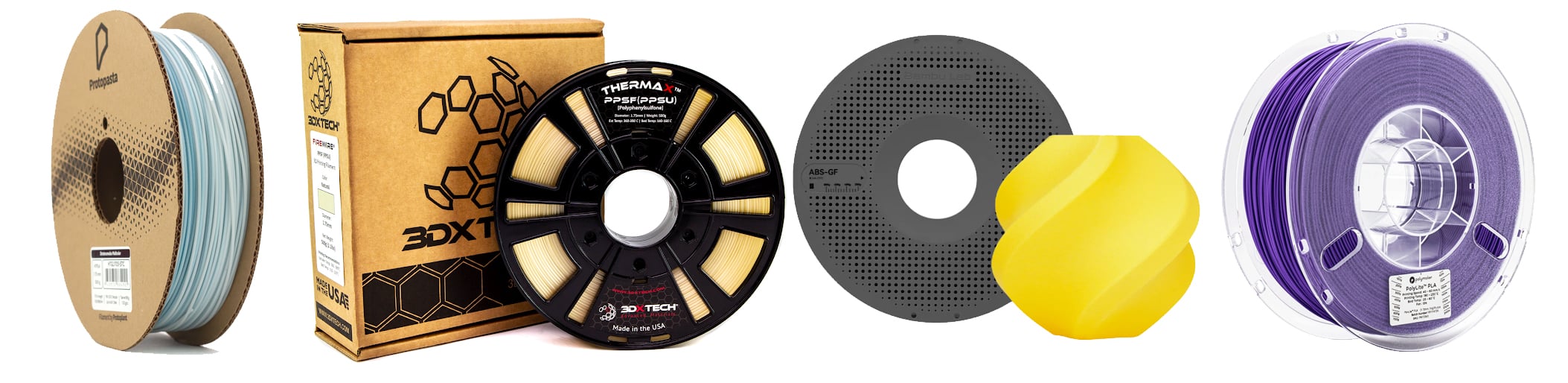
Whether you’re printing cosplay armor in PLA, impact-resistant parts in ABS, or flexible components in TPU, this guide will help you pick the right material—and get the best possible results. Keep an eye out for links in nearly every category to our in-depth guides on how to print with these materials and the top brands we recommend. Filament is big business. More than a billion dollars worth of filament is expected to be sold in 2026, and not all of it is worth your cash.
Let’s dive into the full spectrum of 3D printing filaments and uncover which are right for your next project.

The Six Basics
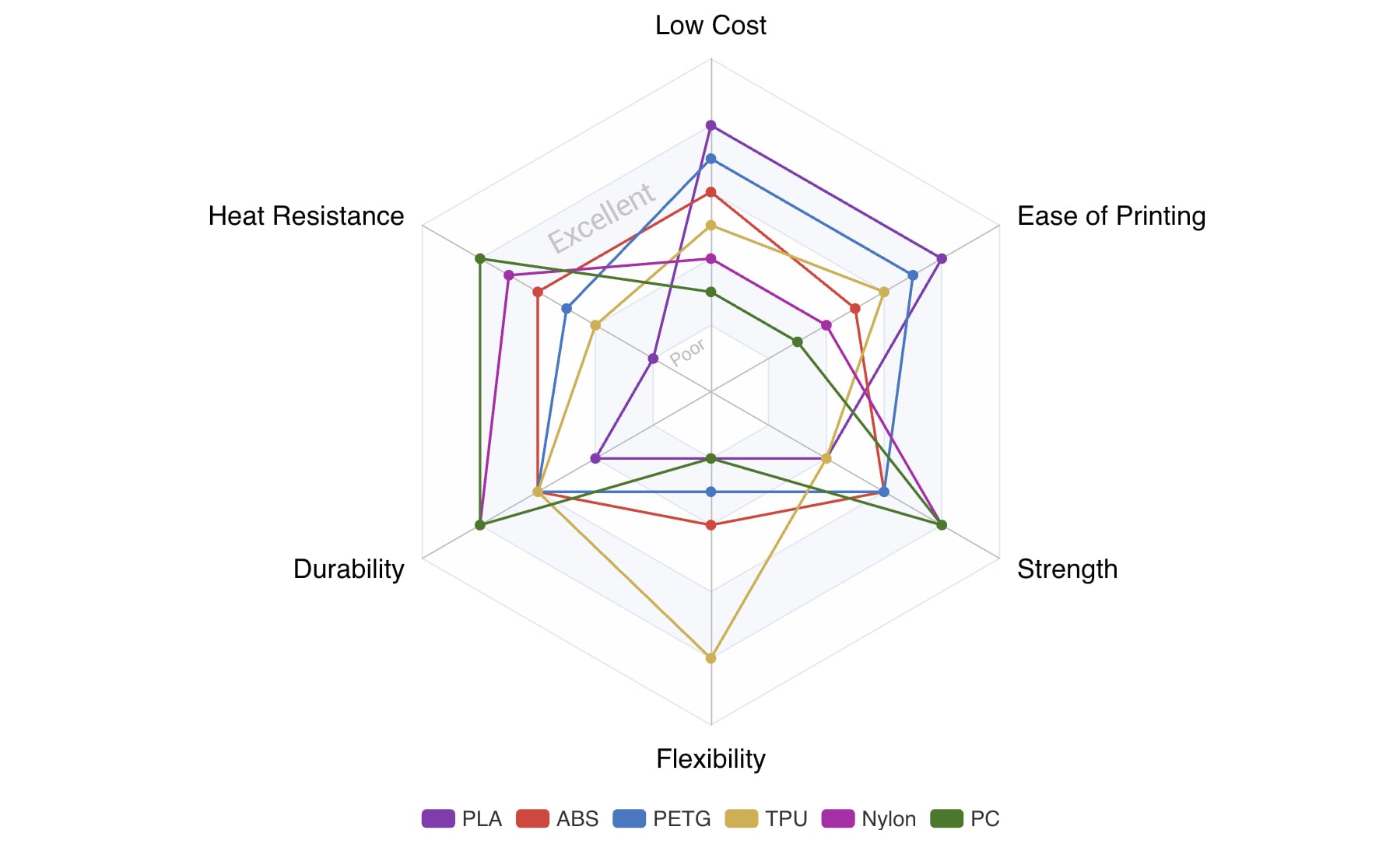
There are six polymers most used in 3D printing: PLA, ABS, PETG, TPU, nylon, and PC. You may never need more than these and while figures vary, it’s estimated that 50% of the filament market is PLA, which comes is a wide range of properties and types. In this first category, we introduce you to the six most commonly used 3D printer filaments, all popular for their specific physical properties.
PLA
What is PLA?
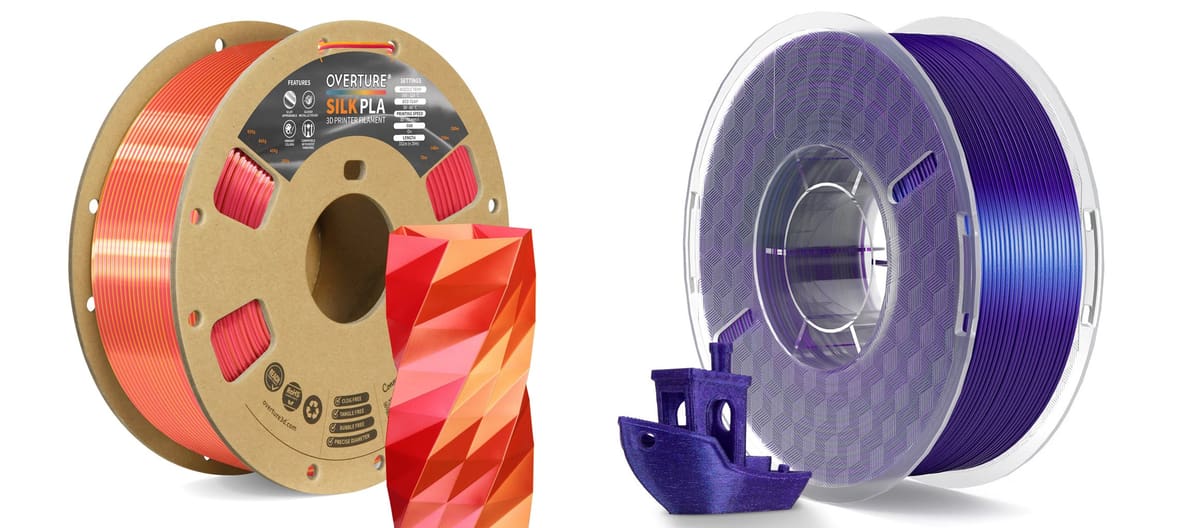
In the realm of consumer 3D printing, polylactic acid (PLA) is king. Although it’s often compared to ABS – arguably the next in line to the throne – PLA is easily the most popular type of 3D printer filament, and for good reason: it’s easy to print on almost any printer, it comes in a huge variety of colors and styles, and it’s typically the cheapest.
3D Printer Filament Properties: PLA
- Strength: Medium | Flexibility: Low | Durability: Medium
- Difficulty to use: Low
- Print temperature: 180 – 230 °C
- Print bed temperature: 20 – 70 °C (but not needed)
- Shrinkage/warping: Minimal
- Soluble: No
- Food safety: Refer to manufacturer guidelines and read “Is PLA Food Safe?”
Generally PLA is easy to print with because has a lower printing temperature than most other filaments and it doesn’t warp as easily, meaning a heated print bed isn’t required (although it definitely helps). Another benefit of using PLA is it is generally considered an odorless filament, but many have reported smelling sweet candy-like fumes depending on the type of PLA. Of course, all 3D printing should be done in a well-ventilated environment.
Another appealing aspect of PLA is its availability in a nearly endless abundance of colors and styles, so many that most hobby printers will never need to leave the realm of PLA.
Major PLA Types:
- Hiigh-speed PLA
- Carbon-fiber-filled PLA,
- Flexible PLA
- High-temperature PLA
- Lightweight / Foaming PLA
PLA is more environmentally friendly than many 3D printer filaments because it’s made from renewable plant-based resources, primarily corn starch (most common), sugarcane, cassava or other carbohydrate-rich crops. PLA is biodegradable only under industrial composting conditions (high heat, moisture, and microbial activity). In landfills or typical environments, it behaves like regular plastics. One exception may be a new filament launched in 2026 said to contain dormant microbes that activate and eat the PLA once it’s in a landfill, breaking down the plastic in five years.
When Should I Use PLA 3D Printer Filament?
In this case, a better question might be “when shouldn’t I use PLA?” Compared to other types of 3D printer filament, in some applications PLA can be too brittle and breakable. This is the main reason users move on from PLA to the polymers below.
You should also avoid using PLA with items that need to withstand higher temperatures, like outdoor use in summertime, since PLA tends to deform around temperatures of 60 °C or higher. For all other applications, PLA makes for a good overall choice in 3D printer filament.
Common prints include models, low-wear toys, prototype parts, and containers.
ABS
What is ABS?
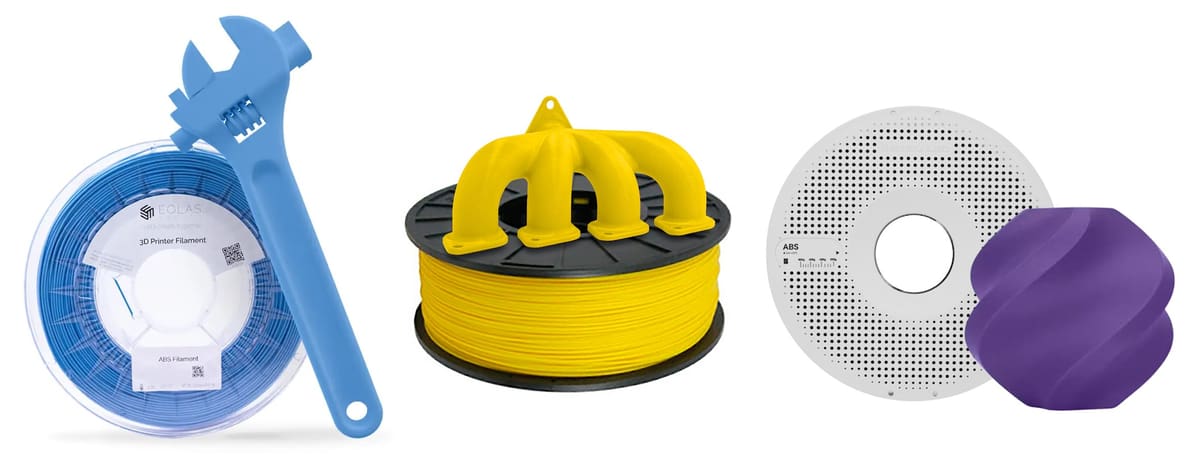
Acrylonitrile butadiene styrene (ABS) is less popular than PLA for everyday 3D printing, mainly because of its hazardous fumes. However, in terms of material properties, ABS is actually moderately superior to PLA, despite being slightly more difficult to print – it’s prone to warping without a hot print bed and bed adhesive.
Commonly used in injection molding, ABS is found in many manufactured household and consumer goods, including LEGO bricks and bicycle helmets.
3D Printer Filament Properties: ABS
- Strength: High | Flexibility: Medium | Durability: High
- Difficulty to use: Medium
- Print temperature: 210 – 250 °C
- Print bed temperature: 80 – 110 °C
- Shrinkage/warping: Considerable
- Soluble: In esters, ketones, and acetone
- Food safety: Not food safe
Products made of ABS boast high durability and a capacity to withstand high temperatures, but 3D printer enthusiasts should be mindful of the filament’s high printing temperature, tendency to warp during cooling, and intense, potentially hazardous fumes. Be sure to print with a heated bed and a well-ventilated space (or with an enclosure).
When Should I Use ABS 3D Printer Filament?
ABS is tough and can withstand high stress and temperature. It’s also moderately flexible, though there are certainly better options for that further down this list. Together, these properties make ABS a good general-purpose 3D printer filament, but where it really shines is with items that are frequently handled, dropped, or heated. Examples include phone cases, high-wear toys, tool handles, automotive trim components, and electrical enclosures.
PETG
What is PETG?
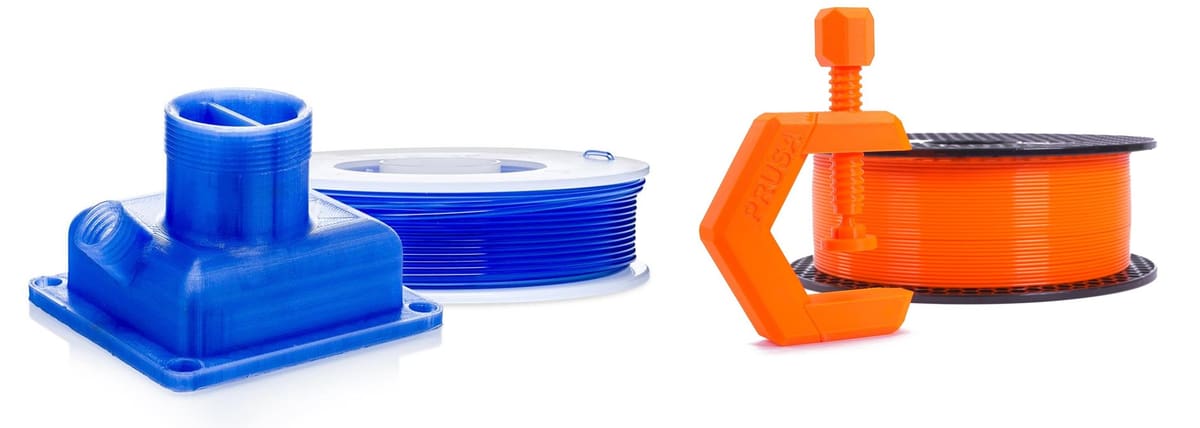
PETG (Polyethylene Terephthalate Glycol) is a widely used 3D printing filament known for its balance of strength, flexibility, and ease of use. It is a modified version of PET (the plastic used in water bottles), with glycol added to reduce brittleness and improve clarity and durability. PETG combines the best characteristics of PLA and ABS, making it a versatile material for a wide range of applications. Recycled PETG is becoming more common and the better sustainable choice.
3D Printer Filament Properties: PETG
- Strength: High | Flexibility: Medium | Durability: High
- Difficulty to use: Low
- Print temperature: 220 – 250 °C
- Print bed temperature: 50 – 75 °C
- Shrinkage/warping: Minimal
- Soluble: No
- Food safety: Refer to manufacturer guidelines
PETG is semi-rigid, impact-resistant, and has good chemical and moisture resistance. It offers better durability and strength than PLA, while being easier to print than ABS. PETG is also less prone to warping, which means it generally doesn’t require an enclosed print chamber. It prints at moderate temperatures (typically 220°C-250°C), and adheres well to the print bed with minimal shrinkage. Additionally, it is food-safe (in some formulations), recyclable, and available in transparent or colored variants.
Three things 3D printer enthusiasts should keep in mind when using PETG:
- PETG is “hygroscopic”, meaning it absorbs moisture from the air. This has a negative effect on the printability of the material, so make sure to store the 3D printer filament in a cool, dry place and, if necessary, dry it before use.
- PETG is sticky when printed, making this 3D printer filament a poor choice for support structures but good for layer adhesion.
- Though not brittle, PETG scratches more easily than ABS.
When Should I Use PETG 3D Printer Filament?
PETG is a good all-rounder but stands out from many other types of 3D printer filament due to its flexibility, strength, and resistance to high temperature and impact. This makes it an ideal 3D printer filament to use for functional objects that might experience sustained or sudden stress, such as mechanical parts, printer parts, and protective components. Recycled PETG made from old water bottles and other sources is even better for the environment.

TPU
What is TPU?
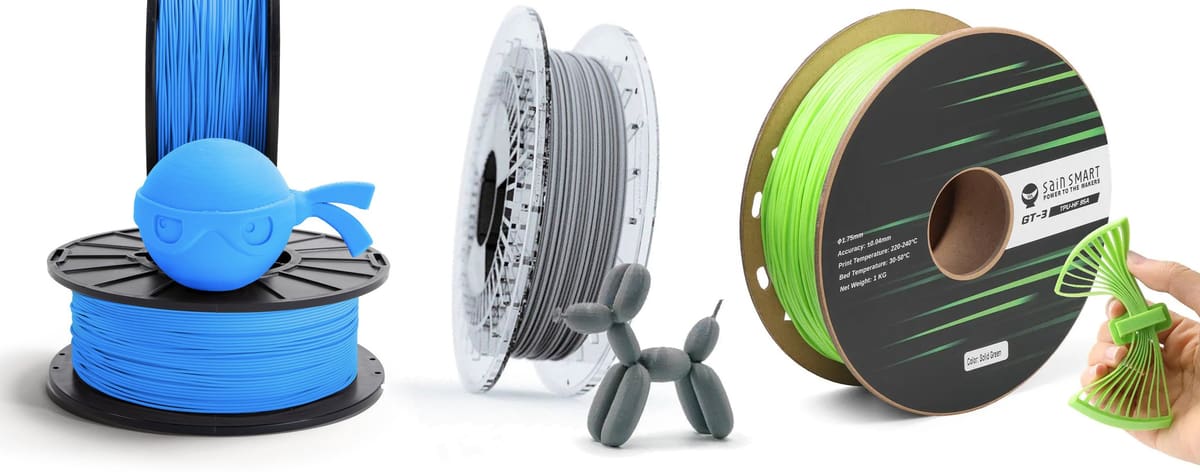
TPU (Thermoplastic Polyurethane) is a flexible, rubber-like 3D printing filament known for its elasticity, durability, and impact resistance. It belongs to the broader category of TPEs (Thermoplastic Elastomers), but TPU is by far the most commonly used variant in 3D printing due to its excellent printability and mechanical strength.
Unlike rigid filaments like PLA or ABS, TPU can bend, stretch, compress, and absorb shocks—making it ideal for functional parts that need to endure wear and tear or mechanical stress.

3D Printer Filament Properties: Flexible TPU
- Strength: Medium | Flexibility: Very High | Durability: Very High
- Difficulty to use: Medium (TPE, TPC); Low (TPU)
- Print temperature: 220 – 250 °C
- Print bed temperature: 40 – 60 °C (but not needed)
- Shrinkage/warping: Minimal
- Soluble: No
- Food safety: Not food safe
TPU requires some adjustments to your printing strategy compared to stiffer filaments. Its flexible nature makes it prone to stringing and oozing, especially at higher speeds, and it can be difficult to feed into your printer and most types aren’t filament-changer compatible. For best results, TPU is usually printed slowly—around 20 to 30 mm/s—and works most reliably with direct-drive extruders, which provide better control of the filament path. Bowden-style extruders can still work, but they often require more tuning to prevent jamming or inconsistent flow.
TPU — a petroleum-based material, although plant-based versions are emerging — is commonly used in applications where flexibility and toughness are essential. This includes phone cases, protective covers, seals, gaskets, and custom grips. It’s also a favorite for producing vibration-dampening components like drone bumpers, RC car tires, and suspension parts. Other creative uses include wearable items such as shoe soles and watch straps, as well as ergonomic tools and soft enclosures for electronics.
While TPU doesn’t perform well in high-temperature environments and may lack the dimensional accuracy of rigid plastics, it excels in scenarios that demand a balance of flexibility, toughness, and longevity. For makers and engineers who need durable, bendable parts, like footwear, TPU offers a reliable and versatile solution—once you get the settings dialed in.
TPU filament come in a range of softnesses, also called Shore values, ranging from super squishy to firm.
When Should I Use TPU 3D Printer Filament?
Use flexibles when creating objects that need to take a lot of wear. If your 3D printed part bends, stretches, or compresses, these 3D printer filaments should be up to the task. Example prints might include toys, phone cases, or wearables (like wristbands). TPC can be used for similar applications, but does especially well in harsher environments, like the outdoors, or anywhere it will be exposed to high heat, like in a car.
Nylon (PA)

What is Nylon?
Nylon, also known as Polyamide (PA), is a popular family of synthetic polymers used in many industrial applications, and it excels where strength and durability are key requirements.
As 3D printer capabilities improve — with better hot ends, enclosed chambers with better temperature control, and humidity-controlled filament stations — it’s easier to avoid the challenges that once plagued printing with nylon, like warping and moisture issues. Nylon has become more accessible. It unlocks a new level of performance that PLA simply can’t match, whether you’re building functional prototypes or end-use spare parts.

3D Printer Filament Properties: Nylon
- Strength: Very High | Flexibility: High | Durability: High
- Difficulty to use: Medium
- Print temperature: 240 – 260 °C
- Print bed temperature: 70 – 100 °C
- Shrinkage/warping: Considerable
- Soluble: No
- Food safety: Refer to manufacturer guidelines
There are many types of nylon, from sustainable-ish bio-based nylons made of castor oil on one end of the nylon spectrum to fossil-fuel-based nylons on the other. It can come embedded with glass fibers, carbon fibers, and Kevlar. There’s specially formulated high-temperature nylon and even recycled nylon from commercial products, including discarded fishing nets. There’s PA6, PA6/66, PA11, and PA12, ranging in price from $30 a kg to more than $200.
Nylon, like PETG, is hygroscopic, meaning it absorbs moisture, so remember to dry it before use and store it in a cool, dry place to keep the filament in prime condition, ensuring better quality prints.
When Should I Use Nylon 3D Printer Filament?
Taking advantage of nylon’s strength, flexibility, and durability, this type of 3D printer filament can be used to create tools, functional prototypes, or mechanical parts (like hinges, buckles, or gears).
Polycarbonate (PC)
What is PC?
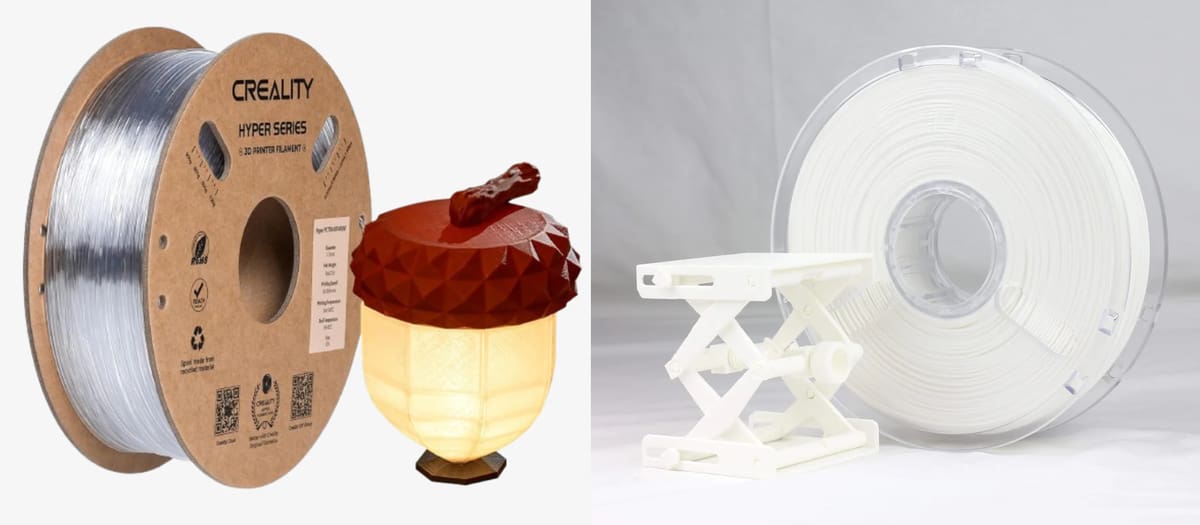
Polycarbonate (PC), in addition to being one of the strongest 3D printer filaments presented in this top 6 list, is extremely durable and resistant to both physical impact and heat, and can withstand temperatures of up to 110 °C. Hobbyists turn to it for printing lamps and lighting fixtures, while it is also widely used in engineering, manufacturing, and industrial applications because it’s tough and capable of handling mechanical stress and repeated use without cracking or deforming.
3D Printer Filament Properties: PC (Polycarbonate)
- Strength: Very High | Flexibility: Medium | Durability: Very High
- Difficulty to use: Medium
- Print temperature: 270 – 310 °C
- Print bed temperature: 90 – 110 °C
- Shrinkage/warping: Considerable
- Soluble: No
- Food safety: Not food safe
Polycarbonate is not easy to print on standard desktop printers. It typically needs a high nozzle temperature, ranging from 260 °C to 310 °C, and a heated bed above 90 °C to 100 °C. An enclosed or actively heated print chamber is strongly recommended to reduce warping and layer separation. Additionally, since the material is hygroscopic, it must be stored in a dry environment to avoid moisture absorption that can compromise print quality.
When Should I Use PC 3D Printer Filament?
Due to its physical properties, PC is an ideal 3D printer filament for parts that need to retain their strength, toughness, and shape in high-temperature environments such as electrical, mechanical, or automotive components. You can also leverage its optical clarity for lighting projects, screens, and other applications that call for transparency. It is also commonly found in protective equipment like face shields, safety visors, and impact-resistant covers. The material’s optical clarity makes it suitable for lighting applications, while its excellent insulation and fire-retardant properties (in certain blends) make it a reliable choice for electronics housings.
Specialty 3D Printer Filaments
Now that we’ve detailed the “Big Six” of filament, let’s look at some interesting and fun filament variations that are often based on the six above, but with additives that affect how you print with them.
Above, we mostly focused on physical characteristics like strength, flexibility, and durability; the next 3D filament types are popular for their finish, composition, and other special characteristics.
Thanks to the mostly aesthetic nature of these filaments, they are especially popular in hobby 3D printer use but work equally well for product prototypes.
Wood-Filled
What is Wood-Filled?
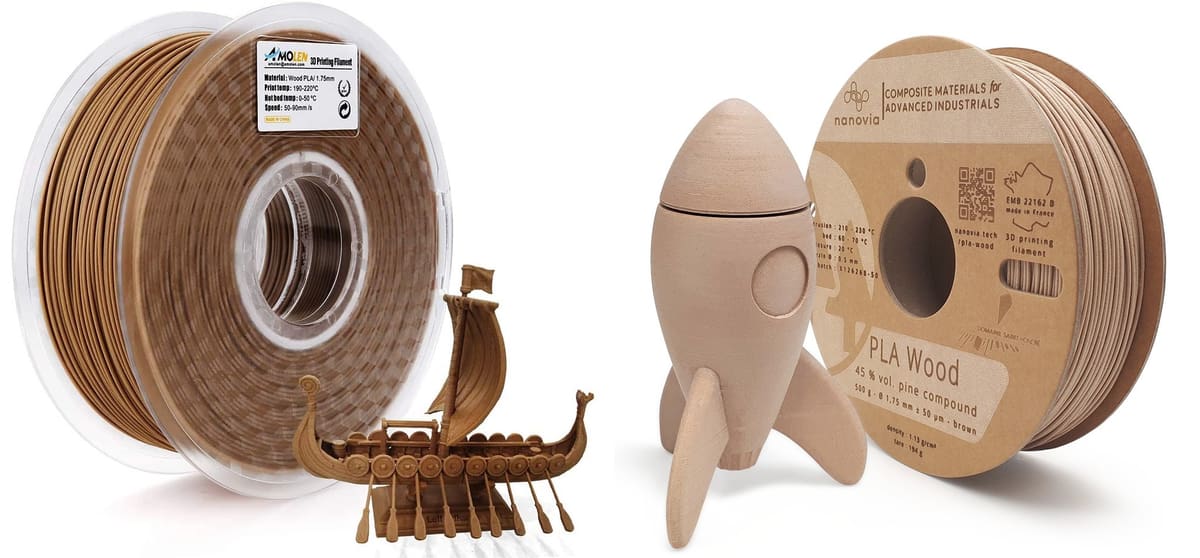
Popular among people who don’t like the “plastic” look of their 3D prints, wood-filled filaments are gaining a fan base. Typically, wood filaments contain 70% PLA and 30% wooden fibers, which vary by the manufacturer. You can now choose between birch, coconut, bamboo, timber, cedar, and many others. We’ve been impressed with just how wood-like the resulting prints feel. From texture to smell, everything seems real. This means wood 3D printed parts can be treated as real wood, so it’s safe to sand the parts and apply various stains and coatings.
One thing to keep in mind is that you might not be aware of is the smell of melting wood filaments. During printing, it basically smells like burning wood, so be sure to have proper ventilation.
As with other types of 3D printer filament, there is a trade-off with using wood. In this case, the aesthetic and tactile appeal comes at the cost of reduced flexibility and strength.
Be careful with the temperature at which you print wood, as too much heat can result in an almost burnt or caramelized appearance. On the other hand, the base appearance of your wooden creations can be greatly improved with a little post-print processing! Wood-filled filament can also accelerate the degradation of your 3D printer’s nozzle a little, as the wood fibers it’s comprised of are abrasive and will tear away at softer materials like brass.

When Should I Use Wood-Filled Filament?
Wood is popular with items that are appreciated less for their functional capabilities and more for their natural appearance. Consider using wood-filled 3D printer filament when printing objects displayed on a desk, table, or shelf. Examples include bowls, figurines, and awards. One really creative application of wood as a 3D printer filament is creating scale models, such as those used in architecture.
Metal-Filled
What is Metal-Filled?
There are two distinct types of metal filament: those that have enough metal embedded to give the appearance of metal when polished, and those that are actually mostly metal and produce near-solid metal parts with several post-processing steps.
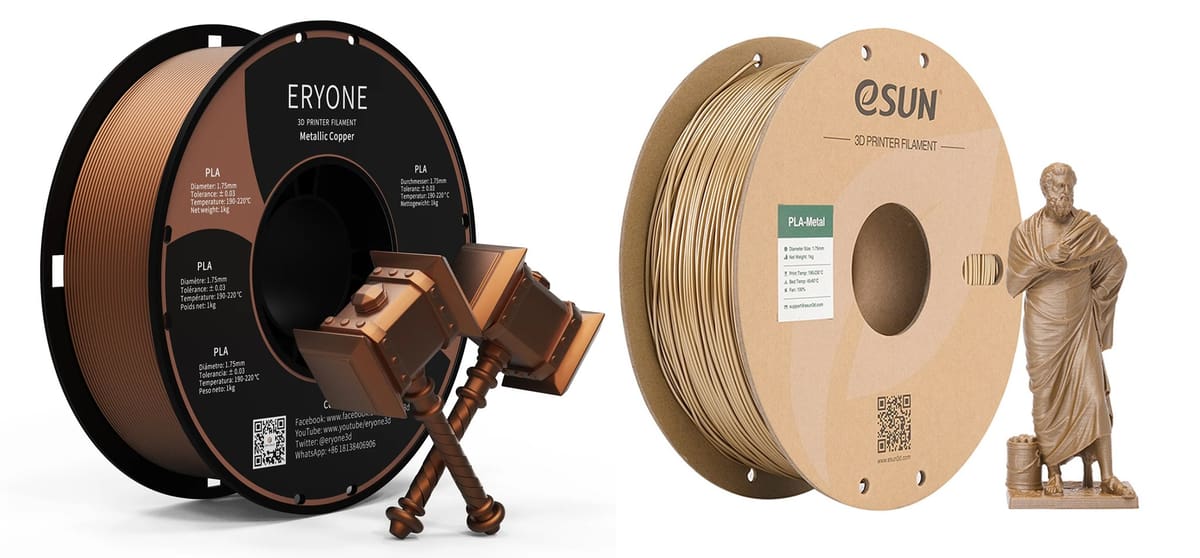
For aesthetic purposes, these metal-filled filaments, which are actually a mix of metal powder and either PLA or ABS, produce the look and feel of metal — some parts are even heavy and can tarnish. For actual metal parts from filament, check out the metal filament in the professional section below.

Bronze, brass, copper, aluminum, and stainless steel are just a few of the varieties of metal 3D printer filaments commercially available. If there’s a specific look you’re interested in, don’t be afraid to polish, weather, or tarnish your metal items after printing – a little post-processing can go a long way.
Mind that you’ll need to replace your nozzle a little more often when printing with metal. Like filaments containing fibers, the metal grains are somewhat abrasive and result in increased nozzle wear. That abrasion adds up especially quickly when passing through relatively soft materials like brass.
The most common 3D printer filament blends tend to be around 50% metal powder and 50% PLA or ABS, but blends also exist up to 85% metal.
When Should I Use Metal Filament?
Metal can be used to print for aesthetics and functionality. For example, trophies, figurines, models, toys, and tokens can all look great when 3D printed in metal, and as long as they don’t have to deal with too much stress, metal 3D printer filament can be used to create practical parts, like a cabinet knob or architectural accents.
Recycled
What is Recycled?
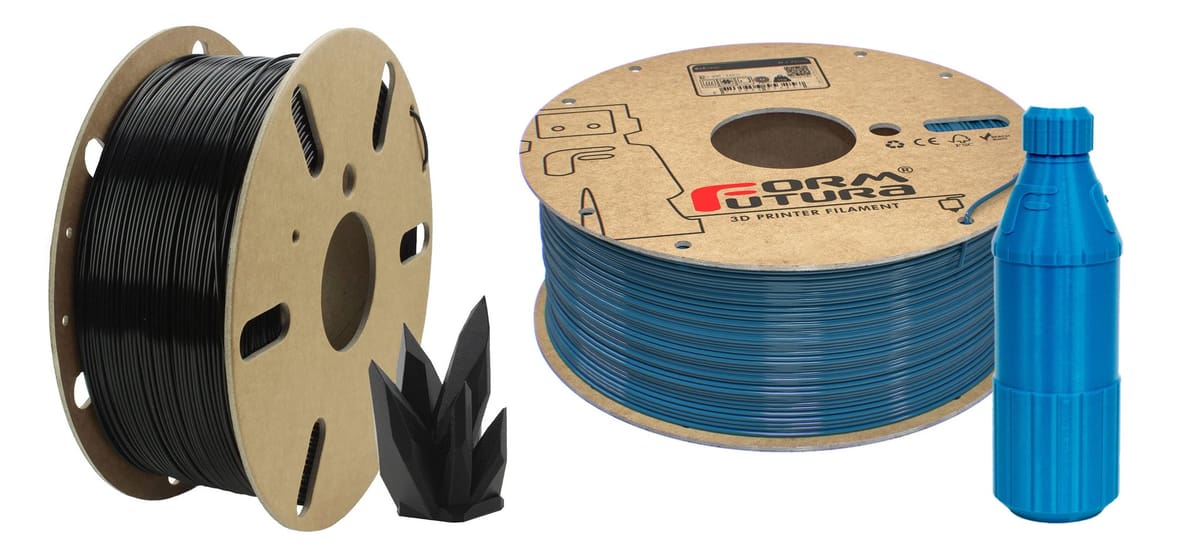
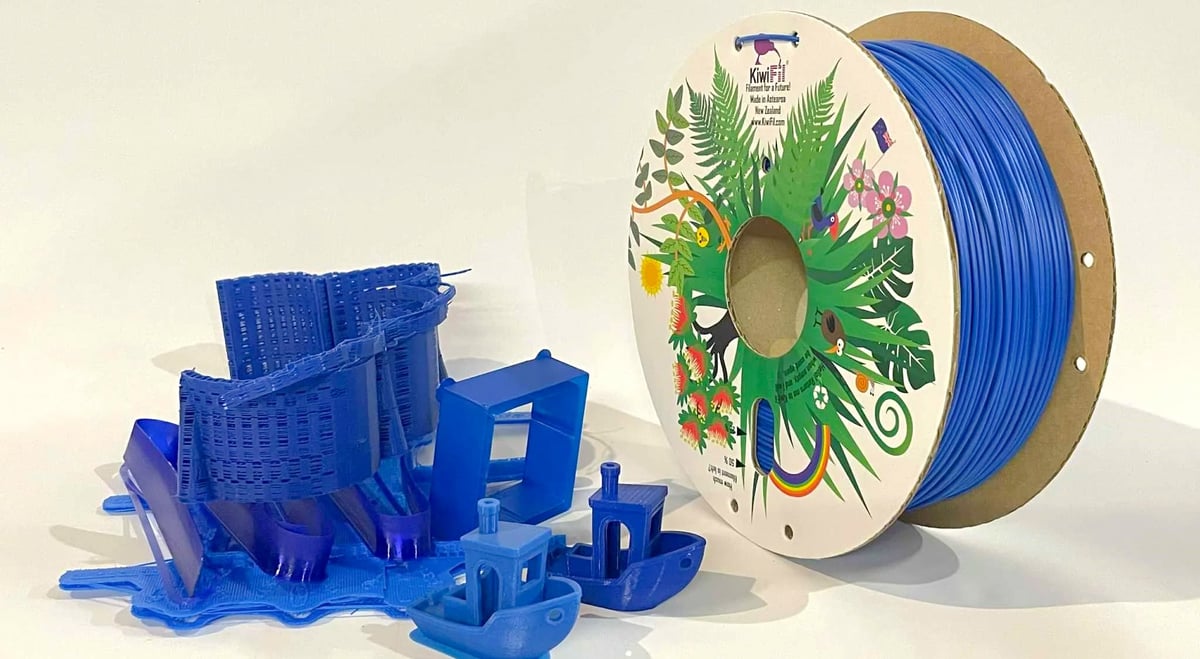
In our opinion, we should all be using more recycled filament for sustainability’s sake. The reason many people don’t is the perception that recycled filament won’t have the look or performance of virgin filament, which isn’t true. Recycled 3D printer filament has come a long way and, in many applications, is indistinguishable from virgin.
Recycled filament, typically available in PLA, nylon, and PET, is produced from plastic waste that has been processed and reformed into new filament spools, just like plastic bottles are recycled into new plastic bottles. This waste typically comes from post-consumer sources, such as containers, or from post-industrial sources, like manufacturing scrap or spent fishing nets. The plastic is collected, cleaned, shredded, and extruded into filament, offering a sustainable alternative to virgin plastic materials. This process supports a circular economy and reduces the environmental footprint associated with 3D printing.
When Should I Use Recycled Filament?
Recycled filaments are a great choice when sustainability is a key concern, such as in green-certified offices, educational institutions, or businesses aiming to reduce waste. They are ideal for prototyping, creating non-critical components, or producing large volumes of prints where top-tier mechanical performance isn’t essential. These filaments are particularly well-suited for classroom settings, community makerspaces, or branding efforts that prioritize eco-conscious values.
Common Types of Recycled Filaments
- Recycled PLA (rPLA) resembles standard PLA in terms of printability and appearance but may have slight inconsistencies depending on the source. This makes it well-suited for prototypes, decorative models, and general-use items.
- Recycled PETG (rPETG) is often sourced from plastic bottles and scrap PETG. It maintains good strength and temperature resistance, making it a viable choice for mechanical parts, functional enclosures, and general-purpose prints.
- Recycled ABS (rABS) comes from items like discarded electronics and industrial ABS scrap. It is known for its toughness and impact resistance, but remains more challenging to print with due to its tendency to warp. Nonetheless, it performs well in functional and durable prototypes.
- Recycled nylon (rPA) is made from materials such as old textiles and industrial nylon waste. This filament offers excellent strength and flexibility, making it ideal for load-bearing parts, gears, and tools that need to endure stress and movement.
- Recycled PET (rPET or PET-PCR) typically originates from post-consumer plastic bottles. It is slightly flexible, glossy, and strong, and is often used for display pieces, containers, and lightweight functional parts.
Tips When Using Recycled Filaments
When printing with recycled filament, it’s important to fine-tune your printer settings to account for possible variations in diameter or consistency. Many of these materials absorb moisture easily, so using a dry box or filament dryer helps ensure print quality. Verifying that the filament meets certain sustainability certifications, such as RoHS or ISO 14021, can provide added confidence in its performance and environmental credentials. Finally, it’s wise to begin with smaller test prints to confirm the quality before proceeding with larger, more complex jobs.
Conductive / EDS-Safe

What is Conductive?
Conductive filament is an emerging material type that’s great for small DIY electronic projects and small circuits all the way up to industrial applications, like drone housings.
Conductive 3D printer filament does as its name implies: conduct electricity, whereas most plastics are electric insulators. With the addition of conductive carbon particulates, mostly graphene, to base materials, such as PLA or nylon, these materials can dissipate electrical charges before they can damage electronic components.
If you want to protect your electronics from electric discharge, then you’ll need a conductor or EDS-safe material. 3D printing with electrostatic discharge-safe filament for your housings, fixtures, and tools can protect them. With these materials, you can print circuit board housings, tools, and fixtures used in electronics testing, and more parts and products that will protect your electronics from electrical charges.
When Should I Use Conductive 3D Printer Filament?
Even though this 3D printer filament type only supports low-voltage circuitry, the sky’s the limit with customized electronics projects. If you’re experimenting, try coupling a circuit board with LEDs, sensors, or even a Raspberry Pi. If you’re looking for something a little more specific, popular ideas include gaming controllers, digital keyboards, and trackpads.
Glow-in-the-Dark
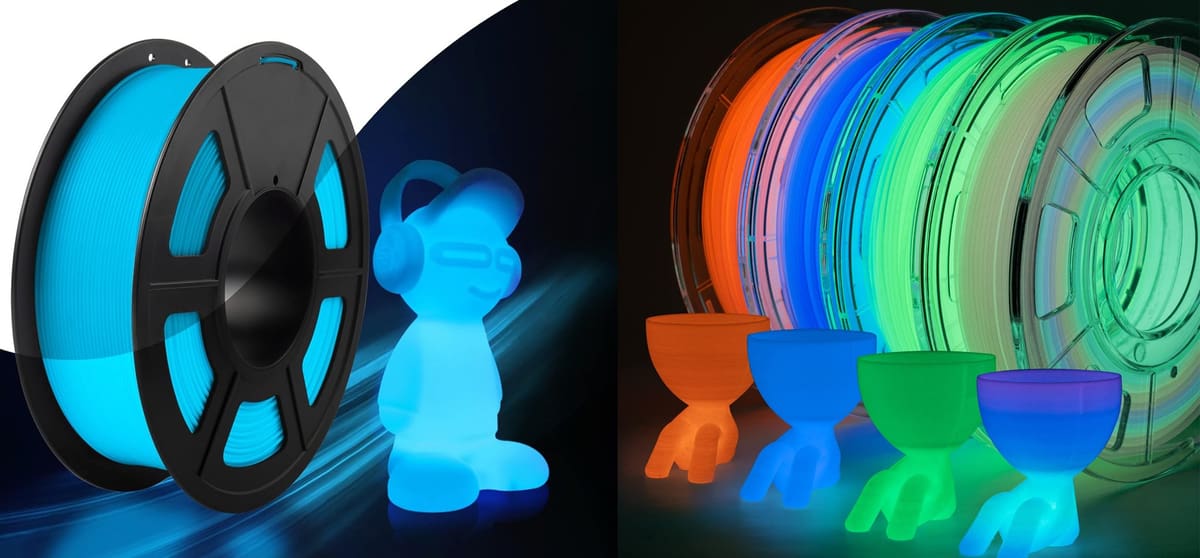
What is Glow-in-the-Dark?
Glow-in-the-dark 3D printer filament is pretty self-explanatory: leave your print in the light for a while, then flick the switch off and behold the glow.
So, how does it work? It all comes down to the phosphorescent materials mixed in with the PLA or ABS base. Thanks to these added materials, a glow-in-the-dark 3D printer filament is able to absorb and later emit photons, basically elemental particles of light. This is why your prints will only glow after being in the light – they have to store the energy before they can release it. Glow-in-the-dark filaments tend to be abrasive to regular brass nozzles, so if you’re printing with them a lot, you might find your nozzle will wear over time.
Glow-in-the-dark PLA is not as easy to print as regular PLA. For best results, consider printing with thick walls and little infill. The thicker your walls, the stronger the glow!
When Should I Use Glow-in-the-Dark 3D Printer Filament?
Thinking about that eerie green glow, it almost doesn’t even seem necessary to suggest using a glow-in-the-dark 3D printer filament for Halloween projects, like jack-o’-lanterns or window decorations. Other examples of where these filaments really shine – er, glow – include wearables (think jewelry), toys, and figurines. There are also practical and even industrial uses for glow-in-the-dark filament when printing safety markers or caution signs.
Color-Changing
What is Color-Changing?
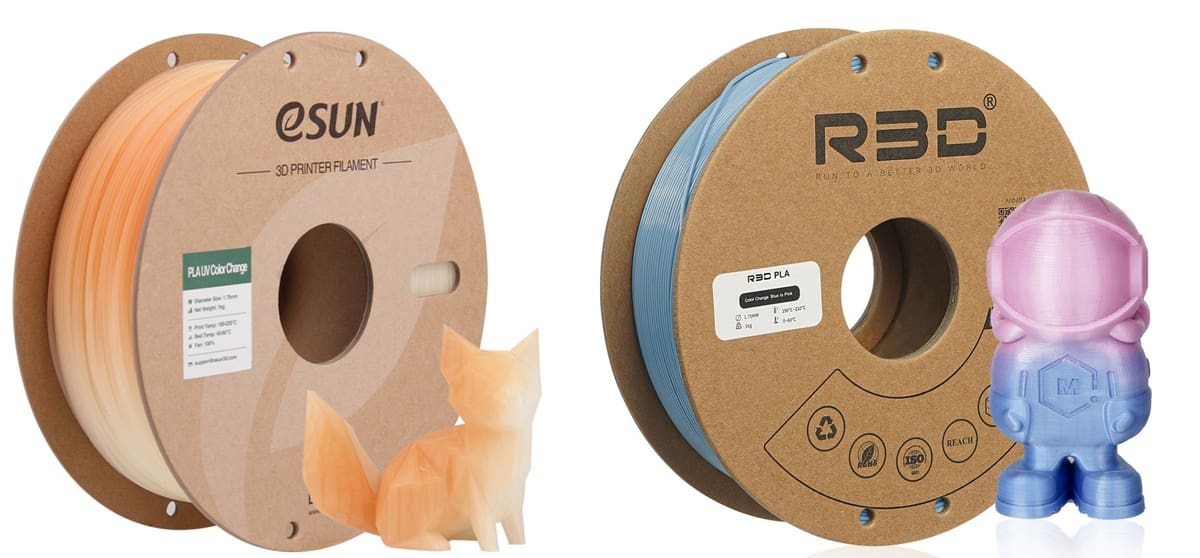
Remember those T-shirts from the ’80s, the ones that would change color based on body temperature? Or how about mood rings? Well, this is the same idea; color-changing 3D printer filaments also change color based on temperature changes or intensity of UV radiation.
Filaments from this category tend to change between a gradient of two colors, for example, from purple to pink, blue to green, or yellow to green.

As with other exotic types of 3D printer filament, color-changing filament exists in blends of both PLA and ABS.
When Should I Use Color-Changing 3D Printer Filament?
With no special physical, tactile, or functional characteristics, this type of 3D printer filament is designed purely for aesthetic applications. Use it whenever you would normally use PLA or ABS, but desire that extra visual flair. Good candidate projects include phone cases, wearables, toys, and containers.
HIPS
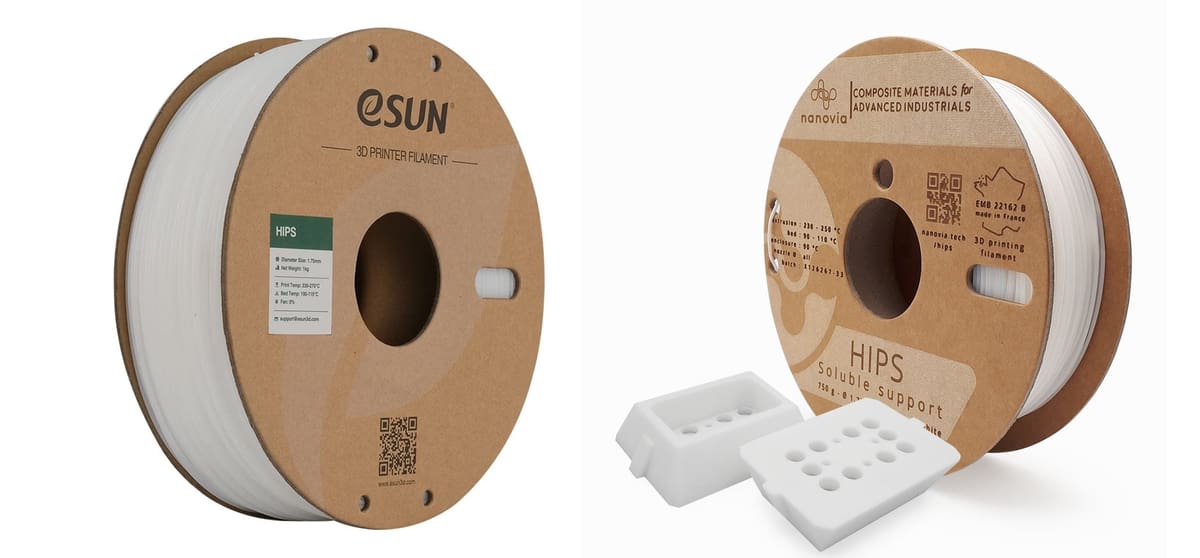
What is HIPS Filament?
High Impact Polystyrene (HIPS) is a durable thermoplastic that combines the stiffness of polystyrene with added rubber for enhanced impact resistance. Commercially, it’s used in packaging, electronics housings, and signage.
In 3D printing, HIPS is best known as a dissolvable support material, especially for ABS. In dual-extrusion printers, HIPS can be used to print complex support structures that are later dissolved in limonene, revealing clean, intricate final prints.
3D Printer Filament Properties: HIPS
- Strength: Medium | Flexibility: Low | Durability: Medium
- Difficulty to use: Medium
- Print temperature: 230 – 245 °C
- Print bed temperature: 90 – 110 °C
- Shrinkage/warping: High
- Soluble: Yes (in limonene)
- Food safety: Not food safe

Although often overshadowed by its role in support, HIPS is also a capable primary filament. It prints with less warping than ABS, is easy to sand, glue, and paint, and is more impact-resistant than PLA. Its moderate strength and finishability make it a good option for functional parts, prototyping, and post-processed models.
PVA, see below, is another popular soluble support material, but you’d choose HIPS because it prints at a higher temperature (~230 °C – 250 °C), matching well with ABS, ASA, and similar filaments. It’s also a more rigid, structural thermoplastic that can handle large overhangs or complex parts without collapsing mid-print.
When Should I Use HIPS 3D Printer Filament?
Use HIPS filament when you need either dissolvable supports for ABS or a lightweight, sandable, impact-resistant plastic for finished parts. HIPS is especially useful as a support material in dual-extruder printing. It pairs well with ABS and can be dissolved away with limonene, making it helpful for overhangs, internal channels, or detailed shapes where breakaway supports are hard to remove. As a stand-alone filament, HIPS is a good choice for display models, props, prototypes, and parts that need post-processing. It sands smoothly and can be painted more easily than many common filaments.
PVA & BVOH

What is PVA?
Polyvinyl alcohol (PVA) is soluble in water, and that’s exactly what commercial applications take advantage of. Popular uses include packaging for dishwasher detergent “pods” or bags full of fishing bait. The same principle applies in 3D printing, making PVA a great support material when paired with another 3D printer filament in a dual extrusion 3D printer. The advantage of using PVA over HIPS is that it can support more materials and prints at a lower temperature.
The trade-off is a 3D printer filament that is slightly more difficult to handle. One must also be careful when storing it, as the moisture in the atmosphere can damage the filament before printing. Dry boxes and silica pouches are a must if you plan to keep a spool of PVA usable in the long run.
3D Printer Filament Properties: PVA (Polyvinyl Alcohol)
- Strength: Low | Flexibility: Low | Durability: Low
- Difficulty to use: High (sensitive to moisture)
- Print temperature: 180 – 220 °C
- Print bed temperature: 45 – 60 °C
- Shrinkage/warping: Minimal
- Soluble: Yes (in water)
- Food safety: Not food safe
Unfortunately, PVA can cost two to three times more than HIPS per kilogram.
BVOH (Butenediol Vinyl Alcohol Copolymer) is another water-soluble 3D printing filament primarily used as a support material for dual-extrusion printers. It is designed to work particularly well with engineering-grade materials like PLA, PETG, ABS, nylon, and some polyesters. Compared to PVA (Polyvinyl Alcohol), which it often replaces, BVOH dissolves faster, more completely, and with fewer residues, making it ideal for creating complex geometries, internal cavities, and overhangs that are otherwise difficult or impossible to support.

When Should I Use PVA 3D Printer Filament?
PVA filament is a great choice as support material on complex prints with overhangs. It’s also a better choice over HIPS if you’re prioritizing eco-friendliness and ease of use over cost or strength.
Cleaning

What is Cleaning Filament?
Unlike the other filaments in this list, cleaning 3D printer filament is not used to print objects but to clean 3D printer extruders. Its purpose is to remove any material in the hot end that might have been left over from previous prints. Though a good general practice, using cleaning 3D printer filament is especially useful when transitioning between materials that have different print temperatures or colors.
The general procedure involves manually feeding cleaning 3D printer filament into a heated print head to force out the old material, then cooling the hot end slightly and yanking the filament back out again. For more detailed instructions, take a look at the manufacturer’s information for the specific filament you’re using.
A few extra things to note:
- “Print” temperature depends on whatever types of 3D printer filament you used before, as well as on the one you want to use next. (Cleaning 3D printer filament is stable anywhere between 150 and 280 °C.)
- It’s not typically necessary to use more than 10 cm of filament at a time.
- Other cleaning methods exist, including the popular “cold pull” technique, which is similar to the above procedure and does not require cleaning 3D printer filament.
When Should I Use Cleaning 3D Printer Filament?
You should consider cleaning 3D printer filament between prints using two materials with wildly different temperature requirements or colors. Generally speaking, it’s important to give your hot end a bit of TLC every once in a while.
Engineering 3D Printer Filament
Although we’ve given the following types of 3D printer filament the label “engineering-grade”, anyone can use them provided their 3D printer can extrude hot enough, and some require an enclosure. You may need to pay closer attention to special print settings and dry these before use.
Compared to those already discussed, these types of 3D printer filament are more popular among hobbyists who sell their 3D prints, along with, of course, professional and industrial users in a wide range of industries.
Polypropylene (PP)
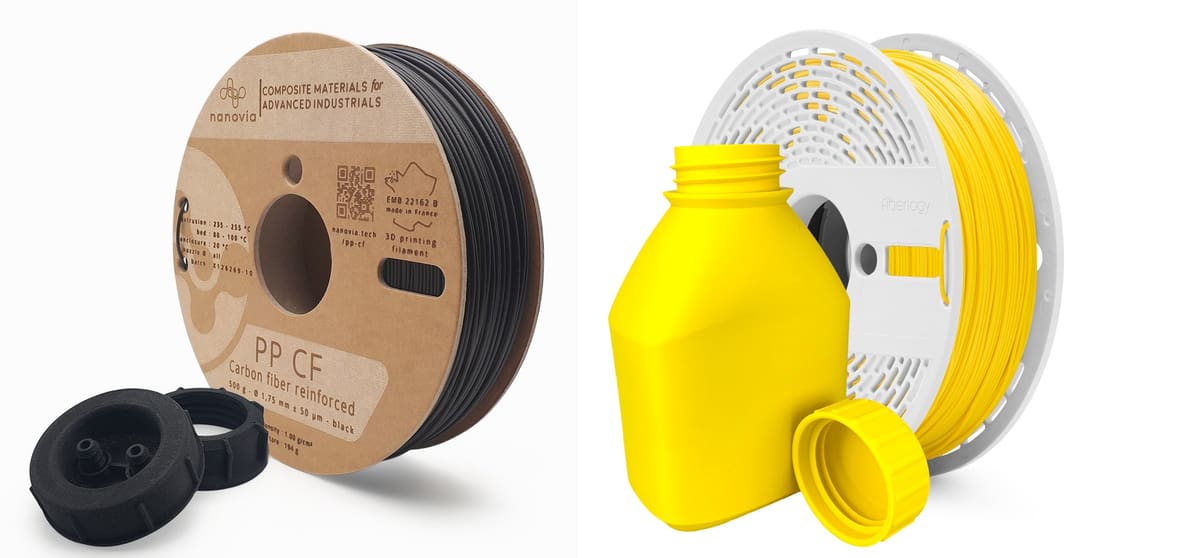
What is Polypropylene?
Polypropylene (PP) is excellent for applications that need to be light, watertight, or durable. Containers for food or liquids, as well as repeatedly bending clips and latches, are popular uses. Although PP is considered a food-safe material, keep in mind that food safety in 3D printing goes beyond the filament’s material properties.

Printing PP comes with its quirks, so let’s explore how to print and store the material. After that, we’ll give you some good options if you want to get your hands on some filament of your own.
Unfortunately, PP is notoriously difficult to print with, often presenting heavy warpage and lackluster layer adhesion. If not for these issues, PP may have contended with PLA and ABS for the most popular 3D printer filament types, given its strong mechanical and chemical properties.
PP can be mixed with carbon fibers to boost the stiffness of your prints.
3D Printer Filament Properties: PP (Polypropylene)
- Strength: Medium | Flexibility: High | Durability: High
- Difficulty to use: High (poor bed adhesion, warping)
- Print temperature: 220 – 250 °C
- Print bed temperature: 85 – 100 °C
- Shrinkage/warping: High
- Soluble: No
- Food safety: Varies, often food safe—check manufacturer
When Should I Use PP 3D Printer Filament?
If you can wrest PP’s warping under control, then most prints calling for a hardy and light material would suit PP. It’s important to note, however, that while the material sees great use in the packaging of consumables and medicine for its food-safe properties, the process of FDM 3D printing negates this with hundreds (if not thousands) of layer lines for bacteria to hang out in – best not to try.
Fiber-Filled Composites (Carbon, Glass, Kevlar)
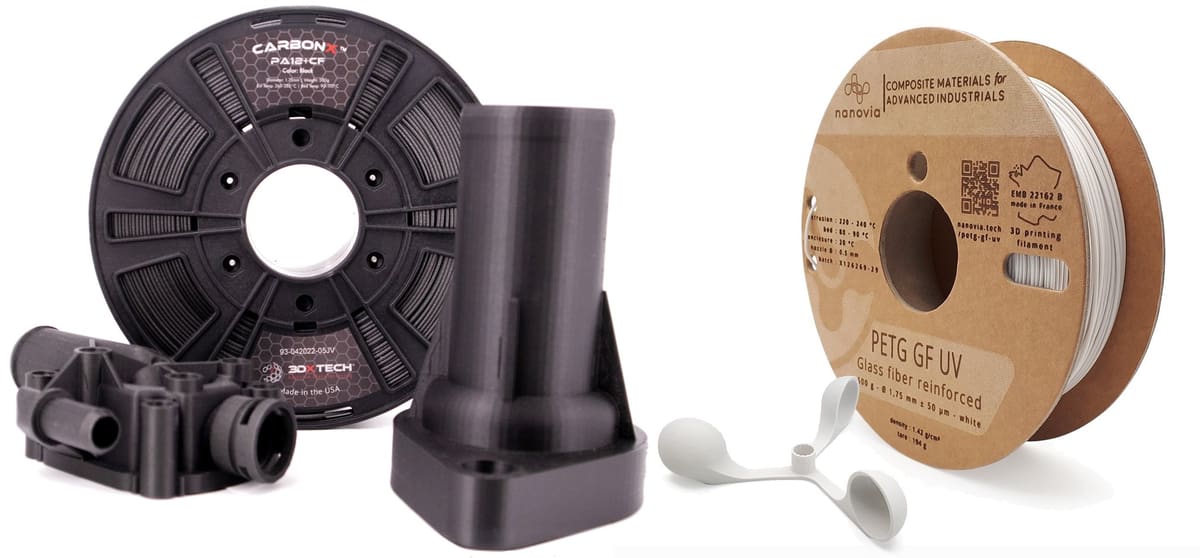
What are Fiber-Filled Filaments?
When 3D printer filament—such as PLA, ABS, PETG, or nylon—is reinforced with chopped fibers like carbon, glass, or Kevlar, the result is a composite filament that exhibits significantly improved mechanical properties. These fibers are uniformly mixed into the base plastic during the filament manufacturing process, typically at concentrations ranging from 10% to 30% by volume. This blending transforms the filament’s behavior during both printing and in its final use.

The primary effect of adding chopped fibers is a substantial increase in strength and stiffness. Carbon fiber, for example, greatly boosts rigidity and reduces flex in the printed part, making it ideal for structural applications. Glass fiber adds strength and impact resistance, while Kevlar fiber contributes durability and resistance to abrasion and fatigue.
In addition to strength, fiber reinforcement usually improves the dimensional stability of the printed object. The part tends to warp less and maintain its shape more precisely, which is particularly valuable when printing functional components that require tight tolerances.
However, these improvements come with trade-offs. Fiber-reinforced filaments are more abrasive than standard ones, meaning they will wear down brass nozzles quickly. For this reason, it’s important to use a hardened steel or ruby-tipped nozzle when printing with composite materials. The filament may also be slightly more brittle, depending on the fiber type and concentration, and can be less flexible than its unfilled counterpart. Additionally, printing with fiber-filled filaments may require higher nozzle temperatures and more precise calibration.
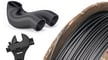
- Carbon Fiber adds high stiffness and low weight, making parts rigid, strong, and dimensionally stable, but also more brittle.
- Glass Fiber enhances strength and impact resistance while maintaining good dimensional stability; parts are tougher but heavier than with carbon.
- Kevlar Fiber improves toughness, abrasion resistance, and flexibility, making parts more durable and resistant to fatigue or cracking under repeated stress.
When Should I Use Carbon Fiber 3D Printer Filament?
These filled composite materials are ideal for applications that demand high strength, stiffness, durability, or thermal stability beyond what standard filaments can provide. Typical uses are structural components, drone parts, auto parts, and jigs and fixtures.
Metal

What is Metal Filament?
Introduced a few years ago and now skyrocketing in popularity, metal filament is used to create real, solid metal parts. Consumers and professionals are turning to this material to produce everything from figurines to small replacement parts and tools. The benefit is tremendous cost and time savings over machining or molding metal, but there are drawbacks, such as the post-processing.
Several FDM 3D printer makers, including UltiMaker, BCN3D, and Anycubic, have launched printer profiles that enable you to print with metal filament on their machines. Metal filaments for metal parts are only available from a small handful of producers, including BASF and The Virtual Foundry. These filaments contain a high percentage of metal powder (around 80%), but they do not produce metal parts right off the print bed; they must go through two post-processing stages that melt away the plastic and then condense the metal part.
A key benefit of metal filament is how easy it is to print with on a regular 3D printer. Just note that, by “regular”, we mean any FDM printer with a heated bed and a hardened steel nozzle that can reach the required temperatures of at least 180ºC to 220ºC.
In theory, you can print metal filament on machines under $200, like an Ender 3 or Anet A8, but be sure to follow the design guidelines from your filament maker and your printer manufacturer, if available. If you’re not provided with specific extrusion width, retraction distance, and speed, infill, bed temperature, print speed, and other perimeters, you’ll spend a lot of time and money experimenting. Metal filament starts at $150 per 500 grams.
This is why certain printer manufacturer have “certified” the material for use on their machines, and others have not.
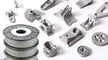
In the third and final step, the brown body is sintered and turned into a metal object. A non-isotropic material shrinkage occurs, which must already be taken into account when designing or preparing the object for print. Depending on the material, percentages vary from 5–20% (specific details will be found on the filament’s spec sheet.)
When should I use Metal Filament?
Because of their high strength and corrosion resistance, metal-based filaments are ideal for manufacturing parts such as fixtures, fasteners, tools, and functional and end-use parts.
Wax & Castable
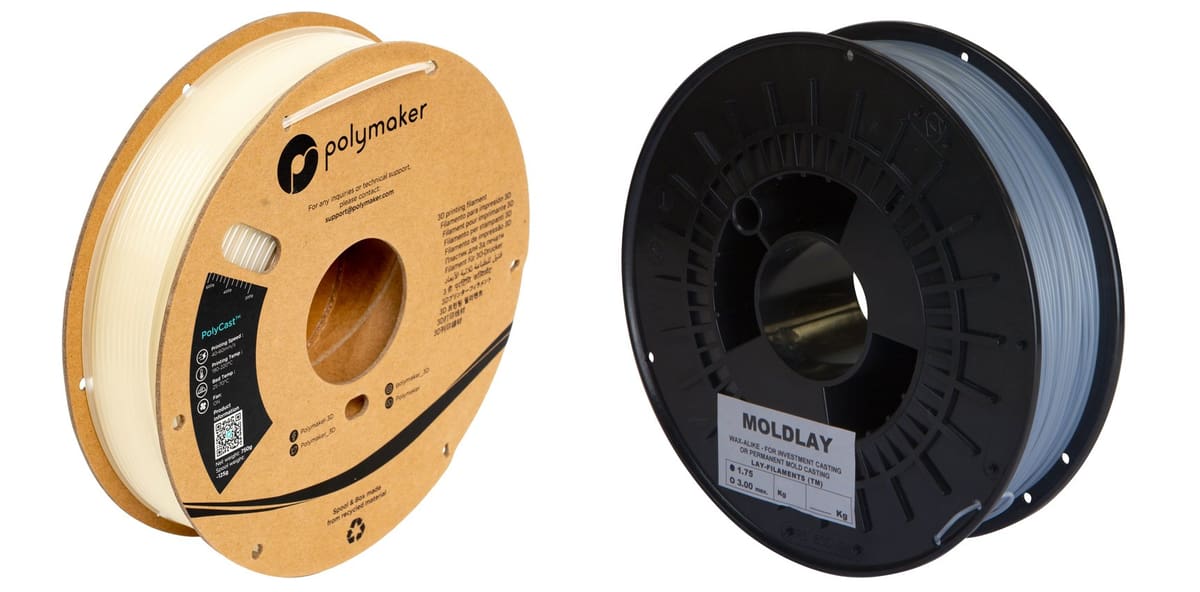
What is Wax/Castable Filament?
Wax and castable 3D printer filaments are specialty materials designed for investment casting (lost wax casting). They are used to create detailed molds for metal parts, especially in jewelry, dentistry, and industrial prototyping.
The process is called “lost-wax” or “investment” casting, and it more or less works like this:
- Create a positive wax mold – a wax replica of what you want the final metal product to look like.
- Dip the mold in plaster and let it dry.
- Put the wax-plaster object in an oven. At a high enough temperature, the wax will melt away, leaving a negative space within the plaster, in which the metal product can be cast.
Wax 3D printer filament makes the first step easy, since you would normally have to carve or CNC machine the mold out of a block of wax. You can also further refine the 3D print once it’s made before your cast. That said, lost wax casting for jewelry and dental applications is more typically done using resin 3D printing technology and a castable resin because of the greater fine detail enabled.
Wax-based filament contains real wax or wax-like compounds, while castable resin or thermoplastic filament is engineered to burn out like wax but is made of plastic. PLA can be used in lost-wax casting, but these specialized waxes and castable materials burn out more cleanly.
When Should I Use Wax/ Castable 3D Printer Filament?
As mentioned above, these filaments are primarily used in indirect metal fabrication, where the printed model is sacrificed to create a metal part via investment casting.
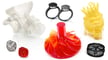
Wax and castable 3D printer filaments are used to create detailed, burn-out models for investment casting. In jewelry, they enable rapid production of intricate, customized metal pieces without hand-sculpting. Dentistry uses them for precise crowns, bridges, and frameworks cast in dental alloys. Aerospace and automotive industries rely on them for prototyping lightweight, complex metal parts. Artists use castable filaments to produce sculptures and medals with fine textures, while engineers create functional prototypes for testing. Hobbyists also benefit, using these filaments to cast custom tools and parts at home. Their clean burnout and high detail make them essential for turning digital designs into durable metal objects.
ASA

What is ASA Filament?
Acrylonitrile styrene acrylate (ASA) is known for high impact strength and chemical resistance, yet it was basically created for one purpose: outdoor use. It has high UV resistance, rigidity, high heat resistance, and high chemical resistance. Colored ASA resists fading outside.
3D Printer Filament Properties: ASA (Acrylonitrile Styrene Acrylate)
- Strength: High | Flexibility: Medium | Durability: High
- Difficulty to use: Medium
- Print temperature: 240 – 260 °C
- Print bed temperature: 90 – 110 °C
- Shrinkage/warping: Moderate to high (enclosure recommended)
- Soluble: No
- Food safety: Not food safe
It’s the easier-to-print cousin of ABS, but also requires high extruder and bed temperatures and an enclosure to counteract warping, cracking, and shrinking. It is certainly not for every printer, but it can be handled by more capable desktop machines and, naturally, industrial FDMs.
Although it can be expensive to buy and difficult to print with, ASA’s quality makes it a fantastic filament for rough and tough use cases. A big drawback of ASA is its strong and potentially hazardous fumes, so it should be used with caution.
ASA can be infused with glass and other fibers to improve the stiffness.
When Should I Use ASA 3D Printer Filament?
For anything from birdhouses to custom garden gnomes and replacement outlet covers, look no further than this 3D printer filament.
PCTG
What is PCTG?
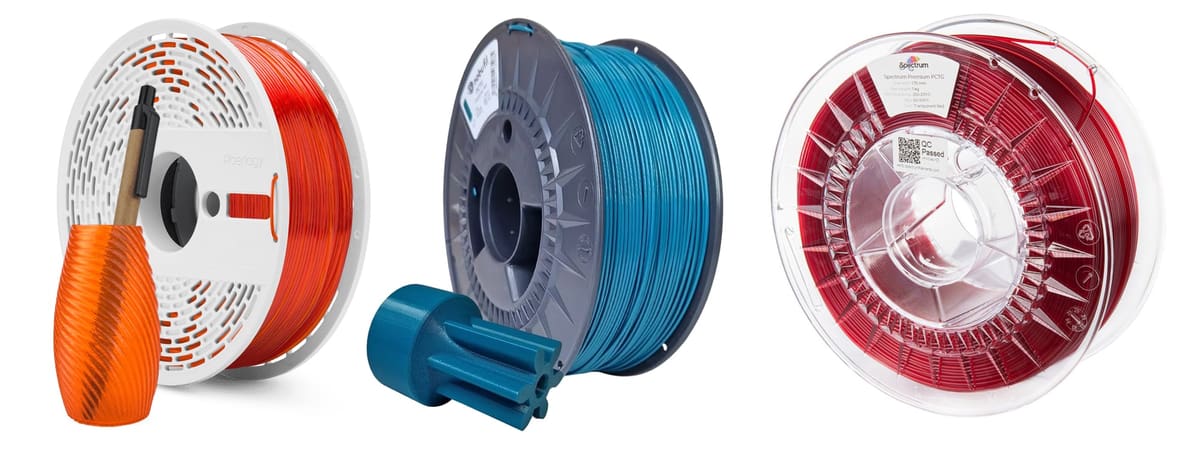
PCTG (Polycyclohexylenedimethylene Terephthalate Glycol) is a copolyester filament closely related to PETG, but tuned for tougher, more impact-resistant parts. It keeps many of PETG’s best traits, including low warping, good chemical resistance, and glossy surface quality, while offering improved impact strength, better clarity, and slightly higher heat resistance. It is often positioned as a more durable, engineering-minded alternative to PETG.
3D Printer Filament Properties: PCTG
- Strength: High | Flexibility: Medium | Durability: High
- Difficulty to use: Low to medium
- Print temperature: 240 °C – 270 °C
- Print bed temperature: 70 °C – 100 °C
- Shrinkage/warping: Minimal
- Soluble: No
- Food safety: Refer to manufacturer guidelines
PCTG is semi-rigid, tough, and highly impact-resistant, making it a good choice for functional prints that need to survive stress, drops, or repeated handling. Compared with PETG, it generally offers better impact resistance and chemical resistance, while remaining far easier to print than materials such as ABS, ASA, or polycarbonate. It also tends to produce a glossy finish and is available in transparent grades with high optical clarity.
It does, however, need higher printing temperatures than standard PETG, so not every beginner printer is ready for it out of the box. An all-metal hotend is recommended for the upper end of the temperature range, and a heated bed is strongly advised. PCTG usually does not require an enclosure, since shrinkage and warping are low, but good cooling control and dry filament storage will help produce cleaner results. Manufacturer data commonly places PCTG around 240–270 °C for the nozzle and roughly 70–100 °C for the bed, depending on formulation.
Three things 3D printer enthusiasts should keep in mind when using PCTG:
- PCTG prints hotter than PETG, so check that your hotend can safely reach the required temperature.
- Like PETG, PCTG can be sticky during printing, which helps layer adhesion but can make supports harder to remove.
- Although some PCTG formulations are marketed as BPA-free or suitable for food contact, food safety depends on the exact filament, printer setup, nozzle, colorants, and post-processing, so always check the manufacturer’s guidance.
When Should I Use PCTG 3D Printer Filament?
Use PCTG when PETG is almost good enough, but you need more toughness, better impact resistance, or a clearer, glossier finish. It is well suited for functional prototypes, protective covers, brackets, jigs, transparent parts, workshop tools, robotics components, and mechanical parts that may face stress, impact, moisture, oils, or cleaners. It is not the best choice for very high-temperature environments, but for durable everyday parts, PCTG is a strong step up from PETG without the printing headaches of more demanding engineering filaments.
Acetal (POM)
What is Acetal (POM) Filament?
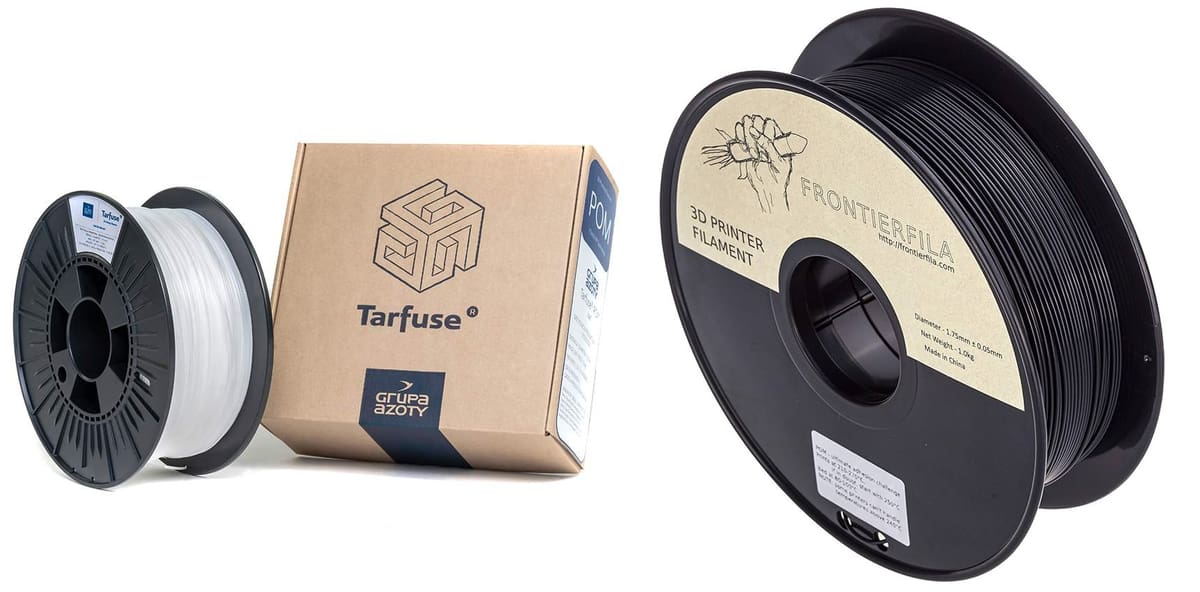
POM, short for polyoxymethylene, is an engineering plastic seen in the likes of zippers, rollers, bushings, and gears. Aside from having a spectacularly low coefficient of friction, it features high strength, along with temperature, chemical, and abrasion resistance. This makes it excellent for applications that involve physical contact and sliding.
For most of the types of 3D printer filament in this list, there is a significant gap between what is made in the industry and what you can make at home with your 3D printer. For POM, this gap is somewhat smaller; the slippery nature of this material means prints can be nearly as functional as mass-produced parts.
3D Printer Filament Properties: POM (Polyoxymethylene / Acetal)
- Strength: High | Flexibility: Medium | Durability: Very High
- Difficulty to use: Very High (poor adhesion, toxic fumes)
- Print temperature: 220 – 250 °C
- Print bed temperature: 100 – 130 °C
- Shrinkage/warping: Very High
- Soluble: No
- Food safety: Generally considered food safe, but check the manufacturer
Make sure to use a heated print bed when printing with POM 3D printer filament, as the first layer doesn’t always want to stick. Especially with POM’s relative rarity in the 3D printing scene, it hasn’t been especially well-tuned for the printing process. Compared to other difficult-to-print materials that have been made more approachable, such as polycarbonate and nylon, POM has remained a challenge.
One new alternative might be a new nylon composite filament just launched by UltiMaker this year. It’s a unique nylon copolymer PA6/12 with carbon fiber offering wear resistance and temperature resistance of up to 180°C. It’s called “slide” because of its low friction and high wear resistance formula, ideal for parts involving sliding contact with other materials, such as stainless steel.
When Should I Use Acetal (POM) 3D Printer Filament?
Gearing mechanisms in projects using motors (such as RC cars) could be an applicable field for POM. It’s also ideal for parts that make contact with metals in a mechanism.
PMMA (Acrylic)
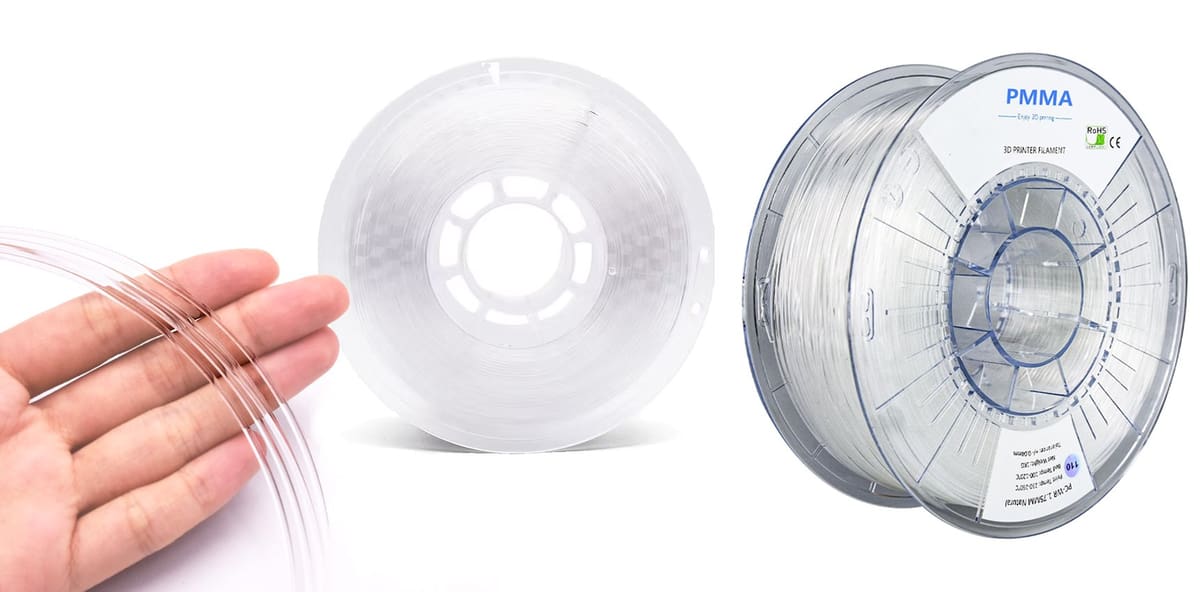
What is PMMA Filament?
PMMA (Polymethyl Methacrylate), also known as acrylic or plexiglass, is a 3D printer filament valued for its optical clarity, rigidity, and weather resistance. It produces parts with a glossy, glass-like finish and transmits light nearly as well as glass, making it ideal for clear or see-through components. While mechanically strong and UV-resistant, it is also brittle and prone to cracking under stress.
Printing PMMA requires high temperatures—typically around 230–250 °C for the nozzle and 80–100 °C for the bed—and works best in an enclosed printer to minimize warping and cracking. The material is hygroscopic and should be kept dry. Due to its printing challenges, PMMA is more suitable for experienced users.
3D Printer Filament Properties: PMMA (Polymethyl Methacrylate / Acrylic)
- Strength: Medium | Flexibility: Low | Durability: Medium
- Difficulty to use: High (brittle, prone to cracking and warping)
- Print temperature: 230 – 250 °C
- Print bed temperature: 80 – 100 °C
- Shrinkage/warping: High
- Soluble: No
- Food safety: Not food safe

When Should I Use PMMA 3D Printer Filament?
Common applications include transparent covers, light diffusers, signage, architectural models, and prototypes where clarity and rigidity are key. It serves as a good alternative to polycarbonate in projects that prioritize appearance over impact strength, but most users looking for optical clarity today tend to use polycarbonate (PC) since PMMA is pricy.
PEI (Ultem)
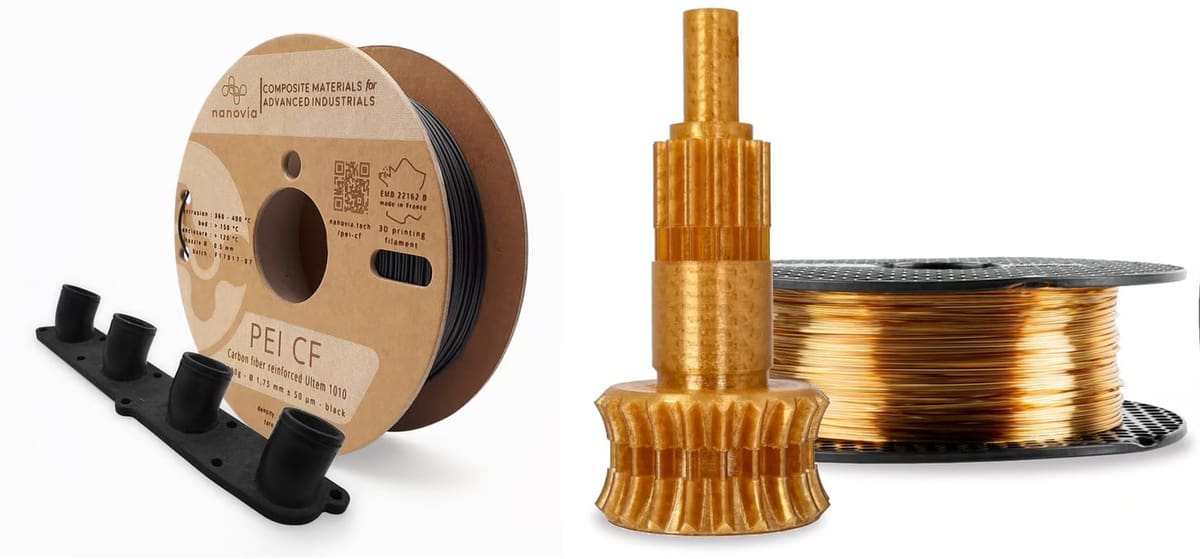
What is PEI Filament?
Polyetherimide (PEI) was first developed in 1982 by General Electric Company (now known as SABIC) under the trade name Ultem, as it is still commonly known. This high-performance plastic is characterized by outstanding thermal, mechanical, and electrical properties, and is most commonly used as a cost-effective alternative to metal. It can retail for more than $350 per kilo, so it’s strictly an engineering-grade material.
3D Printer Filament Properties: PEI (Polyetherimide / Ultem)
- Strength: High | Flexibility: Low | Durability: Very High
- Difficulty to use: Very High (requires high-temp printer)
- Print temperature: 340 – 380 °C
- Print bed temperature: 120 – 160 °C
- Shrinkage/warping: High
- Soluble: No
- Food safety: Often FDA-compliant and suitable for food contact—verify per brand
PEI offers manufacturers a high strength-to-weight ratio, making it strong enough to replace steel in some applications and light enough to be used in others to replace aluminum, particularly in aerospace.
There are many grades of Ultem, the most common being Ultem 1000. Ultem 1010 is a resin material, and Ultem 2300 is a 30% glass-reinforced material. You’ll find PEI variations with carbon fiber.
PEI also has good UV-light resistance and weatherability and is inherently flame resistant. It’s also resistant to alcohols, acids, and hydrocarbon solvents but dissolves in partially halogenated solvents. Most PEI grades are food-contact compliant.
When Should I Use PEI 3D Printer Filament?
PEI is commonly used for gear components, valve housings, sensor and thermostat housings in automotive and aerospace.
PEKK
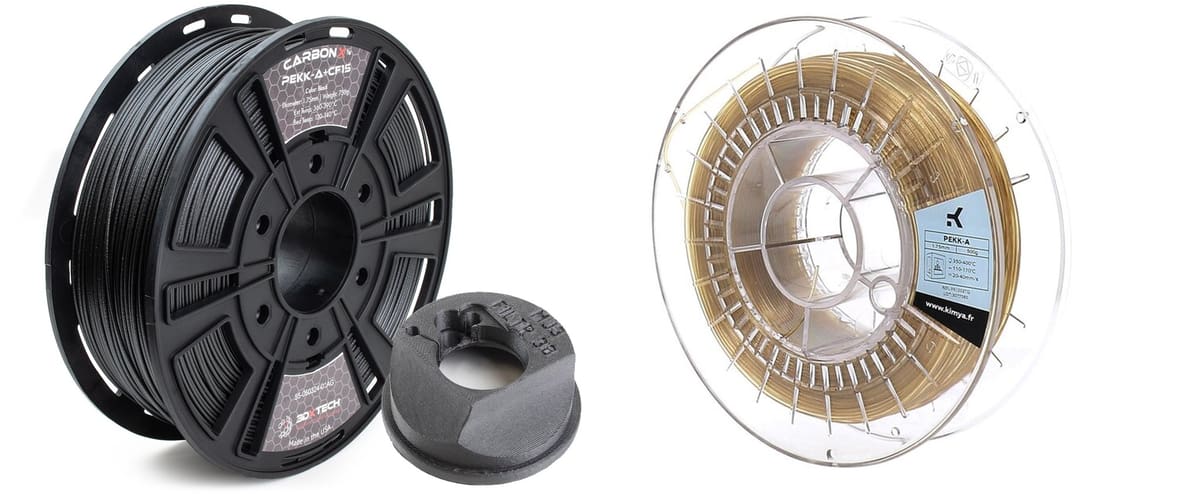
What is PEKK Filament?
PEKK is another polymer in the Polyaryletherketone (PEAK) family and has exceptionally good mechanical, thermal, and chemical resistance properties. One reason some additive manufacturers select PEKK over PEEK is that it’s generally easier to print with.
PEKK can be processed at lower 3D printing temperatures than PEEK-based filaments, doesn’t require a super-heated chamber (like PEEK), and has excellent layer bonding, resulting in parts with exceptional dimensional accuracy and z-strength. This is another versatile high-performance 3D printing polymer that can replace metal and composite parts in various industries, from aerospace and automotive to medtech and marine. The material is resistant to virtually all organic and inorganic chemicals.
3D Printer Filament Properties: PEKK (Polyetherketoneketone)
- Strength: Very High | Flexibility: Medium | Durability: Very High
- Difficulty to use: Very High (easier than PEEK but still demanding)
- Print temperature: 340 – 380 °C
- Print bed temperature: 120 – 160 °C
- Shrinkage/warping: High (enclosure recommended)
- Soluble: No
- Food safety: Can be food safe and biocompatible—check manufacturer specs
Parts printed with PEKK may be heat-treated (annealed) after printing to maximize the mechanical, thermal, and chemical resistance properties. Printed parts will be translucent golden in color and then turn an opaque tan color once annealed.
When Should I Use PEKK 3D Printer Filament?
PEKK is used for structural components, brackets, and housings that must endure extreme temperatures, mechanical stress, and exposure to jet fuels or hydraulic fluids. It is favored for its lighter weight compared to metals and its compliance with stringent aerospace standards, including flame, smoke, and toxicity (FST) regulations.
PEEK
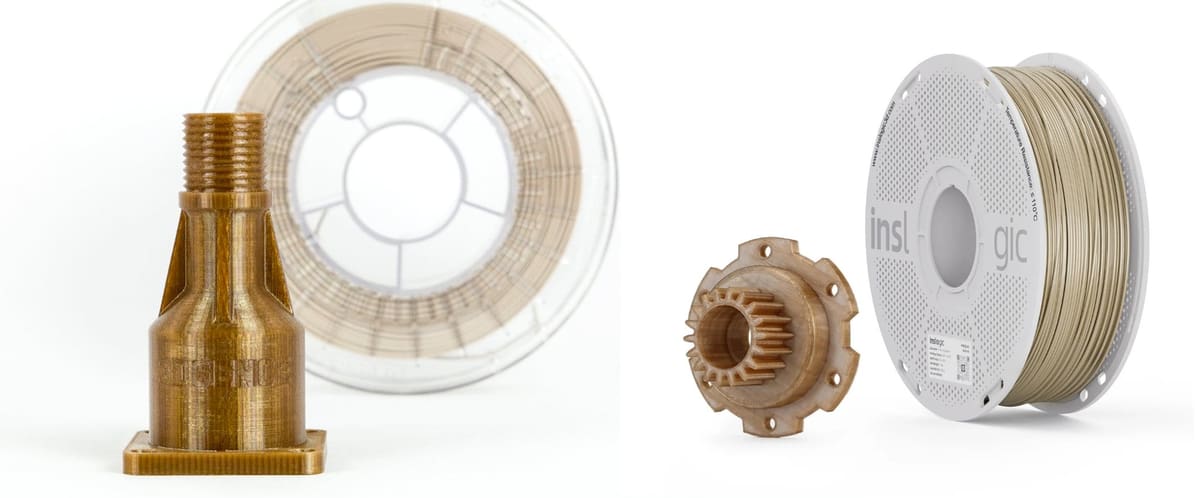
PEEK belongs to the Polyaryletherketone (PAEK) family of polymers and is enjoying growing popularity for applications in the military, pharma, petrochemicals, healthcare, and food packaging.
Its high cost, however, and tricky processing limit it to industrial use with specific printers. PEEK has less than half the weight of aluminum and one-sixth that of steel, making it an excellent metal replacement for parts in the oil and gas industry and in aerospace. PEEK’s properties can be further enhanced by combining it with composite materials, such as glass fiber, graphite, or carbon reinforcements, which help fight shrinkage.

3D Printer Filament Properties: PEEK (Polyetheretherketone)
- Strength: Very High | Flexibility: Medium | Durability: Very High
- Difficulty to use: Very High (specialized printer required)
- Print temperature: 360 – 400 °C
- Print bed temperature: 120 – 160 °C
- Shrinkage/warping: Very High (enclosed heated chamber essential)
- Soluble: No
- Food safety: Often biocompatible and FDA-compliant, but verify with the manufacturer
PEEK is also used for medical implants (since it is fully biocompatibility and X-ray transparent), but there’s a huge difference between industrial and implantable PEEK, with Evonik offering the only fully medically approved PEEK filament on the market to date (priced around $5,000/kg).
PEEK is highly resistant to extreme temperatures up to 260°C and corrosive fluids, gases, and high pressures. It can be sterilized repeatedly and maintain its dimensional stability.
When Should I Use PEEK 3D Printer Filament?
PEEK is often used to print lightweight, high-strength components that can withstand heat and stress, such as brackets, ducting, and housings. In automotive manufacturing, it serves in under-the-hood parts exposed to oil, fuels, and high temperatures, replacing metal components to reduce weight without compromising durability.
In the medical field, PEEK is used for custom implants, surgical instruments, and dental applications because it is biocompatible and sterilizable. It can be tailored for patient-specific needs while maintaining structural integrity in clinical environments. In electronics, PEEK’s excellent electrical insulation and resistance to wear make it ideal for connectors, insulators, and components used in harsh or high-voltage environments.
Manufacturers also rely on PEEK in the production of tooling, jigs, and fixtures that need to maintain dimensional stability during repeated use at elevated temperatures. Because of its outstanding properties, PEEK is chosen when other filaments like ABS, nylon, or even polycarbonate would fail. However, printing with PEEK requires a high-temperature 3D printer with a heated chamber and specialized handling, which limits its use to advanced industrial or research settings.
Yes, There Are More
It’s not practical to list every possible type of 3D printer filament, since there are thousands and new blends and brands entering the market all the time, but we update this guide regularly and hopefully it gives you a sense of the vastness of the offerings and what their uses are. With this in mind, we’d like to point you to even more materials and resources below to learn more.

License: The text of "All 3D Printing Filament Types Explained – Properties, Printing & Best Uses" by All3DP is licensed under a Creative Commons Attribution 4.0 International License.