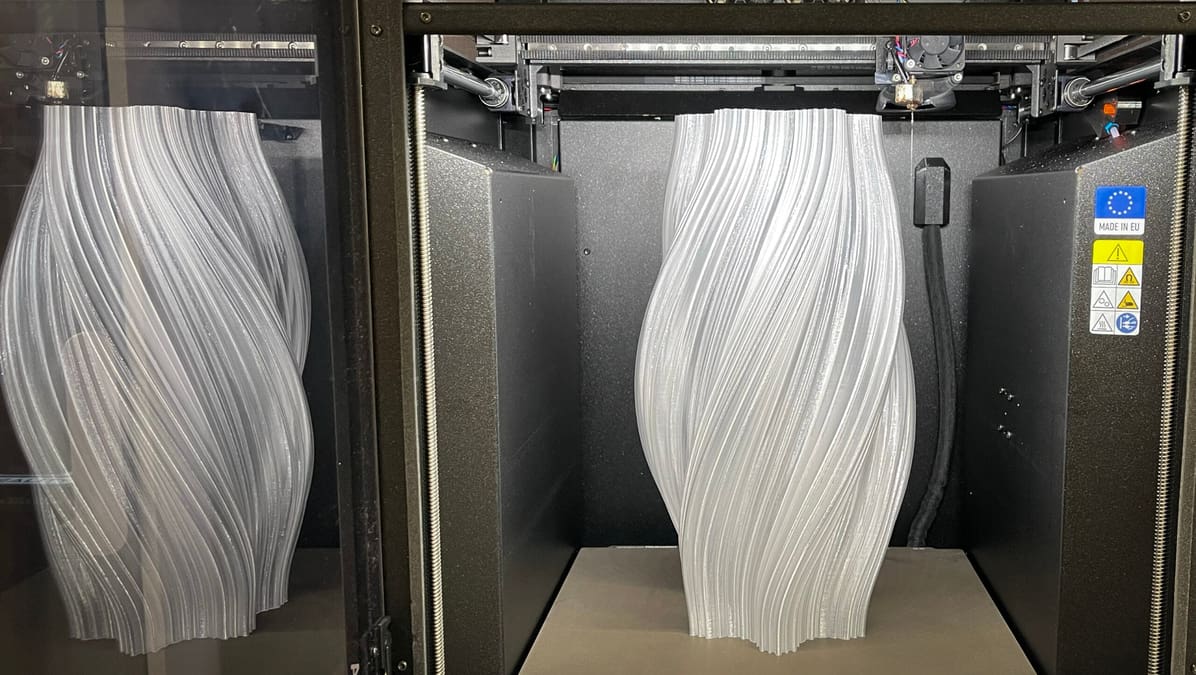
We Tested Fillamentum’s New Recycled PETG, It Didn’t Feel Like an Eco-Compromise

We spent three months print-testing the new rePETG Loopfill to see if recycled waste can deliver the strength, clarity, and printability we expect from PETG.
Every time I buy toilet paper, I pause in the aisle. I look at the tan-colored recycled TP then, longingly, over at the white fluffy stuff and think: I really should buy the one made from recycled paper bags. I should make this compromise for the planet.
Buying filament can feel the same way. Recycled filament made from post-consumer waste or things like fishing nets keeps this material waste out of landfills and gives it a second life, which is great, but what am I compromising? Mechanical performance? Surface quality? Printability?
The assumption that recycled filament isn’t as good as virgin filament is natural. That’s why printing with Fillamentum’s recycled rePETG Loopfill (priced about the same as the average spool of PETG, $23/1kg) was a really nice surprise.
Filament from Plastic Waste Has a Bad Rap
Recycled filament has been around for years, available in nearly all of the common polymers, from PLA to nylon. Several companies launched their “green filament” pitch over the years with lackluster draw. We’ve seen recycled filament come and go. In fact, there’s little market data about the size of the recycled filament sector or consumer demand, presumably because the niche is so small.
Fillamentum says it sought out a better source of PETG waste from which to make its rePETG. Instead of post-consumer waste like water bottles or food packaging that may have been recycled a dozen times, it found a new source: medical-grade PETG. “We take perfectly clean, unused material from the medical industry, plastic that can no longer be processed for medical production, and give it a new life in the hands of makers,” the company says.
So compared with post-consumer PETG, this feedstock likely has fewer issues from food residue, labels, adhesives, mixed plastic streams, UV exposure, unknown additives, or repeated thermal history from various manufacturing processes. Of course, the “made from from a medical-industry supply chain” pedigree, certainly does not mean “medical-grade filament.”
So how does it print?
Fillamentum sent us all five colors in its rePETG Loopfill line and we nearly used them all up. Let’s take a look.
Clear PETG that Prints Like the Good Stuff
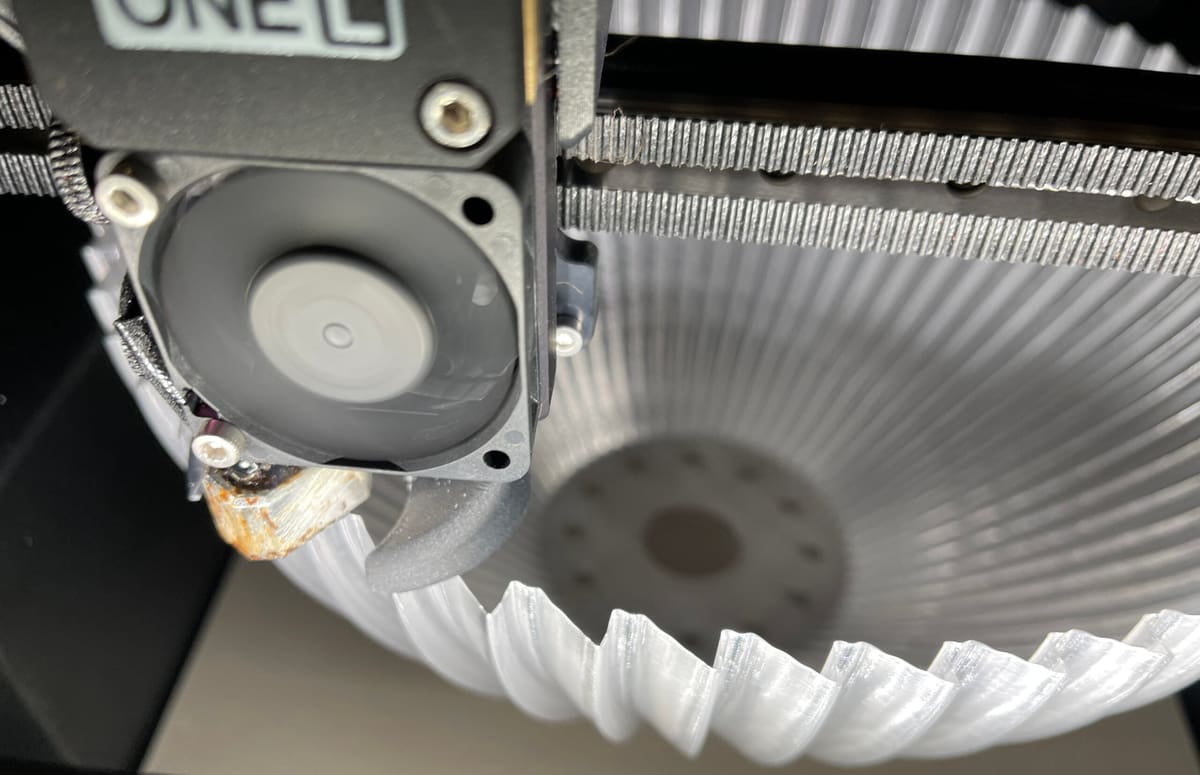
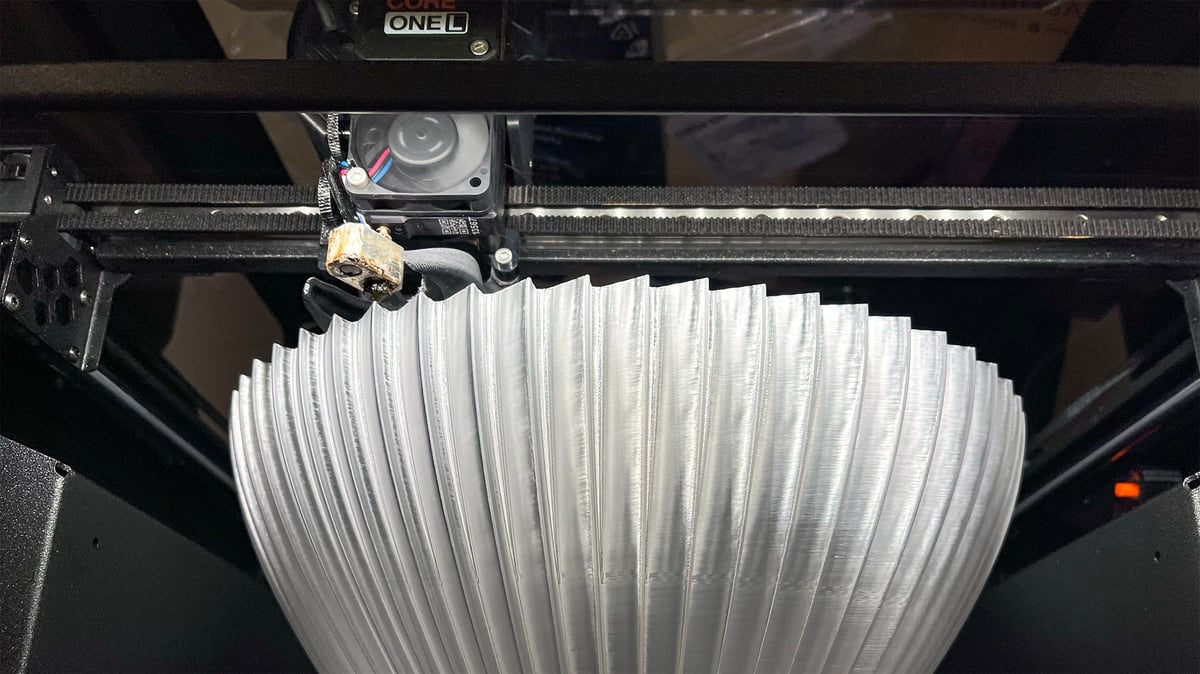
When you think of PETG you think clear or at least transparent — since most clear plastic beverage bottles are made from PETG. This was our first major print.
I’ve printed a lot of lampshades (my personal pet project for a while now) in a lot of PETG, and the rePETG transparent did not disappoint. Printed on our Prusa Core One L using regular PETG settings in the Prusa Slicer it was as flawless as it gets (see below).
Shiny or Matte? It's Both
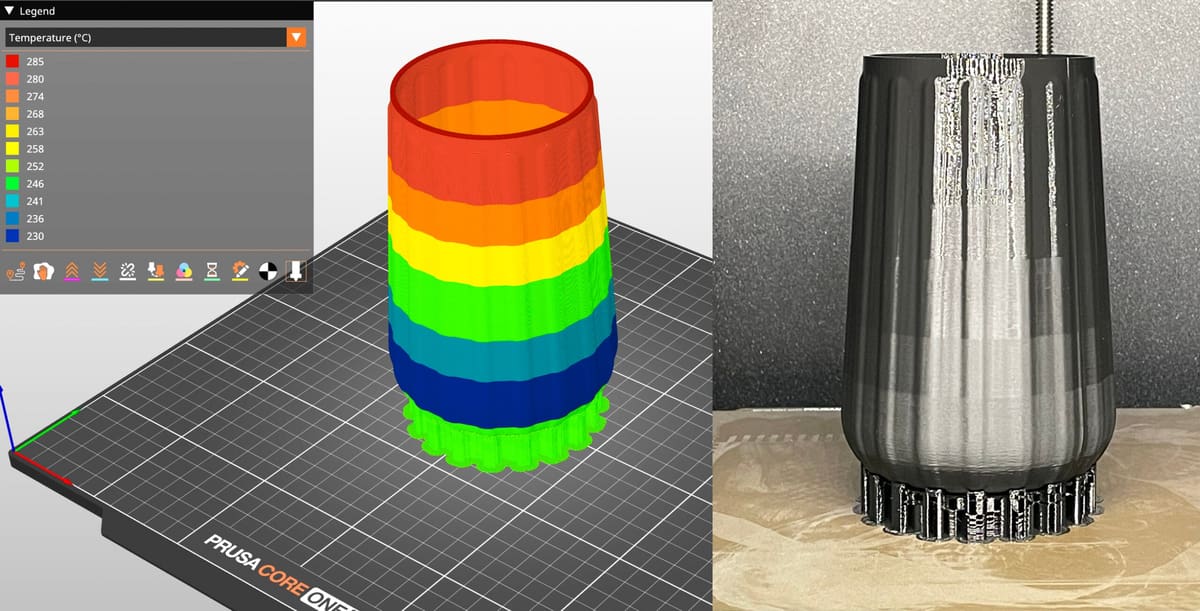
One of our favorite features of PETG in general is its pronounced matte-vs-gloss contrast depending on how hot you print it. On the spool, rePETG Loopfill looks glossy but most of our prints using standard PETG settings in Bambu Studio and Prusa Slicer turned out with a more matte finish because they printed in the middle of the material’s heat range, around 255ºC.
To see if we could control the finish, we printed the black vase above in a range of temperatures, boosting the temperature 10 degrees every few centimeters, from 230ºC to 285ºC. The effect is a fairly obvious matte to glossy finish.
No matter the temperature and surface finish, the in-hand feel and interlayer adhesion appeared uniform – no signs of compromised performance, though this would require scientific testing.
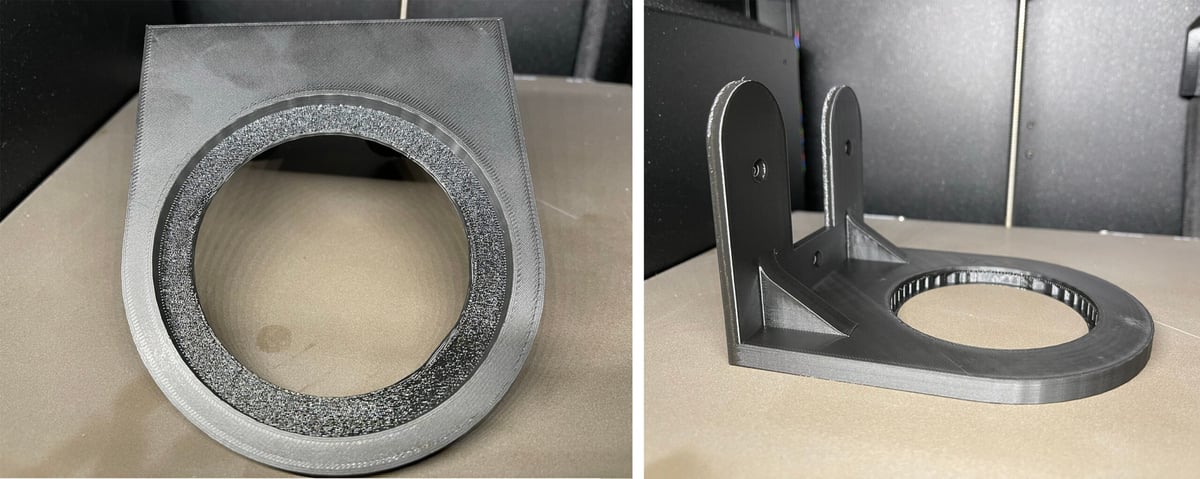
We didn’t put load-bearing to the test since that’s not typically why you’d choose PETG, but when a colleague needed a wall-mounted bracket (below) to hold a device weighing about 1kg, this design below from Tomrzz via Thingiverse did the trick. Another relatively flawless print, this time on our Prusa Core One L using the settings for generic PETG. After several months, the bracket is sill doing it’s job.
Material Changer Compatible, Multicolor
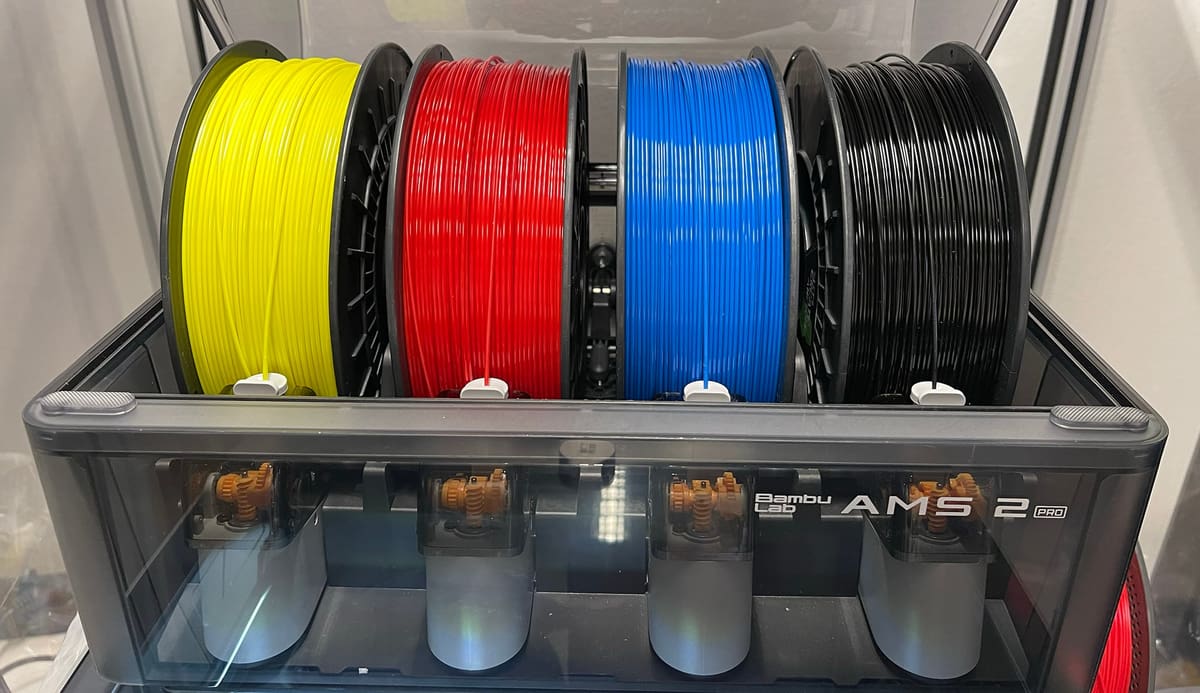
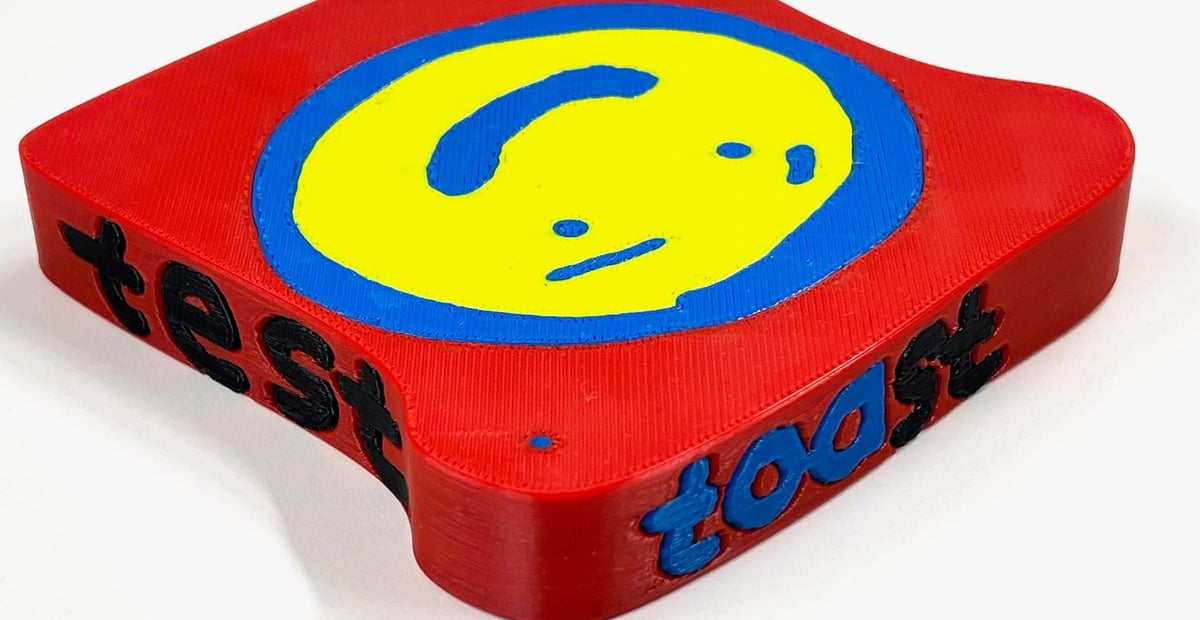
Printing single-filament parts is great but how did these filaments do in Bambu Lab’s AMS 2 Pro for a multi-color print? Our go-to model for this purpose is our custom-designed test toast.
Each color, printed using Bambu Lab’s generic PETG settings, printed par for the course when it comes to multi-filament printing. There were no jams or clogs or anything out of the ordinary for our Bambu Lab Material Station.
If you’re less than inspired by Fillamentum’s basic color offering, know that — and this is particularly good for businesses — you also have the option to have Fillamentum create a custom color tailored exactly to your needs.
Stringing, Blobbing, Bonding to the Bed?
PETG comes with infamous negative characteristics when you compare it to the typical ease of PLA 3D printing. It does tend to string more, blob a bit due to its more viscous nature. It’s more hygroscopic and slower to cool compared with PLA. And while we did see signs of this in rePETG Loopfill, it was not more than any other PETG in our experience.
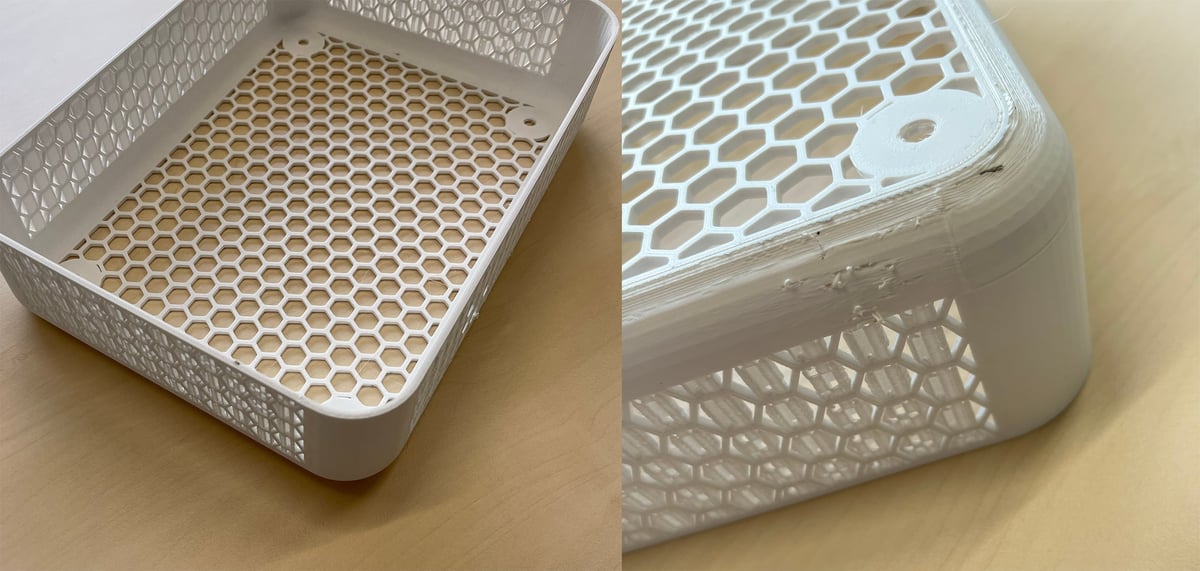
We went looking for stringing when we opted to print this white honeycomb shower basket below. Fortunately there was very little. The black specks are not a feature of the filament, just a reminder that PETG sticks to the nozzle, accumulates, and burns, so keep your nozzles clean and this won’t happen to you.
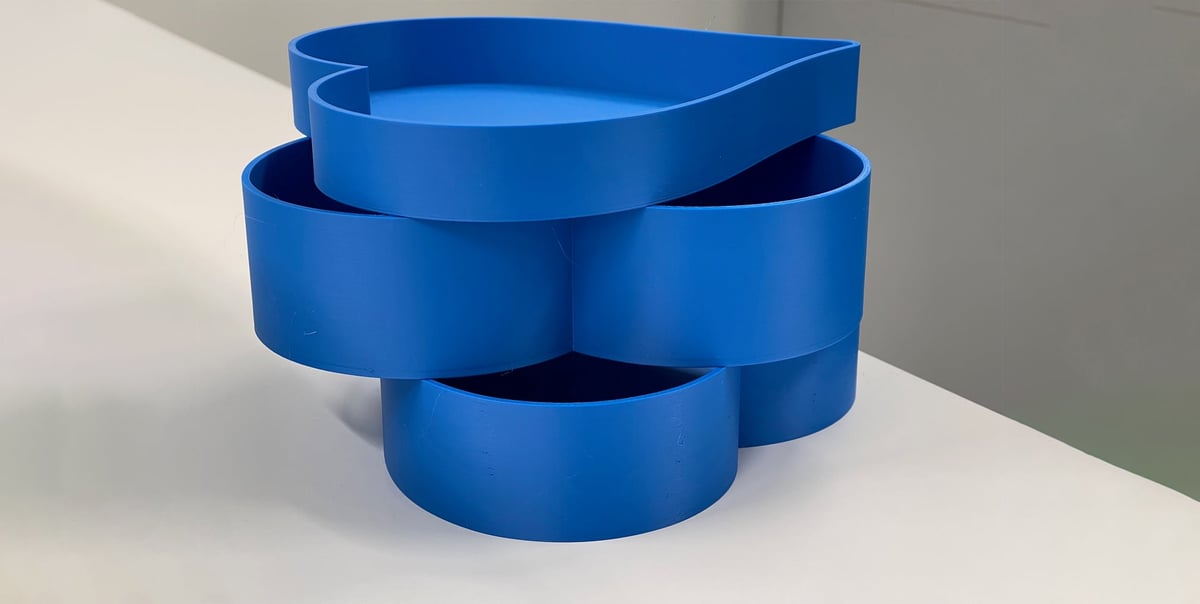
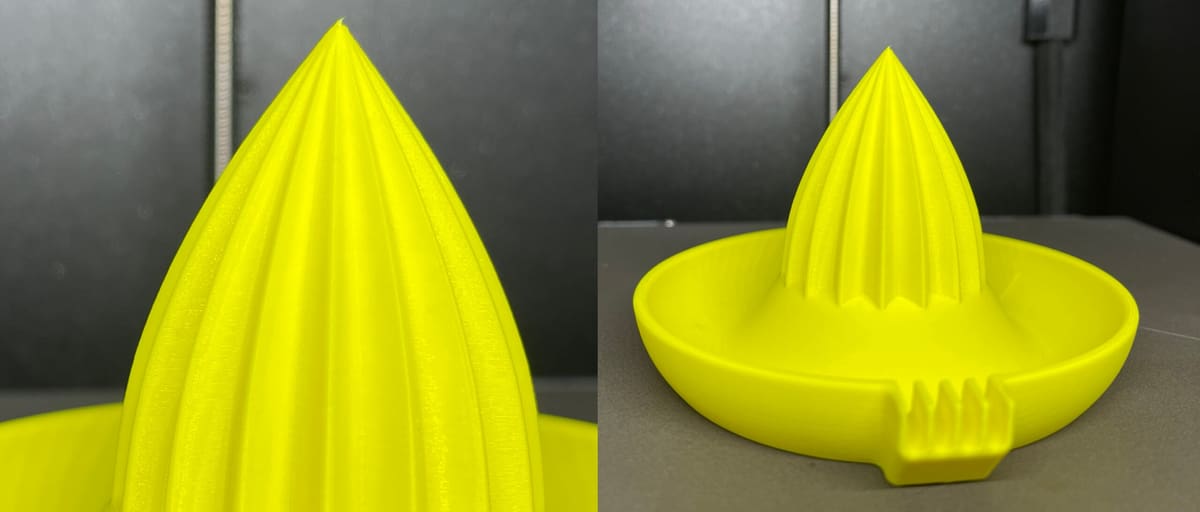
Our blue heart boxes exhibited a tiny bit of blobs, but, then again, we’d been printing with the blue rePETG for three months and hadn’t dried it, so we’ll take the blame for that. The lemon juicer was flawless.
PETG has excellent resistance to a mild acid like lemon juice. Taking into consideration the requirement that anything 3D printed for food contact needs careful and thorough cleaning, I found the juicer to not only be durable after several uses and washes, but the yellow is as bright as ever.
So, Is It Worth It?
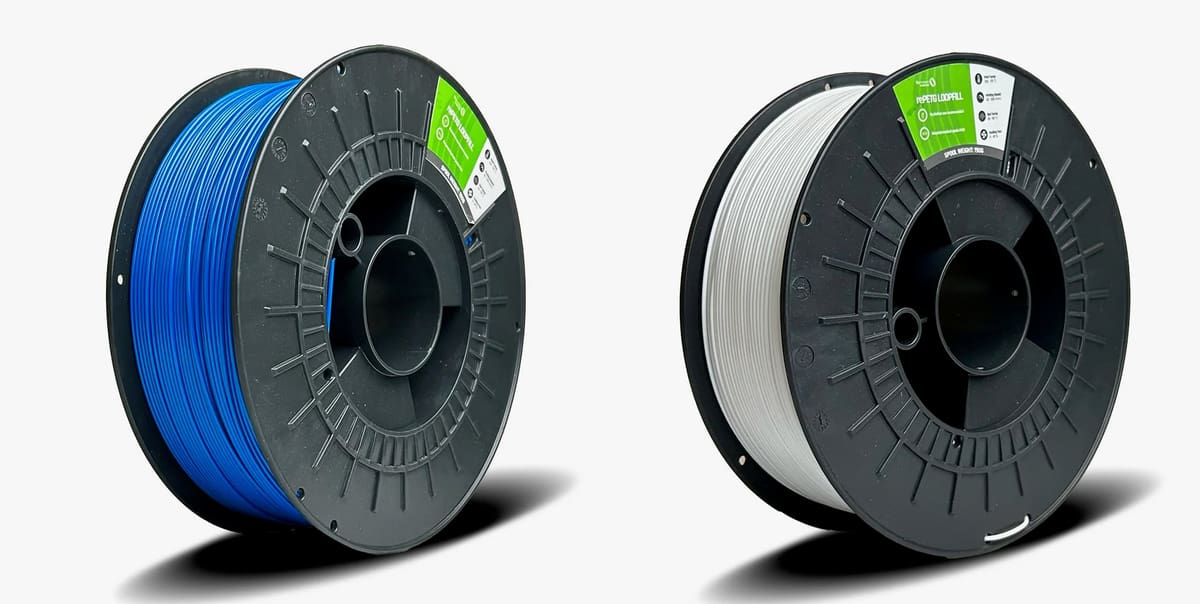
Of course, recycled filament is still a harder sell when it costs more than a comparable non-recycled spool but Fillamentum addresses this too by pricing it below other engineering brands.
So not only did the recycled material performs just as well as virgin PETG in our testing, it’s also competitively priced.
For companies in particular, choosing recycled filament is one practical way to reduce the impact of the waste you create without changing the way you design, slice, or print. It also sends a clear message to customers, clients, and employees: sustainability isn’t just something printed in a mission statement, but something reflected in everyday purchasing decisions. As All3DP has previously noted, reducing plastic waste is not only environmentally responsible, but increasingly good business as customers look for companies that take sustainability seriously.
That doesn’t mean every user should buy recycled filament at any price. Cost still matters, especially for print farms, service bureaus, schools, and small businesses running through kilos of material. But where the budget allows, recycled filament should be the default rather than the compromise. If a recycled PETG can print cleanly, look good, and perform like its virgin-material counterpart, paying a little more becomes less of a premium for “green” branding and more of an investment in making 3D printing a little less wasteful — one spool at a time.
rePETG Loopfill Tech Specs
Drawing a quick comparison of rePETG Loopfill to Bambu Lab PETG Basic and Prusament PETG, there are plenty of measurements where the recycled product only seem marginally lesser. Even with technical data sheets that don’t measure every property in the exact same – Prusa and Bambu include print-orientation-specific values, while the Fillamentum rePETG sheet lists one typical value per property — you can notice relatively similar tensile strength and bending strength.
The main caution with Fillamentum rePETG Loopfill is that its datasheet gives less confidence around impact toughness than the Bambu Lab and Prusa options. Fillamentum does not provide a Charpy impact strength value, while Bambu lists measured impact results and Prusa reports “no break” in Charpy testing. Its listed tensile strength at break is also relatively low at 28 MPa, though this is not directly comparable to every tensile value in the other datasheets.
For general-purpose prints, rigid parts, or sustainability-focused projects, Fillamentum rePETG is likely a solid choice, but for parts that need to survive drops, knocks, snap-fits, or repeated mechanical stress (for which PETG is probably not the perfect polymer anyway), Bambu PETG Basic or Prusament PETG look like safer choices based on the available data.
Notes: “Not stated” means the value was not provided in the supplied technical data sheet.
For Prusament PETG, NB means “no break”; the datasheet notes that the testing machine was equipped with a 4 Joule pendulum.
Fillamentum rePETG Loopfill Thermal Properties
Chemical Properties
Other Properties
Model Credits:
- Main image: Organic Lamp Shade (vase mode) by S.Corp. via MakerWorld.
- Ceiling Lamp Shade & Fittings by Tadad1 via MakerWorld.
- Lemon Citrus Juice Press Squeezer by WasAGoodIdeaAtTheTime via MakerWorld.
- Heart Shaped Gift Box by CADventures3D via MakerWorld.
- Simple Shower Basket by Steini1988 via Thingiverse.
- Vellen Planter Collection Modern Ribbed Pots, Tall, by Zach Taylor (@ZachTaylor_2368774) via Printables.Bracket for projector by Tomrzz via Thingiverse.
License: The text of "We Tested Fillamentum’s New Recycled PETG, It Didn’t Feel Like an Eco-Compromise" by All3DP is licensed under a Creative Commons Attribution 4.0 International License.