The Secret to 3D Prints That Look, Feel, and Smell Like Real Wood

Wood PLA filament adds a natural touch to your 3D prints with a hint of sustainability. But which wood-filled filament is best!
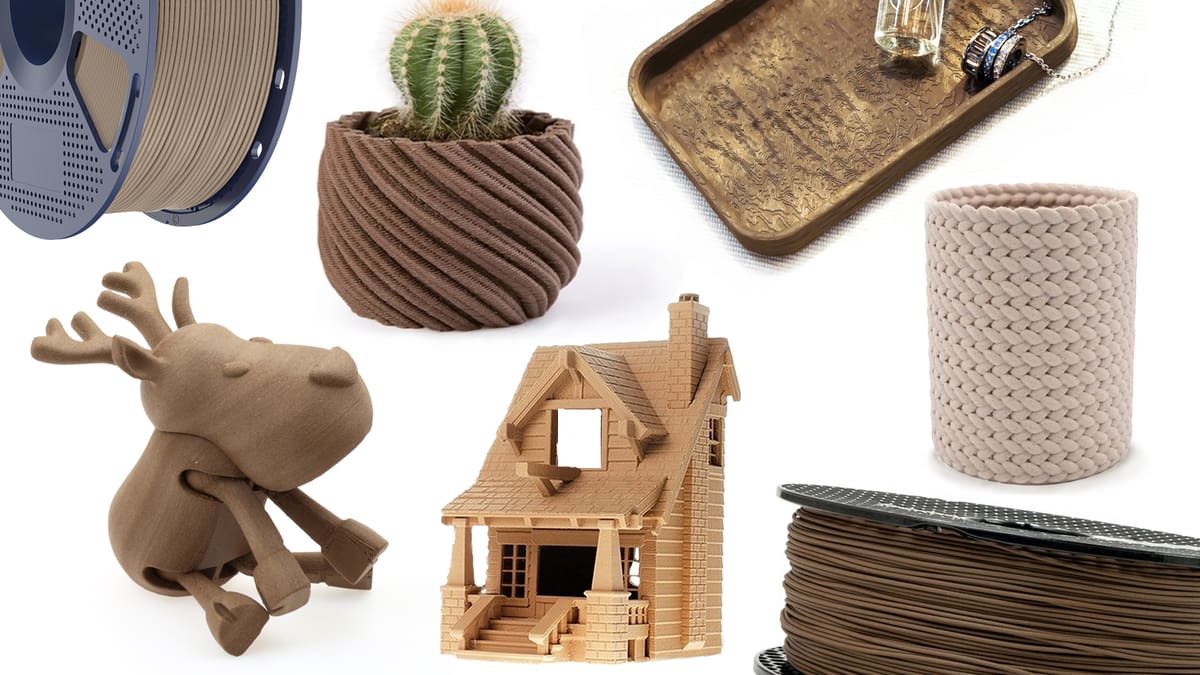
Plastic and nylon have their place, but the warmth and aroma of wood can’t really be beat. Wood-based PLA filaments offer a rare blend of the precision of 3D printing fused with the organic warmth of natural materials.
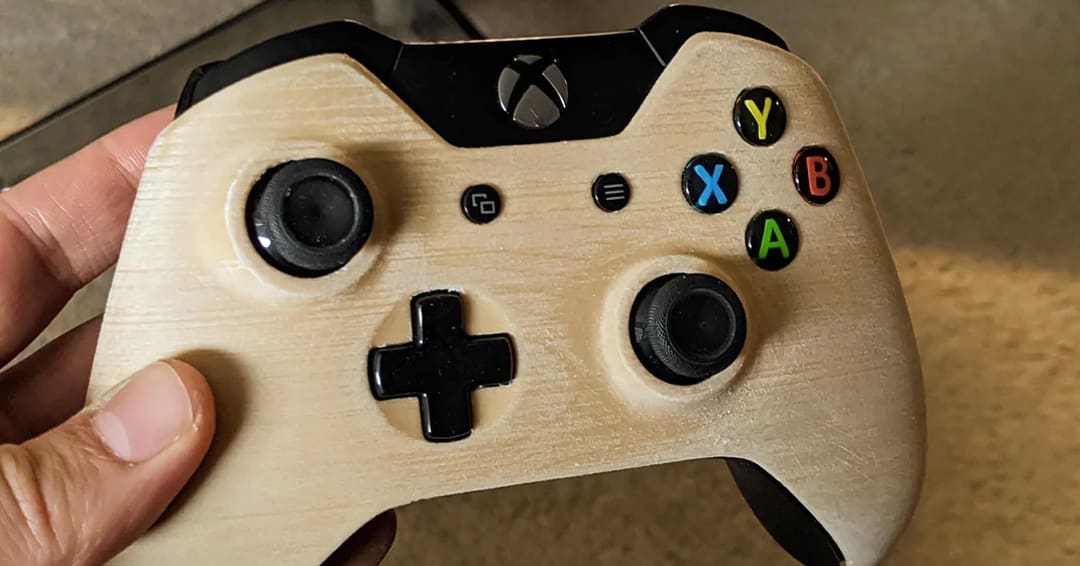
Blended with fine wood fibers or powders (often up-cycled from sawdust or furniture waste), these filaments not only look authentic but also release a pleasant wood scent while printing. Each layer forms subtle grain patterns and textures that can be sanded, stained, or varnished just like real wood. It’s a creative playground for designers, hobbyists, and makers who want their prints to have more life and less plastic sheen.
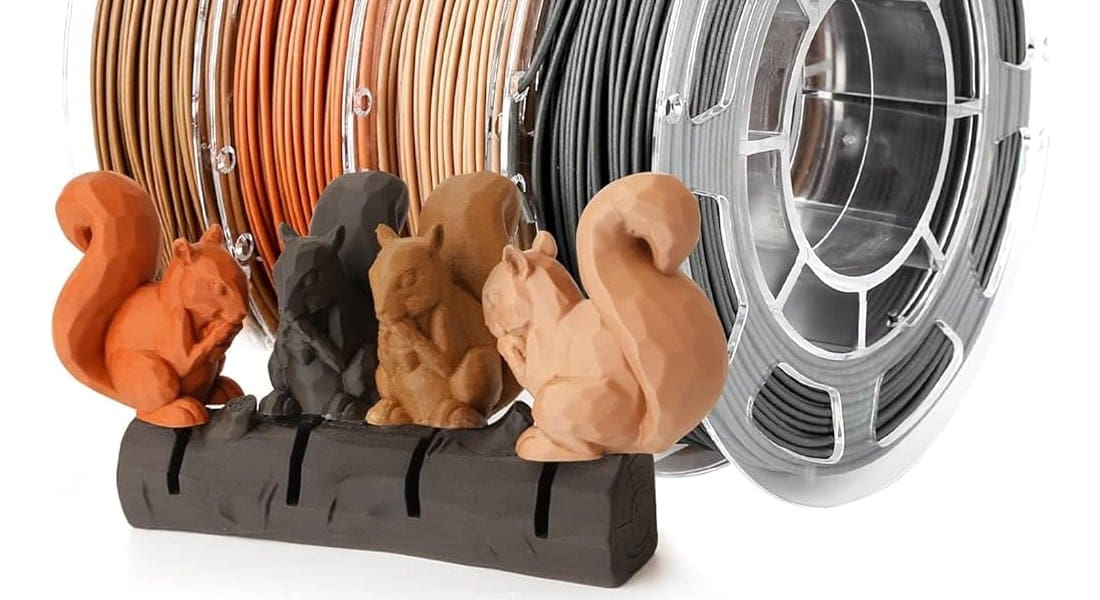
Beyond the aesthetics, wood filaments carry a semi-sustainable appeal. By incorporating reclaimed wood particles into PLA, they help repurpose waste and reduce reliance on plastic and single-use materials. Still, it’s important to remember that most wood-PLA blends remain biodegradable only under industrial composting conditions, not in a backyard bin.
Whether you’re crafting custom decor for your home, architectural models, or one-of-a-kind art pieces, printing with wood filament brings a touch of nature to your workshop and a refreshing aroma to your next print session.
In this guide, we’ll cover practical printing tips, a curated list of top wood filament brands, and an important look at the sustainability of wood-based filaments.

The Best Wood-Filled Filaments
How To Choose the Best Wood Filament
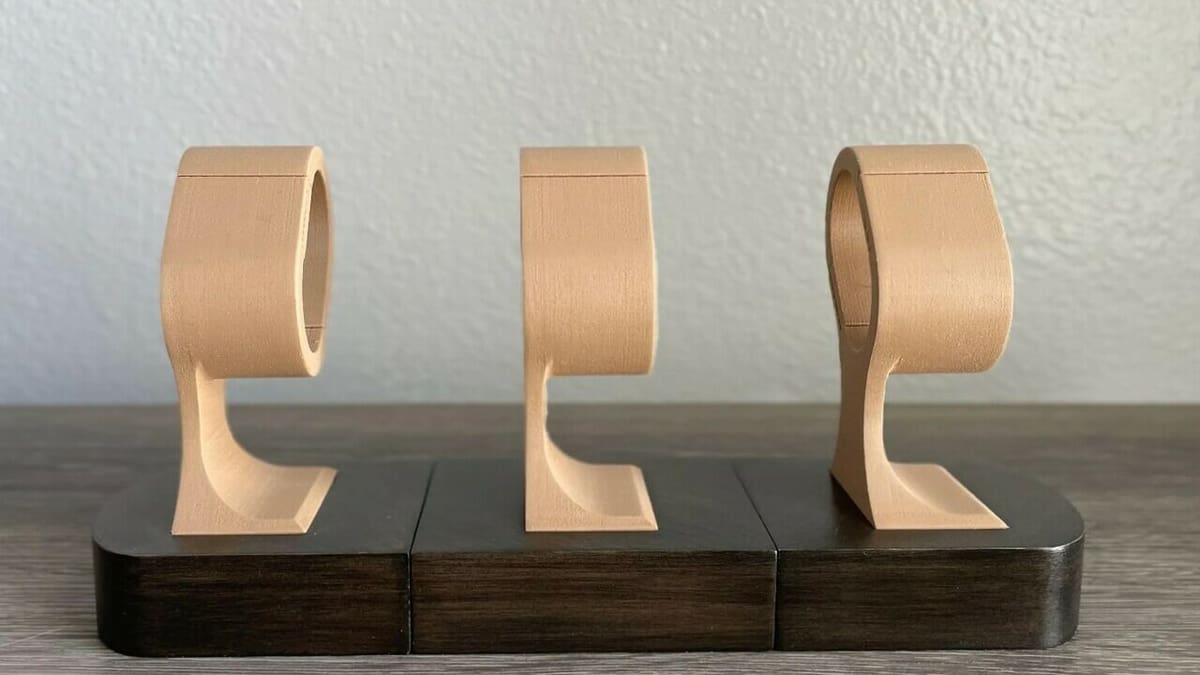
Before we dive into the best wood PLA filaments on the market, it’s important to go over what factors we considered when choosing which options made the cut.
- Rating and reviews: First, and perhaps most importantly, we looked at the rating and reviews for each product. All of the options we selected have a 4+ star rating and glowing reviews, compiled from the different resellers. Of course, the rating alone for any product isn’t always representative of the product quality, so we didn’t rely exclusively on this metric.
- Wooden look and composition: Second, we reviewed how much of a wood-like finish the wood PLA filaments produced by looking at official pictures and those shared in users’ reviews. We also considered the woodfill composition – the actual percentage of wood inside the filament – of the options listed. Additionally, we did our best to include a diverse set of wood PLA filaments that cover a wide range of colors and textures.
- Ease of use: Lastly, we evaluated the printability of the wood PLA filaments by reviewing a mix of user reviews and listed printing specifications (e.g. nozzle temperature, build plate adhesion, etc.) for each filament. When possible, we’ve noted what filaments are known for specific printing malfunctions (e.g. stringing).
Now that you know a bit about wood PLA, how to print it, and what to look for, let’s dive into the best options! Note that we didn’t list them in any particular order.
Prusa Prusament Woodfill
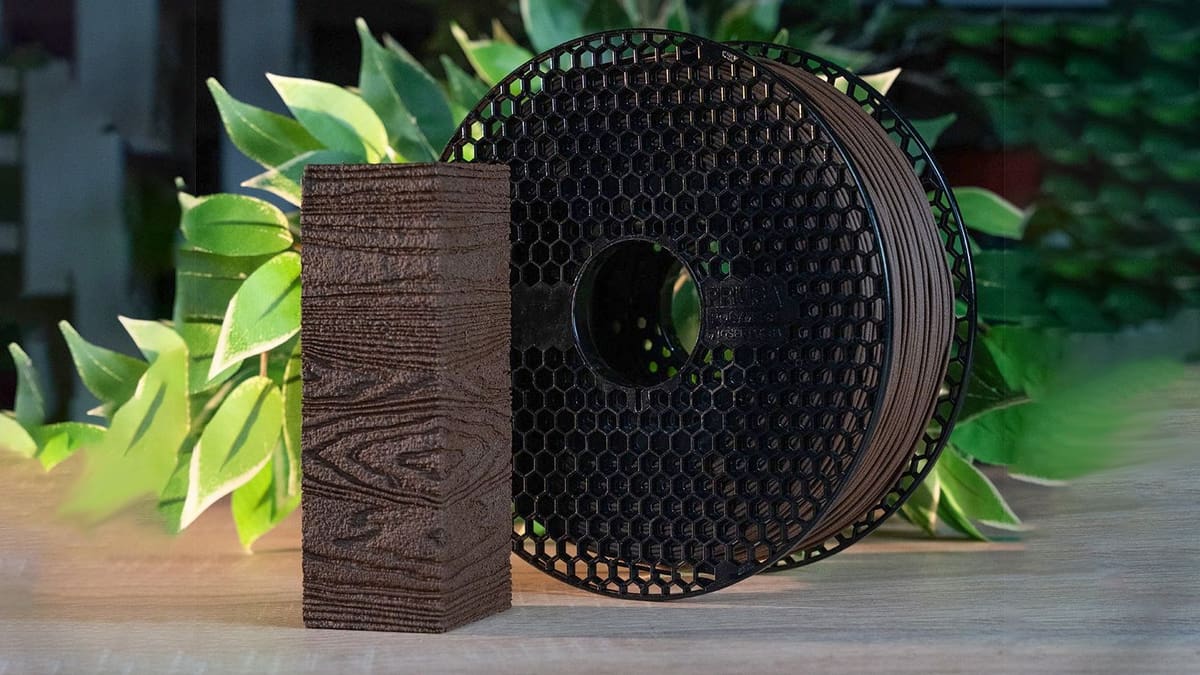
Prusament Woodfill Chocolate Brown joins the company’s growing portfolio of specialty materials focused on ease of use, precision, and sustainable sourcing.
Made in-house by Prusa’s materials division, Prusament, this new filament is crafted from recycled wood manufacturing waste, offering a sustainable option for makers focused on both aesthetics and environmental responsibility. Unlike many wood-filled materials, Prusament Woodfill can be printed with a standard 0.4 mm brass nozzle, eliminating the need for larger-diameter hardware or pre-print drying.
- Composition: Recycled plant-fiber composite
- Colors: Chocolate Brown
- Diameter: 1.75 mm
- Price per kg: ∼$60 (500-g spool at ∼$40)
- Printing temperatures: 195 °C (hot end), 60 °C (bed)
Protopasta Matte Fiber Wood HTPLA
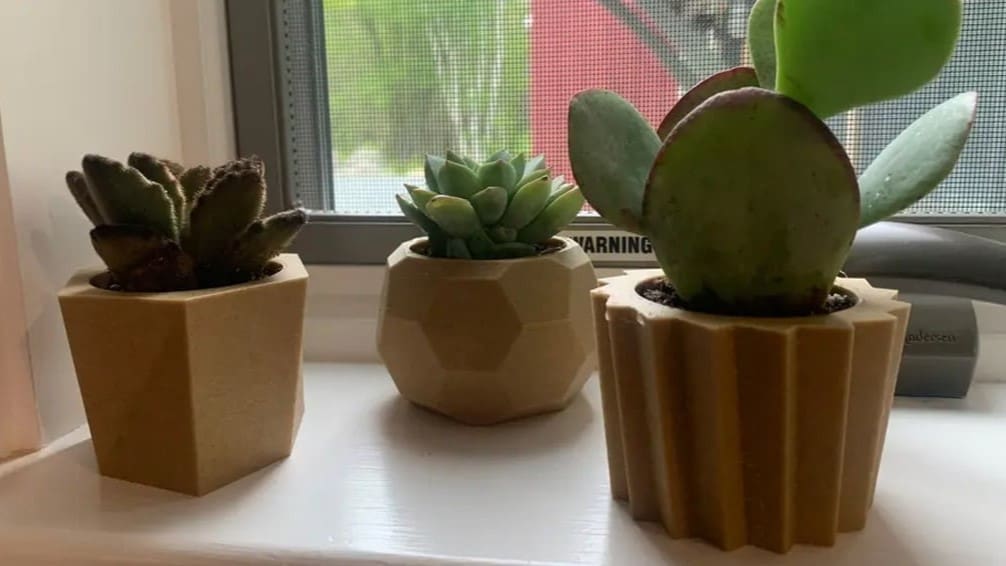
Protopasta is a well-known and respected manufacturer of premium filaments. Founded in 2013, this company focuses on producing biodegradable, reusable, and recyclable materials.
In addition to a realistic wood look, their high-quality Matte Fiber Wood HTPLA provides good bed adhesion. These colors are enhanced with small gold and black flecks to resemble real wood even more. Users are happy with the results and report that they don’t have to do a lot of tweaking to their slicing profiles when printing this filament. The only downside they noted is experiencing more stringing compared to normal PLA. This filament is available in a variety of wood shades, including walnut, mahogany, olive, and more.
- Composition: Plant-fiber composite
- Colors: Walnut, mahogany, daffodil, olive
- Diameter: 1.75 mm
- Price per kg: ∼$60 (500-g spool at ∼$40)
- Printing temperatures: 205 °C (hot end), 60 °C (bed)
FormFutura EasyWood
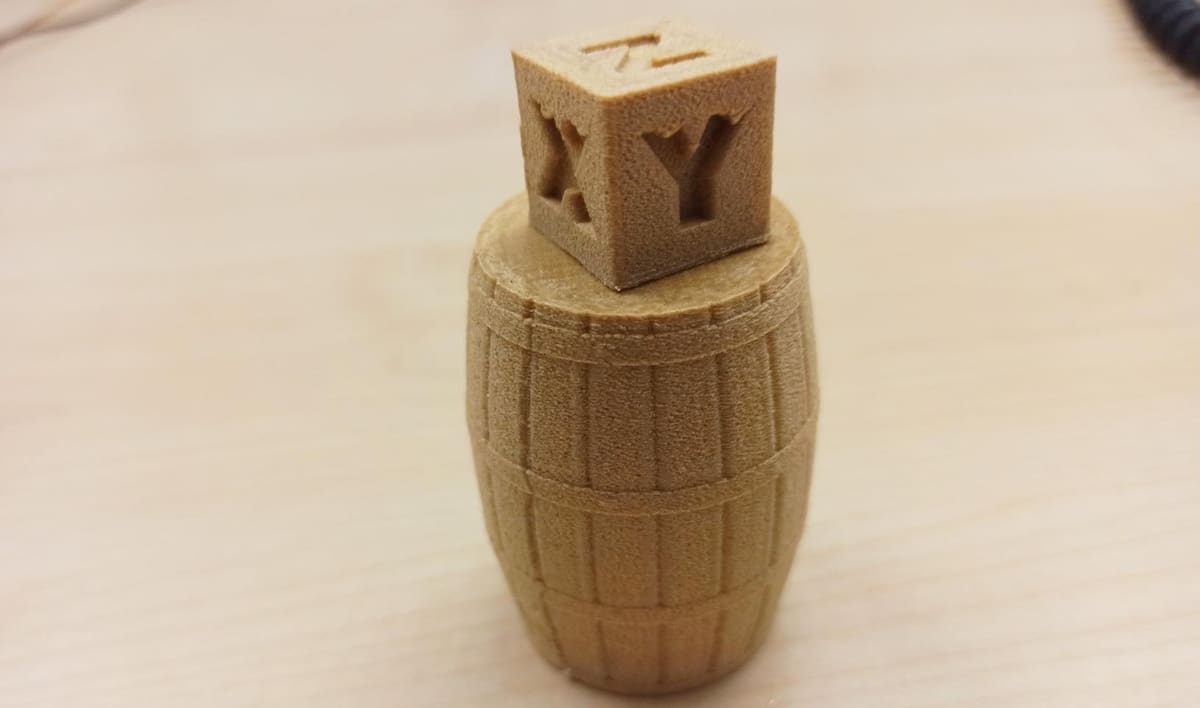
FormFutura is a Dutch filament manufacturer that offers a range of wood filaments called EasyWood. It comes in seven different colors and is claimed to be a warp-free filament.
While there are other budget-friendlier options on this list, the large selection of colors makes this filament a rather alluring choice for newcomers to the world of 3D printing wood.
- Composition: 60% PLA, 40% wood
- Colors: Pine, cedar, olive, coconut, willow, ebony, birch
- Diameters: 1.75 mm, 2.85 mm
- Price per kg: ∼$70 (500-g spool at ∼$35)
- Printing temperature: 210-230 °C (hot end), 0-60 °C (bed)
ColorFabb: WoodFill & CorkFill
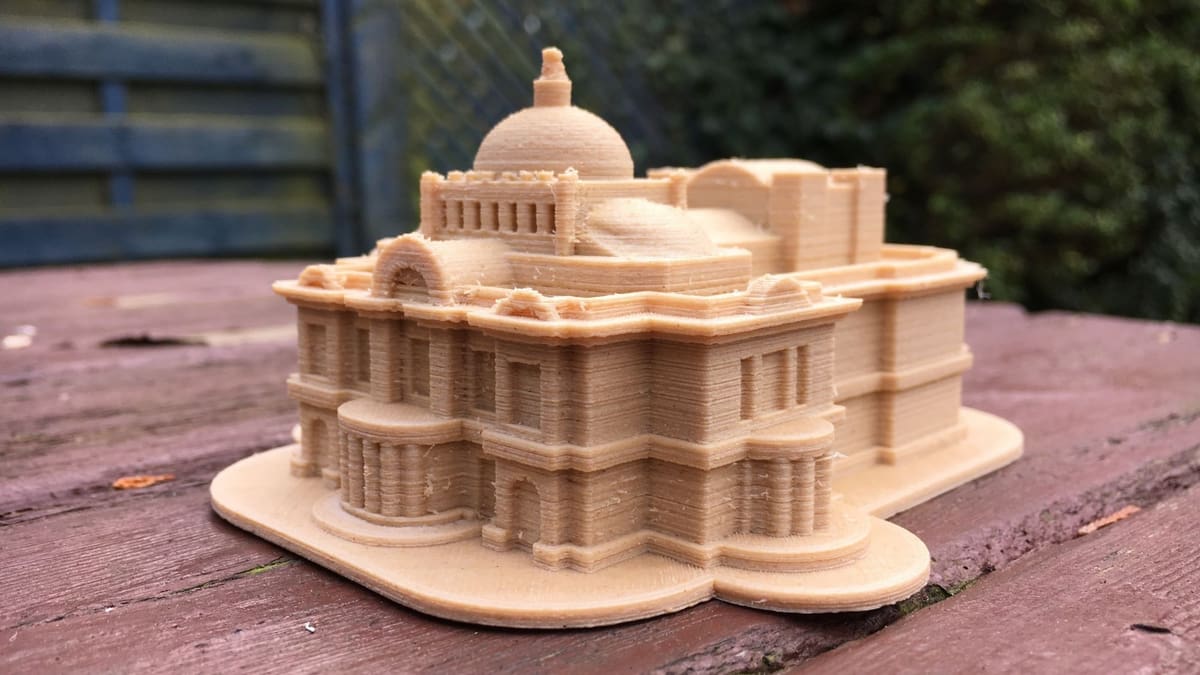
Arguably one of the most exclusive FDM filament manufacturers is the Dutch firm ColorFabb. ColorFabb’s filaments are among the most expensive on the market, but they’re certainly worth it. As you’d expect from a premium filament, the surface finish of the final parts is stunning. Plus, the filaments smell nice and are relatively easy to print with.
If you wish to post-process your parts printed with either CorkFill or WoodFill, you can freely do so. Both of the filaments are easily sanded and can therefore provide an even better surface finish.
- Composition: 70% PLA, 30% wood
- Colors: Pinewood, cork
- Diameters: 1.75 mm, 2.85 mm
- Price per kg: ∼$62 (WoodFill, 600-g spool at ∼$37); ~$54 (CorkFill, 650-g spool at ∼$30)
- Printing temperatures:
- WoodFill: 195-220 °C (hot end), 0-60 °C (bed)
- CorkFill: 210-230 °C (hot end), 0-60 °C (bed)
Bambu Lab PLA Wood
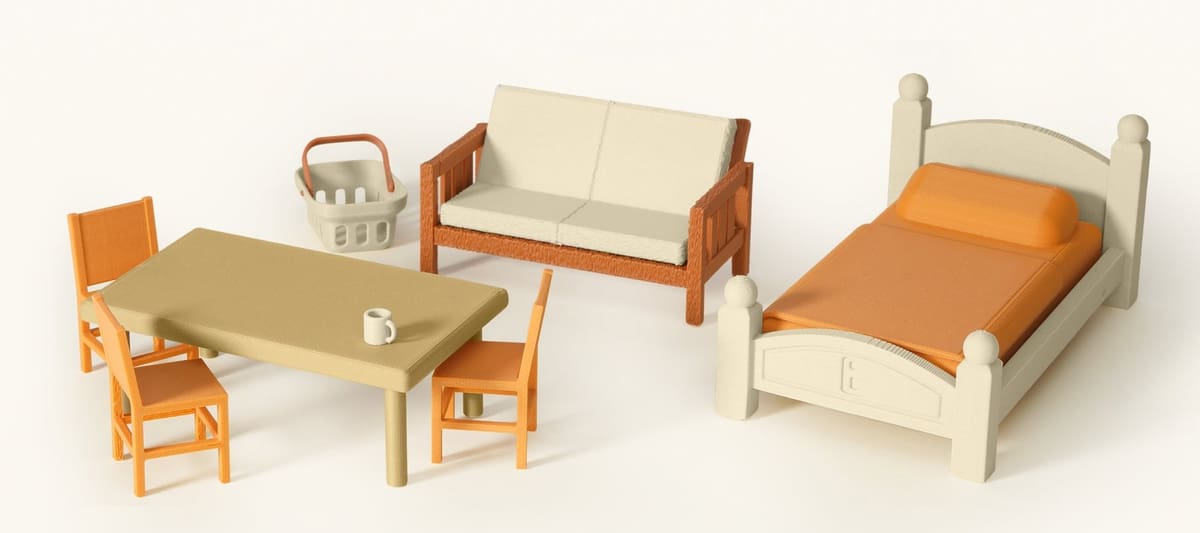
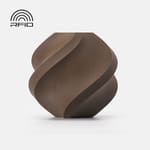
Bambu Lab PLA Wood is a PLA-based composite filament infused with wood powder to create prints that look and feel like real wood. It produces a matte, grainy surface with a natural wood tone and subtle scent during printing. Designed for decorative and aesthetic applications, it integrates seamlessly with Bambu’s AMS and AMS Lite systems through RFID-enabled spools for automatic print-setting recognition.
With a density of about 1.21 g/cm³ and a softening temperature near 64 °C, it offers typical PLA strength and ease of use while delivering a realistic wooden finish. Available in several natural shades like Black Walnut, Rosewood, and White Oak, it’s ideal for artistic models, architectural mock-ups, and display pieces that benefit from a handcrafted look.
- Composition: unknown
- Colors: Black Walnut, Rosewood, White Oak, Ochre Yellow, Classic Birch
- Diameters: 1.75 mm
- Price per kg: ∼$25
- Printing temperatures: 190-240 °C (hot end), 35-45 °C (bed)
Fiberlogy FiberWood
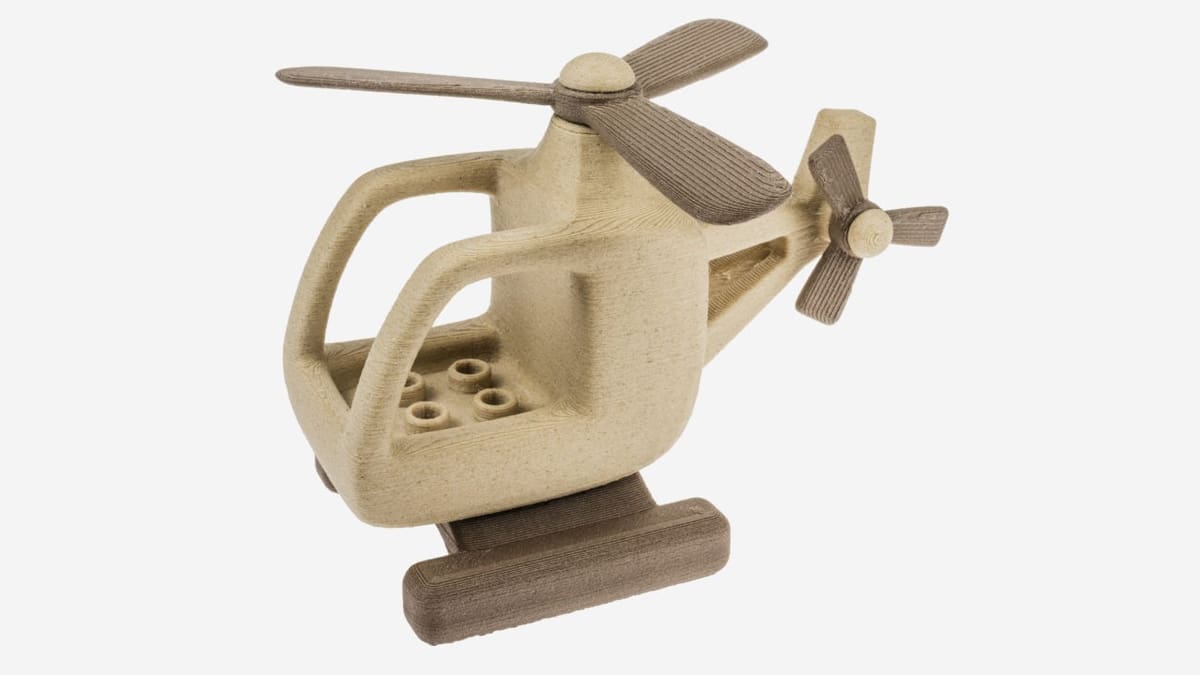
FiberWood comes from Fiberlogy, another company specializing in 3D printing filaments. FiberWood is available in six colors, some with a more “natural” appearance than others. Nonetheless, FiberWood is a great wood PLA filament that Fiberlogy recommends for printing toys, containers, and other models you might want to make wood-like.
The manufacturer states that the filament maintains a diameter tolerance of just ±0.02 mm, which is impressive and indicates that you shouldn’t run into hot end clogs when printing FiberWood. It’s also worth pointing out that you might need to use a bed temperature slightly higher than normal PLA, per Fiberlogy’s printing recommendations (70 °C). Other than that, FiberWood should be fairly easy to print.
- Composition: 70% PLA, 30% wood
- Colors: White, natural, carmine, brown, black, green
- Diameters: 1.75 mm, 2.85 mm
- Price per kg: ∼$60 (750-g spool at ∼$45)
- Printing temperatures: 190-210 °C (hot end), 50-70 °C (bed)
Fillamentum Timberfill
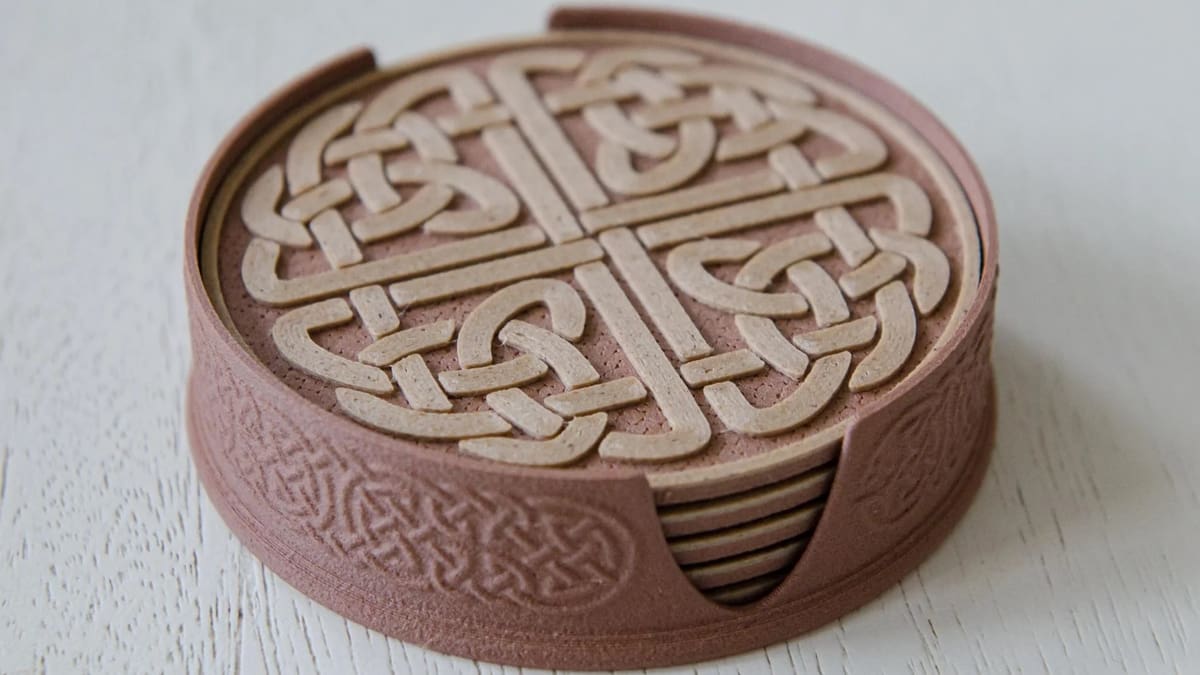
Fillamentum’s Timberfill is a PLA-based, 100% biodegradable wood filament. As with the brand’s other filament offerings, Timberfill has an excellent surface finish, making the parts really look like they’re carved out of wood.
Besides offering great mechanical properties for a wood filament, Timberfill also does a pretty decent job of hiding the layers. Available in eight colors, you have plenty of options to choose the look of the final printed parts.
- Composition: 70% PLA, 30% wood
- Colors: Champagne, cinnamon, rosewood, light wood, southern pine, charcoal, terracotta, red heart
- Diameters: 1.75 mm, 2.85 mm
- Price per kg: ∼$60 (750-g spool at ∼$45)
- Printing temperatures: 165-185 °C (hot end), 40-55 °C (bed)
Filamentive Wood PLA
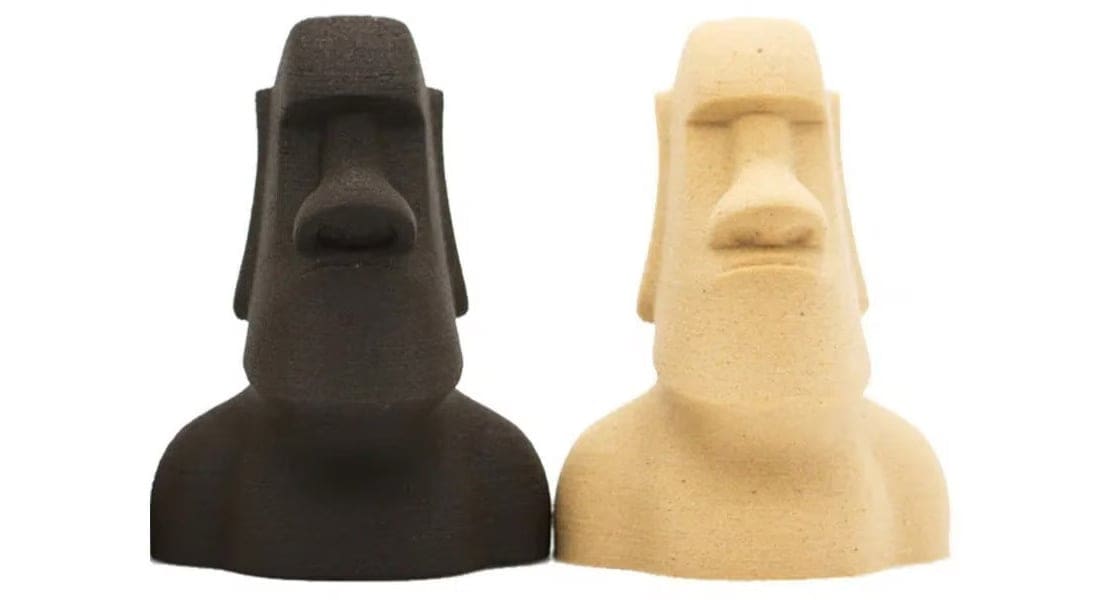
Filamentive is a pioneer in eco-conscious filaments, offering a wide range of filaments made from recycled materials. Since the company’s philosophy is all about the importance of recycling, the filament comes on a cardboard spool inside a cardboard box, all of which can be recycled! Filamentive offers two different colors of wood filament.
Looking at the reviews of the Filamentive wood filaments reveals positive customer feedback. Lots of people seem to compliment this filament for printing like butter, so you can be confident it’s a pleasant experience to print with.
- Composition: 60% PLA, 40% wood
- Colors: Light, dark
- Diameters: 1.75 mm, 2.85 mm
- Price per kg: ∼$60 (750-g spool at ∼$45)
- Printing temperatures: 200-230 °C (hot end), 0-60 °C (bed)
Polymaker PolyWood
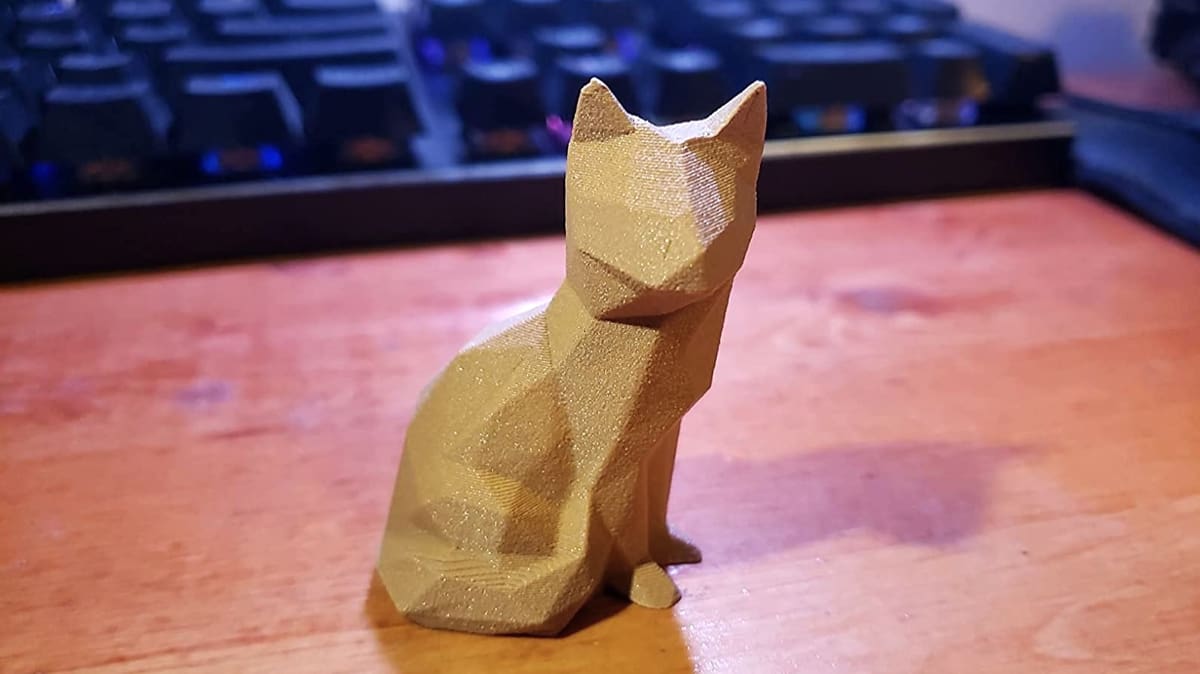
Polymaker is another popular 3D printing filament manufacturer, and PolyWood is the name of their line of wood PLA filament. PolyWood comes in both a 1.75- and 2.85-mm diameter, but there’s only one color for this filament: a light-colored wood that looks impressively natural.
PolyWood is an unusual inclusion on this list as it doesn’t actually contain any wood fibers. Instead, a special “foaming” process was used to integrate the properties of wood into PLA plastic. As a result of this manufacturing technology, their wood filament is about 35-40% less dense than regular PLA filament, mimicking the density and appearance of wood.
Judging by the many online reviews, users seem to like the texture and surface appearance that PolyWood yields on prints. However, it’s worth noting that this filament is a bit expensive, costing around $50 per kilogram.
- Composition: Foamed PLA
- Color: Wood
- Diameters: 1.75 mm, 2.85 mm
- Price per kg: ∼$50 (600-g spool at ∼$30)
- Printing temperatures: 190-210 °C (hot end), 25-60 °C (bed)
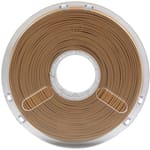
eSun PLA-Wood
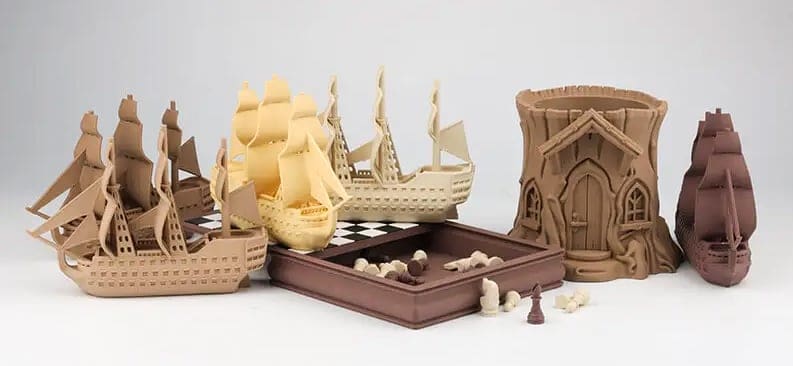
eSun is another well-known brand in the 3D printing world, offering a wide range of printing materials that cater to various needs. Popular filaments include PLA, PCL, ABS, and PETG, as well as wood PLA.
This filament uses a similar “active foaming technology” to that of Polymaker in order to reduce the density of PLA and create a wood-like texture without actually containing wood. Nevertheless, eSun claims the filament boasts a high success rate and nice surface finish, resulting in precise and beautiful creations.
The relatively low price of this filament is perfect for experimenting with stunning wood-like textures for art projects, toys, vases, and more. Plus, eSun mentions that the filament has low warping and tight diameter tolerance, ensuring consistent feeding and stable prints. However, the filament is only available in a natural wood shade.
- Composition: Foamed PLA
- Color: Natural
- Diameter: 1.75 mm
- Price per kg: ∼$20
- Printing temperatures: 210-230 °C (hot end), 45-60 °C (bed)
Eryone Wood PLA
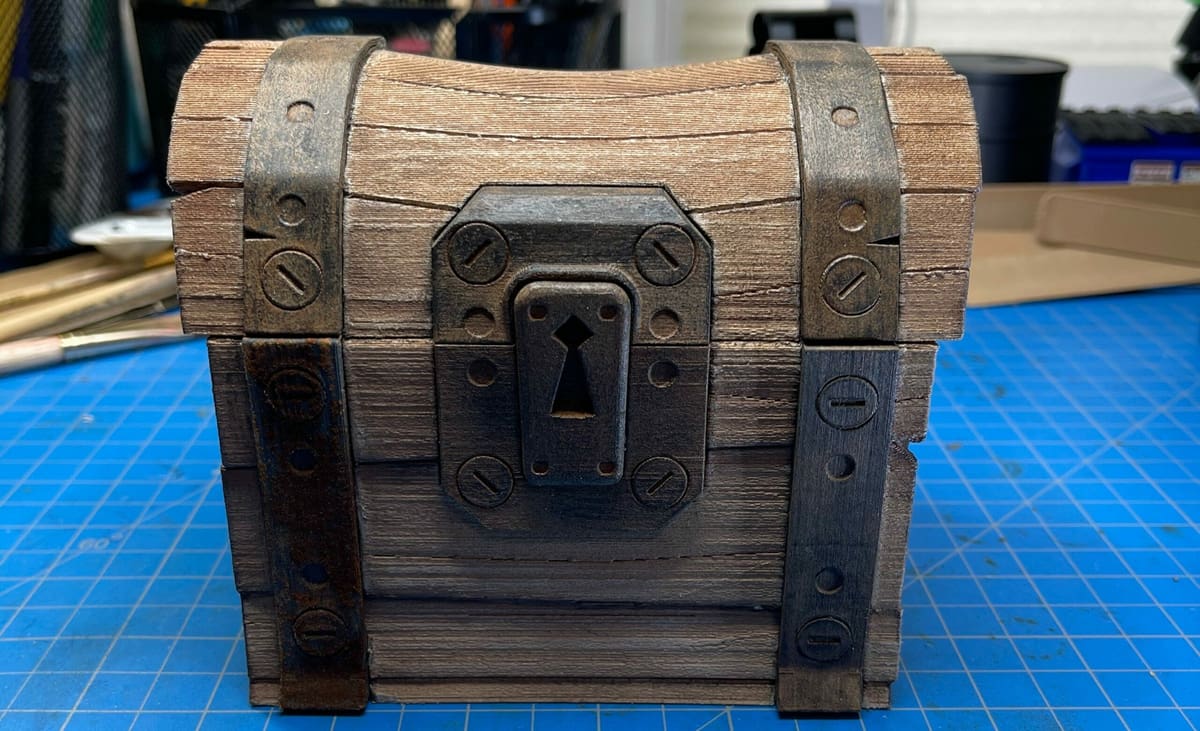
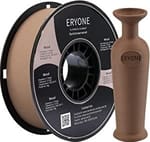
Available in two colors, including light and deep wood, Eryone’s Wood PLA filament has a realistic wood-like texture that’s perfect for a wide range of applications. You can create sculptures and functional objects with an organic look and feel.
Eryone claims this filament has an accuracy of ±0.03 mm. This ensures the filament is easily and consistently fed through the printer, resulting in precise and detailed prints.
The company also mentions that the filament is bubble- and tangle-free, ensuring a seamless printing experience. This filament is designed to work with a wide range of 3D printers, so odds are it will be compatible with your printer.
- Composition: 80% PLA, 20% wood
- Colors: Light, deep
- Diameter: 1.75 mm
- Price per kg: ∼$33
- Printing temperatures: 190-220 °C (hot end), 55-70 °C (bed)
Hatchbox Wood
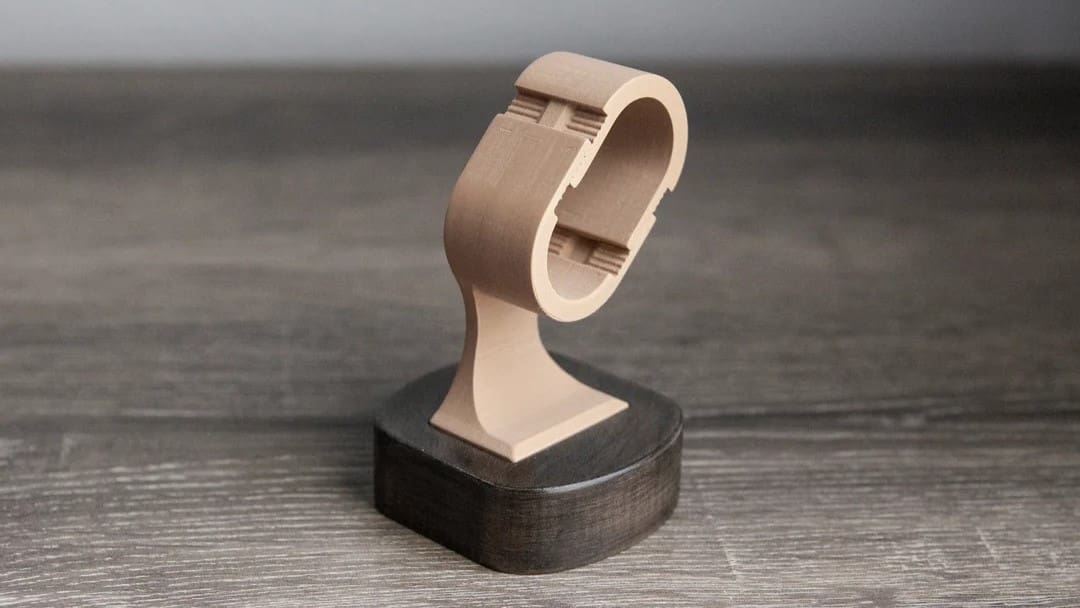
Hatchbox is quite a popular name in the filament world, so it’s not surprising that the company is competing for a piece of the cake in the wood filament market. What’s great about Hatchbox’s wood filament is that it can be easily sanded and doesn’t necessarily require a heated bed to print with it.
Smells nice, prints nice, and looks nice, all for a reasonable price. What more could you ask for?
- Composition: 60% PLA, 40% wood
- Colors: Wood, black, brown, white, gray
- Diameters: 1.75 mm, 3.00 mm (wood color only)
- Price per kg: ∼$67
- Printing temperature: 180-220 °C (hot end), heated bed not required
Isanmate Wood
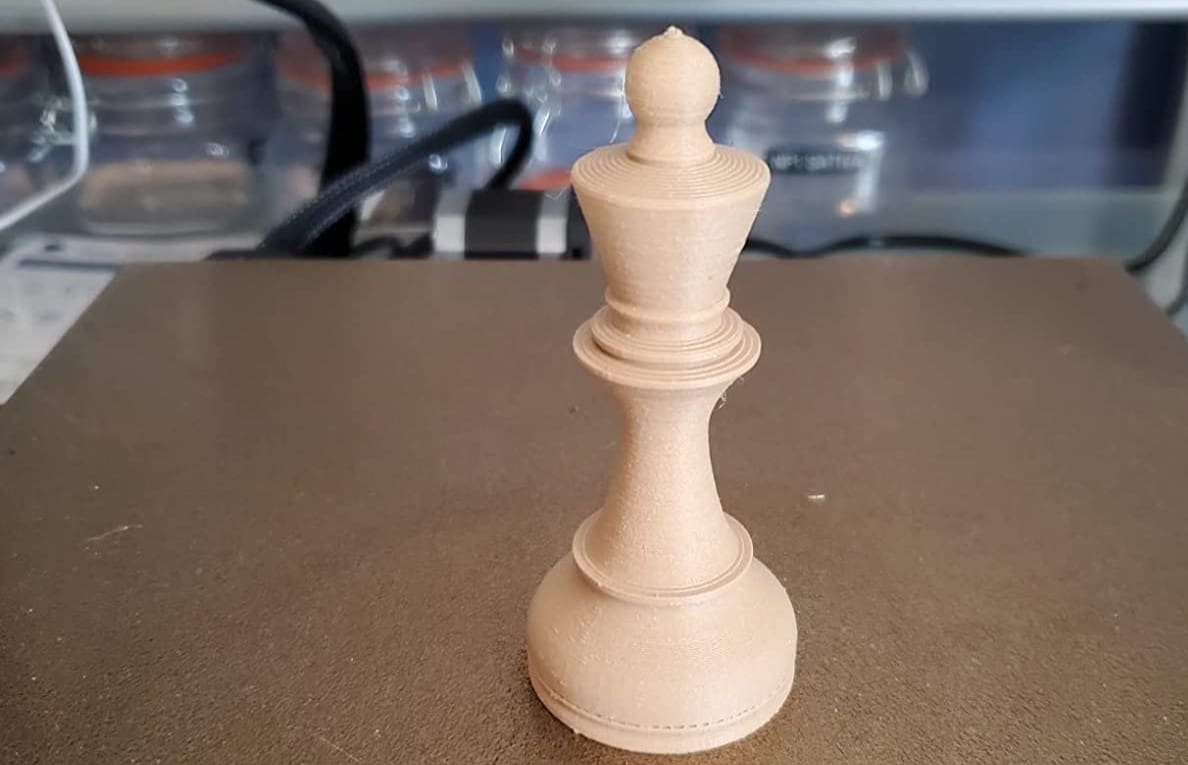
If you’re on the quest for a 3D printing filament that will add an earthy touch to your creations, Isanmate’s PLA-based wood filaments are worth exploring. Made with 20% wood powder, this filament offers a beautiful, natural texture that’s sure to impress. There are five color options to choose from, including red wood and ebony.
Isanmate is a trusted provider of filament for various industries, and just like their other filament offerings, you can expect these wood-based filaments to have a very high tolerance.
However, don’t just take their word for it. The positive customer reviews mention excellent layer bonding and strength. Whether you’re creating a decorative piece or a functional object, Isanmate’s wood filaments should deliver nice results.
- Composition: 80% PLA, 20% wood powder
- Colors: Ebony, red wood, sandal wood, white pine, yellow pear
- Diameter: 1.75 mm
- Price per kg: ∼$31
- Printing temperatures: 190-220 °C (hot end), 50 °C (bed)
Nanovia PLA Wood
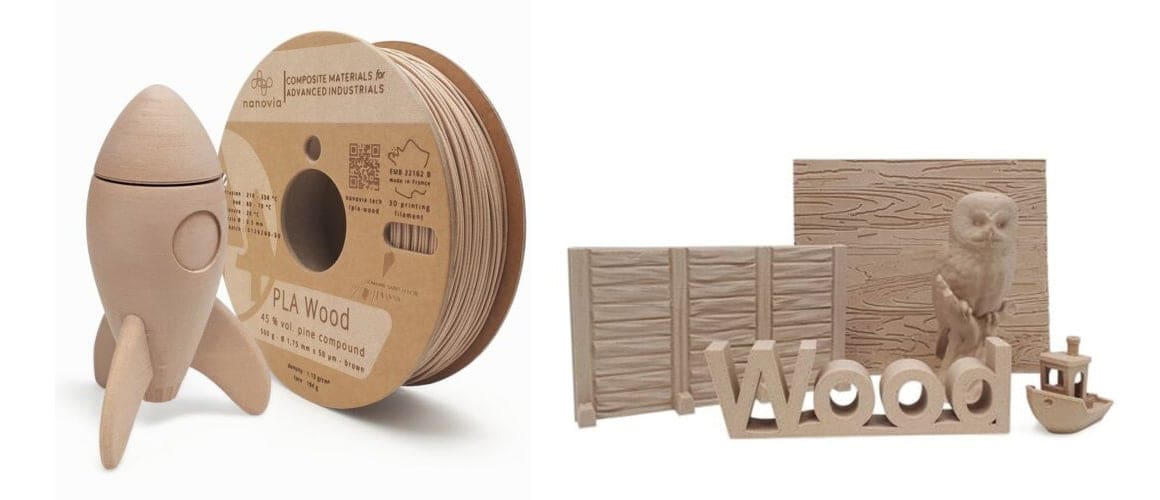
This PLA based biodegradable composite FFF filament is made using 40% up-cycled pine wood powder from the French “Landes” region. It’s dotted light brown aspect and textured surface is perfect for unique interior decorations and objects. Much like regular wood, It’s possible to stain and varnish Nanovia PLA Wood 3D printed parts. This wood powder is obtained from the up-cycling of fallen trees in Saint-Honoré’s domain, located in the French Landes region.
- Composition: 60% PLA, 40% recycled wood
- Colors: Pine
- Diameters: 1.75 mm, 3.00 mm
- Price per kg: unknown
- Printing temperature: 210-230 °C (hot end) 60-70 °C (bed)
Creality Wood

For a natural look, CR-Wood filament from Creality definitely delivers. This filament combines PLA with wood particles to create a realistic texture that looks right at home in a forest. While the color may be a bit lighter than natural wood, it still offers that unmistakable wood grain.
However, it’s not just about looks. Creality claims this filament also delivers excellent printing stability with low shrinkage, so you can expect warp-free and clog-free prints every time. Plus, it’s made with environmentally friendly materials.
While CR-Wood filament is specifically calibrated to pair with Creality printers, it has wide compatibility, so you can use it with a variety of different machines.
- Composition: 60% PLA, 40% wood
- Color: Premium wood
- Diameter: 1.75 mm
- Price per kg: ∼$20
- Printing temperatures: 190-230 °C (hot end)
Amolen Wood PLA
Amolen is a manufacturer of a wide variety of special 3D printing filaments, including multicolor, food-safe, and of course, wood PLA. Amolen’s wood PLA comes in nine colors, each made to resemble a different type of wood, including walnut, bamboo, rosewood, redwood, ebony, and “regular” wood. And, if you can’t limit yourself to just one wood color, they also sell multi-packs that contain smaller spools of multiple colors.
Amolen states that their wood filaments contain 30% wood fibers, which makes sense considering how much the prints made in the filament look like real wood. The manufacturer also mentions that the filament shouldn’t run into any warping, clogging, or bubbling during the printing process. These claims are supported by the many reviews where users mentioned that they achieved high-quality prints without much tuning and with few issues.
- Composition: 70% PLA, 30% wood
- Colors: Walnut, bamboo, rose wood, red cedar, ebony, tigerwood, grain wood, yellow pearwood, cherry
- Diameter: 1.75 mm
- Price per kg: ∼$30
- Printing temperatures: 190-220 °C (hot end), 0-50 °C (bed)
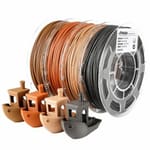
Sunlu PLA Wood
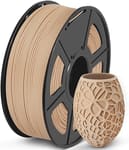
Founded in 2013, Sunlu is a popular manufacturer offering both resin and FDM filament, with around 40 product lines at the moment. Sunlu offers a long list of different filaments that have proven to be high quality. With a 0.02-mm tolerance, you can be sure that your 3D printer can reliably print their filament.
Sunlu’s wood filament includes 20% wood fiber, and the parts look remarkably like real wood. Users are generally quite happy with the results. They do suggest turning off retraction since the filament is softer than regular PLA. While recommends setting the hot end temperature between 200 and 220 °C, one user achieved great results when printing this filament at 180 °C.
- Composition: 80% PLA, 20% wood
- Color: Light
- Diameter: 1.75 mm
- Price per kg: ∼$27
- Printing temperatures: 200-220 °C (hot end), 50-65 °C (bed)
Wood Filament Printing Tips
Wood PLA is generally considered more difficult to print than regular PLA due to the special additives used. Below are a few helpful tips for achieving successful 3D prints in wood PLA filament:
- Increase retraction settings: Wood PLA is notorious for stringing, which occurs when over-extruded plastic stays attached to a model. You can combat stringing by increasing the retraction speed and distance in your slicer settings.
- Use a steel nozzle: Many wood PLA filaments contain abrasive additives that can quickly degrade a standard brass nozzle, leading to clogs, jams, and other catastrophes. Switching to a steel nozzle, such as a MicroSwiss A2 hardened steel nozzle, is recommended. Some users also suggest increasing your nozzle size above 0.4 mm (e.g. 0.5 mm).
- Increase cooling: Unlike some filaments (e.g. ABS), wood PLA requires an active part cooling fan for successful prints. This prevents droopy overhangs, as well as other issues such as excessive stringing. Make sure your part cooling fan (different from the hot end fan) is turned on and is set above 0% in your slicer.
- Find the best nozzle temperature: To further prevent stringing as well as ensure a high-quality 3D print, you should consider printing a temperature tower. This will help you identify the optimal nozzle temperature to print your wood PLA filament with.
Following these tips can significantly improve the quality of your 3D prints. However, it’s still important to follow other 3D printing best practices, such as leveling the bed and calibrating your printer to ensure successful prints.
Wood Filaments & Sustainability
There is an argument to be made that wood filament is a more sustainable option than pure plastic-based PLA or other non-biodegradable filaments. This is true only to an extent; there is currently no such filament that is 100% wood – in most cases, wood powder is mixed with plastic, usually at a ratio of about 20-30% wood to 70-70% PLA (Nanovia is an exception). Even though PLA is a bioplastic, it’s not home compostable and typically only biodegrades under industrial composting conditions. Mixing in wood fibers doesn’t change that.
However, most wood PLA filaments are made with recycled wood fibers or sawdust by-products from other industries, reducing waste streams and making good use of a renewable resource. As for the plastic, the foaming or fiber content can make wood filaments lighter, reducing plastic usage per print.
Wood filaments are more sustainable than pure petroleum-based plastics, but they’re not a perfect green solution. The biggest environmental benefit comes from using renewable wood fibers and minimizing plastic use. If you’re aiming for a lower environmental footprint:
- Print only what you need.
- Reuse or repurpose failed prints when possible.
- Dispose of waste responsibly through proper composting or recycling channels where available.
License: The text of "The Secret to 3D Prints That Look, Feel, and Smell Like Real Wood" by All3DP is licensed under a Creative Commons Attribution 4.0 International License.
CERTAIN CONTENT THAT APPEARS ON THIS SITE COMES FROM AMAZON. THIS CONTENT IS PROVIDED ‘AS IS’ AND IS SUBJECT TO CHANGE OR REMOVAL AT ANY TIME.