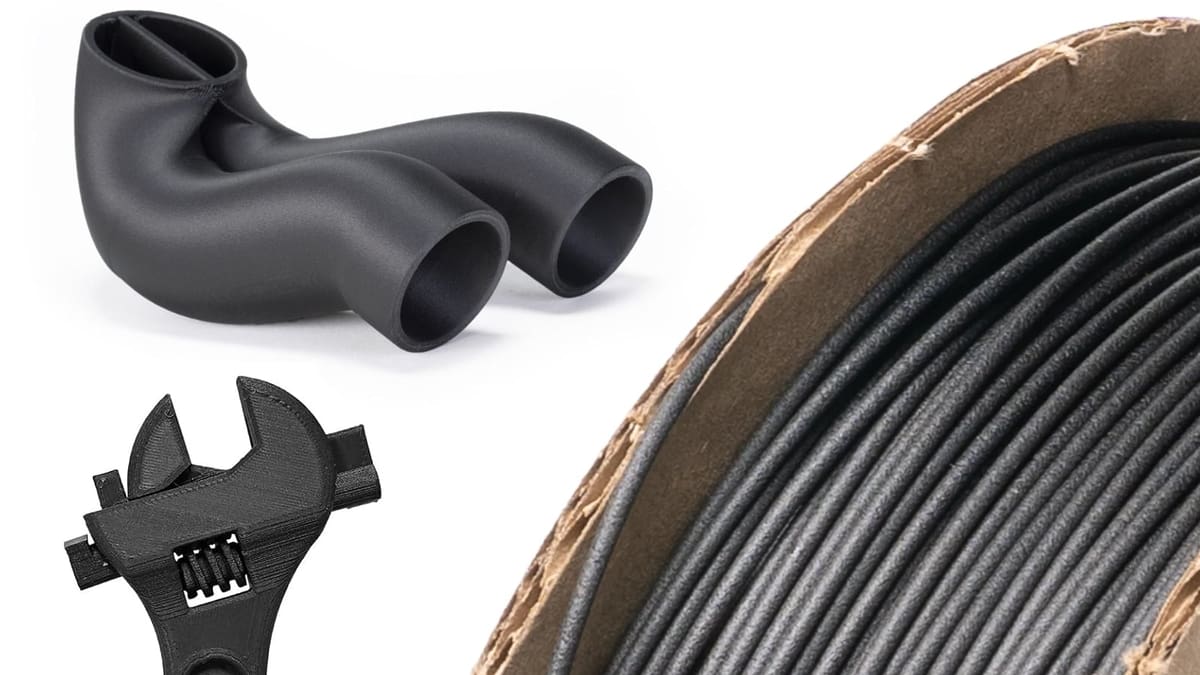
The Best Carbon Fiber Filaments From Entry-Level to Pro

Carbon fiber filament is a tough material with a nice matte finish. Check out the best carbon fiber filament brands on the market!
Carbon fiber filament sounds like the sort of material used to print race cars, rockets, and extremely overengineered phone stands. In reality, it has become a very popular type of filament that you can use for a wide range of applications, some you may never have thought of. And more good news, the price of this material has gone down over the years so it’s not just for engineers anymore.
Because there’s more carbon fiber filament out there you need to understand what your buying and what carbon fiber in a filament really does. We’ll cover all of that and more in this guide to our favorite brands of carbon fiber filament, most of which we use here in All3DP’s print lab.

What Carbon Fiber Filament Is & What it Isn't
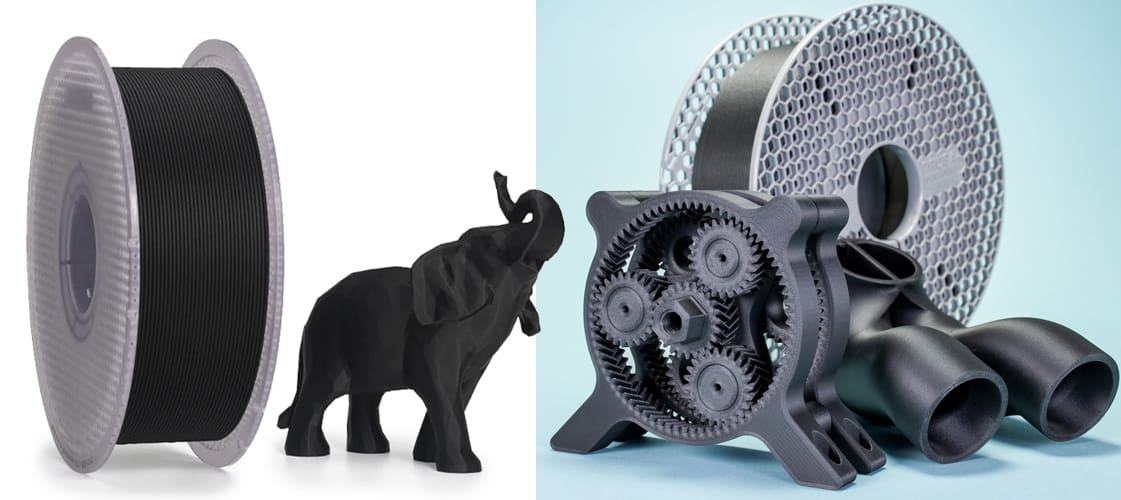
First, carbon fiber isn’t a filament, it’s an ingredient in filament. It can be put in PLA, PETG, PEEK, and nylon, or almost any base polymer and these “filled” materials are often called “composite” filament.
The carbon fiber ingredient is in the form of tiny chopped or milled carbon fibers — often labeled “chopped carbon fiber” or simply “CF” — not a continuous string of carbon fiber, which requires a special 3D printer. (There’s glass fiber and kevlar fiber composites, too, but hey serve different purposes.)
The magic that enables these chopped fibers to make the base material stronger happens as the filament is heated and extruded. Instead of staying randomly placed willy-nilly inside the filament, the fibers align with the direction of extrusion as the filament passes through the hot end. This is what helps printed parts become stiffer, stronger, and more dimensionally stable.
Milled fiber can still improve stiffness, dimensional stability, and wear resistance, but are mostly added for surface finish.
To achieve strength, filament needs to have around 20% carbon fibers, although some materials have less or more. More carbon fiber can mean greater reinforcement, but the base polymer still matters. PLA-CF, for example, isn’t much stronger than regular PLA because the carbon fiber is really only added for surface quality giving parts a line-hiding matte finish.
Which begs the question, why choose a CF filament when you could just select a stronger base material?
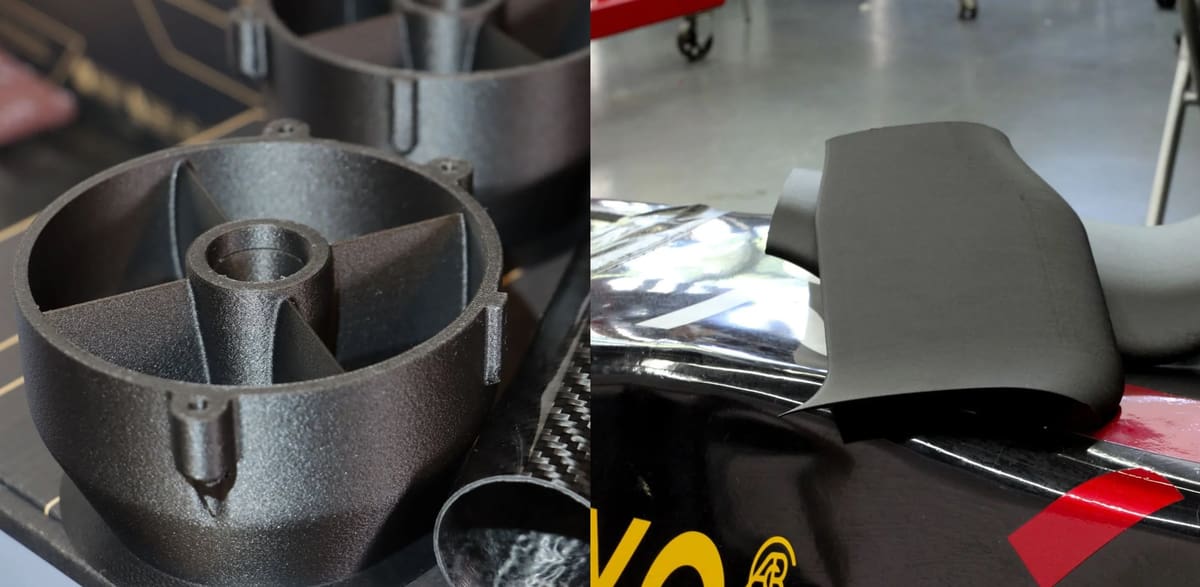
Carbon fiber filament isn’t simply the next step up on the strength ladder. You might select a CF filament for stiffness, low weight, dimensional stability, and printability, not just its tensile strength.
Carbon fibers can reduce shrinkage and warping, helping materials, such as nylon and polycarbonate (PC) produce more dimensionally accurate large parts. CF blends can also provide useful rigidity without adding much weight, making them attractive for drones, robotics, automotive parts, and moving assemblies. Yet, CF filament isn’t always the better option. The fibers can make parts more brittle, and reinforcement is strongest along the extrusion direction. Depending on the formulation and print orientation, a CF blend may offer little improvement in overall tensile strength over the unfilled polymer.
For parts that need toughness, impact resistance, strong layer adhesion, or flexibility, an unfilled engineering polymer may be the smarter choice.
For most makers, carbon fiber-filled filament is the more accessible and affordable way to produce lightweight, rigid, and strong parts.
Below, we’ve rounded up the best carbon fiber filament brands. First, though, let’s cover what you need to print these abrasive materials successfully.
What You Have to Have to Print with Carbon Fiber
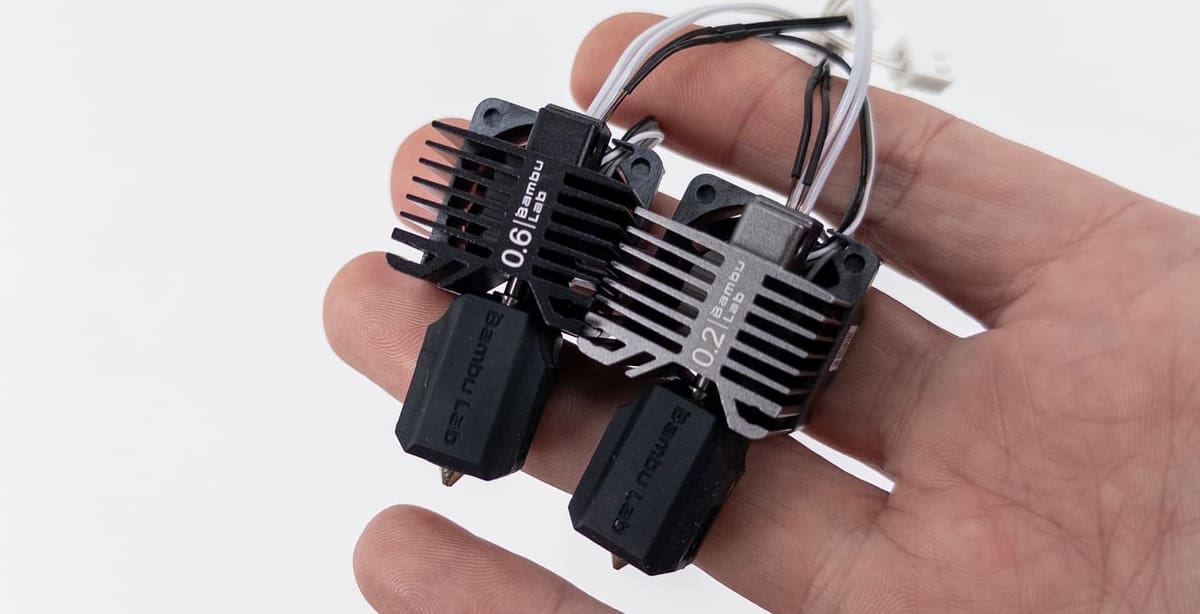
Carbon fiber filament presents a relatively easy alternative to the more expensive and demanding materials, such as polycarbonate (PC) or PEEK because it doesn’t require an enclosed chamber (although is helps for dimensional accuracy, especially for large parts) or a super heated hot end.
It does however have its own quirks that can create issues if not addressed properly. Here are some tips to help you with your carbon fiber printing journey.
- A hardened steel nozzle: Carbon fiber is a very abrasive material that will quickly wear down a traditional brass nozzle. Make sure your printer is equipped with a suitable hardened steel nozzle or equivalent before attempting to print with CF blends.
- A nozzle temperature at least to 220°C : Carbon fiber often requires a much higher nozzle temperature than PLA or PETG, with most brands recommending between 260 °C and 300 °C. Check your filament manufacturer’s recommended settings for best results.
- A heated bed: While some carbon fiber filaments will print fine on standard 60 °C print beds, many brands require a bed temperature closer to 100 °C. Make sure your printer can reach the temperatures needed for any filament you choose.
- An active cooling fan: Carbon fiber requires an active cooling fan to print properly, especially if there are any significant overhangs involved. If you’re having issues with such parts, check your fans and ensure that they are clean and providing sufficient cooling.
- A filament dryer: Drying can improve surface finish and extrusion consistency. Some manufacturers explicitly recommend drying PLA-CF before use.
Carbon fiber, much like any filament blend with additives, is known to clog as the carbon fiber particles don’t melt like the rest of the material. These particles can potentially build up at the tip of the nozzle and form a clog. A larger nozzle size, such as one with a 0.6-mm diameter, is recommended to reduce the chances of clogging.
A final note to remember is that a polymer and carbon fiber mixture increases the material’s brittleness, which can also adversely impact layer adhesion in some cases.
PLA-CF: Best for appearance and easy printing
Good for decorative parts, prototypes, and rigid models. Emphasize that CF may improve finish and dimensional stability more than mechanical performance.
Bambu Lab PLA-CF
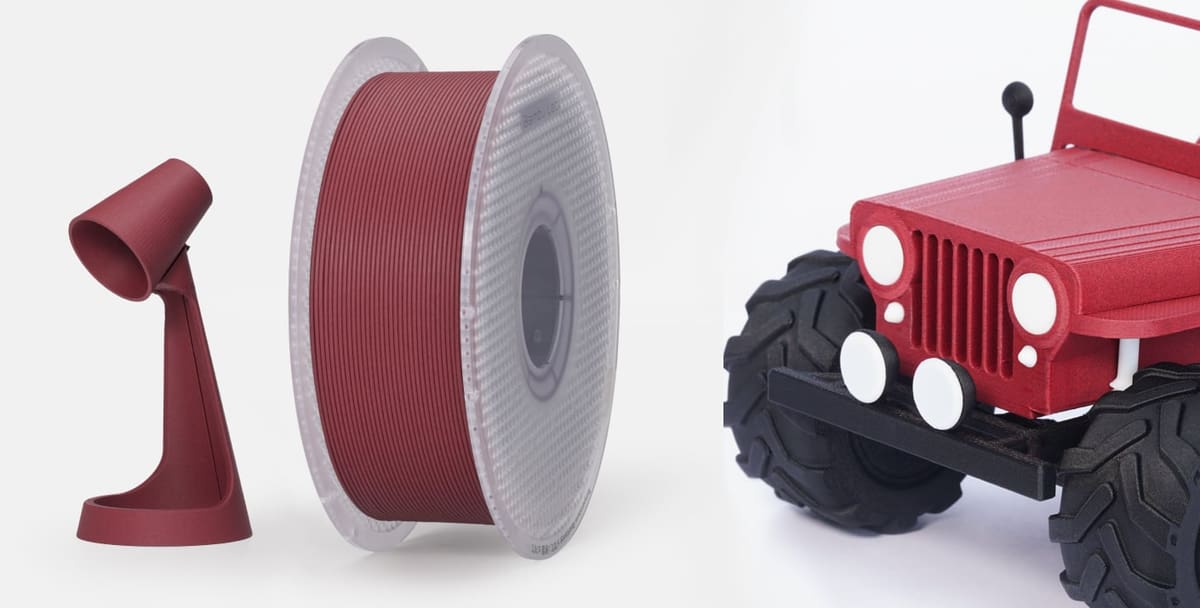
This is the material that made us fall in love the PLA-CF. Bambu Lab has created a plastic that, because of the carbon fibers, doesn’t feel like plastic. Parts have a rich tactile texture with virtually imperceptible layer lines.
With a bending modulus of 3,950 MPa and bending strength of 89 MPa, PLA-CF isn’t all looks. It is significantly stiffer than Bambu Lab’s standard PLA. However, its heat-deflection temperature is still only 55 °C, so don’t let the carbon fiber finish fool you into treating it like a high-temperature engineering material.
Bambu Lab describes it as a tough PLA blend reinforced with carbon fibers, as combining relatively easy PLA printing with greater hardness, stiffness, and resistance to bending. Its low shrinkage and warping resistance also make it a good candidate for dimensionally accurate parts and assemblies.
As you’d expect from Bambu Lab, PLA-CF comes with tuned profiles in Bambu Studio and works with the company’s Automatic Material System. It’s available in several colors rather than the usual carbon-fiber black, making it an appealing option for cosmetic parts. A 0.4-, 0.6-, or 0.8-mm hardened-steel nozzle is recommended; the abrasive fibers make a 0.2-mm nozzle unsuitable, while stainless-steel nozzles aren’t recommended.
- Bed temperature: 30-45 °C
- Hot end temperature: 220-240 °C
- Recommended nozzle: 0.4 mm or larger, hardened steel
- Price per kg: $34.99, with bulk discounts available
Pricing may vary by country, taxes, spool or refill option, and current promotions.
Protopasta Carbon Fiber PLA
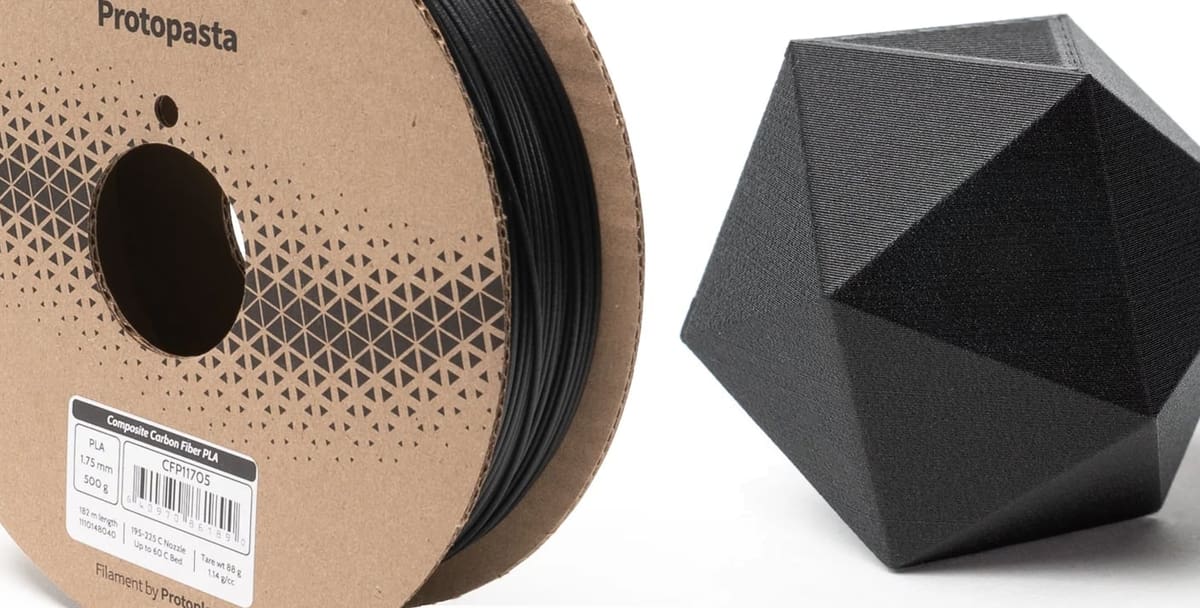
Proto-pasta has a particularly strong claim to a place on this list: The company launched what it describes as the world’s first carbon fiber-filled PLA more than a decade ago. Its Original Carbon Fiber Composite PLA remains an approachable option for makers who want greater rigidity and a distinctive carbon fiber finish without taking on the printing demands of nylon- or polycarbonate-based composites.
Built on Proto-pasta’s standard PLA, the material can generally be printed using familiar PLA settings and requires little to no heated-bed assistance. The chopped fibers make finished parts noticeably stiffer, while low warping and good layer adhesion help with dimensionally accurate models, prototypes, fixtures, and lightly loaded functional components. Supports are also designed to separate relatively easily.
The surface finish is one of the filament’s biggest attractions. Its matte black texture softens the appearance of layer lines, while the embedded fibers add a slight sheen that catches the light. It’s a good choice for display pieces and technical-looking parts, although makers shouldn’t mistake its appearance for the heat resistance or toughness of a higher-performance engineering polymer.
Proto-pasta recommends a 0.6-mm nozzle and a temperature range of 210-230 °C for the most consistent experience, although the company frequently prints it through 0.4-mm nozzles at temperatures as high as 240 °C. Smaller nozzles and Bowden-fed systems may be less reliable. The filament is also abrasive and somewhat more brittle than regular PLA, so careful handling and a wear-resistant nozzle are advisable.
Protopasta also makes a Carbon Fiber HTPLA that’s optimized for heat treating (also known as annealing or crystallizing) for higher temperature use.
- Diameters: 1.75 and 2.85 mm
- Available quantities: 50-g coil, 500-g spool, and 3-kg spool
- Bed temperature: Heated bed not required
- Hot end temperature: 210-230 °C recommended; up to 240 °C used by the manufacturer
- Recommended nozzle: 0.6 mm, wear-resistant
- Color and finish: Matte black with a slight carbon-fiber sheen
- Price: From $5 for 50 g, equivalent to approximately $100 per kg
Pricing, spool availability, and shipping costs may vary by region and current stock.
PETG-CF: Best all-rounder
Useful for makers wanting easier printing, better heat resistance than PLA, and good dimensional stability.
Prusament PETG-CF
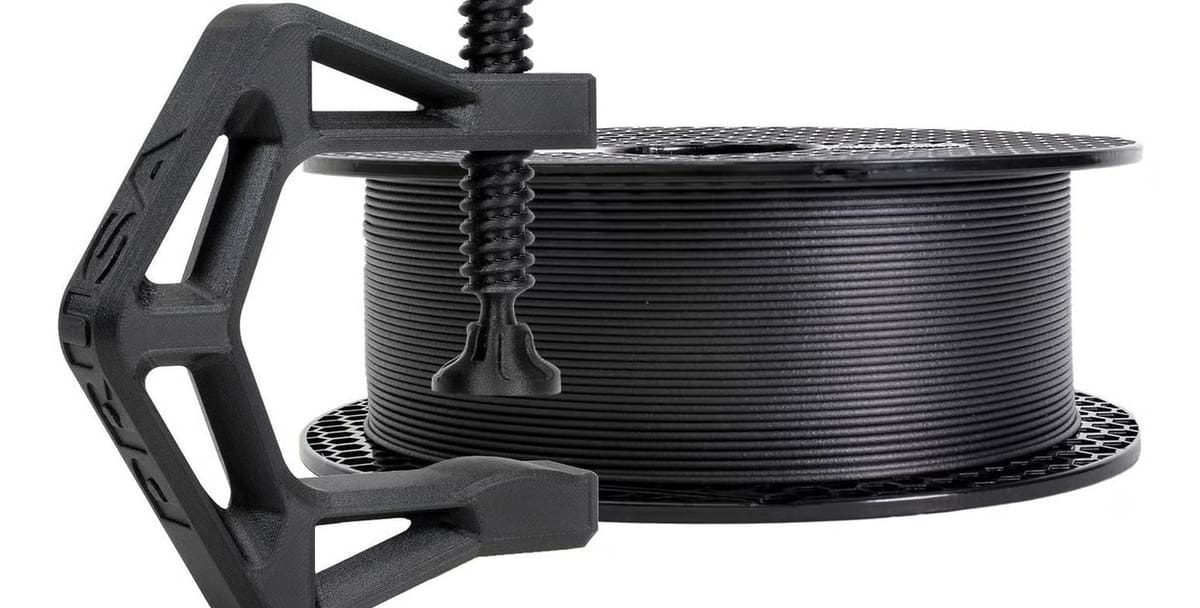
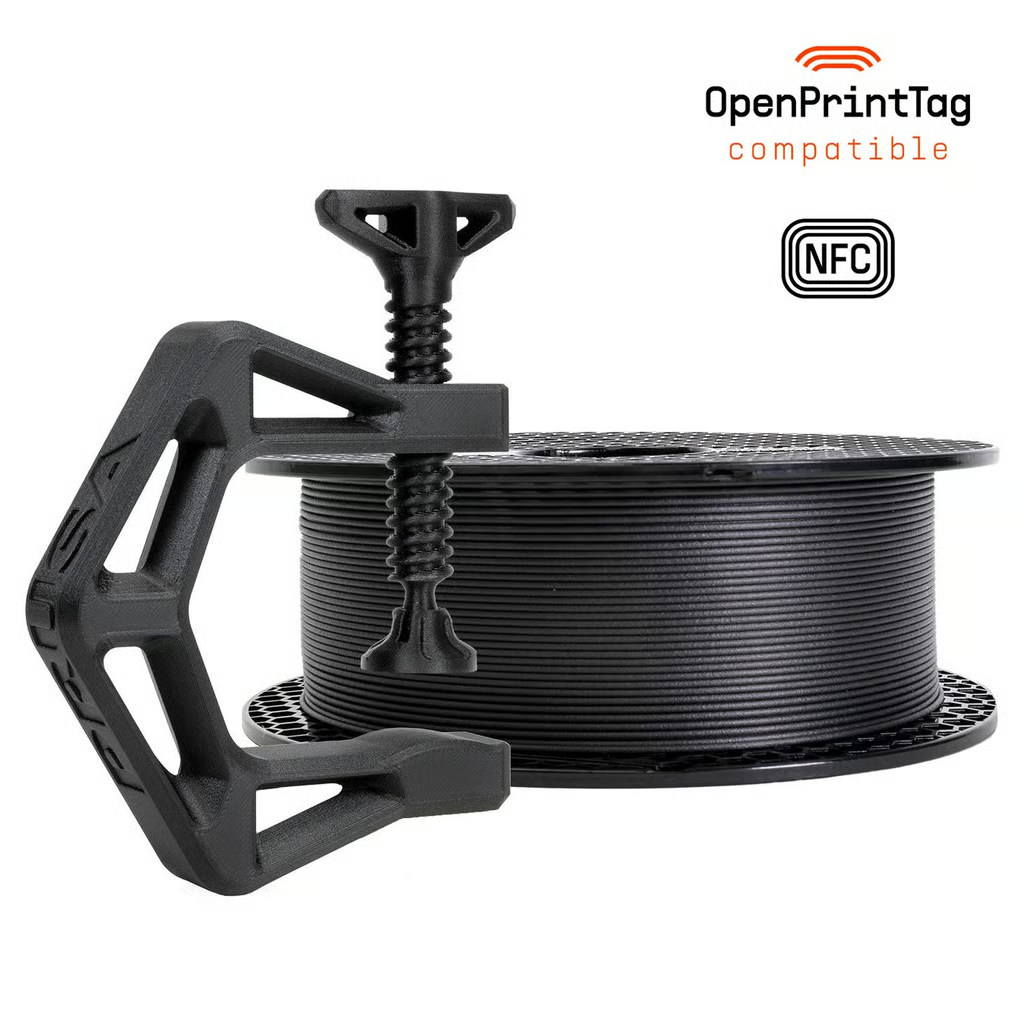
Prusament PETG Carbon Fiber is a good fit for makers who want the durability and user-friendliness of PETG with greater stiffness, dimensional stability, and temperature resistance. Prusa produces the filament in-house and guarantees a diameter tolerance of ±0.02 mm, with the manufacturing data for each individual spool available online.
Compared with standard Prusament PETG, the carbon fiber blend has a higher modulus of elasticity, so printed parts resist bending and flexing more effectively. Prusa also says the material is less prone to stringing and more dimensionally stable during printing, making it suitable for brackets, machine components, fixtures, housings, and other functional parts where accuracy and rigidity matter. Its matte-black finish helps hide layer lines and gives prints a convincingly industrial appearance.
There are some trade-offs. Prusament PETG Carbon Fiber is less tough than regular PETG, meaning it may be more likely to crack rather than flex under sudden impacts. Fine details may also be less crisp than with PLA. Like all carbon fiber-filled filaments, it is abrasive and requires a hardened nozzle rather than a standard brass one.
Prusa uses recycled carbon fibers sourced from industrial production waste and end-of-life carbon composites. New 1-kg spools also include a rewritable OpenPrintTag NFC tag, which stores material information locally and can be read with compatible devices or the Prusa mobile app.
- Bed temperature: 80-100 °C
- Hot end temperature: 255-275 °C
- Recommended nozzle: Hardened nozzle
- Recommended build surface: Textured or satin steel sheet
- Drying recommendation: 55 °C for 6 hours when required
- Price per kg: $54.99
ColorFabb XT-CF20
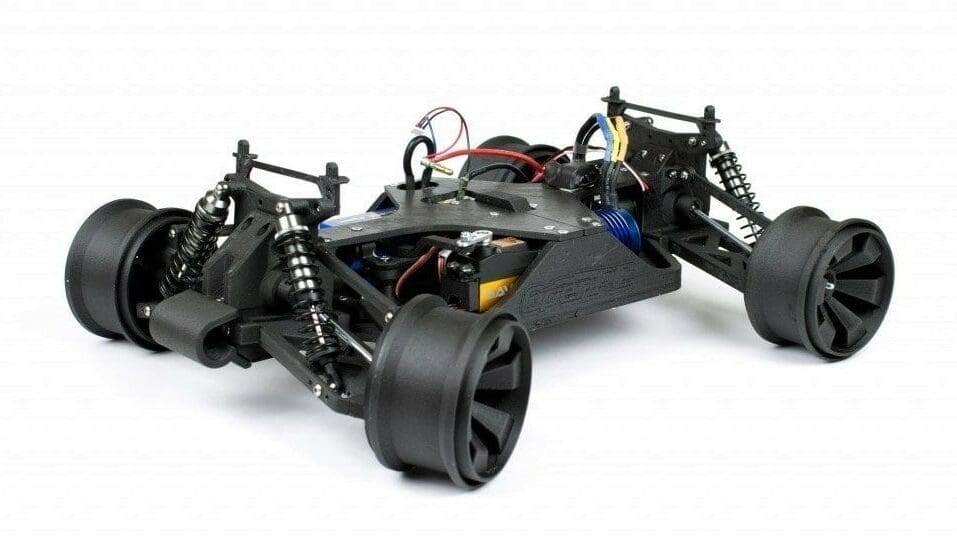
ColorFabb’s XT-CF20 is a combination of their proprietary PETG Amphora 3D polymer with up to 20% carbon fibers. This polymer is free from styrene (a compound known to be harmful to our health and to smell terrible) and already offers the user enhanced mechanical properties like high toughness by itself.
The manufacturer claims that XT-CF20 has great dimensional stability and heat resistance, making it ideal for drone parts and automotive prototyping. Active cooling is recommended (at 50 to 90% power), and once the print is finished, it’s advised to let the build plate cool down to room temperature before attempting to remove the part.
- Diameters: 1.75 mm, 2.85 mm
- Density: ~1.27 g/cm3
- Bed temperature: 60-70 °C
- Hot end temperature: 240-260 °C
- Price per kg: ~$67 (~$50 for 0.75 kg)
Nylon-CF: Best for functional parts
The main category for durable brackets, tools, robotics, and mechanical components. Note moisture sensitivity and higher printing requirements.
Fillamentum Nylon CF15
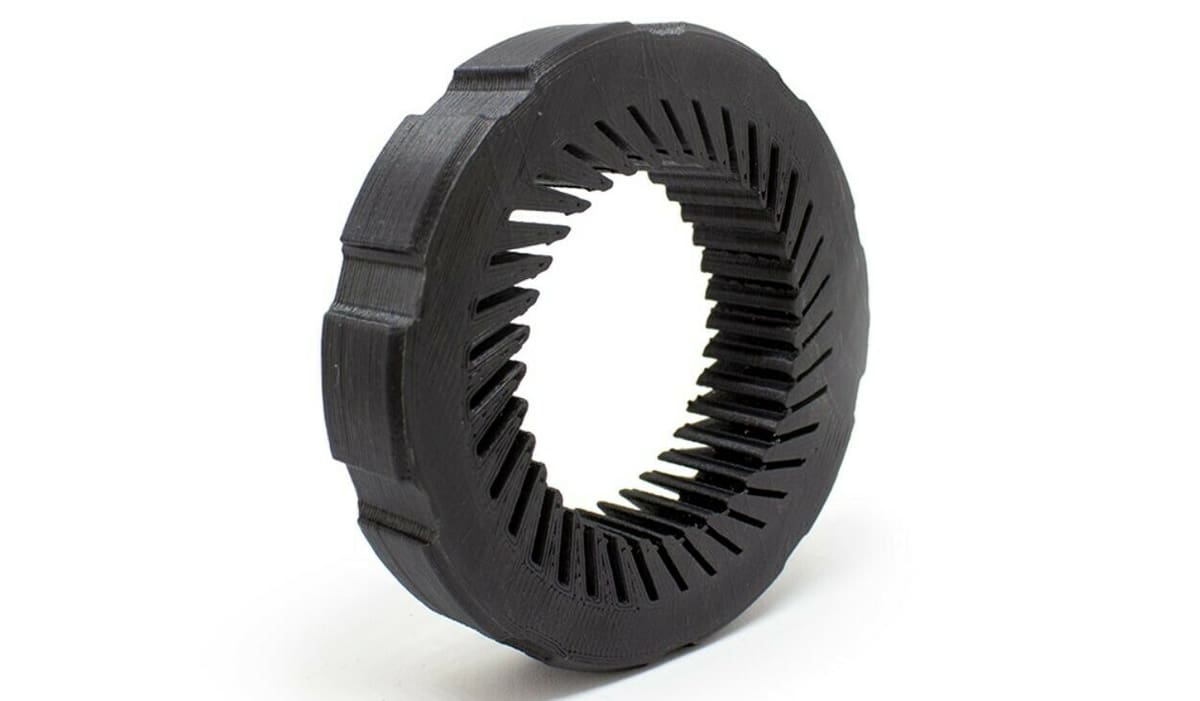
Fillamentum is another very popular manufacturer of 3D printing filament, and their Nylon CF15 Carbon filament is an exceptional carbon fiber composite filament. As the name suggests, CF15 is composed of 15% milled carbon fiber, with the rest being nylon, specifically polyamide (PA) 12.
According to the manufacturer, Nylon CF15 provides high strength, chemical resistance, and heat resistance. They even recommend using this filament for parts that will constantly face physical stresses, such as bearings and reinforcement parts. The diameter tolerance of Fillamentum CF15 is ±0.1 mm, which could potentially cause issues on some printer extruders.
- Diameters: 1.75 mm, 2.85 mm
- Density: ~0.98-1.08 g/cm3
- Bed temperature: 80-110 °C
- Hot end temperature: 235-260 °C
- Price per kg: ~$110 (~$65 for 0.6 kg)
Bambu Lab PA-CF
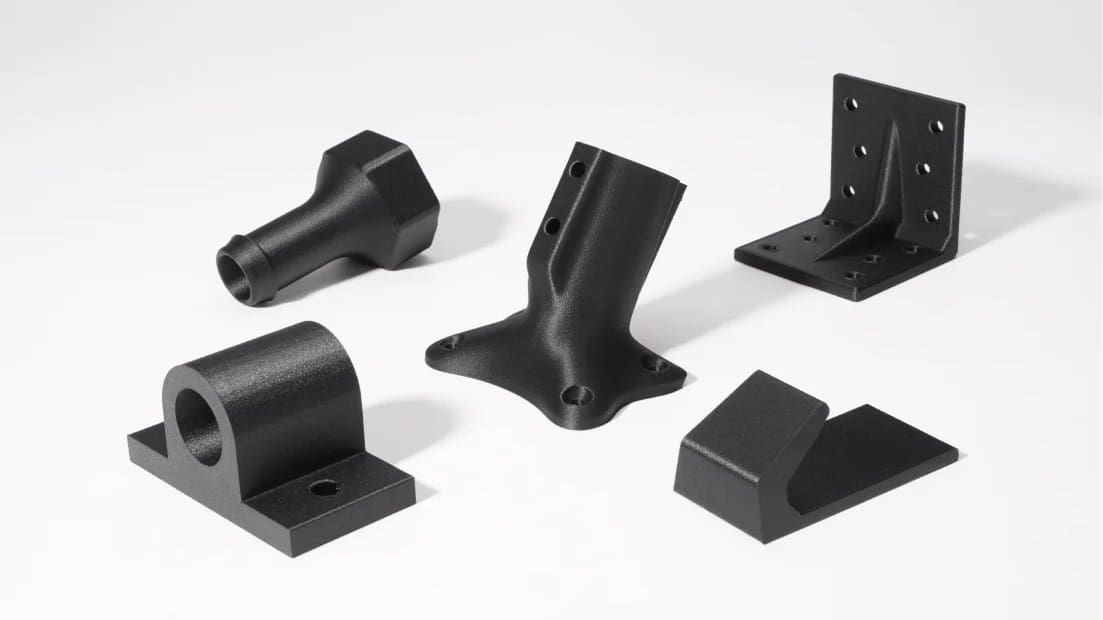
Bambu Lab is well known for their multicolor printing solutions and high-speed 3D printers. The company has created a large catalog of filaments to complement their printers, including their very own high-performance blends. One of their more popular choices is their PA6-CF.
This carbon fiber-reinforced nylon blend claims to outperform traditional CF blends, with a 24% increased stiffness, vibration resistance, and impact resistance in dry environments. Bambu Lab has also released carbon fiber blends for many other filament types, namely PLA-CF, PETG-CF, PAHT-CF, and PET-CF, so you will have plenty of options when shopping with them.
It should be noted that Bambu Lab’s PA6- and PET-CF aren’t compatible with the brand’s AMS, while PLA-, PAHT-, and PETG-CF are, although it’s suggested not to use the latter on the AMS Lite. None are compatible with 0.2-mm nozzles. And while PA6-, PAHT-, and PET-CF are only available in black, the PLA and PETG options have seven and six color variations respectively.
- Diameter: 1.75 mm
- Density: 1.09 g/cm³
- Bed temperature: 80-100 °C (with glue)
- Hot end temperature: 260-290 °C
- Price per kg: ~$80 (~$43 for 0.5 kg)
eSun ePA-CF
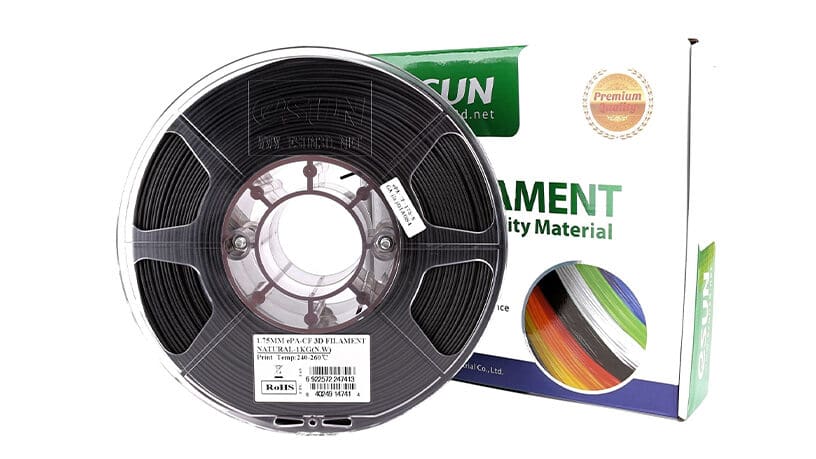
eSun’s huge product portfolio wouldn’t be complete without carbon-fiber-reinforced materials. The so-called ePA-CF is a nylon-based filament with 20% carbon fiber by weight. The Chinese manufacturer is known for offering relatively cheap materials with superb quality, and the ePA-CF is no different, as many positive customer reviews confirm.
In addition to increased stiffness and wear resistance, this filament is claimed to be flame-retardant (UL94-V2), making it especially useful for applications that will be exposed to higher temperatures. As with other carbon-fiber-reinforced filaments, eSun recommends using hardened nozzles with this material.
- Diameters: 1.75 mm, 2.85 mm
- Density: ~1.20 g/cm3
- Bed temperature: 80 °C
- Hot end temperature: 240-260 °C
- Price per kg: ~$55
Polymaker Fiberon PA6-CF20
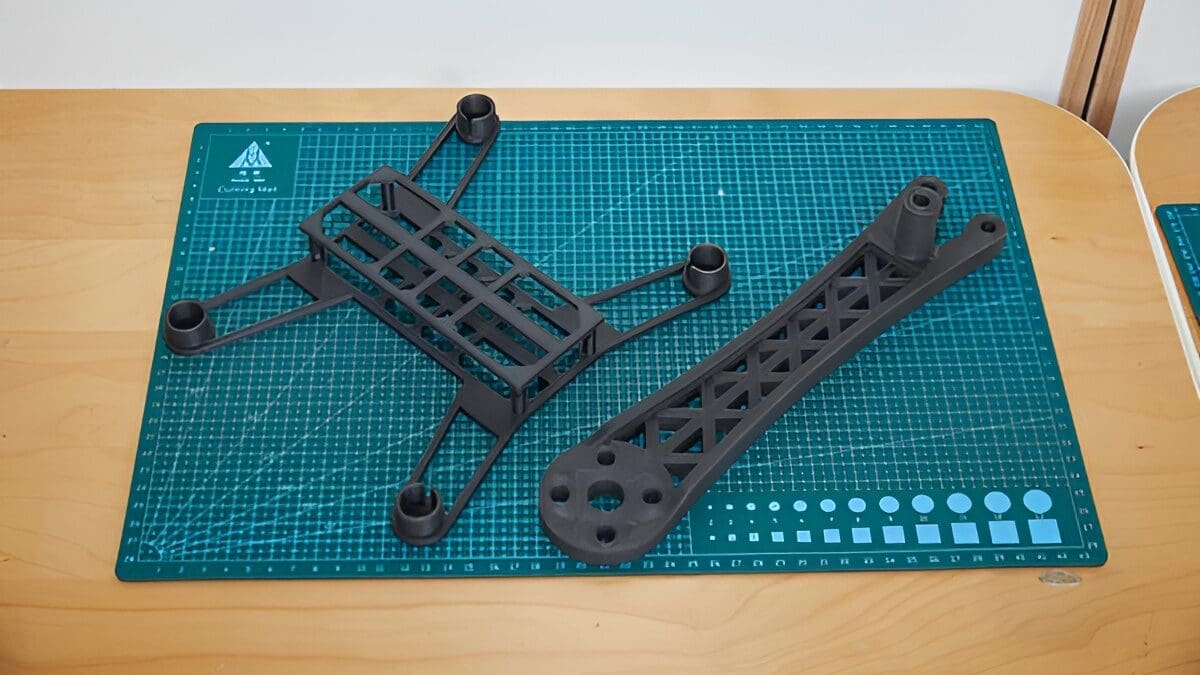
Polymide PA6 CF comes from the same brand responsible for the ever-popular PolyTerra lineup of filaments, Polymaker. This nylon is mixed with 20% chopped carbon fibers and has a couple of aces up its sleeve. First, it’s suitable for annealing in an oven at 90 °C for 2 hours. This will unlock its mechanical and thermal properties to their full potential. And if you are unable to anneal it, this filament can resist temperatures of up to 215 °C under minimal tensile stress. Polymaker offers PLA and PA12 CF options too.
On the flip side, PA6 is extremely hygroscopic and requires continuous drying during printing. It’s also quite demanding in terms of temperature, requiring a hot end capable of sustaining temperatures above 280 °C continuously. The manufacturer specifies that the bed temperature should never exceed 50 °C. While the price isn’t exactly low, Polymide PA6 CF is one of the best performers among similarly priced filaments.
- Diameters: 1.75 mm, 2.85 mm
- Density: ~1.17 g/cm3
- Bed temperature: 25-50 °C
- Hot end temperature: 255-270 °C
- Price per kg: ~$80 (~$40 for 0.5 kg)
Fiberlogy Nylon PA12 CF15
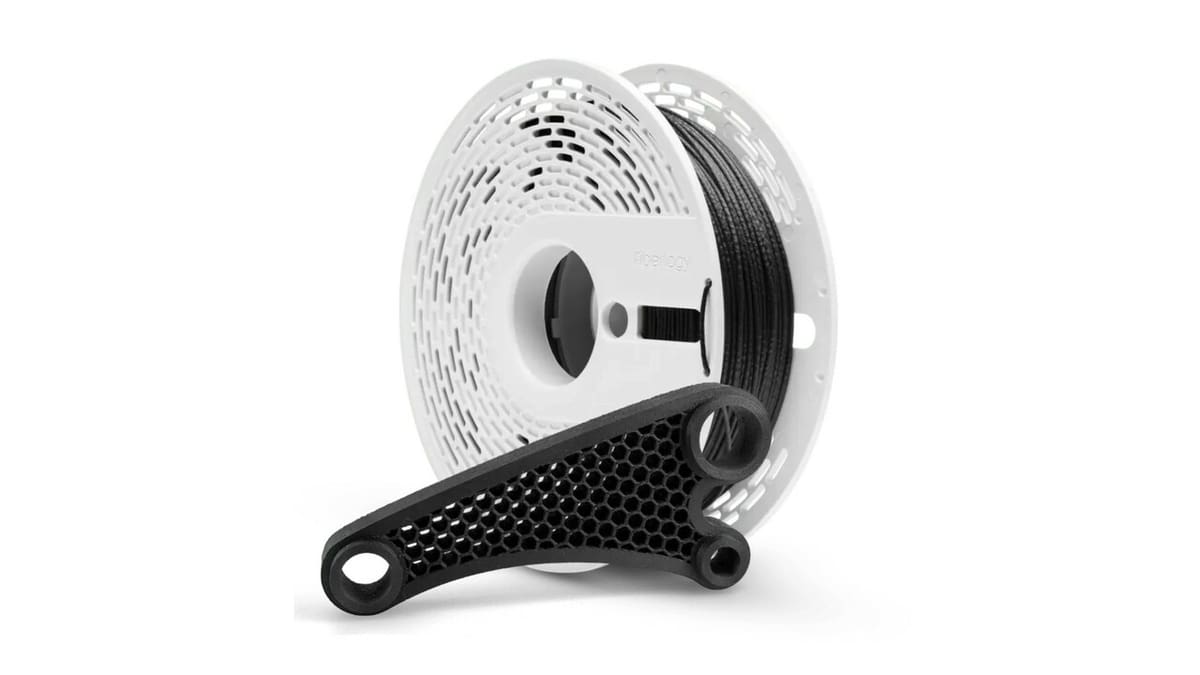
Fiberlogy isn’t a new name in the engineering materials industry. With their distinctive spool design and a large offering of polymers, it’s not surprising they also have a nylon filament. Nylon PA12 CF15 is exactly what the name suggests: A blend with 15% chopped fibers (by weight) in a base of polyamide 12 nylon.
On the more technical side, the blend is engineered to have a slightly reduced warping effect and doesn’t require an enclosure to be printed. As you might expect from PA12 compared to PA6, it’s less hygroscopic. The manufacturer reports a diameter tolerance of ±0.02 mm, which is more than enough for standard printers.
- Diameters: 1.75 mm, 2.85 mm
- Density: ~1.07 g/cm3
- Bed temperature: 90-110 °C
- Hot end temperature: 255-270 °C
- Price per kg: ~$100 (~$50 for 0.5 kg)
PC-CF: Best for heat resistance and rigidity
Polycarbonate with carbon fibers is suited to demanding structural parts, but requires a capable enclosed printer.
Prusament PCCF
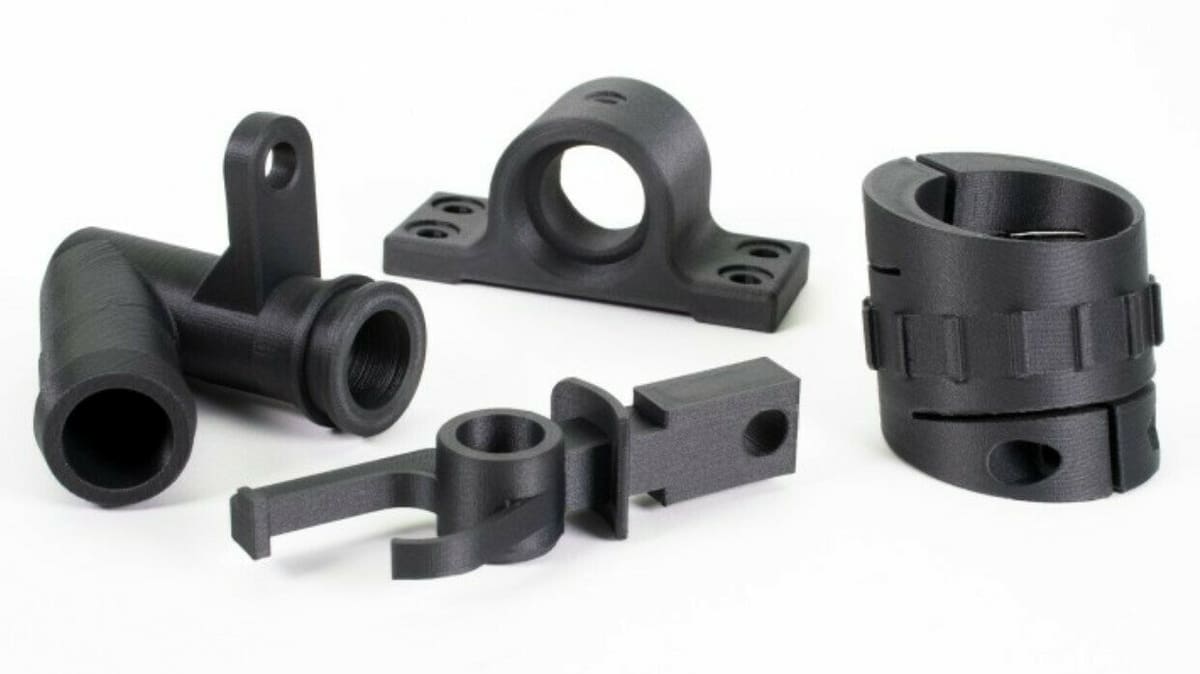
If you have a 3D printer, you’ve probably heard of Prusa Research, the company behind printers like the Prusa i3 MK3S+ and Mini+. Prusament is Prusa’s filament brand, and they sell a polycarbonate-blend carbon fiber composite, commonly abbreviated as PCCF.
While the exact composition of carbon fiber isn’t listed, Prusament’s PCCF should be the perfect option for those looking for maximum strength. That’s because PC is considered the strongest consumer 3D printable filament, and it only gets stronger when reinforced with carbon fiber.
PCCF is only available in black. Noteworthy PCCF properties include its heat resistance as well as its annealing capabilities (for post-processing). According to Prusa, the spool has a dimensional tolerance of just ±0.04 mm, which is exceptional for this type of filament.
- Diameter: 1.75 mm
- Density: ~1.16 g/cm3
- Bed temperature: 100-120 °C
- Hot end temperature: 275-295 °C
- Price per kg: ~$75 (~$60 for 0.8 kg)
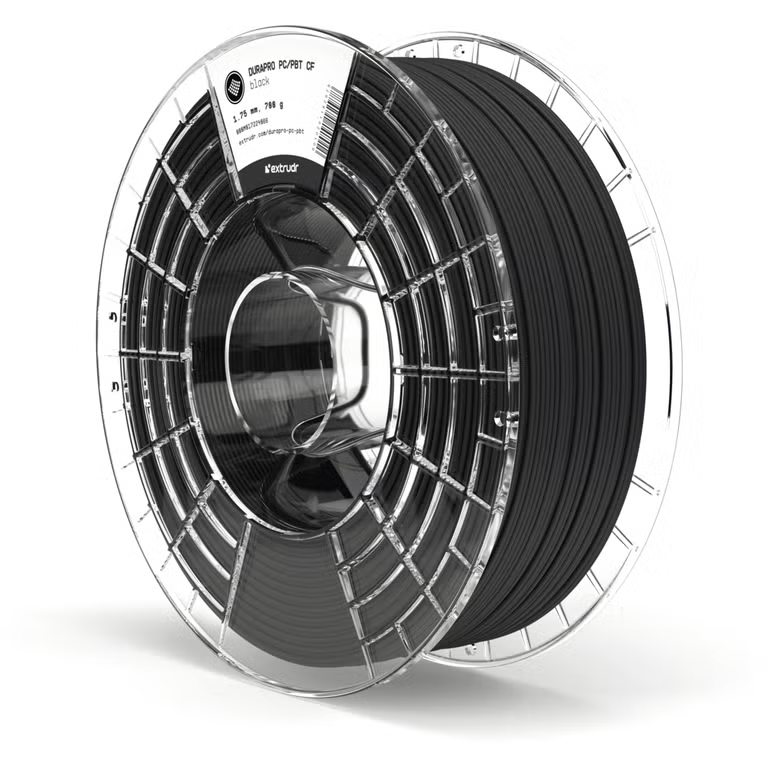
Extrudr DuraPro PC/PBT CF
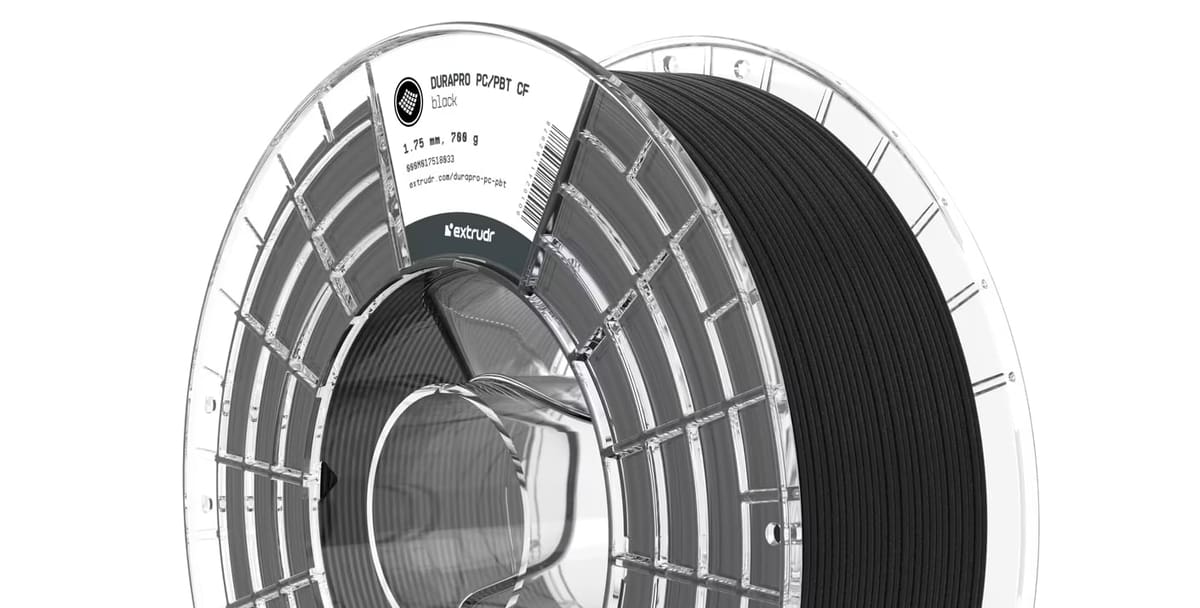
Extrudr DuraPro PC/PBT CF is aimed at makers who need more than a cosmetic carbon fiber effect. Its polycarbonate and polybutylene terephthalate base is reinforced with carbon fibers to produce a lightweight, highly rigid engineering material with strong heat and chemical resistance.
The carbon fiber reinforcement gives printed parts a high strength-to-weight ratio while reducing warping and shrinkage. Extrudr rates the material for temperatures of up to 130 °C according to the Vicat A test, making it a potential choice for machine components, automotive parts, housings, fixtures, and other applications that may be exposed to heat or chemicals.
Despite its demanding-sounding material blend, the filament is designed to produce a smooth, matte carbon finish that helps hide layer lines. Its stiffness and dimensional stability should also suit parts that must maintain their shape under load. However, makers looking for impact resistance or flexibility should bear in mind that highly rigid carbon fiber composites can be less forgiving than unfilled engineering plastics.
DuraPro PC/PBT CF requires a printer capable of reaching nozzle temperatures of up to 290 °C and bed temperatures of around 100-110 °C. An enclosed build chamber is advisable for a material in this class, and the abrasive carbon fibers mean a hardened, wear-resistant nozzle is essential.
- Bed temperature: 100-110 °C
- Hot end temperature: 260-290 °C
- Recommended nozzle: Hardened, wear-resistant nozzle
- Color and finish: Black with a smooth, matte carbon finish
- Price per kg: Approximately $57.85 at the listed sale price
ABS/ASA-CF: Best for automotive or outdoor use
ASA-CF is especially relevant where UV and weather resistance matter. Both require enclosure and ventilation considerations
Siraya Tech Fibreheart ABS-CF Core
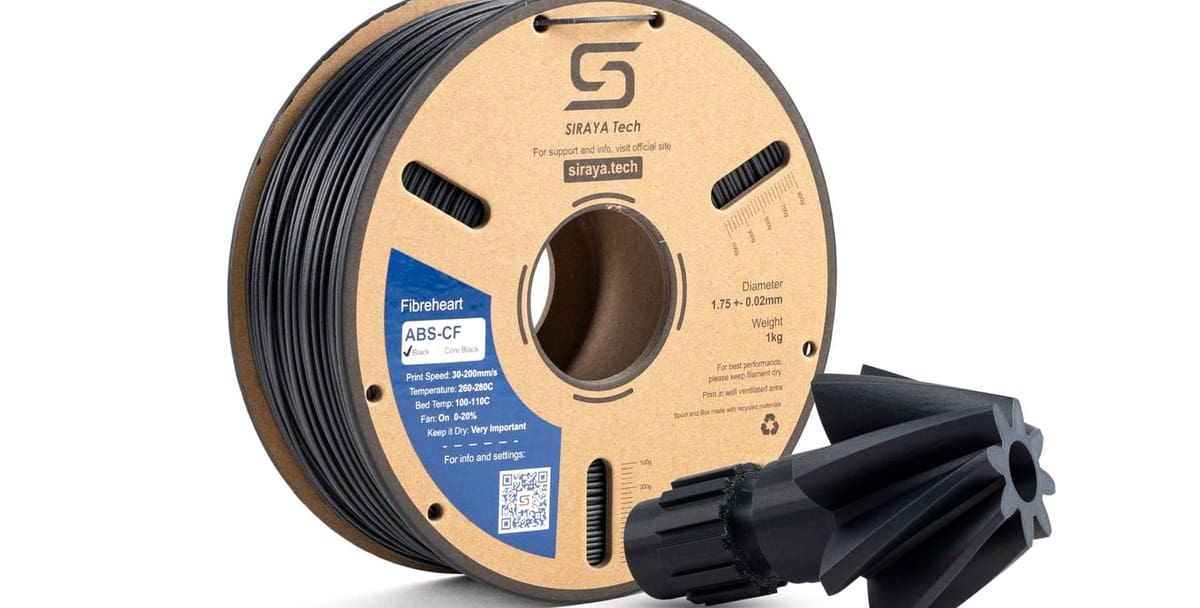
Siraya Tech’s Fibreheart ABS-CF Core takes a different approach to carbon fiber reinforcement. Instead of distributing the fibers throughout the entire filament, it concentrates 20% carbon fiber in the core and surrounds it with a smoother outer layer. The idea is to retain the stiffness and structural benefits of a heavily reinforced composite while improving layer adhesion, surface quality, and nozzle life.
According to Siraya Tech, the core-shell construction reduces direct contact between the abrasive fibers and the nozzle, although a hardened or otherwise wear-resistant nozzle is still strongly recommended. The design also leaves fewer exposed fibers on the surface of finished parts, which may make handling cleaner and reduce skin irritation. Printed parts have a heat-deflection temperature of 90 °C, and the material is intended for rigid functional components such as tooling, jigs, drone parts, robotics components, and heat-resistant housings.
The filament can reportedly print at speeds of up to 200 mm/s, though Siraya Tech notes that very high speeds may disturb the core-shell structure and affect the surface finish. An enclosed printer is recommended to improve layer bonding and reduce warping, while a direct-drive extruder or manual feed path is preferable because the relatively brittle filament is not recommended for use in an AMS.
Siraya Tech also offers a conventional Fibreheart ABS-CF, which uses 10% chopped carbon fibers distributed throughout the material rather than concentrated in the center. The standard version is cheaper and has a slightly higher stated heat-deflection temperature of up to 98 °C, while the Core version emphasizes greater rigidity, improved Z-axis bonding, smoother surfaces, and reduced nozzle wear.
- Carbon fiber content: 20%, concentrated in the core
- Bed temperature: 100-110 °C
- Hot end temperature: 250-280 °C
- Recommended nozzle: 0.4 mm or larger, hardened steel or wear-resistant
- Recommended print speed: 30-200 mm/s
- Drying recommendation: 60-70 °C for 4-6 hours when moisture symptoms appear
- Price per kg: $35.99
Polymaker Fiberon ASA-CF08
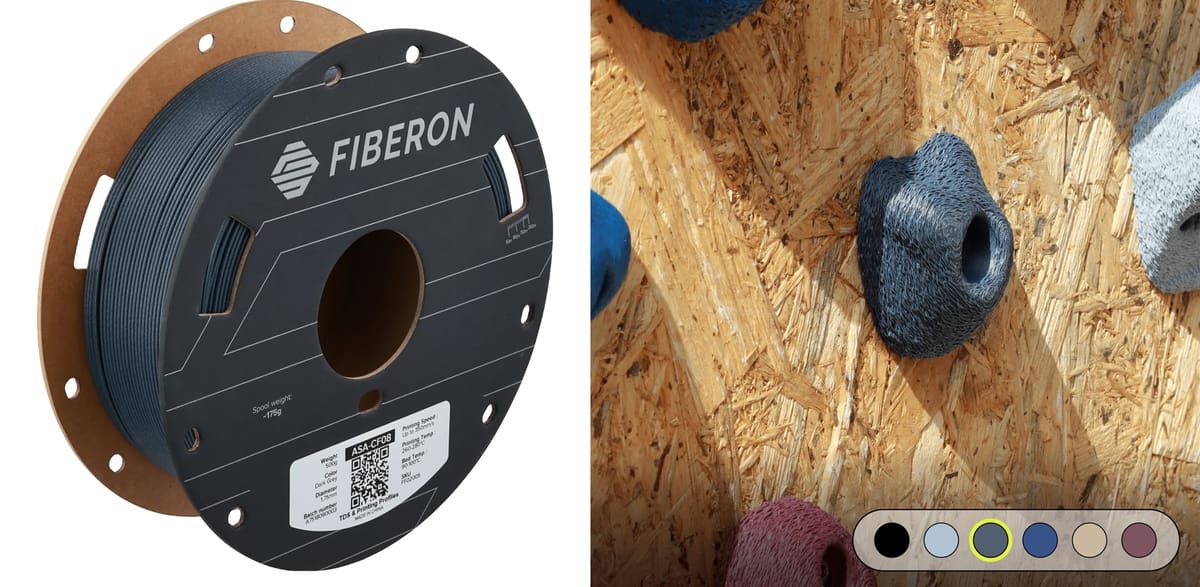
Polymaker’s Fiberon ASA-CF08 combines one of the better polymers for outdoor use with a relatively modest 8% carbon fiber loading. The result is a weather-resistant composite intended for parts that need to survive sunlight, heat, and regular mechanical use without looking like they were printed in someone’s garage.
The ASA base provides UV and weather resistance, while the chopped carbon fibers increase rigidity, reduce warping, and give parts a smooth matte finish that helps disguise layer lines. Polymaker reports a bending modulus of 3,265 MPa, a bending strength of 69.1 MPa, and a tensile strength of 43.5 MPa in the XY direction. That combination makes it a candidate for outdoor housings, brackets, automotive prototypes, drone frames, jigs, agricultural equipment, and other functional components.
Its heat performance is another advantage over entry-level carbon fiber blends. ASA-CF08 has a stated heat-deflection temperature of 103 °C at 0.45 MPa and 97.3 °C at 1.8 MPa, making it suitable for components exposed to direct sunlight or moderately hot environments. It does not require annealing to reach its stated performance.
Polymaker says the material can print at speeds of up to 350 mm/s and does not strictly require a heated chamber. An enclosure is still recommended for larger or taller parts, however, as it helps maintain consistent temperatures and reduce warping. The filament is abrasive, so a hardened-steel, ruby, or similarly wear-resistant nozzle is required.
ASA-CF08 is available in six colors, including black, two shades of gray, navy blue, dark red, and desert sand. That is a welcome change from the sea of black carbon fiber filaments and makes the material useful for visible end-use parts as well as purely structural components.
- Carbon fiber content: 8% by weight
- Bed temperature: 90-100 °C
- Hot end temperature: 260-280 °C
- Maximum stated print speed: 350 mm/s
- Part-cooling fan: Off
- Recommended nozzle: Hardened steel, ruby, or another wear-resistant nozzle
- Drying recommendation: 90 °C for 6 hours if the material has absorbed moisture
- Available colors: Black, dark gray, light gray, navy blue, dark red, and desert sand
- Price per kg: ~$40
ASA can release styrene and other VOCs while printing, so the printer should be operated in a well-ventilated area, ideally inside an enclosure with filtration. The filament is also brittle and abrasive, so Polymaker advises caution when using it with an AMS or other multi-material feeder.
High-temperature CF materials: Best for professional applications
Include PEEK-CF, PEKK-CF, PPS-CF, and similar materials separately, since they require specialist printers and are not realistic choices for most hobbyists.
3DXTech CF-PEEK, CF-PEKK, CF-PEI
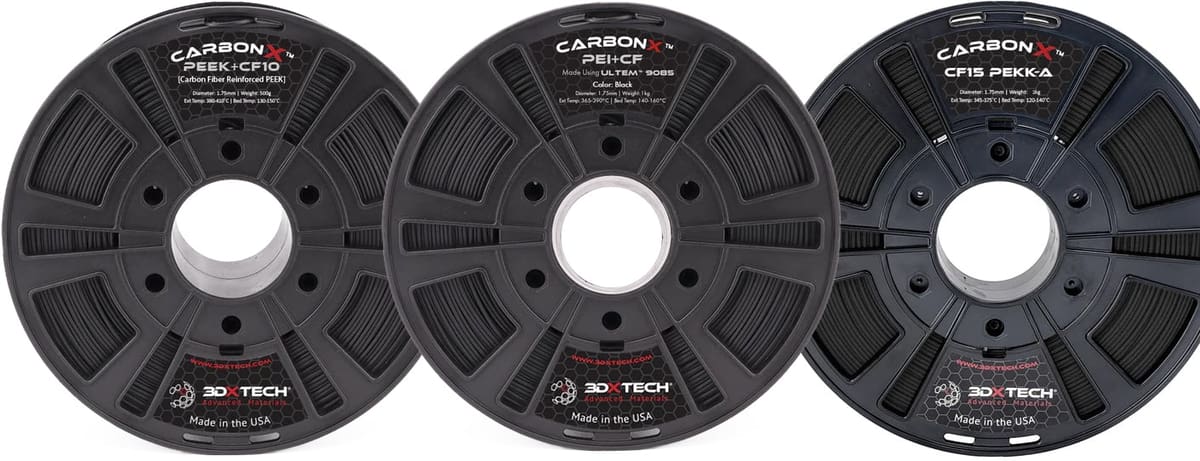
3DXTech CarbonX PEEK+CF10, PEKK-A+CF15, and PEI 9085+CF
At the serious end of carbon fiber filament, 3DXTech’s CarbonX range includes PEEK-, PEKK-, and PEI-based composites intended for aerospace, automotive, energy, tooling, and other industrial applications. These are not materials for a lightly modified desktop printer: All three require very high nozzle temperatures, heated build platforms, controlled chambers, careful drying, and wear-resistant hardware.
CarbonX PEEK+CF10 combines PEEK with 10% high-modulus chopped carbon fiber. It is the most demanding option of the three, but offers excellent mechanical performance at elevated temperatures, chemical resistance, low thermal expansion, and very low moisture absorption. The carbon fibers improve stiffness and dimensional stability, making it suitable for highly loaded end-use parts where heat, chemicals, and mechanical stress may occur together.
CarbonX PEKK-A+CF15 uses a PEKK 60/40 copolymer reinforced with 15% chopped carbon fiber. It provides similar high-temperature, chemical, and mechanical performance to other PAEK-family materials, but 3DXTech positions it as easier to print than carbon fiber PEEK. Its glass-transition temperature is 160 °C, its heat-deflection temperature is 150 °C, and its base resin is inherently flame resistant with a UL 94 V-0 rating.
CarbonX PEI 9085+CF is made from Sabic Ultem 9085 resin with 15% high-modulus carbon fiber. It offers a glass-transition temperature of 186 °C and a heat-deflection temperature of 165 °C, along with improved stiffness, strength, and dimensional stability compared with unfilled PEI. The Ultem 9085 base resin is valued for its inherent flame resistance and is intended for applications where flame, smoke, and toxicity performance matters.
Of the three, PEKK-A+CF15 may be the most approachable route into ultra-performance carbon fiber printing, while PEEK+CF10 targets the most demanding thermal and chemical environments. PEI 9085+CF sits between them as a strong option for rigid, heat-resistant parts requiring flame-resistant material properties. “Approachable,” however, is relative: Even the easiest material here requires an industrial high-temperature printer rather than a typical hobby machine.
- Diameter: 1.75 mm
- Carbon fiber content: PEEK+CF10: 10%; PEKK-A+CF15: 15%; PEI 9085+CF: 15%
- PEEK+CF10 hot end temperature: 380-410 °C
- PEEK+CF10 bed temperature: ~ 120-160 °C
- PEKK-A+CF15 hot end temperature: 360-390 °C
- PEKK-A+CF15 bed temperature: 120-140 °C
- PEI 9085+CF hot end temperature: 365-390 °C
- PEI 9085+CF bed temperature: 140-160 °C
- Recommended nozzle: Hardened steel, 0.4 mm or larger
- Heated chamber: Recommended for all three materials
- Price per kg: PEEK+CF10: ~$715; PEKK-A+CF15: ~ $333; PEI 9085+CF: ~ $390
Prices are calculated from the listed reel options and may vary by package size, availability, shipping, and current promotions. These materials require industrial printing equipment capable of safely maintaining very high extrusion, bed, and chamber temperatures.
Nanovia PEI-CF
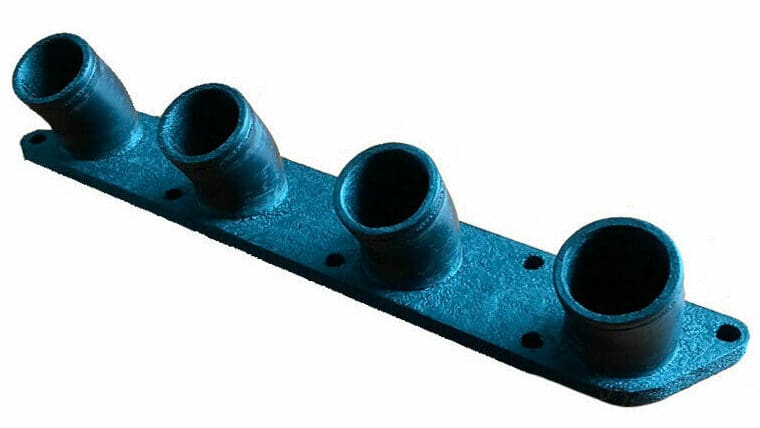
Nanovia offers an entire lineup of carbon-reinforced filaments, ranging from ABS and PETG to Ultem 1010 and PEKK. One product that stands out is the PEI-CF blend. Cheaper than Ultem 1010 (which constitutes the base material for the mix), it has similar specifications while surpassing natural PEI. This is due in great part thanks to the undisclosed carbon fiber content.
The printing process is not simple. Nanovia recommends printing in an enclosed system with air extraction or wearing adequate respiratory protection equipment. The extrusion temperature is between 380 and 420 °C, which puts it outside the reach of most printers. Even prosumers with custom-made machines will have a hard time printing this polymer. The cost might also be a barrier for most.
- Bed temperature: 140 °C
- Hot end temperature: 380-420 °C
- Price per kg: ~$320 (~$160 for 0.5 kg)
Kimya PEKK Carbon
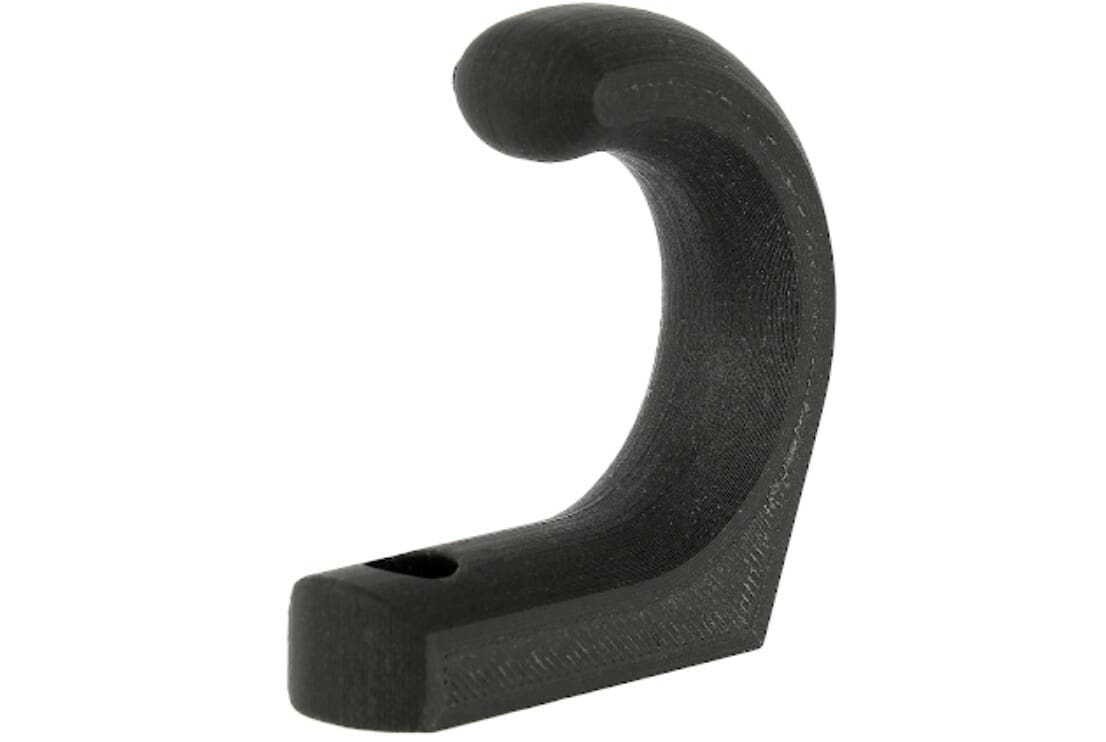
Kimya is on the more professional side of the 3D printer manufacturer spectrum. They make three different carbon fiber composite materials, each with a different base, including ABS, PETG, and PEKK.
Kimya PEKK Carbon sits firmly in the industrial end of the filament market. The material combines a polyetherketoneketone base with carbon fiber reinforcement to produce rigid, dimensionally stable parts designed for demanding mechanical, thermal, and chemical environments.
PEKK belongs to the same high-performance PAEK polymer family as PEEK, but Kimya describes its carbon fiber formulation as easier to print than either PEEK or PEI. Its slower crystallization behavior can help reduce warping and improve interlayer adhesion, although “easier” is relative here: The filament still requires an industrial machine capable of maintaining extremely high nozzle, bed, and chamber temperatures.
The material has a glass-transition temperature of 160 °C and a stated maximum service temperature of 150 °C in Kimya’s technical data. It is also rated UL 94 V-0 for flame resistance and offers strong resistance to abrasion and a broad range of chemicals, including many acids, bases, alcohols, hydrocarbons, ketones, and solvents.
Carbon fiber reinforcement increases stiffness and helps printed components retain their dimensions under load. Kimya reports a tensile modulus of 2,900 MPa and a flexural modulus of 2,924 MPa for printed specimens. These properties make the material a candidate for aerospace components, tooling, automotive parts, electrical applications, and other end-use parts where low weight, rigidity, chemical resistance, and heat performance are more important than easy processing.
A heated chamber is essential, and the filament should be printed slowly using a hardened, wear-resistant nozzle. Careful drying and storage are also advisable for consistent extrusion and mechanical performance. This is not a material intended for a conventional desktop printer.
- Hot end temperature: 370-380 °C
- Bed temperature: 150 °C
- Chamber temperature: 80 °C
- Recommended print speed: 20-40 mm/s
- Recommended nozzle: Hardened, wear-resistant nozzle
- Flame rating: UL 94 V-0
- Price: Contact Airtech or a regional distributor for current pricing and availability
License: The text of "The Best Carbon Fiber Filaments From Entry-Level to Pro" by All3DP is licensed under a Creative Commons Attribution 4.0 International License.
CERTAIN CONTENT THAT APPEARS ON THIS SITE COMES FROM AMAZON. THIS CONTENT IS PROVIDED ‘AS IS’ AND IS SUBJECT TO CHANGE OR REMOVAL AT ANY TIME.