Parts That Won’t Crack: 30 Useful PETG Prints

PETG resists impact, heat, and moisture better than PLA, so these parts hold up to daily use instead of cracking the first time they take a hit.
Just grabbed your first spool of PETG and not sure what to print with it? Or maybe you’ve outgrown PLA and want proof the upgrade is worth it, either way, this list is for you.
PETG splits the difference between PLA’s ease and ABS’s toughness: it resists impact, heat, and moisture noticeably better than PLA, without the warping and fumes that come with ABS. That means parts that actually get used, not just displayed, hold up longer.
Here are 30 free, useful designs built to put those properties to work, from the kitchen to the garage to the garden.
Kitchen
PETG earns its place in the kitchen mainly because it can flex a little before it breaks, instead of snapping outright. Twist a jar opener hard or lean into a pasta press, and PETG gives slightly first, where PLA tends to crack suddenly with little warning.
It also has a reputation as the more food-friendly filament, with the raw material itself is generally considered food-contact safe. That said, it’s worth a grain of salt and doesn’t automatically mean a food-safe printed part, since colorants, additives, print settings, and how well the surface is finished all affect the result too.
None of that rules these prints out; it just means treating them like any other homemade kitchen tool rather than assuming store-bought-level food safety.

Jar Opener
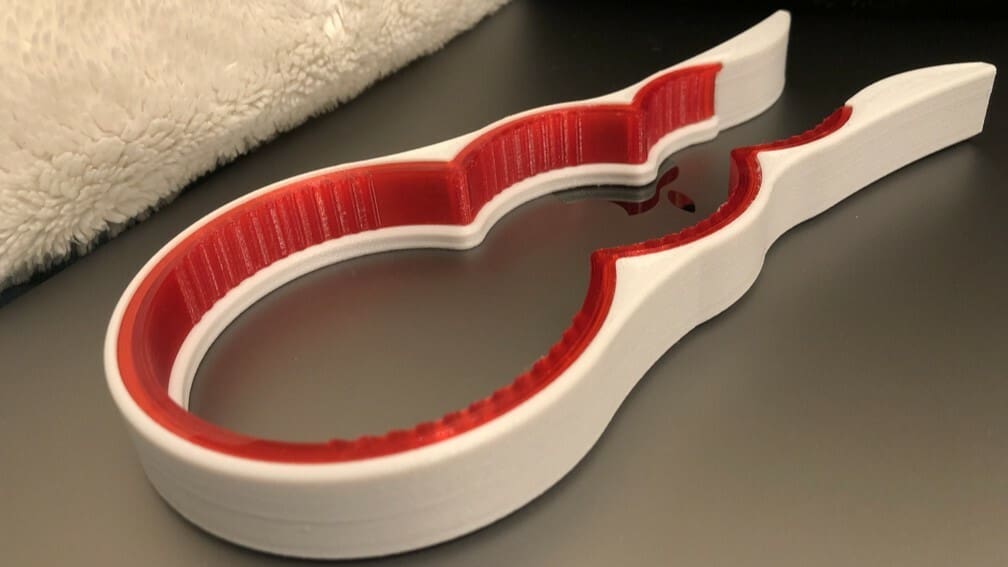
Opening a jar of pickles can sometimes seem like a Herculean task, and for these times, you’ll probably wish you had one of these. This jar opener features three separate grips to accommodate nearly any jar size. The flexibility of PETG allows the openers to bend slightly but stay strong, allowing you to open even the most stubborn jars.
This design is made with two separate pieces, one PETG and the other TPU. The inner TPU section provides more grip as well as the flexibility to conform to the contours of the jar lid.
The designer recommends at least 2 mm wall thickness with 35% infill for the PETG part and at least 1.6 mm wall thickness for the TPU part. They also provided a single-piece version of the model for those without the ability to print TPU.
- Who designed it? thinngimaker
- Where to find it? Thingiverse
Multi-Purpose Jar Dispenser
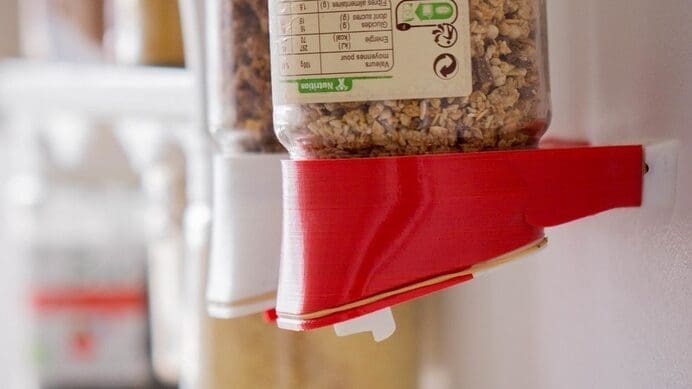
This multi-purpose jar dispenser is a great kitchen tool for storing your daily nutrients, including your favorite cereals, coffee beans, pasta, and more. The dispenser is composed of three components: the valve, the body with threads to screw in a jar, and a bracket with two 5-mm holes for wall attachment.
Although the designer printed this with PLA filament, he mentioned that it’s possible to print with PETG as well. Since PETG features higher strength and durability than PLA, it can help avoid cracks or breakage. Food-safe filaments are available for PETG, so be sure to check them out if you’re planning to print this for your kitchen goodies.
You won’t need any rafts or supports to 3D print this kitchen tool. What you will need, though, is the right jar. The current design fits standard-sized 77-mm diameter containers. Some successfully tested jars have been repurposed from brands, including Bonne Maman and Doritos.
- Who designed it? Barbe_Iturique
- Where to find it? Cults
Easy Peasy Lemon Squeezer
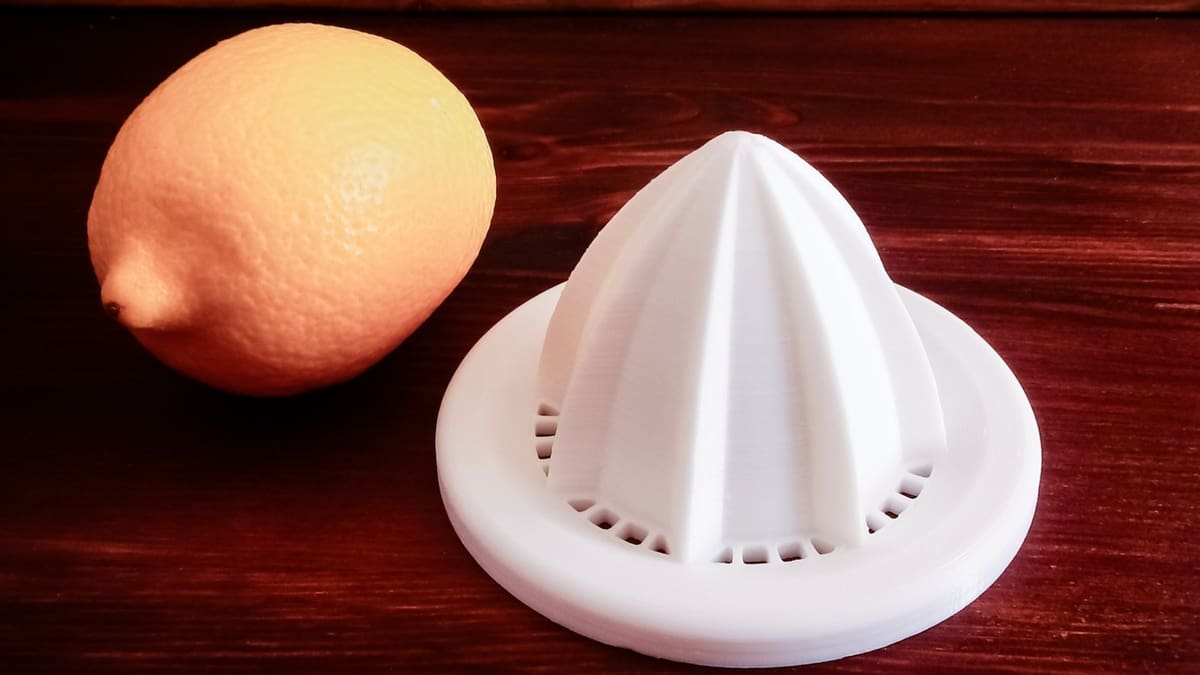
Do you want a nice cold lemonade in the summer or need some fresh lemon juice for a hot tea to cure that sore throat? 3D print this simple and very useful object to make the setup easier, whatever you might need it for!
This particular model was specifically designed to fit on the Ikea Pokal glass, although the maker states that it should work with other glasses as well.
This lemon squeezer is easy to print and requires no supports. PETG is also an ideal material choice thanks to its chemical resistance to acid and moisture (lemon juice in this case), it holds up without degrading.
- Who designed it? Deeeeelson
- Where to find it? Thingiverse
Pasta Press
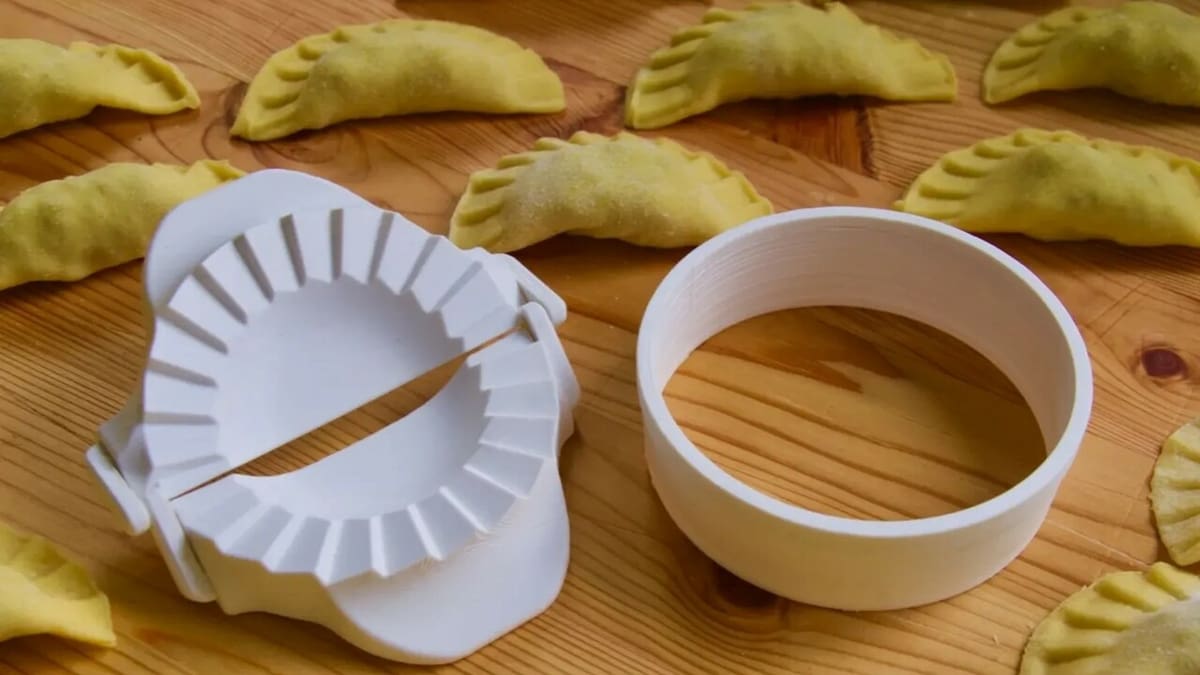
Eating pastries is delicious, but preparing them can be a bit of work. These pasta presses can be used to fill your homemade pasta with a delicious filling, or you can print them scaled up and make pastries. This tool not only makes the task easier and faster, but you’ll also have fun in the process!
In the printing recommendations, it’s recommended to increase the infill density of the hinges to make them more durable. Several reviews have reported that using a piece of filament as an axle works great.
- Who designed it? mmOne
- Where to find it? Printables
Spice Rack Pullout
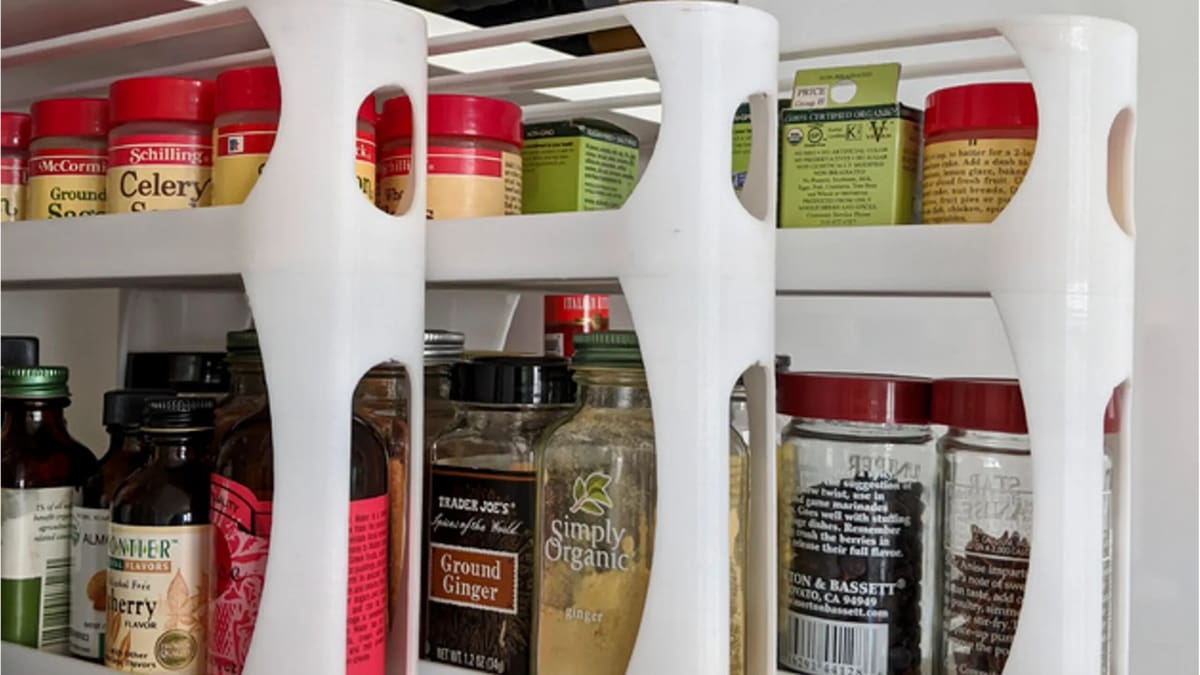
If your spice cabinet is a losing battle, this pullout rack fixes it in one print. It’s a rotating two-tier unit designed to slide into a standard cabinet and hold jars upright as it swings out, so nothing gets lost behind the fifth jar of cumin. It’s one of Printables’ most-downloaded kitchen organizers for a reason.
PETG is the right call here: the pivot point takes real torque every time the rack swings open, and a PLA equivalent tends to wear out or crack at that joint within a few months of daily use.
- Who designed it? SpongyBob
- Where to find it? Printables
Rotary Egg Dispenser
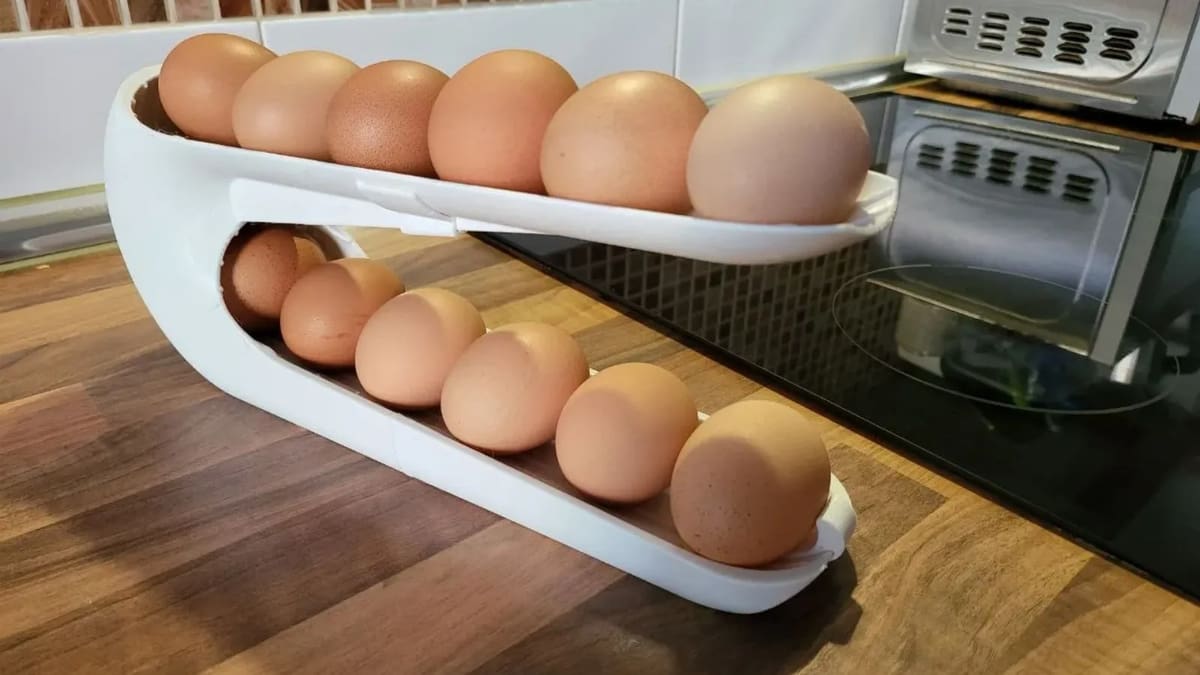
You can use this egg dispenser to store up to 12 XL eggs and up to 14 in smaller sizes. The creative design has a width of only 7 cm and can bring huge space savings to your fridge. Use PETG for this print to retain some flexibility and strength even in the cold temperatures of your kitchen fridge. No need to deal with those cumbersome cartons anymore. Egg omelet: Optimized!
You will need supports to print this, but a raft is not necessary and the infill is 10%. The designer has also added an optional anti-fall stop to the model to avoid any potential runaway eggs.
- Who designed it? ljhtom
- Where to find it? Thingiverse, Printables
Paper Towel Holder
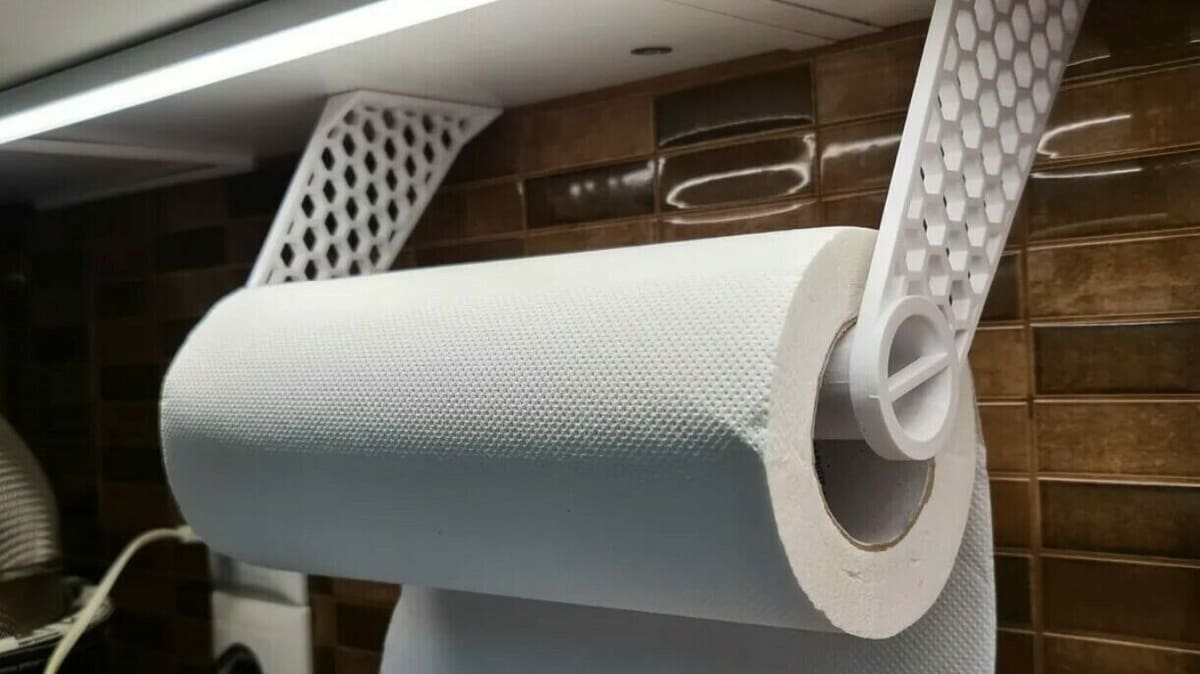
Sometimes, the most mundane objects end up being the most useful. This simple paper towel holder is perfect for the kitchen or, anticipating the next category, any workspace – it can be mounted upright or under surfaces.
To replace rolls, at least one of the arms needs to flex, which is where PETG comes in handy. Its ability to flex and return to the original shape makes it the preferred filament for this design. The hexagonal design also helps ensure the holder is lightweight and visually appealing.
- Who designed it? Lukes3D
- Where to find it? Printables, Cults
Chip Bag Clip
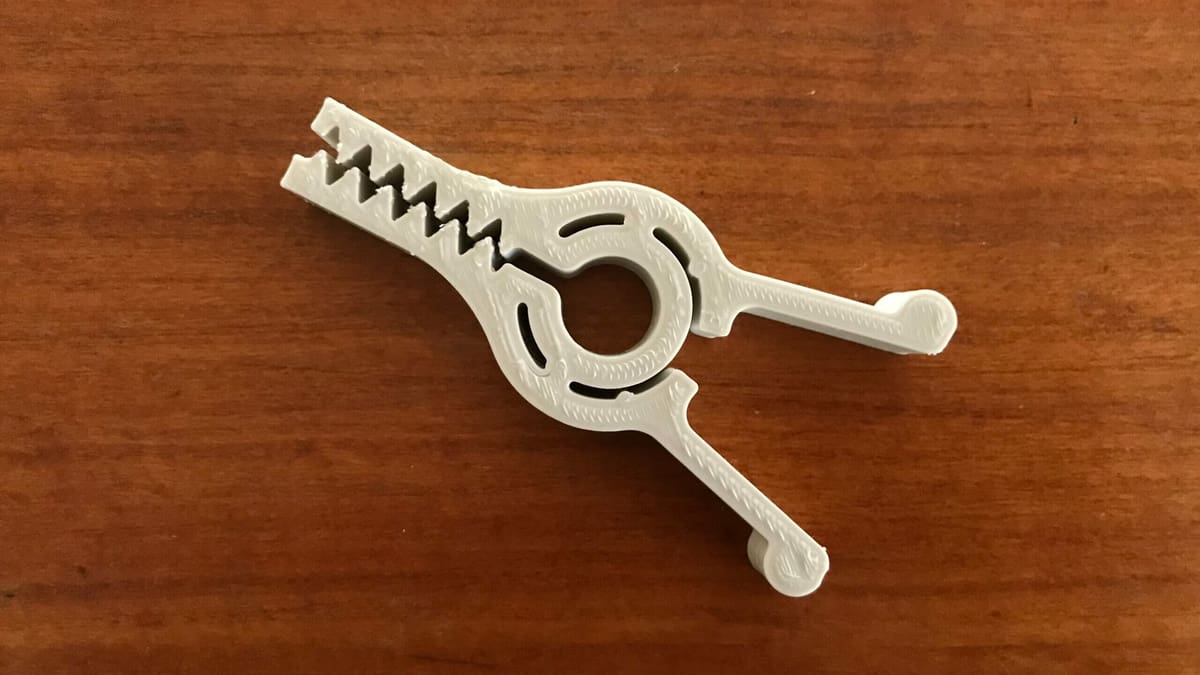
PETG’s ductility and high impact strength make it ideal for compliant mechanisms, which can bend under stress but return to their original form. In a way, the part acts as its own spring without needing any metal components to maintain its shape.
The chip bag clip is a great example of a simple compliant mechanism. Its design allows the user to squeeze the wide end to open the clip and close it when released. Like a regular plastic clip with a metal spring, this is useful for any bag that needs to be closed, but not sealed.
When it comes to printing, the designer used 100% infill. Neither supports nor rafts were used, which means that post-processing should be a breeze. However, given the shape of the clip itself, it may be worth watching out for stringing.
- Who designed it? srwilson58
- Where to find it? Thingiverse
Kitchen Sink Sponge Holder – Draining Rack
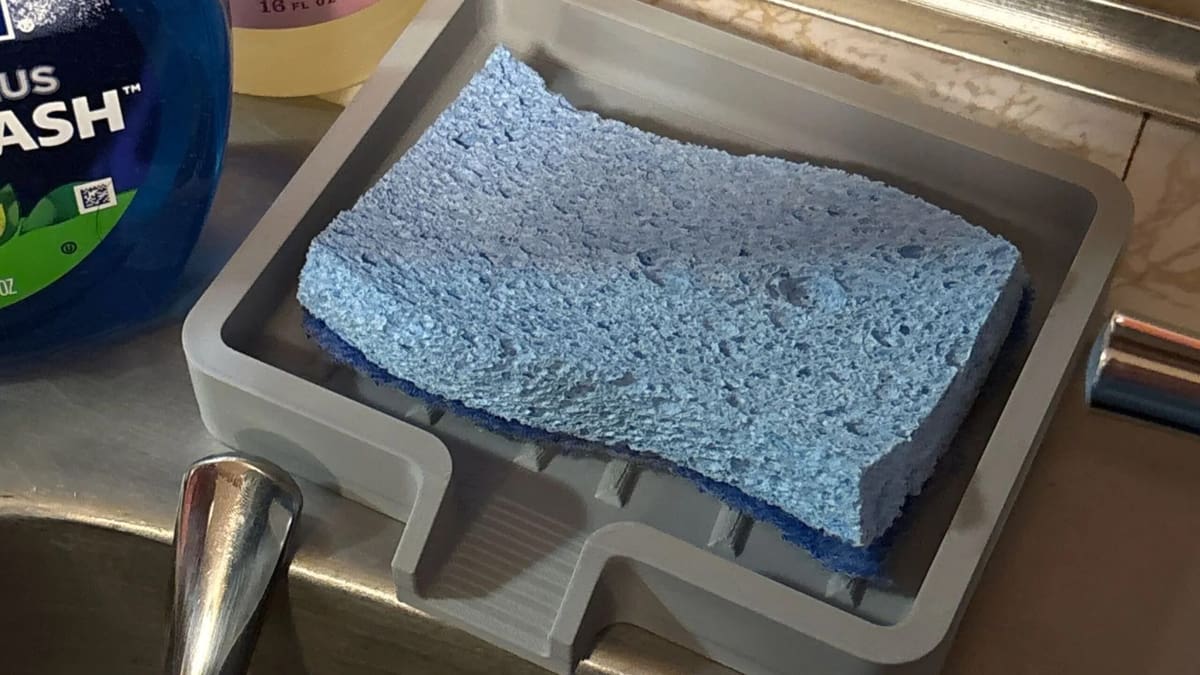
A dry sponge is a happy sponge, and this caddy is built to keep it that way. It clips onto the edge of the sink with a built-in drain channel that routes water straight back down, instead of letting it pool underneath and turn your sponge into a bacteria magnet between washes. No supports needed, and it prints small and fast.
PETG earns its place here because this thing sits in standing water and soap residue all day, every day. PLA absorbs moisture over that kind of long-term exposure and starts to soften or discolor — PETG just doesn’t.
- Who designed it? Drukar UA
- Where to find it? MakerWorld
Under Desk Cable Clip
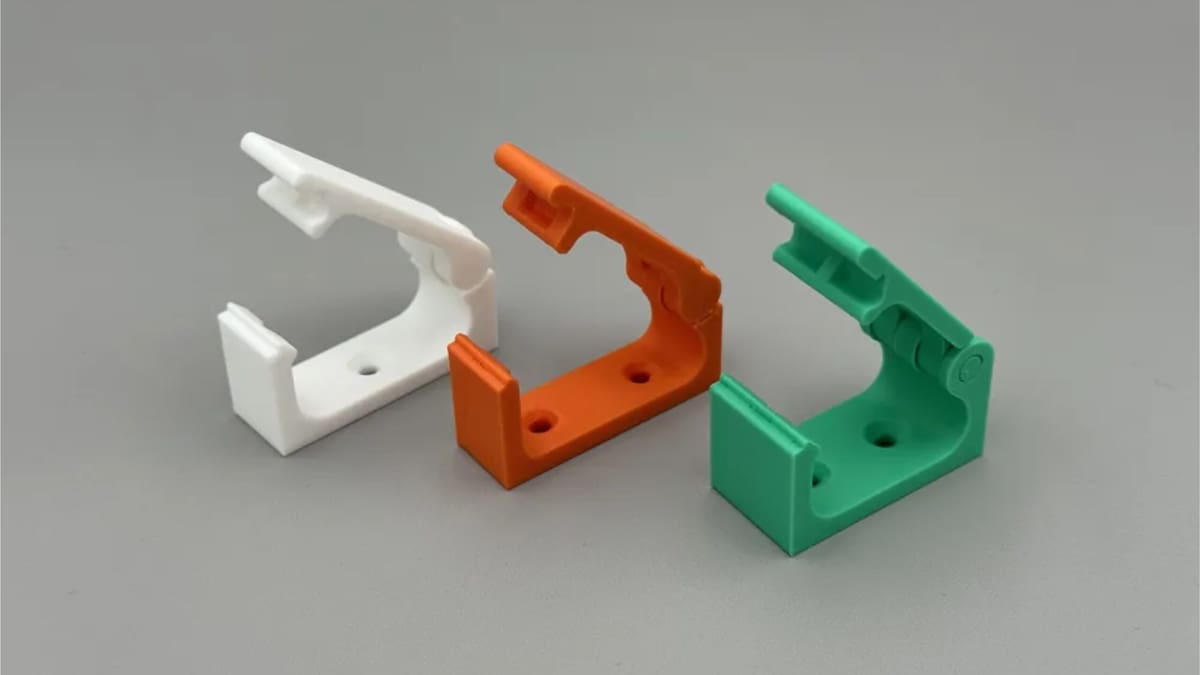
A simple clip that mounts under your desk and stops a cable from sliding off the edge — hinge and all, printed in one piece, no assembly needed. Snap it around a cable and it stays put until you decide otherwise.
That built-in hinge gets opened and closed constantly, which is a fatigue test PLA usually fails within a matter of weeks. PETG’s flex tolerates the repeated bending far longer before it finally cracks.
- Who designed it? plugowski
- Where to find it? MakerWorld

Home & Workspace
From pliers to Raspberry Pi enclosures, different workspaces have different needs, and PETG is here to assist!
Wavy Lamp
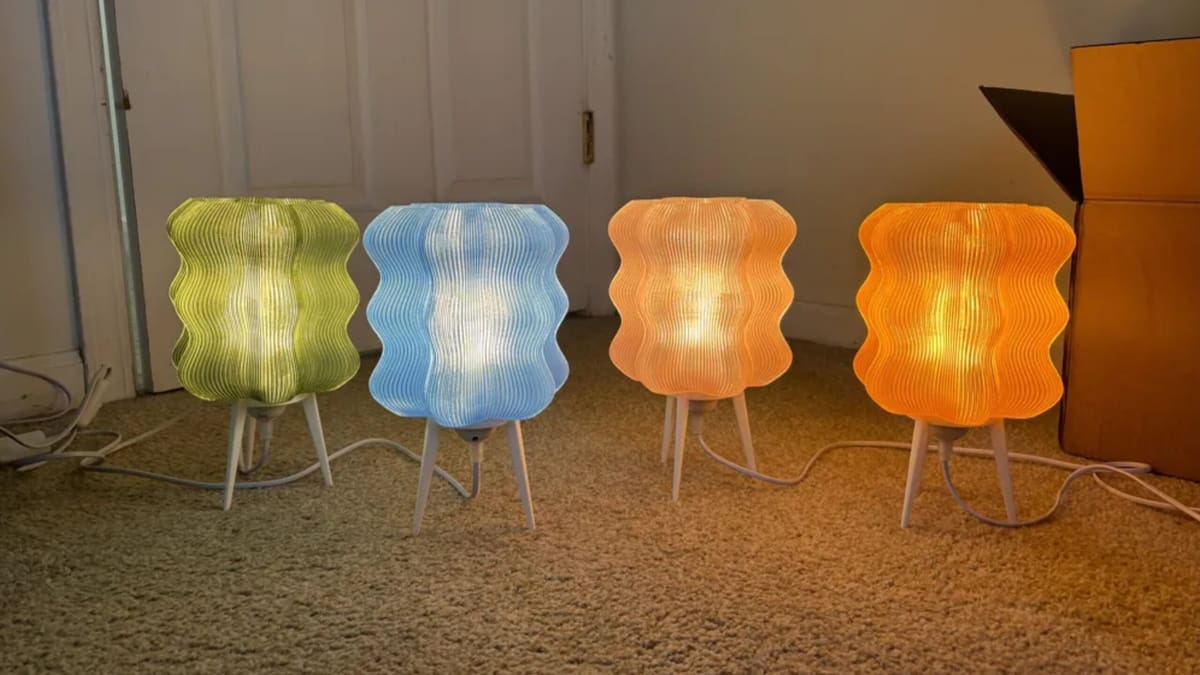
Not every print on this list is strictly practical, and this one earns its spot on looks alone. Inspired by Wooj Design’s now-famous wavy lamps, the shade prints in spiral vase mode as one continuous, undulating wall. No seams, no supports, just a single organic form that glows when lit from inside with a standard E26/E27 LED bulb.
The designer chose PETG specifically for the filament’s color clarity and the way Translucent PETG diffuses light through it. This is one print where “PETG makes sense” not only because of its heat resistance, but also because of how good the material looks doing its job.
- Who designed it? Eris
- Where to find it? MakerWorld
Shoe Horn

Put your best foot forward, quite literally. This compact shoe horn is sized for an entryway table, a travel bag, or a locker — hook it over the heel, slide your foot in, and pull it free.
The curved shaft flexes slightly and takes real foot pressure with every use, which is exactly the kind of repeated stress that eventually snaps a thin PLA print. PETG’s impact resistance and slight give keep it working.
- Who designed it? fifindr
- Where to find it? MakerWorld
Hand Press / Grip Strengthening
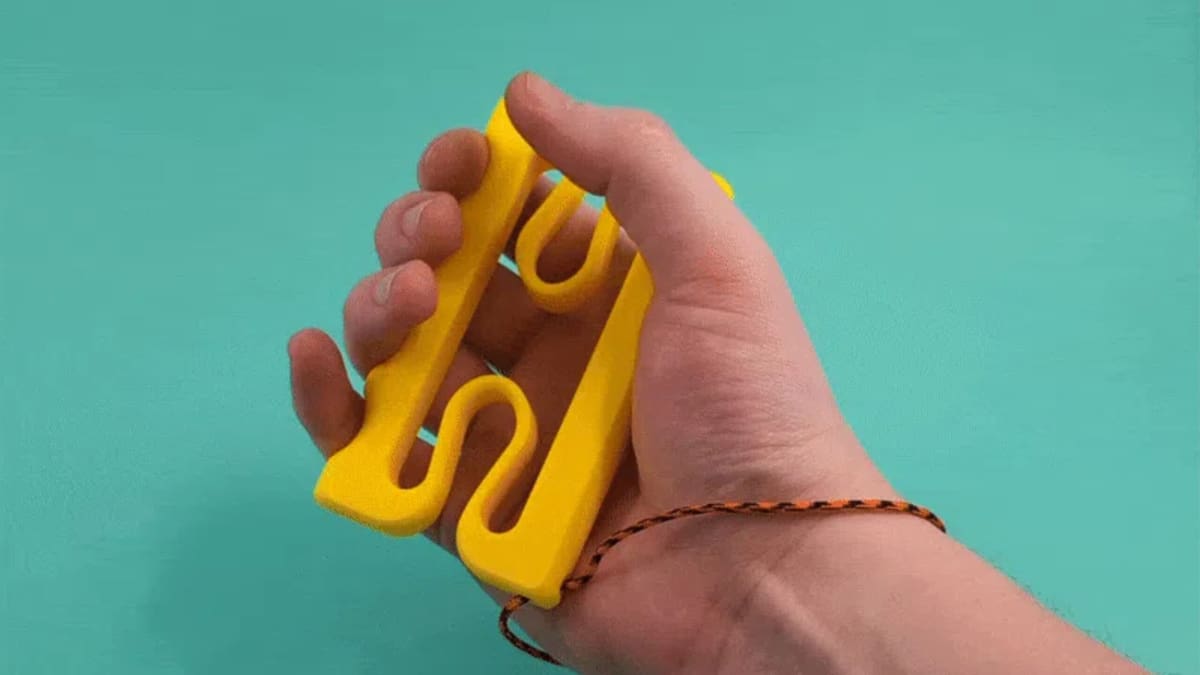
Get a grip — literally. This single-piece hand trainer comes with three built-in resistance levels, adjustable for hand size right in the slicer, and it’s ready to use the moment it comes off the plate.
The designer specifically calls for PETG here, and the reasoning is airtight: the constant squeeze-and-release that makes it useful as an exerciser is also exactly what deforms or cracks a PLA print over time.
- Who designed it? Sakul
- Where to find it? MakerWorld
Mountable Vise
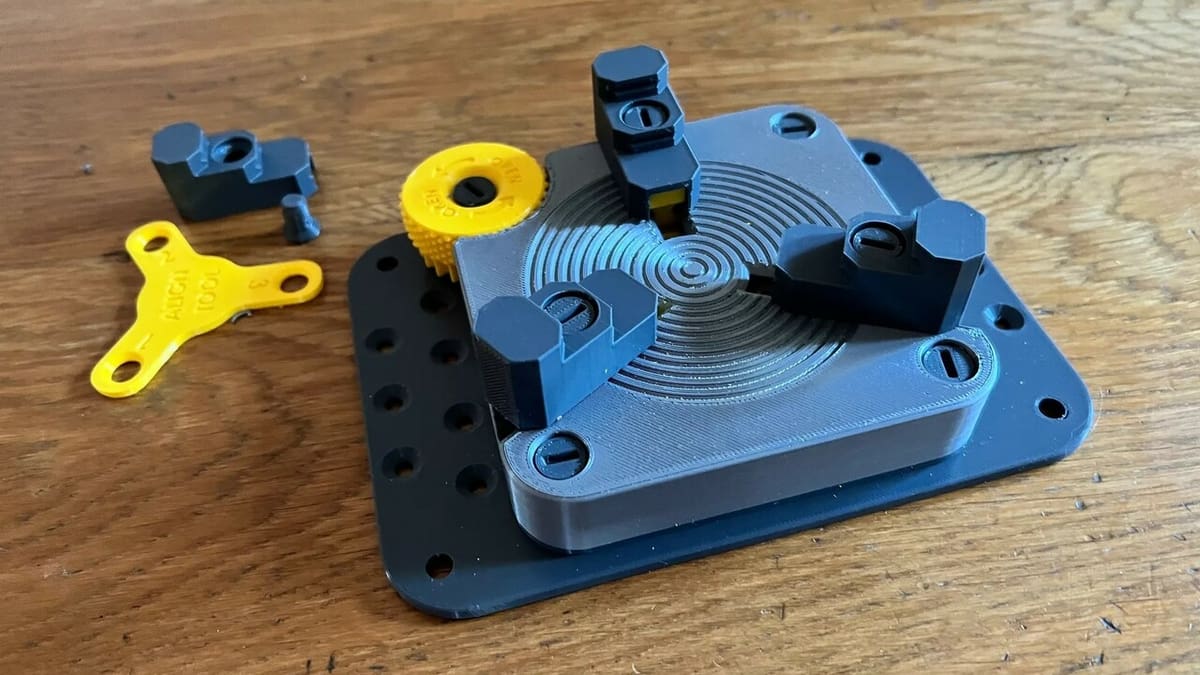
While crafting, sometimes you just need a third hand to hold one piece so your other hands can work freely. If metal tools are too rough, potentially damaging your object, 3D printing a vise using PETG can be a great solution. With this vise design, you can choose insets that offer two, three, or four jaws.
PETG, being a tough material, is a perfect choice to prevent moving parts from breaking. While the design states that you may use PLA for most of the parts, the screws must be printed with PETG for durability. To help you assemble this set, the maker designed an alignment tool for the screws. It was also noted that lubricating the moving parts with a bit of oil will help everything glide smoothly.
- Who designed it? Sneaks
- Where to find it? Printables
Self-Opening Pliers
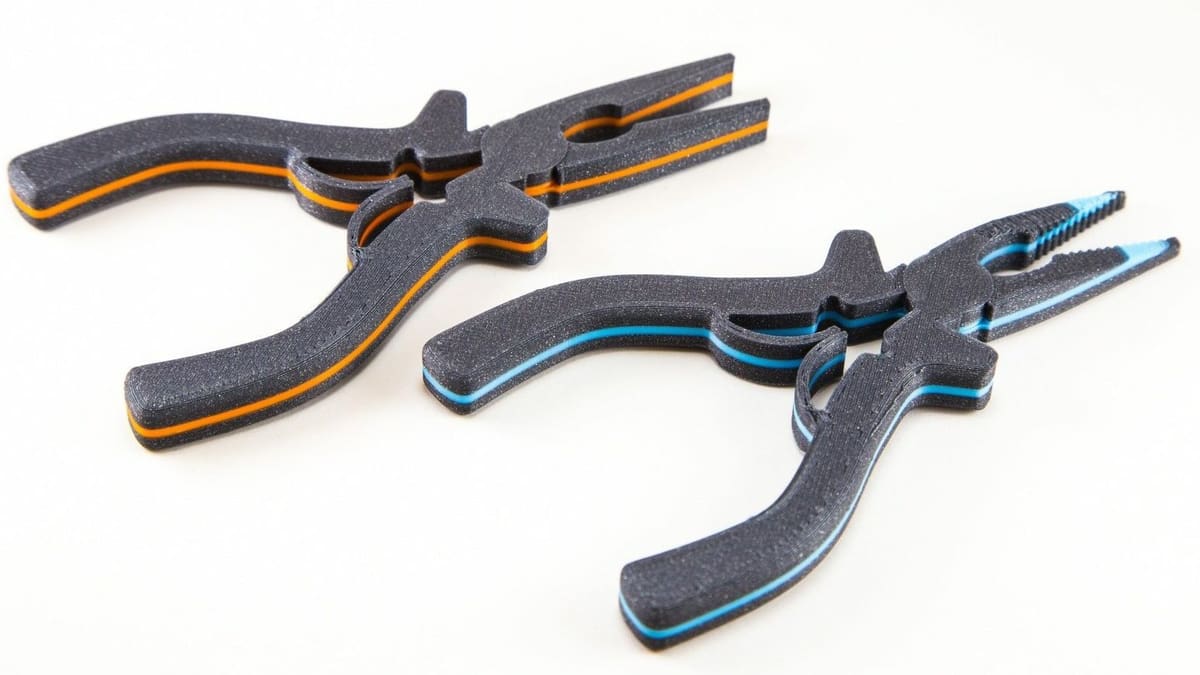
Another compliant mechanism makes our list in the form of a very familiar tool. These self-opening pliers have integrated springs at the joint that allow the tips to close when the handle is squeezed, and then open when released.
Made entirely from PETG, they’re ideal for lightweight applications that still require a narrow, tight grip. There are four styles of pliers available and each consists of a two-part assembly. Although the designer also mentions PLA as an acceptable filament for printing, some makers have reported that their pliers snap in PLA, but succeed with PETG.
- Who designed it? ShawnGano
- Where to find it? Thingiverse, MyMiniFactory, Cults
Outdoors is where PETG really earns its reputation. PLA tends to soften and warp in direct sun or a hot car, but PETG holds its shape through heat and UV exposure, so a planter or bike mount won’t slump or discolor after a summer outside. Pair that with real toughness against knocks, drops, and rain, and these are prints built to actually live outdoors
Reusable Zip Tie
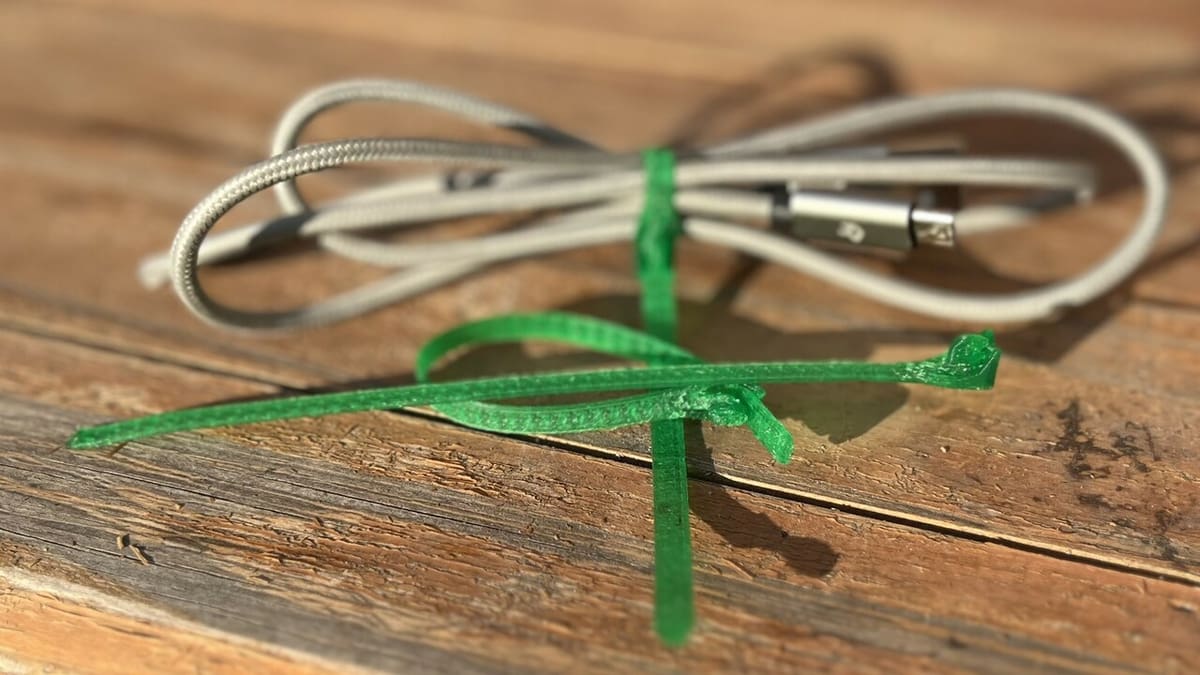
Whether you call them zip ties, zip straps, or cable ties, one thing we can all agree on is that we can never have too many of these things. This design prints without supports and very quickly, so if you find yourself without a cable tie you can have one in under 10 minutes.
PETG makes sense as a material choice, as it will hold on tight but allow just enough give for the ratcheting mechanism to work. There are other cable tie designs out there that are meant to use flexible filaments, but these specifically call for PETG. And one thing that you can’t get from flexibles is that satisfying click sound as you tighten up the strap.
- Who designed it? vinchlet
- Where to find it? Thingiverse
Raspberry Pi 3 Enclosure
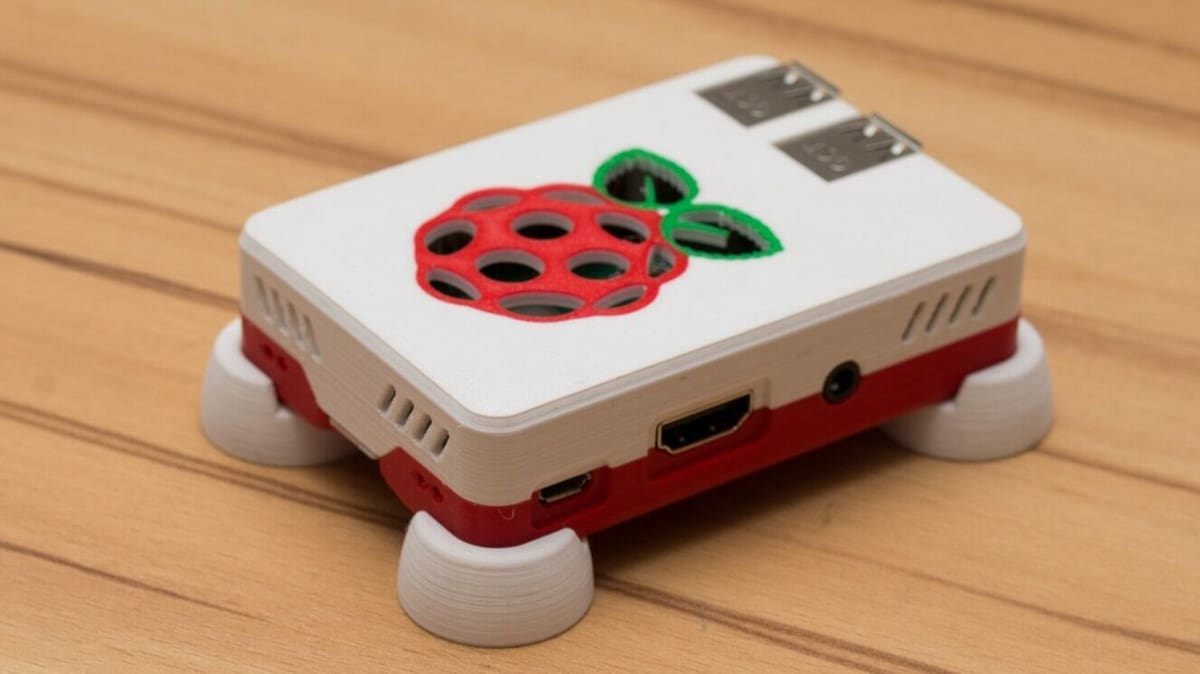
The heat resistance of PETG makes it useful for electronic enclosures. Paired with its ductility, you can have an enclosure that snap-fits together without screws, such as this Raspberry Pi 3 enclosure.
The design not only protects the onboard components of the Pi, but also prevents heat build-up from affecting its performance, as the Pi logo and various cutout vents throughout the case dissipate any excess heat. If you’re looking for a slightly different functionality than what this case can offer, we’ve already compiled a list of cool cases for Raspberry Pi and your Arduino boards, too!
- Who designed it? Malolo
- Where to find it? MyMiniFactory, Cults, Printables, Thingiverse

Torque Wrench Handles
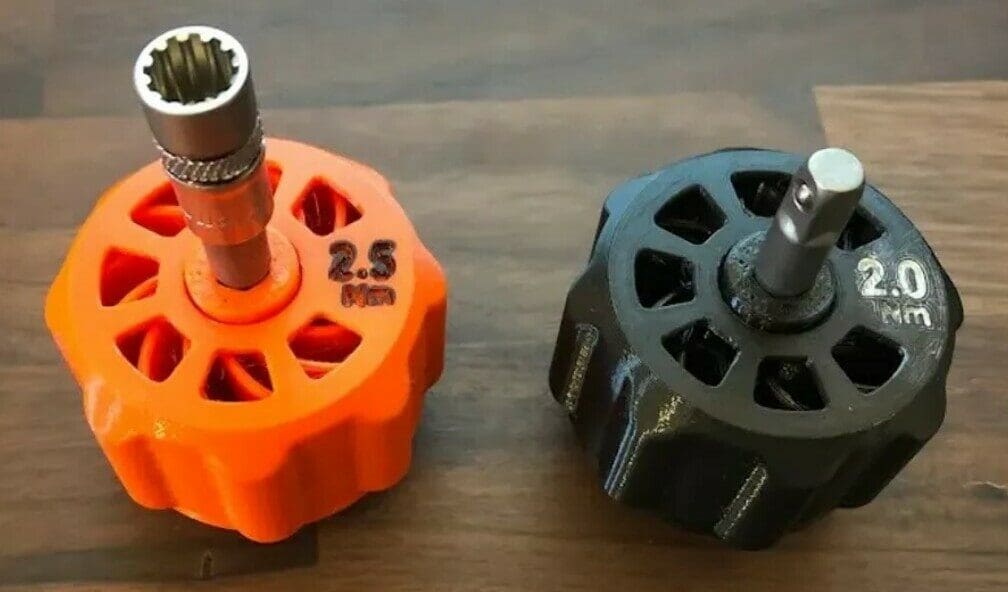
Swapping nozzles can sometimes be a challenge with a limited range of motion and lack of small tools. In this case, the strength and ductility of PETG are here to save the day once again with the torque wrench handles. A standard torque wrench consistently applies the same rotational force when the wrench is fastening a screw or nut.
For the printable torque wrench handles, the internal rotor contains fins that will trip when rotated with a certain force. This indicates that the threshold torque was applied. The design comes in four different torque values between 10 and 30 Newton-meters, perfect for non-permanent fastening needs. The designer recommends printing with 100% infill.
- Who designed it? A_R_B
- Where to find it? Printables, Thingiverse
Hooks for IKEA Skadis
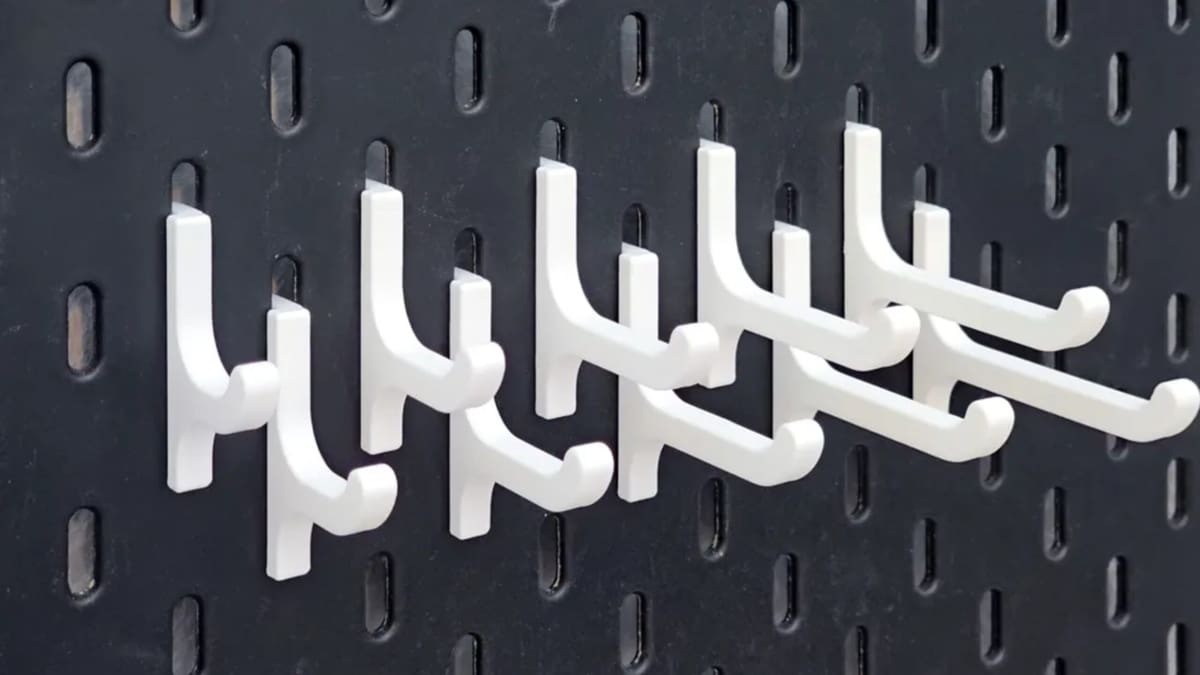
Got a Skadis pegboard with nothing hanging on it? Not for long. This is a full lineup of hook sizes built to snap straight into the Skadis grid, no screws or extra hardware needed — just pick the size for whatever you’re hanging and go.
Hung tools mean constant knocks and steady weight pulling on a small point, and that’s where PETG’s impact resistance pays off. A thin PLA hook tends to snap right at that stress point after enough use; PETG takes it in stride.
- Who designed it? AU3D
- Where to find it? MakerWorld
Sturdy Modular Filament Spool Rack
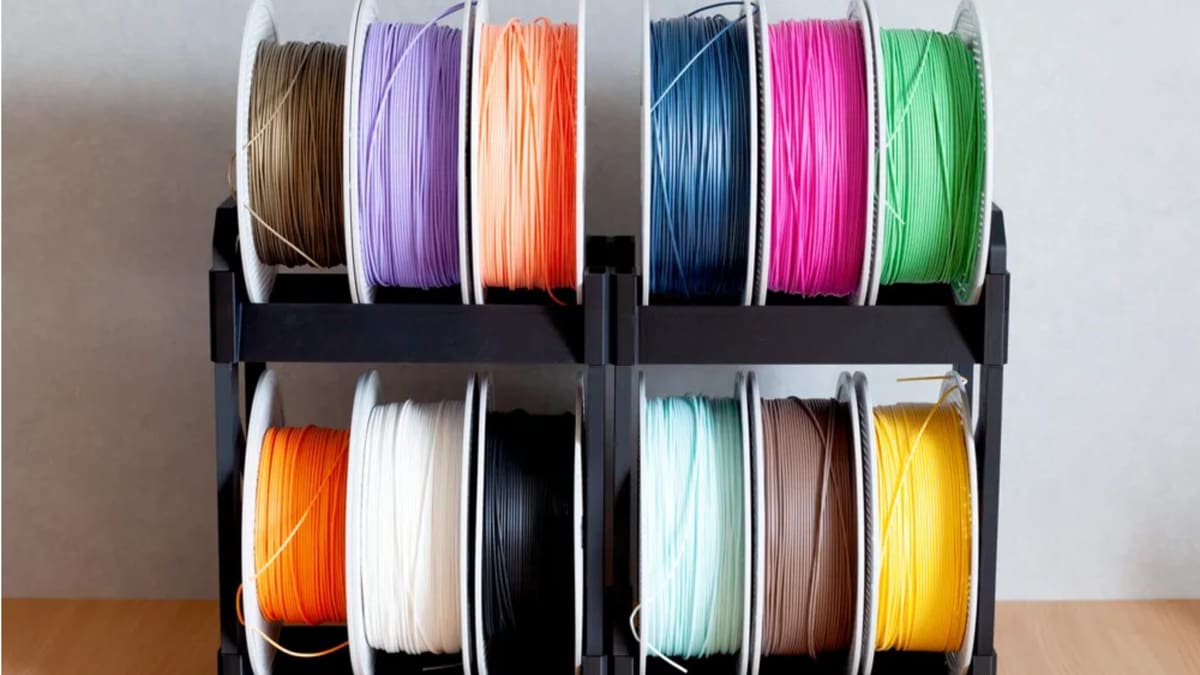
For anyone whose spool collection has outgrown a cardboard box, this is the fix. It’s a fully-printed, stackable rack system that holds spools without a metal rod or any hardware at all — just print another module whenever your stash grows.
A rack like this has to carry real weight without sagging, and that’s exactly where PETG pulls ahead of PLA. A fully loaded PLA rack can creep and bow after a few warm months in a garage or workshop; PETG holds its shape under sustained load.
- Who designed it? Antiphrasis
- Where to find it? MakerWorld
Desk Bag Hook
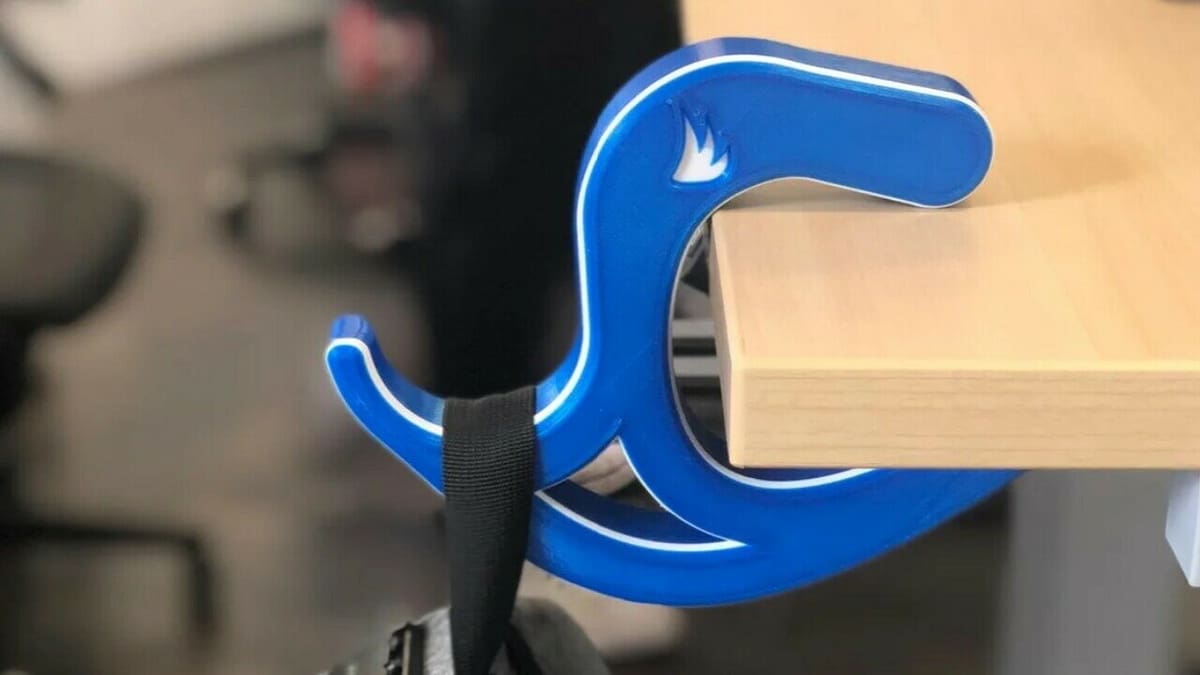
Don’t feel like putting your bag on the floor or hanging it around your chair? Then this desk bag hook can hold it up for you! The simple yet useful design applies pressure to both the surface and undersides of the table to create a counteracting force that can support your bag. It’s also convenient because it can fit various table thicknesses.
If printed in PLA, the hook is at risk of cracking or snapping under a heavy load, but with PETG, the hook will bend before it breaks. Once you’re done, just slip the hook into your bag for the next time you’ll need it.
- Who designed it? PieSupplies
- Where to find it? Printables, Cults, MyMiniFactory, Thingiverse
Outdoors
Outdoors is where PETG really earns its reputation. PLA tends to soften and warp in direct sun or a hot car, but PETG holds its shape through heat and UV exposure, so a planter or bike mount won’t slump or discolor after a summer outside. Pair that with real toughness against knocks, drops, and rain, and these are prints built to live outdoors.
Small Watering Can
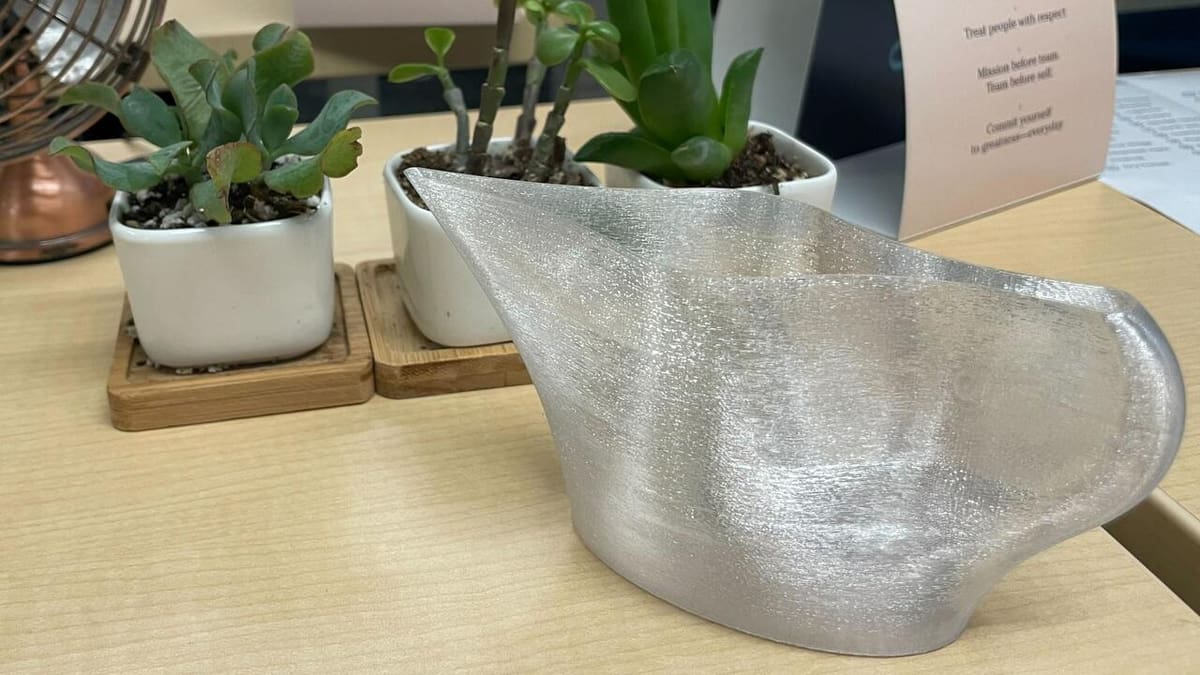
You could buy a small, useful watering can or 3D print your own. Which option do you think we went for at All3DP?
And this one is just right for us: beautiful, practical, and easily printable in PETG!
Printing it was a breeze, as the model doesn’t need supports and you can scale it as much as you need to (although the original size is a great fit for limited workspaces). The designer suggests opting for a slightly slower print speed – 40 mm/s – and recommends adding more bottom layers to ensure that there won’t be any accidental leaks.
And you can get playful with the dazzling PETG choices and opt between different colors and material translucencies to get something unique!
- Who designed it? shmeeed
- Where to find it? Thingiverse
Awesome Bee Feeder
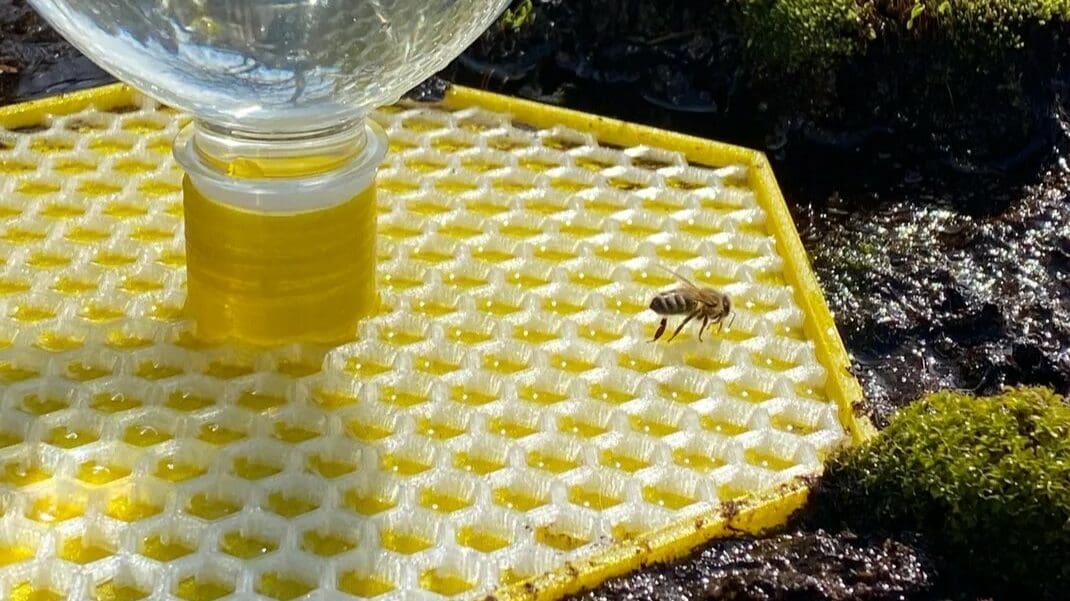
If you’re concerned about living organisms, both animal and plant, this bee feeder is a great sustainable ecosystem tool to help boost the bee population. It features a honeycomb-structured tray that is easy for bees to land on to take a sip of water. This is particularly important on warm summer days when they need to be constantly hydrated.
The advantage of using PETG filament is its relatively higher resistance to UV light to avoid potential degradation or deformation of the feeder, especially on bright summer days. When it comes to putting prints under sunlight, PETG will fare much better in the long run than ABS or PLA.
The bee feeder weighs only 225 grams and takes 20 hours to print. It’s recommended to print in an upside-down position for a nice finish, as makers have reported issues attempting otherwise. You just need a plastic water bottle filled with water to attach to the feeder after printing.
- Who designed it? NicG
- Where to find it? Printables
Bike Stand
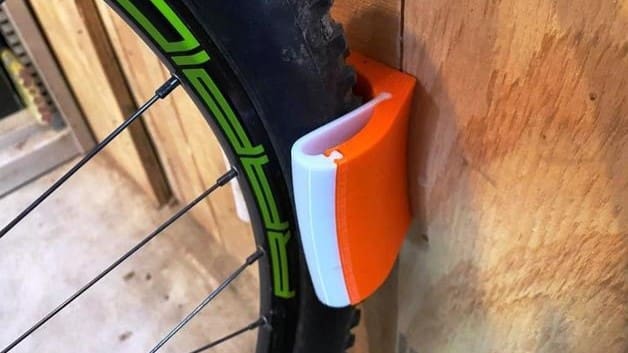
This small and simple bike stand could be just what your messy garage needs. Place it on the wall of your garage to keep the bike stationary while doing maintenance or cleaning. Or use it as a dedicated parking station to avoid staining the wall with tire marks.
The two-part design enables you to use just the right filaments for the task. PETG should be used to print the outer shell to provide reinforcement that withstands the weight of the bike. The inner part should be printed with soft TPU to effectively grab the bicycle wheel.
This particular part is designed to fit a 2.25″ mountain bike tire, but there is also a thinner road bike version. No details on print settings were provided, but you’ll probably want to opt for high infill to make them strong.
- Who designed it? 3DPrintingWorld
- Where to find it? Thingiverse
Squeeze Fan
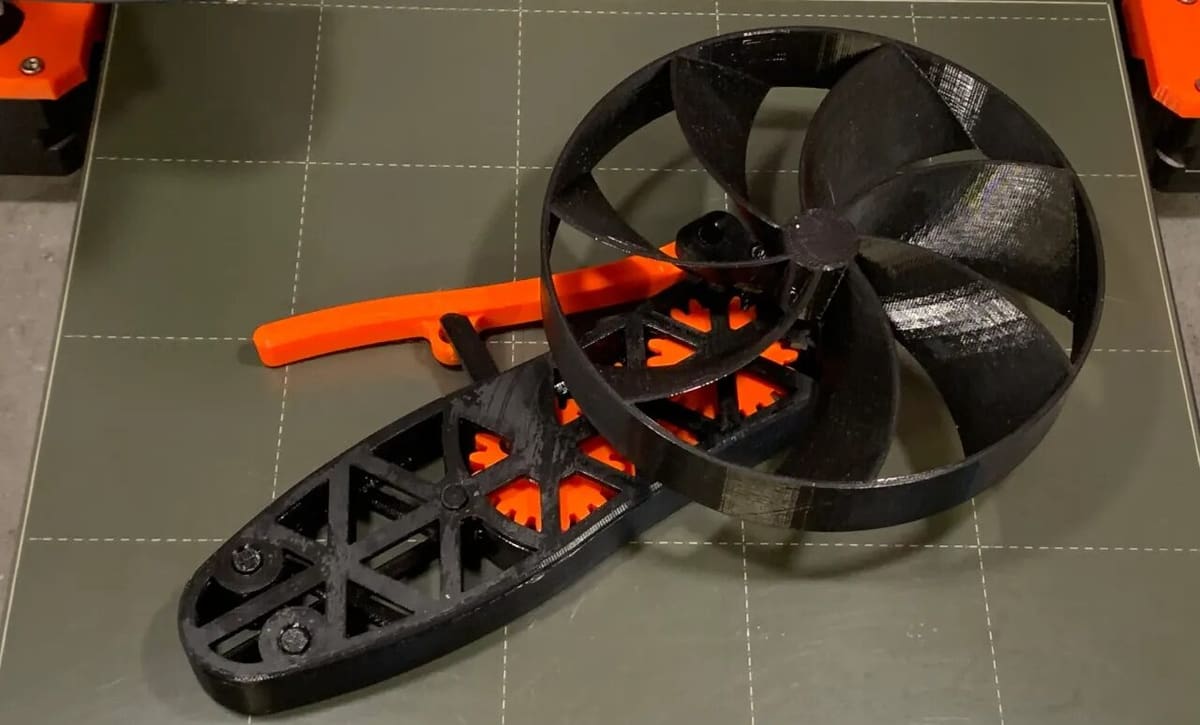
Unlike most squeeze fans which are like useless toys, the ruggedized squeeze fan actually generates sufficient wind to cool you down! This design will be most durable if printed with PETG. After all, the trigger and gears need to withstand repeated force and torque applied by your fingers to avoid cracks or breakage of the fan.
Printing this fan is a breeze (heh) and you won’t need any supports, though there are several components needed. The designer has also updated the files to make its blade 78% larger than the original one to give you even more of that cool breeze.
- Who designed it? GeorgeZSL
- Where to find it? Thingiverse, Printables
Rugged Waterproof Box
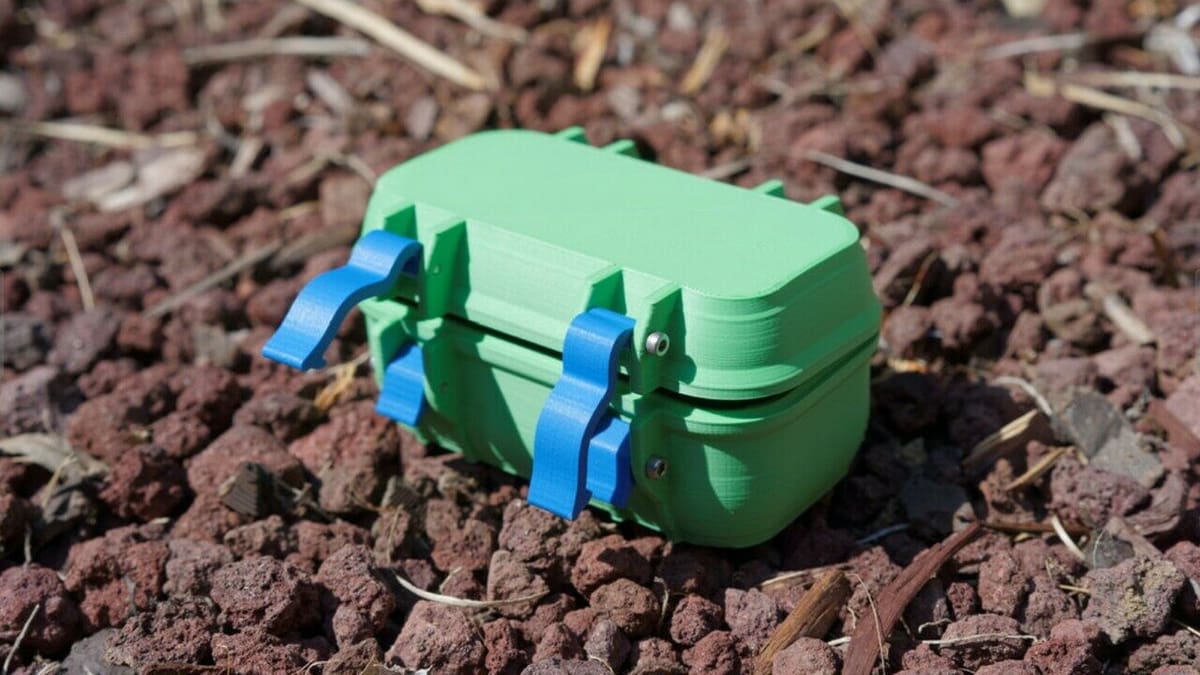
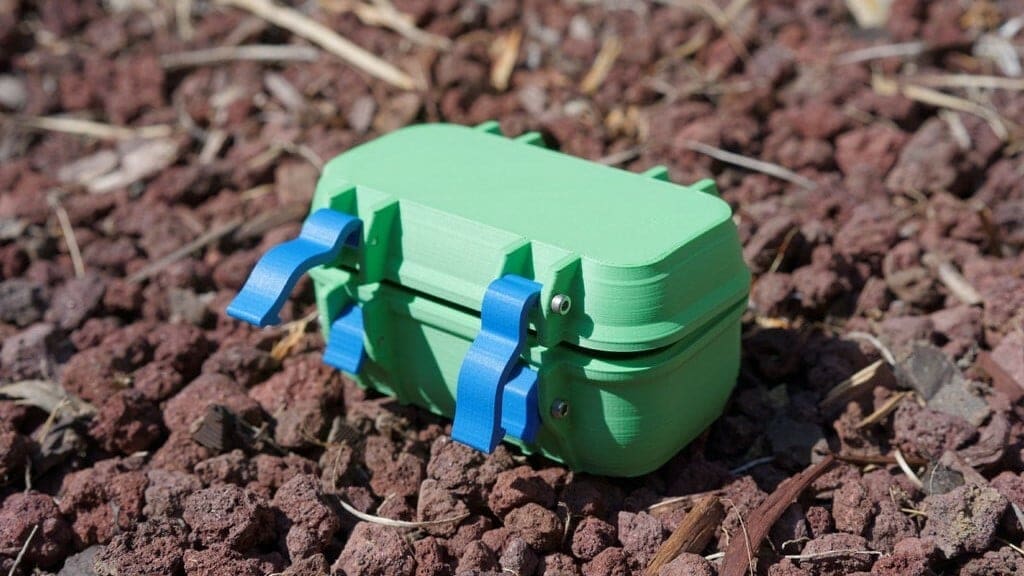
Whether it’s a rainy day or you’re headed to the beach, there’s always a possibility that your valuables can get wet. When printed in PETG, this rugged waterproof box will prove useful in these scenarios.
Kept closed with a silicone gasket and a snap-on cam latch, the box takes advantage of the moisture-resistant and ductile properties of PETG. A foam insert can also further protect the box’s contents when dropped. The design is also customizable to create different shapes and sizes, so the sky’s the limit!
- Who designed it? zx82net
- Where to find it? Thingiverse
Plant Watering Globe
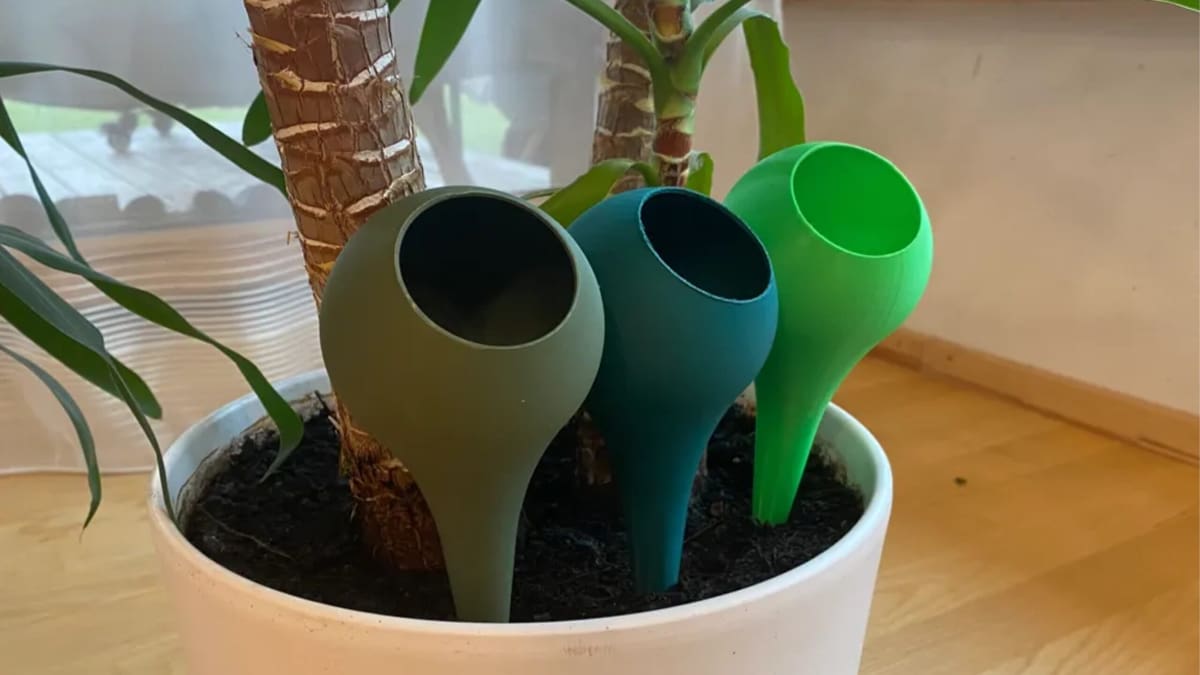
For anyone who forgets to water their plants, or just wants to leave for the weekend without worrying. Fill the roughly 200ml globe, push it into the soil, and it slowly drips water into the root zone over 12 to 24 hours, depending on the soil.
Sitting buried in damp soil for that long is a rough environment for PLA, which absorbs moisture and can soften or cloud over time. PETG’s low water absorption means it barely notices the constant contact.
- Who designed it? Augustas
- Where to find it? MakerWorld
Leaf Nest Bird Feeder
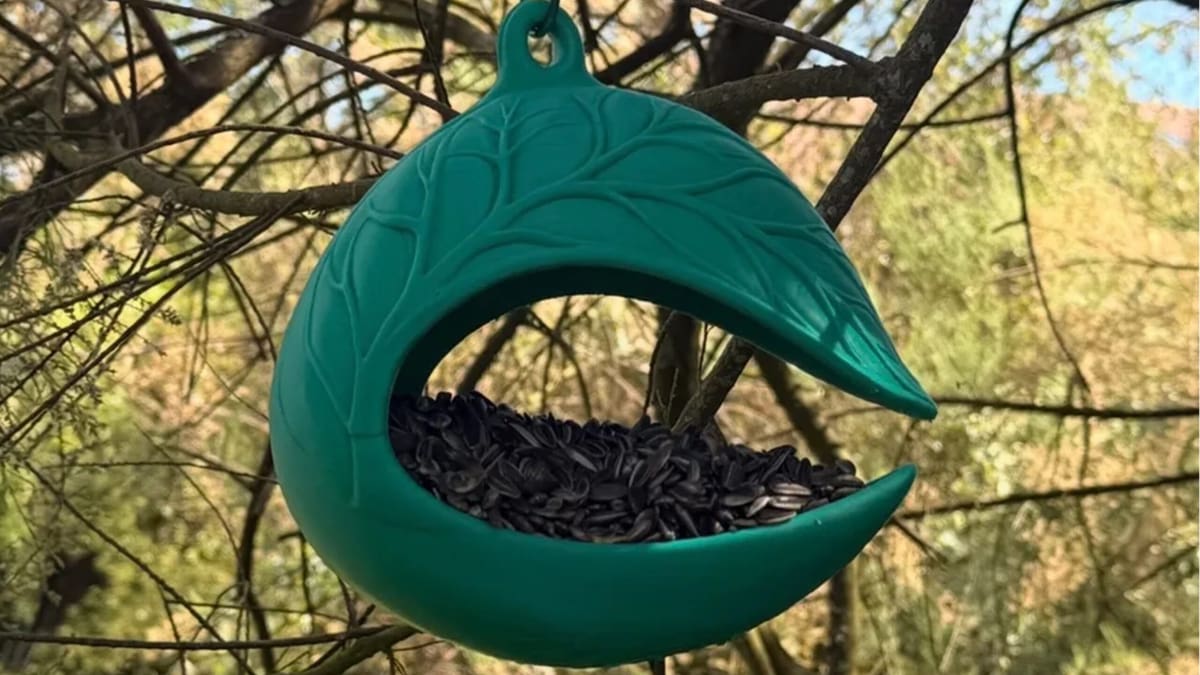
Part bird feeder, part garden decoration, this leaf-shaped feeder looks as good on a balcony railing as it does doing its actual job — its open, bird-friendly design holds seed while staying easy to refill.
Built to live outside year-round, it needs PETG’s UV stability and water resistance to keep that thin, curved leaf shape from yellowing or turning brittle the way a PLA print left out in the weather eventually does.
- Who designed it? Dratek
- Where to find it? MakerWorld
Prusa PRO Face Shield
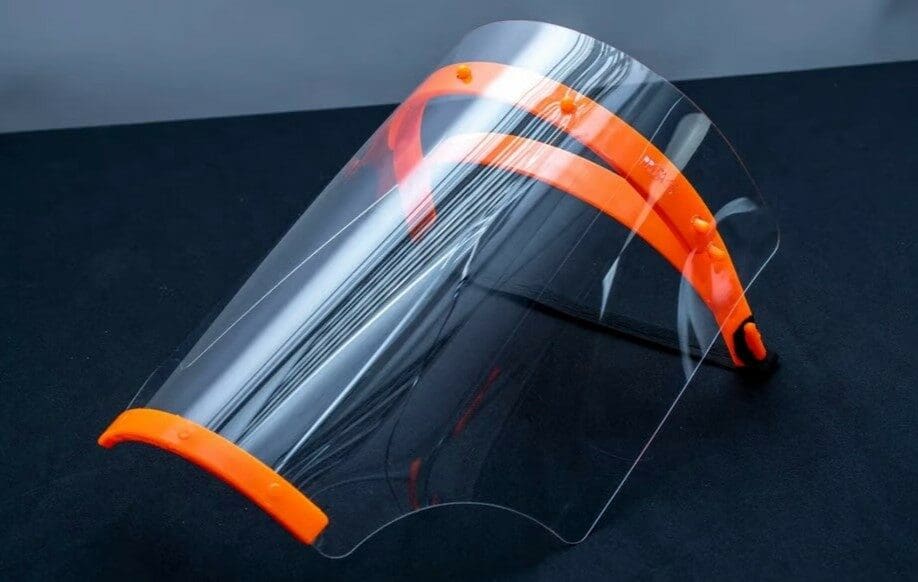
The Prusa PRO Face Shield was designed in just three days by the Prusa Research team during the peak of the Covid-19 pandemic. The team consciously made the design open source to reach as many people as possible. Their filament of choice? You guessed it!
PETG was highly recommended due to its chemical resistance, especially when the face shields need to be disinfected in high-risk environments such as medical facilities. Since the pandemic, designs such as this have helped thousands of essential workers and demonstrated how 3D printing can bring about positive change in the world.
This design is the successor to the already extremely popular Prusa Face Shield RC3. However, this version meets the official EN 166:2001 standard for personal eye protection. Not only is it a straightforward print, but there’s also an official instructional assembly video.
- Who designed it? Prusa3D
- Where to find it? Printables
50+ Plant Labels
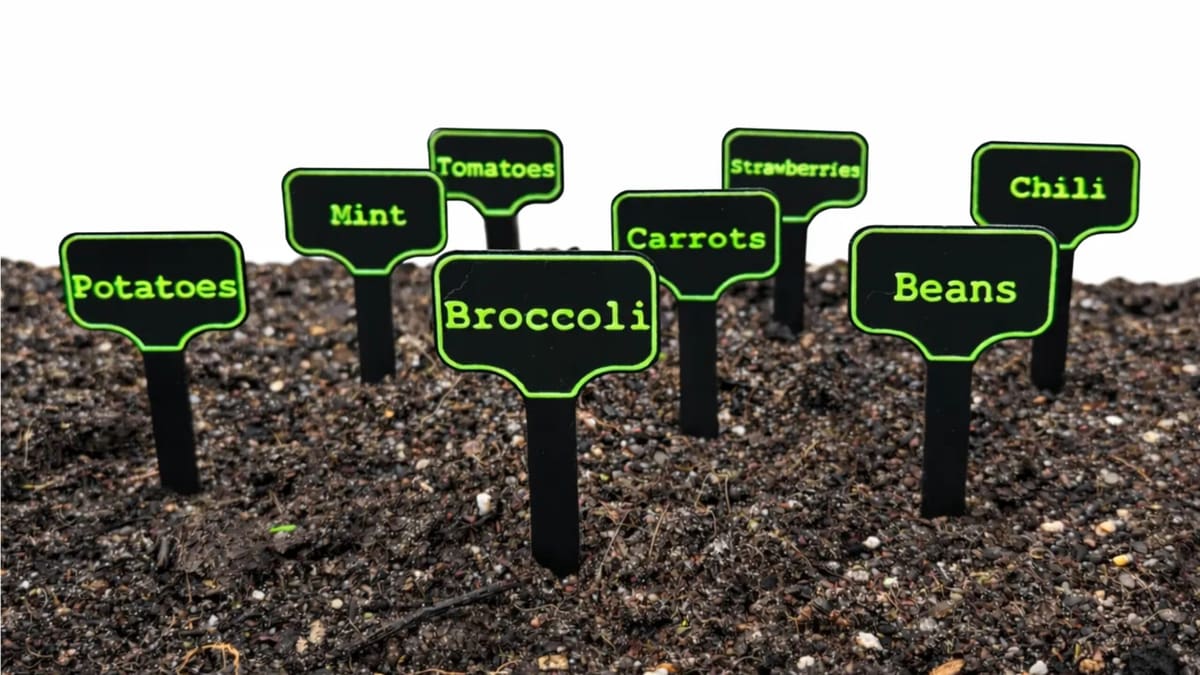
No more squinting at faded pen marks to remember which row is basil and which is cilantro. This is a ready-made set of over 50 labels covering the common vegetables, herbs, and fruits, plus blank ones for anything the set doesn’t cover; write on those by hand, or add text right in the slicer before printing.
The designer specifically calls out PETG (or ABS/ASA) for anything going outside, and it’s easy to see why: these sit in soil and direct sun for an entire growing season, and PLA labels fade, warp, and turn brittle well before harvest. PETG just keeps going.
- Who designed it? Felix
- Where to find it? Printables
You May Also Like:

License: The text of "Parts That Won’t Crack: 30 Useful PETG Prints" by All3DP is licensed under a Creative Commons Attribution 4.0 International License.