Leftover Filament? 15 Useful Small 3D Prints to Empty Your Spool

If you don't know what to do with your filament leftovers, check out these small 3D prints and don't let that last meter go to waste!
There’s a strong sense of satisfaction when it comes to cracking open a fresh spool of filament. Aside from the feeling of plentifulness, it’s also in top shape. It hasn’t had a chance to absorb any moisture from the air yet, so there’s no need to worry about the challenges of printing with wet filament. So, slice away and put the printer to work without any trepidation.
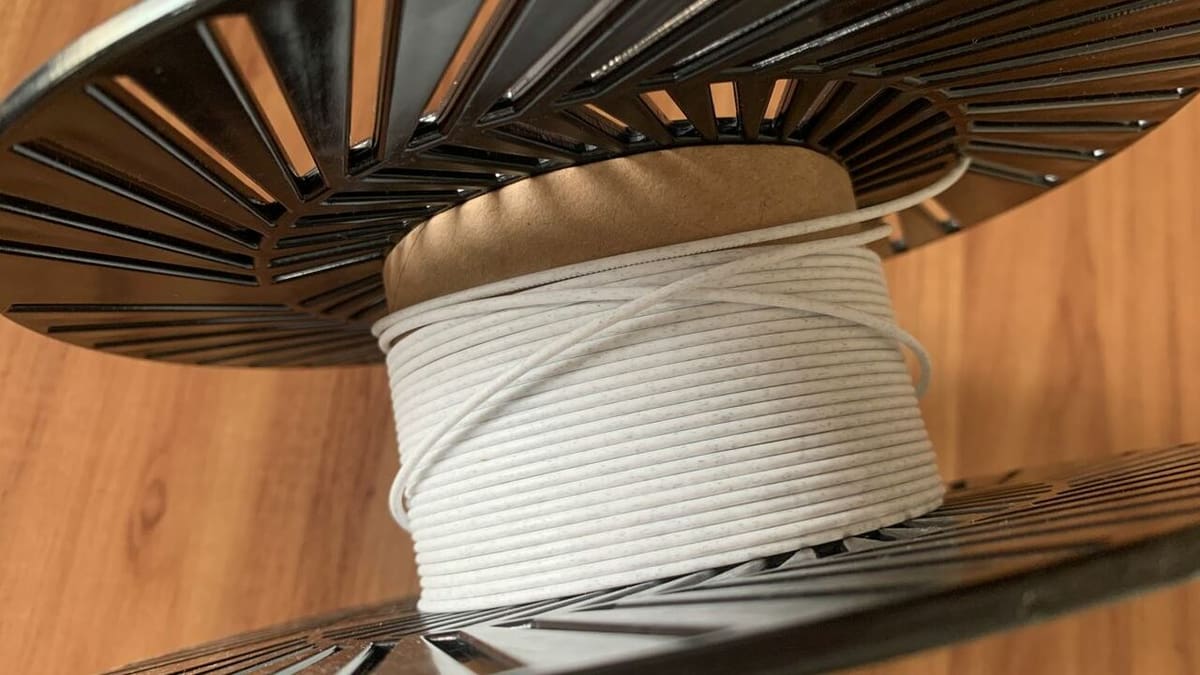
On the other side of that coin though is the pain of having those last meters of filament left on a spool. There’s not enough to start a new project, but it feels wasteful to simply throw away the rest. We could store the filament and weld them together with other filament leftovers, but that raises another set of questions. Are they going to be the same color? And how long will the material be stored and aging?
So, what’s the solution? In this article, we’ve got the answer. We’ve prepared a selection of the best small prints to help you make the most of the end of your spool. Whether useful or fun, keep these pre-sliced, and the next time you’re faced with filament leftovers, just print out one of these designs.

So How Many Grams Are Left on My Spool?

Judging accurately enough how much filament in grams is left on your spool—once it is too low for a quick filament usage gage to tell—is something you learn over time.
One quick rule to remember: With standard 1.75-mm PLA, every meter of filament weighs roughly 3 g. So if your slicer says a model needs 10 g, you’ll want around 3.4 m of filament — plus a little safety margin.
For a standard 1 kg roll of 1.75-mm PLA, you get roughly 330-340 meters of filament. Remember though, that not all filament weighs the same. If you have a carbon-fiber PLA, for example, it’s a touch heavier. Check the filament’s technical data sheet for its density. For 1.75-mm filament, multiply the density by 2.405 to find approximately how many grams one meter weighs.
Slicer Settings to Stretch the Last Gram of Material
When you slice a model, it will tell you exactly how much filament is required. For decorative prints, lowering infill to 5–10% or switching to lightning or cubic infill pattern can significantly reduce filament use. You can also save material by reducing unnecessary walls, top/bottom layers, supports, brims, or rafts, although these are commonly found on the small prints we feature below.
Re-slice after each change to see exactly how many grams you’ve saved.
And now, let’s check out the selection!
Shoe Horn

A nifty and compact shoe horn is something that will always be useful. Conveniently sized to fit into your gym bag, meaning you can easily squeeze into your snug trainers before workouts, to take with traveling, or as an essential wardrobe accessory. Using just 13 g of filament, it’s perfect for the last bit of the spool and something that you are likely to use every day.
- Who designed it? fifindr
- Where to find it? Printables
- How much filament? 13 g
LEGOs Compatible Brick

Why not begin to slowly collect a Lego collection every time the spool nears its end? We love that these are also compatible with Lego, so you can add it to the collection you already have, just make sure to not step on them (ouch!). The file consists of two plates totaling 60 g, which might be a bit much for what’s left on your spool, but you can always scale it down depending on what you have left. We sliced just a single standard rectangular Lego piece, with the slicer estimating you will need less than 4 g of filament.
- Who designed it? CHB 3D PRINTING
- Where to find it? MakerWorld
- How much filament? 4 g for a standard piece
CanMate Soda Cover
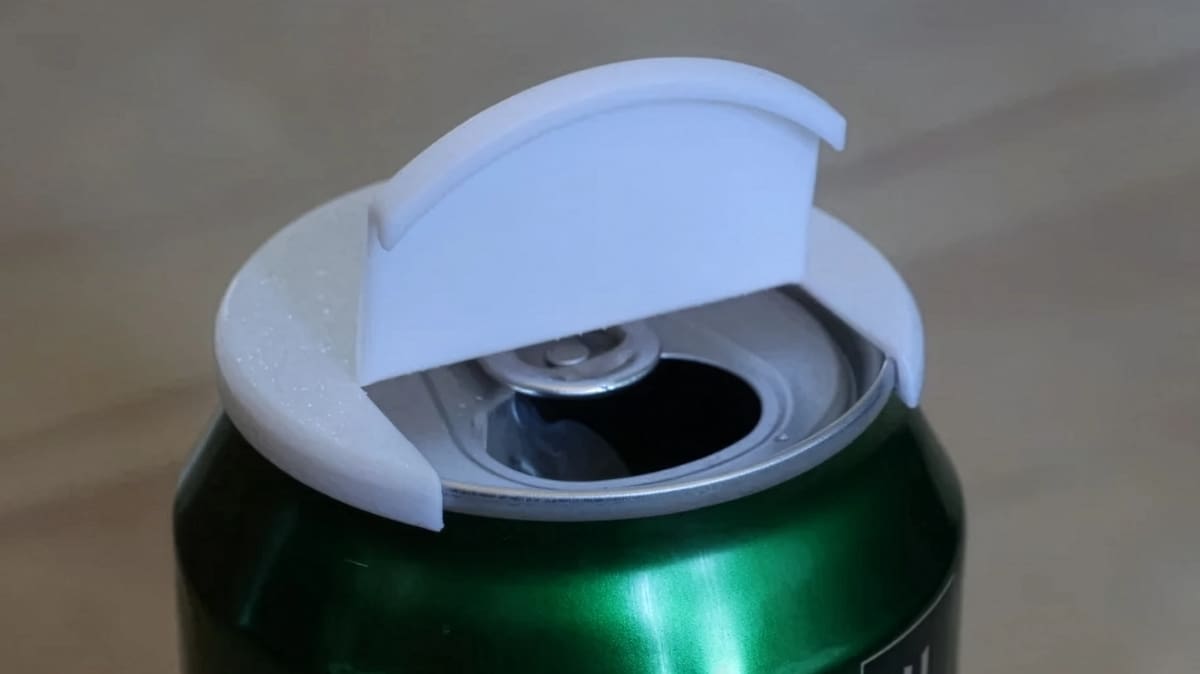
Worried you won’t be able to prevent bugs, dust, or curious furry friends messing with your soda? Well, you… can! Ugh. Anyway, download this quick and easy print to add a leak-resisting, foreign object-barring cover to your Dr. Pepper. It only needs less than 5 g of filament. Don’t have enough filament you say? This Printables alternative does the same job for just 1 g of PLA and an 11-minute print, so it’s basically free on your remaining spool.
- Who designed it? Chiafroe (CanMate Soda Cover), ART TOO (Can Cover)
- Where to find it? Thingiverse (CanMate Soda Cover), Printables (Can Cover)
- How much filament? 5 g or 1 g
Locking Plant Support Clip

For when those tomato vines start getting a bit too unruly or you want to stabilize them from the wind, this one is perfect for all those green thumbs. It also has a secure locking hatch mechanism, preventing it from easily opening or getting easily dislodged. It’s currently sized to fit a 16 mm, but you can simply scale it up or down in the slicer to perfectly match your plant’s supports. The 16 mm option uses less than 8 g of filament. Happy harvest!
- Who designed it? kinichichi
- Where to find it? Cults3D
- How much filament? 8 g
Shopping Cart Key (+ Carabiner Clip)

Forgot to grab a coin for the shopping cart again? Keep this little key on your keyring instead and you’ll never be stuck fishing through your pockets in a cold parking lot. It’s designed to fit carts that need a coin or token deposit, prints in about 10 minutes, and is small and light enough to disappear on your keychain. Speaking of which, if you don’t already have something to attach it with, this quick carabiner clip is the perfect companion print. It uses around 2 g of filament, needs no supports or brim, and has a self-centering mechanism so it won’t twist around on your keys.
- Who designed it? Ethan (shopping cart key), Ollie (carabiner clip)
- Where to find it? MakerWorld (shopping cart key), MakerWorld (carabiner clip)
- How much filament? 2 g
Minimal Cable Holders

If your desk has cables all over the place, these minimalist clips are the fix. Just 3 g of PLA gets you a clean little holder that keeps charging cables, USB leads, and phone chargers exactly where you want them instead of sliding off the back of your desk. No supports needed, quick to print, and rounded enough to actually look intentional sitting next to your keyboard rather than like something that fell out of a printer.
- Who designed it? 3DTimon
- Where to find it? Printables
- How much filament? 3 g
Filament Remaining Estimator

Ever printed something and gambled on whether your spool would make it to the end? This nifty gauge takes the guesswork out of it, giving you a clear read on roughly how much filament is left — 200 g, 400 g, 600 g, 800 g, or 1000 g — just by holding it up to your spool. A little meta for an article about using up the last of your filament, but that’s exactly why it earns a spot: print one now, and you’ll never have to wonder again when it’s time to reach for one of the other ideas on this list. It’s sized for Bambu Lab spools and comes with profiles dialed in for the A1 mini, P1S, X1, and more, taking well under an hour and barely a sliver of filament.
- Who designed it? HeMakes
- Where to find it? MakerWorld
- How much filament? 4 g
Emergency Cable Tie

Out of zip ties but got a few centimeters of filament clinging to the spool for dear life? This single-use cable tie is basically built for exactly that scrap. It’s rated for roughly 220 N (about 22 kg) of holding strength, so it’s no joke for a “leftover” print, and the designer clocked it at under 2 g and about 40 minutes to print. PLA works fine, but PETG, ABS, or nylon will get you a tougher tie if you want it to stick around for the long haul.
- Who designed it? crasycraft90
- Where to find it? MakerWorld
- How much filament? 2 g
Biscuit Cable Organizer

Yes, it’s a cable organizer shaped like a biscuit, and no, we’re not going to pretend that isn’t the best part. Twist the two halves together, no glue, no screws, and it’ll keep a charging cable coiled up and off your desk instead of tangled in a drawer. It comes in four sizes (from a snack-sized 42 x 42 x 20 mm up to 49 x 63 x 20 mm) depending on how much cable you need to wrangle, so pick whichever fits both your cable and what’s left on your spool.
- Who designed it? neilvfx
- Where to find it? MakerWorld
- How much filament? Small biscuit: 17 g
25 Minute Card Comb

Always look fresh when out on the go with this Card Comb that slots snugly into your wallet’s card holder. Using less than 5 g of filament for something that you can use every day is the perfect way to make the most of the end of the spool. The designer printed it in PLA.
- Who designed it? Ollie
- Where to find it? MakerWorld
- How much filament? 5 g
Heavy-Duty Reinforced Corner Brackets

Got a wobbly shelf, a workshop build, or some furniture that needs backup? These corner brackets come in a 2-screw version for lighter jobs and a beefier 4-screw variant when you need it to really hold, complete with mounting holes and countersunk recesses so the screw heads sit flush. At 18 g in PETG for a set, it’s on the heavier side for an end-of-spool print, so it might eat into more of your remaining filament than some of the other ideas here, but if your spool still has a decent chunk left, this is a genuinely useful one to have on hand.
- Who designed it? MehTechArt
- Where to find it? Printables
- How much filament? 18 g
Mini Bag Clip

Chips going stale, cereal going soft, chocolate going… well, someone’s going to eat it before it goes anywhere. This little clip snaps shut over the top of an open bag to keep everything inside fresh, and at just 3.6 g of PLA and a 13-minute print, it’s an easy one to knock out from whatever’s left on the spool. There’s a standard version and a stronger variant if you want extra grip for heavier bags — either way, it beats digging through the drawer for a peg that’s gone missing. If you don’t like this design, we also love these Mini Clip Cats.
- Who designed it? fifindr
- Where to find it? Printables
- How much filament? 4 g
Toothpaste & Cleanser Squeezer

For anyone who’s ever tried to wring the last bit of toothpaste out of a nearly-flat tube with their bare hands (we’ve all been there), this little roller does the job for you. Just feed the end of the tube through and crank it up to squeeze out every last drop, whether it’s toothpaste or facial cleanser. Stick with the standard version, it needs no supports and is the quickest of the bunch to print at under an hour. Save the extended size for bigger tubes if you’ve got the filament to spare. If you don’t fancy this model, it seems to be a popular print so there are plenty of alternatives out there.
- Who designed it? 3D Luis
- Where to find it? MakerWorld
- How much filament? 20 g
Print-in-Place Phone Stand Keychain

This one pairs nicely with the shopping cart key above if you’re on a keychain kick. It folds flat for your pocket and pops open into a stand that holds your phone in landscape or portrait, no assembly required since it prints fully hinged and ready to go. It comes in four sizes to match different phone-and-case thicknesses, and each one takes well under 40 minutes.
- Who designed it? mgm86
- Where to find it? MakerWorld
- How much filament: 18 g
Micro Print-in-Place Hinge

A genuinely tiny hinge that prints fully assembled — no pins to fiddle in afterward. It’s designed to take M2 screws or small wood screws (or just glue, if you use the adhesive variant), making it a handy fix for a wobbly box lid or a small drawer that’s lost its hardware. The designer set out to see just how small a working print-in-place hinge could get, and at a 4.9-star rating from 170 makers, it seems to have landed.
- Who designed it? steff.chris
- Where to find it? MakerWorld
- How much filament? 8 g
License: The text of "Leftover Filament? 15 Useful Small 3D Prints to Empty Your Spool" by All3DP is licensed under a Creative Commons Attribution 4.0 International License.