Why Don’t More Brands Release Finish-It-Yourself Products?

With the rise of affordable, accessible desktop 3D printers, co-printable or "finish-it-yourself" (FIY) products as we're calling them, logically should follow, shouldn't they? Everyone with a 3D printer has the power to manufacture essential parts of physical products, yet only a token few FIY products exist.
Over the past dozen-plus years 3D printing has evolved from expensive, industrial technology to mainstream and accessible. The expiration of patents led to enthusiast-built desktop printing, led to commodification and 3D printers becoming available today in big-box retailers and high-street flagship stores.
You don’t have to spend much for a decent 3D printer today, putting the power of small-scale manufacturing on your desktop with almost no outlay.
So, with more printers out there (we know this), it poses the question – why don’t more brands capitalize on this? As a brand, if you could ship a bag of bits and rely on the end user to print simple components to finish building your product, you save on material costs and part of the assembly. It’s a win-win, surely?
Not always.
The concept of what a “co-printable” or “finish-it-yourself” product is can be a little difficult to wrap the mind around, but it is simple. These are virtually-complete technological products, that require personal 3D printing to create the final parts before trivial assembly into the finished product. The assembly isn’t the ticket to entry, it’s having the 3D printer to make the last parts, resulting in a product you attribute to the brand.
This, of course, excludes a vast universe of imaginative, complex projects and products on the likes of Bambu Lab’s MakerWorld, where an ecosystem exists for the very creation of such products. We’re talking about existing manufacturers and their products leveraging the growing pool of customers with access to 3D printers, not inventive individuals bringing printed-first products to life.
We can only identify a token pool of small manufacturers doing this, and they’ve given a mixture of responses to questions about the business sense and intricacies of it. Two of the brands still active in this space arrived at the finish-it-yourself model from opposite directions, with both running into the same wall.
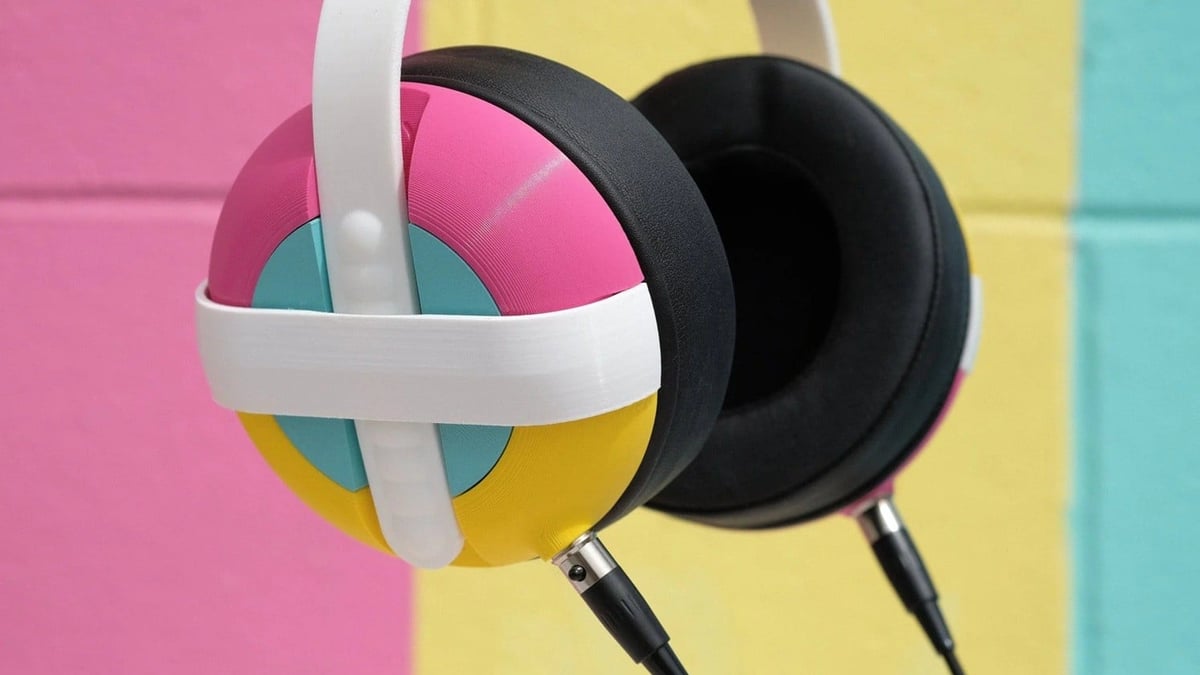
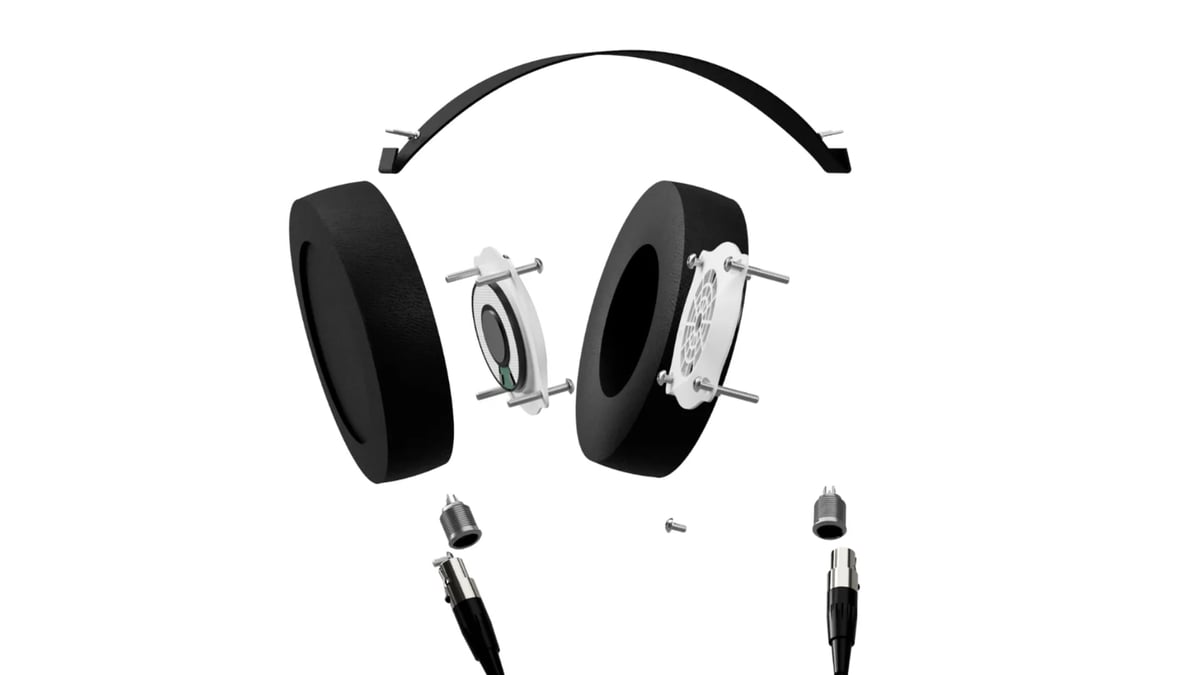
For Morgan Andreychuk, founder of head(amame) headphones, it filled an apparent gap. Having gone through the challenge of building his own Voron DIY 3D printer, the worth of the effort prompted head(amame). “I didn’t just want to print knick-knacks; I wondered why we weren’t printing actual products” he tells us. “Around that time, a friend took me to a hi-fi listening room where I couldn’t afford anything. I found out how cheap a driver was in a $1,000 pair of headphones and realized we could get close to that value by designing something ourselves.”
“My goal was to make a headphone that could be fully FDM printed.” Of course the word ‘fully’ is relative, here: Andreychuk sells the unprintable components, like drivers and cables, as well as provides the STLs for the printable components. Iteration trickles out to users; when Andreychuk improves a model, the updated files are pushed to existing owners, who simply reprint. “The act of printing and assembling them gives people a ‘psycho-acoustic’ sense of pride,” he said of the standard V2 headphones. “It becomes their favorite headphone because they made it.”
But talk to Andreychuk long enough and the ceiling comes into view. “If you take a Venn diagram of someone who is a cheapskate, likes audio, and has a 3D printer, that sliver is tiny,” he said. “If I remove the 3D printer requirement, my market grows significantly”. The head(amame) product lineup asserts this; V2 of the regular head(amame) headphones remains the finish-it-yourself product, but the tuned, audiophile-grade Pro model – currently available to preorder – is sold exclusively as a finished headphone. Repair-files to print replacements yourself are included, granted, but the responsibility (and satisfaction) of self assembly is not as present.
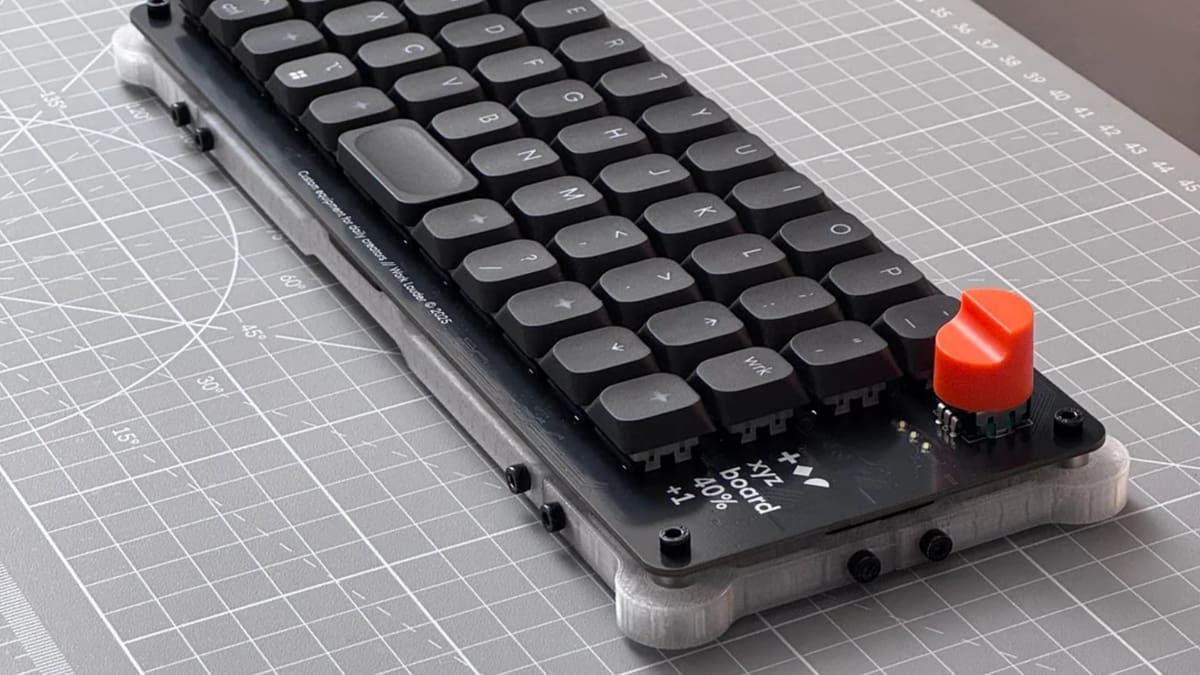
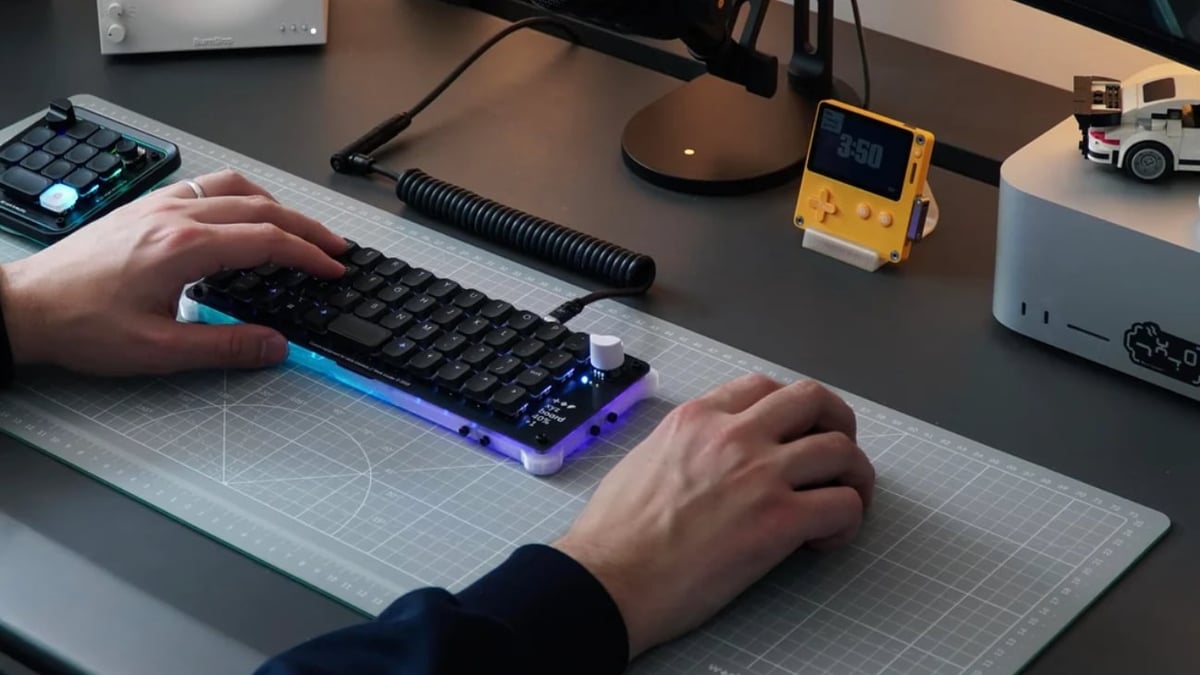
At Work Louder, motivation was more one of practical business. “Last summer we were clearing out our stock room, and found a bunch of spare components from our more expensive Creator Boards” co-founder Michael Di Genova tells us. “Instead of letting those parts sit unused, we started asking: what if we could upcycle them into something new? Something more affordable, but still very much part of the Work Louder ecosystem.
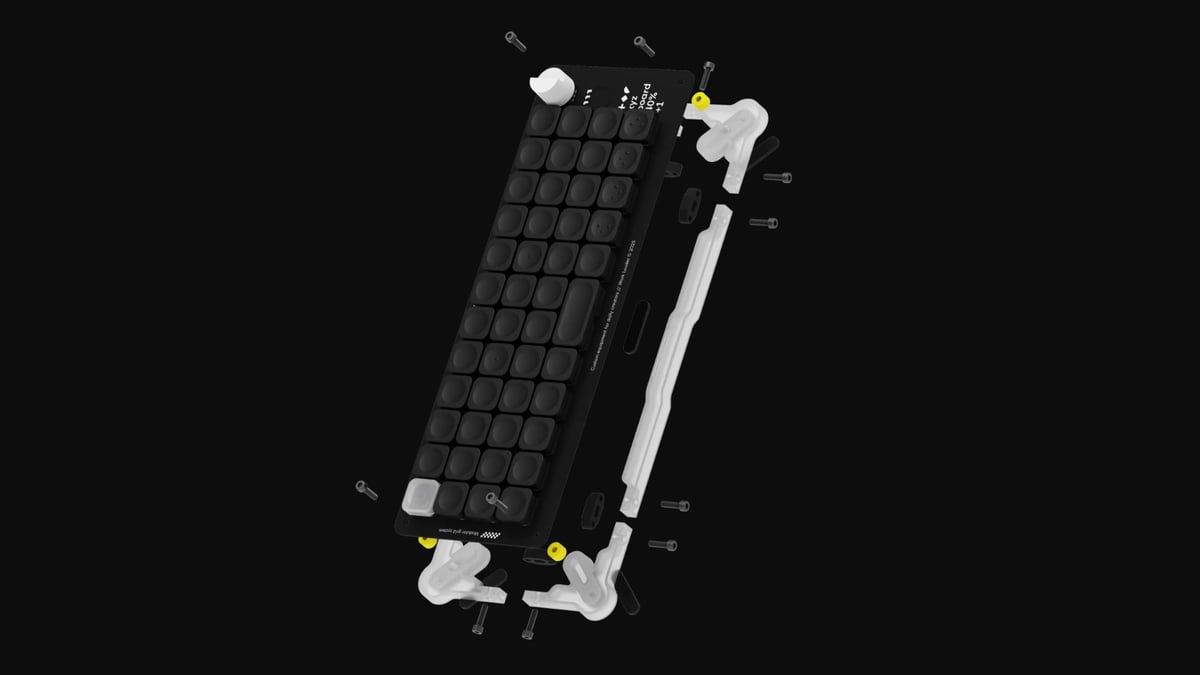
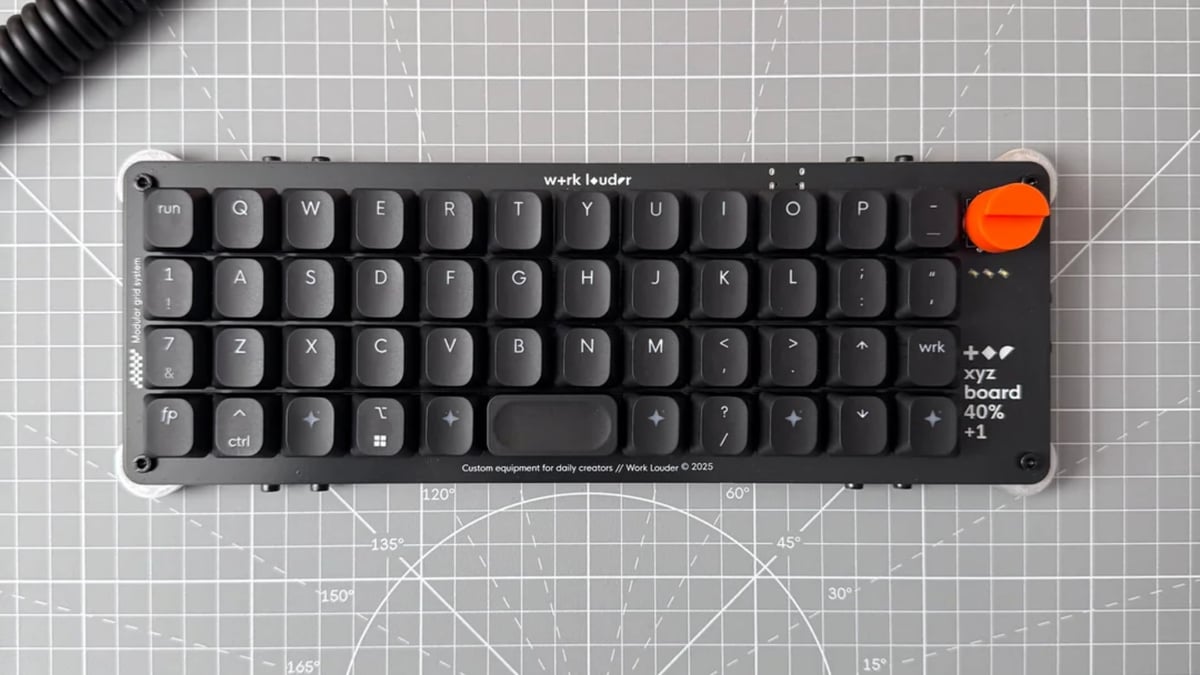
Instead of doing expensive tooling or trying to make another traditional keyboard, we leaned into the strengths of a 3D printed modular frame, and an IKEA-style assembly.” The result was the XYZ Work Board, a pared back finish-at-home keyboard that maintained the company’s retro-futuristic aesthetics, but transformed the experience into a more affordable, ten-minute build. A four-piece 3D printable frame holds everything together.
“Some people hear ‘3D printed’ and immediately assume it means lower quality” he adds. The risks of leaving the build to the user compounds, too. “When the customer is assembling something themselves the odds of them accidentally breaking something goes way up… and they will be happy to blame you for it.”
Even paring the build and risk to a minimum, the printing step is a wall. “There were people who loved the idea, but either didn’t have a 3D printer or didn’t want to actually do the printing themselves…. The finish-at-home element is a strength, but only if the customer has the tools and feels supported.”
The home-printable version, it turns out, was not the version Work Louder’s customers wanted the most. The “Assembly Kit” XYZ Work Board, a kit that ships with the 3D printed parts included, won out as the most in-demand of the three variants of the XYZ.
For them, it demonstrates something Di Genova refers to as defensive design. “You have to make the parts strong, make the instructions clear, and make sure the final product still feels like a quality Work Louder product – not just a DIY project.”
There are material advantages when deliberately designing for your users to front some of the manufacturing. “You can launch faster, eliminate all tooling costs, iterate more freely, and make the product much more customizable. It also changes the relationship between the customer and the object” Di Genova tells us.
The relationship for the user changes, too. “When someone prints or assembles part of the product themselves, they understand it differently. They feel more connected to it, they are proud of it.”
Indeed, any notion of finish-it-yourself being simply a means to a lower-cost production would be misplaced. “The lesson for us was that cost effective does not have to mean generic,” he adds. “A product can be lower-cost, and easier to produce while still feeling considered and special.”
These two differing philosophies both suggest that despite desktop 3D printing’s proliferation, there’s an element of allure in offering an on-rails involvement in the making of the product, even if the group capable and willing to do it is too small for it to be anything more than one option among several.
Neither head(amame) nor Work Louder are walking away from the idea of their users printing and assembling their products. Work Louder calls the XYZ a “business card product,” a low-commitment taste of the brand, and sees “a real appetite for products that sit somewhere between finished consumer hardware and DIY maker projects.”
Andreychuk, for his part, suspects the model “doesn’t make conventional business sense” for most products – “but 3D printing isn’t conventional; it’s starting to enter its teenage years.”
License: The text of "Why Don’t More Brands Release Finish-It-Yourself Products?" by All3DP is licensed under a Creative Commons Attribution 4.0 International License.