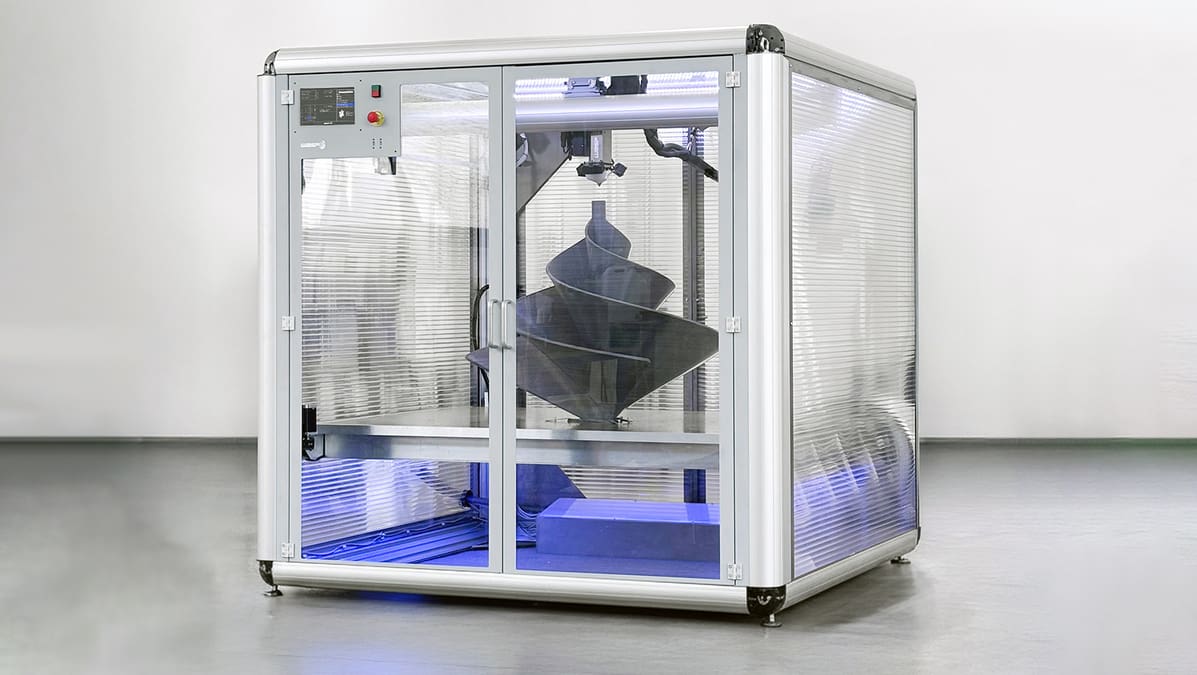
WASP’s New 3D Printer is a Monster That Feeds on Recycled Plastic

The new WASP Cubo HDP boasts a massive cubic-meter-plus build volume and is designed to turn recycled plastic pellets into production-scale parts and furniture.
As demand grows for large-format 3D printing that can handle recycled materials at scale, Italian manufacturer WASP has unveiled the Cubo HDP, a pellet- or shredded plastic-fed 3D printer with a cubic meter-plus build volume and built-in sustainability features.
It expands the company’s HDP line, which began in 2016 with the WASP 3MT HDP and positions WASP to compete more directly in the fast-expanding market for large-scale FDM printing with recycled scrap.
Built entirely in WASP’s laboratories in Italy, the Cubo offers a 1,200 x 1,200 x 1,200 mm build area, targeting meter-class parts and finished products for manufacturing and design industries. Large-format pellet-based printers are increasingly used for molds, furniture, signage, and display elements because they deliver faster throughput and lower material costs compared to filament systems. The Cubo pushes into this space with sustainability as a core differentiator. Its compatibility with shredded plastics and micro-particles goes beyond what many current pellet-fed systems support, making it attractive to companies prioritizing circular manufacturing.
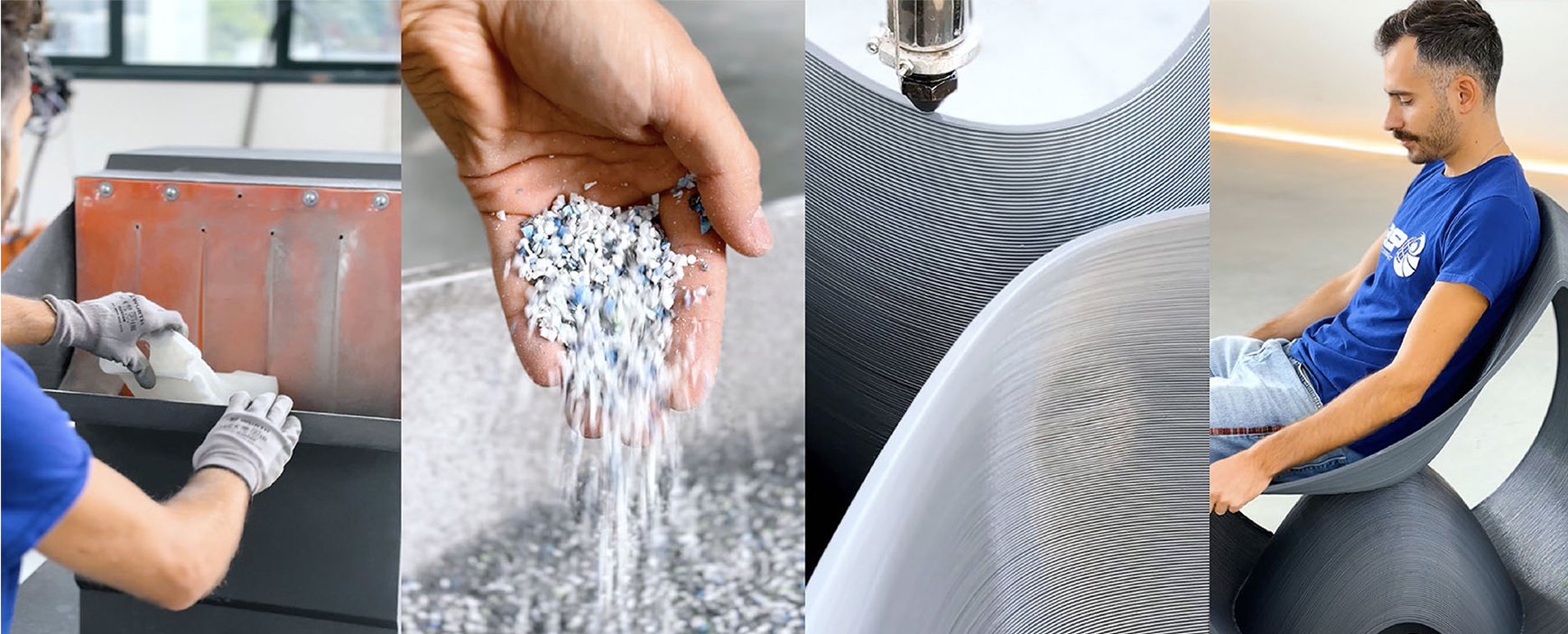
The new model prints directly from shredded plastics through the Rigenera 3D extrusion system that, WASP says, can print directly from in-house recycled shredded plastics. “Unlike traditional extruders that only work with pellets … Rigenera extruders are redesigned to accept shredded plastic in various sizes,” the company says.
Rigenera is WASP’s series of tools (waste bins, shredder, chainsaw, dehumidifier) that, when used together, enable companies to manage their entire plastic recycling process from start to finish.

There’s also a mechanical clamping system that secures large parts without relying on a heated bed, the company says. “Unlike a heated bed, which on very large surfaces can cause warping, detachment, or uneven heating, the clamps keep the part perfectly secured throughout the entire printing process.”
Its enclosed build chamber helps with thermal consistency, while a rechargeable filtration system is designed to handle fumes from recycled or impure materials. With an average power draw of just 450 watts, the Cubo HDP also aims for efficiency in operation.
Against the company’s own 3MT HDP — a tall delta printer with a cylindrical Ø1,000 × 1,000 mm volume — the new Cubo offers more than double the usable space in a cubic layout. This geometry is better suited for flat or boxy parts such as panels, molds, and props. Both machines are designed for pellet and recycled materials, but the Cubo puts greater emphasis on processing impure feedstocks and microplastics, signaling a stronger “waste-to-part” approach.
Some details remain to be confirmed, including pricing, direct comparisons with industrial pellet systems like 3D Systems’ EXT Titan or large-scale FDMs like Big Rep, remain incomplete. Still, the Cubo’s combination of sustainability features, large cubic workspace, and modest power requirements positions it as a strong contender for industries that want production-scale 3D printing with a smaller environmental footprint.
Cubo HDP Technical Specifications
You May Also Like:


Listen to All3DP’s News Podcast:
License: The text of "WASP’s New 3D Printer is a Monster That Feeds on Recycled Plastic" by All3DP Pro is licensed under a Creative Commons Attribution 4.0 International License.