3D Printing’s Pellet Revolution: Why Hobbyists Are Being Left Behind

3D printing with pellets and recycled shreds instead of filament can cut material costs up to 90%, but it's not ready for your desktop just yet.
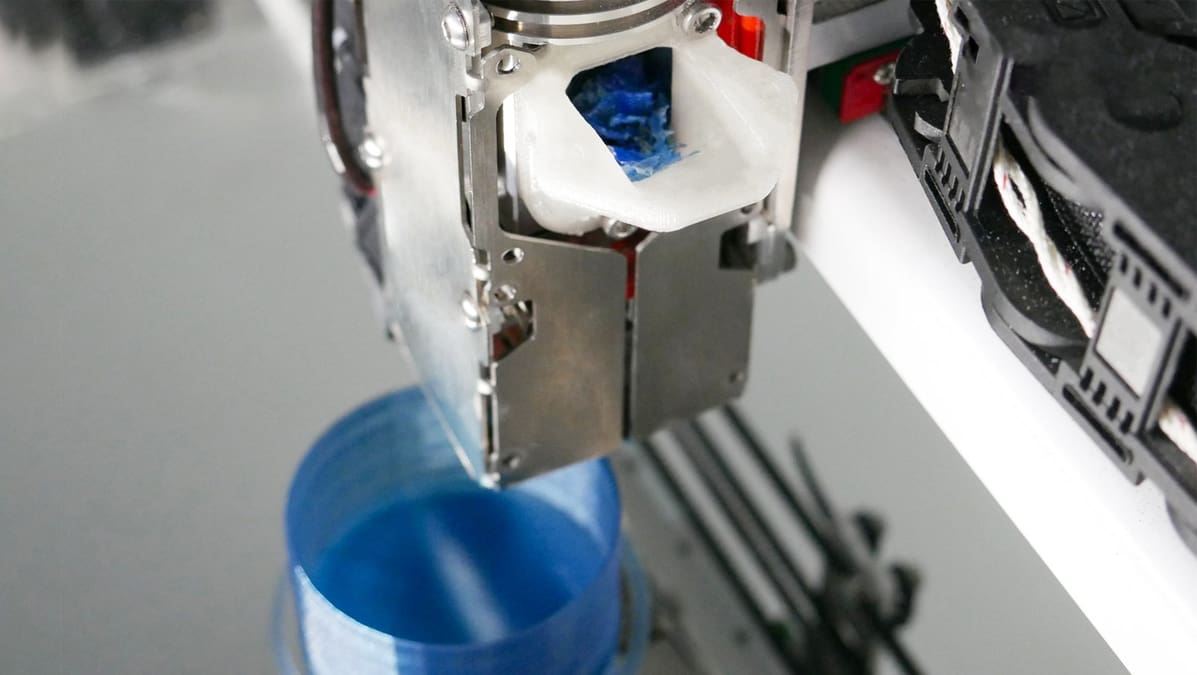
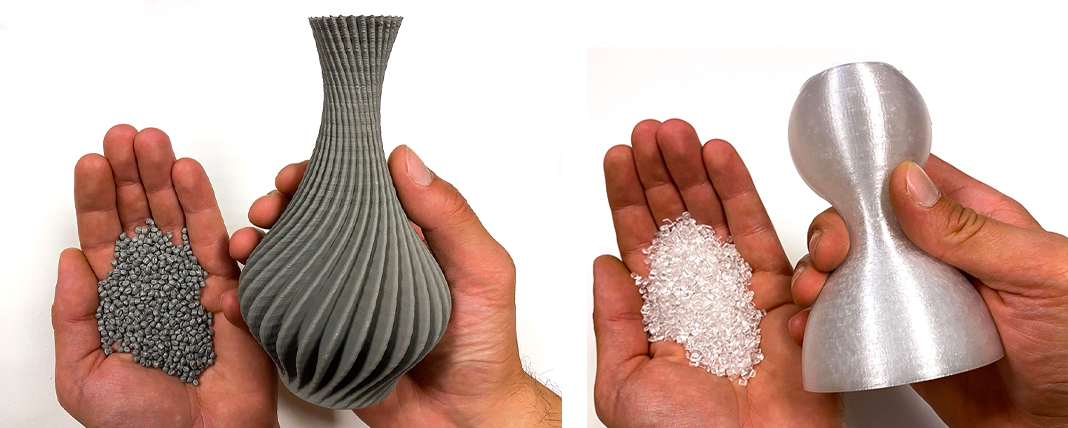
All 3D printing filament starts out in pellet form – small granules of plastic – so why not skip the long strands and print directly with the raw material?
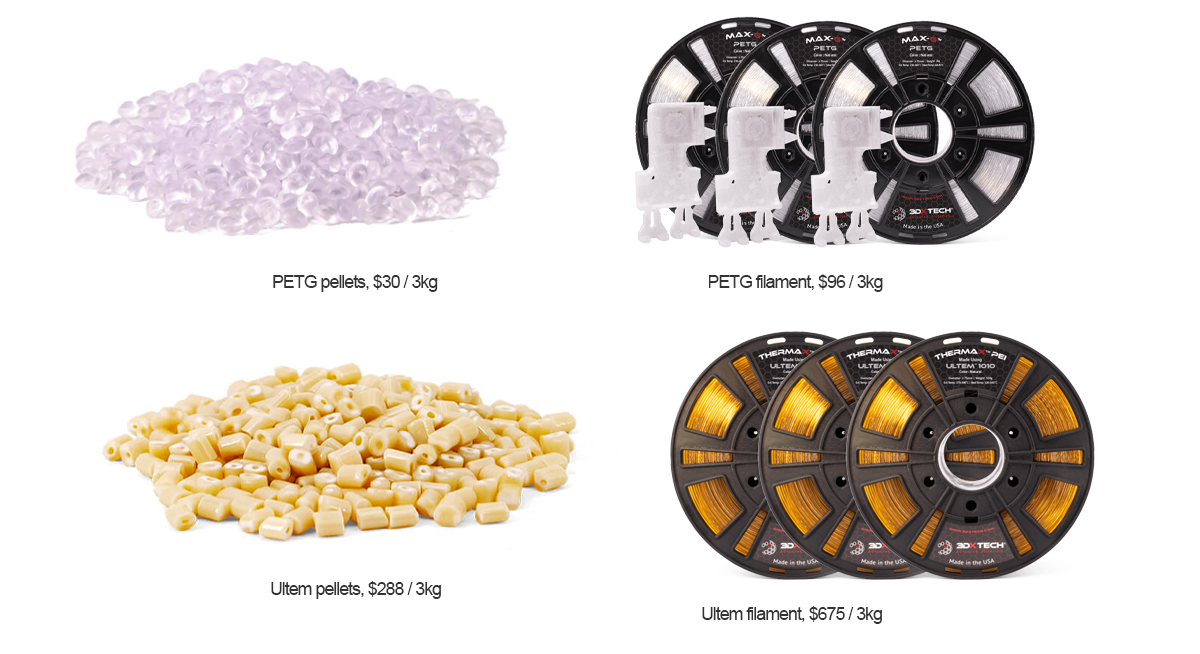
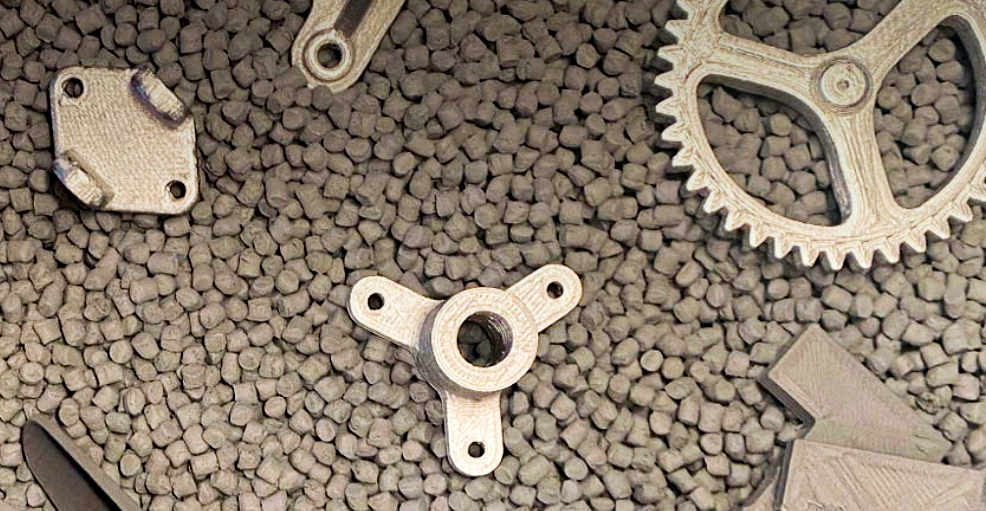
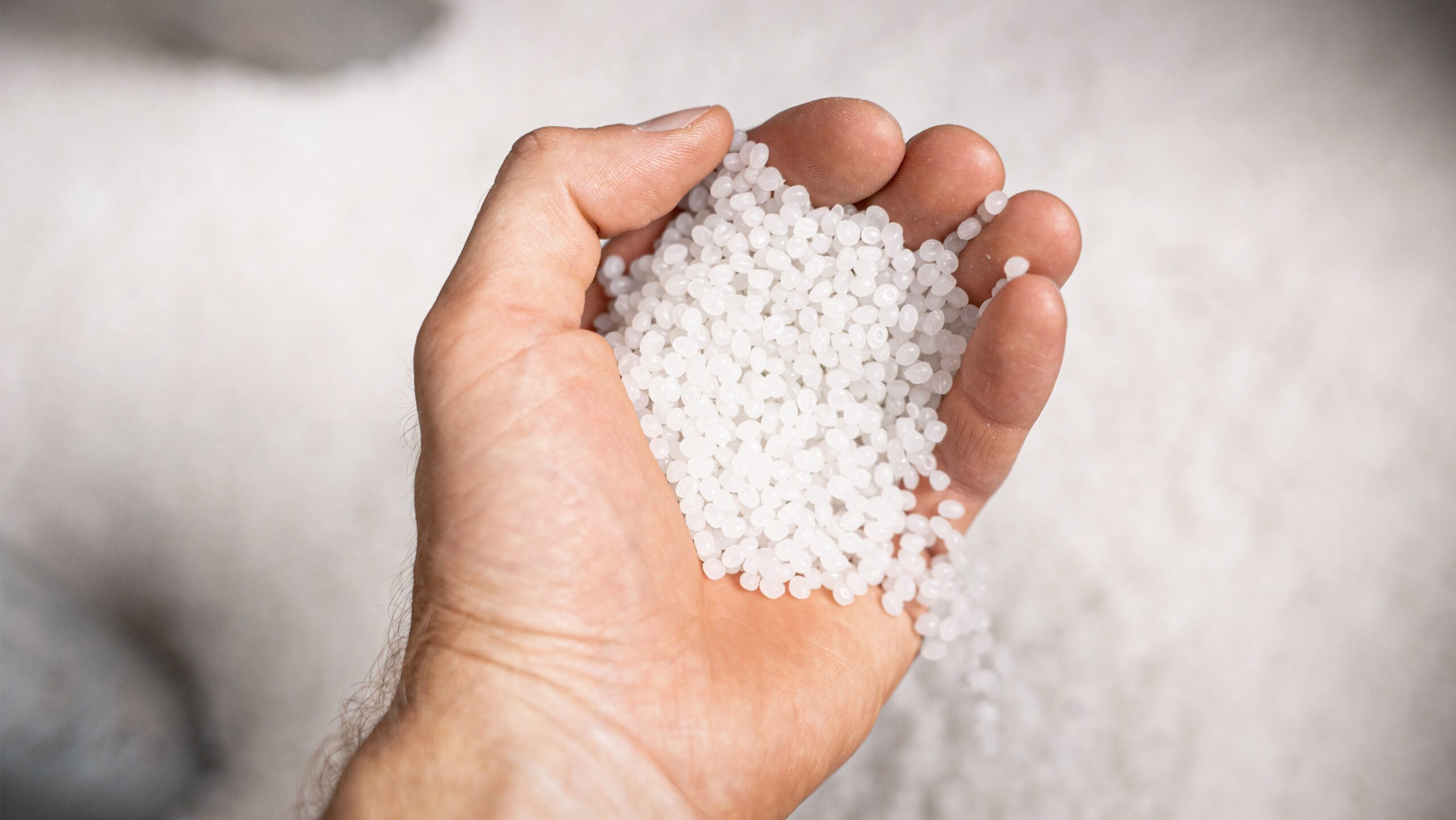
Printing directly with polymer pellets — a process often referred to as fused granular fabrication (FGF) or direct extrusion — not only saves money (an estimated 65% to 90% reduction in printing cost per kilo), but you can print large parts faster, and, more significantly, you can directly print with your own chopped-up failed prints, supports, and other plastic waste. Pellets are cheaper than filament not only because one processing step is eliminated but also because pellet-form plastics are used in injection molding and other types of manufacturing already, so the market for pellets is huge, with more competition, which keeps prices lower. Available pellets range from PLA all the way to high-temperature, engineering-grade thermoplastics, such as reinforced nylon and PEEK.
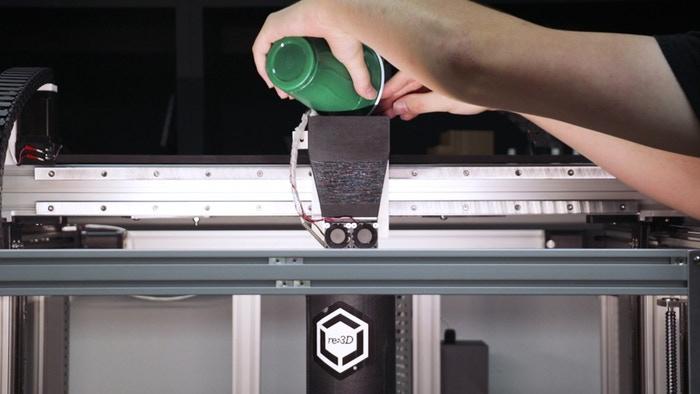

Over the past five years, there’s been growth in pellet-fed extrusion 3D printers on the industrial side, while dwindling availability on the desktop side. It’s one of those technologies that, for now, appears to make practical and economical sense only for large parts that require a lot of material.
Although eco-conscious consumers may want to feed failed prints back into their machine, the product ecosystem (plastic shredder and affordable pellet 3D printer) just isn’t there yet. Today, there are just a few desktop machines that mainly target R&D facilities and universities. The standout exception is the Creality subsidiary Piocreat that lunched its pellet-fed desktop unit, the G5, in 2024, yet, at $5,800, it still isn’t in the affordable category.
For commercial manufacturers and companies that print large parts often, 3D printing with pellets and shredded recycled plastic — and in some cases metal pellets — is a financial and environmental win-win.
If you want to learn more about the pros and cons of pellet 3D printing and how to print with pellets, skip down to the sections at the end. If you’re on board and ready to see what your printer options are, below, we take a look at how to print with pellets, the top pellet 3D printers available today, and the pellet extruder systems available for your robotic arm, should you want to build your own large-scale pellet 3D printer.
Desktop / Benchtop Pellet 3D Printers
We’ve seen a few pellet adapter kits for desktop FDM 3D printers come and go over the years. Consumers either weren’t ready for them, or they didn’t produce the results expected. In any case, printing with pellets is far more than a replacement for filament; it requires a completely different extrusion system, from the feeder to the nozzle.
Piocreat G5 Ultra
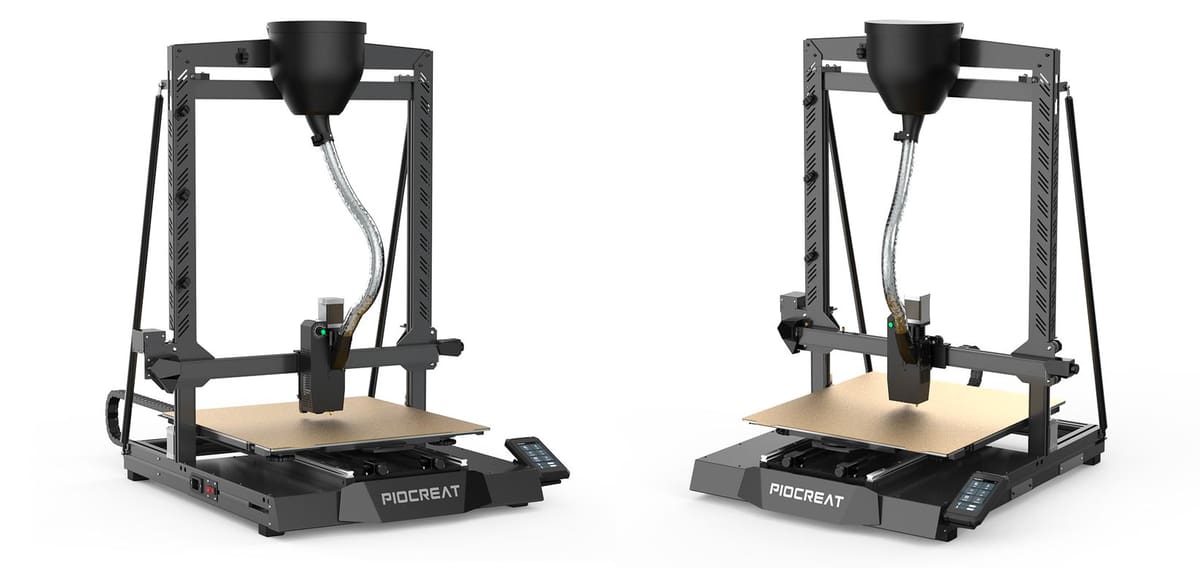
Well-known desktop 3D printer maker Creality has another brand called Piocreat that’s been working on desktop and industrial pellet material extrusion machines since about 2021.
The G5 Ultra (~$5,700) has a very large volume (500 x 500 x 400 mm) for a desktop printer, a heated bed, and a nozzle temp up to 420ºC so it can handle just about any material, including pellets and recycled plastics, but it does not come enclosed, so that may limit your material options a bit.
The hopper is relatively small, and material is fed to the extruder by gravity, but there’s a zippy (220 mm/s) print speed and a decent minimum layer height of 0.2 mm, and it can achieve a 3-mm layer height with the 2.4 mm nozzle for rapid printing. If your material runs out, there’s a pellet run-out detection and print resume after a power outage.
The printer comes with both automatic leveling and auxiliary leveling modes, runs on Creality Print slicing software, and has a magnetic spring steel build platform for easy part removal.
Piocreat also offers two much larger industrial pellet-fed machines, the G12 and the G40.
IT3D Tumaker NX Pro Pellet
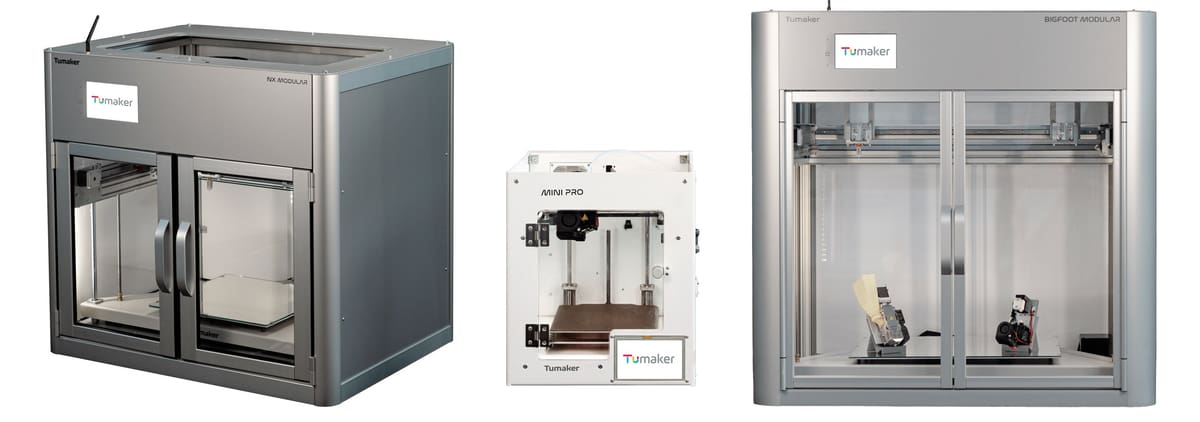
Spain-based Indart3D has been developing its line of Tumaker pellet-fed 3D printers for about a decade. Over the years, various models have come and gone, but they remain trailblazers in desktop machines.
Today, the company markets the smallest of its desktop units, the Mini, mainly to research and academic institutions to develop and test new materials. It has a build volume of 200 x 200 x 200 mm, six nozzle diameters that can heat up to 300 ºC.
The company’s two other units, which are more benchtop size, are aimed at companies that want to curb their plastic waste problem. Indart3D customizes its devices to meet individual user needs, even developing models equipped with up to four extruders and a mix of pellet fed and filament fed.
Currently, all of its offerings are modular, enabling you to change between pellet and filament.
Pollen AM P Series
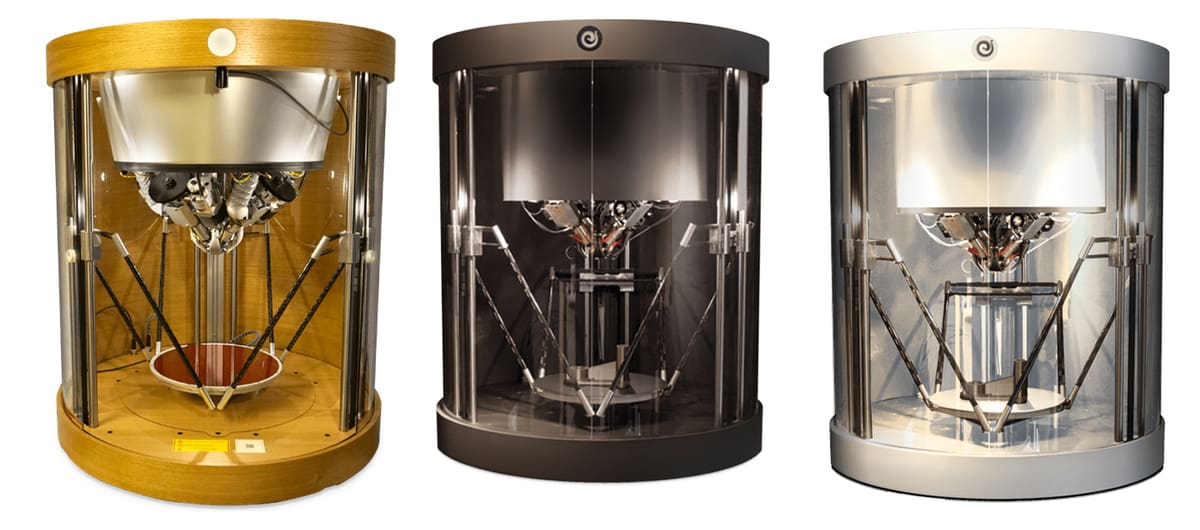
French 3D printer maker Pollen AM offers plenty of options when it comes to which type of pellet printing you’d like to do, from standard thermoplastics to high-temperature polymers to metal and ceramic.
The company’s PAM (Pellet Additive Manufacturing) series of printers include PAM o2 machines tailored specifically for thermoplastics with engineering, the company says, that fixes many of the common drawbacks of pellet printing. For example, the P printer ($65,000) has six nozzle sizes available, so it can achieve layer heights down to 40 microns. The printer’s print head has four extruders.
The company’s PAM o2 HT (high temperature) performance material printer has two extruders that can reach 450 ºC, a heated chamber up to 80 ºC, and a heated bed up to 250 ºC.
The PAM o2 MC metal and ceramic pellet printer prints with most of the existing metal injection molding feedstocks, including copper. Using these standard industrial metal feedstocks with the MC makes sense for industries already using them. Existing grades can be printed as-is, just like in injection molding. The MC is also compatible with thermoplastics.
All Pollen printers use the same PAM series frame with a cylindrical platform 300 mm in diameter and height. The variety of different extruder configurations and material options makes Pollen’s machines suitable for practically any application, from prototyping to the production of high-grade parts for aerospace and other demanding industries.
New in 2025, Pollen is teasing a new large-format pellet-based 3D printer for production sale manufacturing called the Pam Pro. Look for more details here in the 4Q of 2025.
Professional / Industrial Pellet 3D Printers
Unlike most 3D printer markets, there’s no handful of dominant brands in this space. In fact, there are a wide variety of machine makers around the world specializing in selling their machines (and often custom building them) for clients in their own country or region, which is why we list the manufacturer’s location in the chart below.
Ginger Additive G1
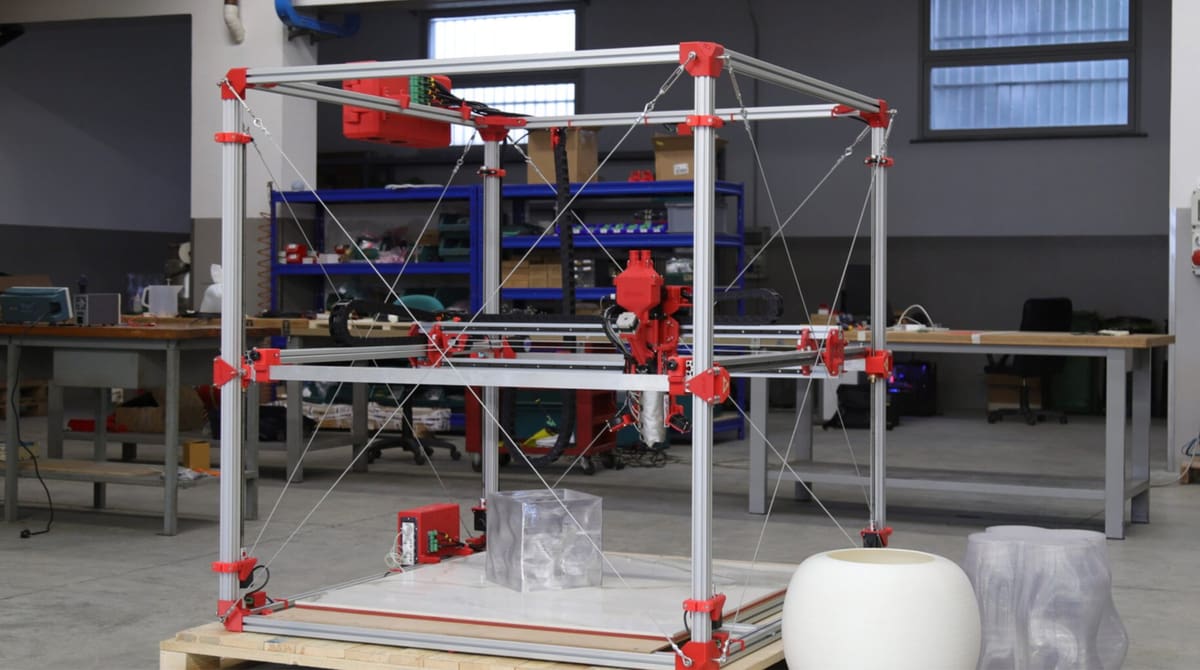
Just launched in January 2025, Italy-based Ginger Additive offers the G1 pellet-based large format printer for just over $13K. It is designed for medium-complexity projects, so no super-fine details, and is compatible with industrial pellet formats or even chopped flakes. You can get a layer height from 0.5 mm up to 5 mm.
The G1 is a Cartesian printer with a print volume of 1 cubic meter and low energy consumption. Its features include automatic bed leveling and a print speed of up to 2 kg per hour. The firmware is Klipper, and it comes with Orca Slicer as its slicing software. The enclosure and heated bed are optional.
Re3D Gigabot X2
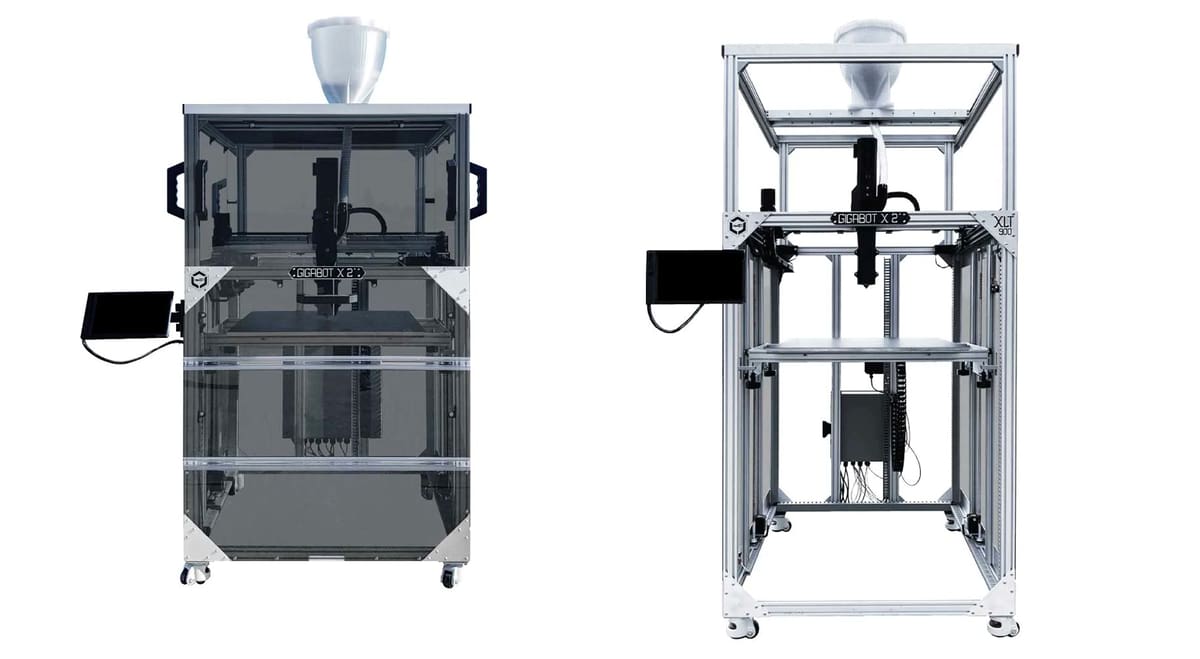
Re3D produces some of the best-known pellet 3D printers with its Gigabot line. Including both Gigabot X2 ($21,100) and Gigabot X2 XLT ($25,670), the printers are compatible with recycled and virgin plastic PLA, PC, and PET pellets, flakes, and shreds, alongside customized specialty composites.
Gigabot X2 has a build volume of 570 x 595 x 470 mm, while the Gigabot X2 XLT bumps that up to 552 x 740 x 765 mm. Able to handle pellet sizes up to 5mm and materials that melt at or below 270°C, the Gigabots support a wide range of material options. The optional enclosure goes for about $900.
Re3D says they’re able to provide customized hardware for their machines, which makes them a great choice for highly specialized applications.
There’s a webcam viewer for remote monitoring and an integrated USB port for loading Gcode files directly onto your printer. Material is manually fed into the 24-hour capacity hopper, which rides on an independent hopper gantry system, to allow a full and smooth range of motion and consistent feeding into the extruder, the company says.
Filament Innovations
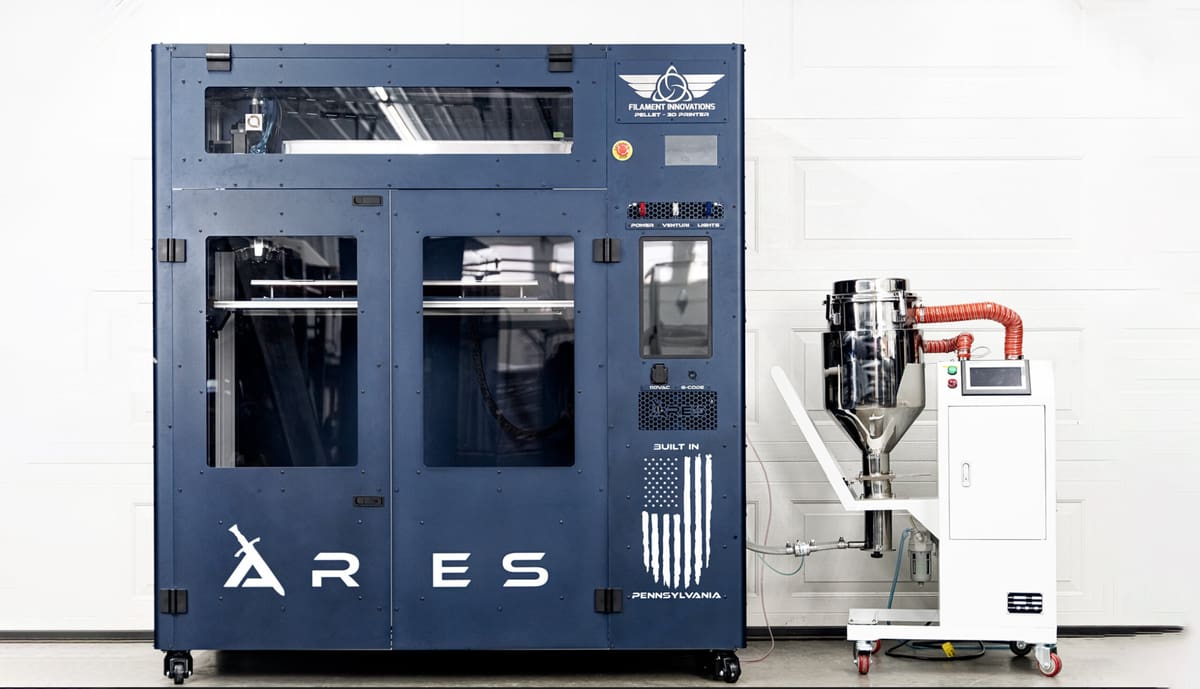
Despite the name, US-based Filament Innovations is perhaps better known for its innovative pellet 3D printers. There are three on the menu, and the massive (1,060 x 1,080 x 1,050 mm) Poseidon is the only one on this list that can switch seamlessly between pellets and filament. The machine is also designed to be customizable so you can choose dual filament extrusion or only a pellet system. The hybrid version includes the entire ecosystem including a pellet system, high-flow filament system, 25kg pellet dryer, and the Odin slicing system for about $125,000.
The smaller Icarus ($50,000) gives you the choice of either a pellet extrusion system or a high-flow filament system, and while the slightly larger Ares ($79,000) is a dedicated pellet printer.
Each machine features pellet feeding systems and extruders from Dyze Design with tool steel nozzles available in six diameters from 1 to 5 mm. There are two LCD screens included with the system. The 7-inch PanelDue from Duet3D, and a 15-inch touchscreen enable you to visualize your height-map, write custom macros on the fly, and monitor your system. File transfer and connectivity options include USB jump-drive, WiFi, and hardwired Ethernet.
WASP 4070 HDP
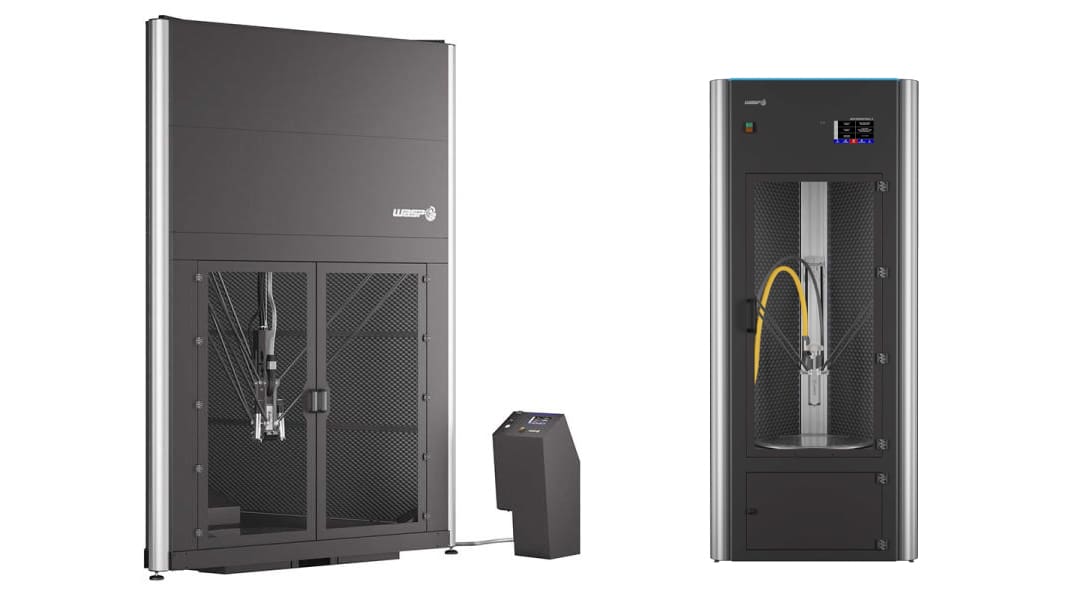
Italy-based WASP has been making large-format 3D printers since 2012, many of which are hybrid filament and pellet versions.
It’s smallest unit is the 4070 HDP large format 3D printer with a 5-liter pellet tank. The 4070 HDP has a build volume of Ø400 x 600 mm. There’s also the 60100 HDP pellet-fed option with a Ø600 x 1000 mm build volume.
On the larger end, the 3MT HDP printer has a sizable Ø1,000 x 1,000 mm heated print chamber, which makes it suitable for large prints. WASP says the max speed is 3.8 kg per hour using ABS and a 5 mm nozzle. The minimum layer height is a fine 0.5mm (with 2 mm nozzle) to 2.5 mm (with 5 mm nozzle).
The 3MT HDP comes with the features you’d expect from an industrial 3D printer, including onboard camera monitoring, Wi-Fi support, open-door safety sensors, a resurrection system to restart printing in case of a power outage, and a printer self-diagnosis system.
3D Systems Ext 800 Titan Pellet
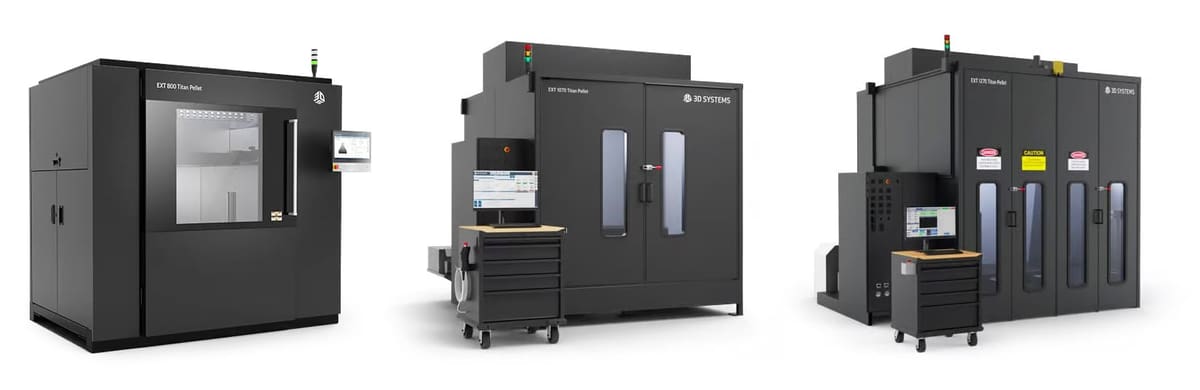
3D Systems offers three pellet-enabled printers with large-scale build volumes. The newest and smallest is the Ext 800 Titan. It’s has a large build volume (800 x 600 x 800 mm) and is compatible with nozzles ranging from 0.6mm to 9.0mm so you can choose between fine layers with smooth surfaces and coarse resolution with high-throughput of up to 14 kilos per hour for draft prototyping.
3D Systems says the EXT 800 is also an excellent pilot platform for materials testing and development.
If your needs are a bit lager, there’s the 1070 and 1270 Titan editions. These both have a pellet extruder and an optional filament extruder that can both reach 400°C. Couple this with the heated bed to 140°C and enclosure to 80°C, and a wide range of engineering grade materials are possible, including PEEK. In fact, Titan printers can use hundreds of grades of pellet materials and dozens of filament materials from any supplier.
The Titan printers aren’t just pellet printers; the base unit includes a single pellet extruder but can be equipped with up to three tool heads, including a second pellet extruder, a filament extruder, and a 3-axis CNC spindle. For large parts that need to be printed quickly, select pellet extrusion for high-deposition rates. For parts that require high surface resolution and fine details, filament extrusion is the preferred method.
Discovery 3D Printer
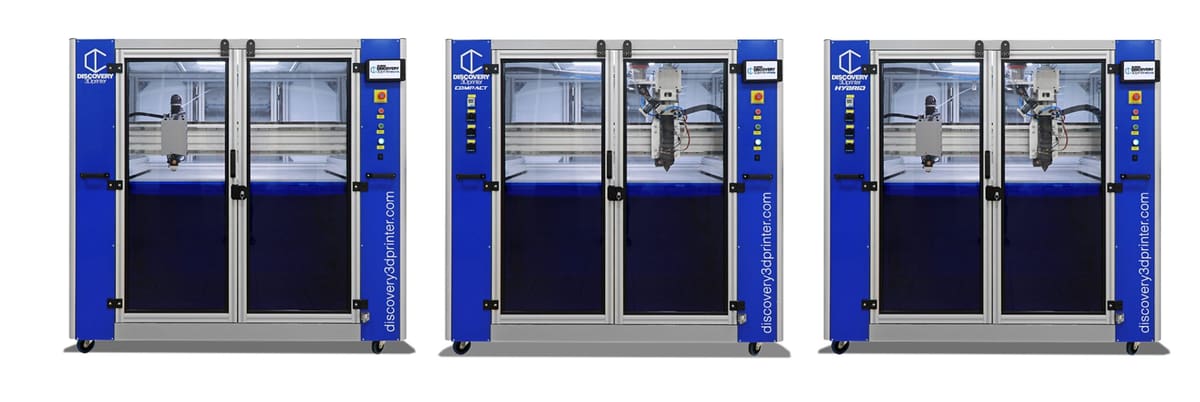
Discovery 3D Printer is a branch of Spain-based CNC Bárcenas, a CNC machine maker that moved into 3D printers almost a decade ago.
The company’s pellet-fed large-scale 3D printers include the Super Discovery, Super Discovery Compact, and Super Discovery Hybrid.
The compact version has a 1,100 x 750 x 500 mm print volume, but it can be custom designed and manufactured to your specifications. It features a fully closed chamber and heated bed (up to 125ºC), self-leveling bed, and an extruder temp. to 400ºC.
JuggerBot 3D
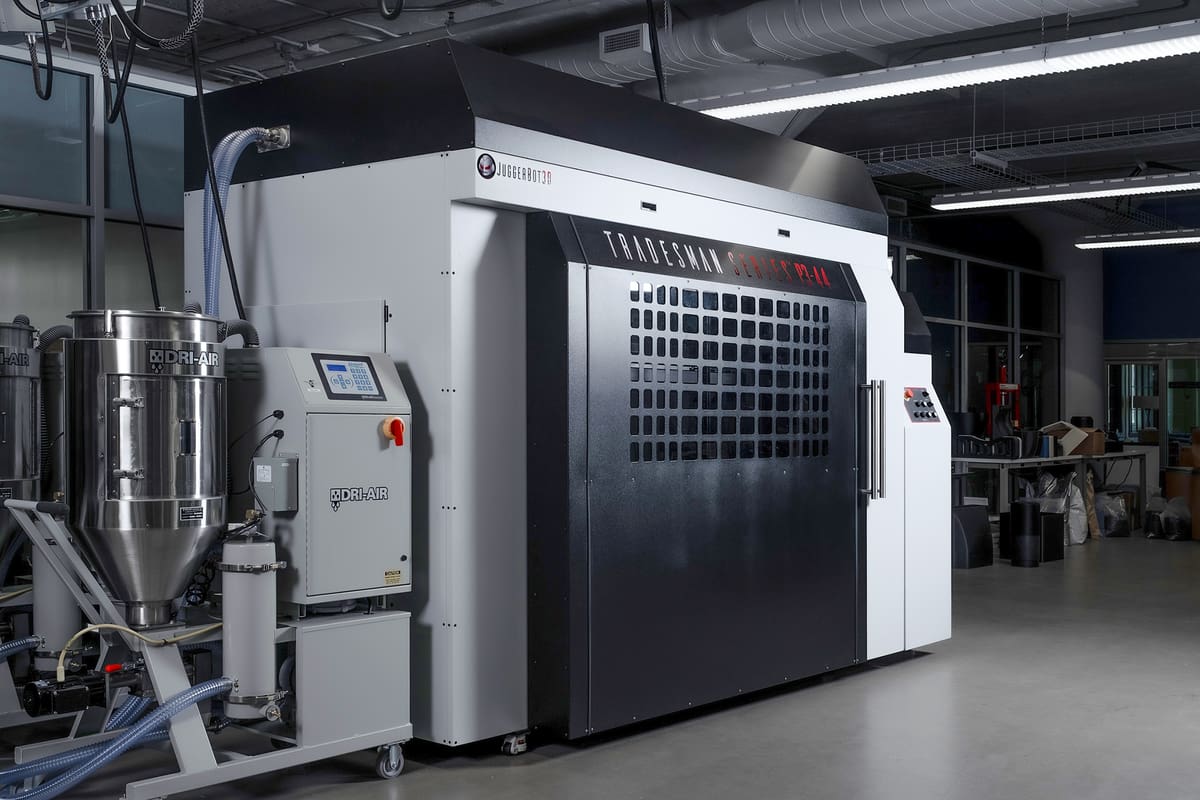
Founded about 10 years ago in Youngstown, Ohio, large-format 3D printer manufacturer JuggerBot 3D offers industrial pellet-fed 3D printers called the Tradesman Series. At one time, the company offered large-format 3D printers that used filament but has since completely moved over to pellet material machines.
The P3-44, which comes in variations, thus the “series,” is a fully enclosed 3D printer capable of printing at a speed of 13.6 kg of material an hour. The bed can be heated to 120°C and the chamber to 95°C, so you can print with a wide range of materials, including glass- or carbon-fiber-reinforced polymers, PEEK, PEKK, Ultem, and more.
Rather than a touch-screen, the Tradesman is built with an integrated workstation that includes a monitor, slicing software (ORNL Slicer 2), and machine control programs with a library of processing information. Also included are third-party material profiles, streamlined production workflows called Material Cards.
Your Tradesman includes a pellet material hopper and feeding systems with a mobile drying unit to remove moisture.
JuggerBot 3D says its industrial machines include “robust integrated motion controllers” coupled with closed-loop servo motors and absolute encoders to ensure “reliable and repeatable movement.”
JuggerBot 3D’s machines range in price from $275,000 to $325,000.
Arburg Freeformer 300-3X
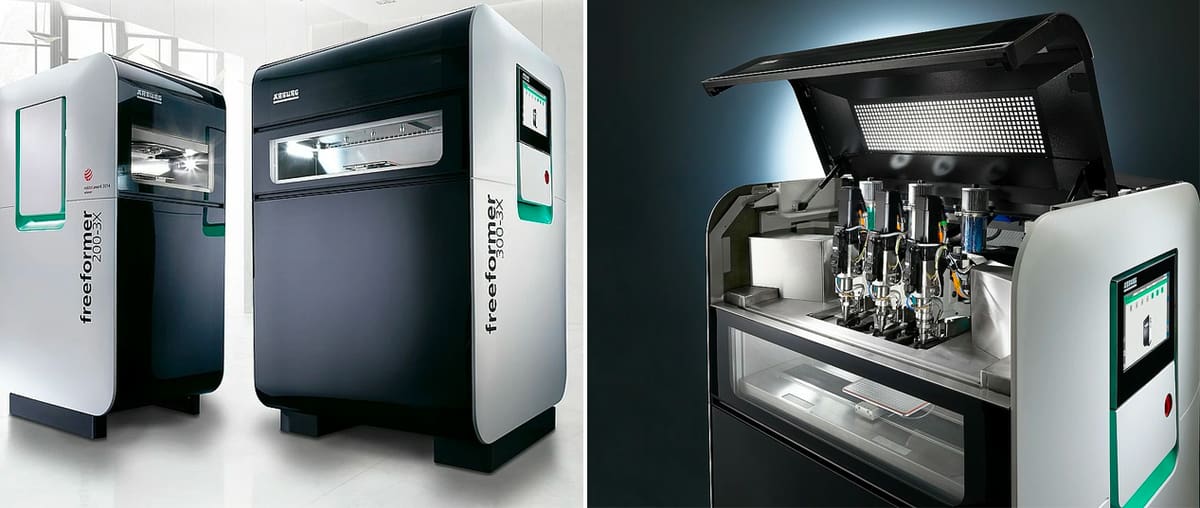
Arburg brings serious accuracy to the table with their Freeformer Series, including the 300-3X and the larger 500-3X and 750-3X, which offer pellet printing with a minimum layer thickness of 0.2 mm.
The Freeformers achieve this high level of detail thanks to their unique printing technology, which the manufacturer calls Arburg Plastic Freeforming. Unlike the other listed printers, the Freeformers deposit melted plastic as individual droplets instead of a continuous string, so it’s a material jetting technology rather than an extrusion technology.
The printers feature an open platform, making them compatible with any plastic material that can melt, from ABS and PLA to medical-grade PLA and PC thermoplastics. This is what you’d expect from a company that makes injection molding machines. The 300-3X can print with three materials at once and also has a material drying system.
More Industrial Pellet Printers
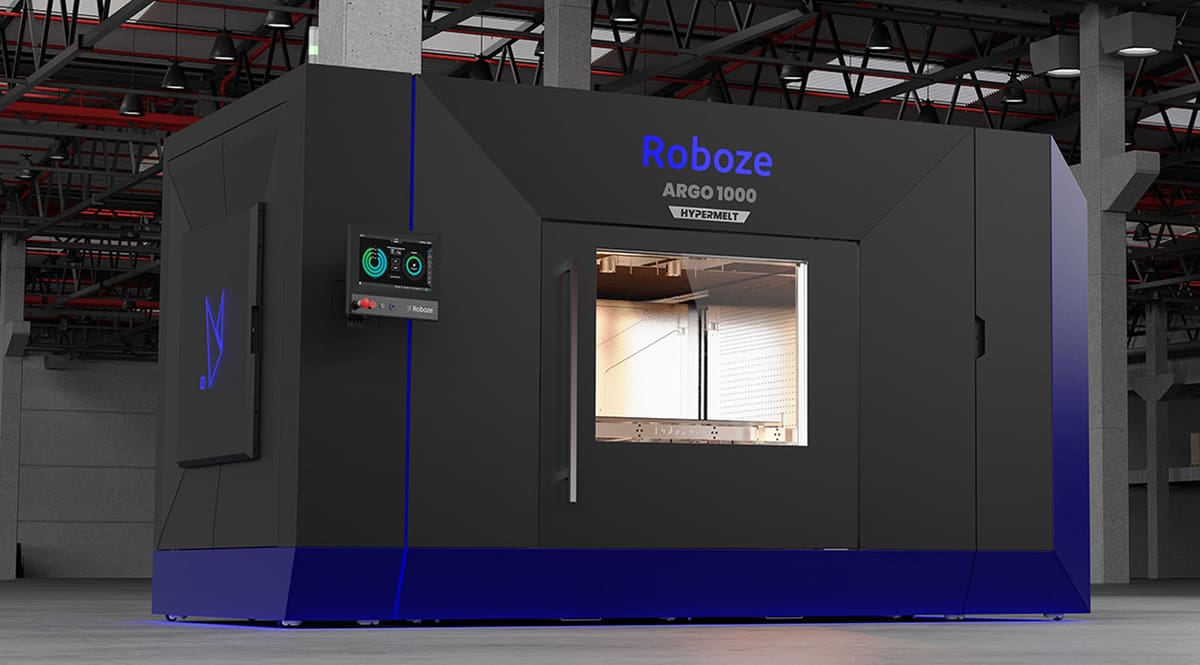
Roboze Argo 1000 HyperMelt
Roboze recently launched its high-temperature, pellet-fed 3D printer Argo 1000. The company is calling its pellet system Hypermelt. And although it won’t be an open material system, Roboze says you’ll have a wide range of engineering-grade polymers and high-performance composite materials to choose from, including PEKK, Ultem, and carbon PEEK.
Fused Form P1000
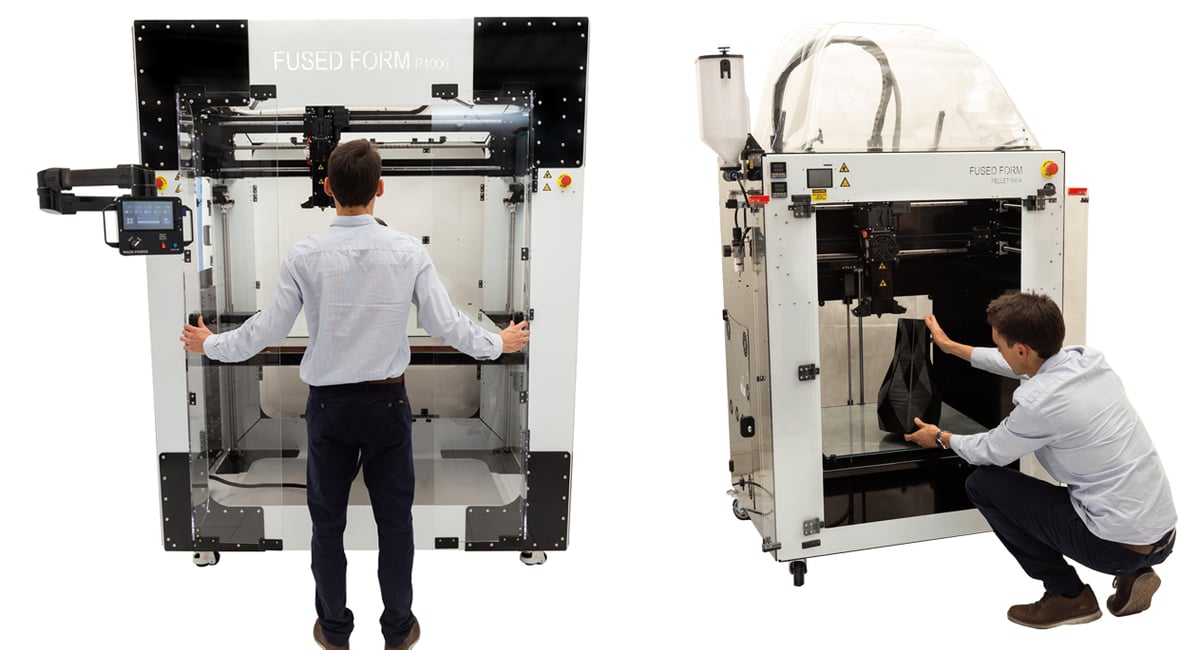
If your business is located in South or Central America, shipping a large-format 3D printer from Europe or the US is likely cost-prohibitive. But that’s certainly not the only reason to consider the P1000 large-format pellet 3D printer from Colombia-based manufacturer Fused Form.
“Our machines are designed to be durable, robust, and 24/7-hardworking,” the company says. The P1000 has an impressive 1,100 x 1,100 x 1,300 mm enclosed volume, a 300 mm/s maximum printing speed, a super-hot extruder (450°C), and a heated bed to 120°C.
Q.BIG 3D Queen 1
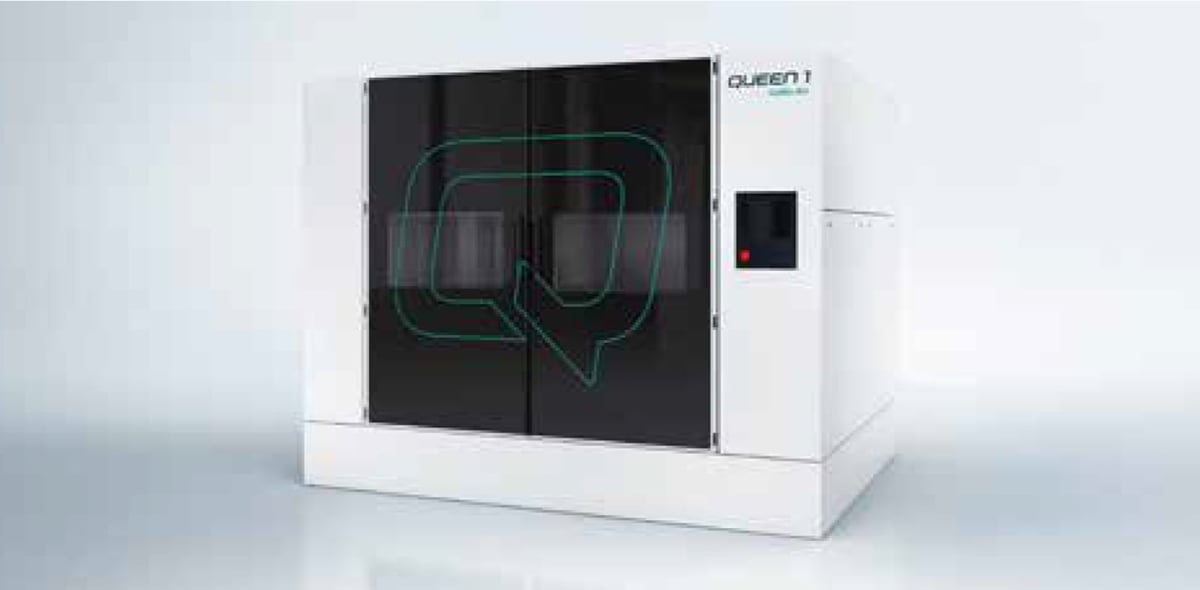
German couple Katja and Dennis Herrmann founded Q.Big 3D in 2019 to make large-scale 3D printing economically viable, they say. The company’s first machine, the Queen 1, debuted in 2023, and it sports some innovations that may catch on quickly in the large-format 3D printing space.
First is its print head with variable nozzle diameters that can switch from a 1.5 mm diameter to a 3 mm diameter, which enables it to print fine detail in parts that need it and less detail in parts that don’t, resulting in faster print times. The maximum print speed is 500 mm/s.
The Queen 1 only prints with material in pellet form with a maximum output of 2.0 kg/h. It’s a fully enclosed machine with a build volume of 1,700 x 1,050 x 1,050 mm, a heated chamber to 80°C, and a heated bed to 120°C. Q.Big 3D says its machine is particularly designed to “accelerate development and early-stage manufacturing of large parts.”
Compound Dynamics
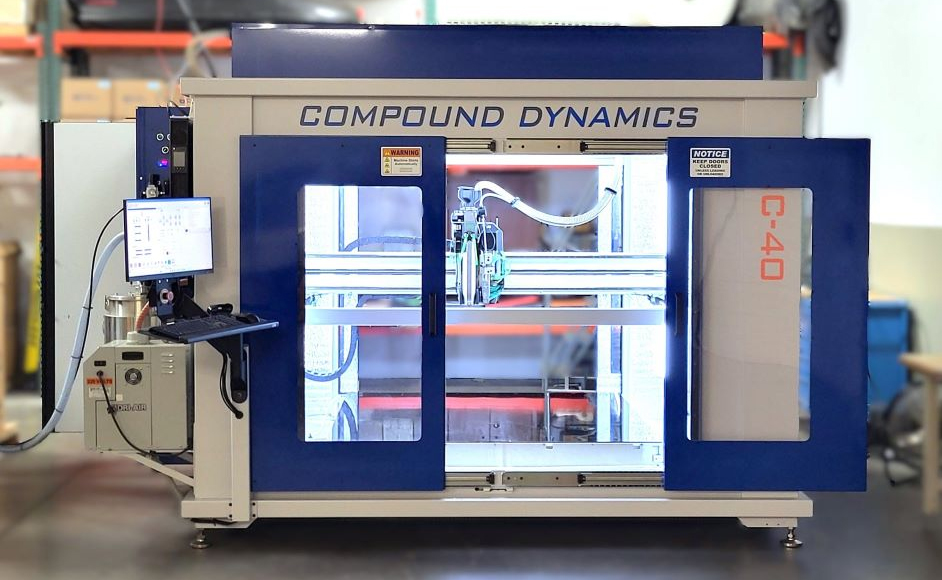
U.S.-based Compound Dynamics offers two large-format 3D printers that can be configured for filament and/or pellets. The RM30 Series, which boasts a print area of over one cubic meter and can handle both filament and pellet extrusion within its enclosed chamber, ranges from $145,000 to $250,000.
For larger projects, the RM40 Series provides a substantial print volume of 2.25 cubic meters and shares the advanced features of the RM30, with a price point between $240,000 and $310,000. Compound Dynamics’ background is in custom machine design and offers customization services, enabling you to specify different print bed sizes, Z heights, and extruder combinations to meet your requirements.
There’s also a heated chamber and a pellet dryer. These printers feature Dyze Pulsar pellet extruders.
Robotic Arm Pellet 3D Printers
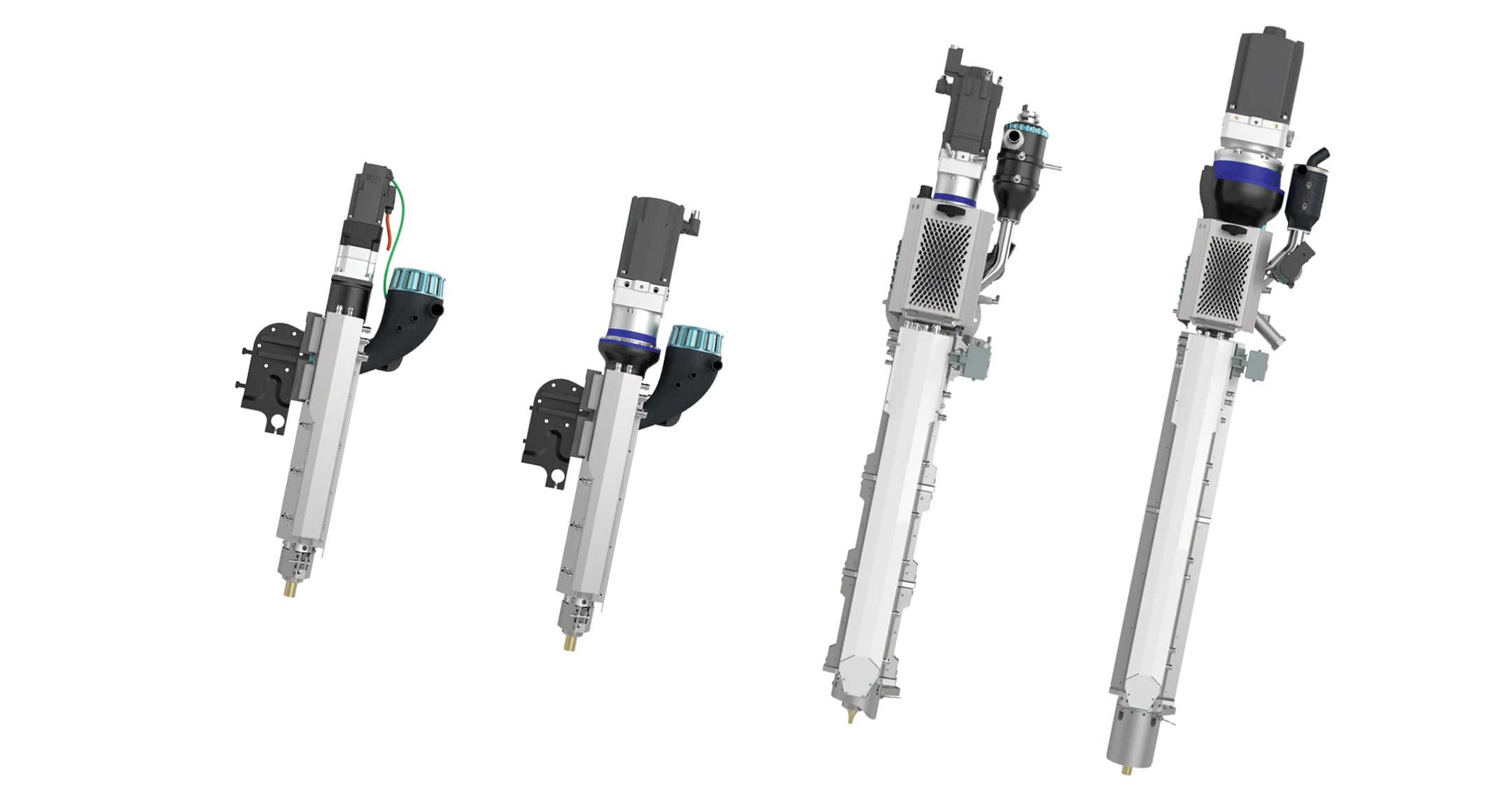
If you’re up for building your own pellet-fed robotic arm 3D printer — or you’d like to retrofit a robotic arm or CNC machine that you already own so you can repurpose your equipment for additive manufacturing — you’ll need a pellet extruder and a few accessories, such as a unit that conveys the material from the hopper to the print head, a feedstock agitator, and a cooling fan. You may also want to consider a heated build surface.
We cover this topic in-depth in our guide to robotic arm 3D printers, but we wanted to list your robotic arm extruder options.
Extruders for Pellet-Fed Robotic Arm 3D Printers:
Pellet Printing: Pros & Cons
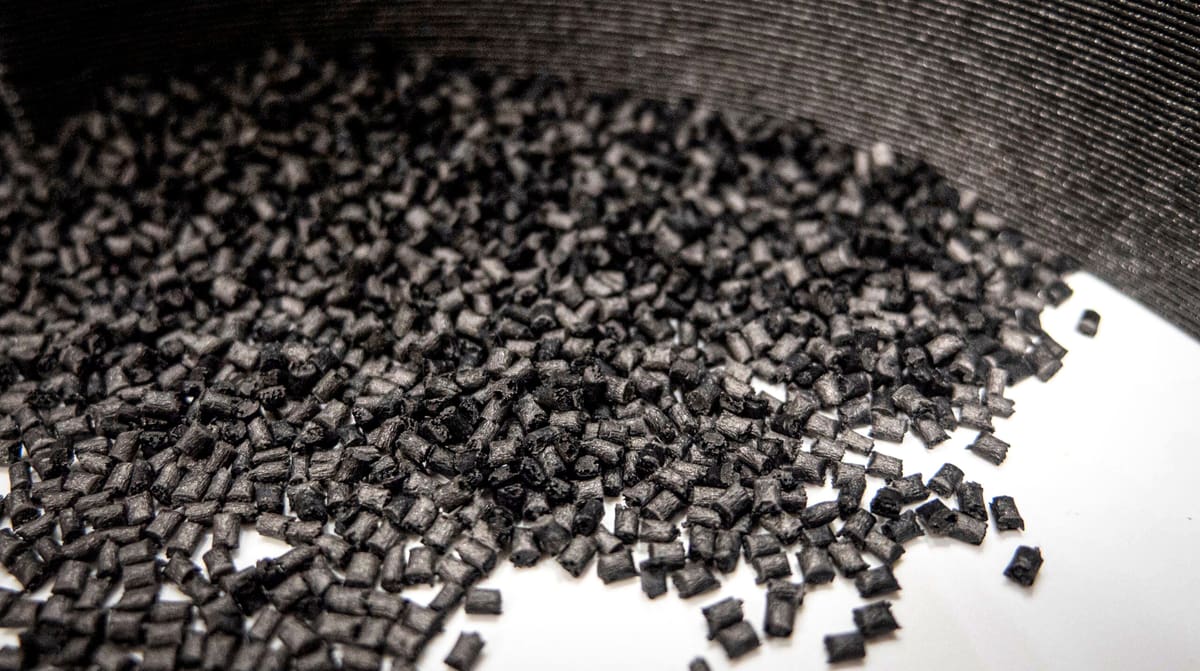
Such a seemingly small change in material can deliver significant benefits in 3D printing, along with some drawbacks. Pellet printers deliver much faster print speeds and much higher throughput, which are both significant advantages over traditional filament FDM when printing very large parts.
According to research by chemical company Convestro, which manufactures pellets for 3D printing, filament printers offer a typical throughput of 2.27 to 113 grams per hour. Pellet printers, on the other hand, have typical throughputs of 227 grams to 9 kilos per hour.
3D printing with materials in pellet form doesn’t generally impact the mechanical properties of the final parts. Evaluation tests have shown that pellet printing produces comparable results to FDM with filament. In some cases, it may even improve the mechanical characteristics, like tensile strength, because the plastic hasn’t been processed a second time into filament.
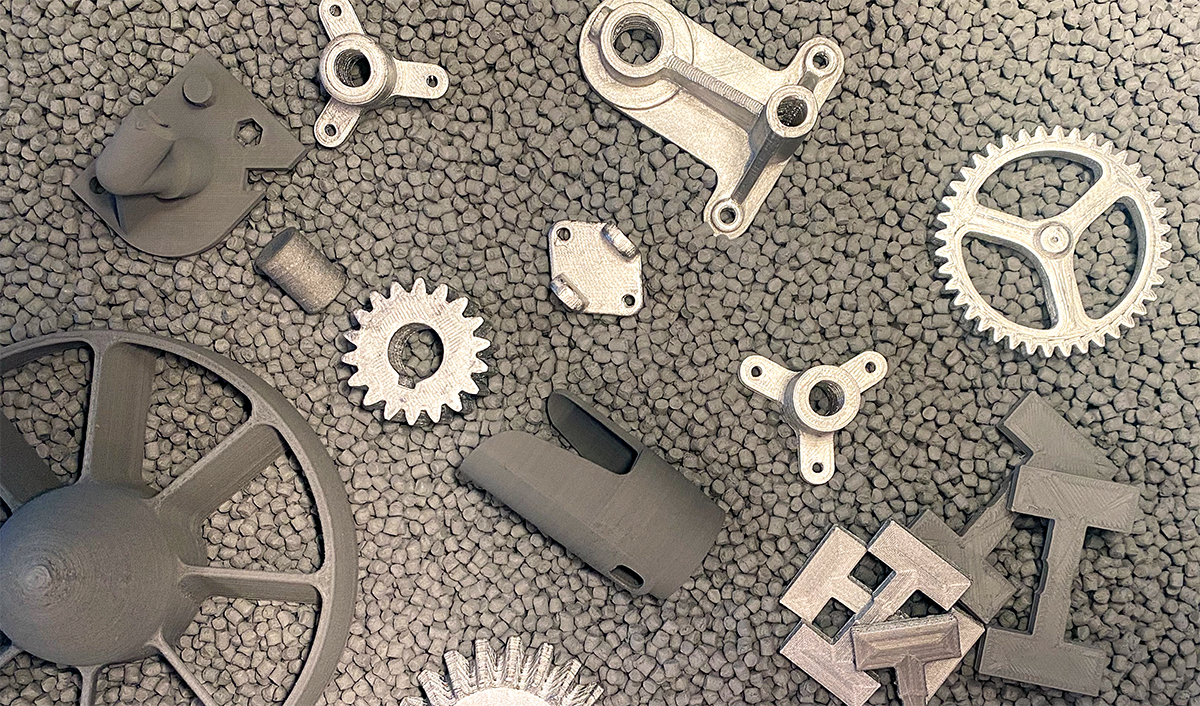
In the end, will the advantages of printing with pellets outweigh the drawbacks? Take a look at this list of pros and cons and decide for yourself.
Pros
- Cost Saving. Pellets can cost 65% to 90% less than filament of the same plastic, depending on the volume of your purchase.
- Faster Print Speeds. Because of the large heat zones in pellet extruders, nearly 100 times greater material throughput is possible compared to filament printers. This makes pellet extruders capable of up to 200 times faster print speeds.
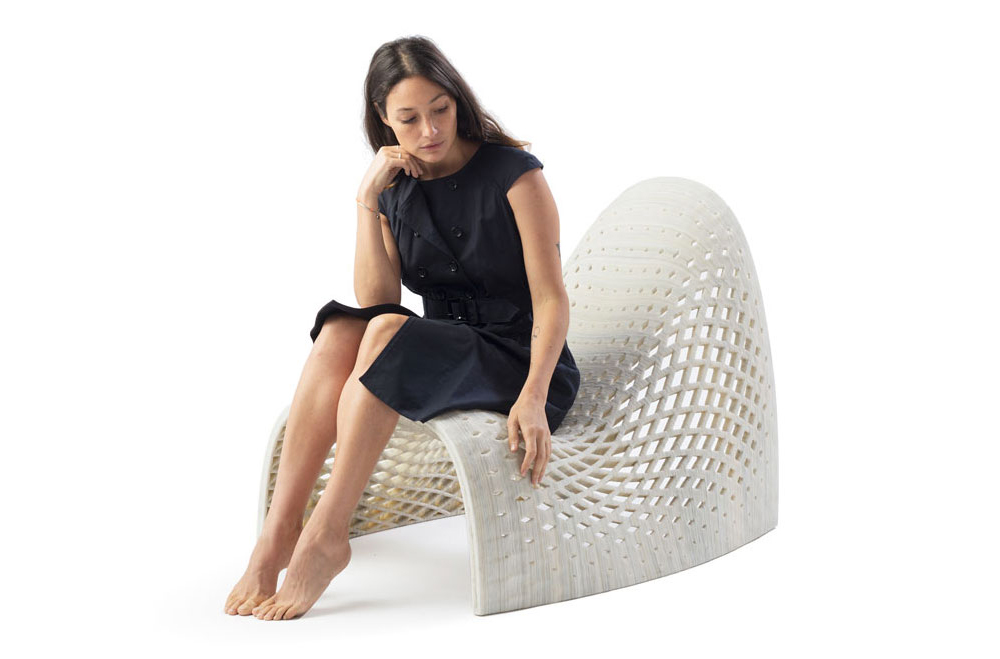
- Larger Print Sizes. 3D printed furniture and large objects are often only economically feasible with cheaper materials and faster print times. Robotic arm 3D printers coupled with pellet-fed extruders are what manufacturers typically use for very large prints, such as the furniture pictured below.
- Custom Composites. Create your own custom material blends by combining different pellets. You can easily add dyes, additives, and reinforcement fibers to the mix to create custom composite plastics. Reuse your waste plastic by tossing it in with your virgin pellets.
- Environmental Benefits. Someday, everyone will be chopping up their own household plastic waste to use in their 3D printer. Today, initiatives such as Print Your City are raising awareness by helping cities collect plastic waste to 3D print public park benches. Plastic makers, including Covestro, sell recycled plastic shreds.
Cons
- Limited Detail and Geometry. Due to the speed at which molten plastic is extruded, the practice isn’t generally used to produce fine details when coupled with a robotic-art style 3D printing. Desktop FDMs using pellets, however, can produce 40-micron layer heights.
- Print Defect Potential. Depending on the quality of your pellet extruder and original materials, you could experience print defects caused by inconsistent material intake and output. These could range from voids and air bubbles to warping and over- or under-extruding.
- Availability of Pellets. For industrial 3D printing, obtaining hundreds of kilos of pellets is easier than filament, but for consumers looking for just 5 – 10 kilos of pellets at a time, distributors are few.
- Lack of Retraction. Retraction in FDM printing prevents material from oozing from the print nozzle by reversing the direction of the filament-feeding gears. Pellet printers can’t do this because they rely on screws to push material to the nozzle. The only option to cut the flow of material is to stop or slow down the screw or block the nozzle. Only some industrial pellet 3D printers boast an integrated melt pump that is fully retraction-enabled.

How to Print with Pellets
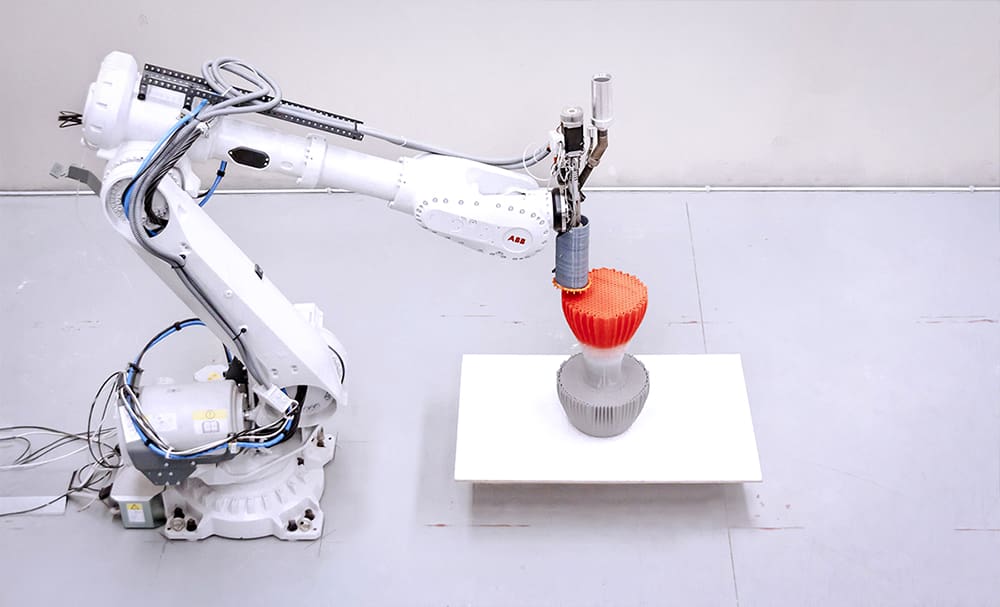
You can’t process pellets through a regular FDM filament extruder-melter assembly. To print with pellets and shreds, you’ll need to purchase a pellet 3D printer (see printers below), use a pellet extruder system on a robotic arm, or convert your current FDM printer to a pellet printer with add-ons.
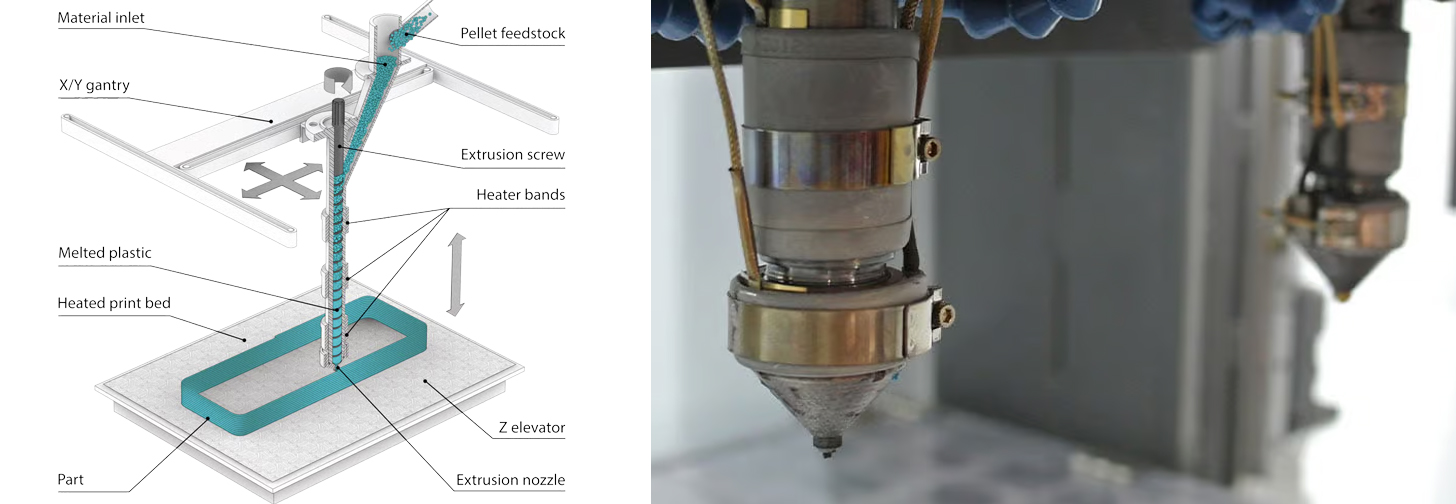
Pellet extruders are specialized print heads designed specifically for 3D printing with pellets or shreds. The heart of the extruder is an auger screw that transports pellets from the hopper outlet to the printing head. Along the way, the pellets pass through heaters that melt the plastic.

Most pellet extruders have several heat zones. The first one generally has a higher temperature to ensure uniform material melting. The other zones are lower in temperature, as their purpose is to maintain a consistent temperature and flow along the long screw. Note that these heaters are generally hotter than an FDM heater, and operators must ensure constant throughput to avoid burning the plastic.
The movement of the auger screw builds up the pressure at the end of the extruder, which forces the melted plastic through the printer nozzle.
The hopper in a pellet printer is just a large container to house the pellets or shreds. Some hoppers allow the pellets to fall down under their own gravity, while others use conveyors to move the pellets forward.
Some printers, such as those from 3D Systems, Atlas, and WASP, have exchangeable extruder setups so you can print with pellets or filament; other pellet 3D printers are exclusive to loose material.
Desktop Pellet Printing
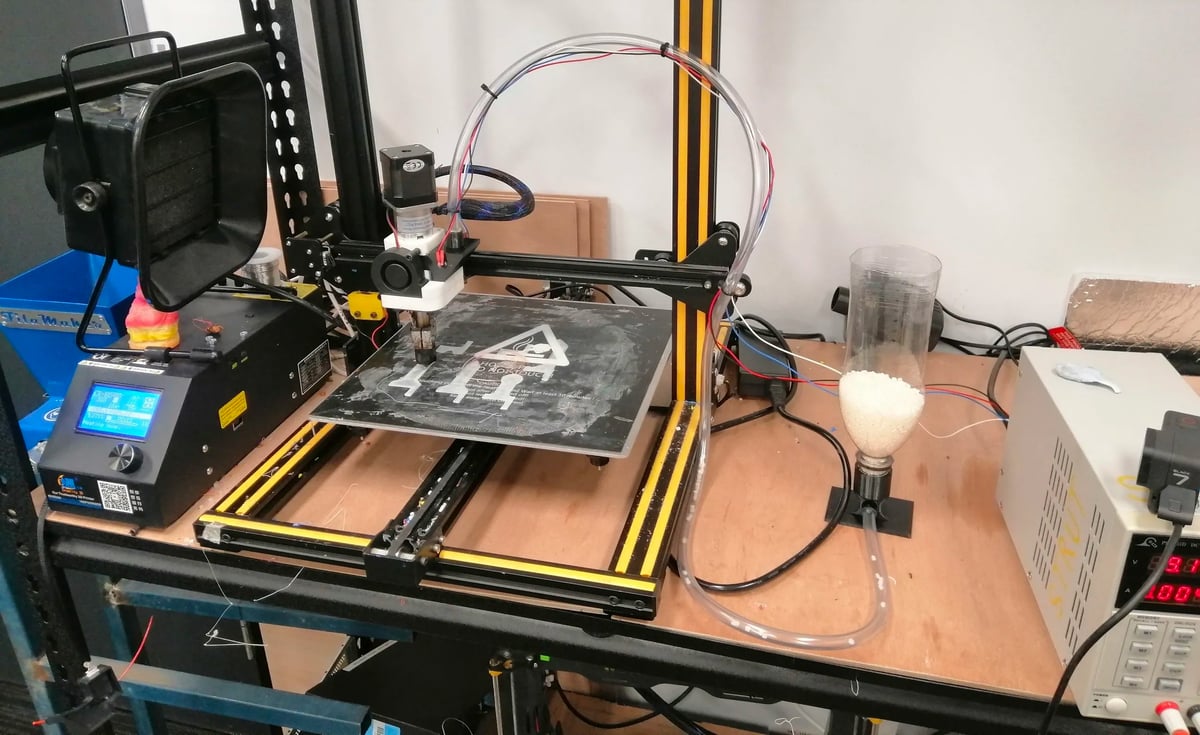
Converting your current FDM filament printer into a pellet printer is possible if you’re handy, but it comes with a new set of potential challenges, such as possibly needing to modify your printer’s firmware or redesign your printer’s X-carriage to work with automatic bed leveling. Running a pellet extruder also may consume more power than your printer’s original design.
Currently, you won’t find many major desktop printer brands, such as Ultimaker or Raise3D, offering pellet printers or printing conversion kits. (Creality is a recent exception.) What you will find are a few companies — such as Polylab or Extrudinaire — that make add-on pellet extruders that can be used to transform most existing desktop filament printers into pellet printers, they say. These extruder units are designed to enable consumers and small businesses to start recycling plastic and realize the other benefits of pellet printing.
Industrial Pellet Printing
For business and industrial users, 3D printing with pellets can save tens of thousands of dollars a year in materials, especially if you print with the more expensive engineering-grade polymers. The professional 3D printers we detail below have largely perfected printing with pellets to get the highest print quality from the technology without the defects you may experience in converted desktop printers.
Of course, you don’t even need a 3D printer to print with pellets. All you need is a pellet extruder head and a pellet hopper hooked up to a robotic arm or CNC machine with the appropriate software. This type of set-up is known as robotic arm 3D printing and it almost exclusively uses pellets as material. These, however, are not the type of printer we’re featuring here since the robotic arm is really a different technology and we go deep into the details of the extruders, robotic arms, software, and applications in the separate guide linked below.

Here, we focus on 3D printers, both desktop and industrial, that are not robotic arm systems, but rather all-in-one gantry- or delta-based 3D printing systems.
Where to Buy Pellets & Source Shreds
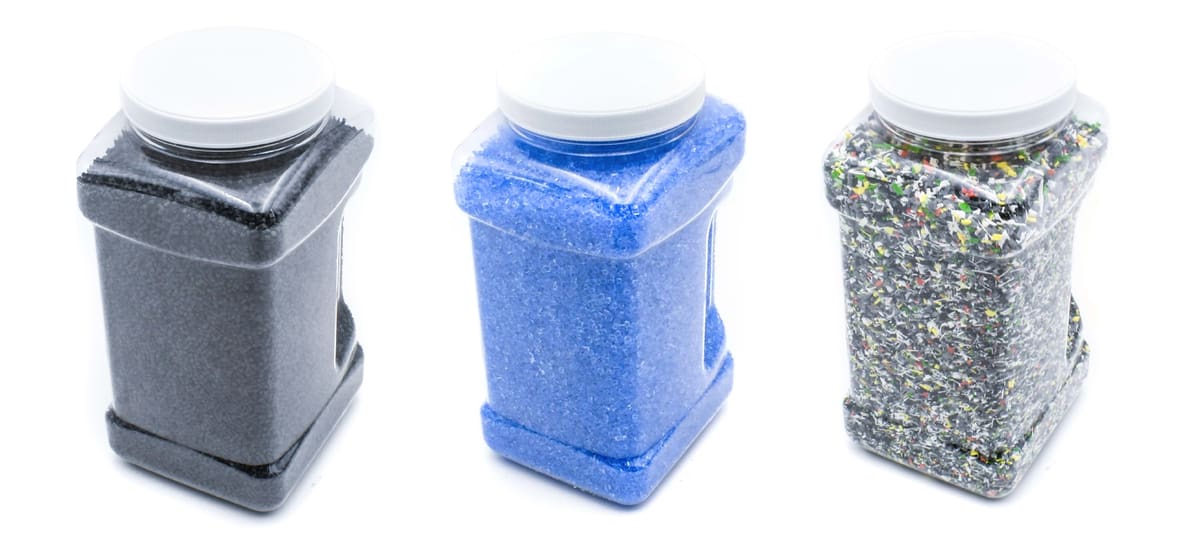
As we mentioned above, companies and industrial manufacturers should have no problem sourcing 50-kilo bags of pellets from commercial polymer makers and plastics distributors around the globe. Smaller quantities for prototype labs and non-professionals are a little harder to find, but not impossible.
Just like shopping at Costco, it only makes sense to buy in bulk if you plan to use it. As with plastic filament, pellets should be stored in a moisture-free environment and may need to be dried before use.
Recycling your own plastic is another story. Corporations are beginning to look seriously at the amount of plastic waste they produce and how to address the issue. Carmaker Audi, for example, launched a program this year to shred industrial packaging and feed it into a filament maker to use in its 3D printers and produce factory tools.
Industrial shredders can consume your plastic waste and produce an abundance of material to feed your hungry 3D printers. For smaller-scale shred production and more on how to chop up your failed prints and scraps, see our article below:
Pellet & Shred Resellers
License: The text of "3D Printing’s Pellet Revolution: Why Hobbyists Are Being Left Behind" by All3DP Pro is licensed under a Creative Commons Attribution 4.0 International License.