Want Tougher FullSpectrum Prints? 3D-Fuel Just Released the Right Colors in Pro PCTG

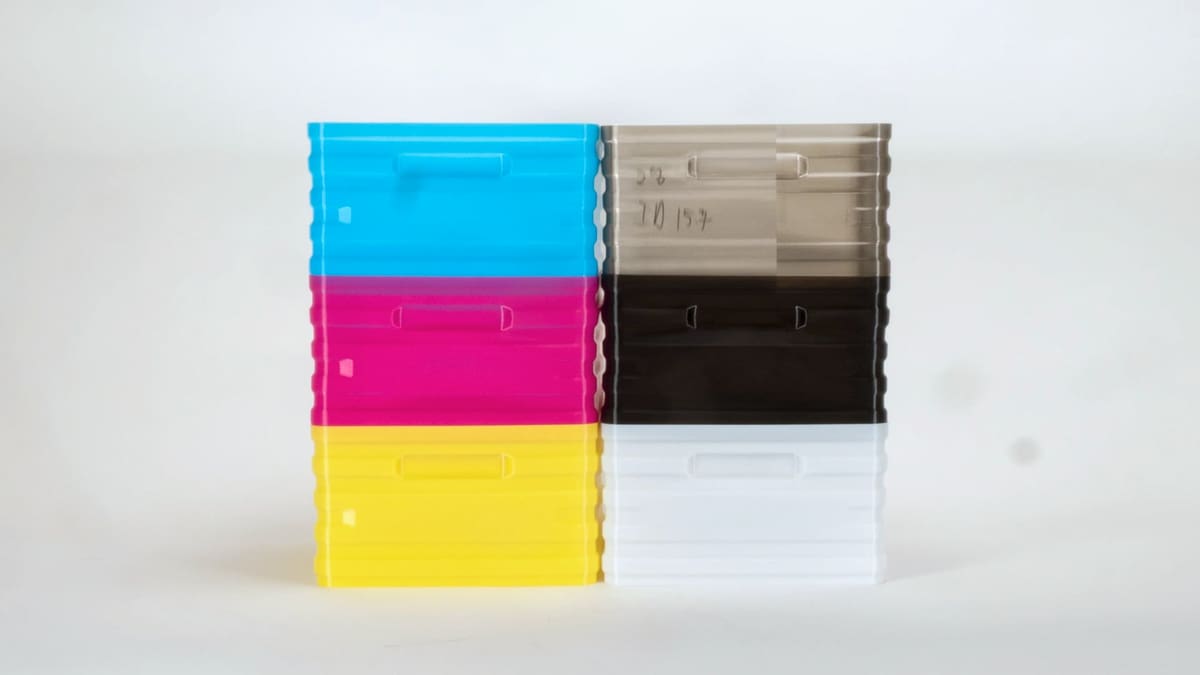
Now available in Translucent Cyan, Magenta, Yellow, White, Black, plus Transparent Smoke Black, 3D-Fuel’s new Pro PCTG colors offer a tougher-than-PETG-prints-like-PLA spin on FullSpectrum color prints for realistic color mixing.
It’s been a hot minute since we last spoke about anything color-mixing and FullSpectrum, so kudos to 3D-Fuel for giving us a new reason to talk about it.
The company’s line of Pro PCTG (we took some for a spin not so long ago – it’s good) expanded late last month with the addition of six new colors pitched toward use with color-mixing techniques like FullSpectrum, and other such slicer-based features that have gotten popular this year.
For the uninitiated, color-mixing filaments was popularized by FullSpectrum, a fork of Snapmaker’s Orca Slicer-based software for its U1 3D printer that added the peculiar feature to create “virtual” colors for your print. Achieved by printing alternating layers of selected colors, at fine layer heights the colors optically blend, giving the appearance of new colors.
It caught on, and has been ported, adapted, and replicated many different ways by major printer manufacturers, as well as independent developers who have created other tools that use the principles FullSpectrum established.
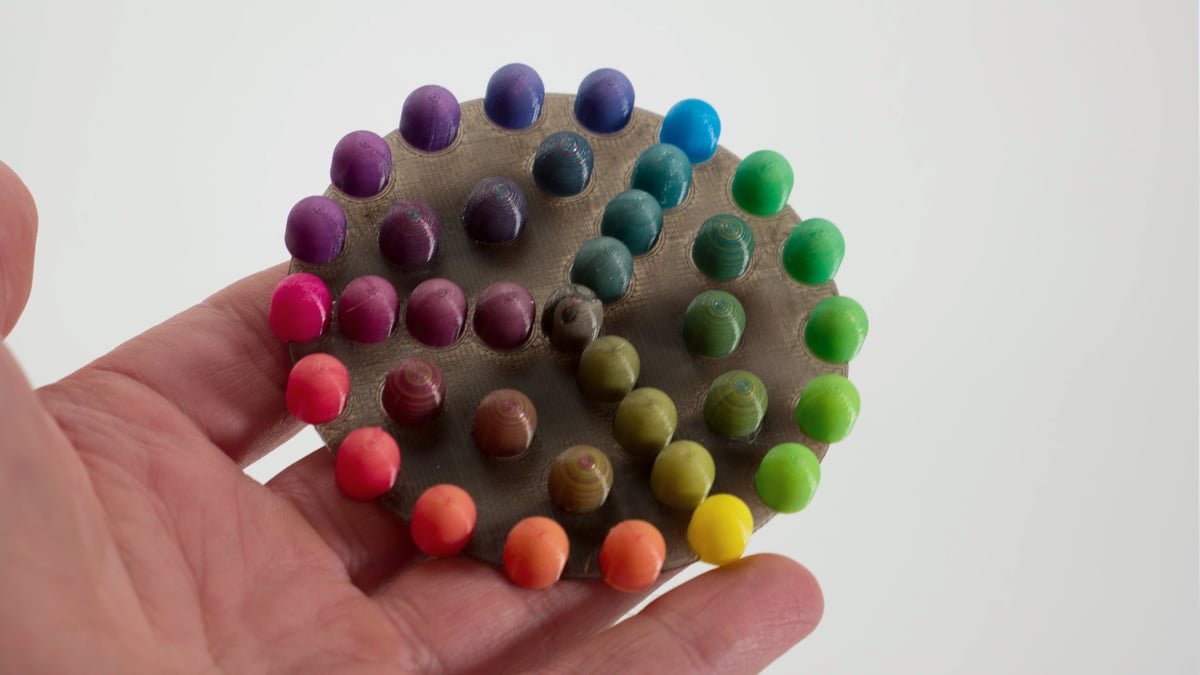
The color theory for creating real virtual colors is based in part on the CMYK color model used in traditional 2D printing – millions of colors from overlapping dots of a smaller base set. Filament manufacturers are increasingly offering CMYK sets of filament for 3D printerers to recreate the effect, with controllable color ratios and more predictable results.
Which brings us full circle back to 3D-Fuel, which has released a batch of colors that suit this sort of printing. The six new colors of Pro PCTG are available in cyan, magenta, yellow, white, a translucent black, and what the company calls Transparent Smoke Black. 1 kg spools of each are available at $29.95, while a CMYW bundle (which excludes a black filament) offers four spools at $109.90.
A detailed post on the company’s blog explains “these colors give creators a highly capable CMYKW palette, along with two distinctly different ways to add shadows, contrast, depth, and smoky transparency.” All of the filaments have been released along with their light transmission distance (TD) values – at a glance useful to understand how much they will or won’t overpower adjacent colors, as well as a specific value you can use in precision software that works with TD values as a part of the job setup, like HueForge.
The inclusion of two different types of black give a measure more flexibility in controlling the depth of a shade. Translucent Black, they say, performs in contrast to its name. With a low TD value, light doesn’t penetrate it particularly well, making it push adjacent layers in the print to appear much darker. Transparent Smoke Black, however, has a higher TD value, meaning light travels better through it.
It’s worth mentioning that, actually, there’s no limit on the filaments you mix – you don’t need a set of CMYKW to create virtual colors in FullSpectrum or other filament mixing features – it’s just the logical place to start if you want to know exactly the sort of hue you’ll be getting without boatloads of test printing and effort.
The new colors of Pro PCTG are available now on the 3D-Fuel webstore.
More News



License: The text of "Want Tougher FullSpectrum Prints? 3D-Fuel Just Released the Right Colors in Pro PCTG" by All3DP is licensed under a Creative Commons Attribution 4.0 International License.