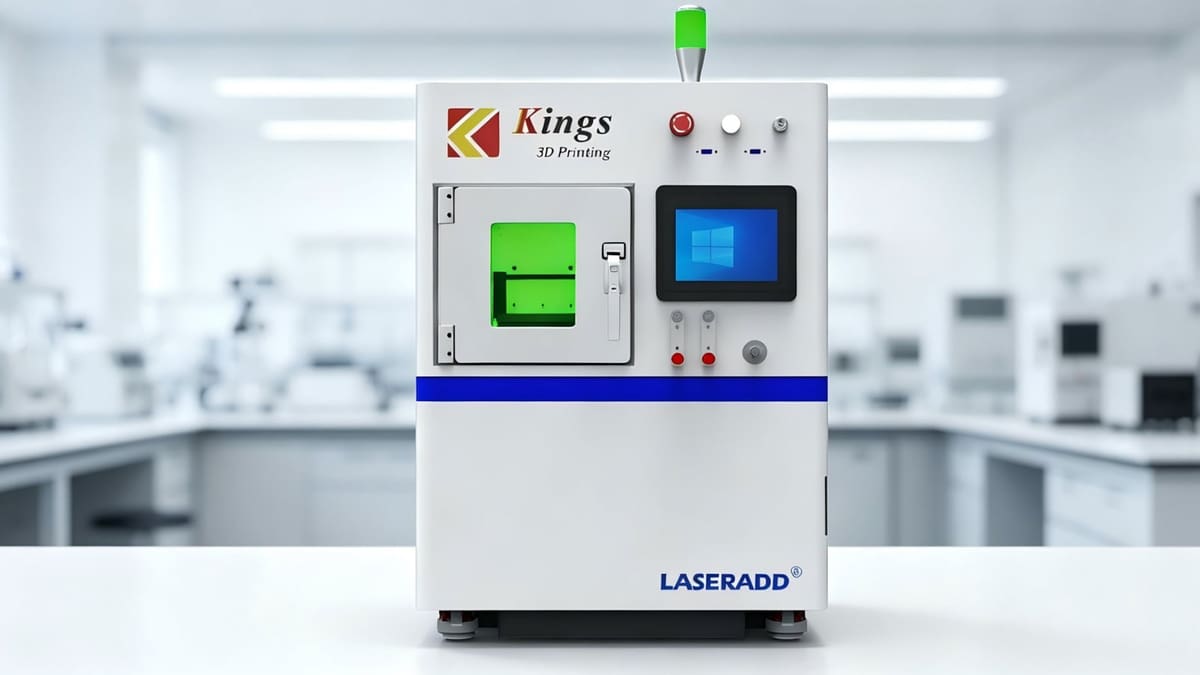
Kings 3D’s New 140-Kg DiMetal-100 Proves ‘Desktop-Sized’ Isn’t Always ‘Desktop-Friendly’

The 140-kg laser metal printer still needs 6 kW of three-phase power, reactive-metal-powder handling, inert-gas purging, and dedicated post-processing to run.
Better known for room-sized resin and pellet printers, Kings 3D is pitching its latest metal laser powder bed fusion (LPBF) system as “desktop” metal printing although this is still firmly industrial equipment.
The new DiMetal 100 joins a rash of printing manufacturers with sights set on miniaturizing metal LPBF — Global Laser Box’s DP-C1, Scrap Labs’ Scrap 1, Mastrex’s MX100 — although this compact printer is targeting dental laboratories, research institutions, and small-batch metal production. It’s closest competition is likely the well-known Chinese brands also targeting dental with desktop size machines like HBD’s 150D, E-Plus3D’s EP-M150, and Farsoon’s FS121M.
The DiMetal 100 is a notable change of scale for a company that may be more familiar to Western audiences for very large industrial printers. Kings’ portfolio spans SLA resin, SLS polymer powder, MPBF metal, filament extrusion, and large-format fused granulate fabrication systems. Its largest machines include the SLA 2700 Pro, with a 2,700 × 900 × 800 mm build area, and multi-ton pellet-extrusion systems for molds, tooling, furniture, and sculptures.
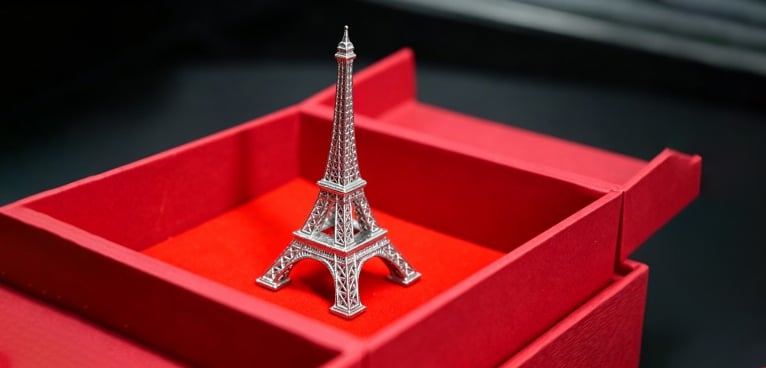
The machine measures 690 × 720 × 1,000 mm and weighs 140 kg. It combines a 120-mm-diameter, 100-mm-high build volume with a 300-W fiber laser, scan speeds of up to 7 m/s, and layer heights between 20 and 100 microns. Compatible materials include stainless steel, cobalt-chrome, titanium alloys, and tool steel. At Formnext 2025 in Frankfurt, Kings exhibited its SLA 1000 Pro, compact SLS P260 Pro, and FGF 1800 Pro. The latter offers an 1,800 × 1,200 × 1,100 mm build volume and weighs 1,300 kg — making the DiMetal-100 look genuinely small by comparison.
“Desktop,” however, describes the DiMetal-100’s footprint rather than its accessibility. The system requires up to 6 kW of three-phase power and involves reactive metal powders, inert gas, filtration, powder handling, part removal, and post-processing. It may suit a properly equipped dental or research laboratory, but it is not destined for hobbyists or conventional workshops in the way desktop polymer printers are.
Pricing and export availability have not been announced. The DiMetal-100 is currently absent from Kings’ English-language catalog, although the company internationally markets a similar 140-kg M100 Series machine and accepts inquiries from customers worldwide. Buyers outside China will therefore need to confirm availability, certification, installation, and local support directly with Kings 3D.
DiMetal-100 technical specifications
You May Also Like:
License: The text of "Kings 3D’s New 140-Kg DiMetal-100 Proves ‘Desktop-Sized’ Isn’t Always ‘Desktop-Friendly’" by All3DP Pro is licensed under a Creative Commons Attribution 4.0 International License.