Mastrex Debuts to Disrupt Metal 3D Printers with Sub-$40K Laser Powder Bed Fusion

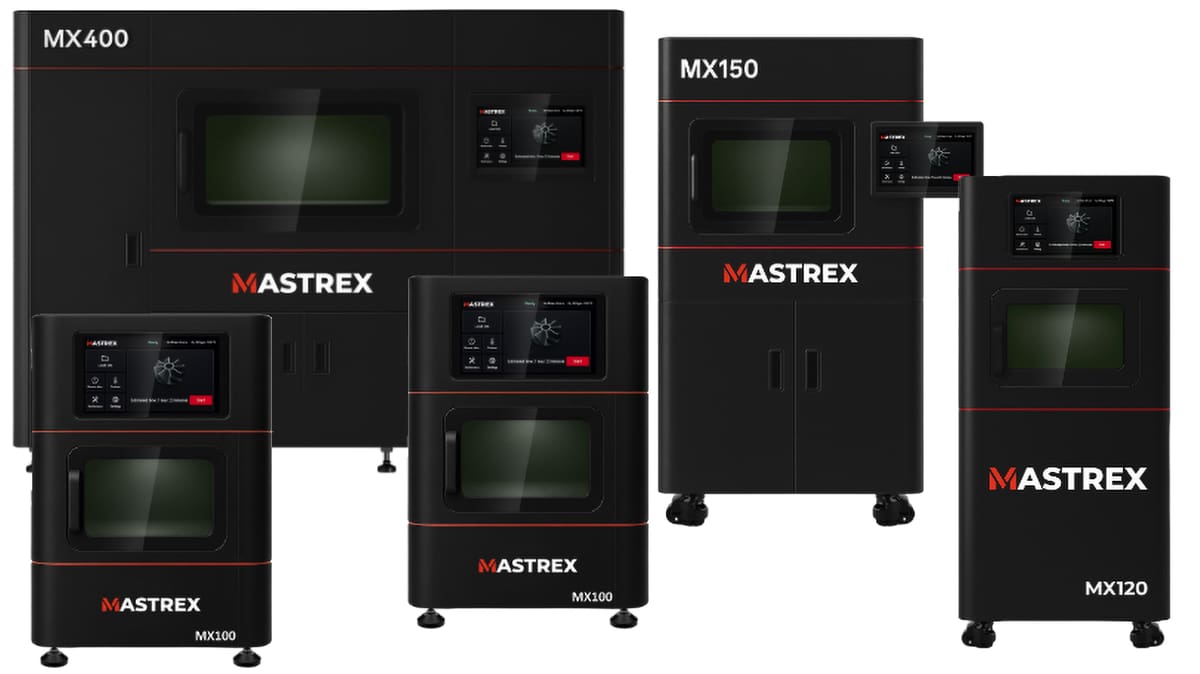
The newly formed Mastrex ecosystem launches with a versatile lineup of six machines, offering a scalable path from entry-level desktop metal printing to high-output industrial production.
Two American manufacturing companies with very different histories—Vulcan and Burgmaster—have officially just merged to form Mastrex, a new entity positioning itself as a scalable, cost-accessible alternative in the increasingly competitive metal laser powder bed fusion (LPBF) market. The company debuted it’s new name and branding at the Consumer Electronics Show in Las Vegas this week.
The newly launched Mastrex brand combines Vulcan’s relatively recent push into metal additive manufacturing with Burgmaster’s long legacy in American machine tools. According to the company, the merger is intended to create a single platform spanning entry-level metal 3D printing through to multi-laser industrial production systems—an ambition that places it squarely between desktop-oriented LPBF offerings and high-capital production machines.
Competing Beyond “Cheap Metal Printing”
Metal LPBF has long been dominated by high-cost, highly validated systems from manufacturers such as EOS, Nikon SLM, and Farsoon, where machine prices, qualification costs, and ecosystem lock-in often put adoption out of reach for smaller manufacturers.
At the opposite end of the spectrum, companies like One Click Metal have focused on simplifying metal LPBF through tightly controlled workflows, cartridge-based powder handling, and compact system designs aimed at lowering operational barriers. (Prices start at $100,000)
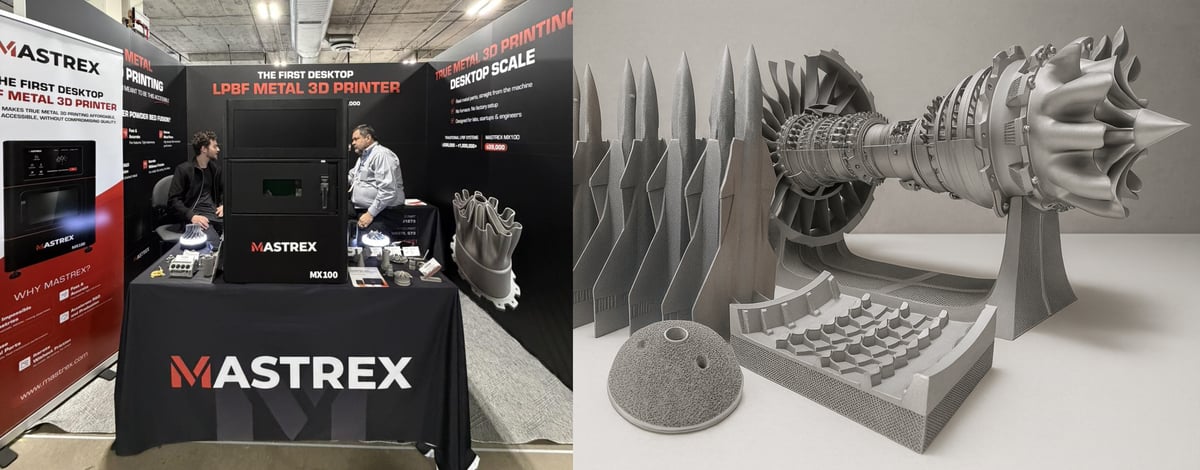
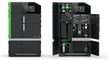
Mastrex’s strategy appears to deliberately span these two poles, with its entry level MX100 priced below $40,000 and its MX150 at just below $90,000, while also offering quad-laser, larger-volume (400 x 350 x 400 mm) production units.
While the company prominently advertises entry pricing—starting below what has historically been considered the threshold for industrial LPBF—its messaging does not frame Mastrex as a “desktop metal” provider. Instead, the company emphasizes a single LPBF product family that scales upward, from small-format systems to larger, multi-laser machines intended for production environments.
Scaling Within One Ecosystem
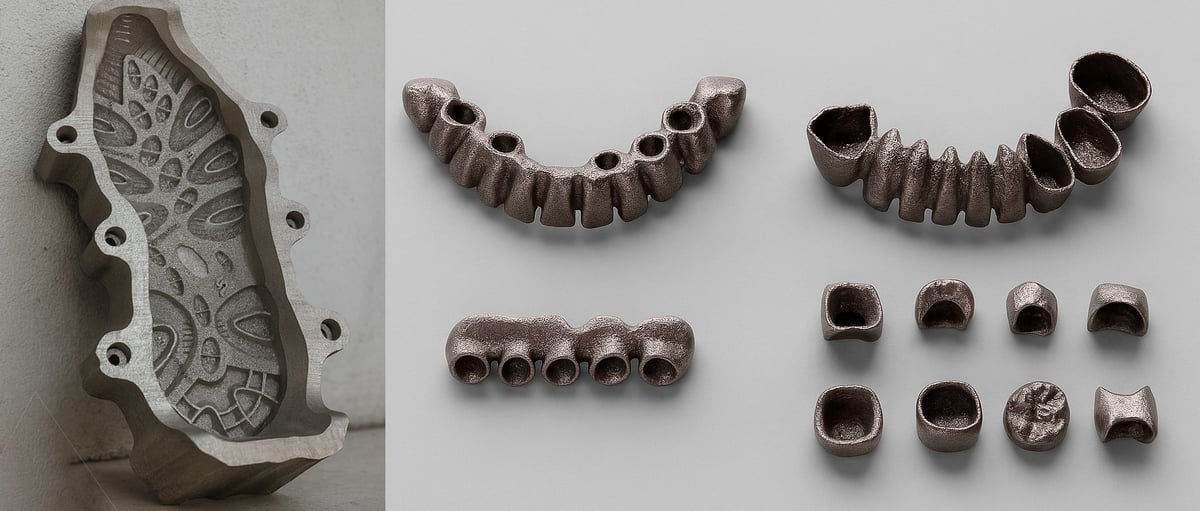
According to product information released alongside the merger, Mastrex’s LPBF lineup ranges from compact, single-laser systems aimed at prototyping and low-volume production, up to multi-laser platforms with substantially larger build volumes. Rather than positioning each system as a standalone product, Mastrex presents the portfolio as a progression—allowing customers to remain within the same vendor ecosystem as their production needs grow.
This contrasts with the traditional LPBF purchasing model, where companies often move from an entry-level system directly into a completely different vendor’s industrial platform, incurring new training, workflow, and qualification costs in the process.
Mastrex is also leaning heavily into financing and purchasing flexibility, marketing monthly payment options and lower upfront capital requirements as part of its competitive positioning. In an industry where machine acquisition costs can rival full CNC production lines, this approach may resonate with contract manufacturers and smaller OEMs evaluating their first move into metal additive manufacturing.
What Mastrex Is—and Isn’t—Challenging
Mastrex does not appear to be positioning itself as a direct replacement for high-throughput production systems like Nikon SLM’s largest multi-laser platforms, which emphasize maximum productivity and deeply integrated production workflows. Nor does the company currently offer the same level of materials qualification and process validation, messaging that has long been a core selling point for EOS.
Instead, Mastrex’s pitch centers on capability per dollar: offering industrial LPBF hardware, a broad materials range, and a clear upgrade path without requiring the capital investment typically associated with top-tier production machines.
In this sense, the company may be most directly competitive with mid-range industrial LPBF systems—particularly those from Farsoon—while simultaneously undercutting traditional price expectations and expanding access to manufacturers previously priced out of the market.
A Bet on Accessibility and Domestic Manufacturing
The merger also carries symbolic weight. Burgmaster, once a fixture of American machine tool manufacturing, effectively re-enters the market through additive manufacturing, while Vulcan gains manufacturing heritage and credibility beyond its startup-era roots. It also brings a collection of machine-shop and industrial laser cutter to the menu.
Whether Mastrex can translate aggressive pricing, broad machine coverage, and simplified acquisition into long-term market share remains to be seen. But with metal LPBF adoption increasingly driven by cost justification and scalability rather than novelty, Mastrex’s hybrid strategy may appeal to a segment of the market that has so far remained underserved.
For now, the merger signals a clear intent: to make industrial metal LPBF less exclusive—and more attainable—without abandoning the performance expectations of modern manufacturing.
You May Also Like:


License: The text of "Mastrex Debuts to Disrupt Metal 3D Printers with Sub-$40K Laser Powder Bed Fusion" by All3DP Pro is licensed under a Creative Commons Attribution 4.0 International License.