Are Fully 3D Printed Shoes Ready for Everyday Wear? A Hands-On PollyFab Review

I spent three weeks testing these seamless, 3D printed lattice sneakers to see if they offer real-world support or if they’re just a high-tech novelty.
Wearing unfamiliar shoes just weeks after knee replacement surgery felt like a bad idea. I should have been in my most stable, most supportive pair—something like my partially 3D printed Adidas 4DFWD. But when PollyFab offered to send over its fully 3D printed shoes, it seemed like the perfect distraction.
During the next three weeks of full-time physical therapy, I’d be paying attention to — and relying on — my footwear like never before, so why not see how these held up.
That curiosity quickly raises a bigger question: what exactly makes these shoes different from the growing number of 3D printed options on the market? The answer lies in PollyFab’s technology, materials, and mass-manufacturing approach.
PollyFab, the World’s Largest 3D Printed Shoe Maker
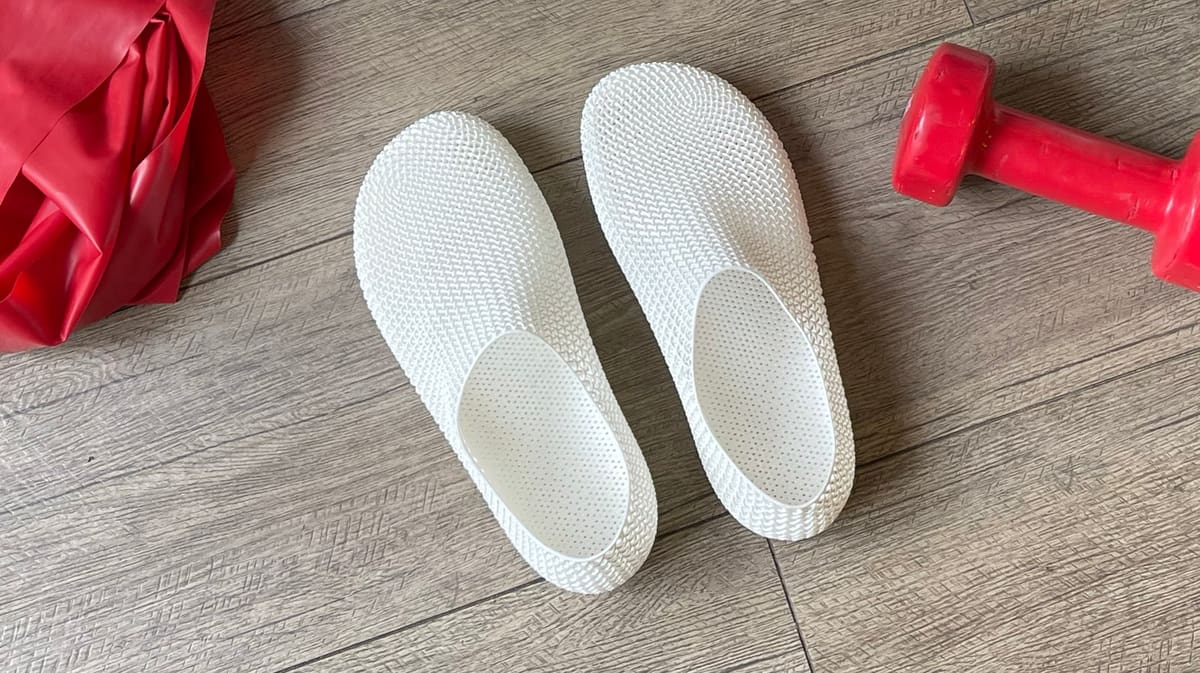
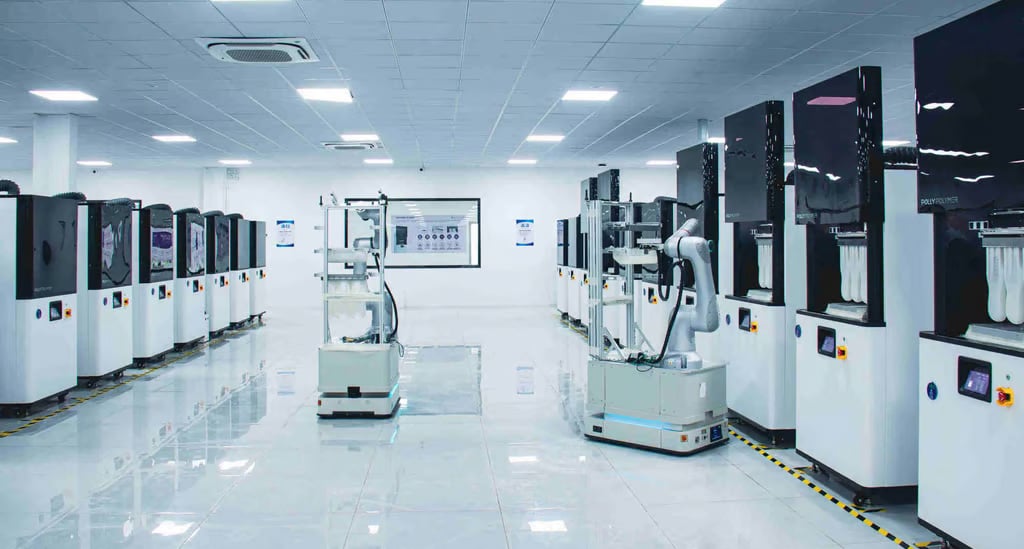
PollyFab is the consumer-facing brand of PollyPolymer, a Chinese additive manufacturing company focused on materials and high-speed resin printing. Rather than relying on 3D printing for the midsoles or parts of the uppers, like we’ve seen for several years now, the company 3D prints the whole shoe as a single, seamless lattice structure. There’s no glue, stitching, or separate sole.
The priority is breathability, lightness, and comfort with design and materials as the key.
PollyFab approaches footwear as a digital product from the ground up, where geometry replaces foam and production can, in theory, happen on demand with minimal waste. The company uses proprietary resin 3D printers and materials at five fully automated factories. Each printer can print eight shoes (four pairs) in a single one-hour print cycle, the company says. That’s an annual production capacity of 3.5 million pairs.
PollyPolymer has raised tens of millions in venture funding and is likely valued in the low hundreds of millions, putting it in the upper tier of China’s emerging additive manufacturing players.
It has made, by many accounts, impressive strides in photopolymer research and development along with its custom lattice-generation software and 3D printing technology. It says its resin formulas are up to 53% bio-based while PollyPolymer’s “hindered asynchronous light synthesis (HALS)” technology claims to boost printing speeds by up to 100× compared to traditional processes.
Its approach is comparable to Carbon, the Silicon Valley company behind the Adidas Climacool ($140), but where Carbon provides the technology for other brands, PollyPolymer, through PollyFab, is selling directly to consumers.
PollyFab markets its shoe production as “5D printing”, which is less a formal engineering term and more of a marketing-fluff catch-all for its mix of high-speed resin printing, algorithmically generated lattice structures, and performance-tuned materials.
PollyFab’s Airpuff One Pro & Aero Pro
The Airpuff One Pro ($130) is PollyFab’s lightweight, fully 3D printed slide available in black, white, and, what I call, caution orange, which was my choice.
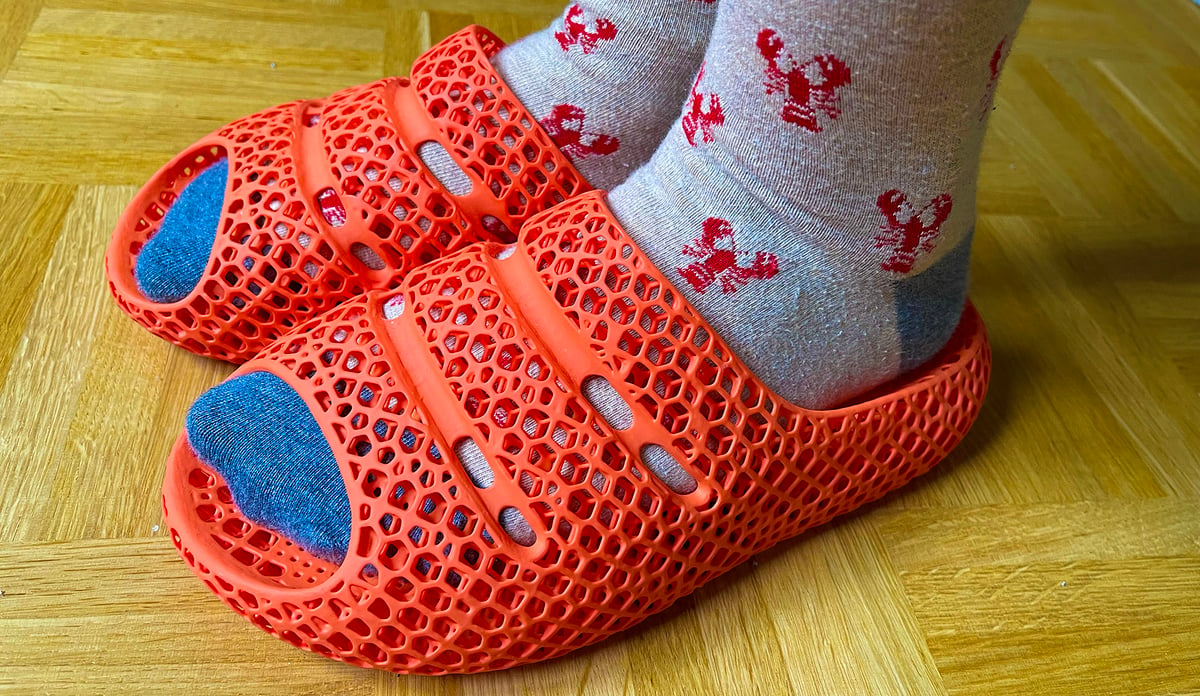
Make what you will of the look, I think they’re futuristic and fun. Unlike the FDM 3D printed shoes from companies like Zellerfeld where layer lines and slight printing imperfections are considered features, these are flawless. The real life shoe looks exactly like the marketing beauty shots. The color is applied in a post-processing step that hides any layer lines.

The company cites 360° deformation and high energy return, but what stood out to me was simpler: the second you slip them on, you want to hop. My daughter tried them on; hop, hop, hop. Her friend tried them on; hop, hop, hop. They are the springiest thing I’ve ever had on my feet.
Weighing slightly less than a deck of cards, they are extremely comfortable. Although these were not 3D printed to a scan of my foot or required any type of sizing app, the fit was spot on. I submitted the length of my foot, the width at the widest, and my normal shoe size.
Despite my enthusiasm for the Airpuffs, my physical therapists gave them a thumbs down for a rehab shoe due solely to their potential to slip off (although they haven’t yet). The Airpuffs instead became my “recovery shoe”, the ones I would look forward to slipping on when I got home.
The recovery shoe trend started as a niche product for runners but has since gone mainstream as footwear designed less for performance and more for helping your body recover. Think maximal cushioning, airflow, and effortless movement. The Airpuff fits squarely into that category up against the likes of OOFOS slides ($60 – $80) but at roughly a third of the weight but double the price.
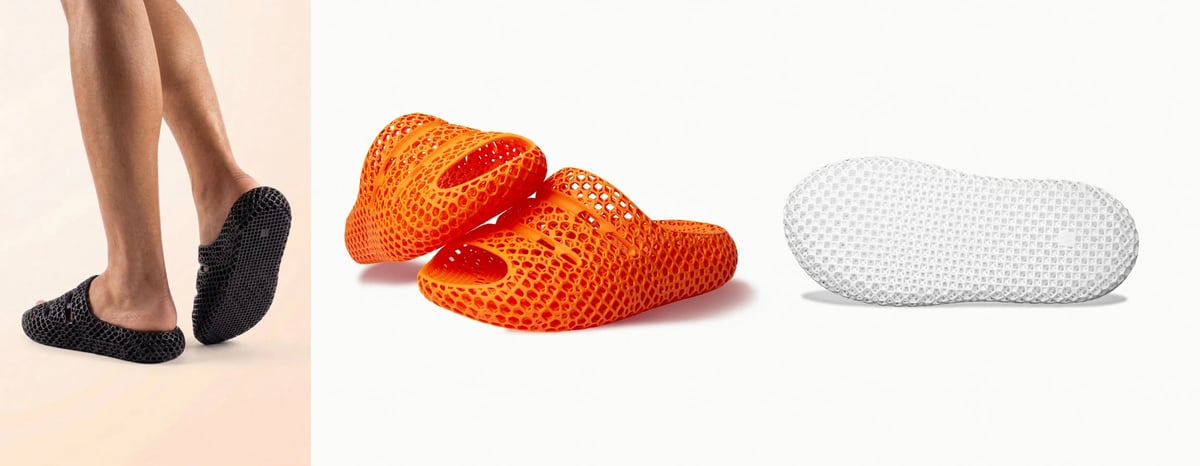
And yes, those holes run all the way through the shoe, no solid bottom. My advice would be to restrict these to indoor use only. Although PollyFab’s marketing materials shows models wearing these for a walk on the beach, I can not imagine the hassle of getting sand and tiny stones out of the crevices (PollyFab recommends a high-pressure water gun to wash them out).
The Ideal Workout Shoe?
The shoe my physical therapists green lit — and rather enthusiastically — was the Aero Pro.
The Aero Pro ($180) is basically PollyFab’s take on an everyday, throw-on-and-go shoe. It’s fully 3D printed in one seamless piece and made from a soft, elastic material with that signature open lattice design. It feels super light, flexible, and airy.
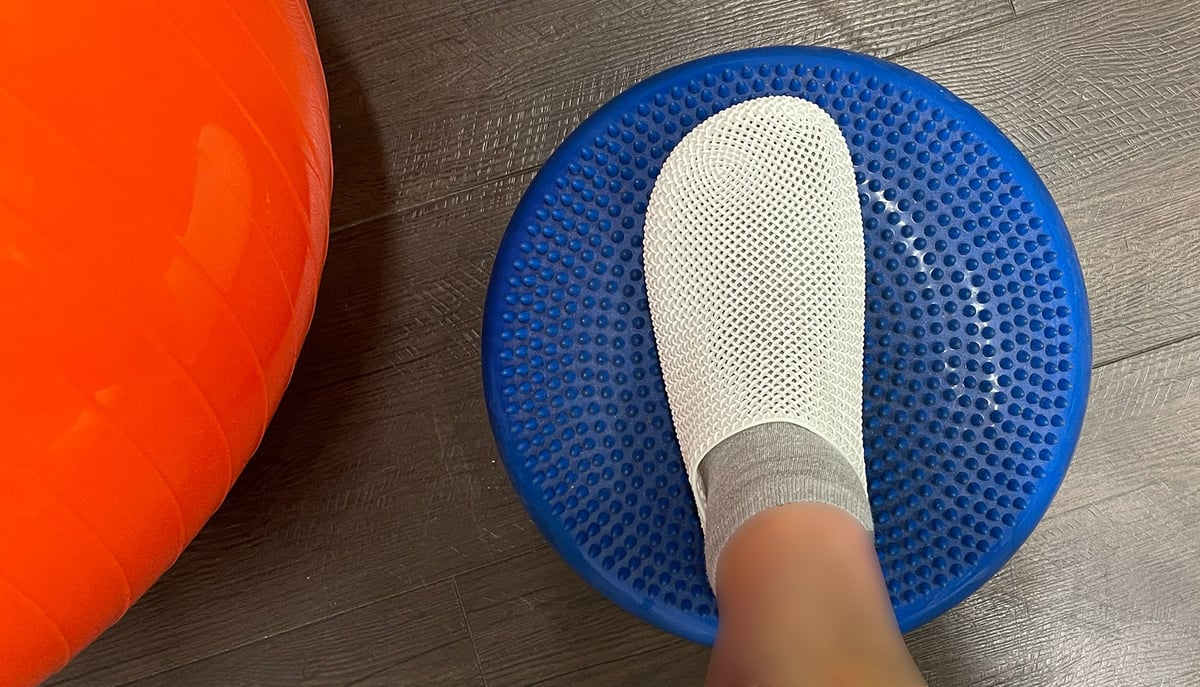
It has enough cushioning and bounce to handle a gym workout or yoga class. It’s less about performance and more about easy, breathable comfort you don’t have to think about.
A few features that made the Aero Pro ideal for my three weeks of physical therapy were ones I didn’t even know I needed until my physical therapists pointed them out.
This is where PollyFab stopped feeling like a novelty and started feeling genuinely useful.
First, a wide toebox, which can be hard to find on a women’s shoe (although PollyFab shoes are unisex), which enables you to fully bend, flex, and spread your toes inside the shoe (one of my recovery exercises). Next, a sole that’s cushiony but thin enough and flexible enough to let you feel the ground and perform a full slow heel to toe roll as you walk (another therapy exercise). The sole is akin to a barefoot shoe and prevents the type of sidelong ankle roll that can happen with a stiffer elevated athletic shoe sole, especially those with a heightened heel, my therapists told me.
Plus, they’re slip-on, which is great for when you can’t easily reach laces.
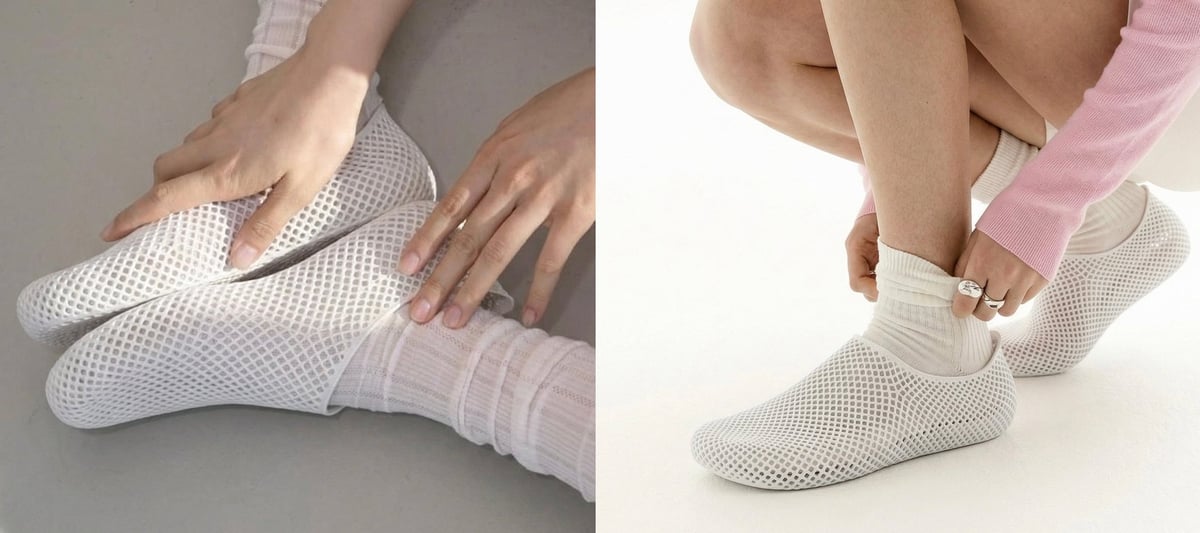
Of the hundreds of fellow patients I saw at the orthopedic rehab clinic in my three weeks — yes, I was actively checking out everyone else’s shoes — no one else had footwear with these features. One extra bonus: I wore them in the pool and just shook them dry afterwards. They have the same wet surface traction as any water shoe.
Yeah, But Will They Last?
Materials have long been the Achilles’ heel of production additive manufacturing. These are new formulations built for a new process. Long-term durability is still an open question – Pollyfab recommends alternating “between at least two pairs of shoes to extend their lifespan”, and color loss in high-friction areas is expected wear and tear for the company’s shoes. All I can add is that, in my short three weeks of daily use, there are zero signs of wear, no cracking, ripping, delamination — nothing.
It would appear, for now at least, that from a shoe-buying perspective, there’s no reason to expect your 3D printed PollyFabs to perform any differently than any other type of mainstream consumer shoe. Your mileage in them may vary.
Expect to see PollyFab physical stores opening in 2026.
You May Also Like:

License: The text of "Are Fully 3D Printed Shoes Ready for Everyday Wear? A Hands-On PollyFab Review" by All3DP Pro is licensed under a Creative Commons Attribution 4.0 International License.