
3D Printing & Kickstarter: The Good, the Bad, and the Ugly

Crowdfunding is responsible for the big break of many a 3D printer – but for every high-profile success, there’s a handful of failures to launch. Here’s the low down on 3D printing on Kickstarter.
The rise of desktop 3D printing was only made possible by the efforts of those engaged in Adrian Bowyer’s RepRap project, and the open source hardware and software advocates that go hand in hand with it.
Yet many of the household names we know in desktop 3D printing, including Formlabs and Bambu Lab, have gotten their break from crowdfunding. The concept became popular in the 2010s as a way to “bring creative projects to life,” according to Kickstarter, the most prominent platform and often the first name associated with the term.
The idea is simple. If you’ve got a product but miss some of the capital to fully develop and launch it, Kickstarter gives the platform to advertise the idea and pitch it to the public, who can “back” it to varying degrees, typically at one of a variety of levels set by the campaign’s organizers. These different levels come with gratitude or the promise of material reward in exchange for backing.
It’s easy to mistake it for a store offering cut-price printers or printer-aligned products. Regular readers will know that we always caution against backing Kickstarter campaigns with money you can’t afford to lose for the simple reason that there is no guarantee you will get anything. Furthermore, there is no mechanism for you to get the money back should a campaign go awry and the funds dry up before a product is finished. It is categorically not the same as buying a product from a shop.
Gloomy warnings aside, Kickstarter, in particular, has been a phenomenal incubator for desktop 3D printing. But, for the successes, there have also been some spectacular duds, too, and no shortage of also-rans that, while technically successful in their campaign, have faded into obscurity.

We’re often impressed by the amount of money projects are able to rake in. Several high-profile campaigns have raised millions in funding, the most recent being Snapmaker’s barely-begun campaign for the U1 toolchanger, which at the time of writing has $7-million pledged after only a single day online. The significance of a campaign is not always all about the dollars, though. Creating value for the 3D printing community as a whole is important, as the 2013 Smoothieboard campaign shows us.
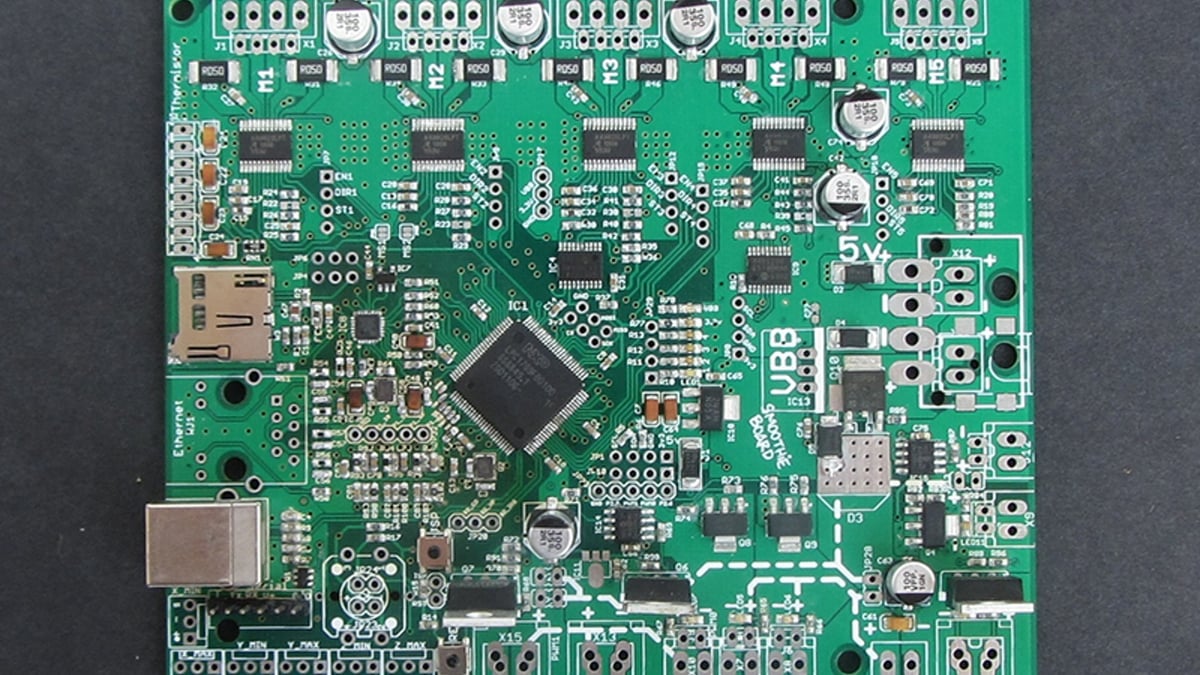
Prior to the campaign, Arthur Wolf and a community of volunteers had been developing open-source firmware capable of controlling a wide range of CNC machines, including 3D printers, CNC machines, laser cutters, among others. The firmware’s code base was designed to be modular, allowing other user communities to easily add functionality.
However, back then, the most common controller board hardware for 3D printers presented limitations. 8-bit AVR controllers adversely affect speed, resolution, print quality, noise levels, among other things. YouTube channel Teaching Tech helpfully explains that their processing power is too limited for higher resolution microstepping, increased speed, and controlling other motion systems such as Delta and CoreXY. Therefore, Smoothieware was initially run on breadboard setups.
The community behind Smoothieware wanted a board that could handle the feature-rich modular firmware and the variety of machines it could run. They designed and subsequently refined a board featuring a 32-bit ARM microcontroller, and hundreds of beta boards were tested within the community.
In September 2013, a Kickstarter campaign with a $20,000 goal was launched to raise money for a larger production run of the boards. By the close of the campaign a little over two weeks later, 727 backers pledged $110,000 to support the project.
This campaign is praiseworthy because it funneled financial resources to a community-based project that sought to resolve a technical challenge impacting everyone in the 3D printing community. Furthermore, the project was and continues to be fully open source, which brings something of value to the entire community.
These days, 32-bit controller boards are commonplace. We may have the Smoothie Project to thank in part for that.
As we note in our article 8 Things to Watch for When Backing a 3D Printing Kickstarter, you’re backing an idea, pure and simple. Matt Gajkowski, “the mind behind Tiko’s groundbreaking technologies”, certainly had a compelling one: a remarkably affordable, easy-to-use machine with bespoke parts optimized for mass manufacturing. A good idea, however, doesn’t guarantee success.
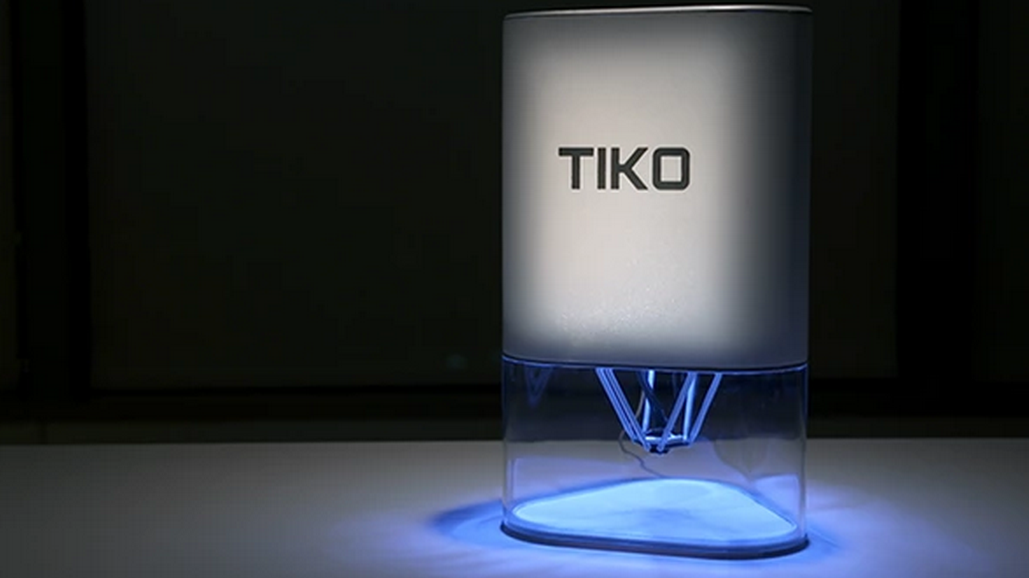
Tiko’s appeal was its Delta motion system, engineered around a single, continuous unibody frame. As Gajkowski explained in interviews, this approach was intended to drastically reduce manufacturing costs, eliminate complex assembly, and maintain calibration, solving many of the pain points associated with consumer 3D printing at the time. The printer promised a sleek, enclosed build chamber, Wi-Fi connectivity, and a novel liquefier designed for reliability.
The campaign was showered with extensive, optimistic coverage from tech media. It was a Kickstarter staff pick, and the concept even won a product design award. Over 16,500 people backed the project – with pledges coming in close to $3 million, surpassing the Tiko team’s initial goal of $100,000. The campaign still ranks high in the list of top funded 3D printer projects in Kickstarter’s history.
Despite the fanfare, the campaign ended in failure. It promised a design “easy to manufacture”, but the Tiko team struggled to move from prototype to mass-produced product.
The company had significantly underestimated the costs of production, logistics, and quality control. Extrusion problems and chassis production failures presented manufacturing hurdles. Scaling production to fulfill the quantity of orders proved problematic.
Tiko 3D managed to fulfill about 25% of the pledges received in the 2015 campaign: only 4,151 semi-operational units were shipped before the company closed in late 2017. Based on user feedback posted to the Kickstarter campaign and social media, many who received the printer were unsatisfied with its performance.
Now, things get ugly. The 2013 Peachy Printer campaign sought to raise funds to continue developing and eventually manufacture an innovative SLA 3D printer that was slated to cost only $100. This was considered revolutionary considering desktop resin 3D printing was still in its infancy – Formlabs led the charge with their 2012 Kickstarter campaign for the Form 1 – and also the fact that SLA technology was, at the time, still monopolized by patent holder 3D Systems.
Rylan Grayston, Peachy Printer’s inventor, pitched a simplified form of stereolithography (SLA) that used laser light and a controlled drip-feed resin system. The movement of the laser was ingeniously controlled by the audio output from a computer’s sound card, a novel approach that dramatically lowered the cost and complexity compared to other resin printers on the market.
Over the course of the 30-day campaign, 4,420 backers supported the project, pledging over $600,000. For years following the campaign’s close, the Peachy Printer team worked on developing the product and provided periodic updates to their backers, detailing the journey of refining the printer’s design, sourcing components, and preparing for manufacturing. While the development was protracted, the community remained largely hopeful that the Peachy Printer would eventually come to fruition.
Unfortunately, the project came to a shocking and abrupt end in May 2016. Grayston revealed that the co-owner and financial manager of the company had embezzled half of the funds raised during the Kickstarter campaign. Worse, backers were left empty handed, and there’s no evidence that any of them received a refund. The only positive to come out of the whole ordeal was the open-sourcing of the work that had been completed.
It’s uncommon for Kickstarter campaigns to end as ignominiously as the Peachy Printer. In looking at campaigns to pull this article together, we see that there has been a veritable ocean of forgettable projects over the years. Did you back any of them? Let us know in the comments if it was worth it!
License: The text of "3D Printing & Kickstarter: The Good, the Bad, and the Ugly" by All3DP is licensed under a Creative Commons Attribution 4.0 International License.