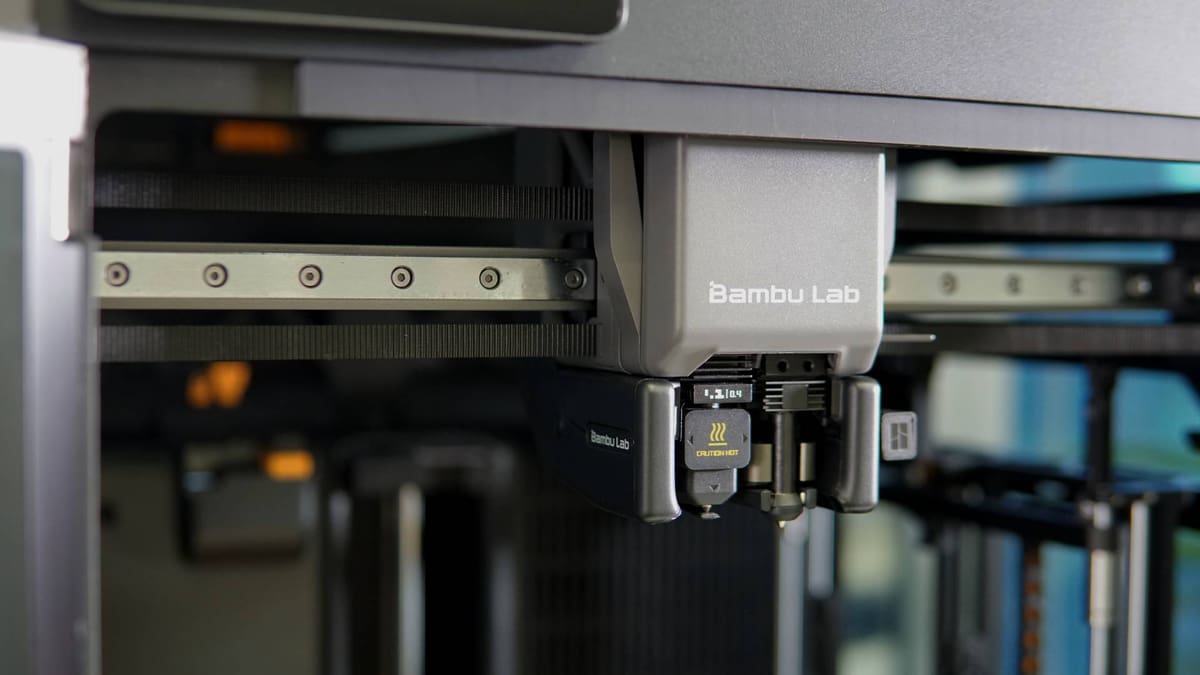
Best Multi/Dual Extruder & Multicolor 3D Printers of 2026

From budget-friendly single-nozzle systems to high-end toolchangers, here are the best multi-extrusion 3D printers for 2026 across five distinct categories.
Dual extrusion (or multi-extrusion) 3D printing is many things to many makers. To some, it’s the possibility of printing multicolor objects, cutting down on post-processing and finishing work after a part has been printed. For others, it’s a means to achieve more complex prints using soluble or breakaway support material – something not possible using a typical single-extruder 3D printer.
The space has largely trended away from technologies like independent dual extrusion (IDEX), with filament switching addons, toolchangers and nozzle changers taking center-stage as the main ways to achieve multicolor and multi-material 3D printing.
Handily, we go hands-on with the printers worth knowing about and have whittled them down to a handful of recommendations tailored to the various multicolor/multi-material-enabling options.
In the lab: We currently have the Phrozen Arco, Elegoo Centauri Carbon 2 Combo, and Anycubic Kobra X in the lab. We'll update accordingly once we're satisfied (or not!) with these.
| 3D Printer | Pick | Market Price (Approx., USD) | Check Price (Commissions Earned) | |
|---|---|---|---|---|
| Bambu Lab A1 Mini Combo | Budget | A compact and connected mini printer ideal for color | $329 | |
| Snapmaker U1 | Toolchanger (Active) | Easy, fast, no-waste multicolor printing | $849 (presale) | |
| Bambu Lab H2C | Toolchanger (Passive) | The everything printer, but more – optimal for 3+ material prints | $2,399 | |
| Bambu Lab H2D | Dependent Dual-nozzle | The everything printer, ideal for waste-free dual material prints | From $1,749 | |
| Creality K2 Pro Combo | Single-nozzle | High-speed & a heated chamber with the volume for big prints | $1,049 | |
How to Choose a Dual Extrusion 3D Printer
The considerations for dual extrusion 3D printers aren’t particularly complex. Ultimately, it’s all about the type of 3D print you want to achieve and how cleanly the printer can accomplish it. That’s about it.
Be sure of what you will mostly be printing
While two extruders feeding material to a single nozzle risks cross-contamination of the materials and will require more rigorous purging of the nozzle for clean prints, an IDEX or toolchanger 3D printer uses entirely separate print heads for each material, minimizing contamination at the expense of added complexity to the motion system and calibration. Physical or software offsets may be needed to properly align IDEX print heads, and so printers that automate this process reliably are integral to a decent multicolor or multi-material printing experience.
There are also dual-nozzle printers that have a single printhead but two nozzles that extrude independently. Compared to a single-nozzle 3D printer, these are a bit more flexible and can produce faster multi-material prints. Faster because less time is spent switching filaments and more versatile because the separate nozzles allow printing with materials that require different temperatures. Some dual-nozzle printers add the risk of oozing filament from the inactive nozzle affecting your print, though, so print-quality measures like ooze shields and prime towers may be necessary.
Dual nozzles can reduce waste, but increase complexity
It’s a push-pull of factors, and each style of system offers some advantages over the others. Single-nozzle systems save on complexity and typically offer a rock-solid base printing experience with fewer calibration considerations. A toolchanger, meanwhile, excels at material flexibility and minimizing waste.
When selecting a multi-extrusion 3D printer, think about what you want to accomplish. If you’re just looking to print in multiple colors, a single-nozzle system is likely the most affordable and will keep upkeep to a minimum. If you want to print with soluble supports or different nozzle sizes, then you must look at multi-nozzle systems, be it IDEX, dual-nozzle, or a toolchanger.
Bambu Lab A1 Mini Combo

What’s Great
- Fast, self-calibrating “smarts”
- High-uniformity, high-speed prints
- Toolless nozzle changes
Despite its mini size and name, the Bambu Lab A1 Mini is a surprisingly complete 3D printer, giving the full, slick, connected, and productive experience offered by the rest of Bambu Lab’s more premium line-up of 3D printers, in a compact form and slim price tag ($329) to boot. For that reason, we’re drawing attention to it as a low-cost entry point to multicolor printing. The possibilities for multi-material are limited, though, so bounce further down the list for more.
This cantilever-style 3D printer boasts a 180 x 180 x 180 mm build volume, automatic calibrations, flow compensation, motor noise compensation, plus a self-monitoring system that can alert you to issues and remedies. All of this is to say it’s a smart little cookie, and as far as active involvement is required from you, there isn’t really any. When you need to, you can make quick nozzle changes (no tools required) – just one of the reasons the A1 Mini is a recommendation in many of our guides.
As the Bambu Lab A1 Mini Combo, the printer comes bundled with the AMS Lite. This device sits next to the printer and feeds filament through an array of guide tubes into a buffer that sits on top of the print head. The AMS Lite is powered directly by the printer and connects via a single data/power cable.
Using Bambu Lab’s own materials offers the smoothest experience. The company’s spools contain RFID tags that the AMS Lite can read, conveying the material type to your computer. Together, the A1 Mini and AMS Lite let you combine up to four different spools of filament in a single print job, be it multiple colors of the same material, or, to a limited degree, different materials.
The A1 Mini printer is only rated for lower-temp materials, such as PLA, PETG, PVA, and TPU. Of those, note that the AMS Lite cannot reliably deliver TPU and similar soft materials to the printer.
It’s a single-nozzle system, so to keep color transitions clean, some material purging is required. The printer’s default purge behavior has led to criticism of it being wasteful (which it certainly can be when printing small, colorful objects), but there are measures you can take to offset this, such as purging into an object’s infill or printing a dedicated purge object alongside your desired print.
As of late last year, the A1 Mini gained compatibility with Bambu Lab’s other AMS devices, too, provided you use the AMS Hub (sold separately). This allows for up to sixteen-filament printing through any combination of the AMS, AMS 2 Pro, and AMS HT.
Snapmaker U1
What’s Great
- Zero-waste filament changes
- Open-firmware flexibility
- User-friendly material handling
The Snapmaker U1’s shockingly successful Kickstarter campaign should have been a sign that this printer could be something special. As it happens, it is.
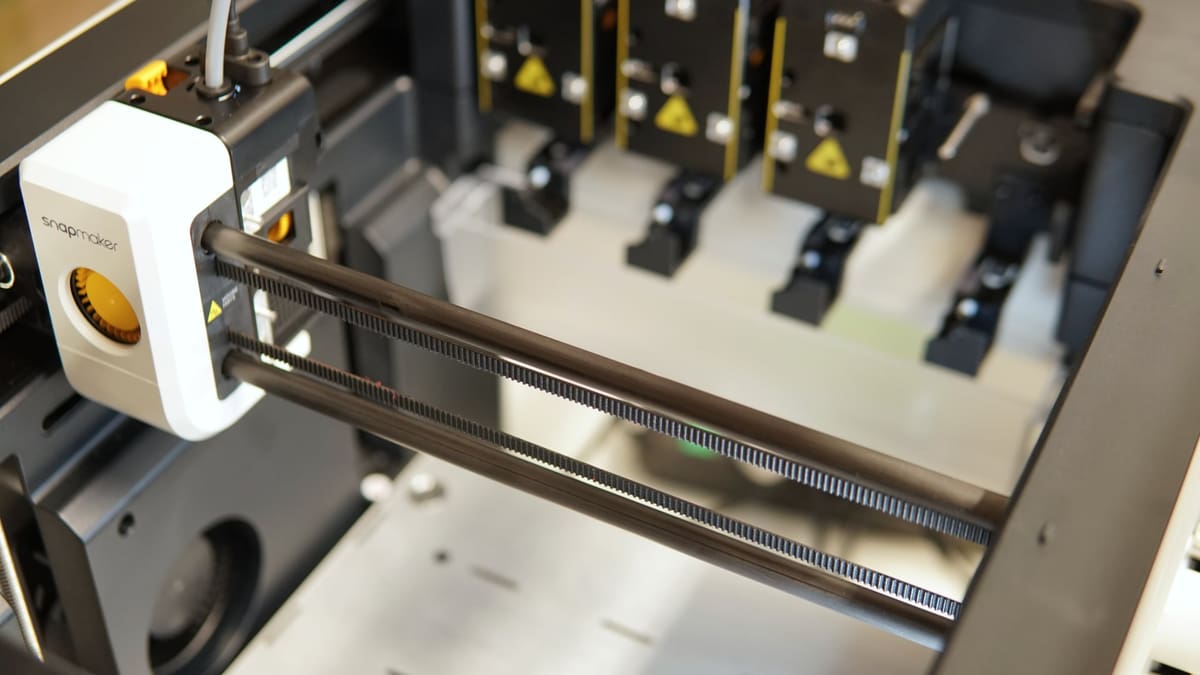
At its core, the Snapmaker U1 is a “traditional” toolchanger – it uses a carriage system to deposit and pick up complete extruder and hot end assemblies as required. This means filament changes happen quickly and cleanly, with no purging of nozzles between. Snapmaker’s so-called SnapSwap system pegs the changeover at 5 seconds. It is quick.
You get a 270 x 270 x 270 mm build volume, with four 0.4 mm stainless steel nozzle-equipped toolheads each capable of heating to 300°C. The print bed hits 100°C, and while it is semi-enclosed with walls and a door, in its stock configuration there’s no chamber temperature regulation to speak of. A lid, sold separately, is available, adding air filtration and temperature management.

The Snapmaker U1’s secret sauce is just how pleasant and straightforward it is to use. Modern printers are smart enough to throw up all sorts of error codes and fail states when things go wrong, but in our time with it the U1 was a relatively happy chappy, plodding through multicolor prints without complaint.
Compounding this positivity are the things the Snapmaker does to make living with a multi-filament device easier. Things like queuing loading and unloading, and the two filament autoloaders that sit on either side of the machine to deliver the filament to the hot end for you are minor additions that make a big difference.
Beyond this, the U1 uses Klipper firmware without locking things down, as some manufacturers have in the past. Snapmaker’s take leaves the printer open for you to toy with community config improvements and changes as you please.
We’re told the eventual retail price will be $999, so the preorder price of $849 isn’t half bad. You can’t go beyond four colors like you can with AMS-type devices that chain together, but you do get a dramatic saving in total print time and material wastage.
Bambu Lab H2C
What’s Great
- Wireless induction hotends
- Seven-material efficiency
- Versatile nozzle mixing
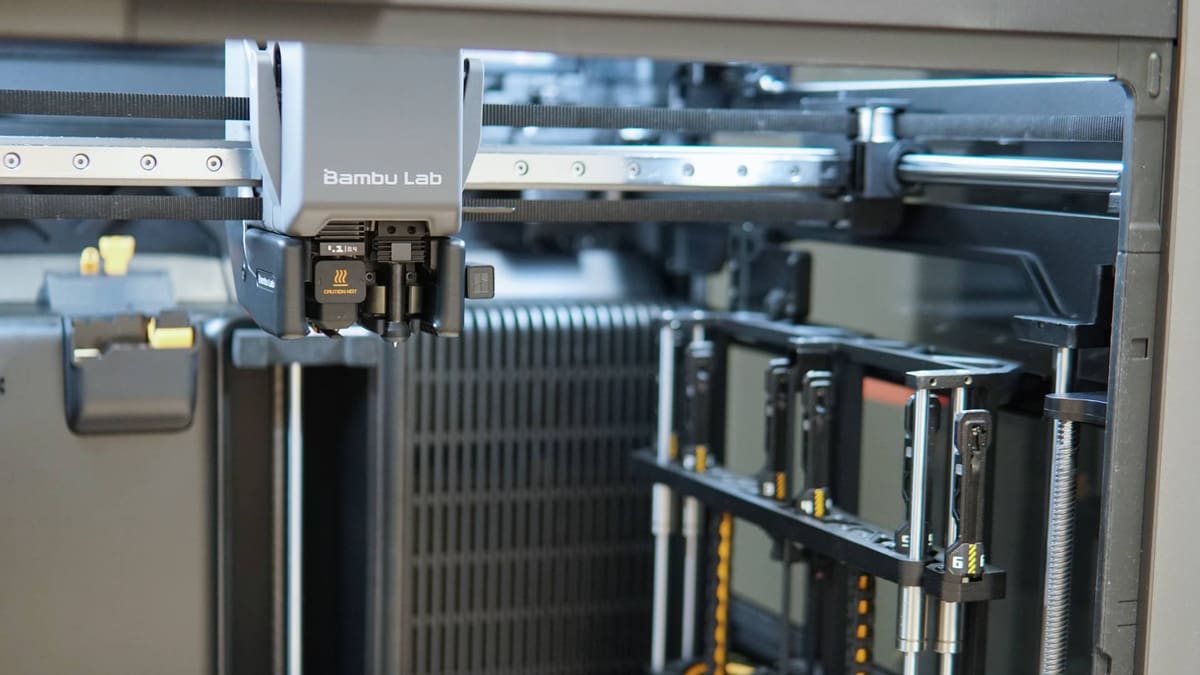
The pinnacle of Bambu Lab’s line-up is a technological powerhouse, building on the sensor-laden H2D and H2S that came before it with one crucial new addition in the Vortek nozzle-changing system, which grants purge-free seven-material printing.
Currently priced at $2,399, everything great about the H2D applies to the H2C – it’s fast, smart, tightly monitored from a quality-control standpoint. The H2C stands apart from the H2D in a couple of significant ways, though, all consequential of the new Vortek nozzle changing system.
First, a downside: to accommodate the rack of Vortek nozzles, the build volume of the H2C is slightly smaller than the H2D – 330 x 320 x 325 mm total for both nozzles compared to the H2D’s 350 x 320 x 325 mm. Anyone locked in with H2S or H2D accessories eyeing the H2C should beware any extra print beds they bought won’t fit the H2C. The company’s vision encoder, for upping print accuracy, is compatible with the H2C though.
On the flip side of this, you get up-to-seven-material-printing with zero purge at the changes. This is a massive efficiency gain over single nozzle, or even dual-nozzle systems for anyone printing with more than two colors or materials at a time.
It works thanks to the Vortek’s new induction hot ends, which wirelessly hold data about the loaded material, communicate with the printer, and wirelessly heat up (quickly) too. There’s a long, sciencey explanation for how it works about electromagnetism and resistance, but it suffices to say that, as a piece of 3D printing kit, it’s a generational leap.
The H2C rapidly picks up and deposits these nozzles as it requires them. There’s no fixed requirement about which nozzles you have installed, meaning the printer can sit ready to tackle all of a variety of 0.2 mm, 0.4 mm, 0.6 mm, and 0.8 mm print jobs without the need to actually change anything on the printer between jobs.
Because they can heat so quickly, the interruption from picking up a “cold” nozzle is minimal, although depending on how exactly you feed the filament (and how far it has to travel or retreat), it can vary.
It’s a singular 3D printer, and arguably the most fun to watch. The nozzle changing mechanic is mesmerizing.
Bambu Lab H2D
What’s Great
- Purge-free material switching
- Large-format build volume
- Makes print efficiency easier
Bambu Lab’s H2D not only grows the fast, effortless Bambu Lab formula to a 350 x 320 x 325 mm build volume, but tackles the material inefficiencies generations of single-nozzle machines normalized. (3D printer “poop”, anyone?)
The H2D not only utilizes two independent nozzles for efficient printing, but offers higher layer uniformity, quality, material flexibility, plus the potential for pro users to guarantee dimensional accuracy with the optional encoder plate. Available in combo with the AMS 2 Pro for $1,999, the base H2D, which pulls filament from two external spool holders, is currently available at $1,749.
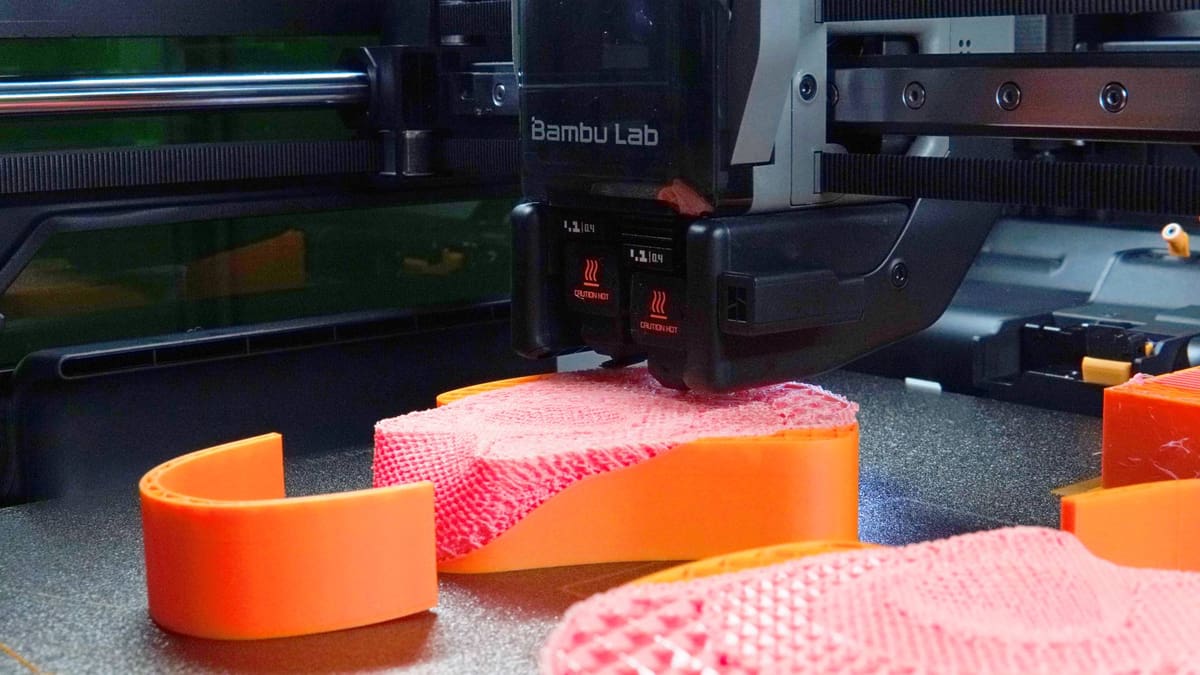
The Bambu Lab H2D uses a clever actuation system to lift the idle nozzle and simultaneously block its opening to prevent ooze. At first glance, you’d think the gigantic print head accommodating all this tech would slow it down, but a boost to acceleration and a supposed doubling of top print speed over older generation machines sees the H2D shake and shimmy at speed to achieve its prints.

The real boon of the H2D comes from being able to intelligently task a material to each hot end, routing your intentions in the slicer to what is physically loaded and where, unlocking purge-free material switching with only a slender prime tower besides the model to show for it. Each hot end can be connected to its own AMS device, letting you get creative with the colors and materials you mix between jobs without having to go through the motions of unloading and loading filaments for yourself, and with the AMS 2 Pro capable of filament drying, you can be pretty liberal about what you load up and how long you leave it there.
Quick-swappable nozzles of the type found on the Bambu Lab A-series lowers the barrier to creative printing with different nozzle sizes and performance a quick-swap away; though beware that while they use the same cage lock mechanism, Bambu Lab’s A-series nozzles are not compatible with the H2D.
There are a couple of upgrade paths open to you with the H2D, but they are not all created equal. The H2D can be outfitted with additional tools for greater creative output, like a laser cutting toolhead, drag-knife, and pen plotter – all on top of the great dual-extrusion 3D printer to turn the system into a multi-modal making powerhouse. This comes as a kit (from $698) or preinstalled as the Bambu Lab H2D Full Laser Combo (from $2,549).
Creality K2 Pro Combo
What’s Great
- Active chamber heating
- Expandable 16-filament printing
- Full print-chamber monitoring
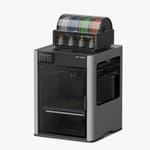
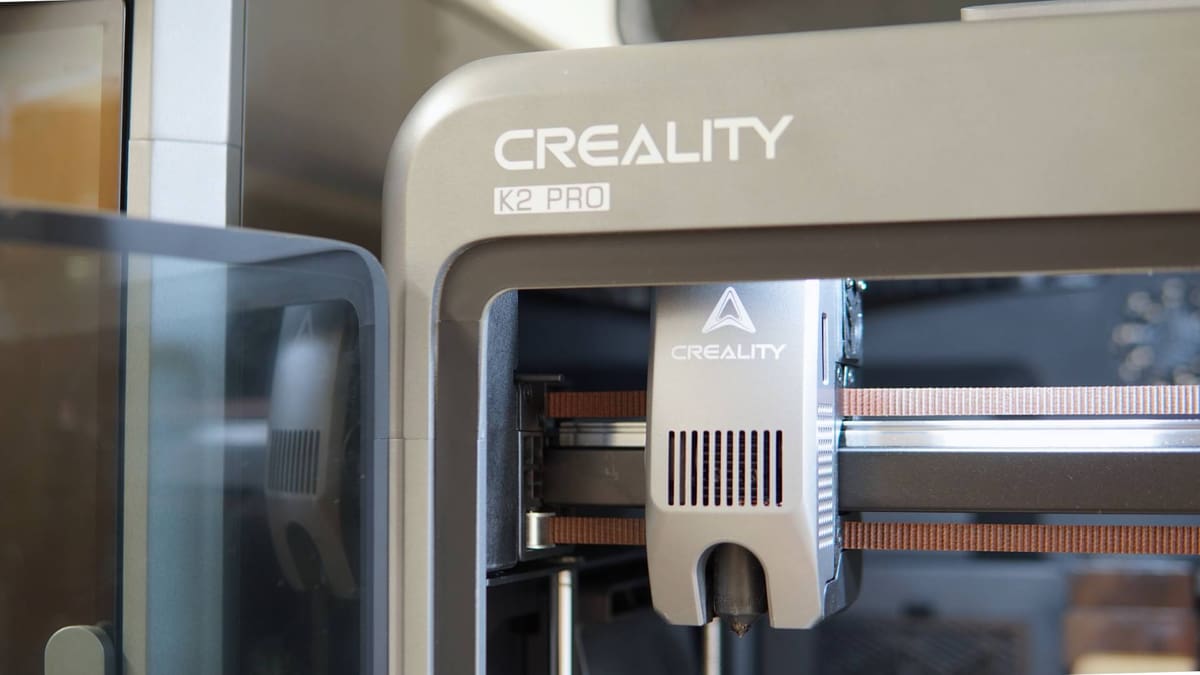
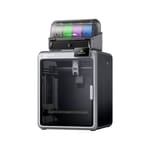
The Creality K2 Pro lives up to the flagship pedestal Creality puts it on, and is a great example of what consumers should expect in this era of modern, connected, and high-performance desktop 3D printing. Part of that package is native compatibility with the Creality Filament System (CFS), a four-filament switcher that can be chained with three others for up to 16-filament printing.
The K2 Pro offers a roomy 300 x 300 x 300 mm build volume, 300°C at the hot end and 110°C at the bed, plus in-chamber heating that can reach 60°C for more reliable printing on warp-prone materials.
Integrated air filtration is a nod toward keeping the printer a friendly fixture, as is full connectivity through print chamber monitoring and print overwatch.
It might just be the best 3D printer Creality has ever made, offering a sweet spot of build volume – large enough to tackle big prints and projects – while remaining small enough to keep the printer relatively compact and desk-friendly (unlike the massive K2 Plus.)
The Creality K2 Pro Combo is available for around $1,050. While it’s likely Creality’s preference you stay in its walled garden on its firmware with its software, it’s not as restrictive as Bambu Lab and its hard-walled garden. The K2 Pro (and other K-series machines) permit rooting, letting you flash other firmware (such as stock Klipper) to gain deeper control and customization of the hardware.
What's Changed?
We’ll be keeping track of the major changes to this guide here. The ins and the outs: here are all the changes we’ve made over the last 12 months.
Update – March 12, 2026: IDEX as a recommendation category has retired for now (we’ve simply not seen nor tested any in a long time) and new picks for our single-nozzle and toolchanger picks modernize our line-up of recommendations.
Update – August 15, 2025: A minor maintenance update to update pricing and add relevant new details.
Update – May 27, 2025: We’ve dropped the UltiMaker S5 for the Bambu Lab H2D in our dependent dual extrusion category. It’s a big, quick, versatile beast, built for modern day printing.
How We Test
If there’s one thing that testing a lot of 3D printers has taught us, it’s that maintaining a broad benchmarking scheme for 3D printers is impractical for getting a sense of what a 3D printer is like to use and live with. Holding a sub-$200 self-assembled printer for hobbyists to the standard of a $6,000 production machine designed to handle engineering-grade materials won’t tell you that the former is a breeze to set up and the latter a tangled web of firmware updates, buggy systems, and unreliable performance.
We want our reviews and buyer’s guides to cut straight to the chase. What is it like to use a printer? What are the defining features like? What didn’t we like? And, more importantly, is it worth the money? We don’t want to get bogged down benchmarking numbers out of context or hung up on issues affected by more variables than we can control.
Who Are We Testing For?
Our buyer’s guides and reviews take the intended end user of a 3D printer into consideration. We imagine what they’re likely to do with it and focus the testing on challenging this. If we have a large-volume printer, for example, we’ll be printing – surprise, surprise – large prints, making use of the entire bed, and checking the performance at the limits of Z-height.
Other points of consideration for what makes the best 3D printer include ease of use, supporting software, and repair options. If something goes wrong, how easy is it to fix the machine? Does the documentation or customer service provide adequate information?
We strive to answer all these questions and more in our quest to find the best 3D printer for you.
Why Should You Trust Us?
Trust is important to All3DP, so our product testing policy is strict. When sourcing test units from a manufacturer, we do so under a zero guarantees policy. We make no guarantee of coverage in exchange for the printer, and the first time a manufacturer sees what we think is when we publish the content.
If a manufacturer doesn’t reclaim the unit after testing is complete, it is donated to a local cause or goes into deep storage for responsible disposal later. We occasionally buy machines for testing, too. In such cases, machines purchased by All3DP either remain in the office for team usage or are donated or disposed of in the manner described above.
Manufacturers or benefactors donating units for review do not influence the outcome or content of the reviews we produce. To the best of our ability, we will investigate abnormal issues with the manufacturer to glean better context or get insight into their awareness of the problem. But we make no excuses for poor design or bad QA.
How We Monetize Our Content
One method we monetize our content at no additional cost to the reader is through affiliate product links. If you click on a shopping link featured in our buyer’s guides and reviews, we may receive a small commission from the store if make a purchase. This is at no additional cost to you. For more meaty content policy details, we cover it all in the advertising and commercial activities section of our terms of use.
Which 3D Printer is Best for Me?
For most readers, our top recommended 3D printers are your best bet in a given category.
But, facing the fact that there is no one-size-fits-all solution to home 3D printing, we’re here to help. Here are some pointers to orient you in this terminologically dense but wonderful world. (A word on terminology, we have a handy glossary of terms to know at to bottom of this article.)
Beginner’s printers
Many 3D printers pitched for “beginners” or children go to such lengths to baby the user that they quickly become claustrophobic experiences. You will encounter more limitations than possibilities as your experience grows. If you aren’t satisfied with a “beginner” 3D printer’s features, we’d recommend a budget pick instead. You’ll save a little money, and the opportunity to learn by doing is far greater. And if something goes wrong, there are giant tribes online for each printer that have already asked and answered every question under the sun.
Follow the crowd
While the general quality of budget 3D printers has dramatically improved in recent years, quality control is often lacking. While manufacturers with large user bases are adapting to meet the demands of their newfound fans, including better customer support, there are usually better wells of knowledge to be found in the owners themselves, who contribute to the vast forum knowledge bases for some 3D printers.
Reviews matter
We have zero obligation to manufacturers to sugarcoat what we find, and the first time they read it is when you do too. That’s why you can trust our reviews. We don’t pander to anyone, and our experience with the printer is what you read on the page.
If you can’t find any information about a printer you’d like to know more about, let us know at editors@all3dp.com.
Understand the costs
A 3D printer for the home is rarely ever a one-and-done investment. Besides the continual purchase of materials, maintenance costs on perishable printer parts can stack up – think nozzles on an FDM printer or FEP film on an MSLA machine. Of course, parts can wear down or break, too, meaning sourcing replacement parts is a sensible consideration if you plan to print long-term. Printers with roots in the RepRap movement and open-source designs will be easiest to source parts for, with off-the-shelf components part and parcel of the design ethos behind them. Enclosed-design printers aimed at beginners may offer the gentlest introduction to printing, but your options to source spare parts will often be limited to the manufacturer. That’s if you can even get to and diagnose the problem.
Know why you want to 3D print
The thrill of a new hobby will only sustain you so far. Being the desktopification of an otherwise complicated manufacturing process, expect to encounter, sooner or later, problems with a home 3D printer – even the occasional show-stopping issue. Having an end goal in mind for your printing gives you purpose and a reason to learn the solutions to the problems. Printing simply because it looks cool will result in a small mountain of useless doodads and, eventually, disinterest at the hands of cost, frustration, and the buildup of useless plastic trash.
When you do know, pick a printer that will make it easier
Most home 3D printers are single extrusion fused deposition modeling machines, meaning a single printable material extruded through a single nozzle. Versatile enough for many applications through material compatibility, they’re safe machines to start with. But if you know you need to print objects with challenging geometries or semi-enclosed volumes, a dual extrusion printer would make your printing far easier. Likewise, single objects that need to have different material properties will only be achievable with dual extrusion. A resin printer will be the way to go for high-detail miniatures. Understand the technologies to find a printer that best suits your needs.
Pick a printer appropriate for your space
While the size of FDM 3D printers can vary greatly, the spillover is small. You’ll get some emissions from the filament melting, cloying the air, making it inadvisable to spend prolonged periods nearby. Generally speaking, the cleanup is minor and relatively easy to contain, depending on the models you print.
Resin 3D printing, however, is dramatically different and has unique demands that should make you think twice before investing. To varying degrees, the resin is smelly and toxic to you and the environment. It requires dedicated cleanup stations and personal protective equipment. You typically need 95 %+ isopropanol to clean prints and dissolve uncured resin from surfaces.
All printers should be operated in well-ventilated spaces, but this applies doubly to resin 3D printers.
Kickstarter – It’s complicated
While many excellent 3D printers have gotten their big break on Kickstarter, there’s the unavoidable issue that the platform is not a store. You are not buying a printer when you commit money to a campaign on Kickstarter; you are backing a vision. It’s putting money into the pot to help a company or person trying to achieve something.
You get nothing in return if a project is grossly mishandled and the money disappears. Often what you do get is the beta version of the product. You are paying for early access and all the wrinkles across all stages of the product that come with it.
We’re seeing more big-name companies turning to Kickstarter than ever to launch their products – it’s a safe way for them to gauge demand and drum up some interest against the pressure of a ticking countdown. Despite many companies being capable of outright launching products, they go cap-in-hand to enthusiasts with the promise of shiny new tech. Don’t be that user unless you absolutely must be the first to use a product and have money you can afford to lose.
We don’t think it’s worth the risk, but in the interest of cool new tech, report on new campaigns with our news coverage. You will never see a Kickstarter 3D printer in our buyer’s guides unless it has completed its campaign and the printer is widely available at retail, with all the protections that come with buying from a store.
Best Professional 3D Printers
But where’s the UltiMaker? Or Formlabs? What about Raise3D? Desktop Metal?
In the past, we’d list the best professional 3D printers alongside what we consider consumer or hobby-oriented machines (the printers we mainly focus on). An apples and oranges comparison, we know.
With this in mind, we created All3DP Pro, a wing of our content exclusively covering the professional applications of 3D printing and additive manufacturing solutions. Here’s a selection of articles covering the best 3D printers for professional use to get you started.
- The 6 Best Pro 3D Printers Under $10K for High-Uptime Workshops
- The Best 3D Printers for Small Businesses in 2025
- Best Metal 3D Printers in 2026: Systems to Know by Budget, Technology & Use Case
- Best Desktop-Size Carbon Fiber 3D Printers: Our 10 Picks
- The Best Carbon Fiber 3D Printers for Industrial Use
- Is It Finally Time to Upgrade to an SLS 3D Printer? Here's What You Need to Know
- The Best Independent Dual Extruder (IDEX) 3D Printers
- The Best Ceramic / Pottery 3D Printers
- The Best Dental 3D Printers 2025
- This High-Tech Polymer Replaces Metal in Spacecraft, Implants & Defense: Your Ultimate PEEK 3D Printing Guide
Glossary of Terms
Choosing the best 3D printer is tricky, not least because the terminology surrounding 3D printing is dense. Here are some need-to-know terms, their explanations, and useful links to help you on your way to 3D printing mastery.
FDM: Fused deposition modeling, otherwise known as FDM, is a 3D printing process that extrudes heated thermoplastic material through a moving nozzle to build an object layer by layer. FDM is a trademarked term, which led to the RepRap open-source movement to coin the alternative phrase “fused filament fabrication” (FFF), but the two are interchangeable.
Filament: Filament is the base material used to 3D print objects via FDM. The filament is typically a solid thermoplastic fed to a print head, heated to its melting point, and extruded through a small nozzle. Filament is commonly available in spools of either 1.75 mm, 2.85 mm, or 3 mm diameter widths – dimensions that dictate the printers that can use them.
G-Code: G-code is the machine language used to instruct computerized tools such as 3D printers. Giving coordinates and instructions for tool heads and other non-movement functions, it is almost exclusively generated by slicing software. It comprises a library of commands to control specific actions like motion, speed, rotation, depth, and other related switches and sensors used in a machine’s operation. You can get to grips with G-code in no time with our guide to G-code commands.
Heated bed: This is a build plate that is heated so that the few layers of extruded plastic are prevented from cooling too quickly and then warping. A heated bed is essential for working with ABS or PETG materials but not so much with PLA.
Hot end: This is the cluster of components that heat and melt the plastic for deposition through the nozzle.
Extruder: Used by some to describe the entire system of parts that pushes and melts filament, extruder can also refer specifically to the motor and accompanying gears that grip the filament, feeding it to the hot end. How the extruder is arranged can affect the printer and its capabilities. There are two common arrangements: Bowden and direct. It’s a messy subject with overlapping terms and technical explanations; our guide to 3D printer extruders gives you all the knowledge to make sense of it.
Bowden: A style of extruder that sees the extruder motor positioned away from the hot end – typically the structural frame of the printer or on one end of the X-axis gantry. So-called for the Bowden cable and its action of allowing a wire to move freely within tightly constraining tubing, the Bowden extruder feeds filament through a PTFE tube directly into the hot end.
Direct Extruder: The other commonly seen extruder type, a direct extruder sees the extruder motor and associated feeding mechanism mounted directly to the hot end, with barely any distance between the feed and the melt zone of the hot end.
Dual Extrusion: Some 3D printers carry two extruders/hot ends, allowing them to incorporate multiple colors or materials into the same print job. While the obvious appeal comes from the possibility for decorative two-tone prints, the real benefit of dual extrusion systems is combining different materials, such as dissolvable support material, to enable the printing of otherwise impossible geometries. It’s a deep topic worth exploring more in our guide to all you need to know about dual extrusion.
PLA: Polylactic Acid, otherwise known as PLA, is a thermoplastic commonly used as a material for printing with FDM 3D printers. It’s easy to work with and is available in many colors and finishes. PLA is somewhat brittle – don’t expect to print strong items with it – but it remains popular for decorative printing thanks to its low cost. You can learn more about PLA in our guide dedicated to the topic.
SLA: Stereolithography is a 3D printing technology that falls under the broader process of vat photopolymerization. The term is often (incorrectly) used to describe all methods of vat polymerization – really, it’s a particular technology that uses a directed laser beam to trace layers into a vat of liquid photopolymer resin. Alongside SLA, other technologies are considered vat polymerization.
Resin: The material used in desktop SLA, DLP, and LCD (MSLA) 3D printers. A blend of chemicals that includes a photoinitiator, resin solidifies under ultraviolet light. Highly toxic and difficult to clean up after a spill, care, attention, and personal protective equipment are musts when working with resin. It is an unpleasant material, and wastage must be disposed of in accordance with local laws. Despite all the warnings, it’s the only way to go for intricate detail.
LCD 3D Printer: A common term for resin 3D printers that use an LCD as a layer mask over UV light. The de facto standard in inexpensive resin 3D printers, the technology is cheap and widely used. The LCD panels are consumable, though, with monochrome LCDs typically having lifespans in the low 1,000s of hours.
MSLA: Mask stereolithography (MSLA) is a term coined by Structo but popularized by Prusa Research. It refers to, basically, the LCD 3D printer as described above.
Micron: One-thousandth of a millimeter. This unit of measurement is commonly used in 3D printing as a value to indicate accuracy, resolution, or surface finish.
Slicer: 3D printing works by building an object layer by layer. A slicer is a program that divides a 3D model into flat layers and generates the machine code for the printer to trace out said layers. The output of a slicer for FDM 3D printers is typically G-code, which gives instructions and coordinates for the printer to execute. Our deep dive explaining what exactly a slicer is gives good foundational knowledge. Many popular slicers are free and open source. Others are proprietary and machine-specific. It’s an essential tool for successful 3D printing.
STL: STL is the most popular file format for 3D printing. Developed by 3D Systems in the ’80s, the STL file type only contains the surface geometry of a 3D object. Despite industry efforts to move onto more efficient and data-rich formats such as 3mf, STL endures and is the most commonly found 3D model file type on popular 3D model file repositories. We explain in more detail in our guide to what exactly STL is.
Open Source: The term given to a product, typically software, but also applicable to hardware that is freely open for others to modify and redistribute according to their needs. In 3D printing, this is often in the spirit that individuals are free to modify, improve, and share changes to the source material for others to test, iterate, and reciprocate. Open source licenses govern the fair and correct usage of open source works, giving terms and conditions that ensure the freedom of access to the creation and any derivatives.
RepRap: A project started in 2005 by Dr. Adrian Bowyer, a mechanical engineering lecturer at the University of Bath. Created to develop a replicating rapid prototype, a low-cost machine capable of printing replacement parts for itself or other new machines. The vast majority of desktop 3D printers stem from the work laid down by the RepRap project. We have a fascinating alternative RepRap Wiki page on the topic if you want to dig deeper.
License: The text of "Best Multi/Dual Extruder & Multicolor 3D Printers of 2026" by All3DP is licensed under a Creative Commons Attribution 4.0 International License.
CERTAIN CONTENT THAT APPEARS ON THIS SITE COMES FROM AMAZON. THIS CONTENT IS PROVIDED ‘AS IS’ AND IS SUBJECT TO CHANGE OR REMOVAL AT ANY TIME.