Not Just Another Green: Prusa Launches Škoda Green Filament Collaboration

Prusa partners with Škoda Auto to release "Electric" and "Emerald" greens to your 3D printer in both PLA and PETG.
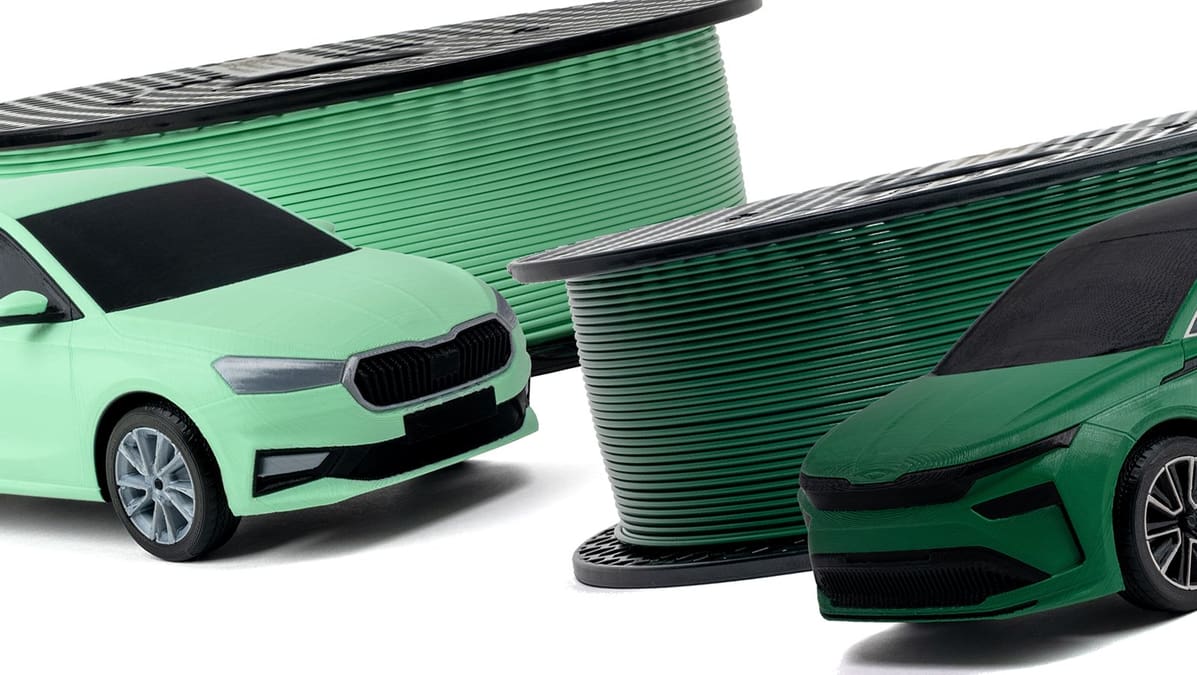
For Prusa’s second brand-matched color (after the Noctua browns) it chose two new lovely, spring-like greens developed in collaboration with Škoda Auto, which is, like Prusa, a Czech Republic-based company. The new shades — Electric Green and Emerald Green — are available in both PLA and PETG, continuing the company’s Printables Brands initiative.
If you’re in the U.S., you are forgiven for not instantly recognizing the “Škoda” greens since the company doesn’t sell any cars there. For you, these are just really fresh, modern, Easter greens, you could say.
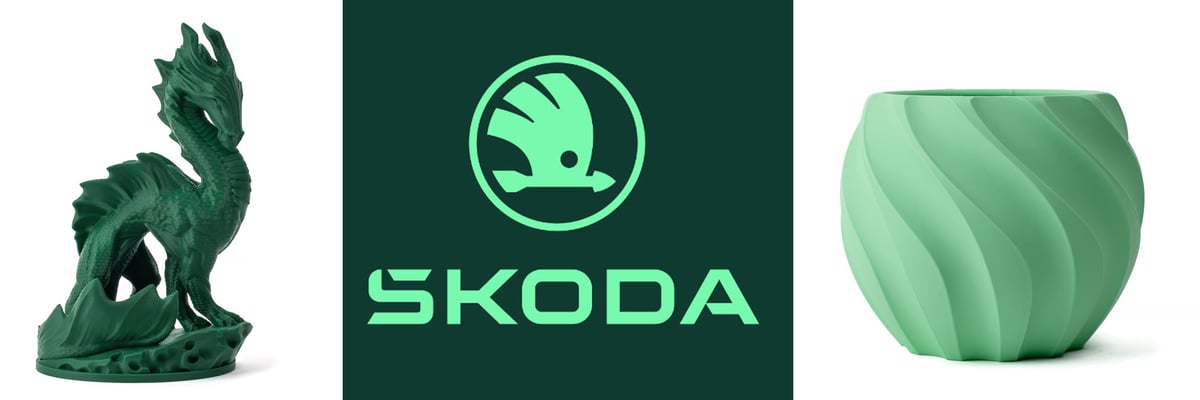
The collaboration builds on the philosophy behind Printables Brands, which focuses on connecting everyday physical products and home 3D printint. recognizable real-world products with desktop 3D printing.
This approach remains relatively new in the filament space, where colors are often inspired by brands but rarely officially matched or co-developed.
Electric Green: High-Impact Brand Color
Electric Green is available in both PLA and PETG, allowing users to choose between ease of printing or higher mechanical durability depending on the intended use. This makes the color suitable for both visual showcase prints and everyday functional parts.

Emerald Green: Deeper, Premium Visual Finish
Emerald Green offers a deeper, more saturated interpretation of Škoda’s brand color. Like Electric Green, it was developed to provide a precise and repeatable visual match that is easy for users to recognize and reproduce across multiple prints.
Also offered in both PLA and PETG, Emerald Green targets users looking for a more refined aesthetic while maintaining compatibility with standard printing workflows used by hobbyists and professionals alike.
PLA vs PETG: Choosing the Right Material
PLA remains the most accessible filament for most users because of its ease of printing and low tendency to warp. It typically produces a matte to satin surface finish that helps hide small print imperfections and gives parts a more professional look. The material is widely used for figures, home décor, cosplay parts, lithophanes, and quick prototypes that do not require high heat resistance or mechanical durability.
PETG, on the other hand, is designed for more demanding applications. It provides strong layer adhesion, good temperature resistance, and significantly lower brittleness compared to PLA. The material has a small amount of flexibility, which helps prevent parts from cracking under load. PETG also has low thermal expansion, meaning it can be used for larger prints without an enclosure while still maintaining good bed adhesion and minimal warping. Because of these characteristics, PETG is often used for holders, clamps, outdoor components, and functional printer parts. Prusa itself uses PETG to manufacture parts for its own printers.
You May Also Like:



License: The text of "Not Just Another Green: Prusa Launches Škoda Green Filament Collaboration" by All3DP is licensed under a Creative Commons Attribution 4.0 International License.
CERTAIN CONTENT THAT APPEARS ON THIS SITE COMES FROM AMAZON. THIS CONTENT IS PROVIDED ‘AS IS’ AND IS SUBJECT TO CHANGE OR REMOVAL AT ANY TIME.