Is This New $189 “Smart Enclosure” the Missing Piece for Your Bambu Lab A1?

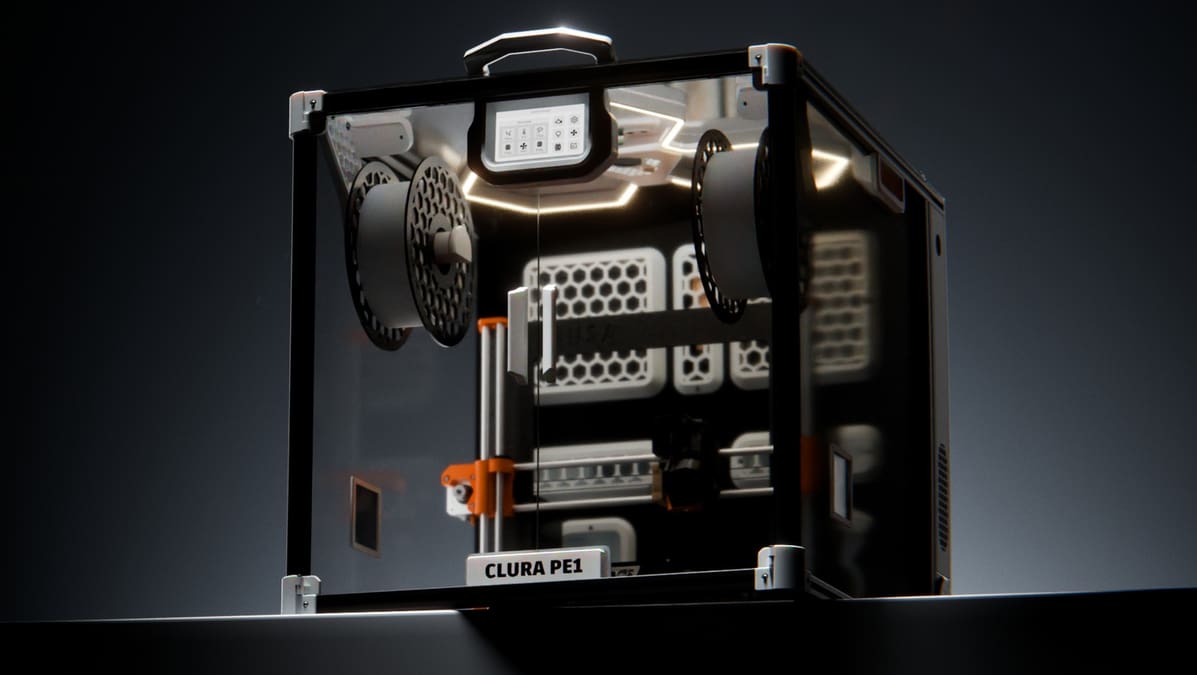
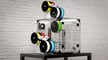
Clura is designed as a “smart 3D printer enclosure” that integrates environmental monitoring, air filtration, and safety systems in a single modular unit.
Launching today on Kickstarter, the Clura “smart enclosure” is pitching to be an open-source, sensor-equipped 3D printer box designed to improve air quality and print reliability. Raising funds to launch production, the system is the brainchild of a group of aerospace engineering students and longtime makers in the Netherlands.
Early-bird pricing for the Lite version at $189 aims to tick all the boxes for makers, schools, and businesses wanting to curb the airborne particles that result from melting plastic in a 3D printer. The enclosure combines sealed containment with multi-stage filtration, and real-time air monitoring to reduce exposure to airborne particles.
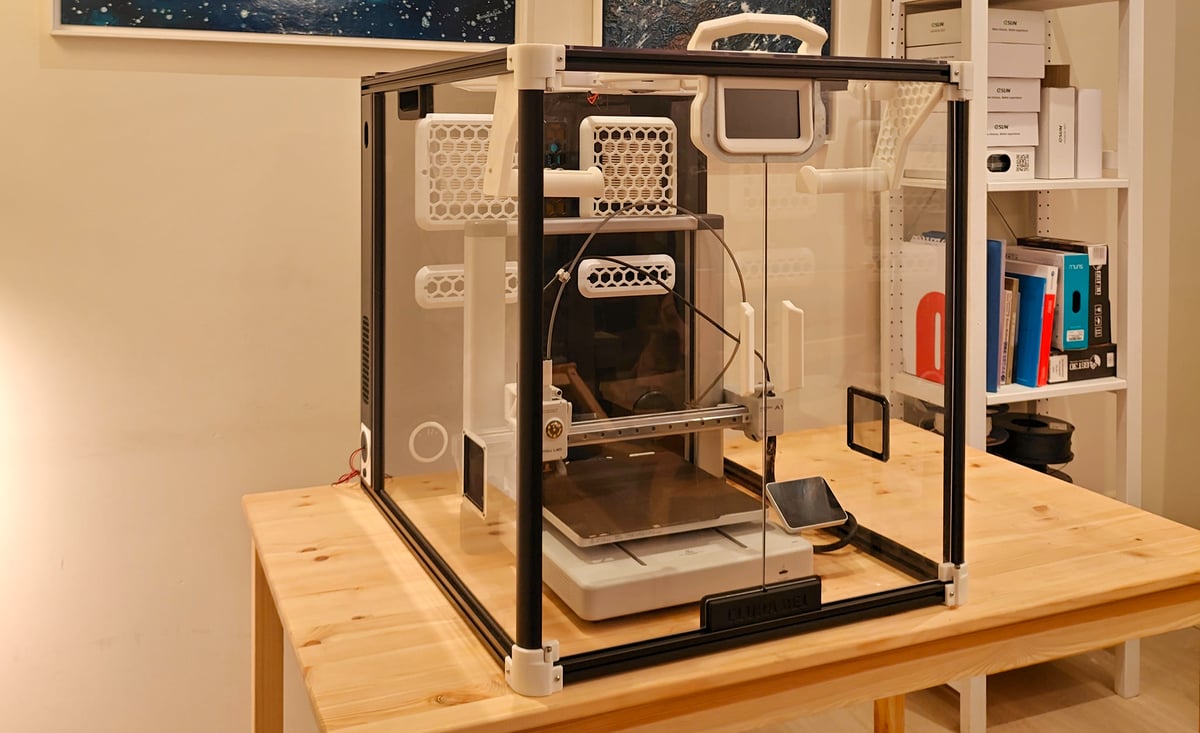
Schools, in particular, often opt for an enclosed printer instead of something like a Bambu Lab A1 Mini because they need to keep fingers away from moving parts along with ensuring classroom air quality. Meanwhile, and enclosure, can be more expensive than the printer.
Developed by a group of aerospace engineering students and longtime makers in the Netherlands, team says they were motivated by a lack of affordable and universal enclosure solutions. Existing options were often limited to specific printer models, compromised build quality, or were prohibitively expensive, prompting them to pursue a more accessible alternative.
The Clura traps the fumes, particulate matter (PM), and volatile organic compounds (VOCs) wafting from your printer with HEPA and activated carbon air filters. It also features an smoke detector, and air quality monitors that track the temperature, humidity, and pressure inside the enclosure.
By monitoring what’s going on inside, the enclosure can adjust the airflow system, which is capable of filtering the internal volume within about 60 seconds. If internal temperatures exceed safety thresholds, the system can dynamically adjust airflow and switch ventilation modes. This is important since many printers, like the aforementioned A1, do not have sufficient cooling solutions for its electronics and rely the airflow from not being enclosed.
Not Just About Air Quality
Beyond air quality, the enclosure aims to improve print consistency — like most enclosures do — by stabilizing temperature and reducing dust and airflow disturbances, while also reducing printer noise and organizing cable management.
But Clura also has some fun extras in the Base and Pro versions, like filament tracking via load cells to prevent mid-print runouts and customizable RGB LED lighting for both visibility and just because it looks cool.
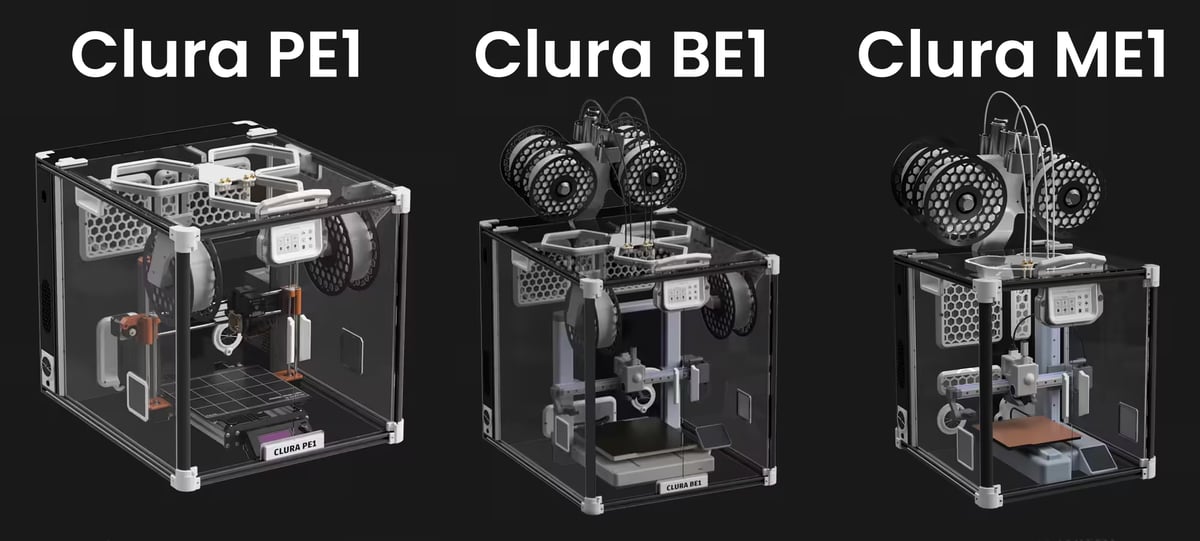
Clura is designed to accommodate several brands of popular desktop FDM and resin printers, including models from Prusa, Bambu Lab, Creality, Anycubic, Elegoo, and others.
The enclosure is modular and available in multiple sizes, allowing it to accommodate a range of printer footprints. While “compatible” printers are listed, they’re only representative of machines that fit the respective size Clura enclosures. There is no actual hard printer model compatibility to speak of.
Fully Open Source, Modifiable
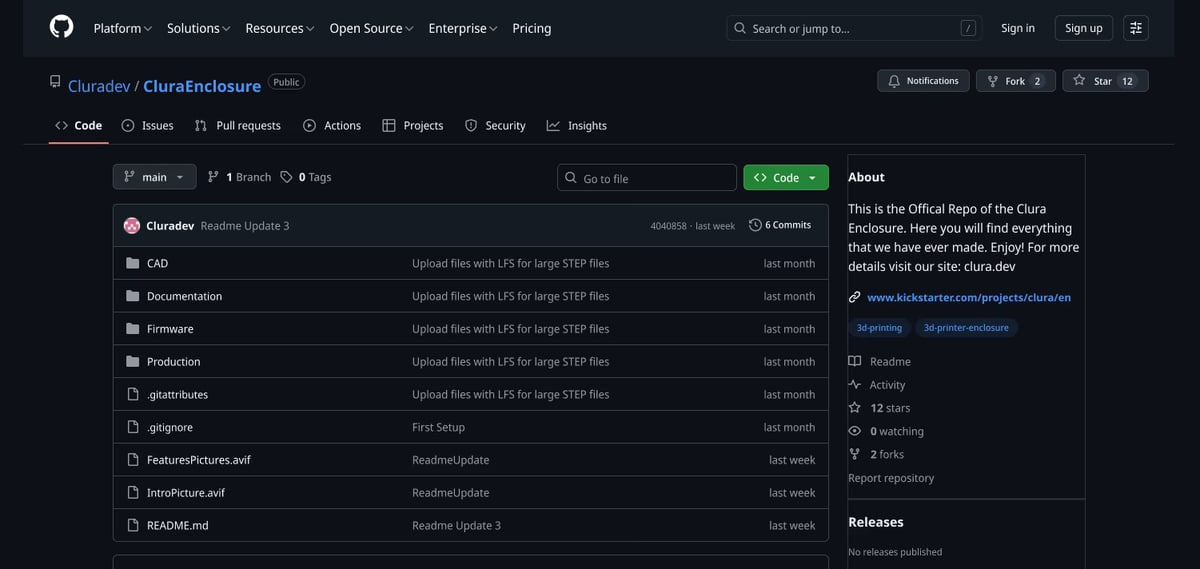
A key differentiator for Clura is its fully open-source approach. The company’s GitHub repo has all CAD files, software, electronics designs, and documentation freely available for you to self-source a build or customize it to your own specification.
This open architecture is intended to give users full control over the hardware and encourage community-driven development. Central to the Clura ecosystem is the Community Upgrade Shop, an open platform where makers can submit, refine, and sell their own enclosure upgrades.
“The idea is to create a dedicated space on Cluradocs where the community can submit feature requests and suggestions,” says Fabrizio Blasio, Clura’s co-founder and lead engineer. ” The community can take the lead on developing branches of Clura adapted for specific printers or minor quality-of-life tweaks (e.g., different camera mounts, custom handles, custom ways to fix the enclosure to their surface etc.).”
Kickstarter Launch
Clura’s Kickstarter campaign invites early backers to reserve units and receive discounts through pre-launch sign-ups. Why back it when you could take the designs and source your own? Convenience and cost, saving yourself the time, hassle of getting the components and building. Not to mention supporting the work of the creators.
- Funding goal: €4,200
- Early bird price: $189 (Lite), $239 (Base), $259 (Pro)
- Retail price after Kickstarter: $259 (Lite), $349 (Base), $399 (Pro)
- Expected shipping date: August 2026
Features:
- Dual-layer HEPA and carbon filtration for ultrafine particles and VOCs.
- Integrated fire and smoke detection for safer long or unattended prints.
- Environmental monitoring with VOC, PM2.5, temperature, and humidity sensors.
- Filament tracking via load cells to prevent mid-print runouts.
- Customizable RGB LED lighting for both visibility and aesthetic flair.
- 4.3-inch touchscreen controls for fans, lights, and live sensor data.
Editor's Note – This article highlights a Kickstarter crowdfunding campaign. Kickstarter is not a shop; campaigns are under no legal obligation to deliver on crowdfunding promises, nor offer refunds on unfulfilled campaign rewards. For more insight, read our article 8 Things to Watch for When Backing a 3D Printing Kickstarter.
You May Also Like:
License: The text of "Is This New $189 “Smart Enclosure” the Missing Piece for Your Bambu Lab A1?" by All3DP is licensed under a Creative Commons Attribution 4.0 International License.