Desktop CNC Lathes Cost Thousands – This Kickstarter One Wants $799

Newcomer Duroxen has taken to Kickstarter to get its eponymous desktop CNC lathe off the ground and into your workshop. But what is a lathe even, and what does that sub-$1,000 pledge get you?
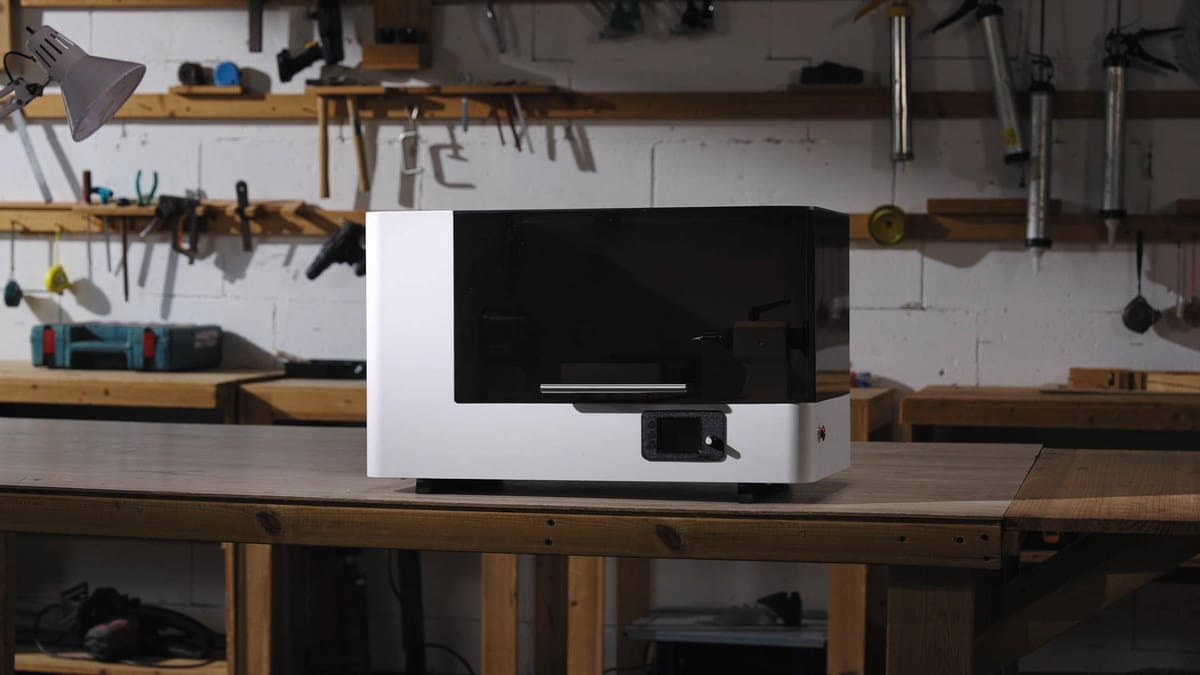
A Hong Kong-based team called Duroxen is running a Kickstarter campaign for a compact, fully enclosed desktop CNC lathe, raising roughly $200,000 from 190 backers so far. Super-early-bird pricing started at $769, but are now unavailable. The next “Kickstarter Special” tier has the machine at $799 against a stated retail of $1,299.
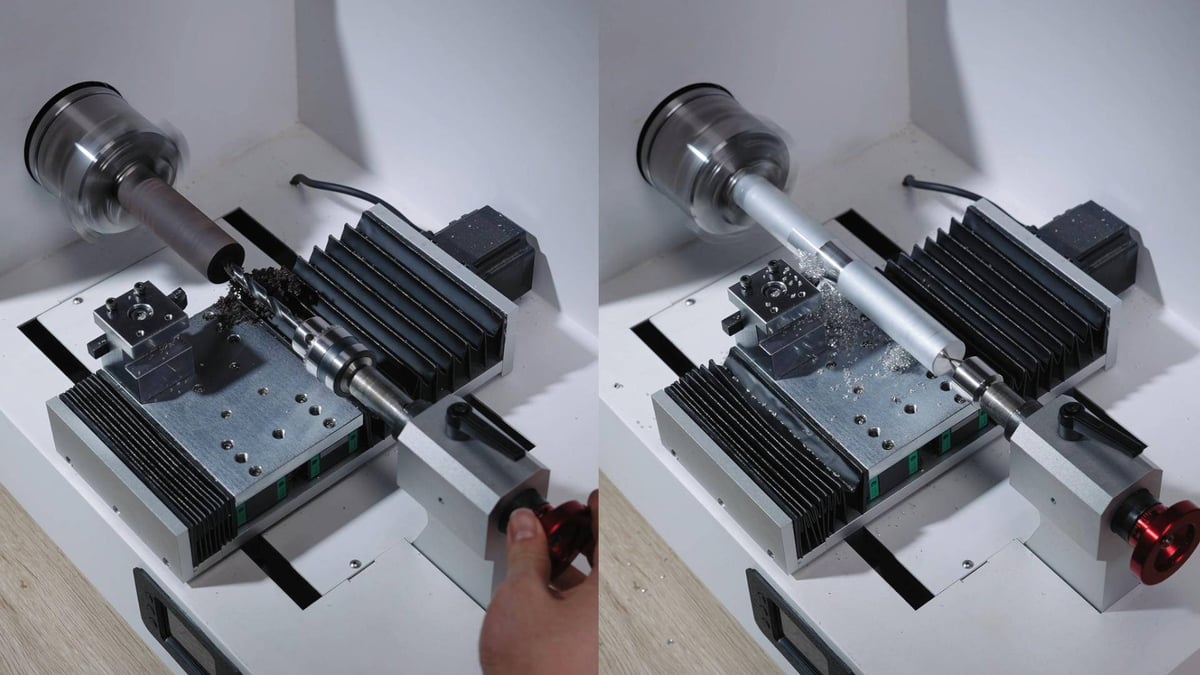
The machine is a two-axis CNC turning center – an automated lathe, effectively, distinguishing it from the typically three-axis CNC routers we’ve covered in the past. It runs a 750W brushless spindle from 100 to 4,200 RPM in 100 RPM increments, claims a positional accuracy to 0.01mm, and ships with a choice of 3-jaw K11-100 or 4-jaw K12-80 chuck. A through-spindle bore accepts bar stock up to 30mm in diameter. The enclosed acrylic-panel design contains chips, with a removable drawer on the back of the machine letting you clean up the mess in a pinch (provided you don’t put it up against a wall).
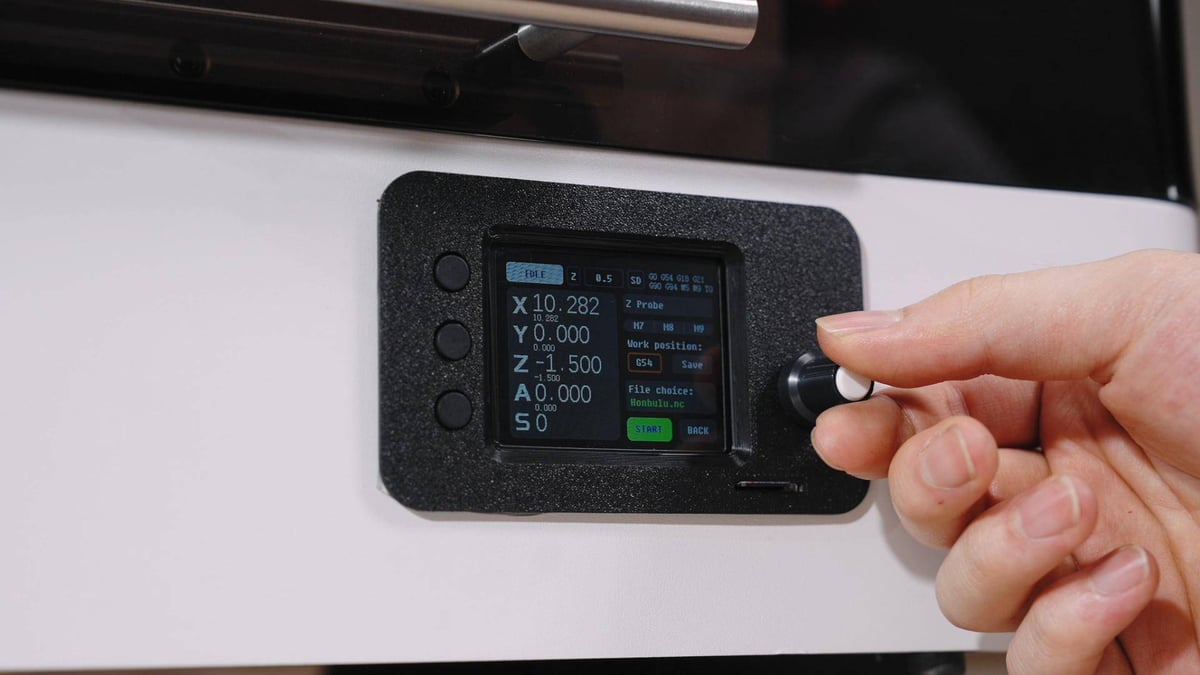
Running on standard NC or G-code, the Duroxen is compatible with Fusion, FreeCAD, and most CAM software with lathe post support. The company – a relatively unknown operation with no apparent history of delivering any other products – is targeting hobbyists, pen turners, jewelers, and STEM educators with this launch. On paper, the machine seems very well positioned for people who want to make round things and have nowhere sensible to start below several thousand dollars.
Credible desktop CNC lathes under $1,000 are rare. The nearest comparable Kickstarter campaigns we could find, from Rownd and SineCore – both launched significantly north of $3,000. While pricier, those machines are larger, more powerful, and offer deeper feature sets like automatic toolchanging and – essential for tough metalwork – cooling.
What is a CNC Lathe?
A CNC lathe is a machine for subtractive manufacturing – you’re cutting material away from a stock material, etching chips of material away at high speeds in a controlled manner. In regular CNC routers and mills, the cutting is done by a “bit” – a finely balanced cutting tool designed to cleanly pull chips of material away. The bits spin at high speeds attached to a spindle, cutting away per the degrees of freedom the CNC machine they’re attached to can offer: in many cases beyond the three axes of freedom we’re accustomed to in 3D printing.
A lathe flips this process on its head. The “bit” stays still, and instead the material is spun at high speeds. Rather than chips carved out on every rotation of the bit, a lathe peels a continuous ribbon of material away, with the machine’s X- and Z- axes positioning the tool on the surface of the spinning material to gradually carve it away. They are mostly used for creating circular and spherical works.
As the Duroxen currently stands, the machine will ship with open-loop stepper motors, which can’t detect or correct for missed steps under load. There’s reportedly a stretch goal to upgrade all units to closed-loop motors at the $300,000 threshold. The independent crowdfunding campaign tracking website, Kicktraq, shows trending data that suggests the campaign is on track to clear this hurdle.
Budget Price Tag, Limited Feature Set?
More significantly, there is no quick-change tool post, no tool offset measurement, and no cooling system, leaving the system looking a little barebones – reasonable for the price ask, but possibly limiting when you consider Duroxen rates the not only for plastic, wood, but aluminum, and steel. As we understand things, a 750W spindle on a desktop machine without a coolant system is not a steel machining setup in any meaningful sense beyond the softest free-machining alloys under light passes.
Limitations or no, for a technically literate 3D printerer looking to add turning capability to their workshop, the Duroxen could be one to watch. It’s available to back now on Kickstarter. Pledges are expected to ship in October this year.
Editor's Note – This article highlights a Kickstarter crowdfunding campaign. Kickstarter is not a shop; campaigns are under no legal obligation to deliver on crowdfunding promises, nor offer refunds on unfulfilled campaign rewards. For more insight, read our article 8 Things to Watch for When Backing a 3D Printing Kickstarter.
Read more recent news:
License: The text of "Desktop CNC Lathes Cost Thousands – This Kickstarter One Wants $799" by All3DP is licensed under a Creative Commons Attribution 4.0 International License.