Creality Estimates $5 Homemade Spools From Its New Filament Maker

Creality will soon begin crowdfunding a desktop filament extruder that gives you the ability to recycle printing scraps and waste at home, turning it into fresh printable filament. But there are caveats, and plenty of history to say it’s not so simple.
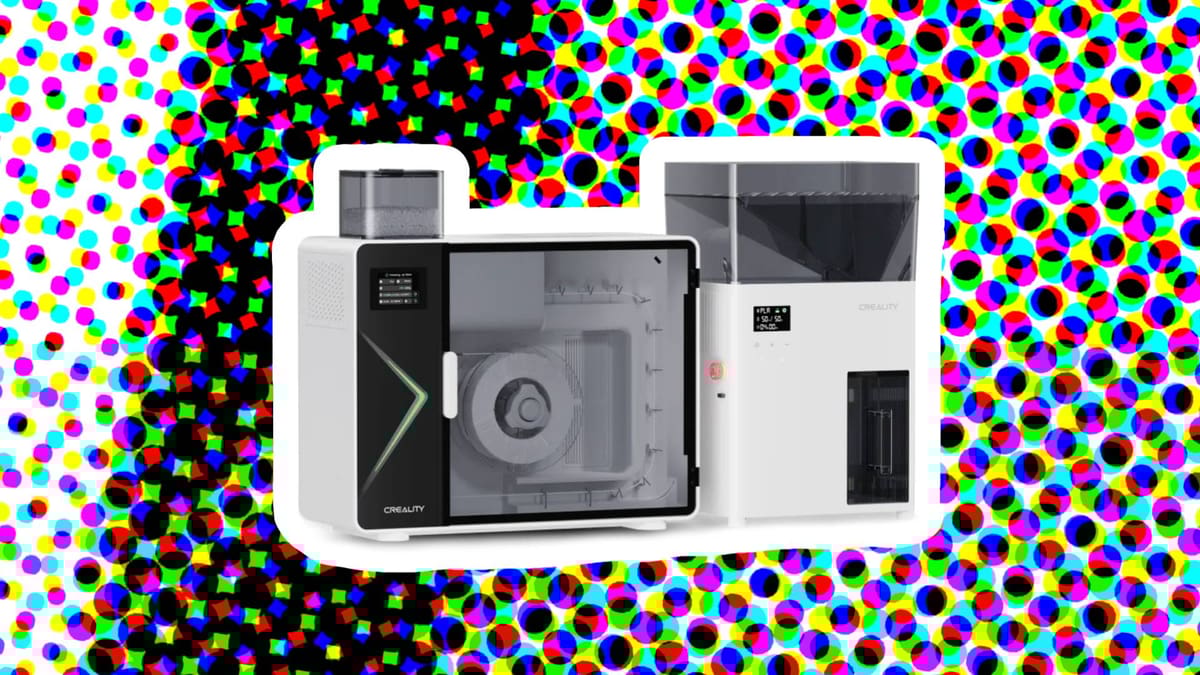
The Filament Maker M1 and Shredder R1 grinder, collectively the “Filastudio”, will be launching on the IndieGoGo crowdfunding platform soon. Creality is offering a reservation system for the launch’s lower early-bird tier of pricing – a $50 deposit to secure the set for $899, compared to the stated MSRP of $1,699.
Set to ship in the summer, this “closed loop” recycling workflow tackles the main hurdles of filament recycling, with the R1 shredder chopping up any small waste plastic you have (such as multicolor printing purge poop) into suitably small chips, and then, crucially, drying them.
The M1 filament maker then takes this processable plastic and extrudes it, targeting a 1.75 mm diameter, cooling and spooling onto an empty spool pending a little effort from yourself to get the end of the extrusion set in place.
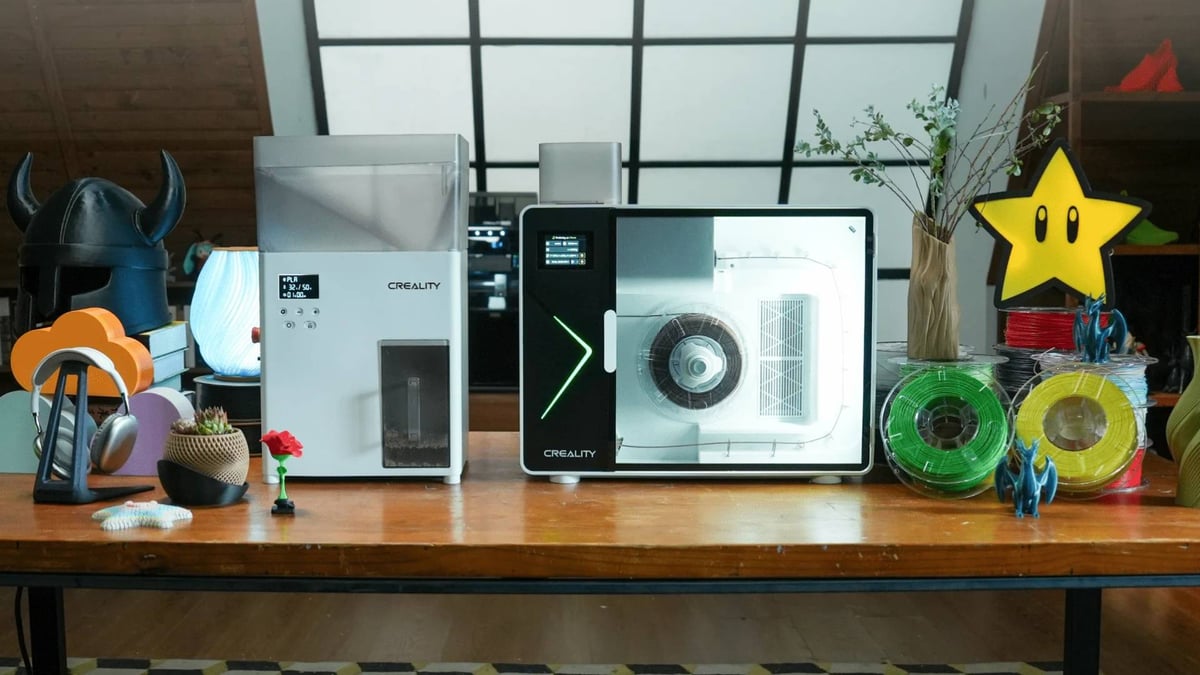
As a companion system for home printing it looks like a tidy and simple setup – one I’m particularly excited to try just for the sheer novelty of cooking up weird blends of filament.
But, there’s a long history of desktop filament recycling solutions coming and going, and it’s not without reason that they’ve never really caught on. Studies have shown that 3D printing thermoplastic, particularly PLA, don’t do well when repeatedly heated and formed – they undergo chain scission, whereby the long polymer chains break down, losing performance and the desirable characteristics that the original filament offered. Recycled versions of everyday filaments do exist, but they’re a niche product often made from a high-quality waste-stream.
The scrap you recycle has to be dry, clean, and uncontaminated by other plastics. And even then, you usually have to cut it with virgin plastic to achieve anything approaching acceptable levels of usefulness. These caveats all appear to apply for Creality’s system as it is presented.
The pitch centers on turning waste filament into fresh spools for what Creality estimates to be $5 in material cost, but to achieve the stated ±0.05 mm diameter tolerance Creality recommends a 1:1 ratio mix with virgin plastic pellets. Otherwise, they say the tolerance drops to ±0.1 mm – double the “worst” variance we see in most commercial filaments, and a huge drop in quality from the ±0.02 mm spec we see from higher-end materials.
That tolerance gap showed up in a hands-on by YouTube creator Embrace Making, who showed off a prototype M1 using only virgin pellets. They reported the unit couldn’t consistently hit even the tighter spec, with visible diameter drift and spooling issues. That was a prototype, mind, so it’s reasonable to expect some improvement between that and what will eventually ship. You can get a good look at the general workflow in the video, embedded below.
Desktop filament extrusion like this is not a new idea. For over a decade, it has failed to capture the imagination or wallets of the public, even as 3D printers have gotten better, faster, easier and, as a consequence of multicolor printing going mainstream, more wasteful. Filastruder successfully Kickstarted its eponymous extruder in 2013; the company’s flagship model is now out of stock indefinitely. Others, like the ReDeTec ProtoCycler+ list around $4,000, while institutional machines like 3devo’s Filament Maker Two push past $18,000.
It’s notable that the positioning for these products today is less about any meaningful quantity of recycling and more about testing, experimentation, and producing small custom batches of materials. While Creality leans heavily into the recyclability aspect with its language, it does also suggest a wide range of exotic experiments you could produce, including custom glitter blends, aromatics, and natural fibers for supposedly greater eco-friendliness.
The math is harder than it looks. Creality’s own virgin PLA pellets (teased on the campaign warm-up page) run $13 per kilogram; the cheaper end of retail PLA can cost $10–15. If you’re printing a kilogram a month and mixing half-recycled scrap, you’d be saving roughly $5–10 per kilo after pellet costs. At $649 for the extruder system only, it’d take you past five years for it to start paying off – longer if you’re buying colorants or dealing with failed extrusions inbetween.
Creality doesn’t implicitly address degradation of the materials you recycle – only in the admission that virgin plastics are needed for better results – nor has it published anything yet about how exactly the system determines the output ovality and accuracy. The campaign warmup page lists eight compatible plastics (PLA, ABS, PETG, ASA, PA, TPU, PC, and PET). Mixed-material recycling is strongly discouraged against the risk of damaging the equipment.
The company is bundling starter pellets and “masterbatch” colorant packs with the hardware for early adopters, with signals it plans to sell consumables long-term, supported by a growing roster of “recipes” and what it hopes will be a community that coalesces around the product.
It is all rather ambitious, made all the more tantalizing the by relatively low price tag. Anyone viewing this – dollars in their eyes – as a silver bullet to fix any mountains of purge poop they’ve accumulated should maybe set their sights a little lower, though – the filament is unlikely to be as good as you can buy outright. That being said, it’ll put the power to tinker with the materials you feed your printer in your hands, which can’t be a bad thing.
The Creality Filastudio Filament Maker M1 and Shredder R1 will be launching on IndieGoGo soon. You can sign up for updates and secure the lowest launch price with a $50 deposit on the Creality Crowdfunding webpage.
Read more recent news:
- Best Multi/Dual Extruder & Multicolor 3D Printers of 2026
- Alveo3D Launches HEPA14 Filter Kit for Bambu Lab P2S, Adds Extra Layer of VOC Capture
- Prusa's Referral Program Has Evolved, Now Pays Money Out Too
Tired of Reading? Try Listening
License: The text of "Creality Estimates $5 Homemade Spools From Its New Filament Maker" by All3DP is licensed under a Creative Commons Attribution 4.0 International License.