Biqu Shows Off Biqu Vault, a Solution To All Your Filament Management Woes

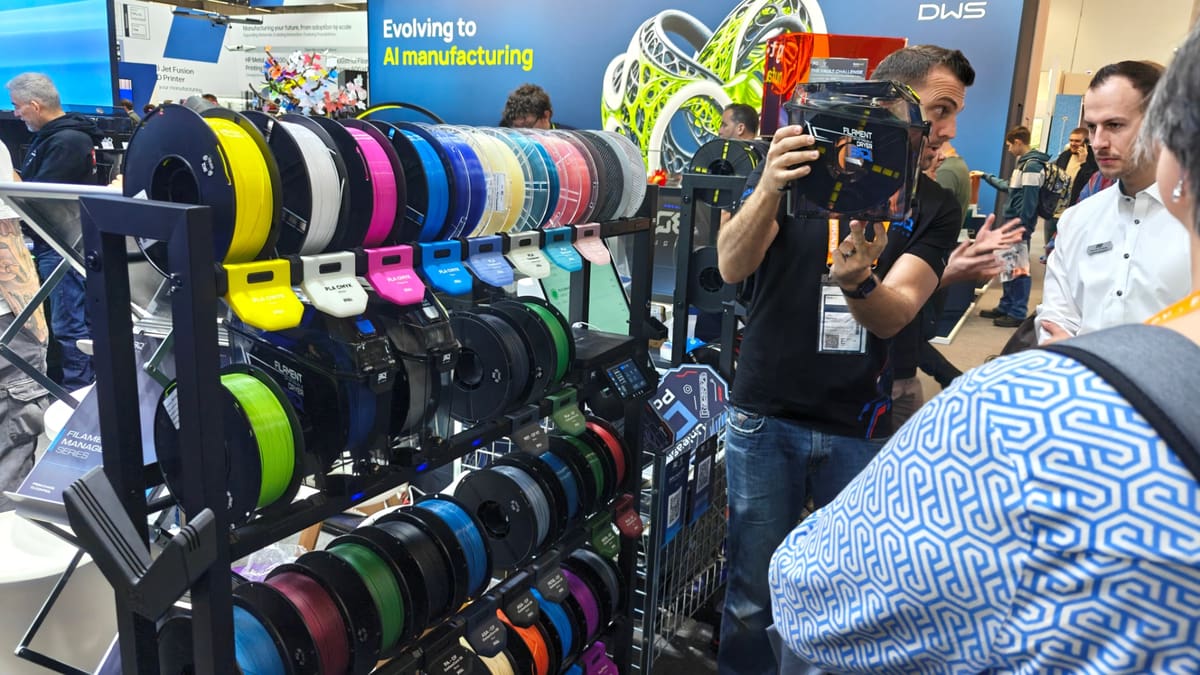
Among the expected spectrum of new products designed to enhance your 3D printer, Biqu showed off its ambitious new future for filament management, Biqu Vault.
I always look forward to stopping by Biqu’s booth at Formnext because it’s probably the closest we’ll ever come to a 3D printing equivalent to the Wonka chocolate factory (more for the creative and fun products, less the OSHA-violating funhouse and traumatized children). Anyway this year, they’ve got me excited about a shelf, of all things.
The Biqu Vault is an new filament storage system the company’s creative and technical lead, Luke Harrison, tells me is born for the era of toolchangers and desktop printer-based farms.
It’s the starting shot of a new era of cloud-enabled infrastructure from the company, based around intelligent filament management. The idea is to not have to think about which filament is where, how much is left, or when it was last dried. Vault knows. And it can show you where a given spool is, with directional lighting built in to help you find what you’re looking for.
The concept is sound, and seeing it up close every but-what-if question that came to mind is likely already there or coming. Vault is the first Biqu product to benefit from OTA firmware updates, giving users a more direct connection to the company’s bewilderingly fast iteration and development pace. We’re told features and requests mentioned at Formnext are already in beta testing and feasibly only a quick update away from beaming to the few beta units out in the wild.
Priced at $499, the main rack is the brains of the Vault system, containing space for 46 spools – including six spots for dryboxes. It includes a weighing station, NFC reader, touchscreen display, and connects via the internet to Biqu’s cloud. Up to three extension racks can be added, each adding 50 spools worth of storage for a maximum capacity of 196 spools, all an integrated part of the storage network hub of the main rack.
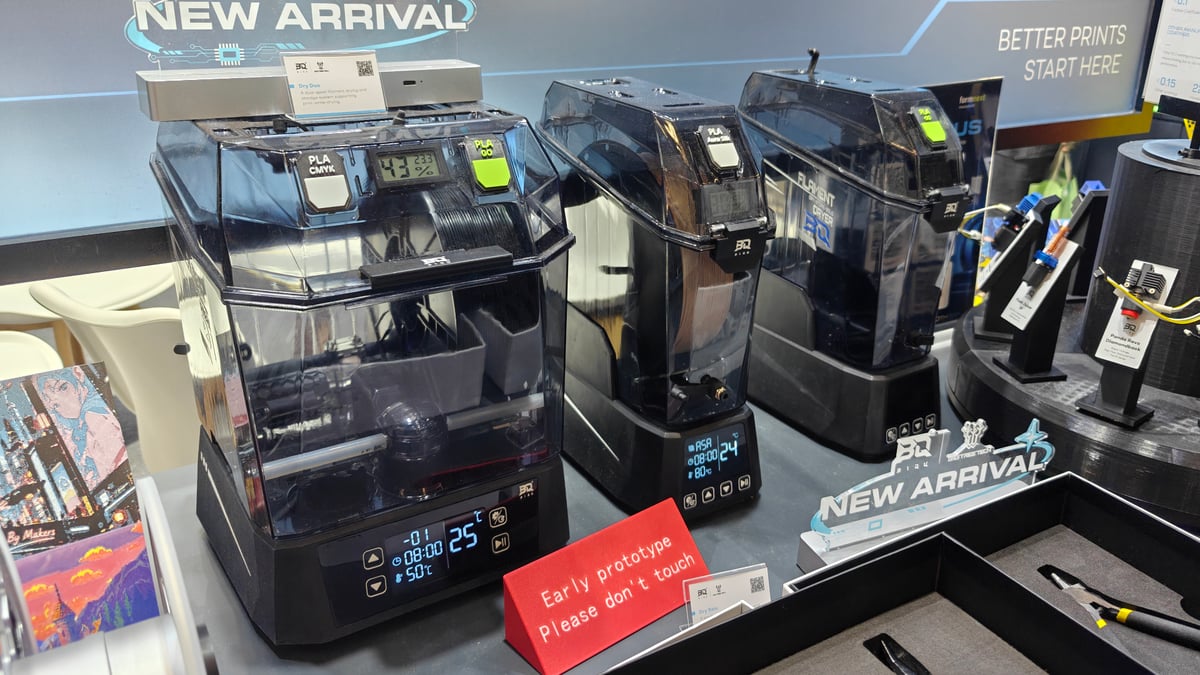
Complimenting the Vault are new dryboxes; available in 1 kg and 2 kg spool-sized versions, and optionally a smart part of the Vault system, too. Integrated humidity information can feasible feeds into the vault, letting you know when a filament has been exposed to enough humidity to require drying before printing.
Likewise a Biqu Hub app expands the inventory and discovery aspects of the system. At the show we saw a demonstration showing how you can snap a picture of a model you’d like to recreate, and machine vision will identify the closest available colors in your filament library. On the inverse side of this, snapping photographs of the labels and the material on a spool can feasibly let it figure what the spool is exactly for you, saving time when manually inputting a new spool that doesn’t already exist in the Vault’s library. In time, Harrison tells us, users opted in to a community program to aggregate such data could automatically grow the list of known filaments to the system, saving even more time if others have used the same filament before you.
Usage statistics and monitoring are baked into the app. RFID compatibility is seemingly endless – major brands are already supported, including Creality, Elegoo, and Bambu Lab, the Open RFID standard is supported, as are 20+ others, according to the product specifications.
Drying Off
Filament condition management comes by way of the BQDry Solo and BQDry Duo filament dryboxes. Similar in style to Polymaker’s Polybox, in that they’re distinct tubs with removable drying docks beneath, Biqu’s effort features automatic rotation of the spools, drying temperatures up to 80°C, and automatic venting – open to purge moist air when drying, and closed when removed to seal the filament from the atmosphere.
The presentation really showed a harmonized system for managing filament, extending the advantages of RFID tagging of the filament beyond the printer and making use of where it’s arguable at its most annoying – in the mess of the room where the printing happens.
Peeling back the motivations behind the system, Harrison confirms that it was one of personal frustration. Losing tracking endless spools of odd filaments is annoying. And walking the factory floor in China – to be honest any factory floor that handles electronics assemblies and complex BoMs drawing on disparate parts in far-flung bins – there are systems to make that easier. It was an obvious step to apply that approach to inventory management to filament.
Grip and a Roll
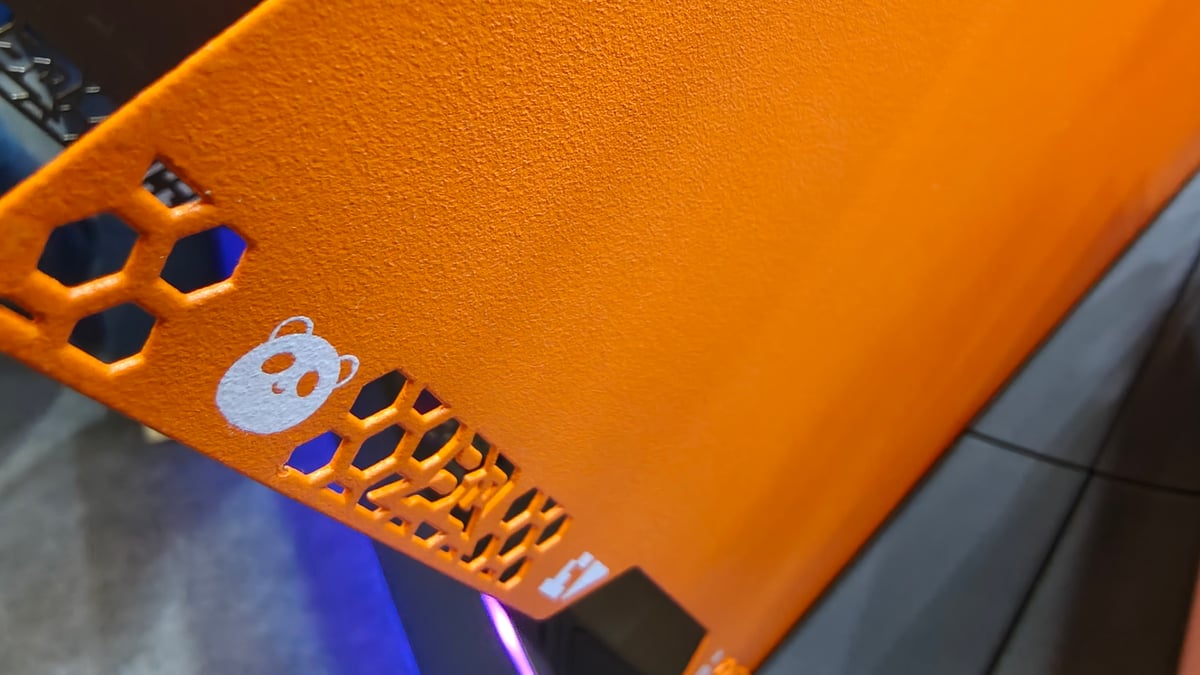
Also new is the CryoGrip Omni build plate (from $30.99). This orange build plate – not to be confused with the regular Halloween-introduced-but-now-one-of-the-default-color CryoGrip plates – offers superior build plate adhesion for PLA and PETG with no bed temperature, and extends all the way up to the likes of PC, PA6-CF at low bed temps, we’re told. It’s the stealthiest new product on show at Formnext for Biqu, and easy to miss amid a display of the brand’s other colorful plates. It’s only available in sizes for Bambu Lab machines and the Snapmaker U1 to start with, but other sizes will follow.
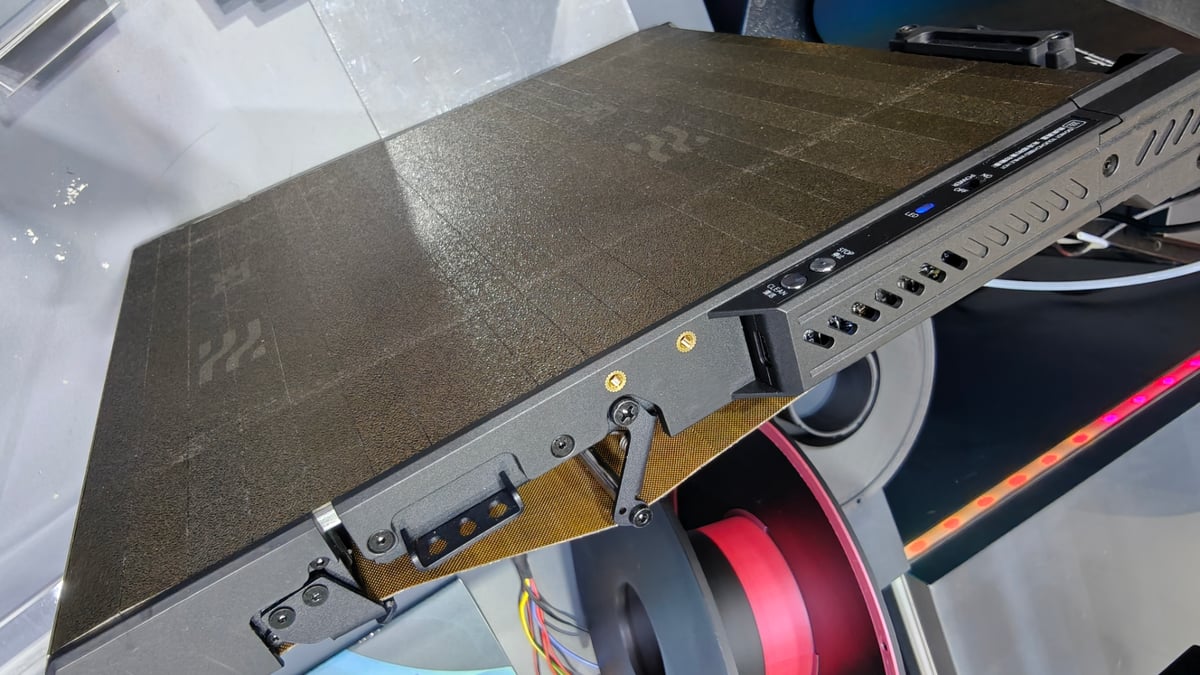
Elsewhere, the Biqu x Foxlt Infinity Bed ($259) is a loop of PEI-coated metal plates, bound around the typical print area of a Bambu Lab P-series printer. It’s motorized, meaning that at the end of a print the bed winds forward, with the print springing free at the precipice, exposing fresh build surface ready for the next print. Installing it requires no firmware modification, keeping it a relatively unintrusive addition for the printer that Biqu says fits right in with the printers’ expected behaviors for bed leveling and monitoring. Compatible with all of the P1P, P1S, and P2S machines (it even adds chamber temperature monitoring for the P1 machines, via in the inbuilt PTC thermistor) seemingly the only compromise is that you lose a little build volume in all axes. Preorders are open now, with shipping expected to follow in January.
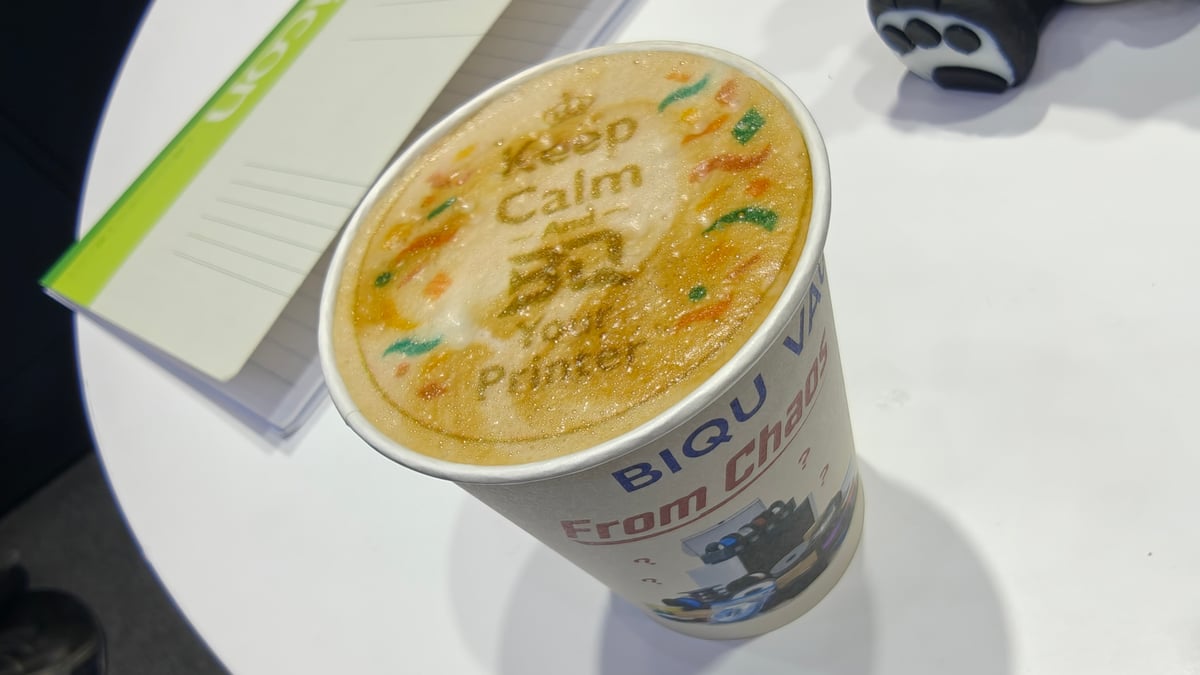
And, the Panda Cyborg is imminently available, I’m told. It’s been a year since we got a closer look at this modification kit, and the wait may almost be over. In case you missed it, it takes Bambu Lab’s P1P 3D printer – now wound down and well on its way to end of life as far as Bambu Lab is concerned – and resurrects it with new brains, connectivity, Klipper, capability and speed. And RGB lighting. It’s a full on kit project to tinker an old printer into a vastly different machine.
You’ve Read That; Now Read These…


License: The text of "Biqu Shows Off Biqu Vault, a Solution To All Your Filament Management Woes" by All3DP is licensed under a Creative Commons Attribution 4.0 International License.