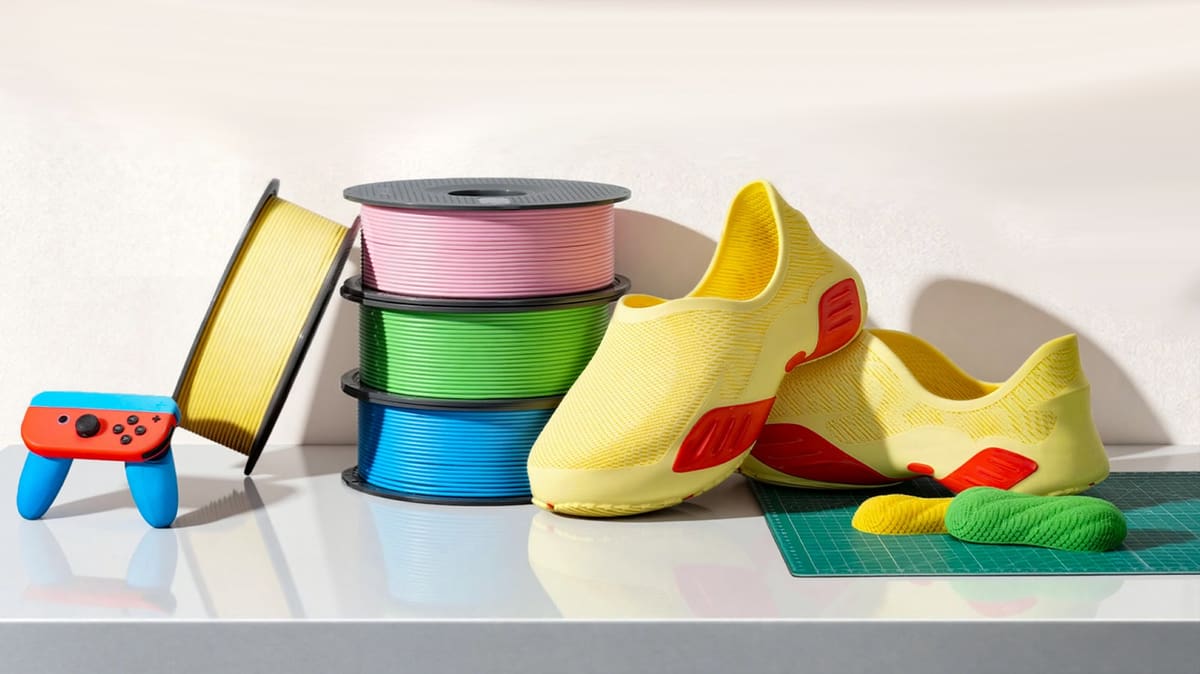
Bambu Lab’s New TPU 75A Is Ultra-Soft, Prints Fast & Brings Back 2.85-mm Filament

Bambu Lab is tackling the challenges of printing ultra-soft TPU with a thicker filament format, but there's a hardware catch.
Bambu Lab may have cracked the secret to hassle-free TPU printing: thicker filament. It just expanded its range of flexible filaments with a 2.85-mm diameter TPU 75A, an ultra-soft material aimed at applications like cushioning, watch straps, and shoes.
With a Shore hardness of 75A, a matte finish, and a claimed volumetric flow rate of 10 mm³/s, the new material is designed to make printing flexible, wearable parts a more practical proposition. There’s a catch, though: You’ll need the new H3C to use it.
We’ve printed with it in the All3DP lab and it is softer than the company’s 85A and 90A TPUs, but not dramatically so. Still, it would be our first choice for neck pillows.
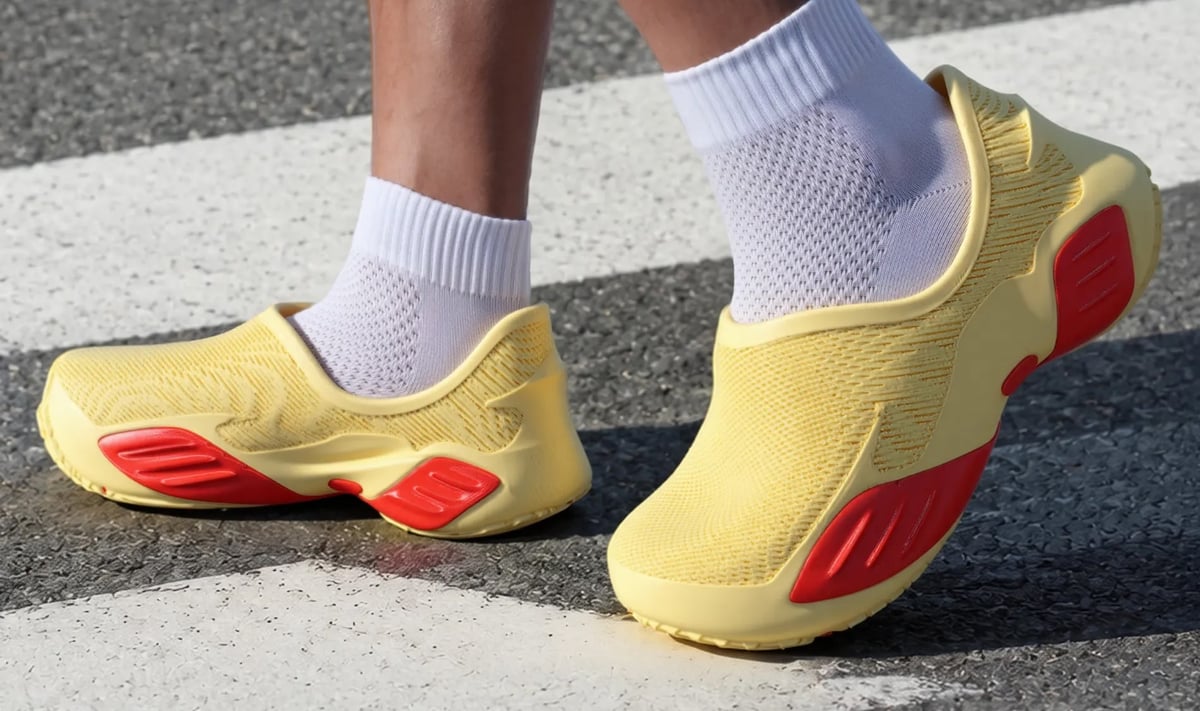
But perhaps the most interesting thing about TPU 75A isn’t its softness. It’s the filament’s 2.85-mm diameter and how it works in the H3C toolchanger with dedicated 2.85-mm printing hardware.
Bambu Lab says the 2.85-mm diameter helps address the feeding difficulties associated with very soft filaments. Flexible TPU is prone to bending and buckling inside an extruder, potentially causing inconsistent extrusion or jams. The thicker filament is designed to reduce these issues when used with Bambu Lab’s new FlexFeed extrusion system.
According to Bambu Lab, the combination achieves a volumetric flow rate of up to 10 mm³/s, approximately three times that of conventional 1.75-mm setups under the company’s test conditions. In our lab, 3D printing a shoe took far less time that with the company’s other TPUs.
The material is also formulated to produce a matte surface rather than the glossy finish common to many TPU filaments. Bambu Lab says it has been tested and certified for skin contact, although that doesn’t necessarily establish suitability for every wearable application.
Limited Compatibility, But Maybe Not for Long
Although the new filament is compatible exclusively with Bambu Lab’s H3C printer, using a dedicated 2.85-mm hotend, we would not be shocked if other toolchangers followed Bambu Lab’s lead here.
TPUs in 2.85 mm size is already available from other material makers, including Extrudr and Recreus.
As with other TPU materials, moisture management remains important. Bambu Lab recommends drying the filament at 70 °C for eight hours before printing and storing it in a dry environment.
TPU 75A is available in ten colors on 1-kg spools, with sale pricing starting at $28.79/kg. Non-sale price is $47.99.
You Might Also Like:


License: The text of "Bambu Lab’s New TPU 75A Is Ultra-Soft, Prints Fast & Brings Back 2.85-mm Filament" by All3DP is licensed under a Creative Commons Attribution 4.0 International License.