The Truth About “Food-Safe” 3D Printing Filament: Regulations, Risks & Real Options

Just because it's PLA doesn't mean it's safe for food contact. See which ones actually are and how to use them.

3D printing makes it easy to recreate everyday household items, but when it comes to food contact—such as cookie cutters, platters, strainers, and bowls—extra caution is required.
Not only do most filaments (even bio-sourced PLA) contain colorants, plasticizers, and performance-enhancing additives that are not intended for food contact and may leach into food, but the layered nature of FDM 3D printing creates microscopic voids and surface irregularities where bacteria can easily accumulate and are difficult to remove through normal cleaning.
Although some filaments, including those featured below, have been tested and found to comply with applicable U.S. FDA or EU food-contact regulatory limits under laboratory conditions, these results apply only to the raw material and do not extend to finished 3D printed objects. The printing process itself can introduce contaminants through printer hardware, nozzle materials, and handling. Combined with the inherent porosity of FDM prints, this means that 3D printed parts are generally unsuitable for regular or long-term food use.
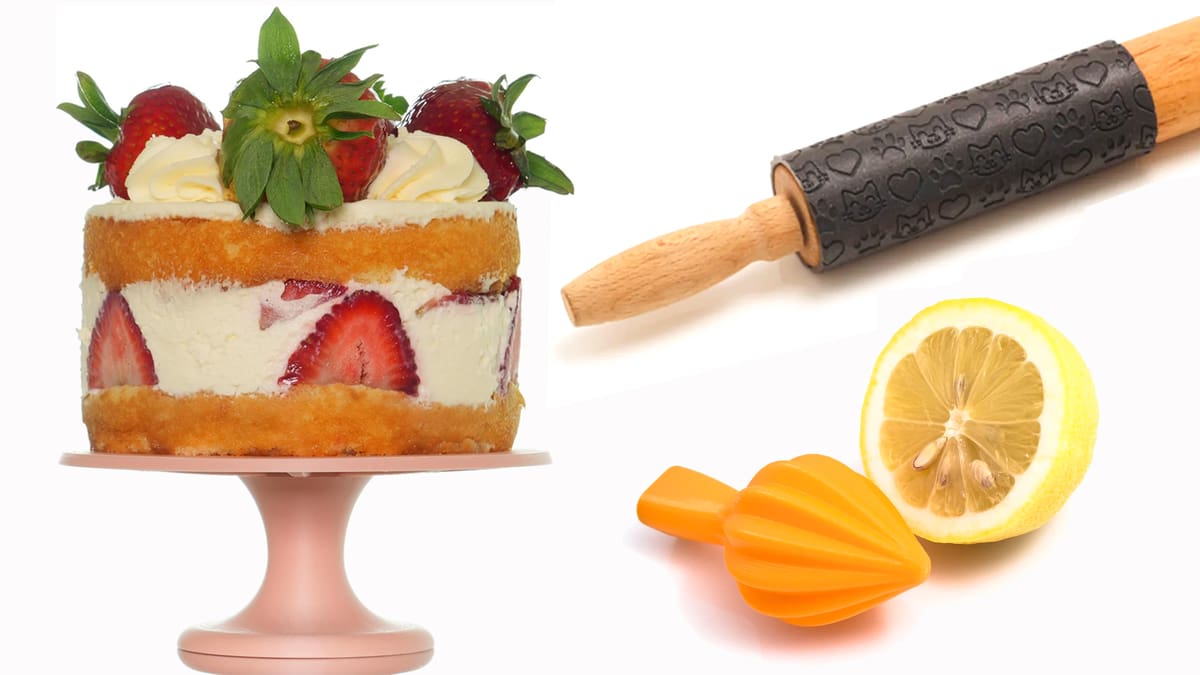
So why are there so many 3D printed cookie cutters and lemon juicers in circulation?
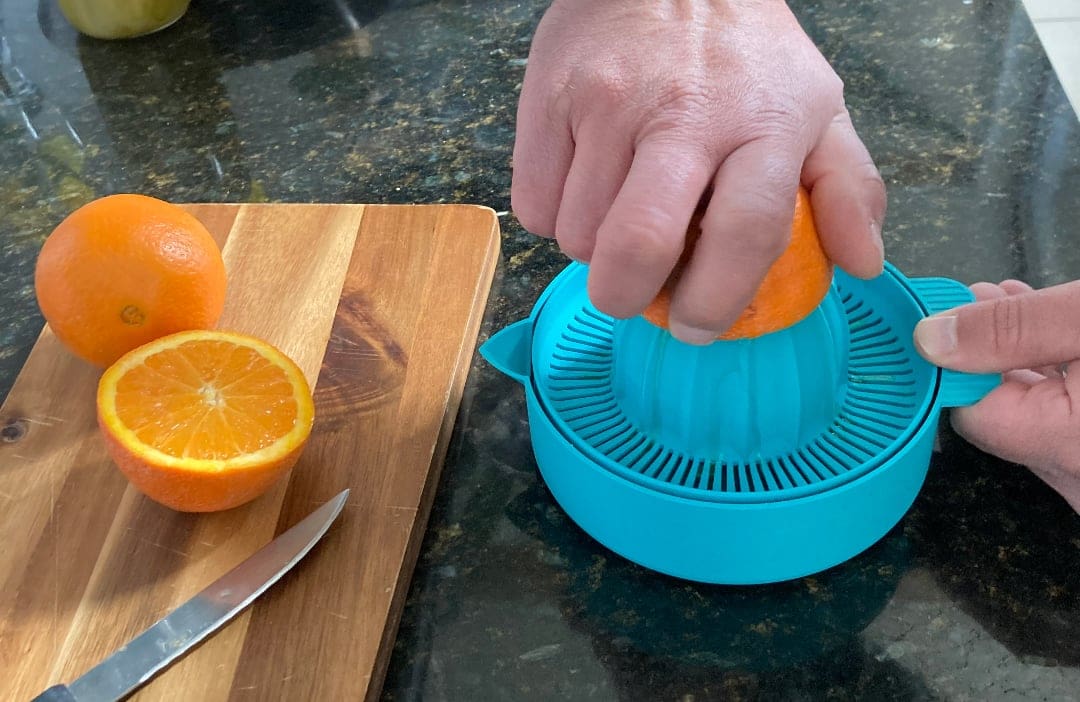
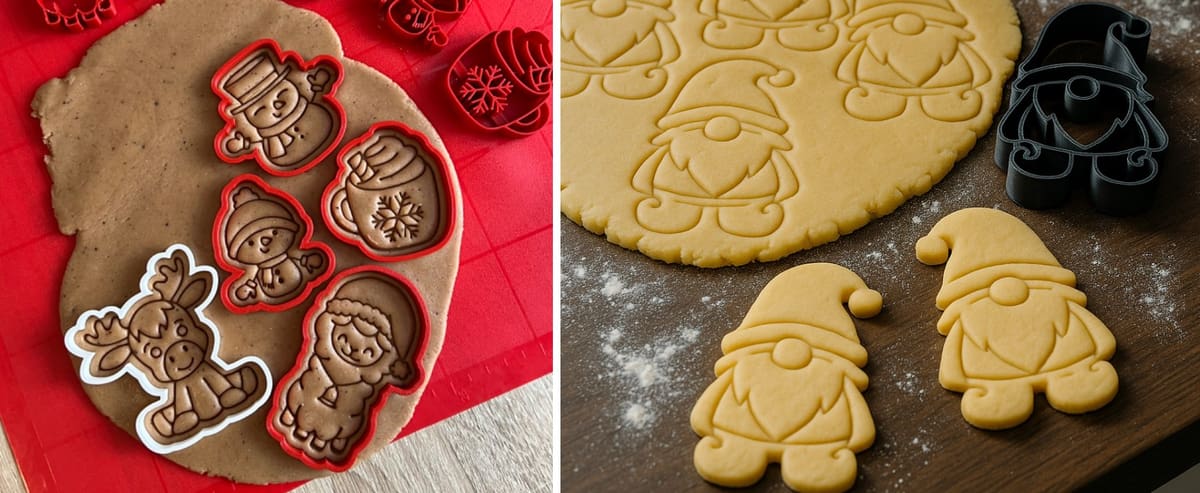
Although FDM printing is not ideal for reusable kitchenware, short-duration, low-moisture, or single-use tools, such as cookie cutters, remain popular. Many users perceive the real-world risk to be relatively low when prints are used briefly, cleaned immediately, or treated as disposable.
In practice, people routinely accept small, manageable risks in their own kitchens. Plastic cutting boards, for example, also develop grooves from use where bacteria can grow, yet are widely used due to proper cleaning habits and an understanding of their limitations.
For those who choose to 3D print items for personal kitchen use, selecting a suitable food-contact filament and following proper printing and handling practices is essential for safer, more reliable results.
Before exploring specific filament options, let’s first look at the additional factors you should consider when 3D printing parts intended for food contact.
A Few Things Explained
Since the application we’re talking about requires a bit of extra caution, here are a few things to keep in mind while printing parts that come in contact with food:
3D printers aren’t food safe.
Although a material might be food-compatible, the printing process itself is not necessarily. When printing, the filament comes in contact with parts of the printer that may have handled non-food-safe materials in the past, unless you exclusively print with food-safe filament. During melting, traces of said materials might mix with the food-contact compatible filament. A good (but not perfect) solution is using a cleaning filament when changing spools, before using food-safe filaments.
Print beds and adhesives may not be food safe.
The printer’s bed and the adhesion medium used (painter’s tape, hairspray, stick glue, and residues on a rough PEI sheet) might contribute to contamination, too. While this contamination may mainly affect the first layer only, not the entire part, it’s still recommended to use a glass surface with no adhesive. A glass bed is easier to clean/sanitize and offers a neutral surface that doesn’t risk contaminating the bottom layer of the print. Of course, you’ll need to confirm material compatibility before printing.
Nozzle material matters.
Brass isn’t considered to be a food-safe material; therefore, a different nozzle is needed. Most standard 3D printer brass nozzles are made from free-machining brass, which typically contains about 1%-3% lead. Lead is added to improve machinability and reduce tool wear, but it is toxic and not food-safe. The choice often falls on stainless steel, as most materials adhere poorly to it. You can check out our guide on the best 3D printer nozzles to learn more about what you need to consider.
Layers should be watertight, which is rare.
If the aim is to make a watertight part to contain liquids, layer adhesion is surely something to keep an eye on. While good layer adhesion can make a part watertight, FDM prints still contain microscopic crevices where bacteria can accumulate. Even thorough washing with warm water and dish soap cannot reliably sanitize these internal gaps. As a result, uncoated FDM prints should not be considered hygienic for repeated or long-term food contact.
Consider using surface coatings.
Consider coating your finished parts with a couple of layers of food-safe epoxy resin or silicone. Not only does it help with making the part watertight, but it also prevents bacterial growth and leftover accumulation in hard-to-reach spots. In many cases, the resin may additionally offer an extra layer of protection against scratches, cuts, and dents. It’s essential to ensure the coating itself is food-contact approved and fully cured before use.
There's No Such Thing as Food-Safe Filament
Manufacturers’ claims around food safety can vary widely and are often overstated. A brand may describe its filament as “food-safe,” but the fact is that the FDA does not certify or approve 3D printing materials as food safe. Instead, it establishes regulations—such as Title 21 of the U.S. Code of Federal Regulations (CFR)—that define limits on how much a raw material may migrate (“extract” or leach) into food.
Internationally recognized testing organizations, such as TÜV SÜD, issue laboratory test reports evaluating compliance with these regulations; they do not issue FDA certifications. As a result, a filament cannot be “certified food safe.” At most, it may be described as being manufactured from “food-contact-compliant materials” if it meets applicable U.S. FDA 21 CFR or EU Regulation (EC) No. 10/2011 requirements, all additives and colorants are also compliant, and appropriate traceability and batch control documentation is available.
Food-contact compliance depends on the exact material and how it will be used. The filament maker whould specify which FDA rule or notification covers the plastic, additives, and colorants, and for what food, temperature, and contact time.
Importantly, food-contact claims apply only to the raw material, not to the final printed part. Printer hardware, print settings, surface finish, and post-processing all play a critical role in real-world food safety.
The Food and Drug Administration explicitly discourages the use of the phrase “FDA approved” in product marketing. Instead, companies may state that their materials comply with applicable food-contact regulations.
Food safety also depends on manufacturing and handling practices. In the European Union, Regulation (EC) No 2023/2006 defines good manufacturing practices for materials intended to come into contact with food. Verifying compliance with these requirements can be difficult, as not all manufacturers provide full traceability or supporting declarations. Plus, compliance with this regulation is not the same as the EU Regulation (EC) No. 10/2011, which shows that specific a material has actually been tested in a lab.
“RoHS compliance” is another claim you may see on your filament. It stands for Restriction of Hazardous Substances, and it’s an EU law that limits certain hazardous chemicals. While RoHS compliance may sound reassuring, a product can be RoHS compliant and still unsafe for food contact.
Finally, compliance for one color of a filament should not be assumed to apply to other colors of the same product. Different pigments and additives may have different regulatory statuses, even within the same material line.
Dedicated Food-Contact Options
The following options are specifically targeted for food-contact applications and come from manufacturers that supply documentation that they comply with specific FDA or EU regulations. These are not the only filaments that comply but they are some of the most popular. Be sure any filament you choose to use in your food-contact parts have test results that show their compliance available for download.
Filamentive
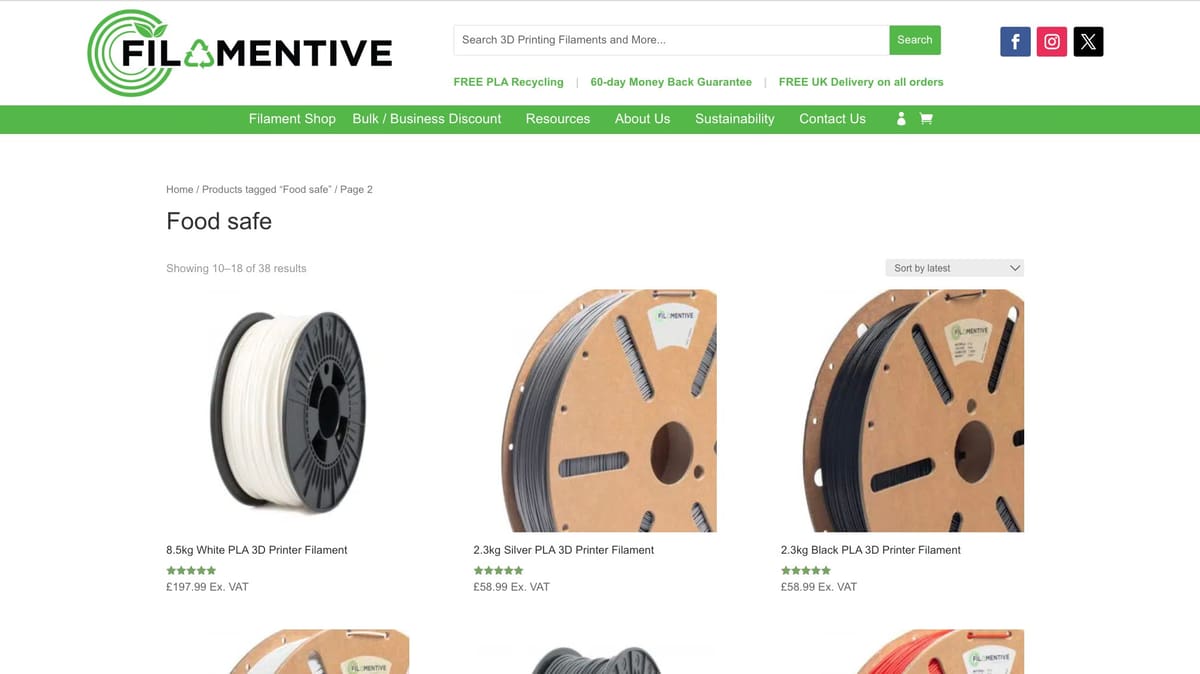
UK-based Filamentive offers a wide range of food-contact compliant filaments, including ABS, ASA, and PETG. Not all of the colors in these materials, however, comply with regulations. For example, their ASA comes in three classic colors (black, gray, and white), but only the white variant is compliant.
If you’re looking for a darker food-contact filament, take a look at their ABS. While lacking UV resistance, the black ABS stands as a suitable choice if your printed parts or model requires strength.
Filamentive says that the version of its PETG filament complies with the “compositional requirements according to EU Regulation No 10/2011.” PETg: Black, Transparent, Dark Blue are “food safe”, according to the company.
Filamentive also says these filaments: “May be used with all food types, with the exception of foods containing greater than 15% alcohol, at temperatures up to 100°C, followed by long-term storage at ambient temperature or below.”
EU 10/2011 compliant:
- (r)PLA
- PLA Cosmic
- (r)PETg
- ABS
- ASA
Read: Filamentive Declaration of Compliance (DOC) for Food Contact Materials
FormFutura
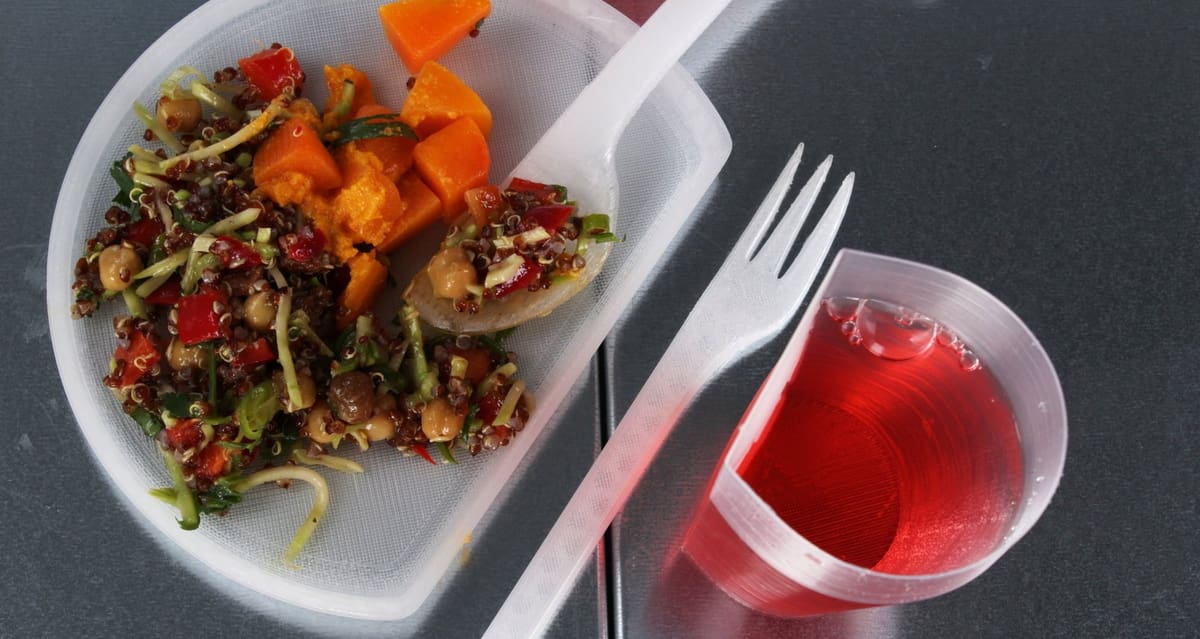
In addition to having eco-conscious packaging, Netherlands-based FormFutura offers filaments that meet applicable EU and U.S. food-contact regulations (EU No 10/2011 and FDA 21 CFR 178.3297), including:
- Centaur PP Natural
- HDGlass (PETG)
FormFutura says its Centaur PP is also both dishwasher and microwave proof, but only the natural, not the black or white, is food contact complaint.
Despite appearing under the company’s “food-safe” category on its website, there’s no mention of documentation that the “Premium PLA” has met any food-contact regulations.
FormFutura’s Statement of Compliance with Food Contact Regulations is available as downloads on the product pages for HDGlass and Centaur PP.
Comfy Materials
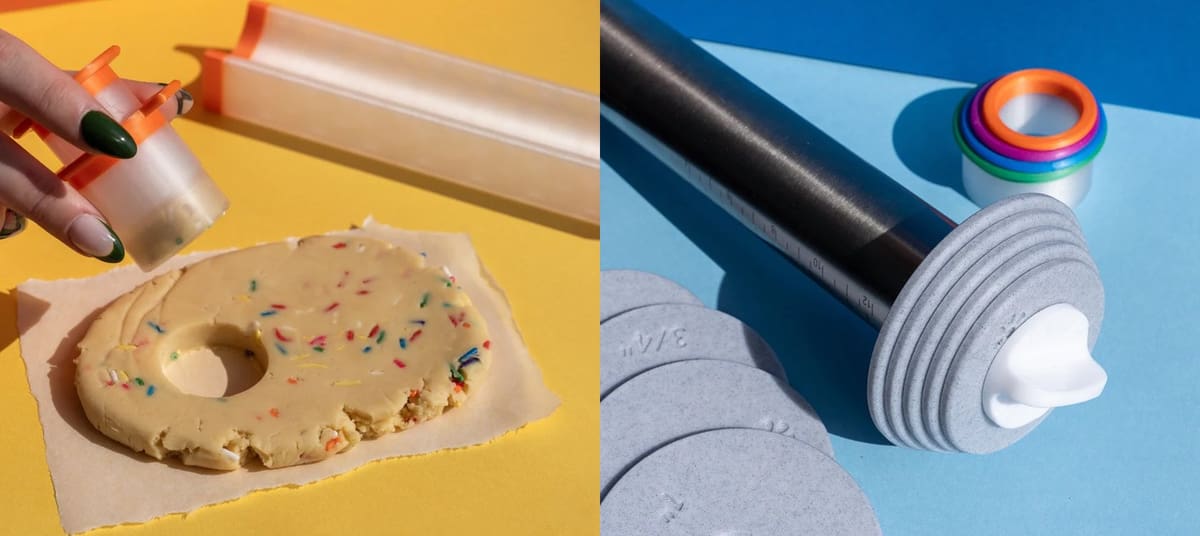
Florida-based Comfy Materials offers filaments that meet applicable EU and U.S. food-contact regulations (EU No 10/2011 and FDA 21 CFR 178.3297), including:
- PETG
- PLA+
- Silver (Ag) AntiBacterial
Comfy Materials Carbon PETG filament (not containing carbon fiber) is manufactured using Eastman GN071 copolyester, which is BPA-free. The resin used to manufacture this filament has been evaluated against multiple third-party standards, including NSF/ANSI Standard 51 for Food Equipment Materials, the company says.
The base resin has also received Greenguard Indoor Air Quality Certification and a Platinum-level Material Health Certificate from the Cradle to Cradle Products Innovation Institute, reflecting efforts to identify and reduce chemicals of concern at the raw-material level.
The company’s Carbon PLA+ (again, not containing carbon fibers) is made from Revode110 Polylactic Acid Resin, which has been evaluated against U.S. FDA 21 CFR §175.300 extractives limits by independent laboratories. This testing does not constitute FDA approval or certification of finished products.
Comfy is more explicit than most is saying that while its material is food-grade, what you print may not be food-safe: “Just because a material is permitted to come into contact with food does not necessarily mean it is Food-Safe. Our Filament is food-grade, and without modification, is also Food Safe. Once the Filament is molded or extruded into a new shape, by the end user, the Food Safe Qualities need to be reassessed.”
Comfy’s Statement of Compliance with Food Contact Regulations are available as images on the product pages for its compliant materials.
EolasPrints TPU

Spain-based EolasPrints may have the most food-contact compliant filaments of any we’ve found. Its products that meet applicable EU food-contact regulations (EU No 10/2011) include:
- PLA
- PLA High Speed
- PLA Silk
- PLA Antibacterial
- PLA Ingeo 850
- PLA Transition
- TPU Flex Filament 93A
- PETG
Its TPU Flex Filament 93A is complaint with EU No 10/2011 food contact regulations and FDA regulation 21 part 177.2600 for rubber articles intended for repeated use.
Available in 14 colors, EcolasPrint says TPU Flex Filament 93A is applicable for “direct food contact applications” including “food preparation tools, custom cookie cutters, kitchen accessories.” Yet, the company is also quick to declare that its claims pertain to the filament and “not to any article manufactured from it.”
EcolasPrint’s Statement of Compliance with Food Contact Regulations is available for PLA, TPU, PETG.
Fillamentum

Fillamentum is another EU-based material maker offering several filament materials that meet applicable EU and U.S. food-contact regulations (EU No 10/2011), including:
- NonOilen
- Flexfill TPE 90A
- Polypropylene PP
- PETG
NonOilen is a PLA/PHB blend that has temperature resistance up to 110 °C and may be washed in the dishwasher.
Fillamentum’s Flexfill TPE 90A is described as “safe for food-contact and skin-contact applications.” It’s available in several colors. The company’s PETG is available in more than 18 colors.
Unfortunately, Fillamentum does not post its compliance to food-contact regulations, instead offering to send documentation to anyone via email (we got ours within 24 hours). Reach out at: helpdesk@fillamentum.com.
Igus
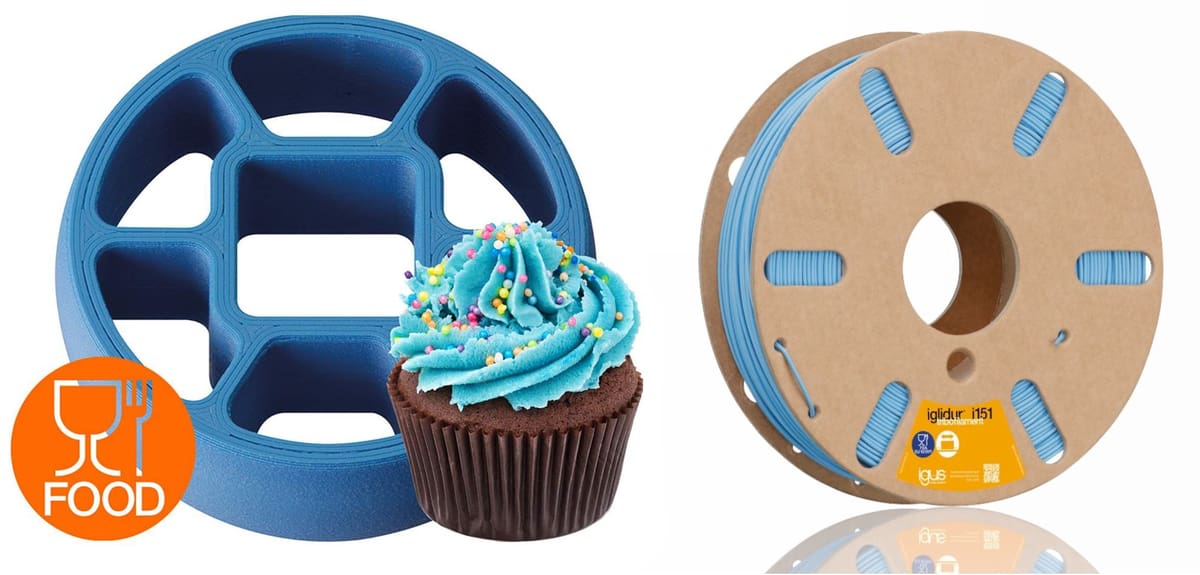
Germany’s Igus Motion Plastics offers filaments for professional manufacturing that meet applicable EU and U.S. food-contact regulations (EU No 10/2011 and FDA 21 CFR 178.3297), including:
- Iglidur A350-PF
- Iglidur I151
Igus iglidur A350-PF is a filament engineered specifically for moving, load-bearing parts, and ideal for demanding industrial environments, including food processing and packaging equipment. The material is manufactured from raw materials that comply with applicable regulations and is supplied in the industry-standard blue color to support visual detectability in food-production settings.
Igus’s Iglidur I151 is enriched with solid lubricants; this material delivers tribological performance up to 50 times better than conventional 3D printing filaments while maintaining EU 10/2011 food contact compliance.
Igus offers its declarations of food conformity according to FDA and EU regulations for download at the Iglidur I151 and Iglidur A350-PF product pages.
Completely Misleading, Missing, or Outdated ,Claims
In our look into food contact compliant 3D printing filament, we came across some companies that not only made broad claims about food contact safety without any documentation, but even put “food” or “food-safe” in the name of their products without any backup for their claims.
One company said its filament was “certified to produce solid and liquid food containers,” which implies end-use approval, which is not how food-contact law works. This claim strongly implies regulatory approval of finished printed containers, which is false or at least unsubstantiated.
Another product claimed food-contact safety according to Regulation (EC) No. 1935/2004 and (EC) No. 2023/2006. Yet these are general safety principles covering whether a material transfers constituents to food in quantities that could endanger human health, as opposed to Regulation (EC) No. 10/2011, which is a Declaration of Compliance after testing, that is a much stronger and more meaningful statement.
Another relatively well-known brand offered a selection of “food-safe” materials, but no declaration of compliance was found. In fact, links to download the compliance went to 404 errors.
Bottom line: If your food-contact-safe material does not come with a declaration of compliance, find one that does.
You May Also Like:



License: The text of "The Truth About “Food-Safe” 3D Printing Filament: Regulations, Risks & Real Options" by All3DP Pro is licensed under a Creative Commons Attribution 4.0 International License.