Want to Replace Your Prusa’s Nozzle? One of These’ll Do the Trick

If you need a replacement or an upgrade for your Prusa nozzle, this is the list for you. Check out the best picks in different categories.
When it comes to nozzle ecosystems, E3D’s V6 has been an industry standard since its release in 2014. While it’s been the go-to for most, nowadays we’re seeing an increasing number of proprietary options.
For example, with E3D’s RapidChange Revo system, released in 2021, the nozzle is manufactured as one piece with the heat break, thus preventing the need for hot nozzle swaps. Bambu Lab’s integrated-nozzle hot end, where the nozzle is permanently connected to the hot end, was first launched with their X1 Carbon in 2022.
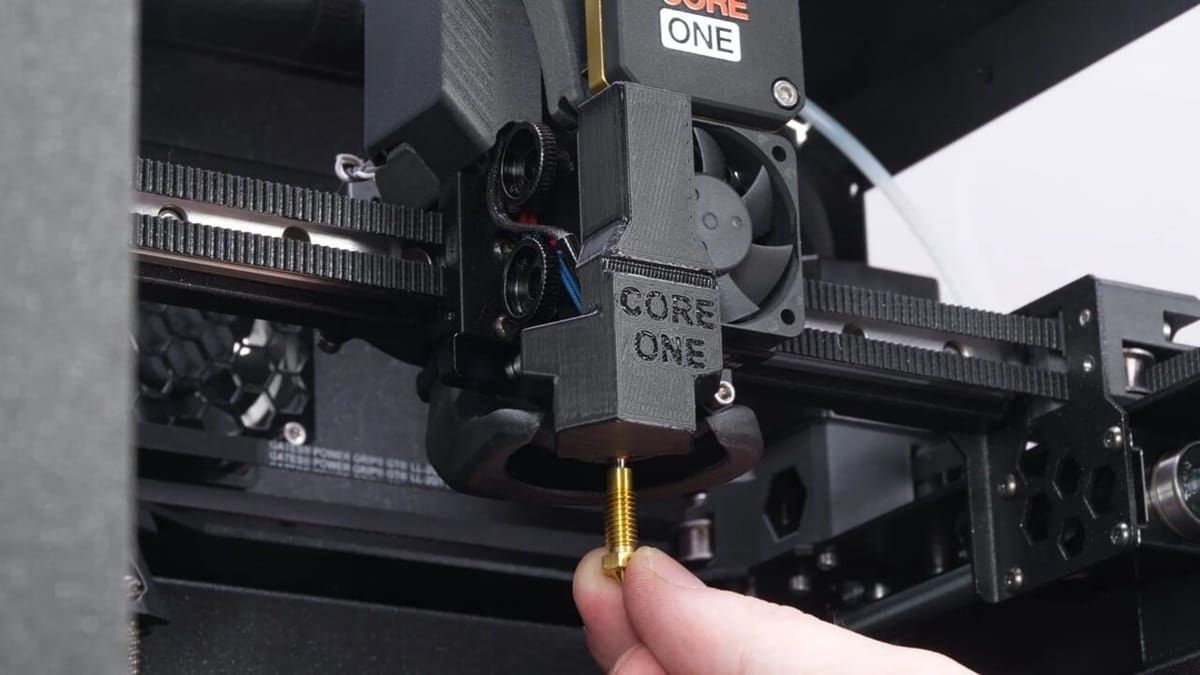
With the release of the Prusa XL in 2024, Prusa Research is following along a similar path. Their newer printers, including the MK4 and Core One, now use a “Nextruder” toolhead, which is compatible with their new custom nozzle, designed with E3D.
If you’ve got a Prusa printer and are looking to change the nozzle – because the stock option isn’t up to your material needs or it’s damaged – this guide is just for you. With options for both V6 and Nextruder systems, you’re bound to find something that meets your budget and needs.
Before we take a look at what nozzles you have to choose from, let’s go over a few technical concepts that are worth keeping in mind while you make your decision.
What Makes a Good Nozzle?
As said, let’s first look at some things you should consider before making a decision on which nozzle to purchase:
- Material: Nozzles are made in a variety of materials, designed for different purposes. For example, harder materials are used when printing more abrasive filaments (e.g. fiber-filled materials), while more thermally conductive materials are preferred when printing non-abrasive filaments, for better heat transfer and potentially better flow rates. Depending on the filament(s) you’ll be printing with, you’ll want to opt for a nozzle that can last longer and provide the best experience possible.
- Flow geometry: Many nozzles today incorporate internal geometries to improve the contact surface area with the filament, hence improving heat transfer and flow rates for faster printing. This is because the metal nozzle material has significantly better thermal conductivity than the polymer filament. However, their higher difficulty in manufacturing also makes them more expensive, so you need to consider whether the higher investment is warranted or if a more “traditional” nozzle, without the internal geometry, will suffice for your needs.
- Price: Of course, price is always the deciding factor. Do your needs justify a premium or expensive nozzle? Again, this comes down to the materials you’ll be printing with, the amount of printing you’ll be doing (are you running a print farm and need continuous consistent results?), and whether you’d rather invest in a longer-lasting (but more expensive) nozzle, or opt for cheaper ones that you might need to replace more often.
With these concepts out of the way, let’s take a look at our three top picks for V6 systems, followed by the top three picks for a Nextruder setup.
V6 Nozzles
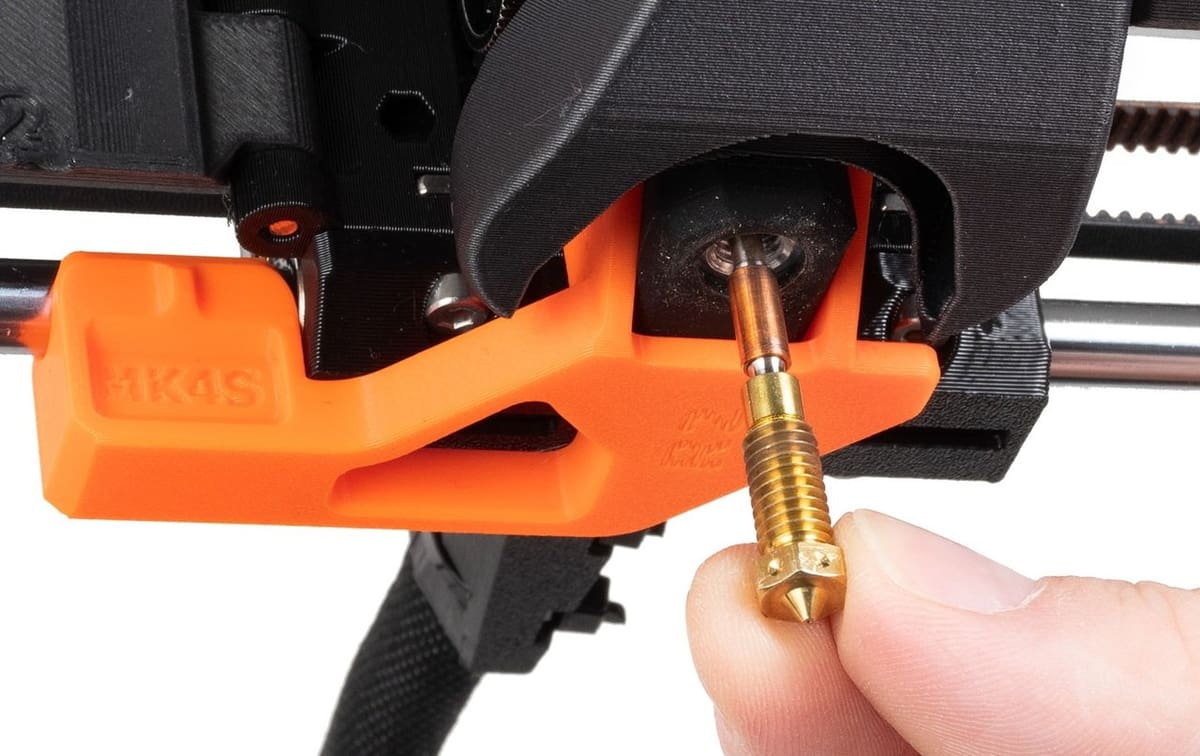
Prusa’s new nozzle system – Nextruder – is also backwards-compatible with the regular V6-style nozzles with the use of an adapter. This allows for a number of advantages, such as wider nozzle compatibility and options (and hence, lower prices). Using the V6 ecosystem also allows you to swap nozzles across multiple printers (and the older generation of Prusa’s machines).
Let’s take a look at our top three picks.
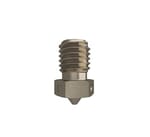
Budget: Nickel-Plated Copper
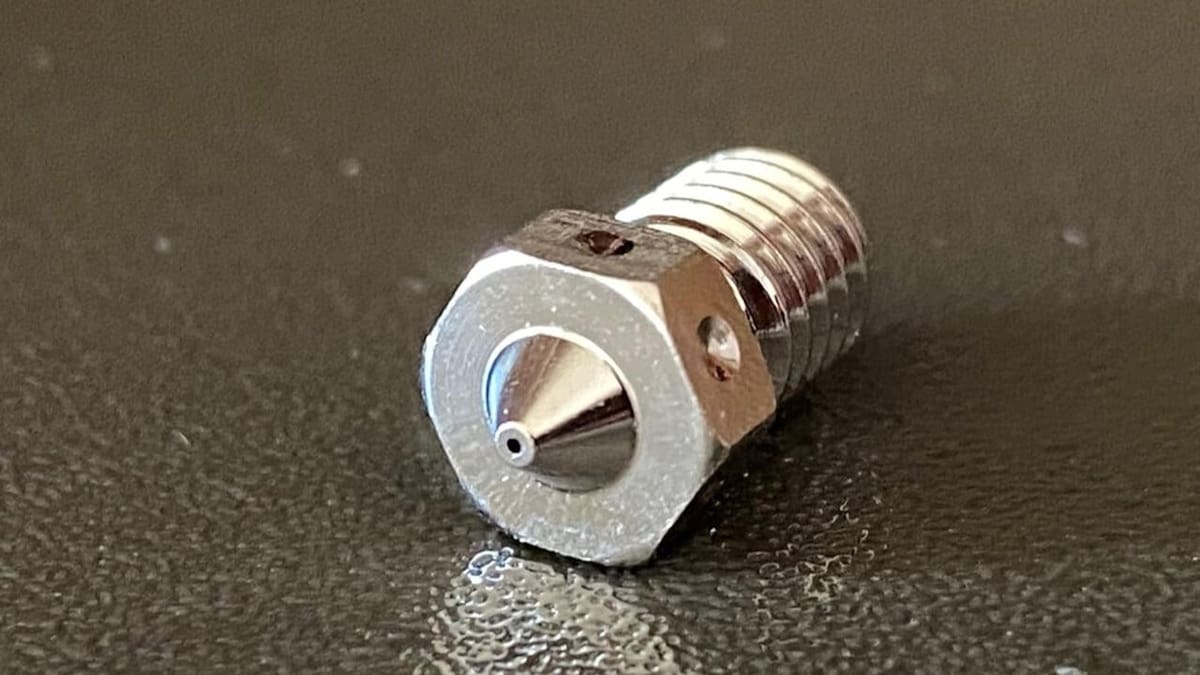
Nickel-plated nozzles are probably the best option when it comes to long lasting budget printing of non-abrasive materials like PLA, PETG, ABS, nylon, and TPU (in their base forms). They offer notable improvements over brass nozzles while coming in at only a slightly higher price point.
First, they are more wear resistant due to a slightly harder nickel coating (nickel has a hardness of 4 Mohs, compared to brass at 3 Mohs). This means that the nozzle will last a long time when printing non-abrasive materials (though abrasive materials will quickly wear out the nozzle). The nickel coating also aids in preventing excess material from sticking to the nozzle.
Also, the higher thermal conductivity of copper (~401 W/mK) compared to brass (~109 W/mK) can give higher heat transfer and flow rates. Hence why nickel-plated copper nozzles make a great option for the majority of basic printing needs!
- Price: ~$20
Mid-Range: Hardened Steel
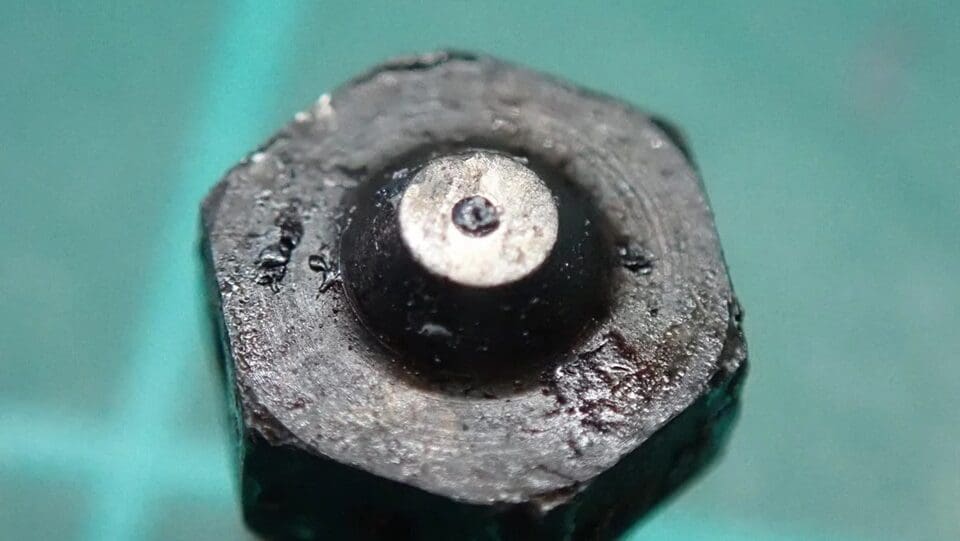
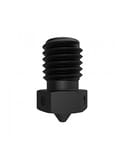
If you print abrasives often, a hardened steel nozzle might be more suitable for your setup.
With a higher hardness of 7-8 Mohs, hardened steel nozzles can handle frequent use of abrasive materials (e.g. fiber-filled filaments like CF nylon) without significant wear, and they virtually don’t erode with non-abrasive ones.
However, there’s no free lunch – hardened steel has a very low thermal conductivity of ~21 W/mK, which means you’ll have to print slower or increase nozzle temperatures to compensate. They’re also slightly more expensive as it’s more difficult and time-consuming to machine hardened steel into a nozzle.
- Price: ~$30
Upgrade: Bozzle Nozzle
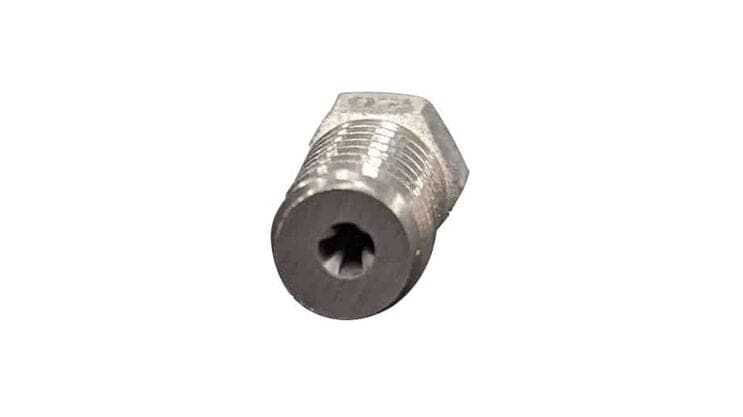
This is the overkill nozzle, as it offers excellent heat conductivity, even better hardness, and has a high flow geometry. The Bozzle is made using a single piece of tungsten carbide (hardness superior to 9.0 Mohs, heat conductivity around 110 W/mK) and presents supreme performance in all aspects. If you print abrasives regularly or simply want the best nozzle there is, this is it.
As you might expect, this excellent nozzle comes at a higher price point. That said, it’ll practically last forever in a typical FDM printing setup (you can even blowtorch it to clear clogs due to tungsten carbide’s high heat resistance).
There are two things to keep in mind, though. First, it only comes in a diameter of 0.5 mm. Second, there have been availability issues reported by makers. Because of the scope of the project, production may not be as consistent as with other products, so a bit of research might be warranted if it’s the one you want to go for. A bit of time and checking out sites like Fabreeko, NorthPrint3D, UniquePrints, 3DMensionally, and 3DO might do the trick – and can be well worth it.
- Price: ~$75
Nextruder
Next, we’ll move on to the Nextruder-dedicated nozzles. These nozzles have an integrated heat break, which means that it’s in one piece with the nozzle, allowing for increased convenience during nozzle swaps.
However, they also tend to be more expensive than V6-style nozzles. For a similarly performing nozzle, a Nextruder option costs around the same as a V6 equivalent plus the adapter. Therefore, depending on how often replacements are warranted, you might want to consider which setup suits you (and your budget) best.
Budget: Prusa Brass Nozzle
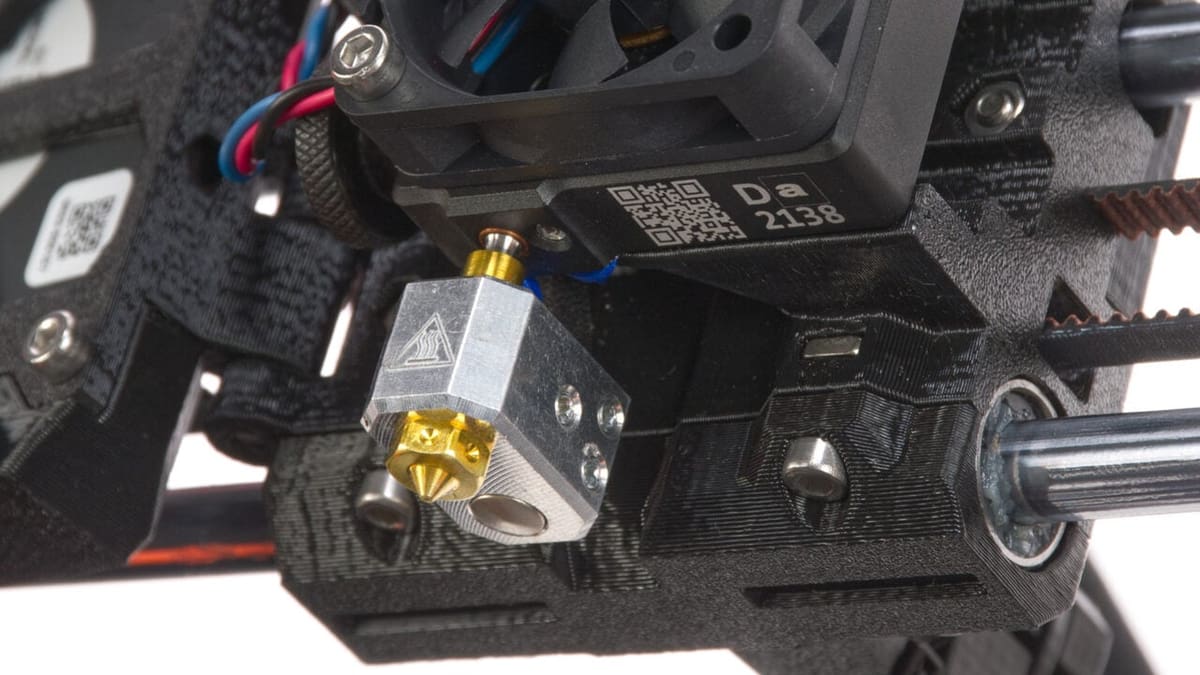
This is the Nextruder equivalent of the ever-popular V6 brass nozzle. It has the good thermal conductivity but poor hardness of brass, hence limiting you to non-abrasive materials – you’ll probably need to swap nozzles regularly.
Because of its basic use, and as an immediate replacement to the stock option, it also comes at a relatively lower price point.
- Price: ~$20
Mid-Range: Brass CHT Nozzle
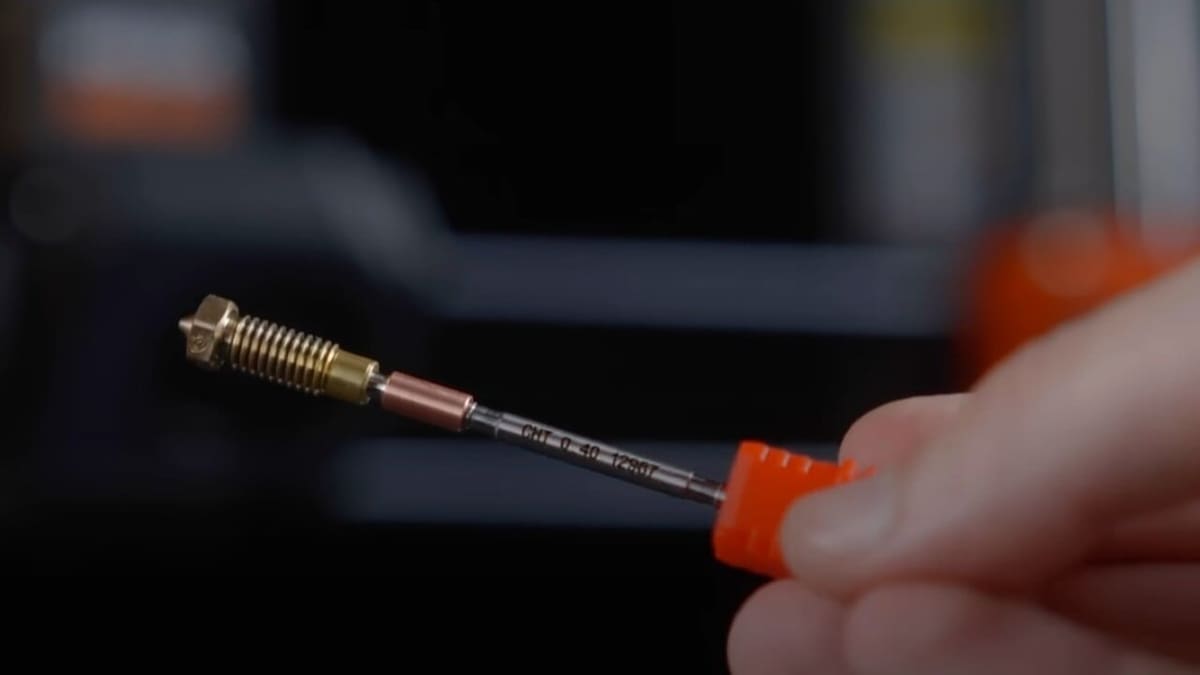
This nozzle is identical in all aspects to the previous one – except it has a high flow geometry. Similarly to the previous option, this nozzle is made of brass, so it should only be used with non-abrasive materials such as PLA, PETG, ABS, nylon, or TPU. To maintain optimal print quality, you’ll also need to replace the nozzle regularly.
With core heating technology (CHT) internal geometry, the filament path is split internally into three, allowing for better contact of the brass in the nozzle with the filament. This increased thermal conductivity gives you higher flow rates and printing speeds.
- Price: ~$30
Upgrade: E3D Prusa ObXidian
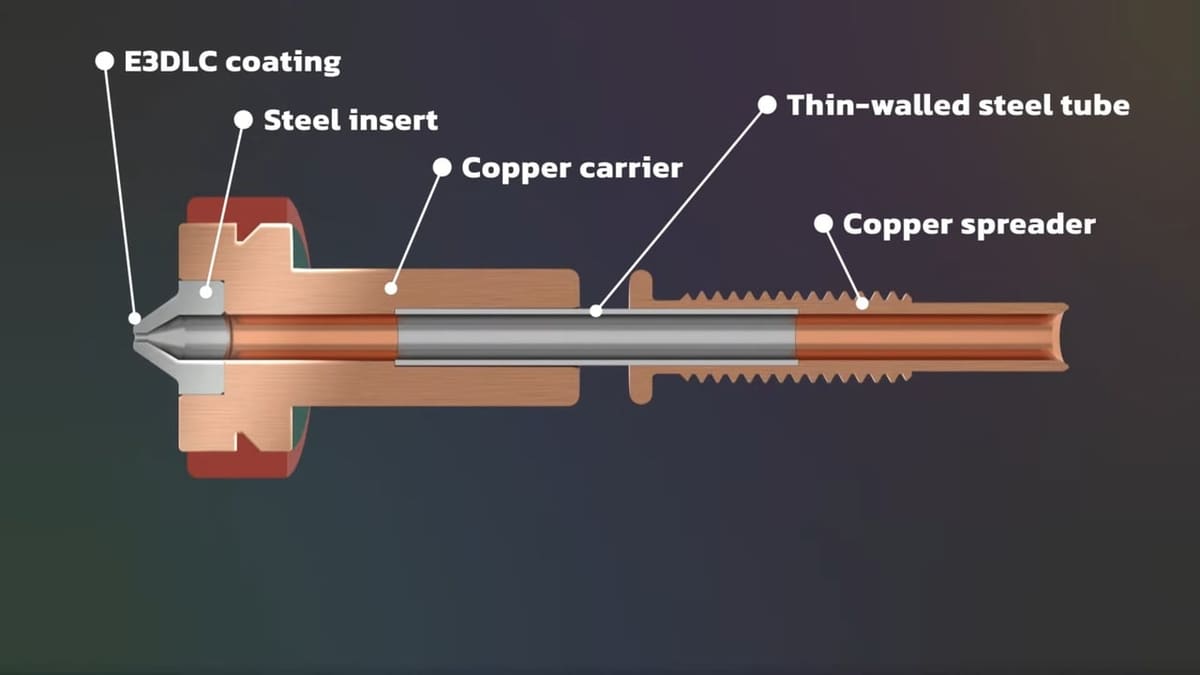
The ObXidian series contains some of E3D’s latest and greatest nozzles. They are designed for very high wear resistance, yet with high thermal conductivity. This is achieved through pairing a tool steel insert with their new proprietary coating (which E3D claims also has non-stick properties), surrounded by a copper alloy for good thermal conductivity. The integrated heat break is then made of a thin-walled steel tube for low thermal conductivity, and heat is then transferred efficiently to the heatsink through the copper spreader.
This exact flavor of the ObXidian, designed for Prusa’s Nextruder, also incorporates a (custom) internal high-flow geometry for better flow rates – allowing you to print faster.
Similar to the tungsten carbide V6 option, this is another overkill nozzle for those looking for the highest printing performance for printing high-performance materials and abrasives at high speeds.
- Price: ~$65
License: The text of "Want to Replace Your Prusa’s Nozzle? One of These’ll Do the Trick" by All3DP is licensed under a Creative Commons Attribution 4.0 International License.
CERTAIN CONTENT THAT APPEARS ON THIS SITE COMES FROM AMAZON. THIS CONTENT IS PROVIDED ‘AS IS’ AND IS SUBJECT TO CHANGE OR REMOVAL AT ANY TIME.