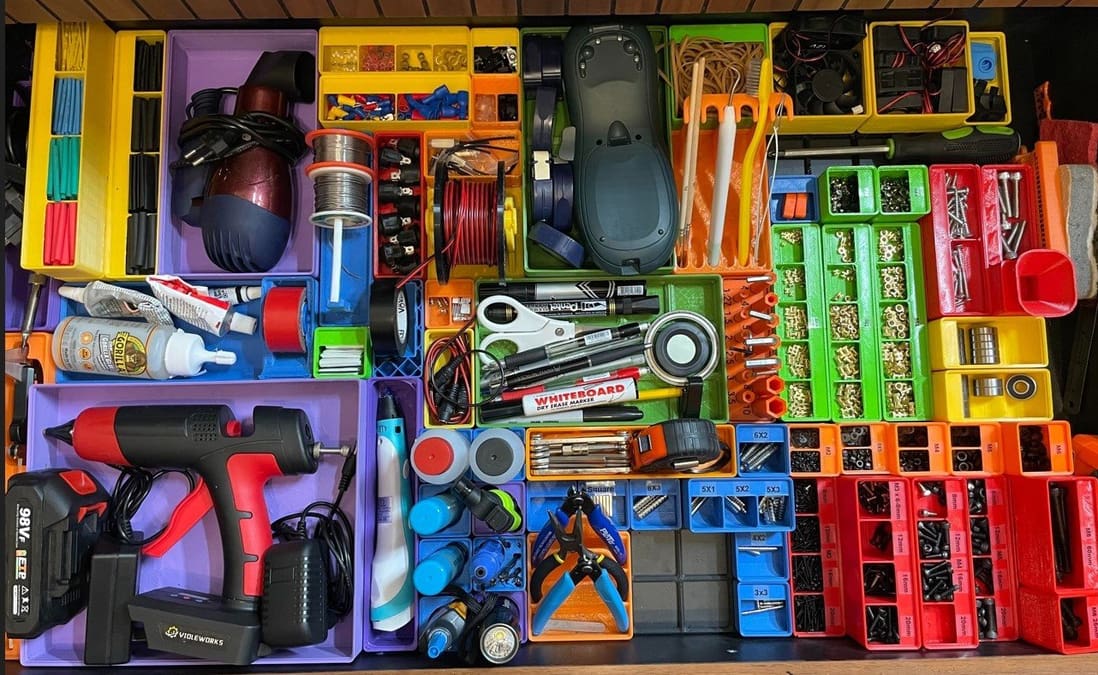
3D Print Your Way Out of Chaos With Gridfinity Modular Storage Systems: All You Need to Know

Gridfinity is more than a 3D printed storage system. It helps improve your workflow and complete projects.
If you’re into 3D printing, you’re probably a tinkerer at heart with several kilograms of spare nuts, bolts, and electronics modules. Or maybe you’re in it for printed figurines, and your art supplies have taken over an entire drawer. Either way, if you’re anything like us, these tools and parts slowly migrate into the infamous “miscellaneous stuff” drawers.
Now imagine a professional setup for whatever work you’re doing: tools and components neatly stored, always within reach, and arranged to fit your workflow. Normally, you’d picture a big price tag and a system that’s heavy, rigid, and not exactly adaptable when your workspace has to serve multiple purposes.
Well, let us let you in on a not-so-secret solution that can turn that chaotic workshop or desk into something closer to that professional setup — without the cost or rigidity. It’s called “Gridfinity”. It’s not a product, it’s a standard to which you 3D print components.
Over the past couple of years, Gridfinity has seen steady growth, with new parts, extensions, and online generator platforms that make customizing and 3D printing the components easier than ever. Used well, it can completely change how you organize and work.
Let’s get into it!
The Gridifinity Philosophy & Its Many Offshoots
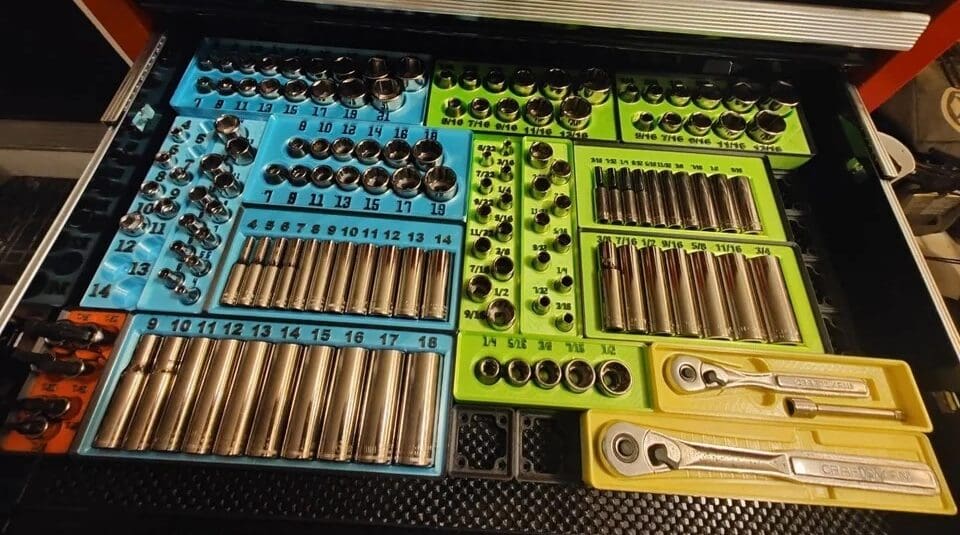
Gridfinity was invented by Zack Freedman, who was once a professional freelance prototyper, but now, he’s a full-time YouTuber who puts out super interesting projects and tutorials mostly related to 3D printing and electronics.. He designed and released the original modular 3D printed storage system in 2022, and it has since become an open, community-driven project for organizing tools, parts, and other workshop items.
There’s widespread adoption and many community contributions. For example, Marcus Svensson launched the Gridfinity Generator, and ther are more than a dozen Gridfinity-related generators, tool, or ecosystem projects.
Freedman’s original idea was to develop a 3D printed organizational system that’s designed to meet a need, one which most people mistake as “small parts storage”. Instead, it’s designed to help you finish projects, reset to clean instantly, and reconfigure on the fly.
The defined philosophy for Gridifinity is that every item has a dedicated home that:
- Is within reach of where you’ll use it,
- Is exposed and easy to grab,
- Prevents accidents like spills and injuries, and
- Is effortless to set up and super easy to put back or rearrange.
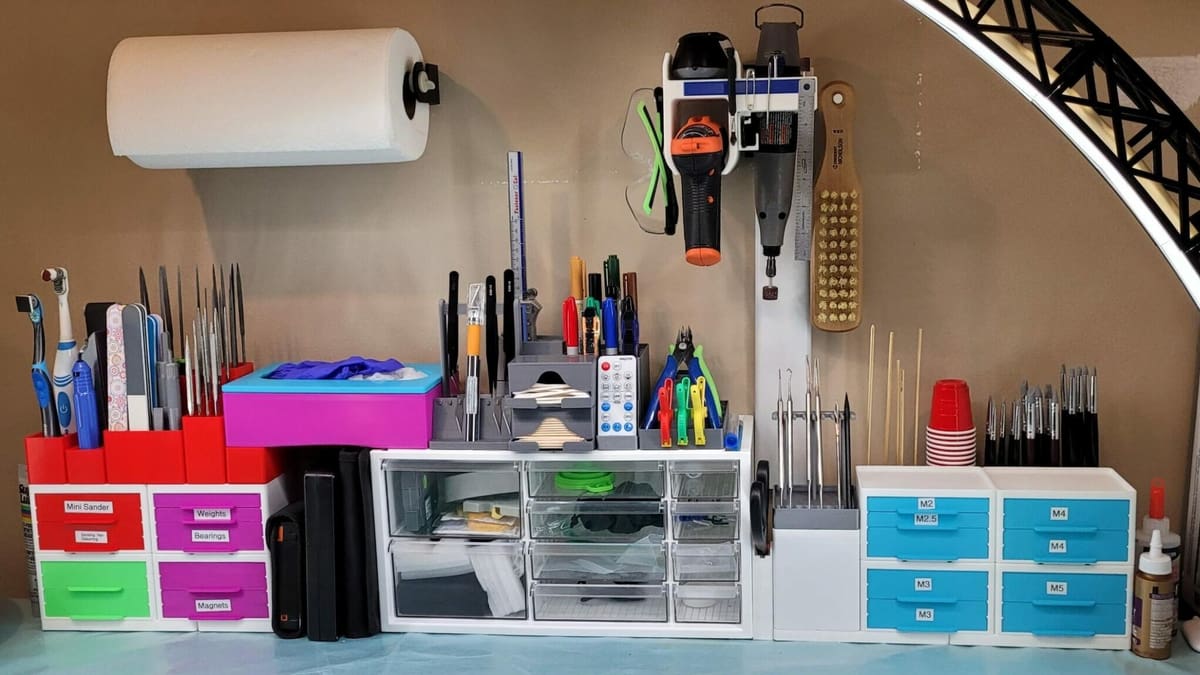
Think of your kitchen drawers. Are the teaspoons at the back of the bottom drawer? Or are they front and center of the top drawer that’s nearby the coffee machine? This is how Gridfinity is designed to work.
Because there’s no way to tell what tools, parts, or projects you have, Freedman designed Gridfinity as a standard – in other words, a set of rules for designing a component that will fit with any other Gridfinity component. He published several example components when he announced the system via YouTube, but these are only examples, and he called upon the community to improve his designs and come up with new ones. And boy, did the community answer his call.
New component designs have been popping up all over the place, including for spaces beyond the workbench like the bathroom and kitchen. So now, let’s get into how this system actually works and how to apply it to your space!
How To Get Your Grid On
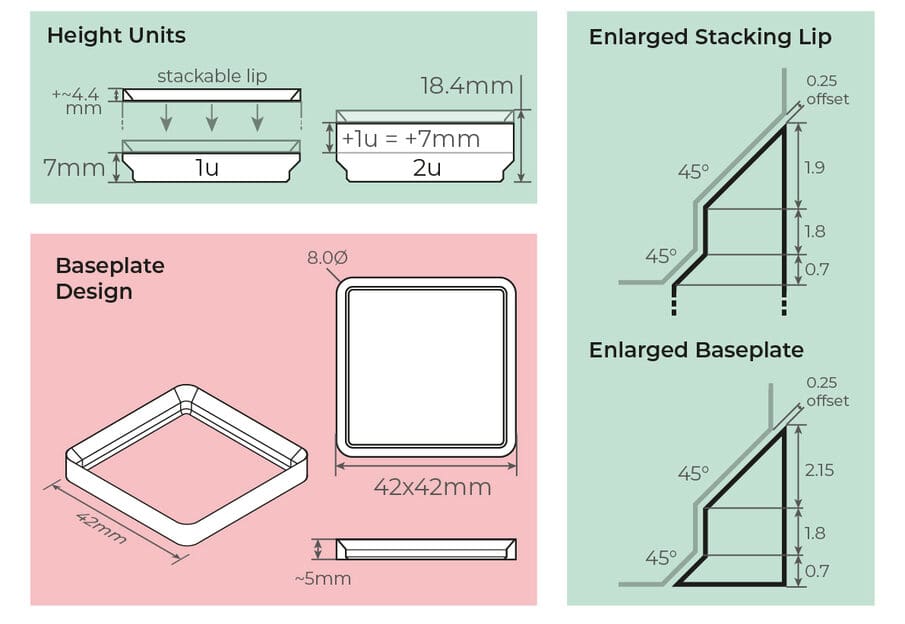
As we mentioned, Gridfinity is a standard, not a product. A Gridfinity-compliant storage solution fits within a baseplate made up of 42-mm squares. So, every component has a width and length that is some multiple of 42 mm. For example, a 1 x 2 component is 42 x 84 mm, and a 4 x 5 component is 168 x 210 mm.
The height of each component follows a similar standard being a multiple of u, equal to 7 mm. The smallest height is 2 u, or 14 mm, as the base that locks into the grid is 7 mm (1u) and needs at least a 7-mm wall on top. This system of multiples allows you to easily stack components on top of each other securely (or if you’re just irked by uneven heights).
Freedman designed two baseplate varieties for his initial release: a weighted base and an open grid. The weighted base has space to glue magnets so that bins with magnetic bases can be secured in place. The open grid is thin enough that bins with magnets would also be able to attract to a steel drawer or surface.
The additional magnets and weights are optional, though. The design of the grid interface is such that you only really need magnets or weights for particularly top-heavy things like these pick and tweezer racks.
Since the original release, others in the community have expanded the baseplate options with designs such as a lightweight magnetic version or a screw-together version to enable smaller grids to be securely connected together.
Gridfinity Generators & CAD
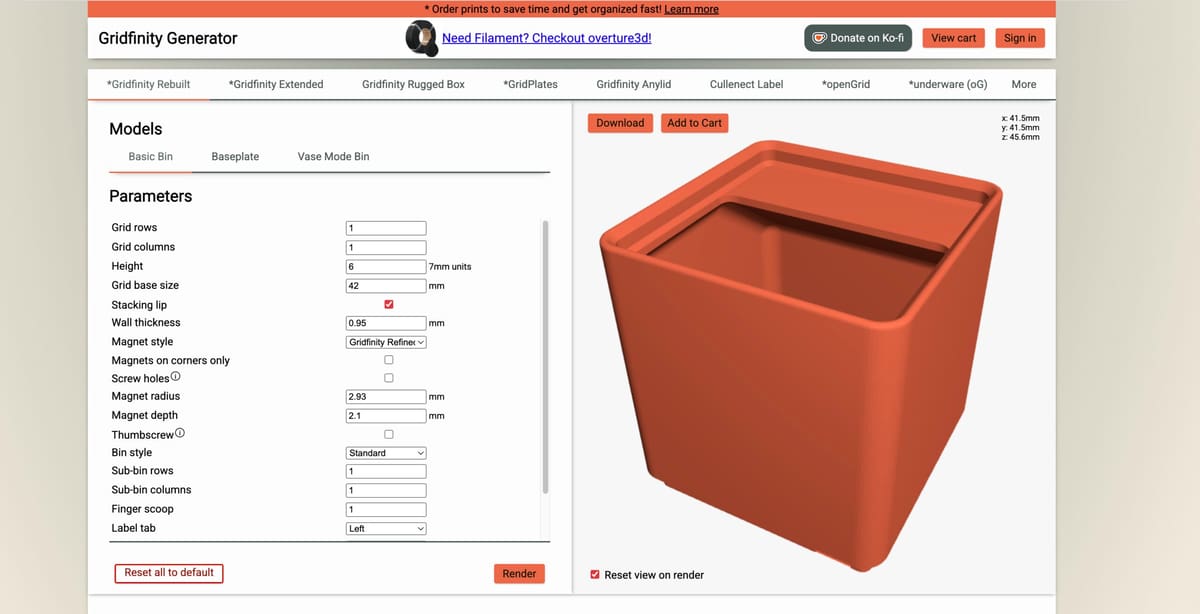
These platforms that essentially do all the designing for you to your specs have made the Gridfinity concept even more accessible to anyone with a 3D printer, or without if you’d like to just upload the files it generates to a 3D printing service like Craftcloud.
They allow you to configure bins, dividers, socket trays, and even foam inserts directly in the browser, then export STLs or parametric files. These tools support features like chamfers, label windows, debossed text, and mesh ventilation without requiring CAD proficiency.
- Gridfinity Generator. Interactive online STL generator. Free & paid plans.
- Parametric Gridfinity Generator at MakerWorld. Developed by Cullen J Webb for the Makerworld Model Maker. Free
- Perplexing Labs’ Gridfinity Generator. Another parametric web tool.
- Extrabold Baseplate Generator. Focused on ease-of-use baseplate creation and easy STL download.
- TrayGen Gridfinity. Measure your drawer, choose a printer, then export baseplates that fit your bed.
- Gridfinity Refinery. A UI-based bin and baseplate generator built on the Gridfinity Rebuilt code.
If you have sharp IT skills, there are also Gridfinity resources for developers, like python modules and CADQuery code.
Gridfinity in CAD
Gridfinity design for computer aided design (CAD) users as largely become a parametric ecosystem powered by modern plugins and template libraries.
Parametric templates for Fusion or Onshape enable you to adjust length, width, or subdivisions through sliders and input fields. These templates not only handle Gridfinity’s dimensional conventions but also keep the geometry lightweight and watertight for slicers, which was a common pain point in earlier generator-based workflows.
Printing Tips
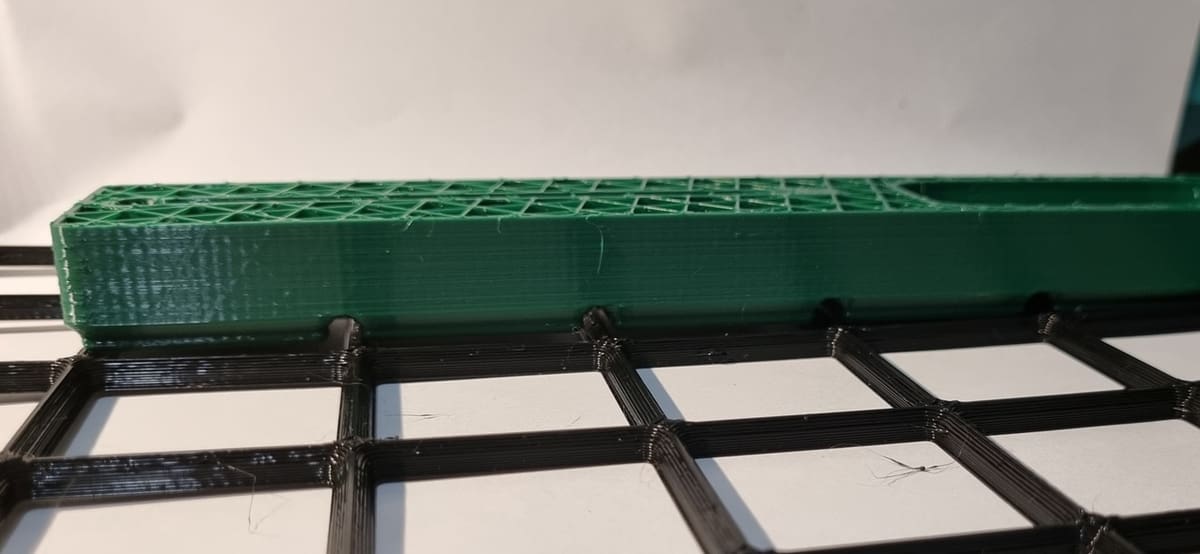
Freedman printed his original setup using an Anycubic Kobra Max outfitted with a Volcano-style 0.4-mm nozzle to give a 0.6-mm line width. Though, he hasn’t specified a particular layer height or temperature. Not to worry, we have even more pointers for you from our personal Gridfinity journey:
- Use a larger nozzle, like 0.6 mm or 0.8 mm, for faster prints. Gridfintiy models don’t need a lot of fine detail.
- Use hotter temperatures for better layer adhesion. When working with eSun PLA+ at 55 mm/s on a Creality CR-10 S with a 0.6-mm nozzle, 215 °C was a good fit.
- Use sufficient infill. Around 15-25% should suffice. This doesn’t significantly increase print time because there’s not a large area within the model that infill even applies to (given the models are generally hollow), but it definitely helps with warping.
- Calibrate and recalibrate your X & Y E-steps until they’re perfect, or you may lose your mind. There’s nothing more frustrating than your components not fitting by a margin.
- Stick to 0.8- to 1-mm top and bottom thickness. It’s plenty, no need to use more filament.
- Do not (and this is super important) put too much thought into how to further optimize your layout before hitting print. You can easily get lost in details and planning before you know it. Months will go by, and you’ve printed nothing. The bins don’t use much plastic, so you can print new ones. Stop thinking about it.
Luckily, Gridfinity has an active community, to not only help with getting the prints right but also to offer component options that suit your needs.
Scaling Your Grid & Buying in Bulk
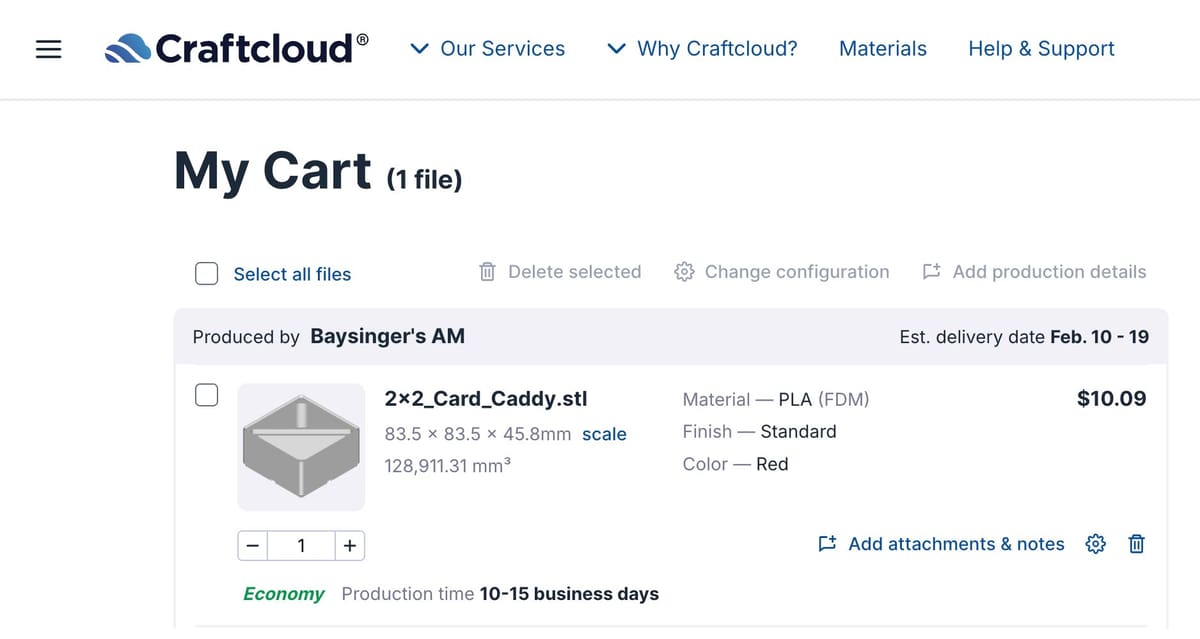
Printing every bin is fun at first, but it doesn’t always scale. Purchasing high-volume or specialty components and printing the rest has become a popular balance. It also reflects the broader shift in Gridfinity from “personal workshop hack” to a flexible, modular storage standard that could work in your professional shop, school, or company.
While Gridfinity began as a purely open-source, maker-driven storage format, it has since expanded into a small but fast-growing commercial ecosystem. Today, you don’t have to print every bin, insert, or baseplate yourself — a number of companies now produce injection-molded and CNC-cut components that complement (and are fully compatible with) the original system (just search Gridfinity on Amazon).
You’ll also find sellers on Etsy to 3D print bins for you and you can even upload your STL files to an affordable 3D printing service, like Craftcloud, and have hundreds printed and sent right to you.
Commercial bins typically focus on durability and consistency, and can often support heavier loads, particularly for fasteners, sockets, or machine shop tooling. Some vendors offer color-coded sets for high-visibility, while others specialize in thin-wall bins designed to maximize density in drawers and cabinets.
Compatibility now extends beyond the desktop workshop, of course. Magnetic steel baseplates and modular cases make it easy to transport tools or hobby materials, and many third-party organizers size their internal compartments around the Gridfinity pitch. This opens the door to hybrid use with common storage systems like shop drawers, Sortimo-style vehicle cases, and portable field boxes.
Storage Systems Integration with Known Brands
Gridfinity modules increasingly coexist with established portable and workshop storage systems. Many users adapt Gridfinity bins to fit into drawer cabinets, Packout-style toolboxes, Sortimo cases, and Systainer organizers, using printed adapters or commercially made steel baseplates. This hybrid approach lets users keep small parts kitted in portable cases while maintaining compatibility with bench-top baseplates and shop drawers. As a result, Gridfinity is no longer confined to 3D printed trays, it has become a flexible “inside layer” that provides structure and organization within a wide range of storage platforms.
Join the Gridfinity Community
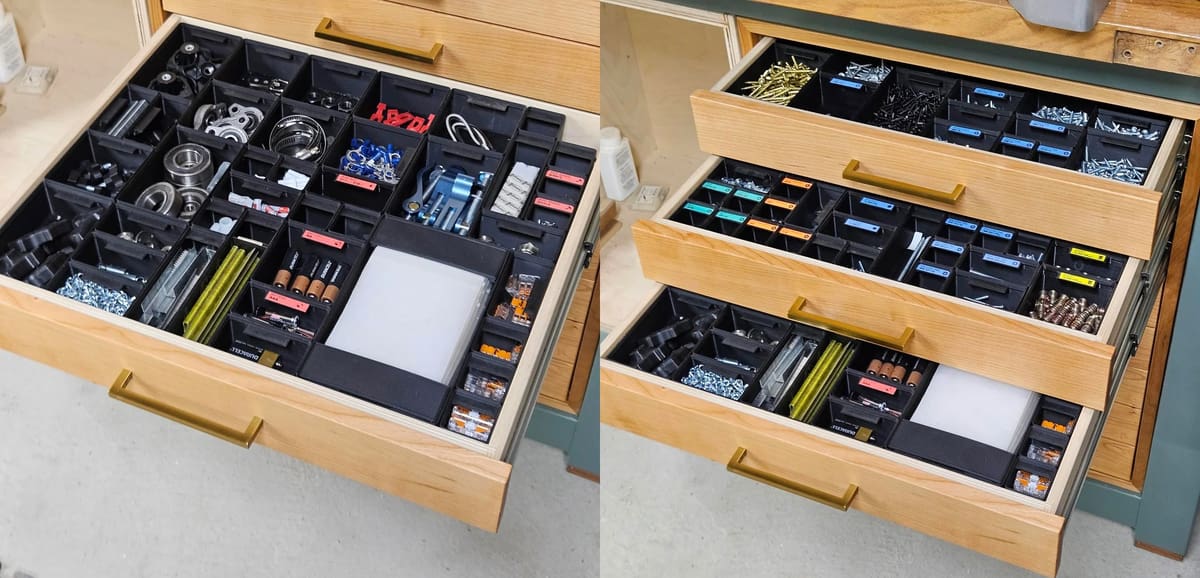
When Freedman announced Gridfinity, a community sprang up almost overnight. As the system was open source, new designs and improvements on Freedman’s originals were posted to all of the usual places: Thingiverse, Printables, MakerWorld, and so on.
If only all the parts had some kind of central library – a single page that had a library of all the parts and the specifications for designing new parts. Well, there is, sort of. Gridfinity.xyz is a dedicated page for the Gridfinity project, though the library sorely needs an update. It also contains the best copy of the specifications we’ve been able to find. Other catalogs have also cropped up on GitHub to help organize all the organizers.
If you want more up-to-date discussions on Gridfinity, Freedman’s #gridfinity Discord channel has an ongoing discussion of all things Gridfinity. You’ll have to agree to the terms and conditions of Freedman’s discord channel, but that’s essentially being polite to other users. If you need any sort of help with your Gridfinity, this is a good place to start!
If you’re more of a “front page of the internet” type of person, there’s also a Gridfinity Reddit page as another place to seek tips and query what has already been designed. With all the community hype, you may be thinking that Gridfinity is unprecedented. Sorry to say, this couldn’t be further from the truth.
Gridfinity Isn't the Only System
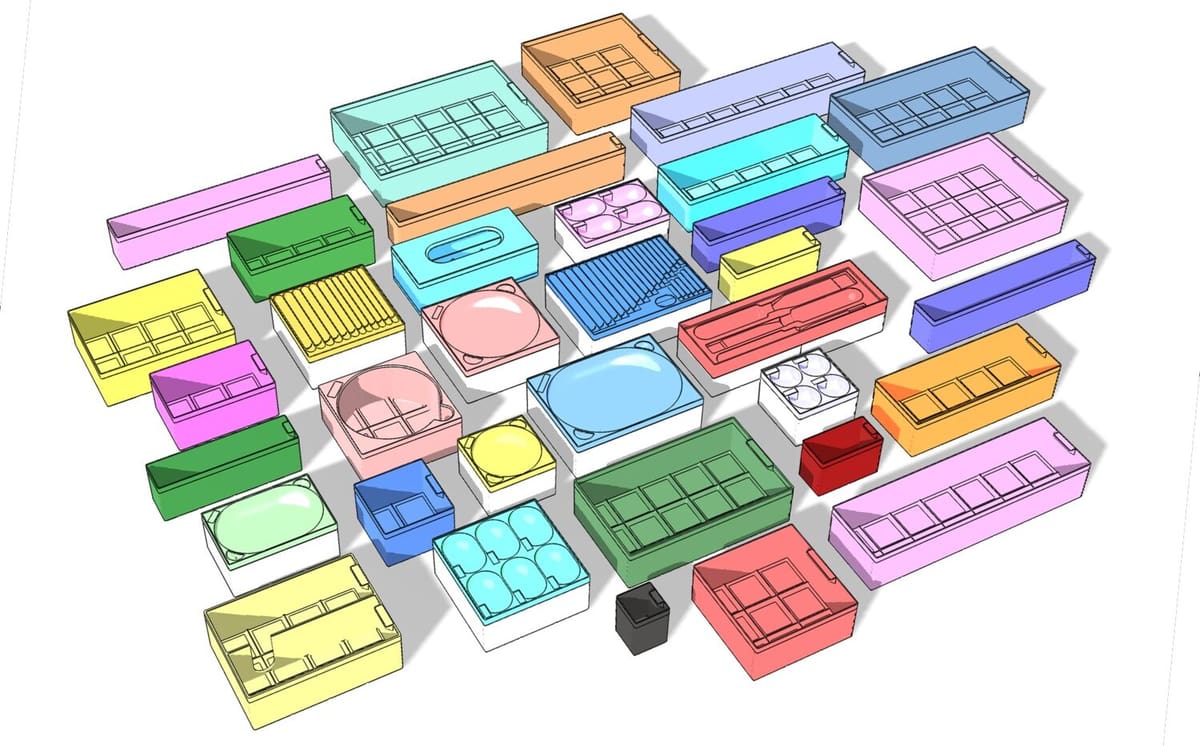
In fact, Gridfinity is based on Alexandre Chappel’s assortment aystem, which is a pay-to-access modular storage system with a closed ecosystem. The system is very well thought out and very flexible, but as it’s not open source, the designs are limited to those that Alexandre Chappel puts out. It does have the advantage of lids functioning as tool trays if your workshop is dusty, for example. Gridfinity tends to also have smaller bins than this system, which was designed for woodworking.
There’s also the Fast Print Modular Storage Drawer System, which could be considered a vertical version of Gridfinity. While it’s not open source, it’s free for personal use. We could easily imagine this supplementing a Gridfinity layout, although there are already drawer modules for Gridfinity…
Another, more vertical option is the HIVE Modular Hex Drawers. These are similar to the fast print drawers except that they’re hexagonal in shape if you’re into that kind of thing. And there’s also a desk honeycomb organizer reminiscent of this design.
While all of these systems will get the job done, they do lack some versatility. This is due to Gridfinity’s community following and open-source nature. And at the end of the day, isn’t it more fun to organize with your fellow makers?
15 Ready-to-Print Gridfinity Essentials
Superlight Base Plat
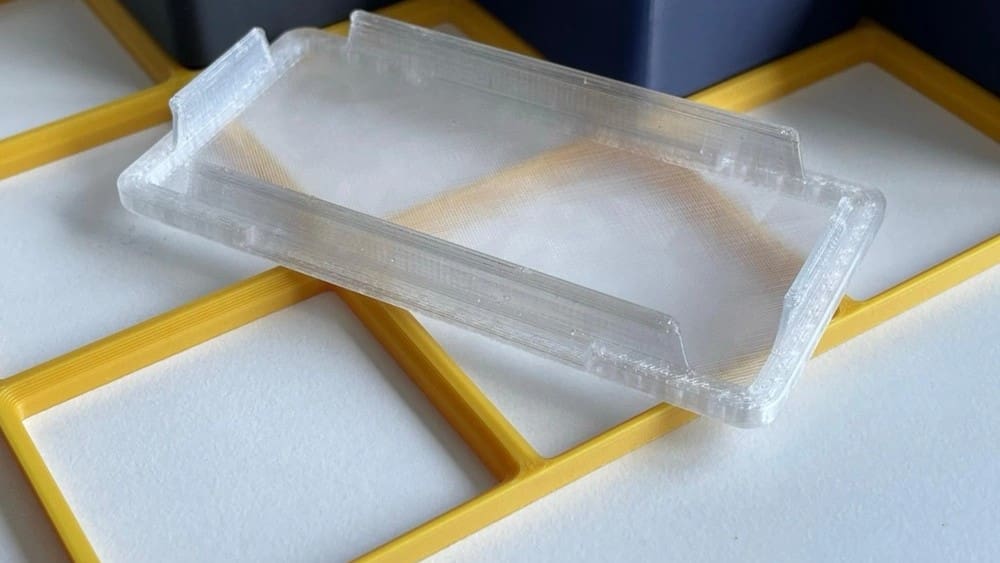
The hidden key to the Gridfinity system is the baseplate. Unfortunately, they can be quite big, using up lots of filament and time to print. If you want to save hours and kilos of materials, you should try this model. As the name suggests, these baseplates are designed to be superlight, reducing print time and needed material. To achieve that, the designer has reduced the height of the base, created smaller radii, and deleted the flares on the bottom.
These plates were designed to be printed with PLA, but you can use whatever material you like. As the creator highlights, make sure to use a brim if you decide to print them with ABS or ASA, since they’re both prone to warping.
You can choose between a large variety of grids, ranging from 1×2 up to 6×6. The bases from 1×2 to 4×4 fit printers with a build plate as small as 180 x 180 mm!
- Who designed it? KYZDesign
- How printable/popular is it? Over 500 users have downloaded this model, and lots of makers have already rated this design with 4.8 stars! Several makes have been shared in the comments, and the designer has also uploaded a remix.
- Where to find it? MakerWorld
Basic Divider Bins
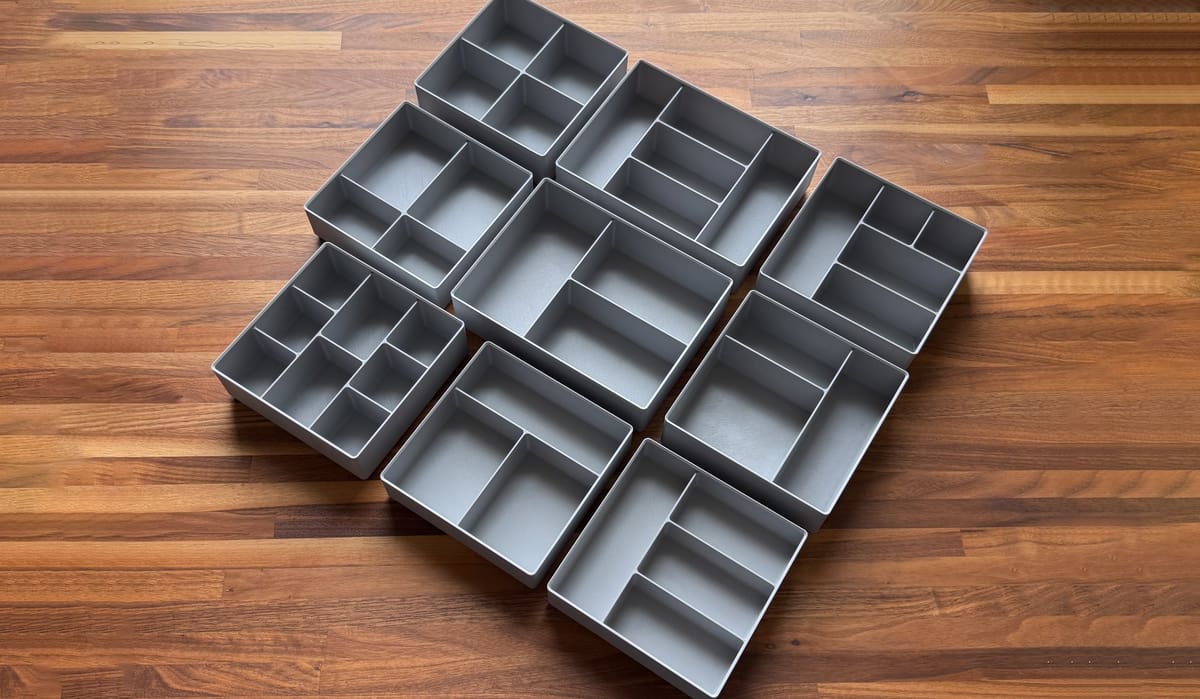
Divider bins are basic Gridfinity storage units that come in various lengths and sizes. A bin can be a single container holding nuts and bolts or a multi-compartment container holding similar items.
You can also label these containers, making it easier to find the item you need. Another great thing about these bins is that they can be stacked on top of one another, allowing you to store items at different levels. If you run out of space on the table, simply start building upwards.
Once you print these bins, you can place them on the baseplate and start using them right away. However, if you’re concerned about accidentally lifting the bin and spilling the contents, use a weighted baseplate that lets you anchor these bins with screws or magnets.
- Who designed it? ZackFreedman
- How printable/popular is it? With over 33,000 downloads, 2,900 likes, and 13 makes on Thangs, this organizer is quite popular.
- Where to find it? Thangs
Bambu Lab Hot End Holder
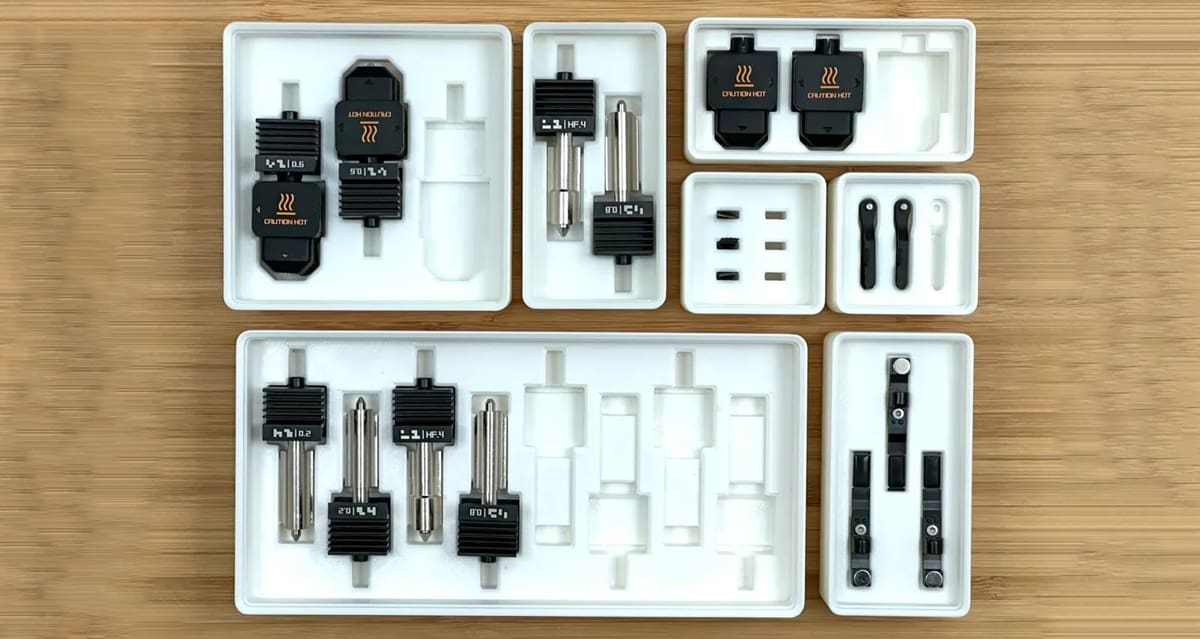
Talking about 3D printer organization, if you often swap or store different hotends and accessories for your Bambu Lab machines, keeping them tidy can be a hassle. Here’s a great solution: this Gridfinity-compatible holder was designed to keep H2D, H2S and P2S hotends along with various accessories neatly in place and easy to grab when you’re working.
This model is easy to print on most FDM printers and doesn’t need any complex supports. It’s made up of a set of integrated pockets sized for different hotend types and their bits, fitting cleanly into your Gridfinity system so each part has its own dedicated spot.
- Who designed it? Maxx Design
- Where to find it? MakerWorld
Labeled Screw & Nail Holder
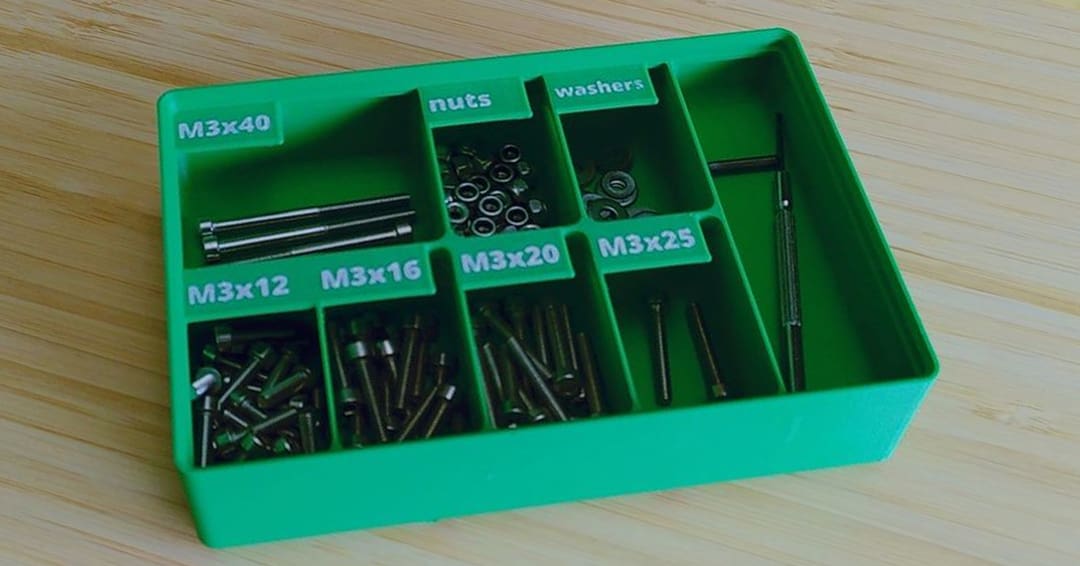
As makers, we have all kinds of parts lying around. When building and creating things is a hobby, you use lots of screws and bolts. Usually, many additional hardware parts end up all together in a big bag. If you’re looking for a better solution, you can’t miss this cool model!
This design consists of an OpenSCAD file that you can customize to fit your needs. The creator, inspired by the Gridfinity arrays out there, created this model to help you design the perfect solution for your space. By using the concept of HTML colspan and rowspan, you can add as many columns and rows as you need. You can add labels where you want or even leave a cell blank.
The possibilities are endless with this type of file! The designer has been so kind to create a GitHub page where they have published the source code and a detailed user guide.
- Who designed it? anne45
- How printable/popular is it? Over 200 people have downloaded this model and 25 have given it a like.
- Where to find it? Thingiverse
Wall Rack
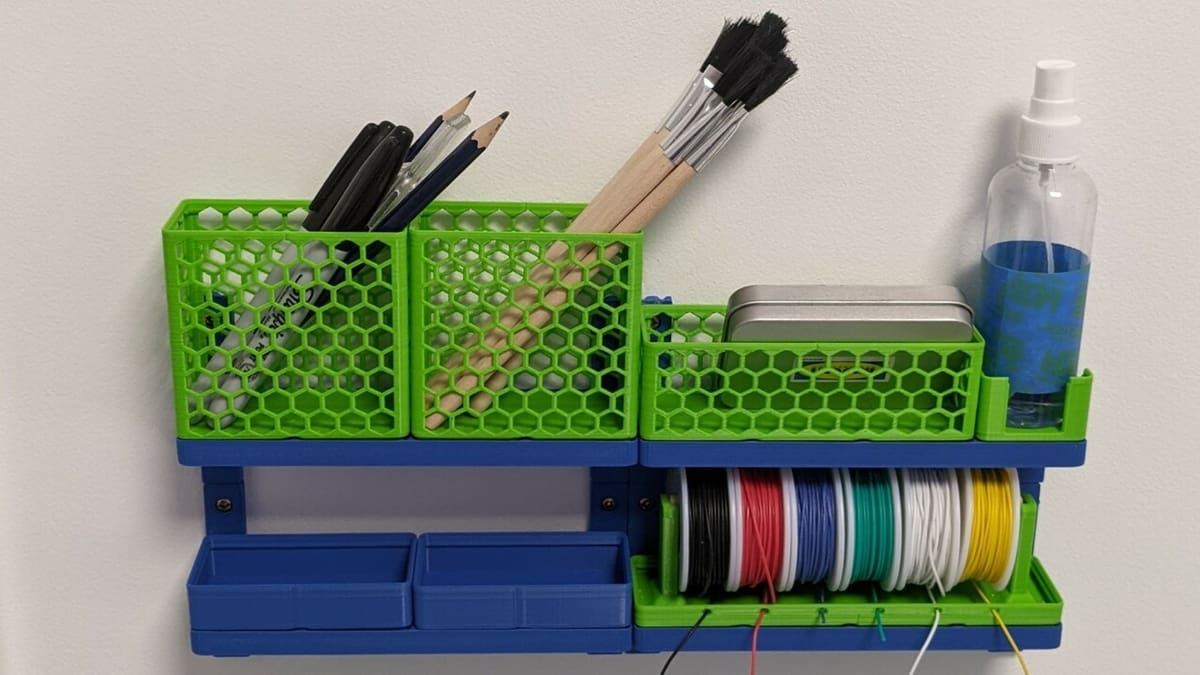
Arrange your Gridfinity storage boxes on this extremely useful wall rack to free up valuable workspace. This wall rack is also simple to install, all you need are a few screws.
You can stack these racks horizontally and vertically. To do so, the designer has included a few tabs on the rack that help align them for a clean arrangement.
This rack pairs well with some unique window divider bins designed by Freedman himself. These bins have an open front that can fit either glass or acrylic, allowing you to see everything inside with a single glance.
- Who designed it? ashleyi100
- How printable/popular is it? At the moment, this organizer has over 3,300 downloads and more than 950 likes.
- Where to find it? Thangs
Quick Vase-Mode Bins
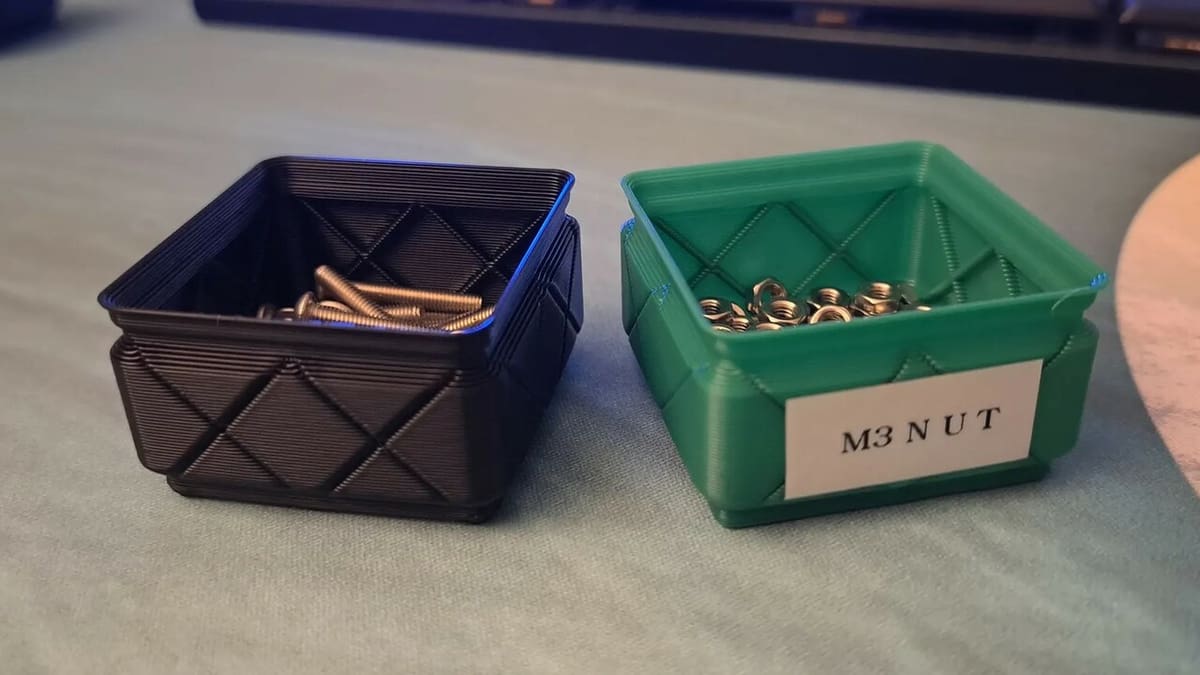
If you want to print plenty of storage bins for your Gridfinity system in less than no time, you can print these vase mode bins. The vase mode model can print within an hour, whereas the standard storage bin would take close to two hours to print (keeping most of the other print settings the same). Apart from printing in less time, vase mode uses less filament as it only has to build a single shell.
However, the disadvantage of having only one wall in vase mode is that it makes the box less sturdy. To compensate, the designer has added slanted ribs to the walls, resulting in a more durable box.
- Who designed it? bradeneliason
- How printable/popular is it? Printables reports that this stand has 121 makes.
- Where to find it? Printables
Spinning Organizer
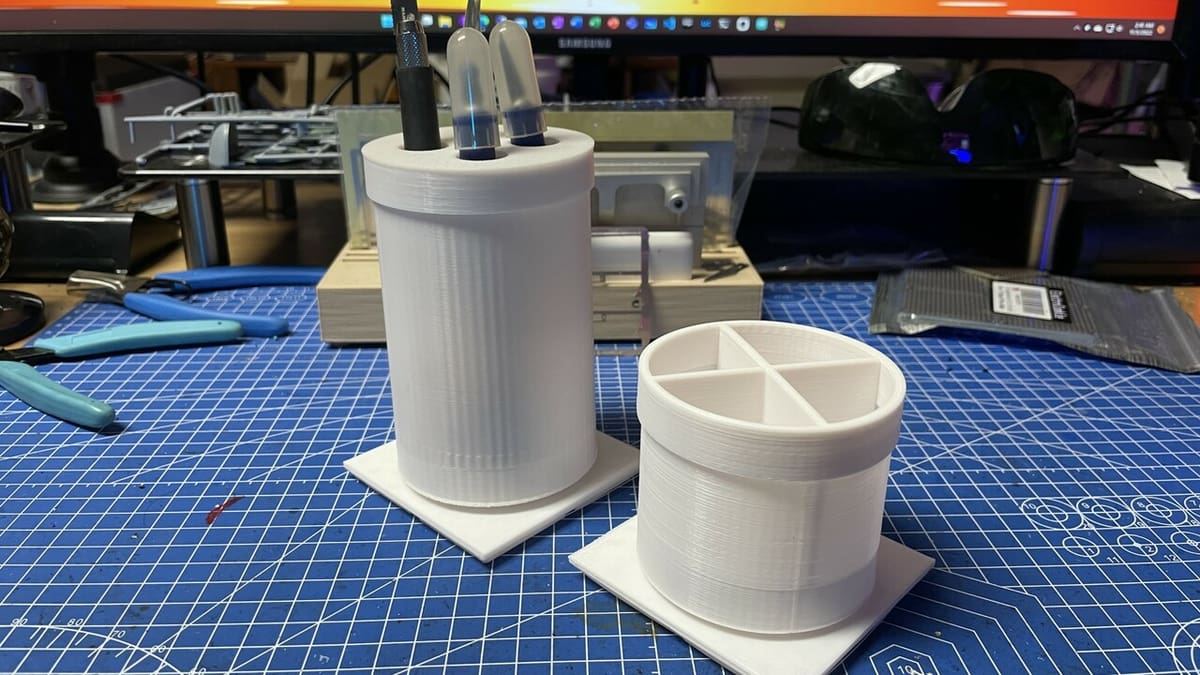
This rotating tool organizer is an essential addition to any workspace. You can quickly find the tool without shuffling through a pile of clutter. Just spin the organizer and grab exactly the tool you need!
The designer has provided a few options for the top, which lets you store different tools such as screwdrivers, tweezers, and cutters. One thing to note is that you’ll need a 608 bearing to make the organizer spin.
Desk Organizer
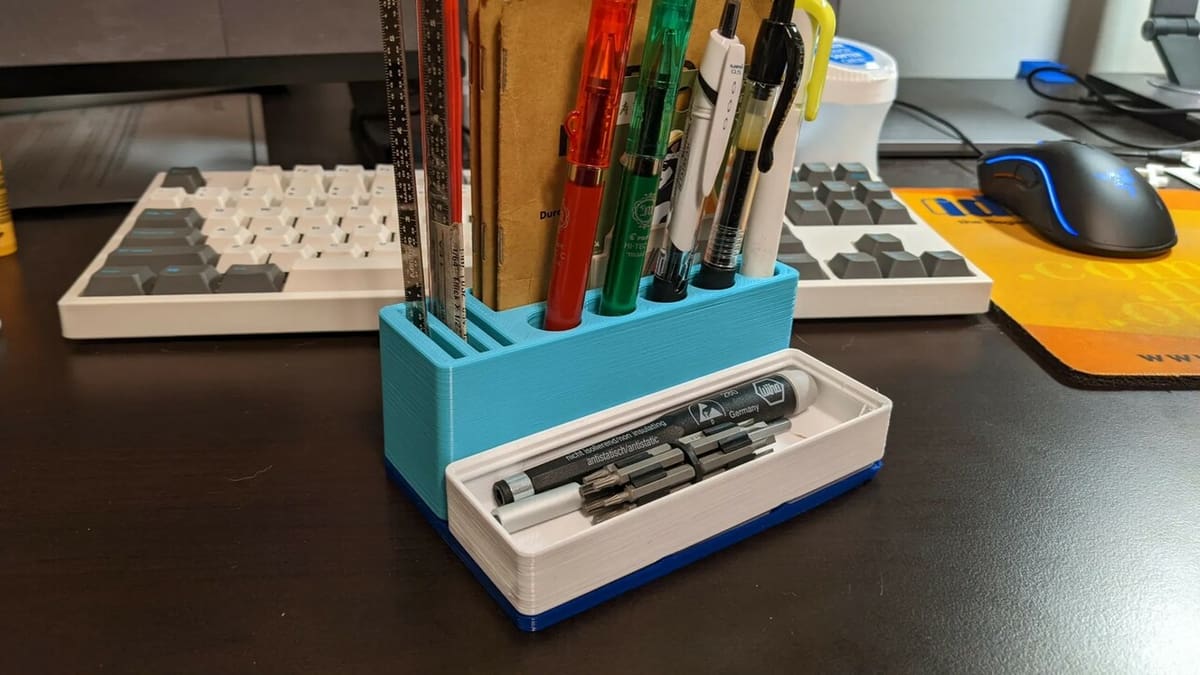
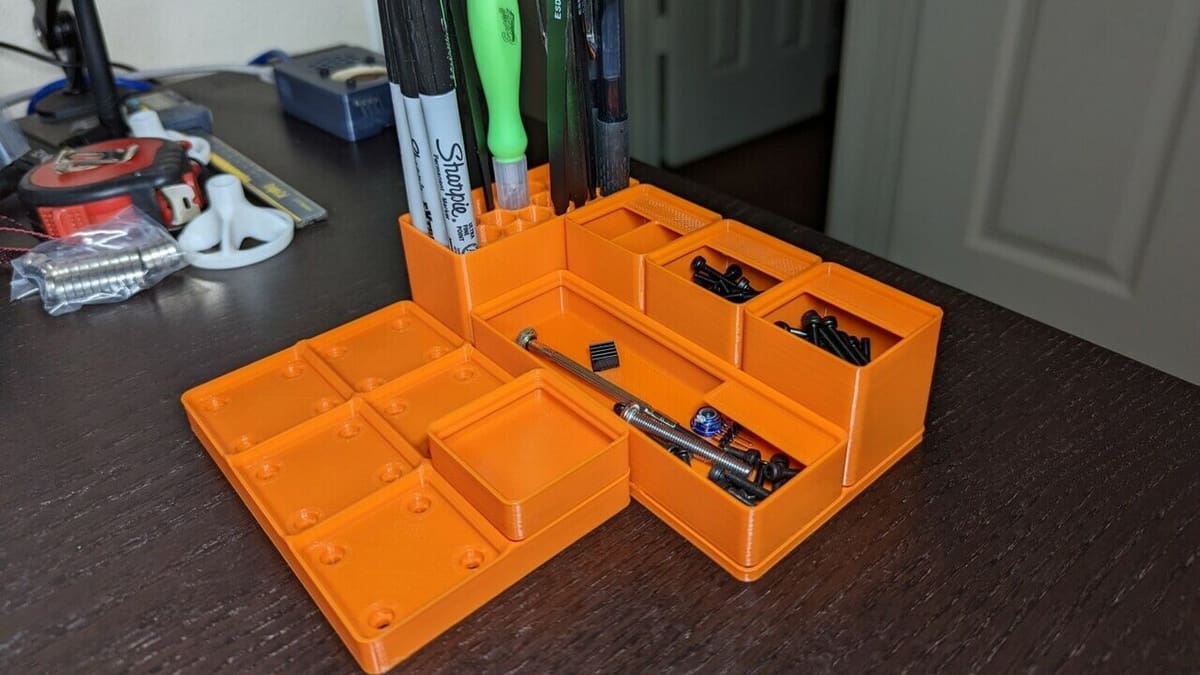
Gridfinity’s stationary holder is an excellent organizational tool for anyone who wants to keep their desk or workspace tidy and efficient. The creator of this holder has designed it specifically to hold pens, rulers, and a few pocket-sized notebooks, making it ideal for students, professionals, or anyone who needs to keep their writing materials within reach.
A maker on Printables repurposed this holder to store their essential beading tools. This demonstrates how simple it is to use Gridfinity’s storage units for any desired purpose.
- Who designed it? Tecknishen
- How printable/popular is it? This design has been downloaded over 670 times and has 14 posted makes.
- Where to find it? Printables
Soldering Spool Holder
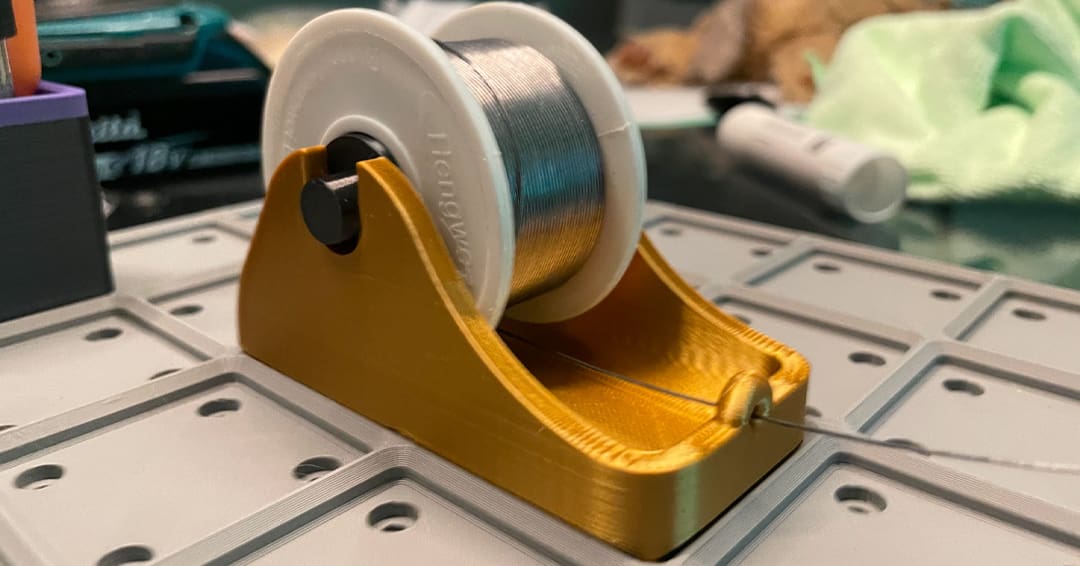
Talking about electronics, one of the most popular and useful tools in a maker’s workshop is without a doubt the soldering iron. You need solder to use it, but how inconvenient is it when you have to manually fiddle with the spool as you work? Here is the perfect model for you: This Gridfinity-compatible model will ensure a neat feed of solder as you work and fit right back into its spot when you finish.
This model is really easy to print, and it doesn’t need any supports. It’s made up of three simple pieces: the base and the two rollers (one for each side) where the solder spool will rotate. It takes up only two spaces of your Gridifnity base and can be easily moved around to have it near you when needed.
- Who designed it? col4444
- How printable/popular is it? This model has been quite appreciated by the makers who have printed it because it has a 4.3-star rating!
- Where to find it? MakerWorld
Bit Holder
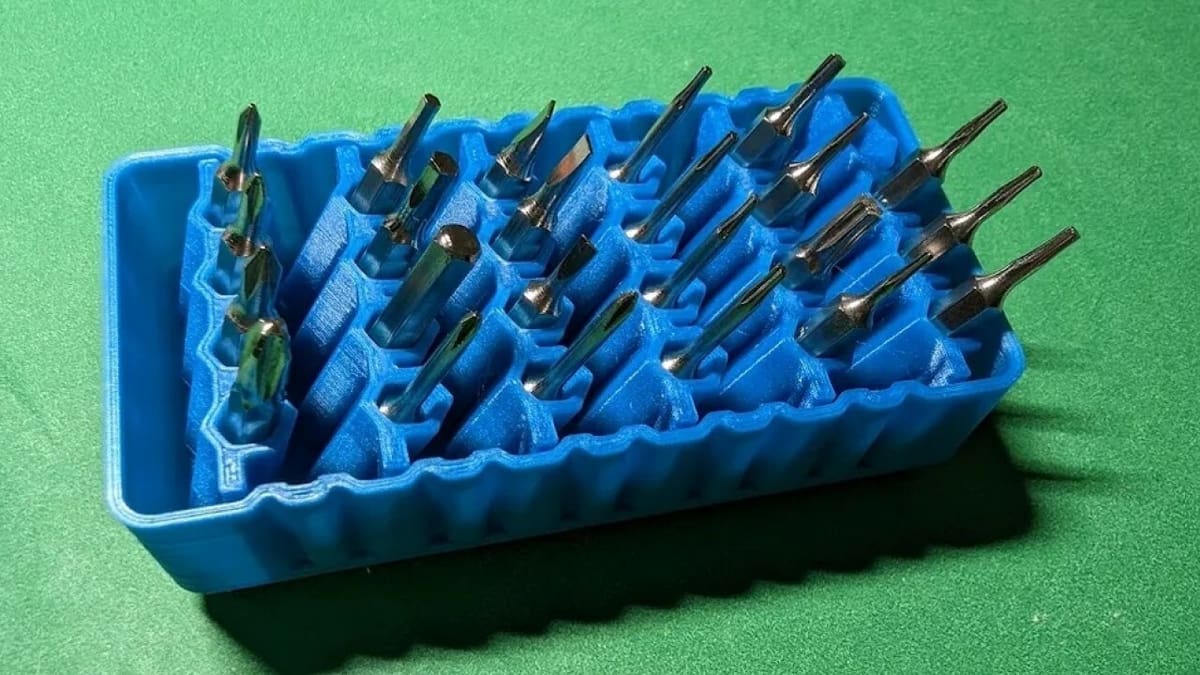
Finding the bit that you need in a given moment of repair can be difficult, as you’ll have to scan through all of them to find the right one. However, with this modular hex bit storage, you can arrange and sort your bits per your preference.
This storage box can hold up to 20 bits, and the best part is that the holders can be removed and rearranged. You’ll find hexagonal and circular slots in different sizes for storing the bits and other tools. With this print, prep the box to streamline your tasks and make it easy to quickly grab any hex bit you may need.
The designer has also provided some partitions that you can slap some labels on to indicate which bits are stored in which box.
- Who designed it? Martin_au
- How printable/popular is it? On Printables, this storage system has more than 660 downloads and a total of 19 makes.
- Where to find it? Printables
Battery Holder
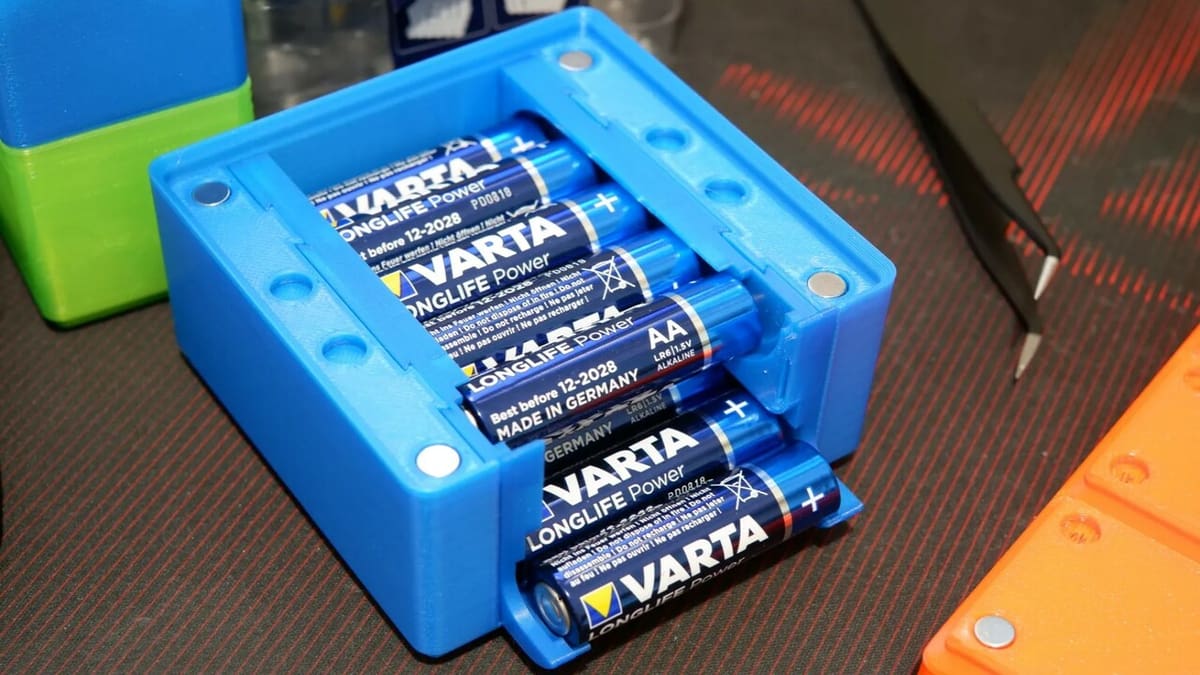
This is a simple battery dispenser that can store both AA and AAA batteries. According to the maker’s design, the dispenser can hold up to 10 AA and 13 AAA batteries, so you know you’ll be good for a while if you fill up.
If you use both types of batteries (AA and AAA), you can label the dispensers to help identify them quickly. In addition, the maker has designed slots for you to add magnets to the top and bottom of the box so that you can stack them securely. If you’re crazy about batteries, you can even build a tower out of these!
- Who designed it? FruitieX
- How printable/popular is it? More than 2,900 users have downloaded this file so far, and 44 have shared their successful prints.
- Where to find it? Printables
SD Card Organizer
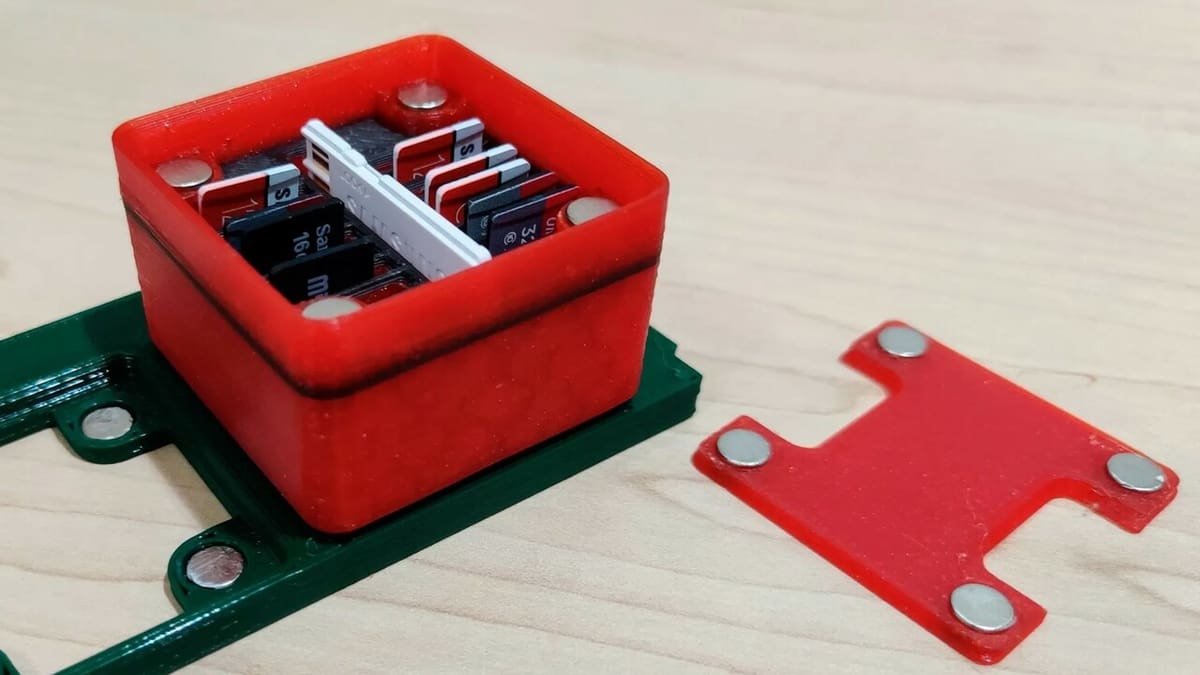
If you use multiple SD cards for all your devices, this Gridfinity storage unit is perfect. This box can hold a total of 14 MicroSD cards as well as a regular SD card (or a MicroSD card adapter).
This storage box sits on any baseplate but works exceptionally well with weighted magnetic ones. While placing individual magnets on all of the baseplate and box slots can be a bit tedious, this maker has also created a magnet jig to speed up the process. The tool helps to align and glue the magnets.
Additionally, all of these cards are kept secure by using a magnetic lid. So, you can grab the box and throw it in your bag without worrying about them flying all over the place.
- Who designed it? JavBR
- How printable/popular is it? It’s a verified easy print that has over 285 downloads and 3 successful makes.
- Where to find it? Printables
All-Purpose Hand Tool Holder
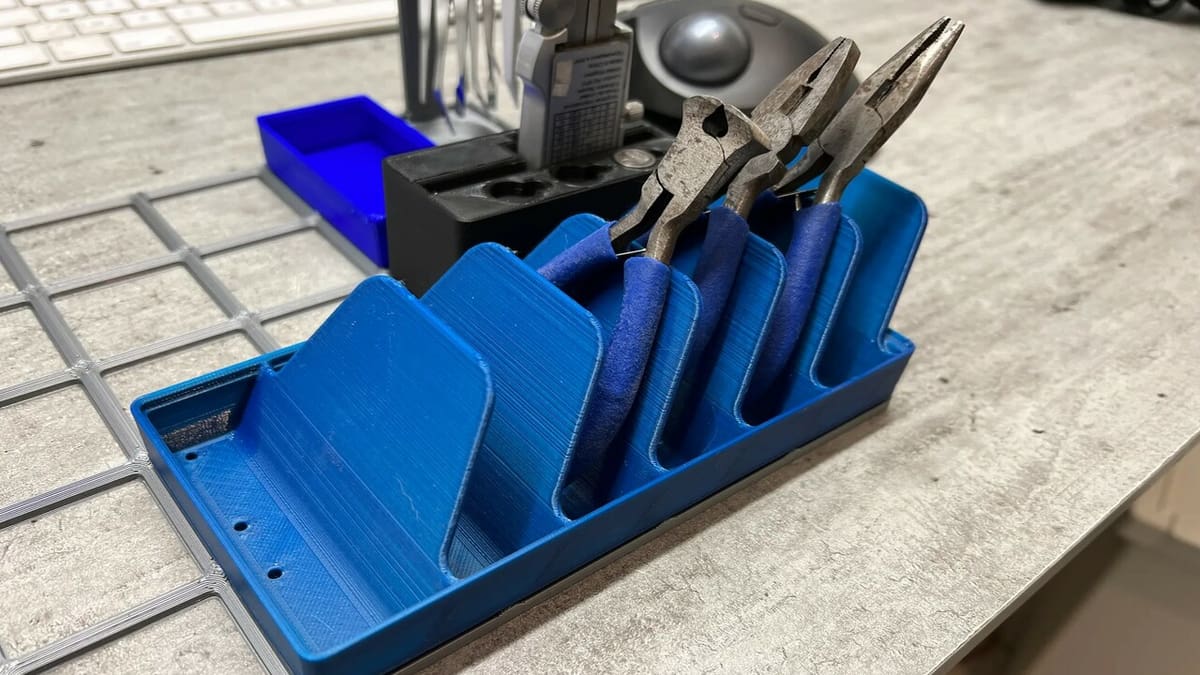
This Gridfinity storage rack can hold a variety of hand tools. Even though the designer has specified the two parametric files are for a nipper holder and a stripper holder, you’ll have no trouble storing various pliers, scissors, and cutters.
The rack arranges all of the tools in such a way that the tips are visible, making it easy to identify and grab what you need. The designer strongly advises using a brim when printing this tool rack to improve adhesion and avoid warping.
Aside from that, you can successfully print your rack using this maker’s print settings, inlcuding a 0.2-mm layer height and 20% infill.
- Who designed it? CmdrMoto (remixed from Zack Freedman’s model)
- How printable/popular is it? Currently, this tool rack has over 1,240 downloads and 45 makes.
- Where to find it? Printables
Würth Wrench Holder
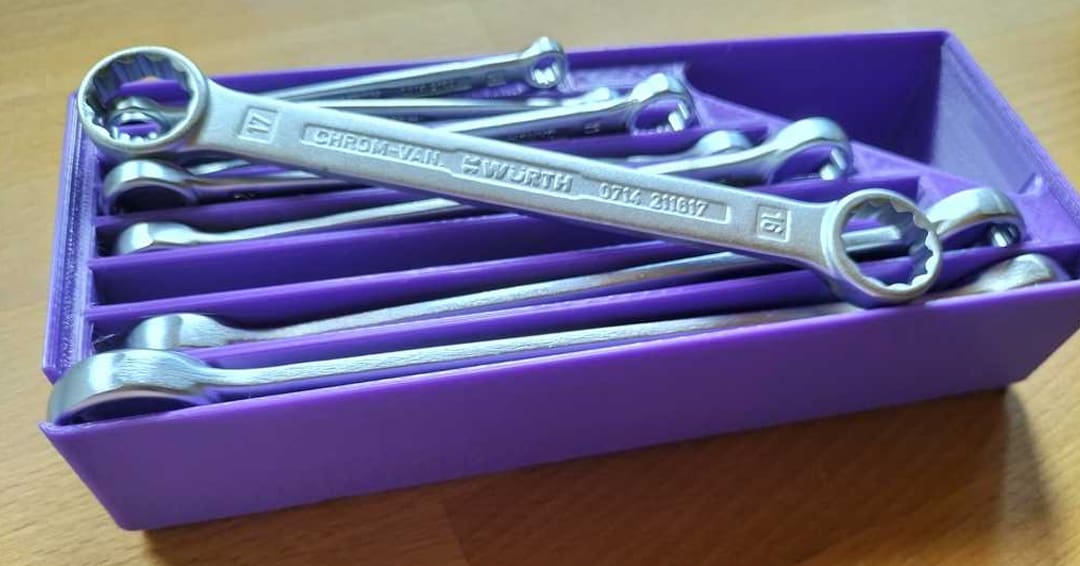
If you own a 3D printer, you use wrenches quite often. From assembling things to changing nozzles, these tools are essential a workshop. More often than not, you’ll actually find way more wrenches than you need when you go to look for one because there are so many dimensions out there. Here comes this Gridfinity accessory that can once again make organizing your tools a breeze.
Designed for Würth wrenches, the dimensions should be quite standard. The wrenches are tilted up so they’re easily accessible when you need them, but this also means that you can’t stack other bins on top. Note that this model has a Gridfinity size of 2x5x6, which is quite large, but it can accommodate eight wrenches. So, it’s quite worth it.
- Who designed it? Frinon
- How printable/popular is it? Over 315 people have downloaded this model, and almost 70 makers have given it a like.
- Where to find it? Thingiverse
Digital Caliper Holder
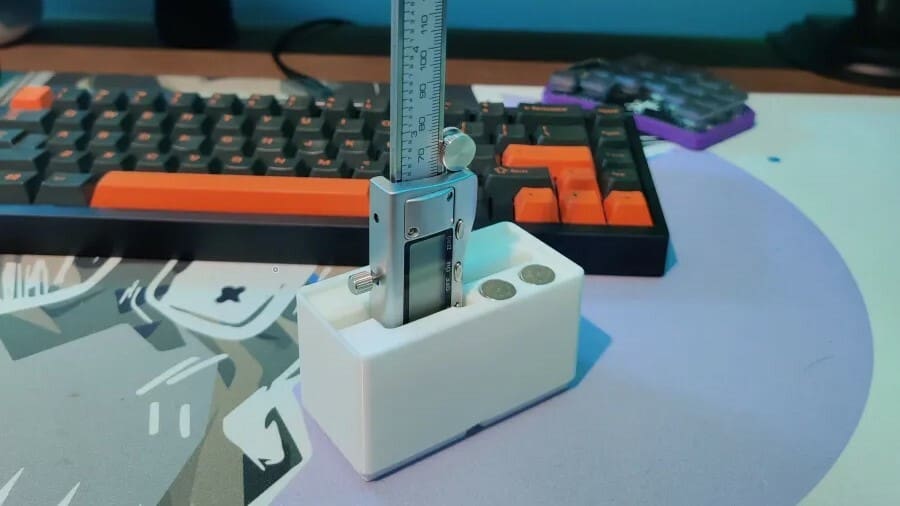
Storing your digital calipers horizontally can take up a lot of space at your workstation. To use your space more efficiently and make it easier to access them, you should consider using this caliper holder. It keeps your tool vertical and features additional slots for two button cells.
This design is a remix of the original made by ZackFreedman; the designer has modified it to store a Mitutoyo caliper, but it should work for generic calipers too. If you find the storage slot to be a little tight, you can use a heat gun to slightly expand the opening for that perfect fit.
- Who designed it? Bear
- How printable/popular is it? There are 34 shared makes of this holder, and the design has been downloaded over 780 times.
- Where to find it? Printables
License: The text of "3D Print Your Way Out of Chaos With Gridfinity Modular Storage Systems: All You Need to Know" by All3DP is licensed under a Creative Commons Attribution 4.0 International License.