Something’s Brewing: eSun’s New PLA Smells Just Like your Morning Coffee

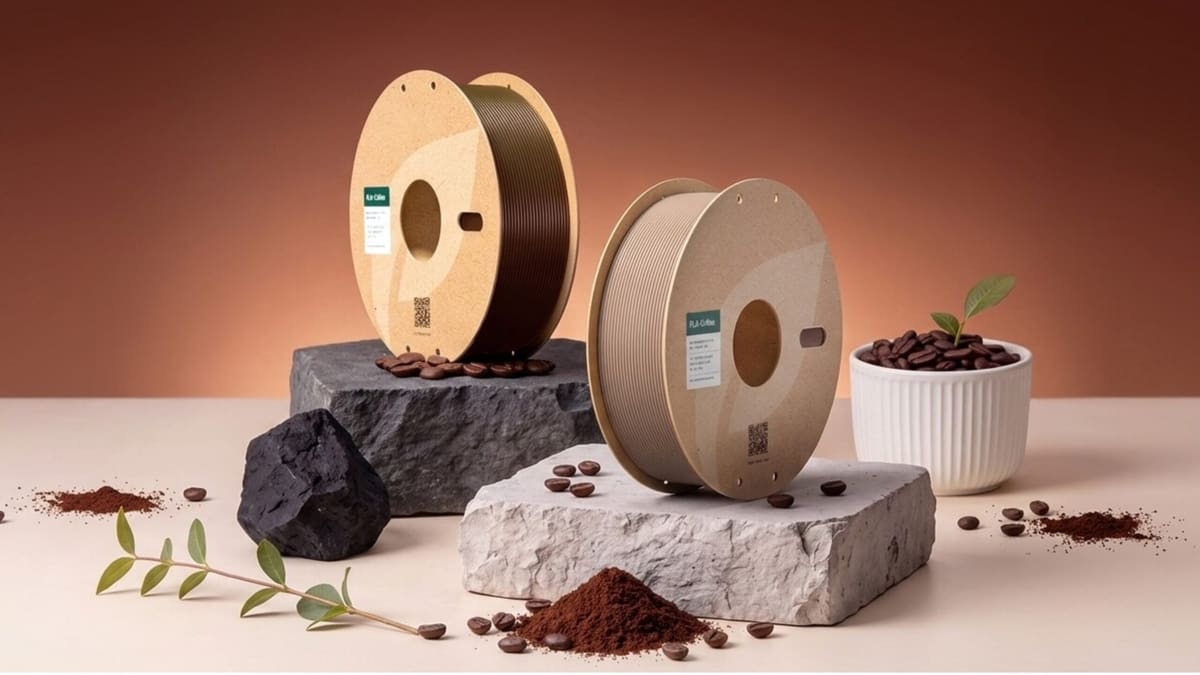
eSun's new PLA-Coffee turns used coffee grounds into a filament that smells like freshly brewed coffee when you print.
Somethings been brewing, and its not what you think it is. eSun has released their PLA-Coffee at $22.99/kg, a filament that not only smells like your morning brew, but is actually made from used coffee grounds.
To develop it, eSUN teamed up with Yum China, the country’s largest restaurant company, which also operates KFC and Pizza Hut across the country. Is a fried chicken-scented filament on the cards next? One can only hope. But I digress. Yum China sourced used coffee grounds from select stores to feed into the material, with eSUN saying the approach builds on lessons learned developing other materials, like its existing wood-fill PLA.
eSUN hasn’t disclosed its exact production process, but it’s likely similar to any filled filament: take a natural material, grind it fine enough that it can blend into plastic without wrecking the print.
Coffee Grounds Don’t play nice with plastic
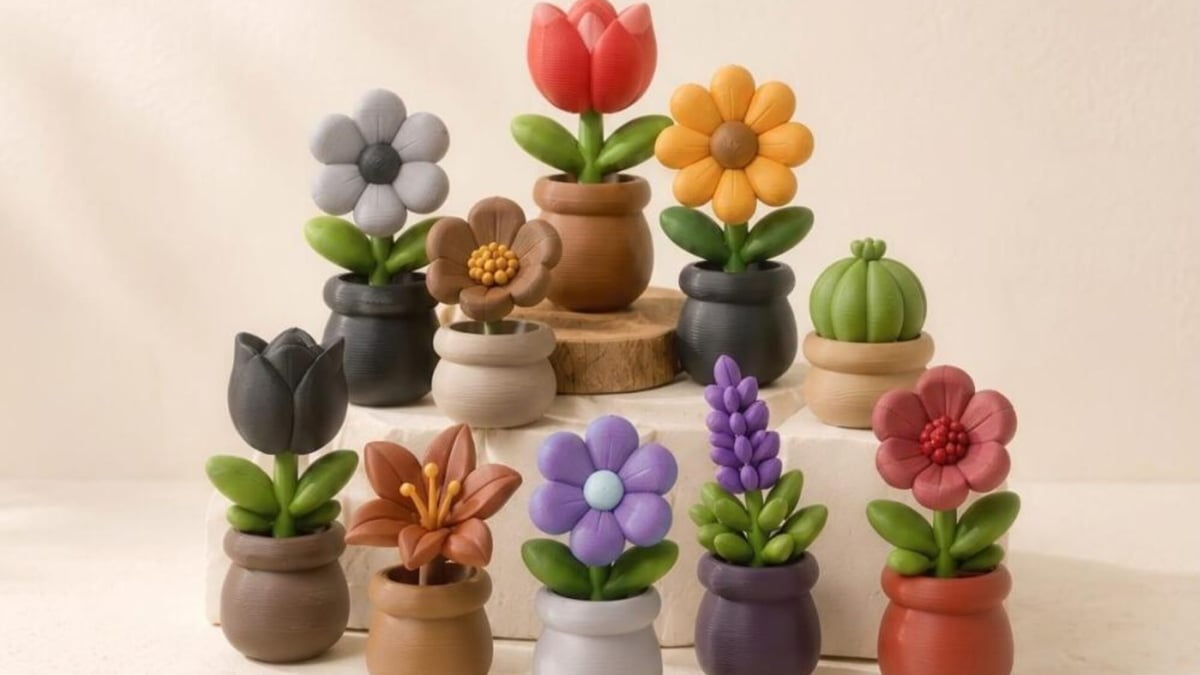
That’s easier said than done, though. eSun states that upclcying coffee grounds comes with some complications: high moisture content, oil and fat, and an organic structure that doesn’t naturally bond to plastic. Mix it in carelessly and you get weak spots, or grit that just crumbles straight out of the finished filament.
eSUN claims to have solved this, saying it achieved “uniform dispersion and tight integration” of the coffee micro-particles in the polymer, retaining the color and texture of natural coffee while still meeting its standards for mechanical properties.
We’re still waiting on an official technical data sheet, but eSUN says the filament holds onto roughly the same tensile strength as standard PLA, so theres no real trade-off for turning your printer into an espresso machine. Beyond the novelty, the company points to a genuine side benefit: the coffee micro-particles scatter light unevenly across the surface, which naturally hides layer lines without any extra sanding or post-processing.
The filament ships in 12 colors, including three coffee-specific shades: Light Coffee, Coffee, and Dark Coffee. Since the color comes partly from real coffee waste rather than a consistent synthetic dye, don’t expect perfect spool-to-spool matching, slight variation from batch to batch is normal.
Print settings are nearly identical to eSUN’s PLA-Basic, with the same 210–230°C nozzle range and a similar 55–65°C bed temperature. The main differences: PLA-Coffee tops out at a lower max print speed, so you’ll need to slow down a bit, and it gives up some tensile strength in exchange for a more sustainable material. The table below breaks down how the two compare.
Both filaments are 1.75mm, 100% fan speed. Sources: eSUN PLA-Coffee product page, eSUN PLA-Basic product page, eSUN PLA-Basic technical data sheet (Jun 2025 rev.)
eSUN is pitching this at makers who want the sensory experience, the smell of fresh coffee filling the room, just as much as the sustainability angle. It’s a pitch we’ve heard before: Kexcelled announced its own coffee (and tea, and bamboo) PLA line late last year, and Cookiecad’s pumpkin spice filament proved there’s a real appetite for 3D printing that smells like something other than hot plastic. eSUN’s version just happens to come with an actual waste-reduction story attached, not just a seasonal scent.
Availability
eSun’s online shop currently lists the filament as sold out while other parts of the site state the online store is currently in beta testing. We’ll update this piece once it becomes available again on the store, or if we get our hands on a spool to sniff-test ourselves.
You May Also Like:


License: The text of "Something’s Brewing: eSun’s New PLA Smells Just Like your Morning Coffee" by All3DP is licensed under a Creative Commons Attribution 4.0 International License.