
Is PLA Biodegradable? Regulatory Changes Could Force Companies to Prove It

New U.S. and EU rules are closing in on vague biodegradability claims, and could change how PLA filament and the resulting products are marketed to consumers.
Polylactic acid (PLA) is the most widely used 3D printing filament. It’s easy to print, made largely from plant-derived materials, and routinely marketed as biodegradable. Yet a PLA print left in a backyard compost heap may remain intact for decades or longer. So is it biodegradable?
That gap between the label claims and real-world disposal is coming under scrutiny. The EU’s new Empowering Consumers for the Green Transition (ECGT) directive takes effect in September 2026 and in the U.S. the Federal Trade Commission is currently reviewing its Green Guides. Both put greater pressure on brands to explain where, how, and how quickly a product will break down.
With these changes in mind, we revisited the question of PLA’s biodegradability.
Below we explore what makes PLA a “bioplastic”, the difference between biodegradable and compostable, and advances in materials that may bring us closer to a truly biodegradable PLA 3D printing filament.
What is a Bioplastic
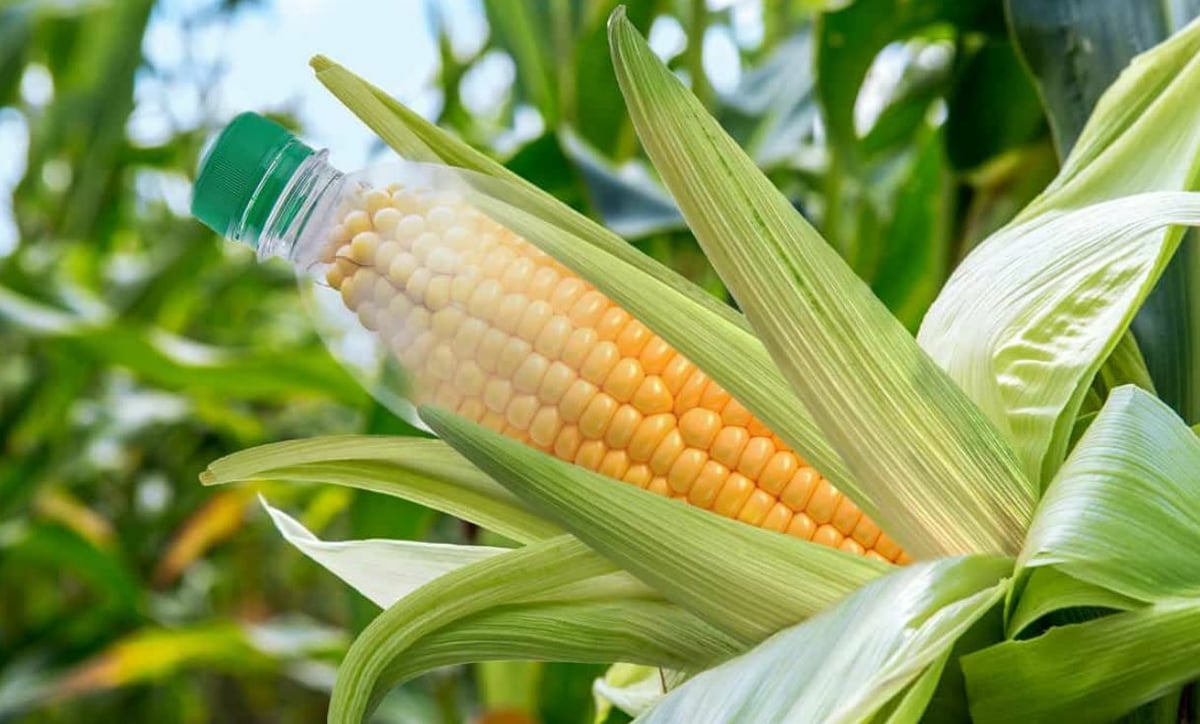
Much of the confusion around PLA’s biodegradability stems from its classification as a bioplastic (and also general confusion between biodegradable and compostable, but more on that later).
Broadly speaking, a bioplastic is any plastic made wholly or partly from renewable biological sources, such as corn starch or sugarcane, including like thermoplastic starch (TPS), polyhydroxyalkanoate (PHA), and polylactic acid (PLA). Most plastics are made from fossil resources, such as petroleum.
In other words, “bio-based” describes where a plastic comes from; “biodegradable” describes what can happen to it at the end of its life. One does not automatically guarantee the other.
PLA is built from lactic acid, an organic acid also found naturally in fermented foods like yogurt and sourdough. Manufacturers typically source it from corn or other glucose-rich crops, extracting the starch and breaking it down into sugar before fermenting it into lactic acid. That lactic acid is then chemically linked through polymerization into the polymer we know as PLA.
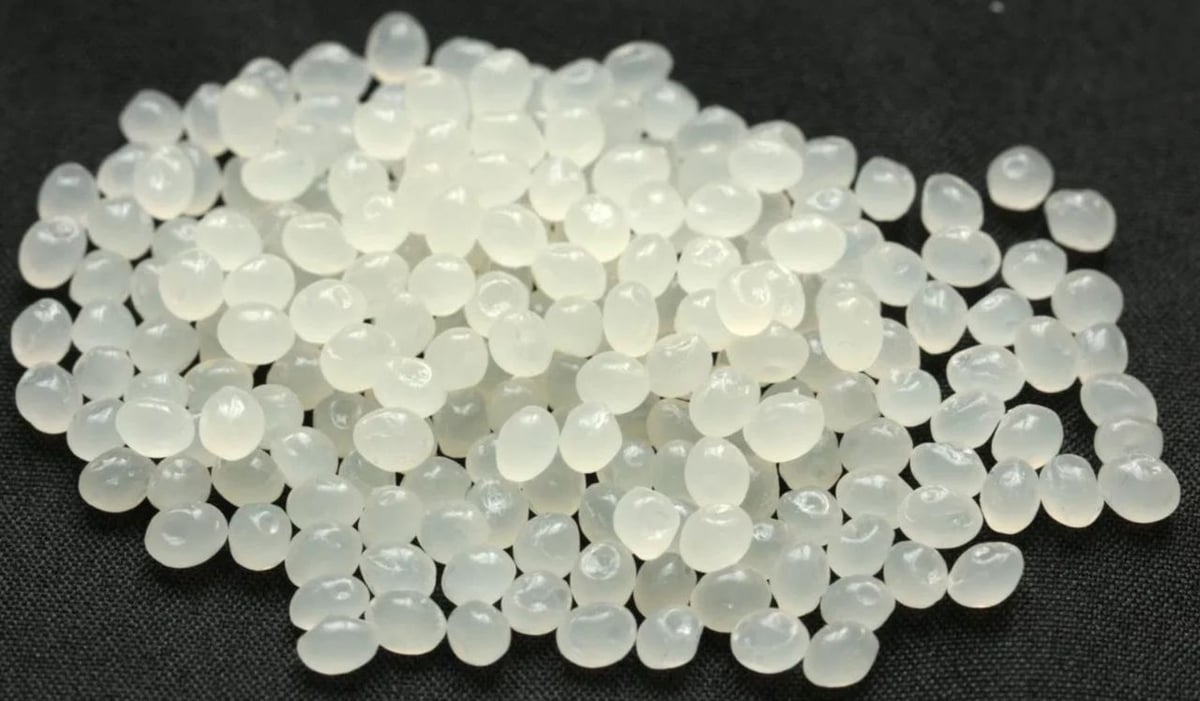
Once that polymerization is complete, the PLA is cooled and cut into small pellets, which can then be melted down and reformed into whatever the final product calls for, whether that’s 3D printing filament, a disposable cup, or packaging.
When it comes to 3D printing filaments, many of them contain additives for color, strength, or printability. Additives dilute the “purity” of the PLA, but in return, they make the material more practical for 3D printing or other purposes.
When PLA is Biodegradable & When It Isn't
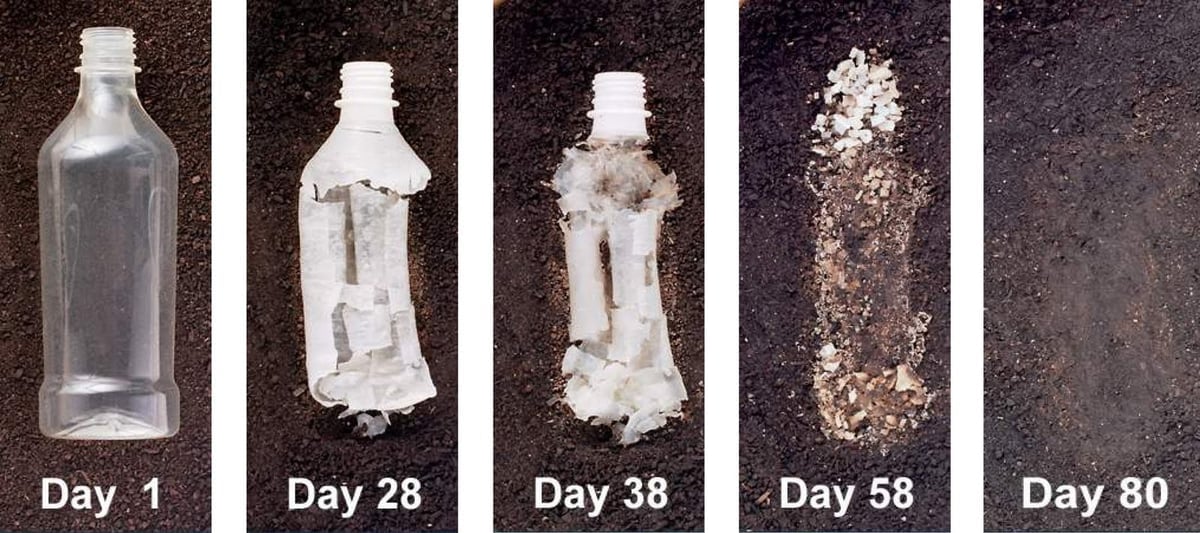
Biodegradable means the material can be broken down by microorganisms into water, CO2, and biomass, with no toxic residue left behind, within a reasonably short timeframe.
That last point about time is important. PLA technically meets the definition biodegradable because it does break down quickly, but only when processed at an industrial facility, where three conditions line up at once:
- a dense and active microbial population not normally present in ordinary soil,
- heat close to PLA’s glass transition point of around 60°C to soften the material enough for microbes to get at it
- enough humidity to drive hydrolysis, the chemical reaction that kicks the breakdown off.
The PLA is also often chopped, shredded, or ground, to facilitate the process.
Without industrial processing conditions, PLA will take decades if not longer to break down, which makes it not technically biodegradable these circumstances. And here is where the new regulations may play a role in filament and product claims.
For example, if a company selling 3D printed lamps made from PLA currently markets them as biodegradable, they will need to clarify that the end user must dispose of the lamp at the end of its life at an industrial facility, not burry it in their backyard compost pile.

This is an important distinction that is often misunderstood. It’s easy for consumer to read “biodegradable” or “plant-based” on a label and assume it means “compostable at home” or it will degrade in a standard landfill.
To further complicate matters, PLA filaments tend to include additives that have a higher crystallinity than plain PLA, meaning they break down even slower. So a “biodegradable” claim on a spool doesn’t just depend on the base polymer, it depends on what’s been mixed into it.
PLA is therefore biodegradable in a technical sense, but the label has limited practical value unless the required disposal conditions are clearly disclosed.
This is the unfortunate reality of PLA when it comes biodegradability. But that doesn’t mean PLA isn’t a sustainable filament choice.
By using a plant-based plastic, you’re contributing to the reduction of carbon emissions associated with plastic production and minimizing the long-term environmental impact, such as pollution and toxic microplastics.
Any claims of it being a more environmentally friendly plastic rest only on it being sourced from renewable materials rather than fossil fuels, not on how it breaks down in nature. PLA waste is likely to coexist alongside PET waste for years to come.
What is Changing
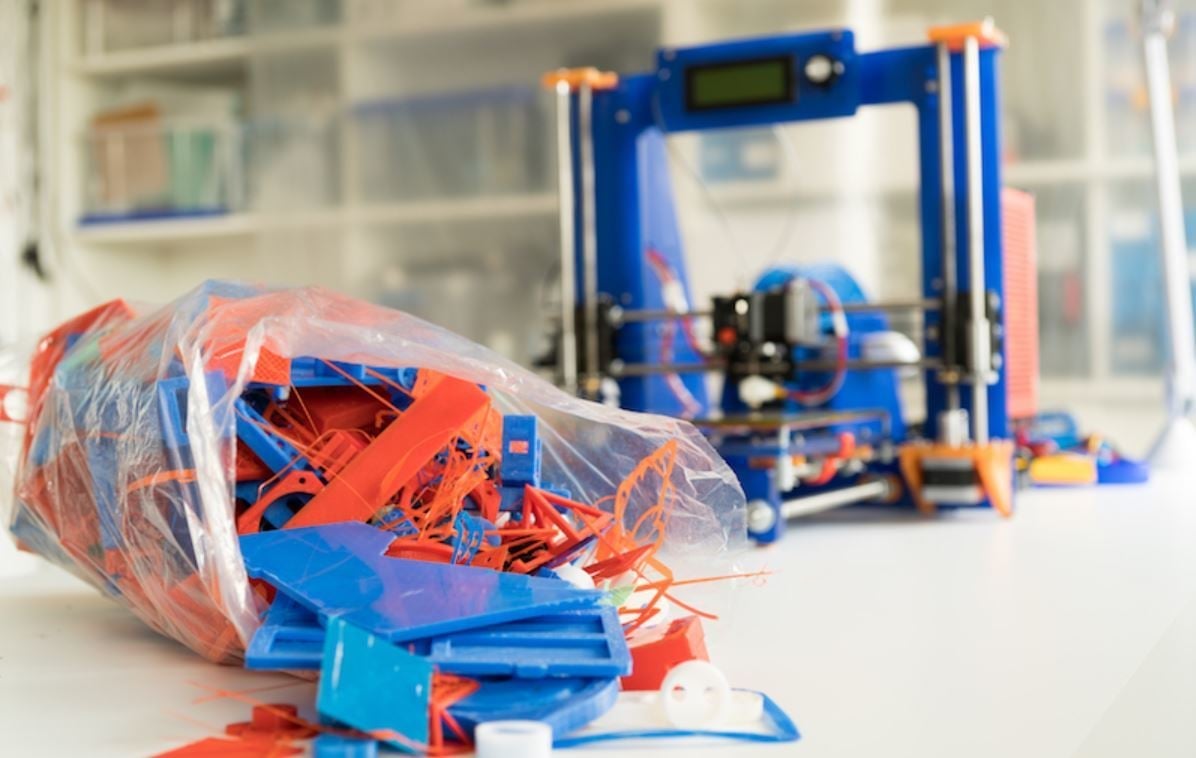
Fortunately, PLA’s biodegradability issue isn’t being ignored. From stricter regulation to promising research and product development, there’s reason to be optimistic.
As mentioned earlier, two regulatory frameworks are emerging that could address how biodegradability claims are marketed.
The distinction may soon become harder for manufacturers to bury in technical documentation. Both U.S. guidance and new EU rules place greater emphasis on qualifying environmental claims prominently.
Bambu Lab’s PLA Basic currently lists “biodegradable” as one of its features on its website, but only mentions that it “can biodegrade in some artificial composting conditions” in the product’s technical data sheet. The upcoming change in legislation will mean that a biodegradable claim like this cannot be listed as a product features without stipulating upfront that this is only possible under industrial composting conditions.
These frameworks weren’t created to target PLA specifically, but they will go a long way in clarifying the situation for consumers.
Promising Research & Breakthrough Materials
In 2025, researchers identified an enzyme called Savinase capable of breaking PLA down into lactic acid in a matter of hours at room temperature, rather than the years or decades typical of a landfill. Other research has gone further, embedding enzymes directly into PLA during manufacturing, so the material effectively carries its own trigger for breakdown once it hits composting conditions.
This work Savinase is still ongoing and none of it is in filament you can buy yet, but it marks a real shift in approach. Instead of just accepting that PLA only degrades under narrow industrial conditions, researchers are now engineering ways to bring those conditions to the material itself.
A handful of filaments do already claim full biodegradability.
Earlier this year, Dutch materials company Hembased launched a PLA filament made from fallen palm leaves that it states is backyard compostable. That said, it’s yet to publish independent, scientific studies to back this up, with its home composting certification currently listed as “pending”.
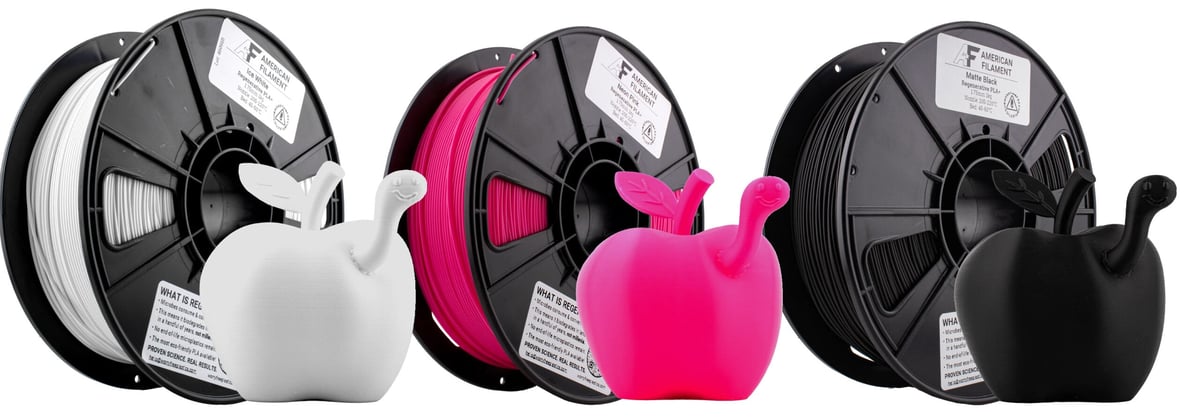
Regenerative PLA+, another recent entrant from South Carolina start-up Worry Free Plastics, says its filament fully biodegrades in an ordinary landfill within five years and leaves no microplastics behind. So far, though, only partial lab documents have surfaced, but it looks promising.
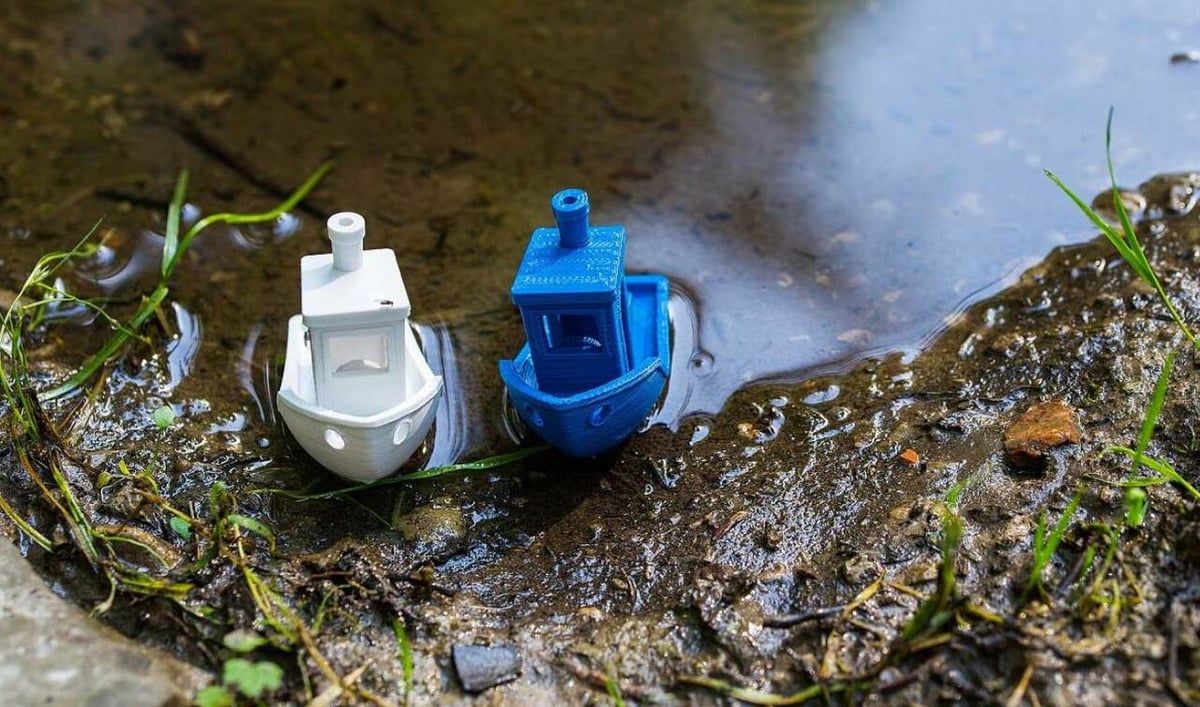
If you want a filament that’s been proven to be home compostable, PHA is another kind of bioplastic which is certified to break down safely in natural marine waters and low-temperature home garden compost heaps without leaving toxic plastic bits behind. That being said, PHA filaments are few and far between, so sourcing it can prove to be a challenge and they tend to be pricier than PLA filaments.
ColorFabb’s allPHA is one PHA filament that can break down in a home bin with no industrial heat required. The tradeoff is usually printability and cost, but if backyard compostability is the goal, PHA is currently the material best equipped to deliver it.

Recycle Your PLA? Not Really
If PLA isn’t biodegradable in a practical sense, surely I can recycle it, end-users often think. Unfortunately, no.
PLA 3D printing scrap should not be put into ordinary mixed-plastic curbside recycling unless your local waste authority specifically says it accepts PLA, and most don’t.
The problem is that PLA has different melting and processing characteristics from common recycling plastics such as PET, HDPE, and PP from bottles and packaging. If it enters those recycling streams, it can act as a contaminant.
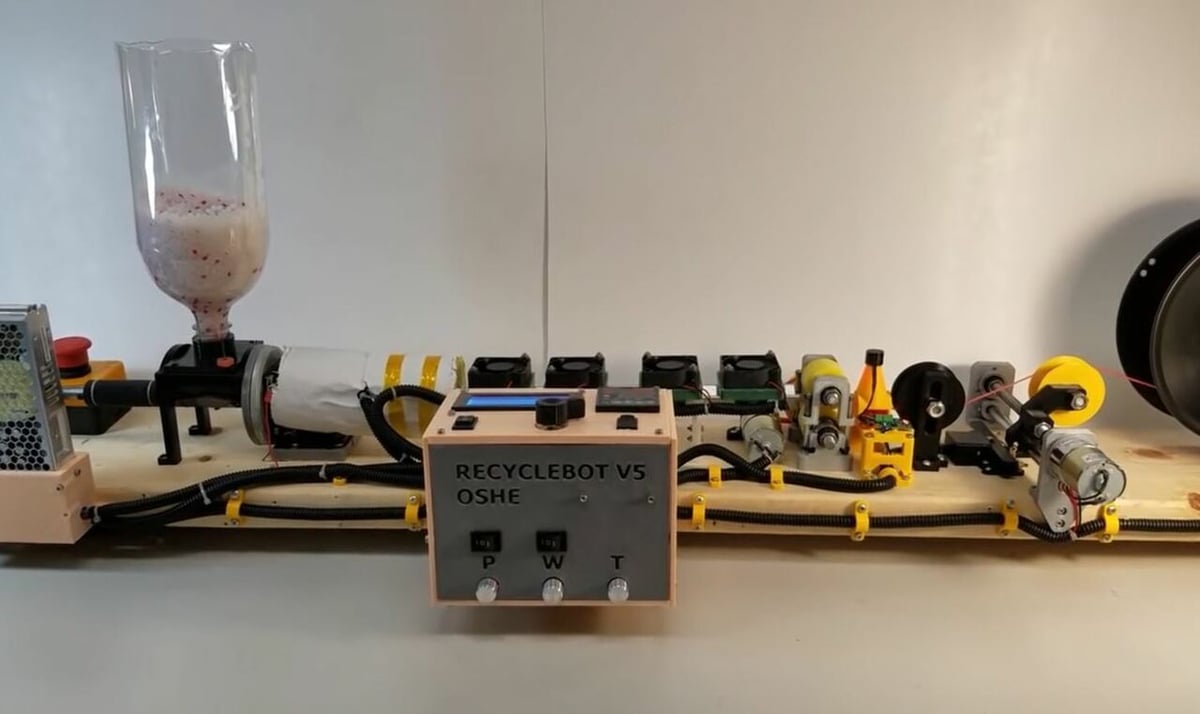
So you’re only end-of-life options for PLA scrap are to make it into other products, such as melting it in molds to make coasters and other objects; make your own recycled 3D filament with a filament maker; or send it to one of the few companies that accept scrap to be shredded, dried, re-extruded back into filament.
Unfortunately, the current price of recycling machines is out of reach for most hobbyists and listed recycling services for 3D print waste are location specific and also come at a cost.
Biodegradable PLA FAQ
Is PLA actually biodegradable?
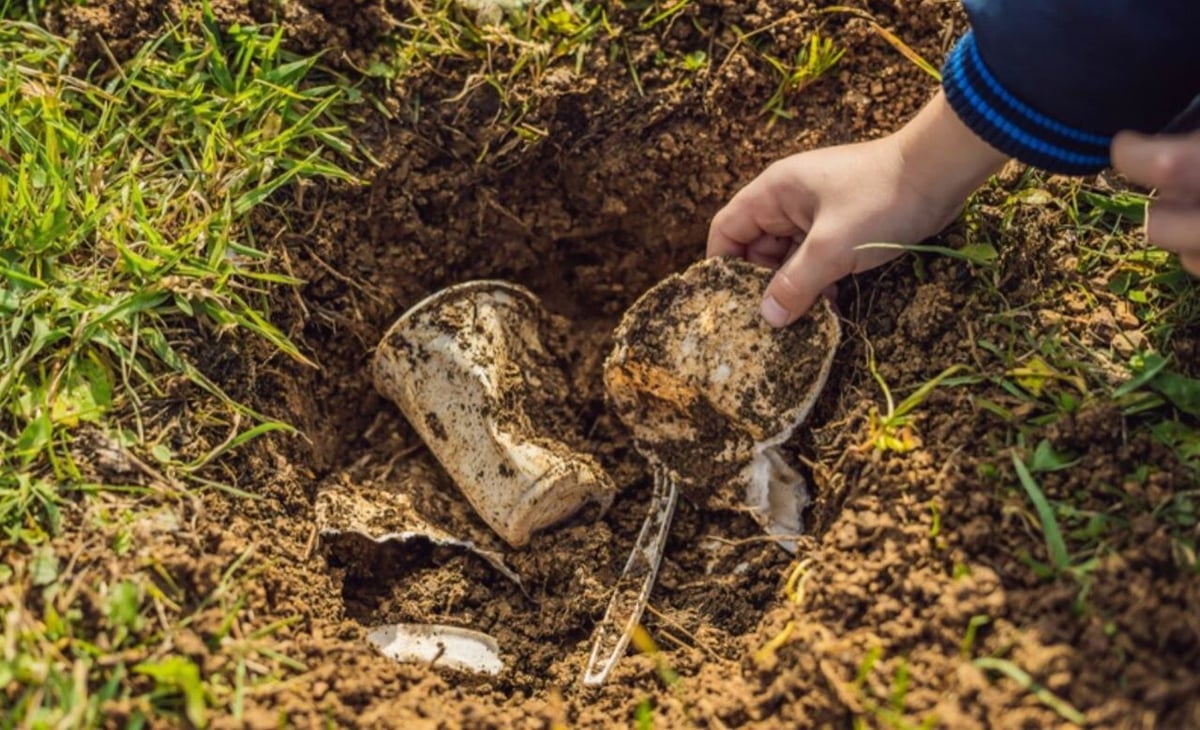
Technically, yes – practically, no. In any environment most people encounter, PLA only breaks down at a meaningful rate under industrial composting conditions: high heat, dense microbial activity, and humidity. Left in a landfill, backyard, or the ocean, it can take decades to centuries to disappear. Later in the article, we delve deeper into PLA’s biodegradation.
Can I compost PLA in my backyard compost bin?
No, not standard PLA. We delve into the conditions needed for PLA to biodegrade and backyard compost piles don’t get hot enough or dense enough with the right microbes to break PLA down in any reasonable timeframe. If backyard compostability matters to you, you can read our list of biodegradable filaments.
How can I tell if a product is home compostable?
Look for a real certification like TÜV’s OK Compost HOME or BPI’s home-compostable mark, not just a “biodegradable” or “plant-based” label. Standard PLA rarely qualifies, but PHA filaments usually do.
How will new regulations affect how PLA is labeled?
The FTC (US) and EU’s ECGT law are cracking down on unqualified “biodegradable” claims. We elaborate further on these regulations later, but it means that if companies choose to label PLA as biodegradable, but they’ll have to specify it only applies under industrial composting or provide evidence that it breaks down under natural conditions.
What’s the difference between PLA and PHA?
Both are bio-based plastics, but the difference between the two lies in how they behave once they are discarded. PHA is produced through bacterial fermentation and can break down in soil, home compost, and even marine environments without special conditions, whereas PLA requires industrial conditions. Some filaments blend the two, which still need an industrial facility, but degrade faster than pure PLA once they get there.
Can I recycle PLA instead?
Not through curbside recycling as most municipal programs don’t accept it. There is a small ecosystem of mail-in recycling services specifically for 3D printing waste. Recycling machines are also an option to recycle filament yourself, but they tend to be pricey.
Is PLA better for the environment than ABS or PETG?
In most cases, yes, but the bar is low. ABS and other petroleum-based plastics take even longer to break down and leave behind more harmful residue. PLA’s real environmental advantage is its renewable feedstock and lower printing energy needs, not that it disappears responsibly once discarded.
What’s the best way to dispose of PLA responsibly?
Right now, your best options are sending it to a specialized recycling service, using a home filament recycler to make new filament, or buying up “imperfect” or waste filament from brands that resell it instead of a landfill run. Backyard composting isn’t currently a reliable option for standard PLA.
You May Also Like:



License: The text of "Is PLA Biodegradable? Regulatory Changes Could Force Companies to Prove It" by All3DP Pro is licensed under a Creative Commons Attribution 4.0 International License.