
Waste to Workshop: 10 Brilliant Hacks for Your Empty Filament Spools

Wondering what to do with all those empty filament spools? Check out these fun projects for some inspiration and new ideas!
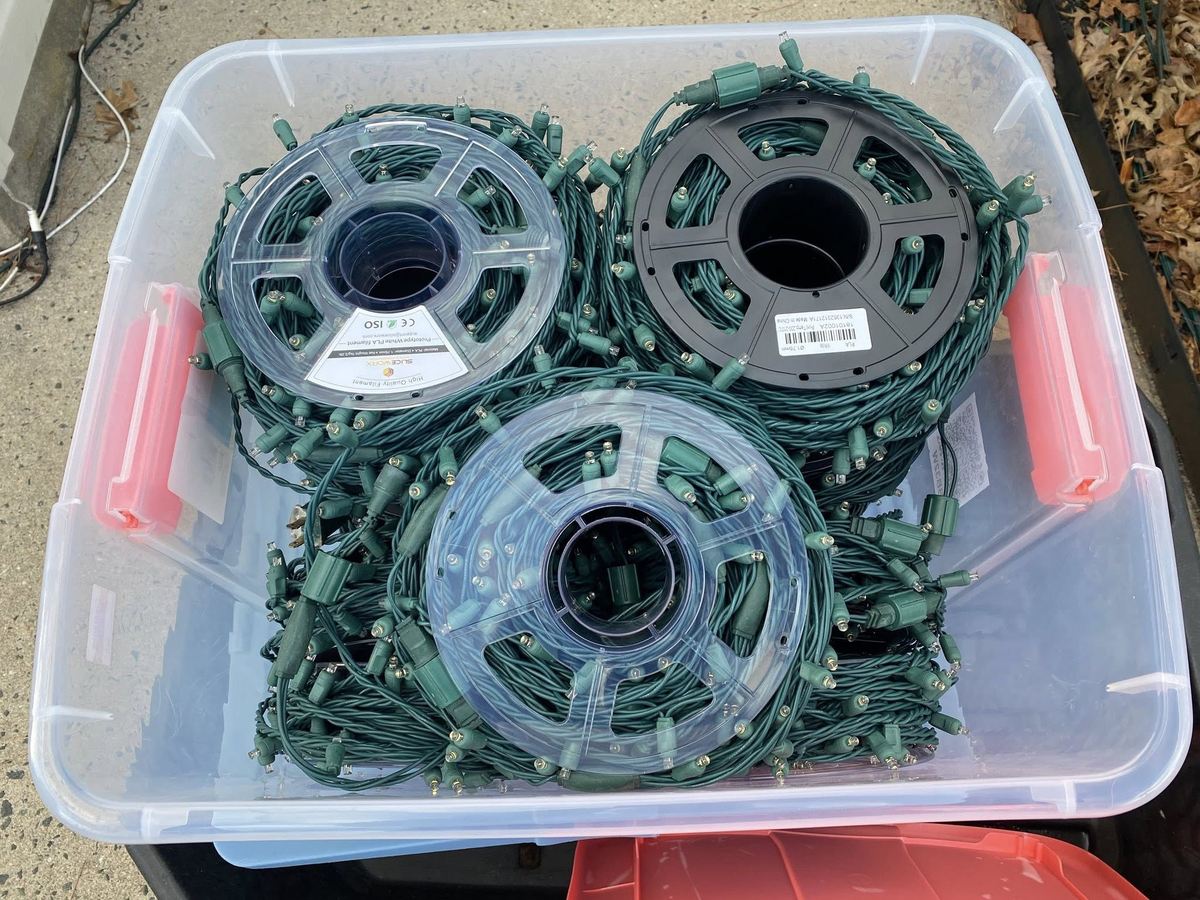
Every 3D printing enthusiast knows the feeling: you finish a spectacular print, peel it off the bed, and look over to see a workshop overflowing with empty plastic spools. It feels incredibly wasteful to toss them out, but wonder, what else is there to do with them?
Fortunately for the 3D printing community, many top manufacturers have started tackling this plastic waste problem head on with the use of recyclable cardboard spools, reusable master spool systems, and spool-less bulk filament refills for less than the cost of a brand new plastic spool.
But what about the empty plastic spools you already have lying around?
Filament spools are the perfect shape to wind anything around: Christmas lights, knitting yarn, extension cords, etc. That might reduce your pile by at least a few spools, but what about the others stacking up in the corner? Instead of letting them clutter up your workspace, why not put them to use?
For your ease and inspiration, we’ve gathered up 10 of the most creative ways to upcycle your old spools.
Cat Toys

Have a bored kitten at home that needs to be entertained so she won’t walk across your keyboard mid-sentence? This ball track made from empty spools is not only functional and eco-friendly, but highly engaging for curious felines.
The upper and lower rings snap on to the empty spool without needing fasteners. Be warned, this design is modeled using Prusament and MatterHackers MH spools, so will need to be modified to be used with other brands.
Maker Dante suggests using PLA with 15% infill, but says PETG will work well also.
- Difficulty: Easy, depending on your brand of filament
- Number of spools: One per feline (unless they like to share)
- Who designed it? Dante
- Where to find it? Printables
Bird Feeder

While we’re on the subject of entertaining wildlife, this bird feeder is made using upcycled a flange from a Prusament spool flange and an empty plastic bottle. Maker danec says both Snapple or Ocean Spray work well or can be adapted for it.
To keep squirrels out, danec wrapped it using chicken wire, but if you’re handy, you could probably print something that would work just as well. The original was printed using ASA for the structural parts and TPU for the flexible adapter needed for the Ocean Spray bottles to snap into.
- Difficulty: Easy, depending on the type of bottle used
- Number of spools: One
- Who designed it? danec
- Where to find it? Printables
Dual Spool Cord Wrap
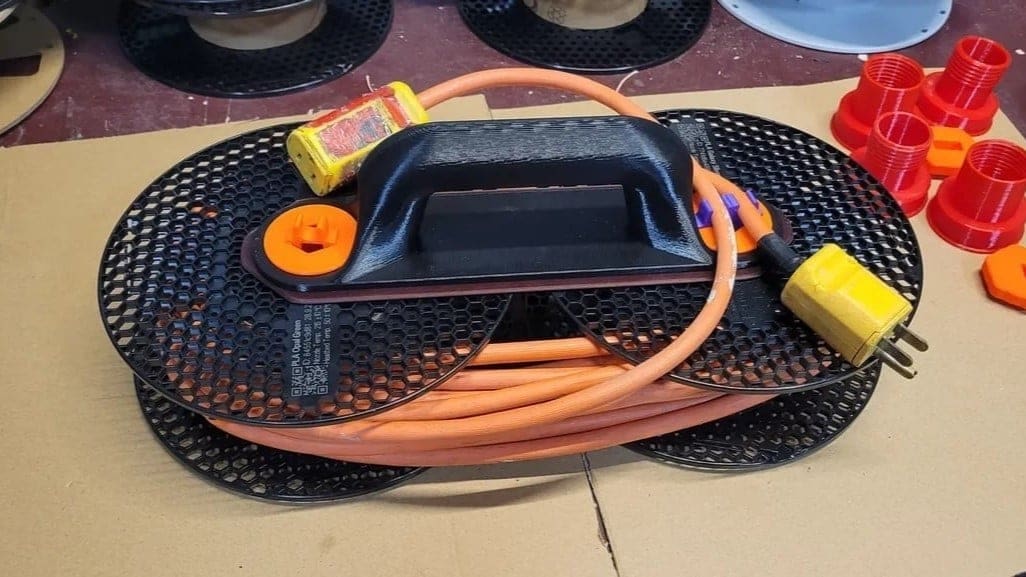
This cable wrap lets you wrap cords around an empty spool (a storage solution we can highly recommend). This is perfect for extension cords or Christmas lights. It also stores more cable than most commercially available versions and uses up those pesky spools! The convenient cable clips fit into the spool adapters and keep the ends from tangling or unraveling. This model has been remixed several times to fit different manufacturers’ spools.
The project is super simple and self-explanatory, so enough said! The handle and the back plate are large flat items, so they may be easier to cut out of acrylic, plywood, or sheet metal if you don’t have a large print bed.
- Difficulty: Easy, with long print times and possible warping issues
- Number of spools: Two per reel
- Who designed it? AndrewRoth
- Where to find it? Printables
Coffee Capsule Holder

This Nespresso capsule holder will definitely add some sunshine to your early morning routine. There are two versions available, one that snaps onto a Nespresso Lattissima One machine and one that stands alone. This stand holds 12 capsules and is designed for Bambu Lab spools but designer PEL3D says it’s been tested to work well with other brands as well.
If you need to store more than 12 capsules at a time, check out this expanding K-cup holder with stackable spools, that work more like lazy susans.
- Difficulty: Easy
- Number of spools: One
- Who designed it? PEL3D
- Where to find it? MakerWorld
Vertical Parts Drawer
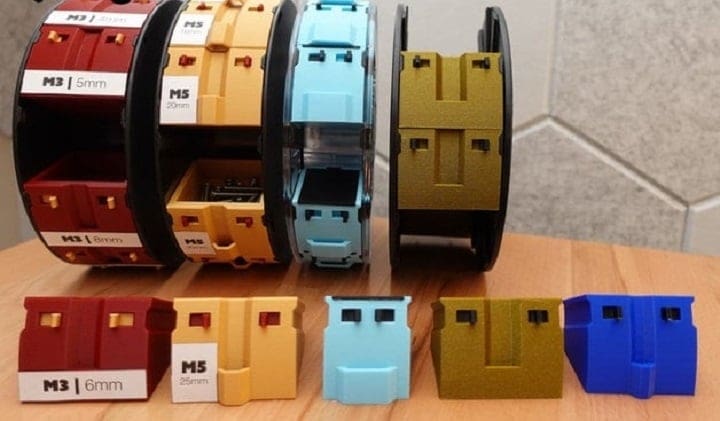
This is a parts organizer, but instead of the standard stack of drawers, you get an expanded Rolodex-style parts storage system that will allow you to quickly and easily find paperclips and other supplies.
There are two files in the build, and the good news is they’re SCAD files, allowing you to quickly customize any dimension to match your spools. The bad news is that they’re SCAD, meaning you need to know how to use that program (unless the Thingiverse customizer works for you).
The prints are not very challenging, but you’ll need a print bed larger than 200 mm. The prints have adjustable tolerances, and you’ll need to know your printer to determine how tight these should be.
- Difficulty: Moderate
- Number of spools: One bin per set
- Who designed it? 3d-printy
- Where to find it? Thingiverse
Modular Miniature Display Tower & Carrier
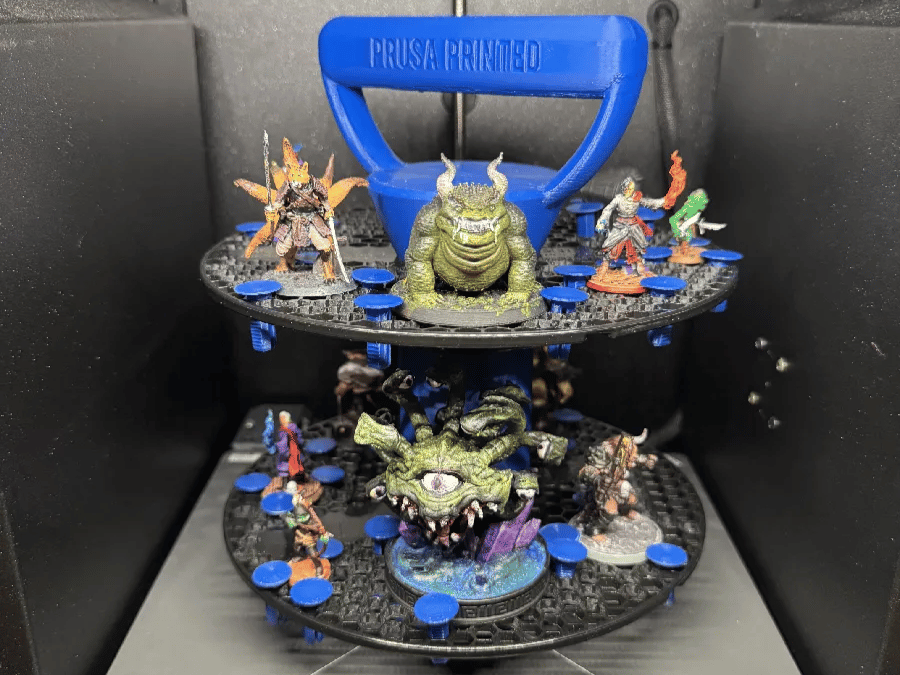
There are a few designs for towers for miniatures out there, but this one stood out, not just for the stackability, but also for the clips that hold the miniatures in place. This allows for spinning the display in place and to carry it from room to room without fear of the miniatures dropping off.
Unfortunately, the designer ran out of miniatures and empty spools before seeing how high the tower could go. Each extra level just needs two extra parts printed per spool to secure it. This design fits Prusa spools but can be adapted for other brands.
- Difficulty: Easy (if working with Prusa filament spools)
- Number of spools: Depends on how many minis you have
- Who designed it? JD3D
- Where to find it? Printables

Upcycle Tape Dispenser
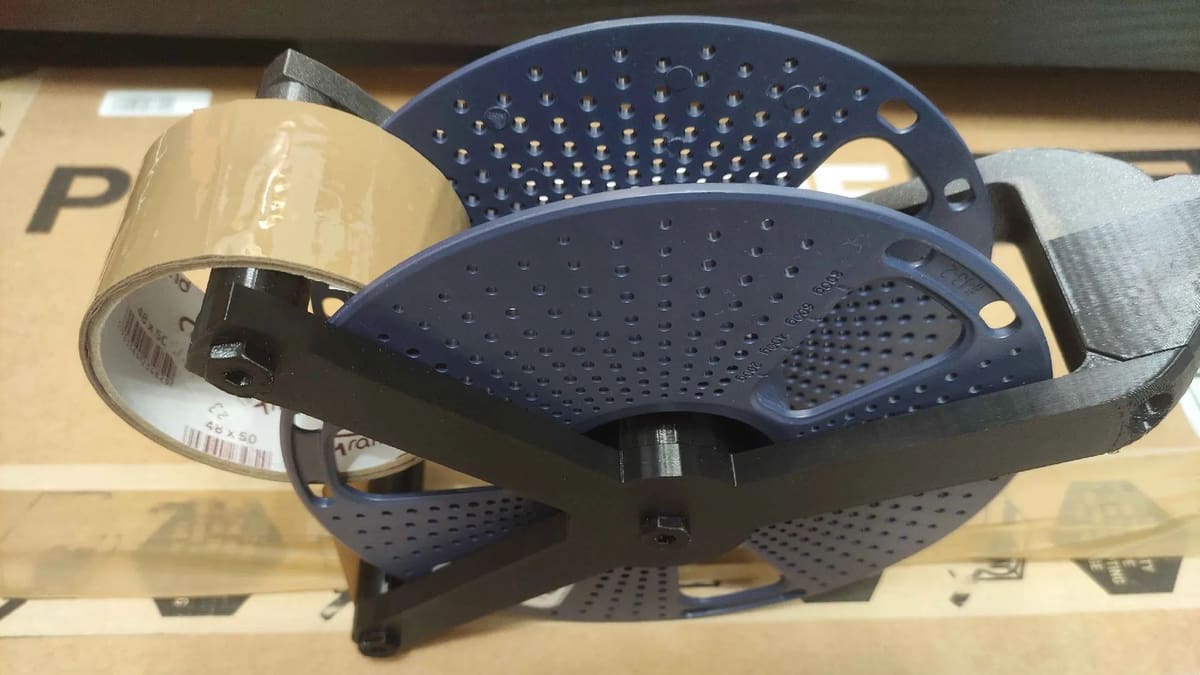
Here’s a new design for an old, empty spool: a packaging tape dispenser! So far, this design has been tested with both Prusa and Sunlu filament spools, so make sure the tape you are using fits into the space required with enough leeway to spin freely.
Designer skot0189 suggests checking the tolerances on your printer and filament to avoid the breakage of the bolts, and then gently screw them in place using the wrench printed in the same design. If the bolt requires too much force to install, the designer says, you’ll need to rescale both the bolts and wrench.
- Difficulty: Moderate
- Number of spools: One
- Who designed it? skot0189
- Where to find it? Printables
Wheel Assembly
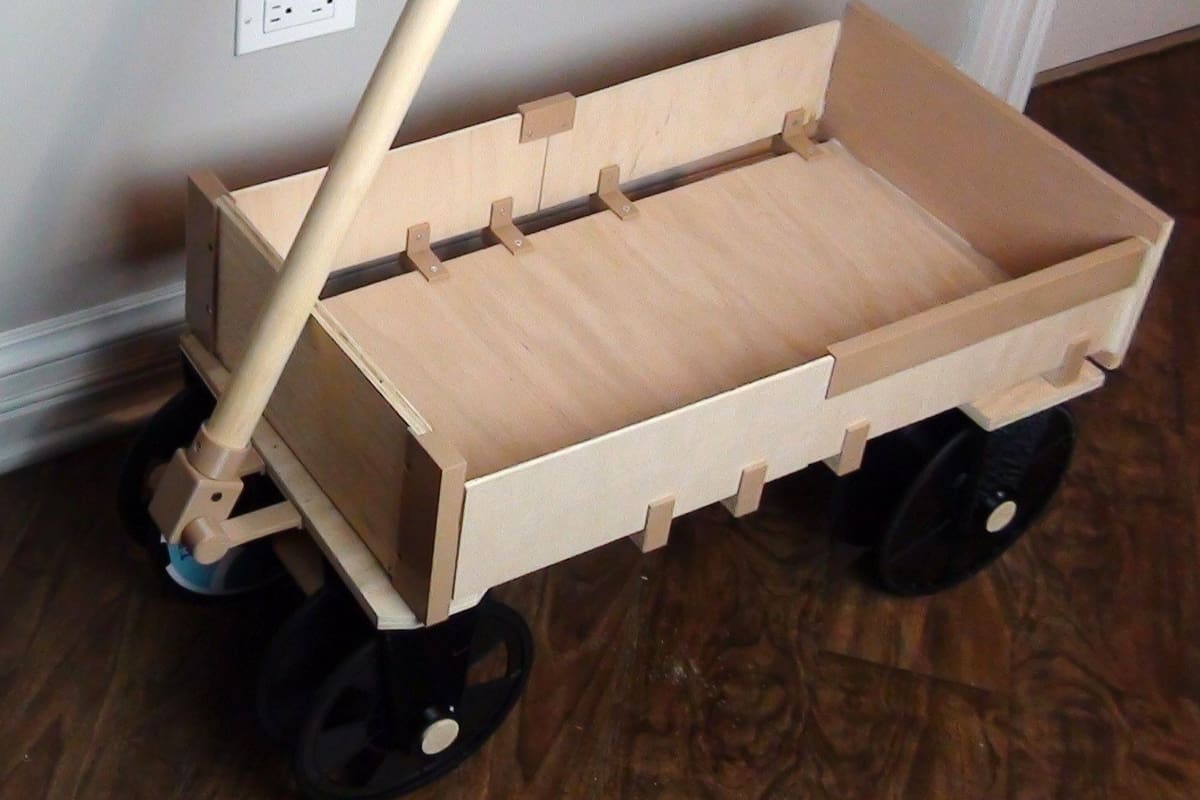
This axle and bracket system will help you create wheels out of empty spools. The project calls for dowels to act as axles, but really any cylindrical object of sufficient strength will suffice, including broom handles.
Be sure not to overload wheels made from spools. They can and do break, particularly when exposed to side loading, such as during cornering! We recommend against riding in this cart for safety purposes, although if you want to see a similar project in action, check out Chep’s Spool Racer.
Most of the project involves woodworking, but you’ll be left with a functional cart for use around the garden or home. Plus, 3D printing and woodworking complement each other very nicely!
Parametric Cable Organizer
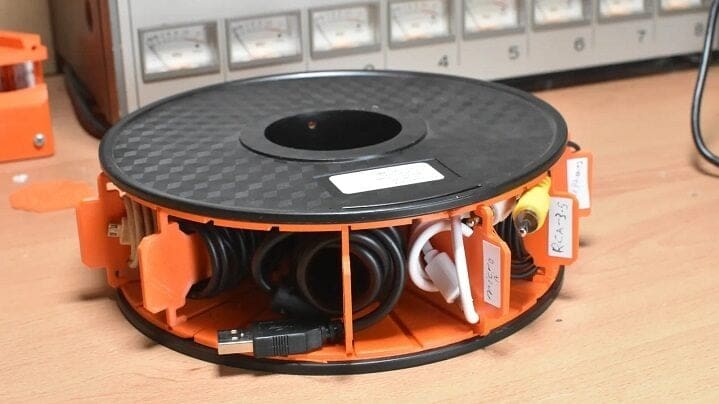
More cables, more problems. If you’re looking to clean up your workspace, here’s a project that will help you organize all of your smaller cables in one easy location.
The print involves cards that slip into slots, and the cables wrap around the cards. The setup is simple and would lend itself to a ball-bearing base. The Printables page for this project includes excellent instructions!
- Difficulty: Easy
- Number of spools: One per organizer (around 10 cables depending on what they are)
- Who designed it? ChrisBorge
- Where to find it? Printables
Astra Lumafloris - Upcycled Lamp

We found a few lamp designs using empty spools, but we chose this design by Fishbone Workshop because it upcycles 1 and a half empty Prusament spools and has both a table top as well as a hanging version. The designer strongly recommends printing the required parts using PETG due to its thermal resistance properties and to always use the lamp LED lightbulbs.
According to the designer, for this model, unless your first layer adhesion on your buildplate is really high, you’ll typically need to print the bases using brim. If you aren’t familiar with this concept, it’s a slicer setting, similar to the brim of a hat, that helps with the adhesion of the first layer.
- Difficulty: Hard
- Number of spools: One and a half
- Who designed it? Fishbone Workshop
- Where to find it? Printables
Bonus: New Filament
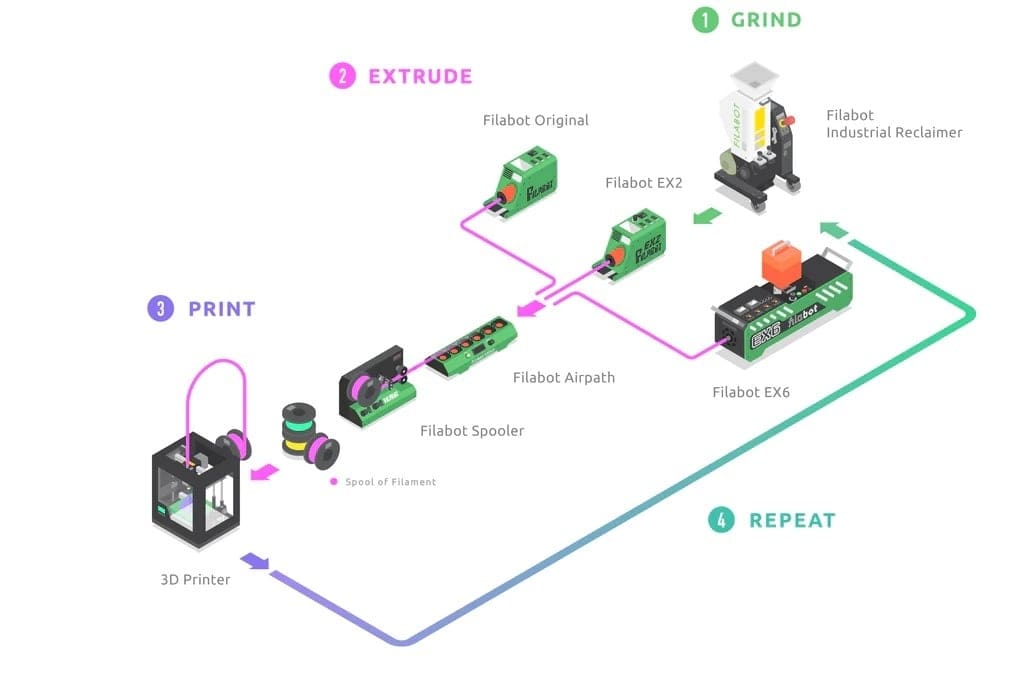
It’s generally very difficult to send your spools for recycling. So, if you’re flush with cash, why not close the loop and set up a recycling facility?
As shown by Filabot, most spools can be recycled into filament. Most manufacturers use different grades and types of plastic, so you would need to work out a way to determine what’s what.
The Filabot full setup (the machines, not the workshop) will set you back around $18,500, which is much more than most people could justify for just a few spools. Other suppliers of plastic recycling equipment are similarly expensive, with a precious plastic shredder and extruder costing around $2,500 for materials alone. Once you put the time into welding, machining, and wiring up the components and adding the necessary quality controls, you’re starting to get close to the Filabot cost anyway.
Despite the high cost and effort required, if a large enough group or club of 3D printing enthusiasts join forces or you’re operating a print farm, then recycling your spools starts to become viable. Remember, the setup can be configured for multiple different polymers with just an (albeit fairly complex) clean between runs.
Lead image source: danec via Printables
License: The text of "Waste to Workshop: 10 Brilliant Hacks for Your Empty Filament Spools" by All3DP is licensed under a Creative Commons Attribution 4.0 International License.