Prusa’s Purgeless Nozzle Swapper is (Almost) Here, and It’s Powered By Bondtech

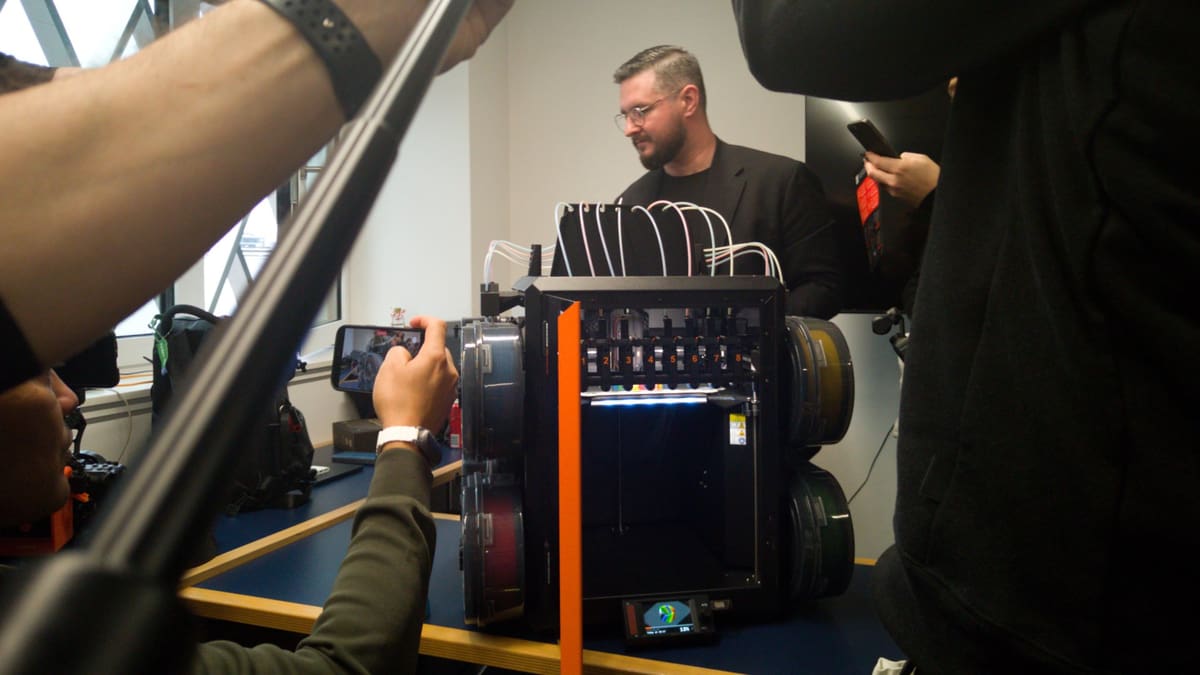
This year’s Formnext doesn’t just belong to Bambu Lab and the H2C, with the Prusa Core One and One L to get next-gen “passive” toolchanging powered by the Bondtech INDX.
It’s busy busy busy at Prusa HQ. Hot on the heels of the all new Core One L, limited-edition Signature Oak, silicone XL toolheads and OpenPrintTag smart spool initiative, Prusa is back with something that, arguably, trumps them all.
Say hello to the first retail release of the Bondtech INDX, tailored to the Core One (now the Core One+, but more on that in a moment) and Core One L. It will be available early next year as an upgrade kit for the Prusa machines.
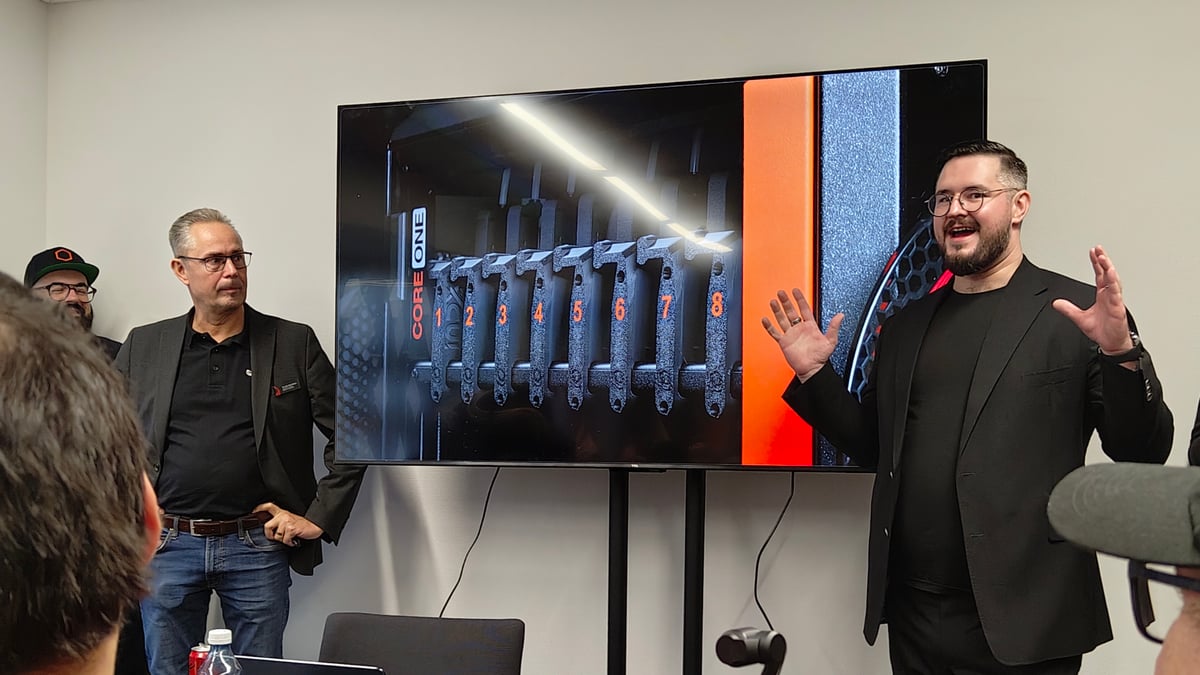
First teased back when Bambu Lab announced its upcoming (and now here) Vortek, Prusa’s new solution offers up to eight-filament 3D printing with next to zero waste. The tech at the heart of this new upgrade is largely the INDX as we’ve seen before. Expect slim, inductively-heating nozzles with contactless sensors that sit beside the print volume for fast retrieval. At the reveal, Prusa says toolhead changes take 15 seconds, but users should expect this to drop below 10 when the INDX for Core One is fully launched in Q2 next year.
Revealed at a press preview today, the system as presented showed eight INDX thin passive tools in a bank on the Core One, with the INDX Smart Toolhead (replacing the Core One’s Nextruder) whizzing back and forth to retrieve them.
Initially only for the Core One, with the Core One L to follow, the INDX is an upgrade. Two forms of kit will be available, a 4-toolhead for $499, and an 8-toolhead for $699 – close-ish to the INDX’s initially estimated price of $250 for the smart toolhead, and $35 a pop for the nozzles, plus some for Prusa’s side of this equation. A 1000-unit founder’s edition will be available via the Bondtech website, shipping in Q1 2026, for the Core One.
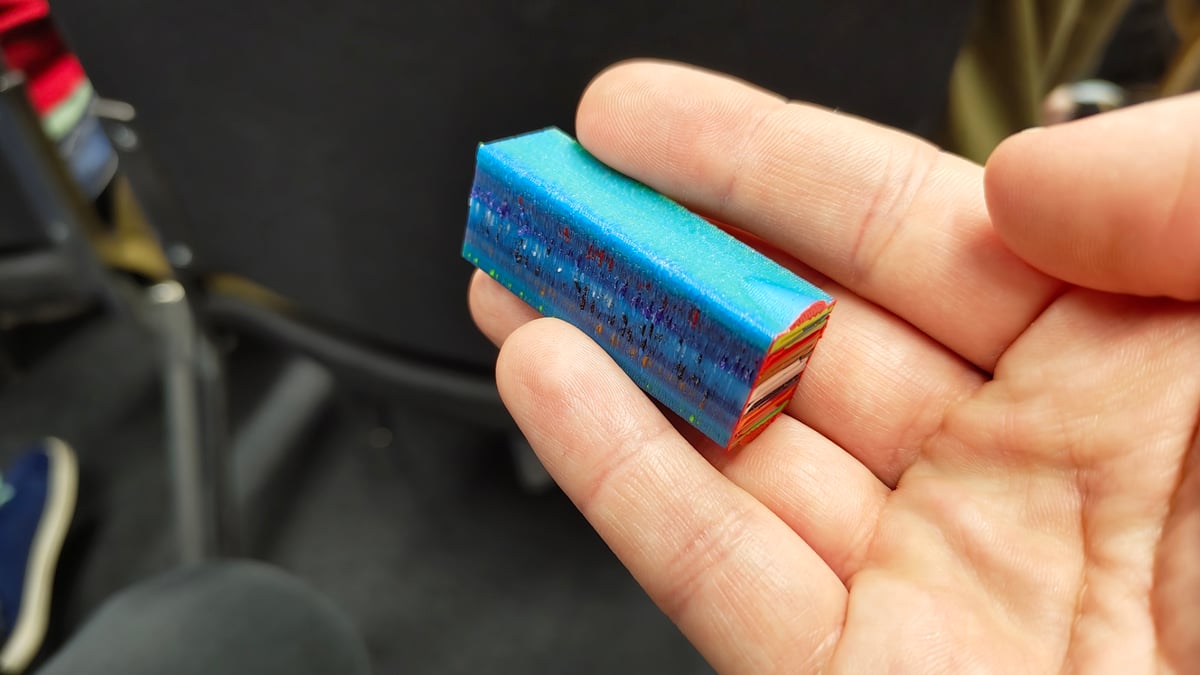
It’s a long time to wait for those who heads may have turned to the Bambu Lab H2C, which launched this week. While the two approaches may look similar, there are some distinctions, chiefly in that the INDX keeps the filament in the nozzle, meaning no waiting for filament withdrawals or reloading like found with the AMS. Prusa’s solution beats the H2C’s 7-filament purgeless printing by one, but can’t be extended to more filaments via complementary single-nozzle changing, as the H2C can.
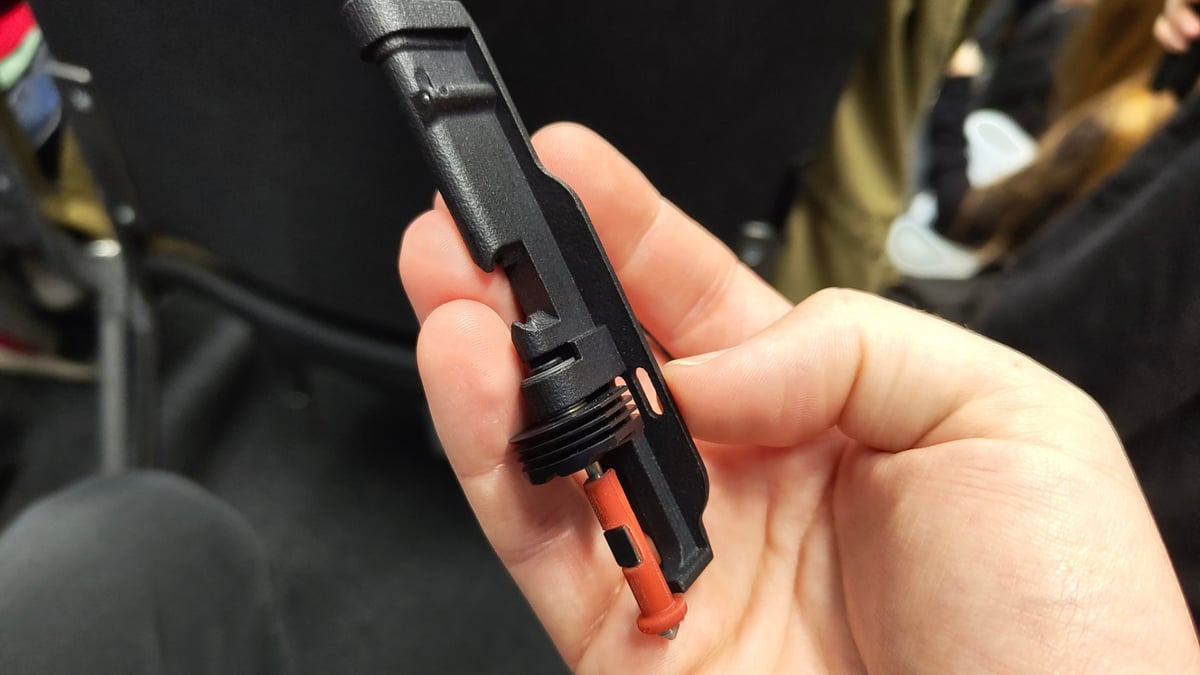
For those unfamiliar with the INDX, the toolhead part contains a dynamic extruder with adjustable gears that tension appropriate to the given filament. The tools themselves combine the nozzle, heatbreak, and data transmission, with the filament remaining in the assembly throughout.
The INDX doesn’t change any of the Core One’s primary printing specs, with temperatures and build volume remaining as they are on the stock Core One. Filament mapping is handled as it is currently on the XL, with you able to remap required filaments to the ones loaded before a job if you so wish. The reveal also indicated that nozzle mixing in jobs will be possible, coming as a part of Prusa Slicer 3.0, due to launch next year.
What Else Is New?
As a part of today’s announcement, Prusa also revealed that the Core One has graduated to the Core One+, inheriting some new features from the Core One L. These include the TPU filament loading switch, which makes it easier to load flexible filaments, and the ability to have the printer automatically open and close its air vents according to the job and material.
They join the recent VFA-targeting firmware update, bringing the Core One to it’s new, evolved state. As with previous iterative updates to its printers, the Core One+ effectively replaces the Core One. The Core One+ is available now, seamlessly replacing the Core One on Prusa’s webstore. A minor upgrade kit will also be made available for Core One owners to bring these quality of life changes to their machine.
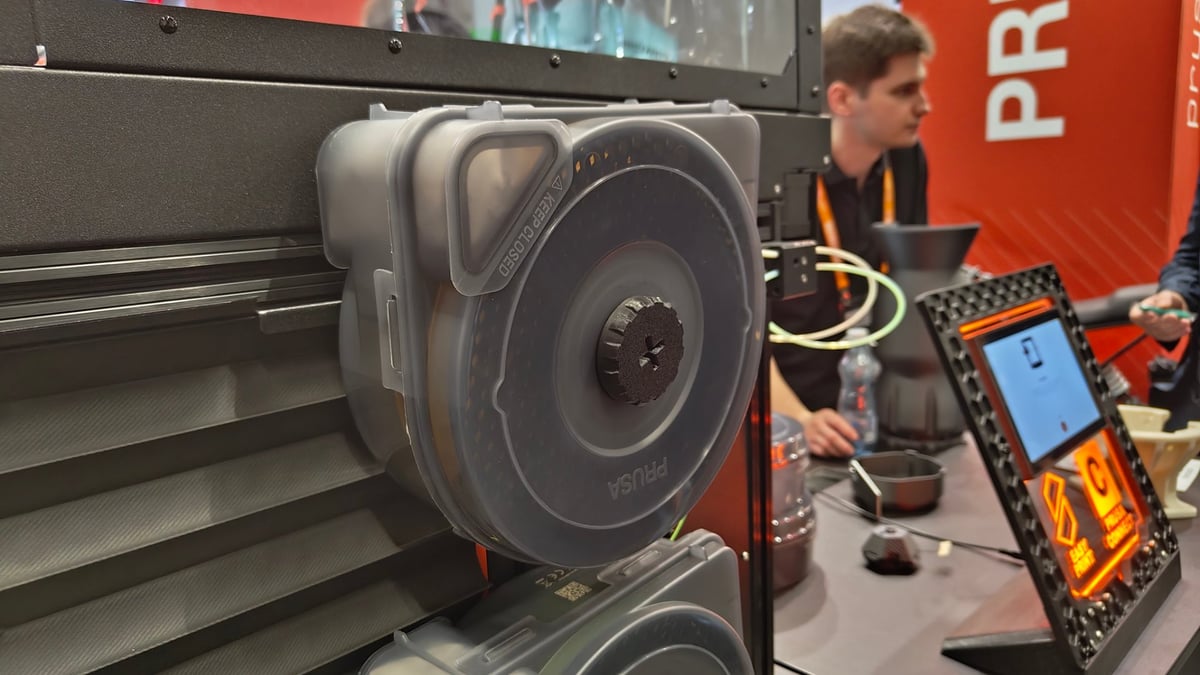
More significant for the ecosystem of Prusa’s machines is the introduction of a Prusa brand filament storage box, the Prusa USS (universal storage system). Fully sealable with a separate compartment for moisture absorbing desiccant, the box’s design also lets you retrieve filament from within without the need to open the box. Set to retail for $34.99, it’ll be available in the coming weeks.
Keeping filament in tip top shape is important, and here with Prusa’s new boxes, synergistically perfect for the company’s other reveal for the week, a new high temp HT hot end for the Core One and Core One L. The Prusa HT Hotend Upgrade bring Prusa Pro-like performance to the Core One, heating up to 400°C and offering superior performance with high temp and technical materials, including ones not previously possible on the Core One, like PEKK. It’s a $199.99 drop-in replacement, fitting into the printer just like any regular replacement hot end.
Read more recent news:
- The Bambu Lab H2C is Here, Bringing Versatile No-Waste Multicolor/Multi-material 3D Printing
- Anycubic Seeing Double With the Photon P1, a Prosumer Resin 3D Printer With Dual Build Volumes
- MakerWorld Sues Other 3D Model Repositories, but Why?
Tired of Reading? Try Listening
License: The text of "Prusa’s Purgeless Nozzle Swapper is (Almost) Here, and It’s Powered By Bondtech" by All3DP is licensed under a Creative Commons Attribution 4.0 International License.