
Prusa Open Sources a Solution for Smart Filament Tagging

The brand, conspicuous in its non-use of RFID for filament tagging, has released OpenPrintTag, an open source solution to cross-printer writable spool data that anyone can use.
At its Prusa Day event in Prague last week, Prusa presented a new open source project that aims to normalize an open, cross-system standard for electronically readable tags on filament spools. It’s called OpenPrintTag, and with it, any filament spool can become a machine readable smart spool.
There’s been much talk in many different circles about what to do with RFID. The likes of Bambu Lab, Creality, and Anycubic all independently use RFID for the convenient reading of a spool’s material, color, and other basic data. But their spools are not readable in each other’s ecosystems. It’s a bid for an easier in-system experience, but completely neglects the fact that that other filaments are available, and users of their machines will have preferences outside the brand’s offerings.
Community-lead initiatives to develop open source RFID solutions do already exist, something the Prusa team was aware of and, ultimately, determined its own solution offered the best of all worlds.
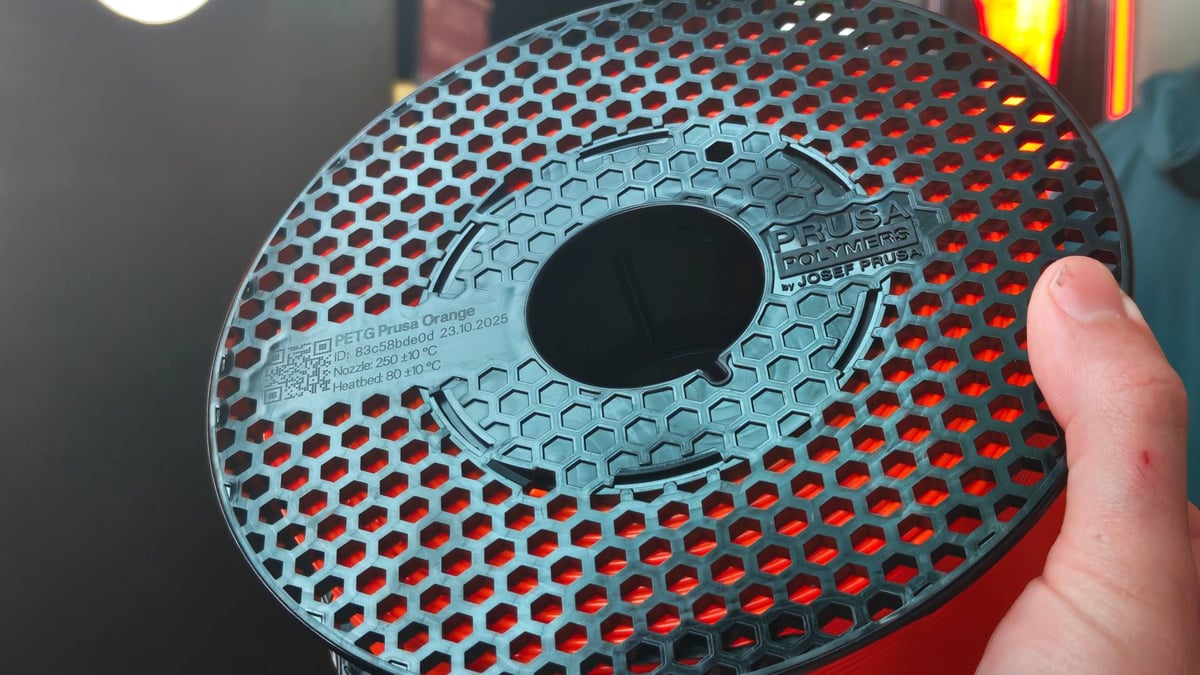
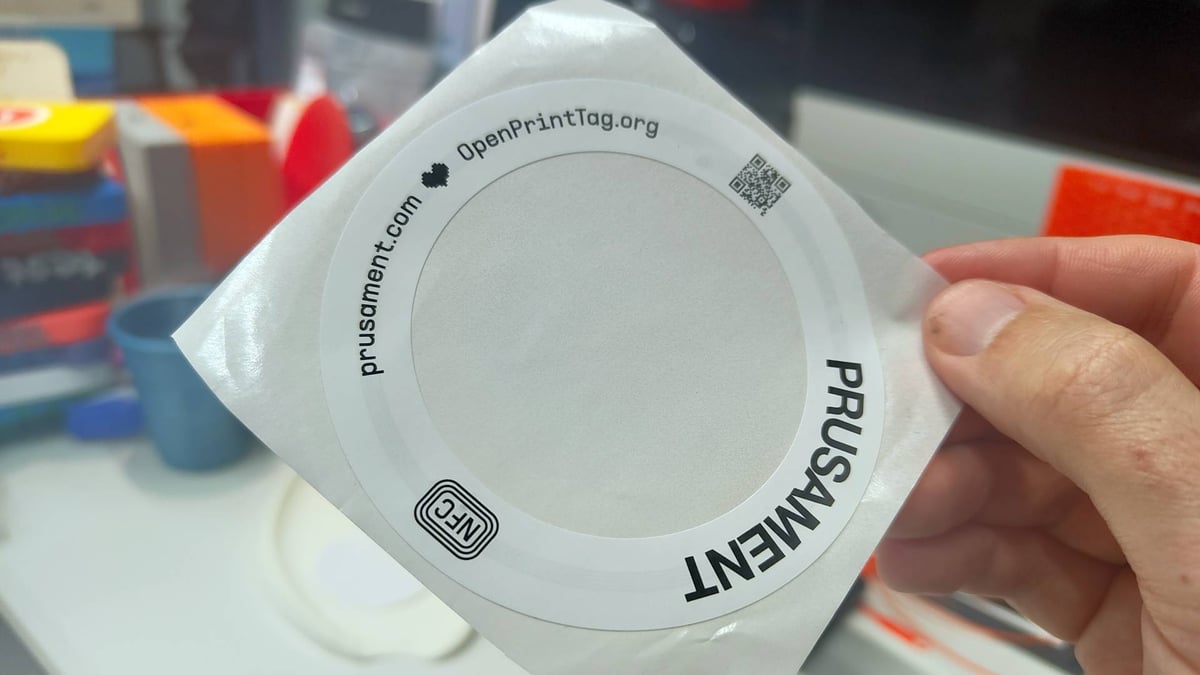
Prusa’s solution dispenses with vendor lock-in and pseudo-smart tags that don’t necessarily store much data. The OpenPrintTag project is a wholesale alternative that uses NFC circuits embedded in stickers and addresses the kinds of useful data such tags could hold, how it holds them, and the simple practicalities of using a smart spool and how a printer could theoretically, interact with it.
Prusa’s tags are a full round that sit around the inner diameter of a spool, using a form of NFC tag that’s readable in close proximity. The data capabilities are an exciting prospect, too. Beyond simply the brand, material, and color of the filament, the OpenPrintTag can include characteristics of the material and the material’s remaining weight, meaning no more weighing or guesswork about how much material is left on a spool. Likewise, inventory management becomes a possibility when you have numbered spools and remaining weights all accessible to your system.
To help get the project off the launchpad, every newly made spool of Prusament now has an OpenPrintTag as standard. This highlights one of the challenges past open projects have faced – critical mass. At launch, Prusa indicates there’s interest from a handful of partners in picking up and adopting the standard. It will, ultimately, thrive or die based on adoption. Getting the stickers out there and in use is the first challenge, with Prusament the first mass manufacturer to do so.
As for any kind of practical usage of the tags with 3D printers today, there currently isn’t any. That will follow early in 2026 for Prusa, when it will release an addon of some kind to give its printers the ability to read the spools. For any other manufacturer, the details are all online and available for them to implement it themselves.
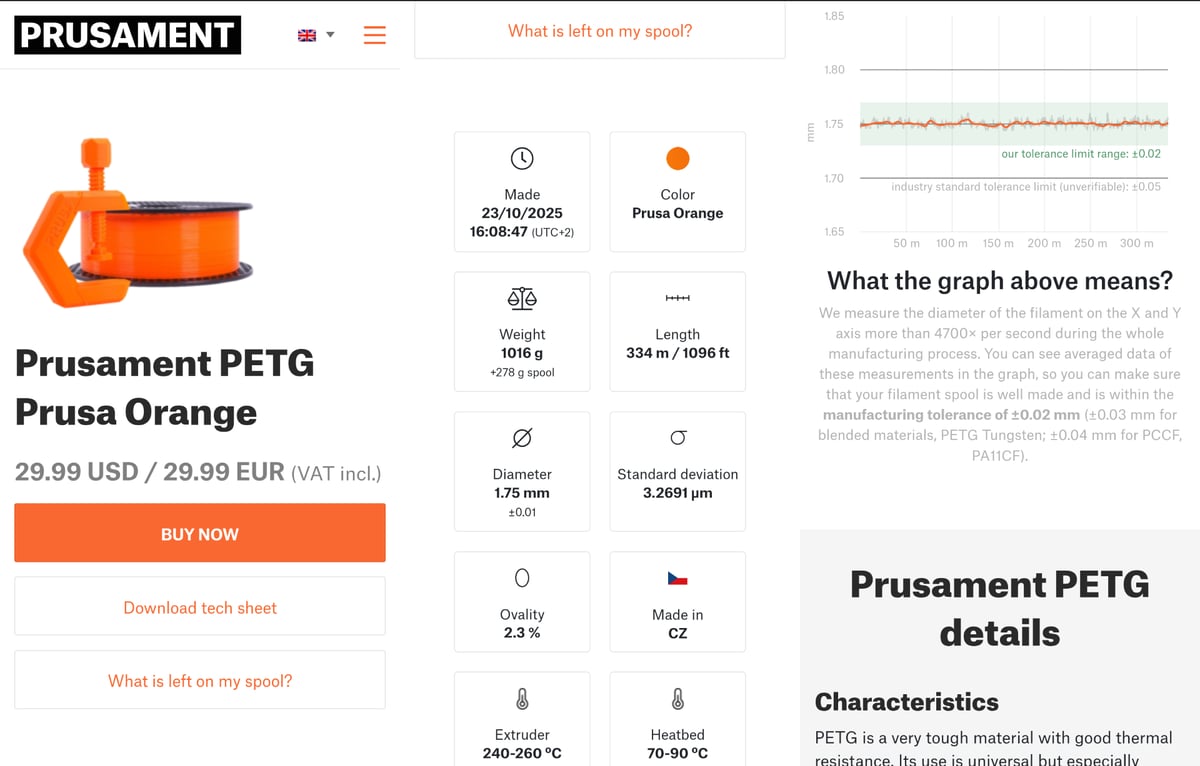
If you’re itching to start smart tagging your own library of materials, you can pick up 10-packs of blank tags from Prusa for $5.99. The full repo for OpenPrintTag can be found on GitHub, with Prusa maintaining control of it for now but expecting a consortium to lead it collectively in time.
Read more recent news:
- Say Hello to the Core One L, Prusa’s Bigger, Better CoreXY 3D Printer
- Prusa Launches Limited Edition 'Signature Oak' 3D Printer
- Prusa XL To Get Silicone Printhead, Fulfilling the Promise of Other Technologies and True Multi-Material
Tired of Reading? Try Listening
License: The text of "Prusa Open Sources a Solution for Smart Filament Tagging" by All3DP is licensed under a Creative Commons Attribution 4.0 International License.