Prusament’s New Foaming PLA: How It Cuts Print Weight by 65%

Prusa’s new actively foaming PLA promises lighter parts, more prints per spool, and a distinctive matte finish.
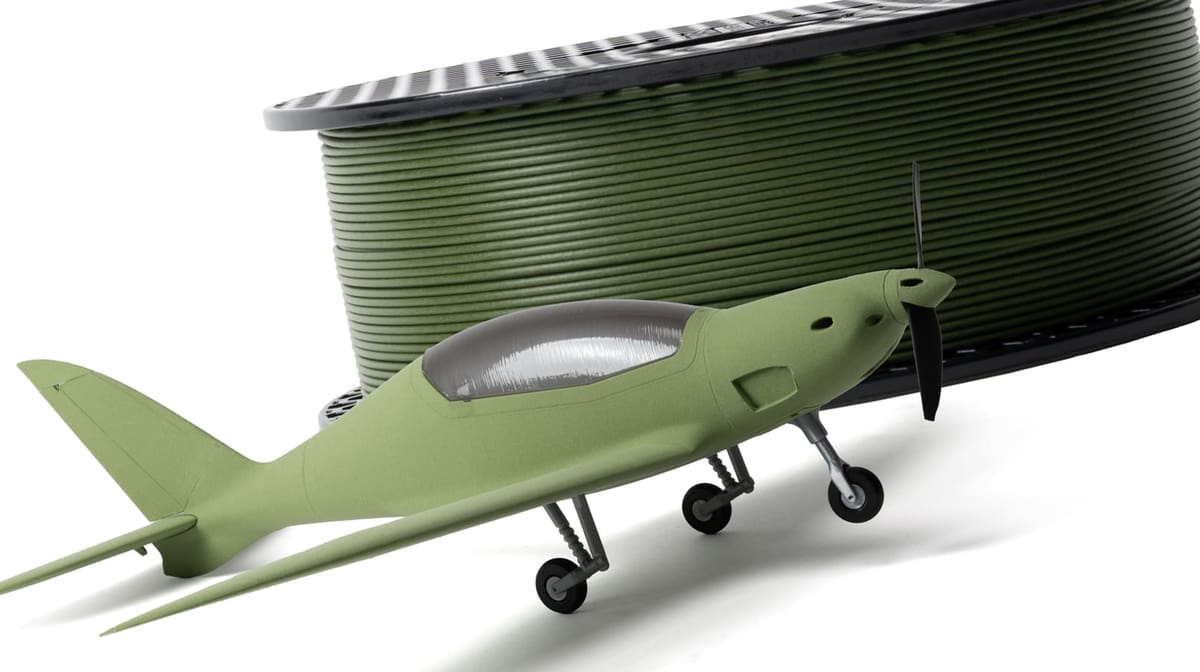
Prusa Research just expanded its Prusament filament lineup with Prusament PLA Lightweight ($56/kg), the company’s first actively foaming filament designed to produce significantly lighter prints.
Foaming PLA is nothing new — ColorFabb brought its actively foaming PLA to market in 2019 — but what Prusa offers is a filament for Prusa printer owners backed by the surrounding Prusa ecosystem, including ready-made PrusaSlicer profiles and an OpenPrintTag-equipped spool. Because foaming filament can be tricky to print with, Prusa aims to make it as foolproof on its machines as possible.
Foaming filament has additives in the filament that are activated as it passes through the hot nozzle, causing the extruded material to expand. Because the foamed material occupies more volume, less filament is needed to produce a part of the same size. The result, Prusa says, can be prints that are up to 65% lighter than comparable parts made from regular PLA.
That expansion also means a spool can go further. Prusa claims a 1-kg spool of PLA Lightweight can produce roughly two to three times as much printed volume as the same weight of conventional PLA. But considering that foaming filament costs at little more than twice as much as regular Prusament PLA, that alone wouldn’t be a reason to buy it.
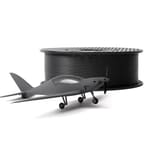
The main appeal is obvious for applications where every gram matters, such as RC aircraft, drones, and cosplay props and costume parts where lower weight can make larger pieces more comfortable to wear.
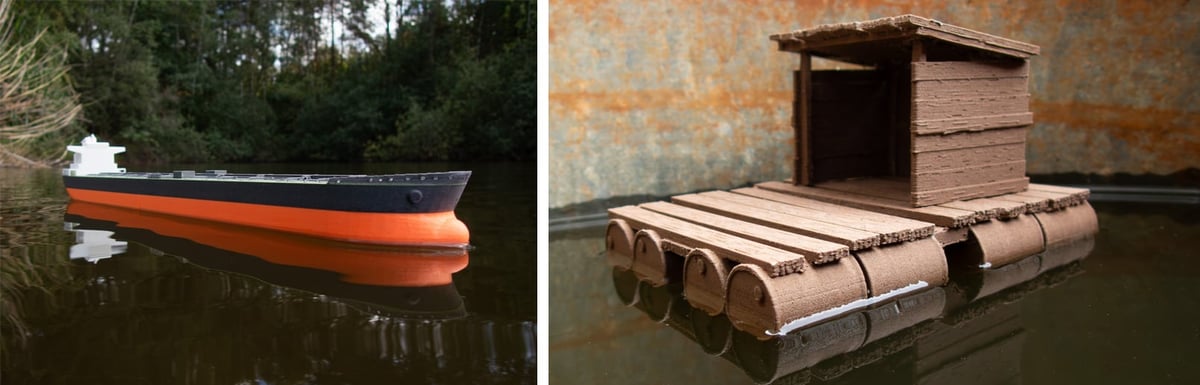
The company also points to other applications that benefit from the filament’s air-filled structure, including thermal-insulation parts such as bottle sleeves and inserts for insulated boxes. Prusa says prints can also be suitable for floating objects, with buoyancy approaching that of polystyrene.
Foaming Changes More Than Just Weight
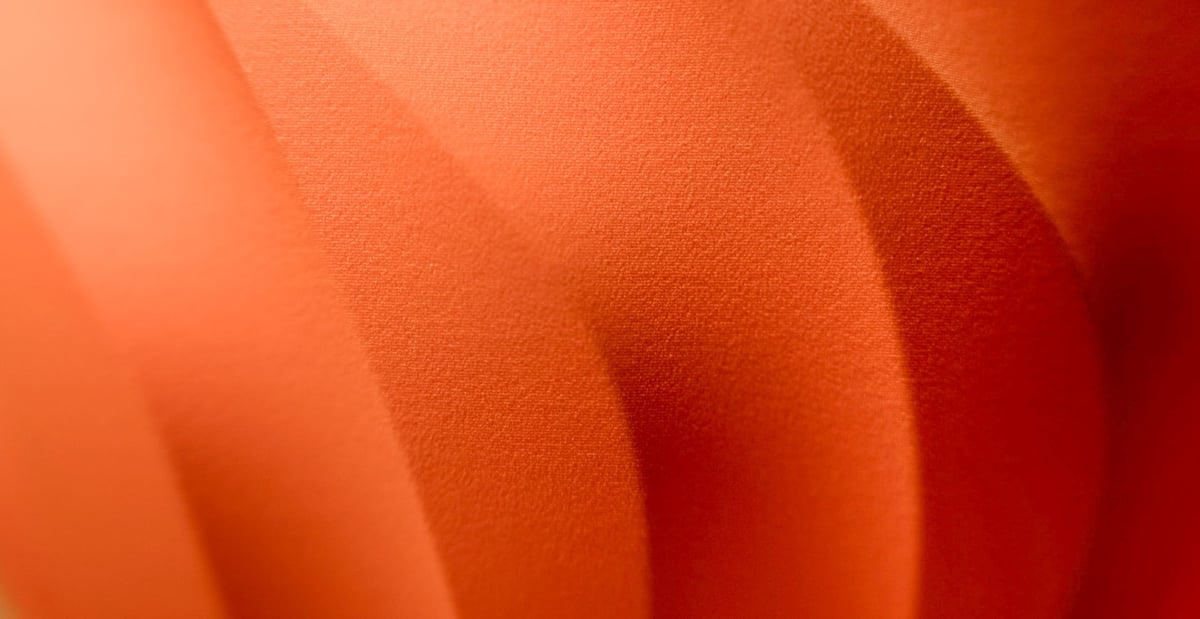
The foaming process also changes how the finished parts look. Prusa describes PLA Lightweight prints as having a matte, finely textured surface that can help conceal layer lines. According to the company, the resulting finish can resemble some wood-filled filaments or parts made using SLS 3D printing.
Colors also become noticeably lighter after foaming. The amount of color change depends partly on nozzle temperature, as higher temperatures generally produce more expansion. Prusa gives Galaxy Black as an example: once printed, the filament takes on what the company describes as a concrete-like dark gray appearance.
Temperature is central to controlling the material’s behavior. Using Prusa’s standard profiles, foaming starts at around 215 °C and reaches its maximum at approximately 235 °C.
Increasing the temperature beyond that point does not meaningfully reduce print weight further, according to Prusa, and can instead hurt surface quality or begin degrading the material.
The company specifically warns users not to exceed 250 °C, saying the material may release potentially dangerous fumes above that temperature.
More Expansion Means More Tuning
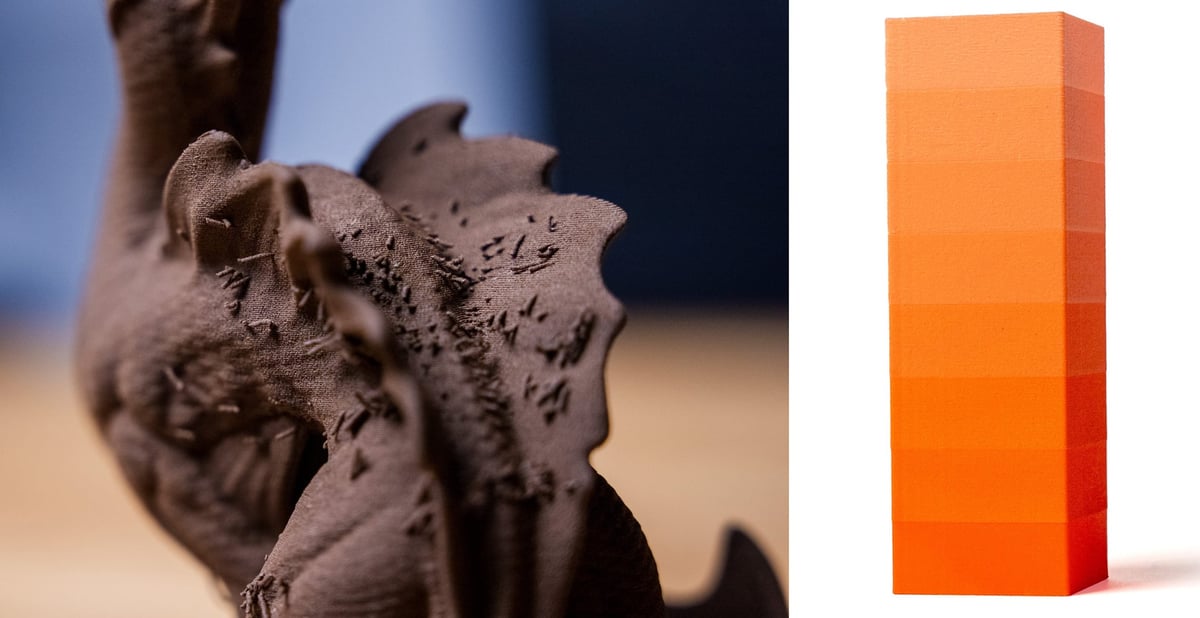
The trade-off for lighter prints is that PLA Lightweight requires more attention to settings than regular PLA. Prusa acknowledges that PLA Lightweight is not intended as a simple drop-in replacement for ordinary PLA. Getting the lowest possible print weight can require additional tuning, and the material’s tendency to string may demand more cleanup. For projects where weight is a major design constraint, however, the ability to produce a full-size part with substantially less material could make the filament especially appealing for aircraft, drones, wearables, and other applications where shaving off grams matters.
Because the filament continues expanding after leaving the nozzle, it is more prone to oozing and stringing during travel moves. Prusa recommends enabling PrusaSlicer’s “Avoid crossing perimeters” option with a maximum detour length of 40 mm. It also suggests printing one object at a time where possible to reduce travel between separate parts.
Prusa’s default PLA Lightweight profile uses a 230 °C nozzle temperature, 60 °C bed temperature, no retraction, and a 0.45 extrusion multiplier.
The company recommends both 0.4- and 0.6-mm stock brass nozzles, including standard and high-flow versions.
Changing nozzle temperature also changes how much the filament expands, which means users may need to adjust the extrusion multiplier accordingly. Prusa recommends printing a single-wall calibration cube and measuring the wall thickness when dialing in custom temperatures and flow settings.
Keep It Dry
Like many 3D printing filaments, PLA Lightweight is hygroscopic and can absorb moisture from the air.
Prusa recommends keeping the filament dry and, when necessary, drying it for five hours at 55 °C.
Supported PrusaSlicer printer profiles listed by the company include the Core One+, Core One+ (Gen 2), Core One L+, MK4S, XL, and XL+.
Prusament PLA Lightweight launches in Army Green, Chocolate Brown, Galaxy Black, Natural, and Coral Orange.
How Prusament PLA Lightweight Compares
You May Also Like:

License: The text of "Prusament’s New Foaming PLA: How It Cuts Print Weight by 65%" by All3DP is licensed under a Creative Commons Attribution 4.0 International License.
CERTAIN CONTENT THAT APPEARS ON THIS SITE COMES FROM AMAZON. THIS CONTENT IS PROVIDED ‘AS IS’ AND IS SUBJECT TO CHANGE OR REMOVAL AT ANY TIME.