New 5-Axis, Generatively Designed 3D Printer Fits on Your Desk

A new partnership between Generative Machine and Aibuild brings large-format robotics-optimized workflow and capabilities to the desktop with this upcoming hardware release.
Aibuild’s software is usually found powering enormous Kuka robotic arm 3D printers and shipping container-sized gantries through precise steps to fabricate big complex prints; exacting, non-planar and segmented builds for unparalleled strength and finish. A new collaboration between the London-based company and Generative Machine is set to expand this, taking Aibuild’s typically large-format capabilities and bringing them down to the desktop.
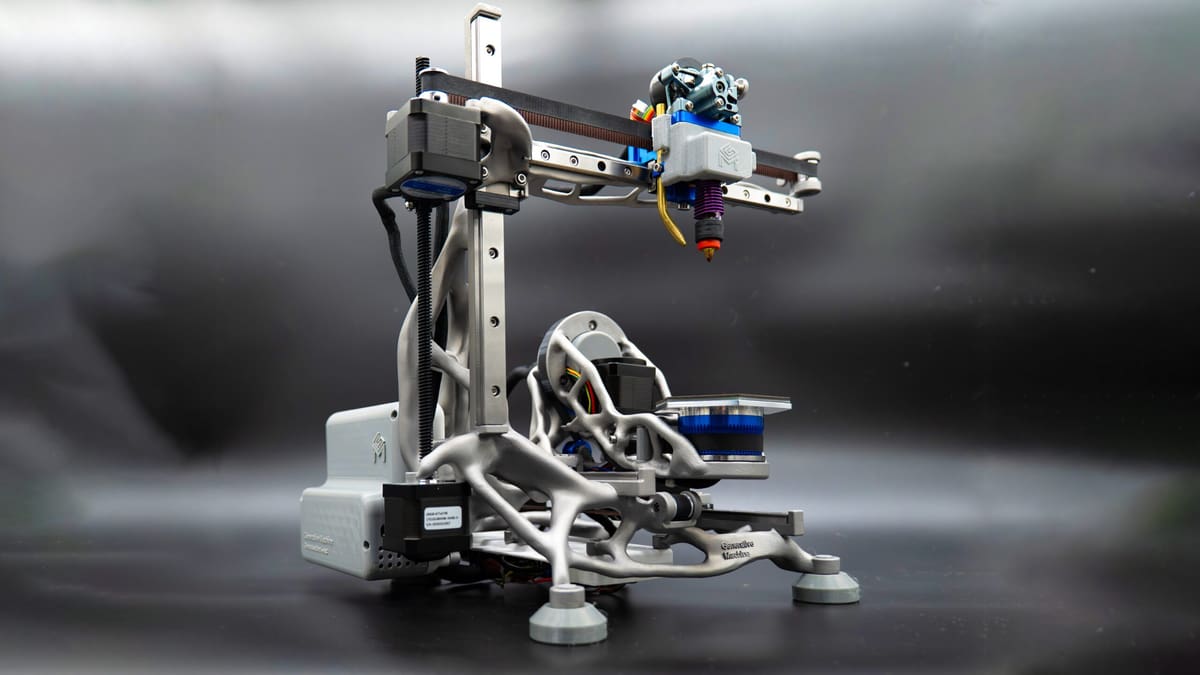
The GenerationOne 5-axis is a new, generatively designed desktop 5-axis 3D printer. It uses a familiar cantilever shape, linear rails and off-the-shelf components, but takes an additively exciting left turn with generatively designed metal 3D printed aluminum frames, giving the machine a fluidly organic look that’s utterly distinct.
We’re told that a limited batch of GenerationOne machines will be available to pre-order on the floor at Formnext next month, where it will be presented and on show at the Aibuild booth, Hall 12.1 B79. Pricing for the machine is still being explored, but expect it to land in the region of other professional desktop machines.
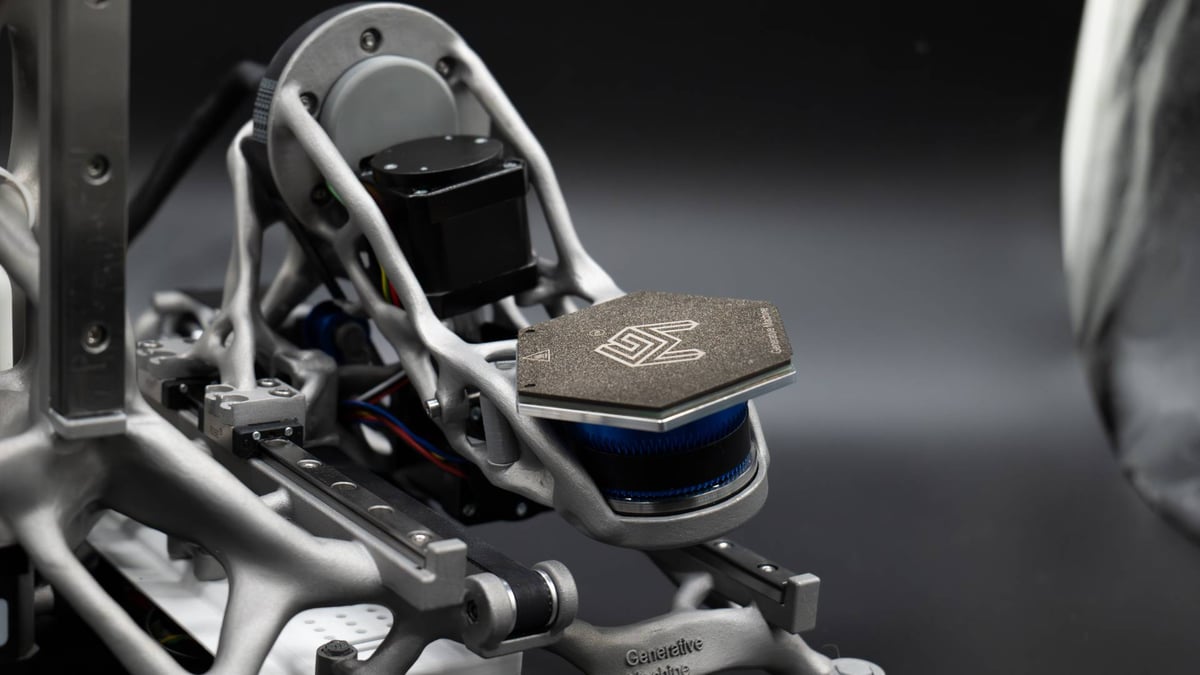
The GenerationOne is an evolution of the work Generative Machine CEO Ric Real began some years ago with his Gen5X 5-axis 3D printer, an open source design that we’ve featured before. That machine was designed to be able to redesign itself to suit the components on hand – a malleable, generatively powered evolution of earlier RepRap work that set out to simply be able to replicate itself. The GenerationOne 5-axis is still a 3D printed 3D printer, but in partnership with Aibuild, marks a significant step forwards with industry-grade software that can take advantage of the full five axes of travel the GenerationOne 5-axis offers.
Real explains in a release: “For years, desktop additive manufacturing has been constrained by the conventional 3-axis approach. We want to change that by bringing to desktop users the same advanced capabilities found in robotics and LFAM [large format additive manufacturing].”
But what are those capabilities? One clearcut way is flexibility in how exactly you lay down the extruded plastic. Robotic arm-based and 5-axis systems share the ability to print non-conformally, letting you adaptively reorient the nozzle to print features with the layer lines and, crucially, strength, as well as avoid the need for wasteful support structures. Prints on regular desktop 3D printers have strength in the X- and Y- axes but not the Z-axis, where strength relies on interlayer adhesion. A 5-axis printer can move rotationally, and use print strategies to imbue strength or finish in directions that wouldn’t be possible with a typical, linear 3-axis machine.
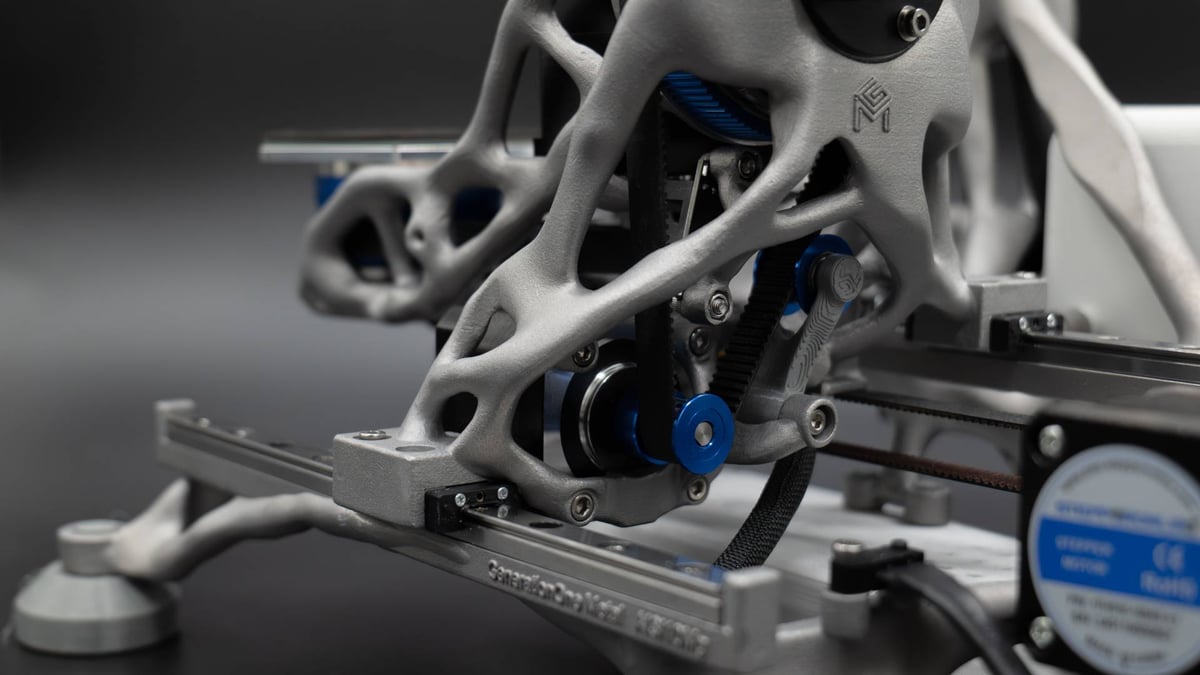
The GenerationOne’s build volume is relatively modest for desktop 3D printers today, ∅140 mm x 180 mm, but interchangeable print beds and automatic bed probing are a couple of ways the machine will feel commensurate with modern desktop standards. Material flexibility stretches as far as the likes of PLA and PETG – you’re not investing in the ability to print engineering-grade materials, so much as regular materials with complete freedom.
Read more recent news:
- What Does "Accessible" Pro 3D Scanning Mean? Hexagon's Has Some Answers
- Bambu Studio Update Unleashes A-Series' Full Multicolor Potential
- Landmark Move: Medicare Will Now Cover Affordable 3D Printed Prosthetics
Tired of Reading? Try Listening
License: The text of "New 5-Axis, Generatively Designed 3D Printer Fits on Your Desk" by All3DP is licensed under a Creative Commons Attribution 4.0 International License.