MicroSwiss’ New FlowTech Hyper-CHT Nozzle Takes Melt-Surface Area (and Flow) to the Extreme

The race for speed in 3D printing might better be characterized as a race for flow. And in that arena, you have options. MicroSwiss recently upped its flow game with the release of the Hyper-CHT nozzle, a riff on Bondtech's Core Heating Technology IP with a custom design that ekes out more millimeters cubed of plastic per second.
As printers get faster, the nozzles that melt the plastic have had to evolve to keep up. At least, that’s the determination we’re drawing having seen previews of unusual new inner-nozzle shapes at trade shows over the last year, coupled with the adoption of 3DSolex and Bondtech’s development of complex, meltzone-splitting “matchless” and CHT shapes, and, now, MicroSwiss’s evolution on that.
The nuts and bolts of it is that to achieve higher flow of the filament, you need to melt it faster. How do you melt it faster? Increase the surface area of plastic exposed to heating. It’s a simple sounding problem, but the solutions are often complicated and subject to closely guarded machining processes.
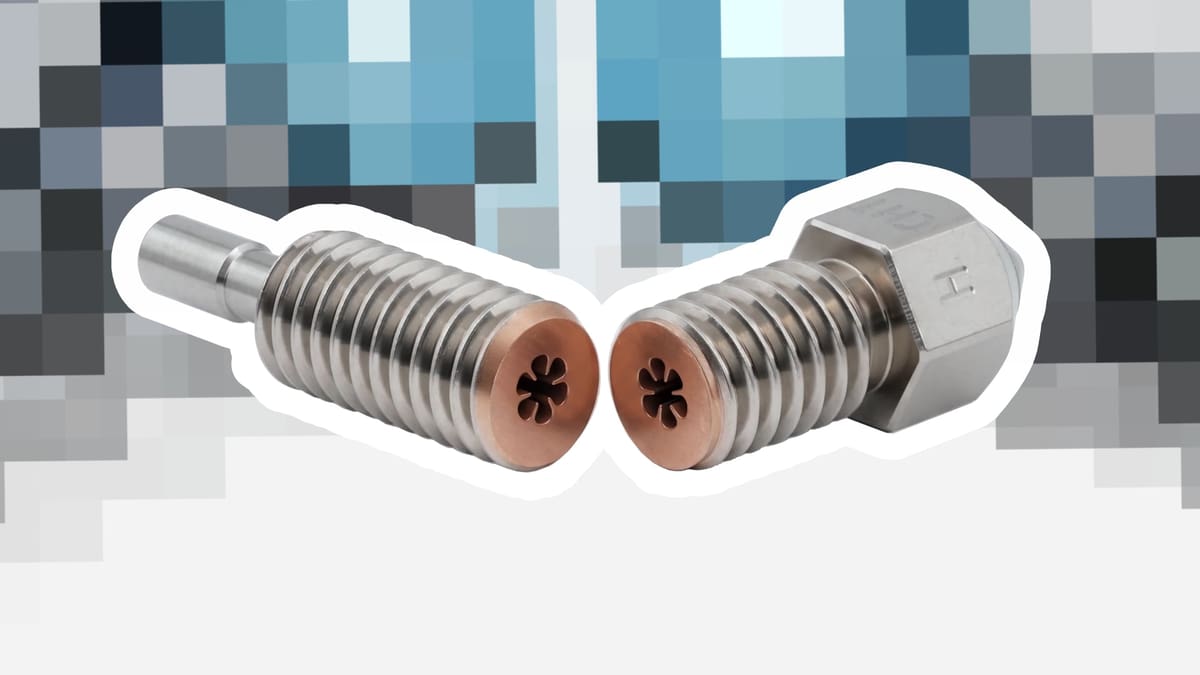
Minnesota based MicroSwiss’s latest update to its FlowTech line of speed (and flow)-oriented hot end upgrades takes things to an extreme, with a six-channel design to melt the filament even faster than the CHT’s typical three channels. The company’s product page for the Hyper-CHT cites a volumetric flow of 58 mm³/s for a 0.4 mm nozzle printing PLA at a layer height of 0.3 mm, compared the 43 mm³/s from a regular CHT nozzle.
These extra channels are worth it for a few different reasons, says co-founder Alex Radysyuk. Other multi-channel nozzles are great, he concedes, “but our 6-channel design increases the heating surface area even further, acting like a ‘radiator’ to heat the filament more evenly.”
One lesser known benefit of the split filament melt channels is in reducing backpressure from obstructions, as is surface discoloration from unintended. He continues “when printing high-density carbon fiber filaments, a center obstruction creates a mixing effect that results in visible print finish discoloration.”
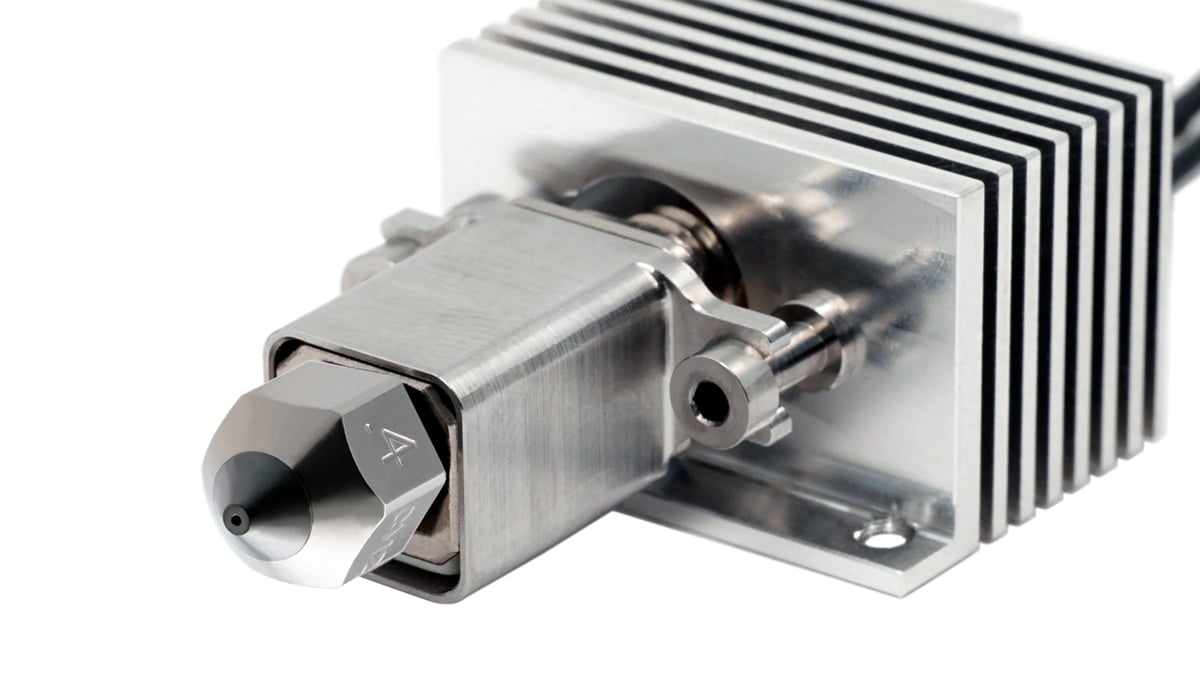
The company produces the Hyper-CHT nozzles using an automated, proprietary manufacturing process inhouse, we’re told. “Simply increasing the number of channels yields diminishing returns. The shape of the channels, the surface finish, and specific features at the tip play a bigger role in achieving the best performance.”
“We wanted to increase nozzle performance without extending the melt zone. After extensive testing, this design gave us the best flow rate performance and significantly improved layer adhesion. Because the filament melts very quickly and evenly, the layer bond is much stronger.”
Stronger bonding, and particularly printing thicker, wider layers (in other words, putting more plastic down per second) are where nozzles like the Hyper-CHT pay off. There is a known tradeoff, though: cold pulls don’t work the way the would with regular nozzles. “To be frank, this applies to any high-flow design” Radysyuk concludes.
The Hyper-CHT nozzles sit with the company’s FlowTech line of drop-in replacement hotends for various 3D printers, including first-generation Bambu Lab machines, as well as classically more modifiable machines like Creality Ender 3s and CR-10s. The Hyper-CHT nozzle is available now from MicroSwiss, priced at $32.50 in 0.4, 0.6, 0.8, and 1.0 mm bore sizes.
Read That? Now Read These


License: The text of "MicroSwiss’ New FlowTech Hyper-CHT Nozzle Takes Melt-Surface Area (and Flow) to the Extreme" by All3DP is licensed under a Creative Commons Attribution 4.0 International License.