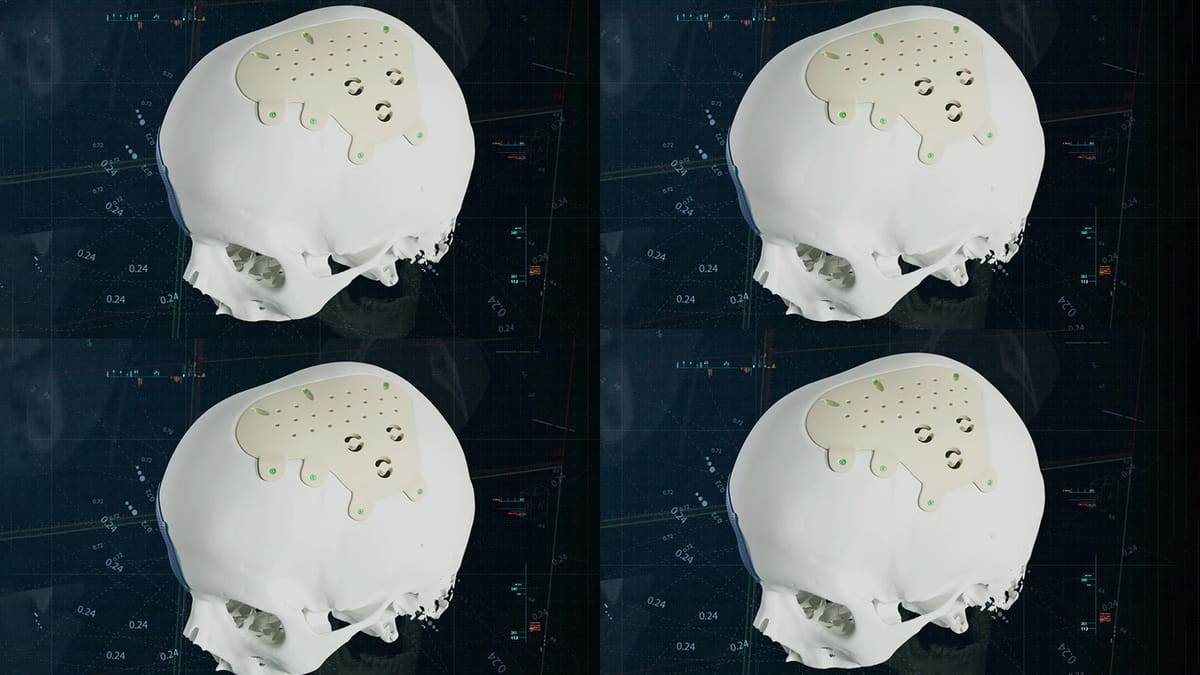
Materialise Launches PEEK CMF Implants, Broadening Material Options in Personalized Surgery

By integrating medical-grade PEEK into its established digital workflow for cranio-maxillofacial implants, Materialise offers surgeons an alternative to titanium.
Materialise has added custom-made PEEK implants to its cranio-maxillofacial (CMF) portfolio in Europe, expanding the material options available to surgeons using its patient-specific implant planning and manufacturing services. The new offering complements the company’s existing titanium implant solutions and is designed to integrate into the same digital workflow.
Rather than introducing a separate product line or process, Materialise is positioning PEEK as an additional option within its established planning environment. The PEEK implants are milled, not 3D printed, Materialize told All3PD. The goal is to enable surgeons to continue using the same Mimics-based planning tools and engineering collaboration process they use for 3D printed titanium, while selecting the material that best fits the clinical case.
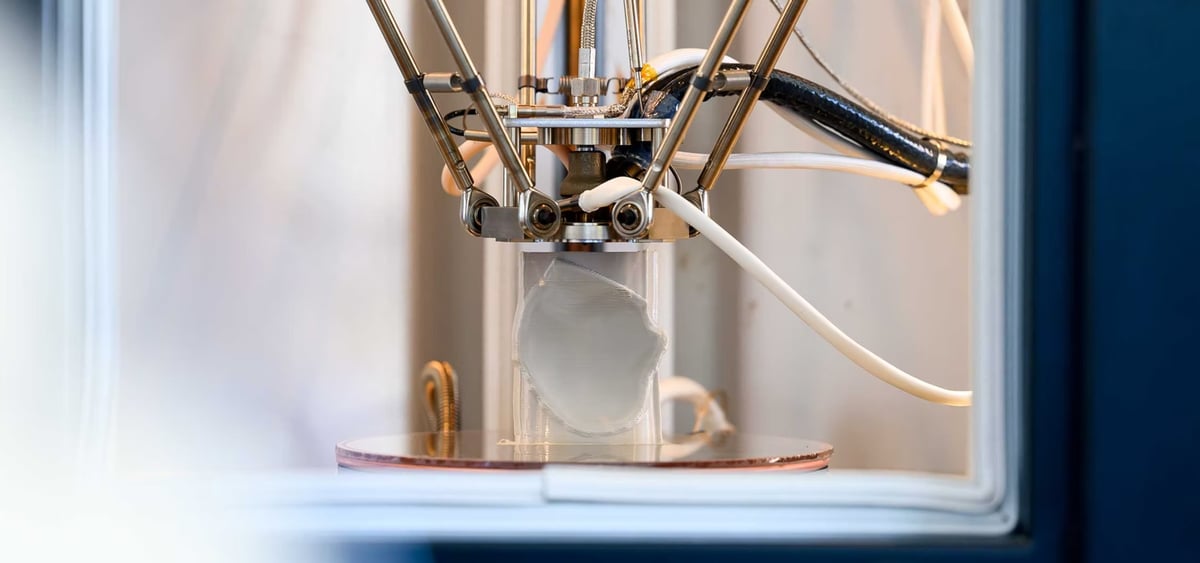
From a clinical perspective, the expansion mainly increases flexibility. A PEEK implant is very similar to the human bone in mechanical stiffness and elasticity and promotes osseointegration with bone. Medical-grade implantable and 3D printable PEEK is only available from specific polymer makers, including Evonik and Invibio.
PEEK implants are used across multiple categories including spinal, orthopedic, dental, and cranio-maxillofacial applications, with spinal implants representing one of the largest segments. Machining remains the dominant production method for standard PEEK implants such as spinal cages, while 3D printing is increasingly used for patient-specific CMF implants, where anatomical customization makes additive manufacturing particularly advantageous.
Expanding Options Without Changing the Process
Materialise’s CMF workflow centers on image-based surgical planning, implant design, and production coordinated between surgeons and the company’s clinical engineering team. With the addition of PEEK, that workflow remains unchanged—only the range of implant materials expands.
This approach reflects how Materialise has structured its medical business: building a consistent digital pipeline where software, planning, and manufacturing are closely linked. From a user perspective, the addition of PEEK means more flexibility without introducing new systems or steps.
“Personalization isn’t just about material choices but about the precision of the planning process and the reliability of execution,” says Maarten Zandbergen, market manager at Materialise. “By adding PEEK implants to our CMF portfolio, we are giving surgeons more flexibility while maintaining the seamless workflow they already trust.”
The implants are designed using Materialise’s planning tools, including Mimics Enlight CMF and Mimics Flow, which allow surgeons to collaborate on patient-specific implant geometry before production.
You May Also Like:

Where PEEK Fits Alongside Titanium
PEEK is already used in cranial and facial reconstruction due to its combination of strength, low weight, and radiolucency. Unlike titanium, it does not interfere with CT or X-ray imaging, which can make postoperative evaluation easier in certain cases.
Titanium, meanwhile, remains widely used, particularly where higher load-bearing strength is required. By offering both materials, Materialise enables surgeons to choose based on the clinical requirements of each patient rather than being limited to a single material option.
The addition doesn’t replace titanium in Materialise’s portfolio but extends the range of cases the company can address within its existing CMF offering.
Manufacturing and Availability
Materialise’s custom PEEK implants are manufactured in Europe through its partner Ad Mirabiles, which operates under EN ISO 13485 certification for medical device manufacturing. The company reports a turnaround time of approximately 72 hours from surgical plan approval to implant production, consistent with its existing service timelines.
The new PEEK implants are available across Europe, with the exception of Switzerland. No timeline was given for North American availability.
Listen to All3DP’s News Podcast:
License: The text of "Materialise Launches PEEK CMF Implants, Broadening Material Options in Personalized Surgery" by All3DP Pro is licensed under a Creative Commons Attribution 4.0 International License.