Make for Good: MakerWorld Wants Makers to Step Up for People Who Need a 3D-Printed Fix

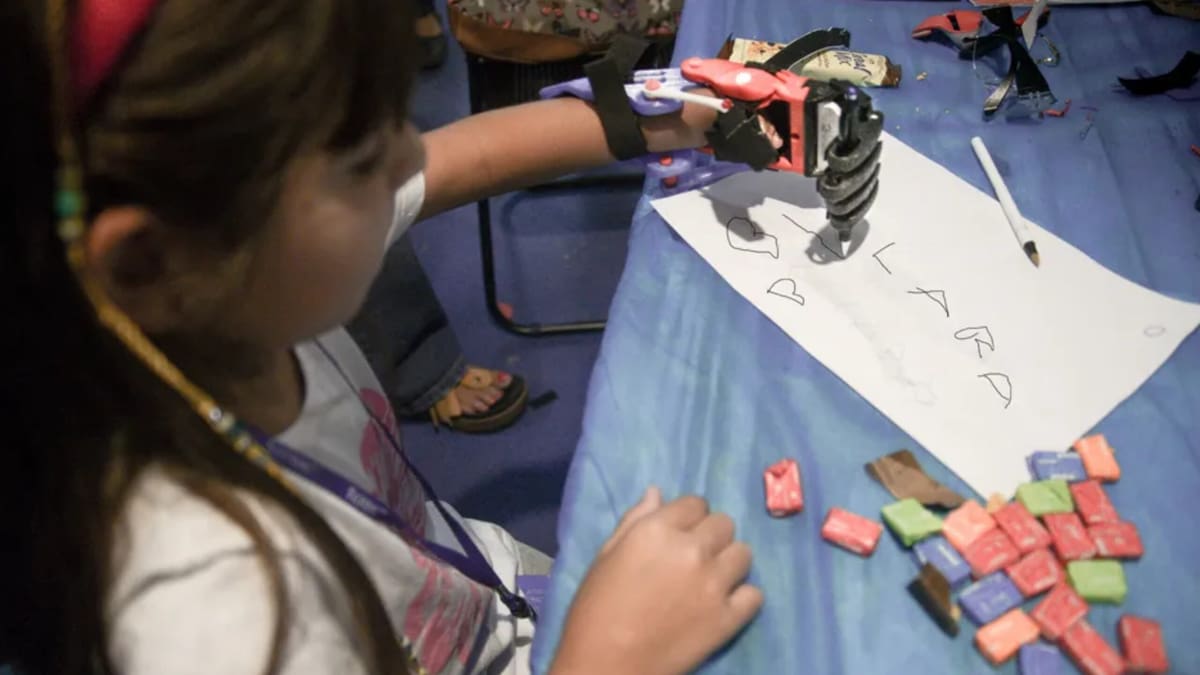
From September through December, 24 real-world briefs will challenge the MakerWorld community to design 3D-printed fixes for everyday accessibility needs.
Bambu Lab has partnered with seven accessibility organizations to launch Make for Good: Accessibility Design Contest, a MakerWorld challenge built around concrete, everyday needs rather than open-ended assistive-tech ideas.
It’s a departure from the CAD-flex and cosplay-prop contests MakerWorld usually runs. Bambu Lab says this is the first time it has mobilized its designer community to work directly with disability organizations on individually defined needs.
The contest, running from 16 September to 15 November, is open to anyone. Your designs, though, will need to follow the specific needs and requirements spelled out in each of the 24 briefs.
Here’s who’s involved and what they’re asking for
Seven accessibility organizations are behind the 24 briefs. Among them: PrintLab, which contributed case studies from its Make:able Challenge program; MakeGood, which works on adaptive sports equipment; Makers Making Change, whose open-source device network has already delivered more than 30,000 devices worldwide;
Here are some of the design briefs
SecondSock, from Rightfooted Foundation International, asks for a foot-operated tool that lets founder Jessica Cox — widely credited as the world’s first licensed armless pilot, and who does most everyday tasks with her feet — pull a second sock over her heel without the grip she loses once one foot is already covered.
PlayforAll, from PrintLab, calls for an accessible tabletop game for people with cerebral palsy, grounded in real case studies from the organization’s Make:able Challenge program — players who found standard board-game pieces too small or fiddly to handle independently.
PaddleUp, from MakeGood, requests a pickleball paddle holder that lets players with weakened hand and arm strength join in without taping the paddle to their arm.
StringAlong, from Makers Making Change, calls for adaptive guitar-playing aids — pick holders, strumming supports, chord aids — for players with limited hand strength or mobility.
From MakerWorld to someone’s hands
After a two-month submission window, the partner organizations will spend a month printing shortlisted designs and testing them with the people the briefs were written about. Winners will be added to open assistive-technology libraries and distributed through volunteer networks that already reach more than 70 countries, including Makers Making Change, which has delivered over 30,000 devices, and Ayúdame3D, which has shipped more than 1,000 since 2017.
Full brief details are available through MakerWorld’s contests page.
You May Also Like:
License: The text of "Make for Good: MakerWorld Wants Makers to Step Up for People Who Need a 3D-Printed Fix" by All3DP is licensed under a Creative Commons Attribution 4.0 International License.