3D Printer Poop Into Fabrics and Fluff? This Kickstarter Campaign Has a Novel Answer to the Question of 3D Printing Wastage

With just a week remaining on the clock, there’s a chance Mini Polyfloss might not hit its target.
Despite 3D printing’s environmental benefits, the hobby still produces plenty of plastic waste. Solutions to the issue are relatively limited, so when something comes along with the potential to solve the problem, we pay attention.
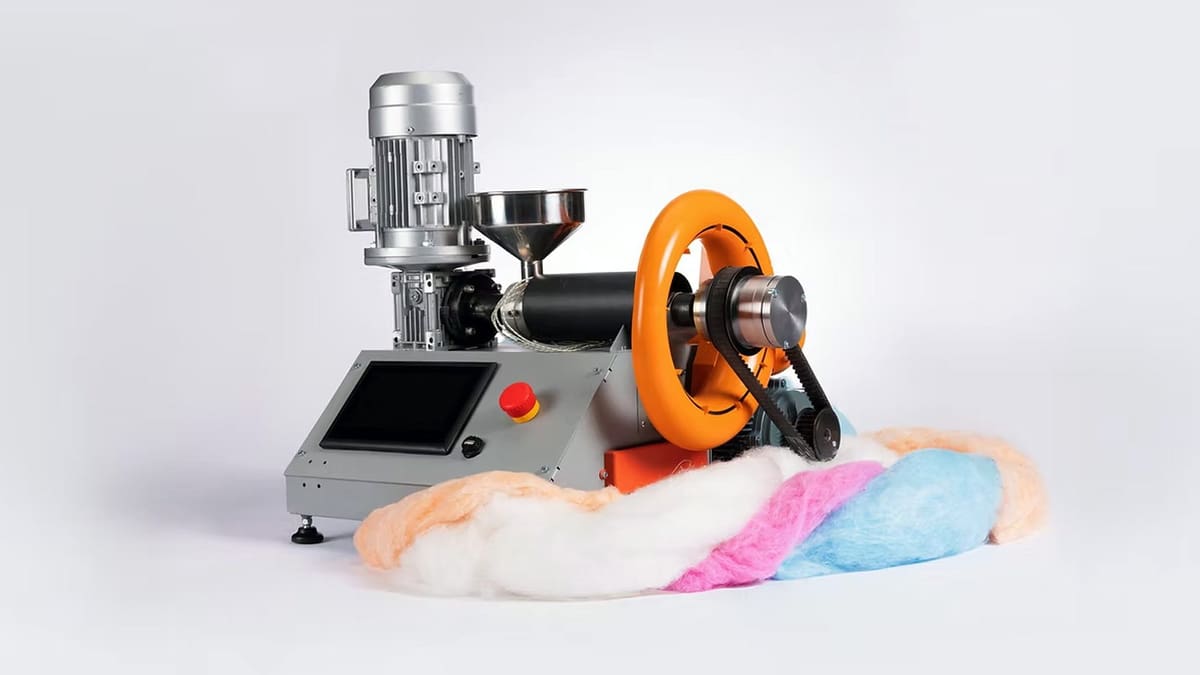
Over on Kickstarter right now is the Mini Polyfloss. This machine takes inspiration from cotton candy to transform plastic waste into soft, versatile fibers. The subsequent plastic fibers can then, according to The Polyfloss Factory, be used in a wide range of applications such as textiles, packaging, DIY projects, interior design, and even the construction industry.
Polyfloss already has a machine on the market for this, but the large, 120 kg machine isn’t practical for many, so the Kickstarter for this more compact 28 kg “Mini Polyfloss” could be a solution the original machine couldn’t solve. At 550 x 500 x 570 mm, all it really requires is a sturdy table to churn out its promises 1 kg per hour of floss.
As well as 3D printing materials, Polyfloss’ mini-machine can apparently let you recycle things such as plastic bottles, food, and medicine packaging. The resulting fibers can even be used to create packaging for products via ironing, potentially allowing small 3D printing businesses to recycle failed prints into packaging for shipping successful ones.
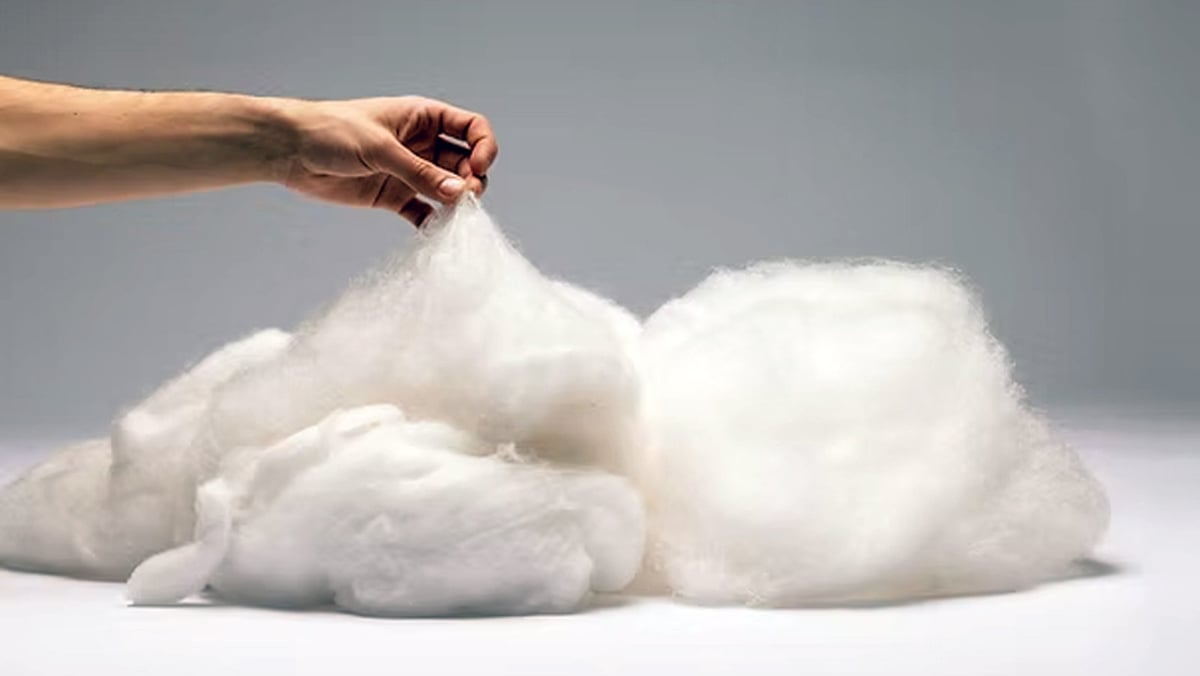
Using heat, pressure, and a spinning head, the Polyfloss spins the plastic by centrifugation into thin fibers. Those fibers are then blown with cold air to elongate them and cool them prior to being ejected for collection on a grid, bag or with a rotational collector to directly create yarns. Each type of plastic requires a different profile to achieve this, so Polyfloss has developed its own in-house software. Once parameters are set, you apparently only have to press play.
Compatible with PP, PET, and PETG, the Polyfloss is also being tested with other plastics. Polyfloss is so confident in its machine that it is offering a 1-year warranty as well as different payment options. If it functions as stated and manages to hit its target, it could be a fantastic solution to plastic’s primary persistent problem.
Pledges are available from the equivalent of $5,062 that secure your own machine, with an expected final production price of around $7,000. Businesses seeking to go into production can pledge roughly $15,900 to secure three machines for that purpose. With just eight days left the product is under 50% funded, so Polyfloss will be hoping for a late surge.
Editor's Note – This article highlights a Kickstarter crowdfunding campaign. Kickstarter is not a shop; campaigns are under no legal obligation to deliver on crowdfunding promises, nor offer refunds on unfulfilled campaign rewards.

For more insight, read our article 8 Things to Watch for When Backing a 3D Printing Kickstarter.
Read more recent news:
License: The text of "3D Printer Poop Into Fabrics and Fluff? This Kickstarter Campaign Has a Novel Answer to the Question of 3D Printing Wastage" by All3DP is licensed under a Creative Commons Attribution 4.0 International License.