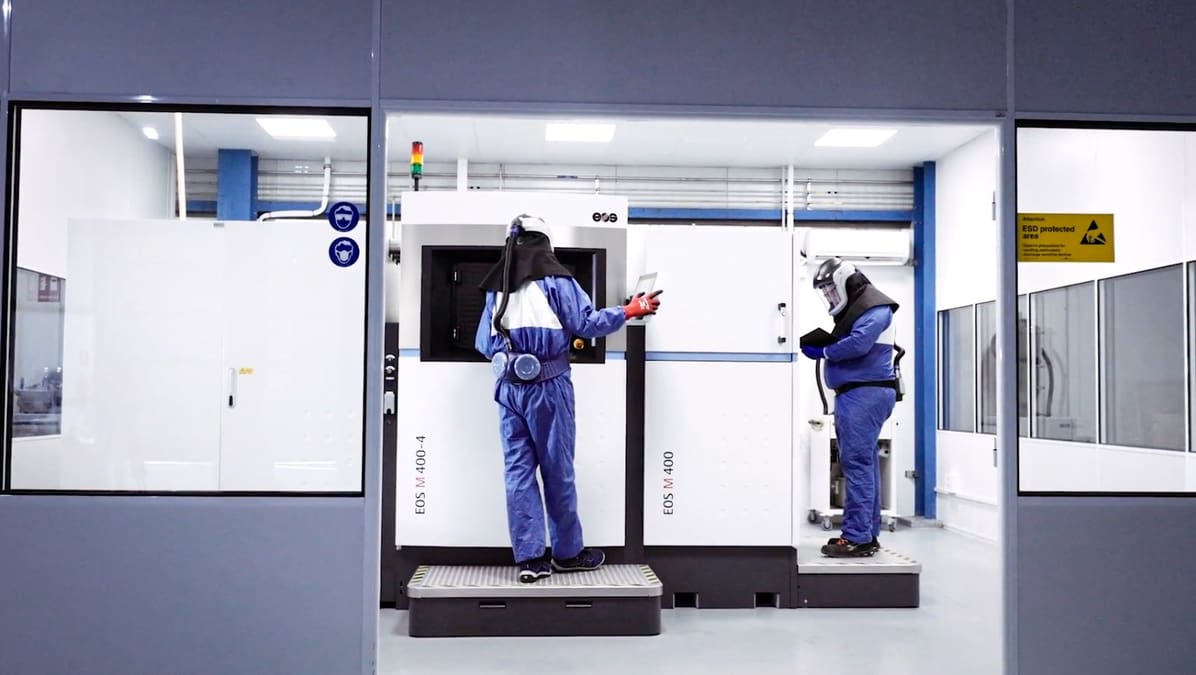
Is Europe Finally Taking Additive Manufacturing Seriously? A New AM Manifesto States the Case

As global rivals invest heavily, Europe sets a new tone for coordinated action, but will real investment and quick political action follow?
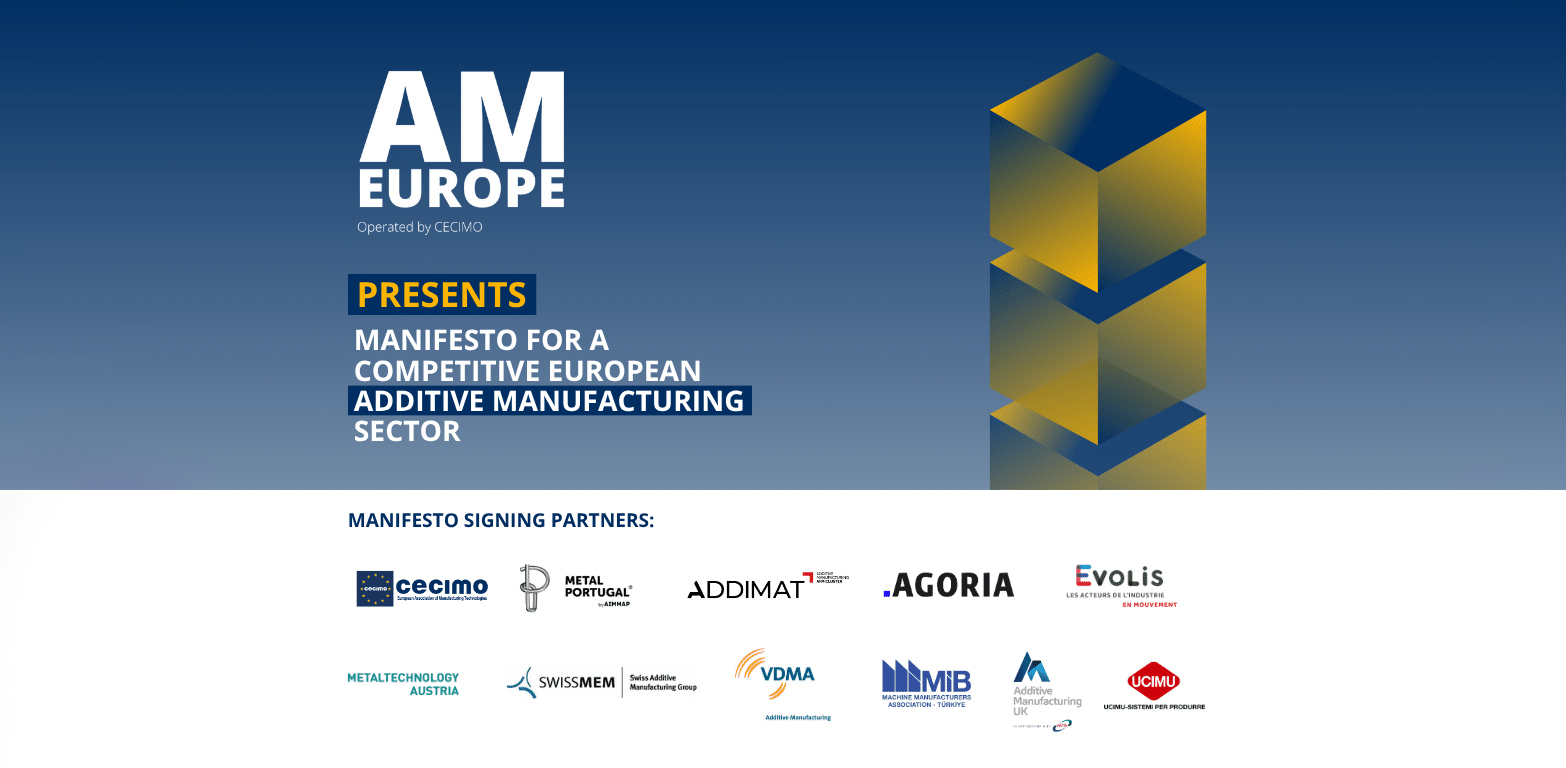
In a declaration that underscores both opportunity and urgency, the European Association of Manufacturing Technologies, along with ten other national manufacturing associations, released the Manifesto for a Competitive European Additive Manufacturing Sector. This new document lays out a strategic vision for establishing Europe as a global powerhouse in additive manufacturing, calling for coordinated action across policy, industry, and workforce development.
Although the continent has long been home to AM leaders and pioneers — EOS, Materialise, Siemens, Renishaw, UltiMaker — the manifesto reflects growing concern: international competitors, particularly the United States and China, are moving swiftly and decisively to solidify their dominance in the next era of advanced manufacturing.
A Measured but Pressing Response
The manifesto arrives just months after a wave of U.S. federal initiatives designed to scale up American AM capabilities — particularly in defense, energy, and supply chain resilience.
Since taking office in January, President Trump’s administration has issued several key executive-level directives that significantly bolster the policy environment for additive manufacturing in the United States.
In addition to the well-publicized goal to make America a manufacturing nation again, executive orders have mandated streamlined procurement and explicitly encourage the Department of Defense to adopt commercial and innovative technologies such as AM. New directives aim to reduce bureaucratic friction and empower agencies to deploy AM rapidly in defense readiness contexts. Other executive orders, also focusing on military preparedness, clear the path for AM-produced components to reach allied nations faster, and increase U.S. defense manufacturing capacity, which sends a strong signal that advanced production technologies, including AM, will play a central role in rearming American industry.
The U.S. is certainly not alone in its willingness to incorporate additive manufacturing into its strategy for manufacturing dominance. China, naturally, has taken significant strategic steps to recognize and elevate additive manufacturing as a core technology backed by national policy and investment benefiting companies, such as Bright Laser Technologies (BLT), Farsoon, UnionTech, and Eplus3D.
Made in China 2025, which launched 2015, explicitly targeted additive manufacturing as one of its ten strategic sectors. It included concrete goals: 30% annual AM growth and over 100 pilot projects across key industries. China’s metal-AM market is among the fastest-growing worldwide, with rapid adoption across orthopedics, tooling, aerospace, and defense domestically and targeting industry in the EU and US.
Europe Leads in R&D but Lags in Adoption
Against this backdrop, the European manifesto may signal a shift from research-heavy enthusiasm toward a more cohesive industrial policy. It outlines a range of actions designed to strengthen the continent’s competitiveness:
- A comprehensive European additive manufacturing strategy, modeled after the Coordinated Plan on Artificial Intelligence.
- A dedicated European AM public-private partnership to consolidate knowledge, accelerate adoption, and support commercialization.
- Recognition of AM as critical infrastructure for emergency response, ensuring rapid production of key components during crises.
- Focused investment alignment across Europe and national programs to avoid duplication and prioritize impact.
- A call to empower the workforce with specialized AM skills through initiatives like the EU-funded SAM (Sector Skills Strategy in Additive Manufacturing) program.
Perhaps most tellingly, the manifesto is backed by a broad geographic coalition—from Portugal and Turkey to Germany, the UK, and Switzerland—reflecting a shared awareness that the time for fragmented national efforts has passed.
Additive Manufacturing as Strategic Infrastructure
The manifesto doesn’t just advocate for innovation; it frames AM as infrastructure — a critical layer in Europe’s ability to deliver on its sustainability, digitalization, and security goals. Its benefits span from lower carbon emissions via lightweight part production and localized supply chains to faster repair cycles, greater design flexibility, and new material frontiers.
But it also warns: without decisive action, Europe risks falling behind. The U.S., with its latest policy burst, aims to not only invest in AM, but integrate it deeply into its national industrial backbone.
The European Association of Manufacturing Technologies has impact on EU policy with concrete regulatory wins. It also has a track record of leading consortiums, drafting standards, and coordinating industry-wide projects that underscore its potential to shepard this manifesto from statement to action.
The publication of this manifesto reflects Europe’s acknowledgment that additive manufacturing has outgrown its experimental phase, but whether this marks the beginning of a European AM renaissance will depend on what comes next: political will, funding alignment, and cross-border cooperation. Yet, the message is unmistakable: The race for leadership in additive manufacturing is on and Europe is a contender.
You May Also Like:



License: The text of "Is Europe Finally Taking Additive Manufacturing Seriously? A New AM Manifesto States the Case" by All3DP Pro is licensed under a Creative Commons Attribution 4.0 International License.