For SLS Part Finishing, Raise3D’s New B520 is Challenging Formlabs Fuse Blast

The B520 at $10K may represent a competitive alternative to the Formlabs Fuse Blast, focusing on automating the final finishing step for SLS parts.
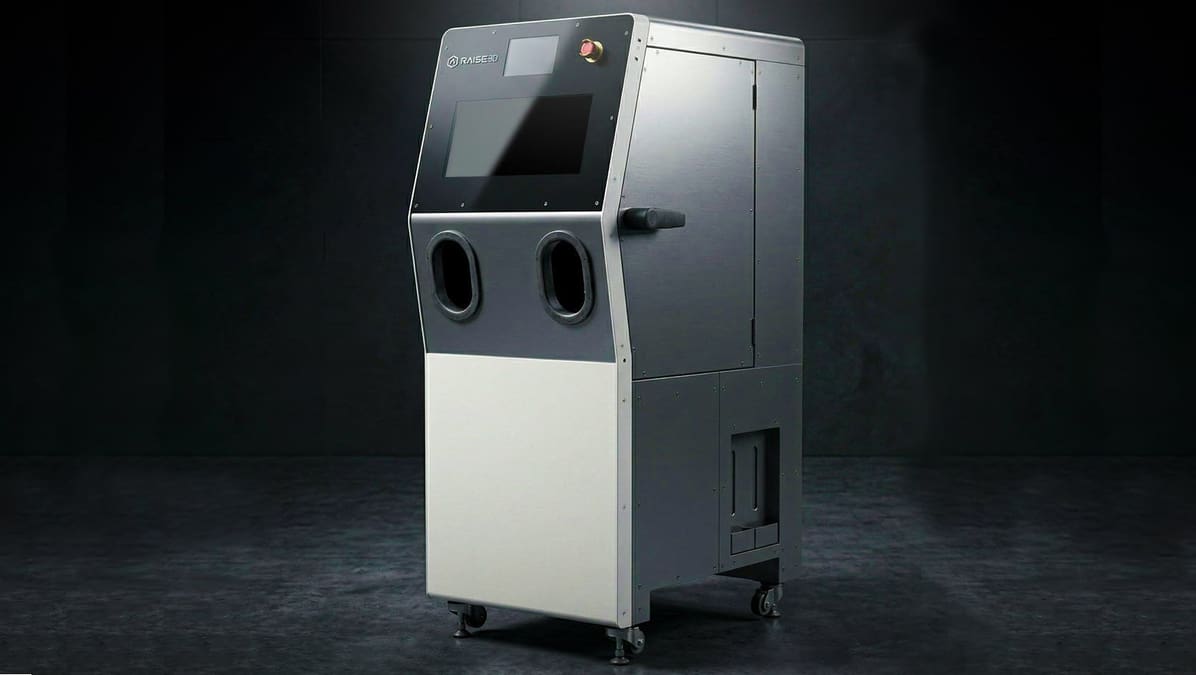
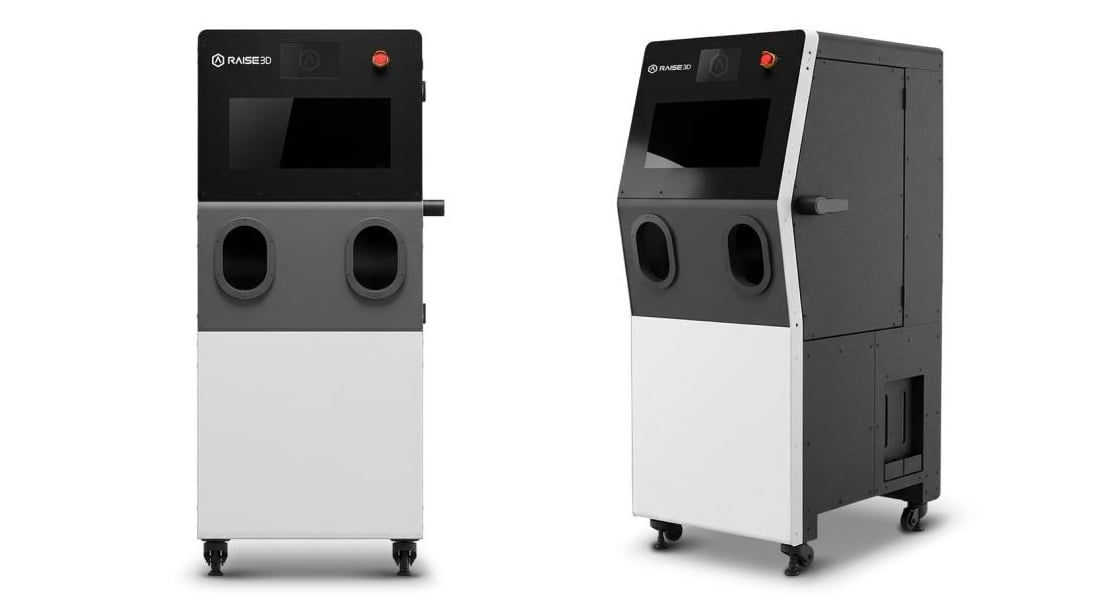
Raise3D launched a sand-blasting unit today at Rapid + TCT that’s designed to remove the manual labor and inconsistency from selective laser sintering (SLS) production. The new B520 sandblaster ($9,999) automates both removing the excess powder from SLS parts and surface finishing, such as polishing with glass beads. For manufacturers, this translates into more predictable output and the ability to scale without proportionally increasing manual work.
At its core, the B520 uses a sealed chamber with precision-controlled media flow and programmable parameters, the company says, to deliver consistent surface results across batches. By enclosing the blasting process and optimizing airflow and filtration, the unit is also designed to improve cleanliness and operator safety while reducing contamination. An optional polishing module will also be available, designed to further simplify operation and expand the capabilities of the B520, but pricing and availability for this module are still TBD.
The unit is launching at about $1,000 less than the Formlabs Fuse Blast, launched in the early 2024, which generally serves the same propose although not using exactly the same approach. If you’re deciding between the Raise3D B520 and the Formlabs Fuse Blast, it may come down to scale versus speed: the B520 is better suited for higher-throughput, production-oriented environments where larger batch capacity and adjustable process control matter, while the Fuse Blast is the stronger choice for teams that prioritize ease of use, faster setup, and a tightly integrated, plug-and-play workflow.
The Final Mile in SLS Part Production
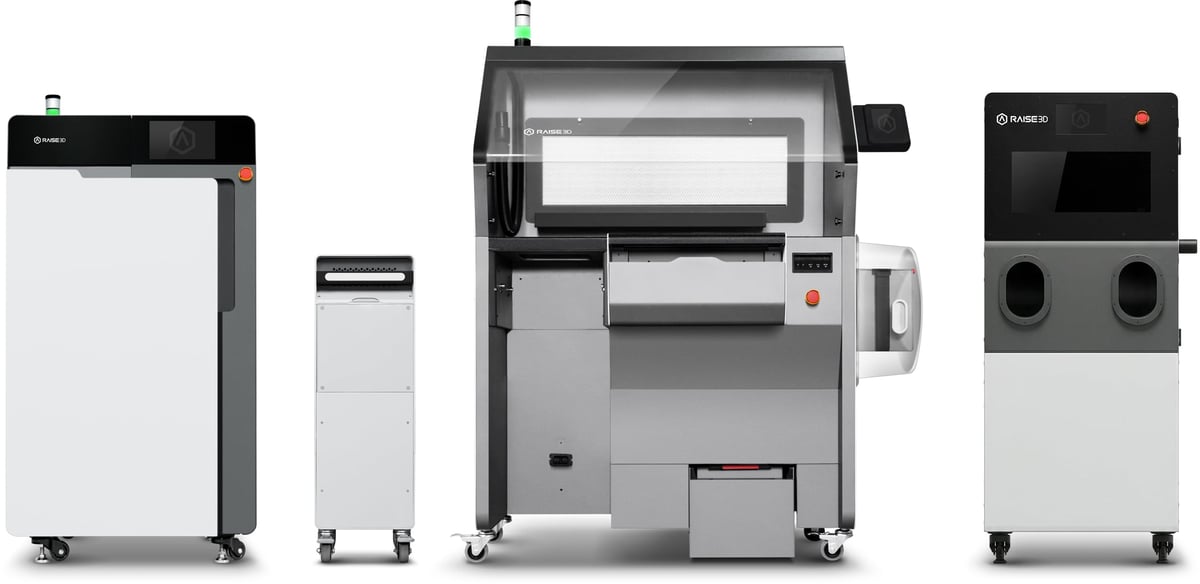
The Raise3D SLS 3D printer, the RMS220 ($34,999), which All3DP covered at launch about a year ago, is still listed as available for pre-order on the Raise3D website and expected to become available “first quarter of 2026”.
SLS parts emerge from the RMS220 encased in a block of unused powder that’s removed in a powder station like the Raise3D C220-P Cleaning Station ($9,999) that sifts and retains the powder for reuse. But then parts still have powder in crevices that needs to be removed and the surfaces typically need some polishing. This step in the Raise3D SLS workflow was once manually done or required using third-party systems. Now, with the B520, Raise3D customers using the RMS220 SLS 3D printer (and even businesses using other brands of SLS printers) can automate this final finishing. Raise3D says the process requires less than five minutes of operator interaction per cycle.
The B520 supports up to 30 liters per cycle and is designed to handle larger-format SLS builds without requiring additional handling steps, the company says.

Raise3D B520 Sandblasting Station
Polishing the Surface
The B520 can also be equipped with “an optional polishing module”, the company says, extending its role beyond depowdering into final surface refinement. With that addition, the system moves closer to functioning as a single-station finishing solution, capable of taking parts from raw print to end-use readiness in one controlled environment.
The emphasis on automation reflects a broader shift in additive manufacturing, where post-processing is increasingly seen as a limiting factor in scaling production. While printers have become faster and more capable, downstream steps like depowdering and finishing have often remained labor-intensive.
By standardizing these processes, the B520 aims to reduce variability between parts and batches while lowering the labor required to achieve production-quality results.
Two New Powder Material Options
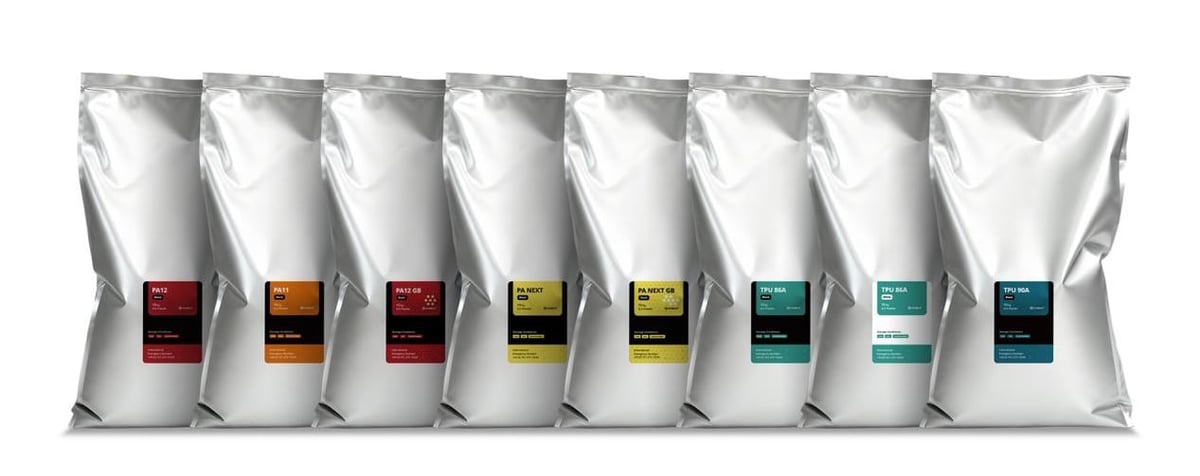
Alongside the hardware, Raise3D is also expanding its SLS material lineup, including new PA Next and PA Next GB powders. Together, these additions reflect a broader strategy of delivering a more complete, production-oriented ecosystem—but the immediate focus remains on solving the post-processing bottleneck.
With the B520, Raise3D is zeroing in on a critical gap in SLS workflows: the step between printing and finished part. By automating depowdering and surface finishing in a single system, the company is aiming to bring the same level of consistency and scalability to post-processing that modern SLS printers have achieved on the production side.
How Raise3D’s SLS Compares
You May Also Like:
License: The text of "For SLS Part Finishing, Raise3D’s New B520 is Challenging Formlabs Fuse Blast" by All3DP Pro is licensed under a Creative Commons Attribution 4.0 International License.