Finally More Affordable MJF & SLS Post-Processing Solutions for Low-Volume Workshops

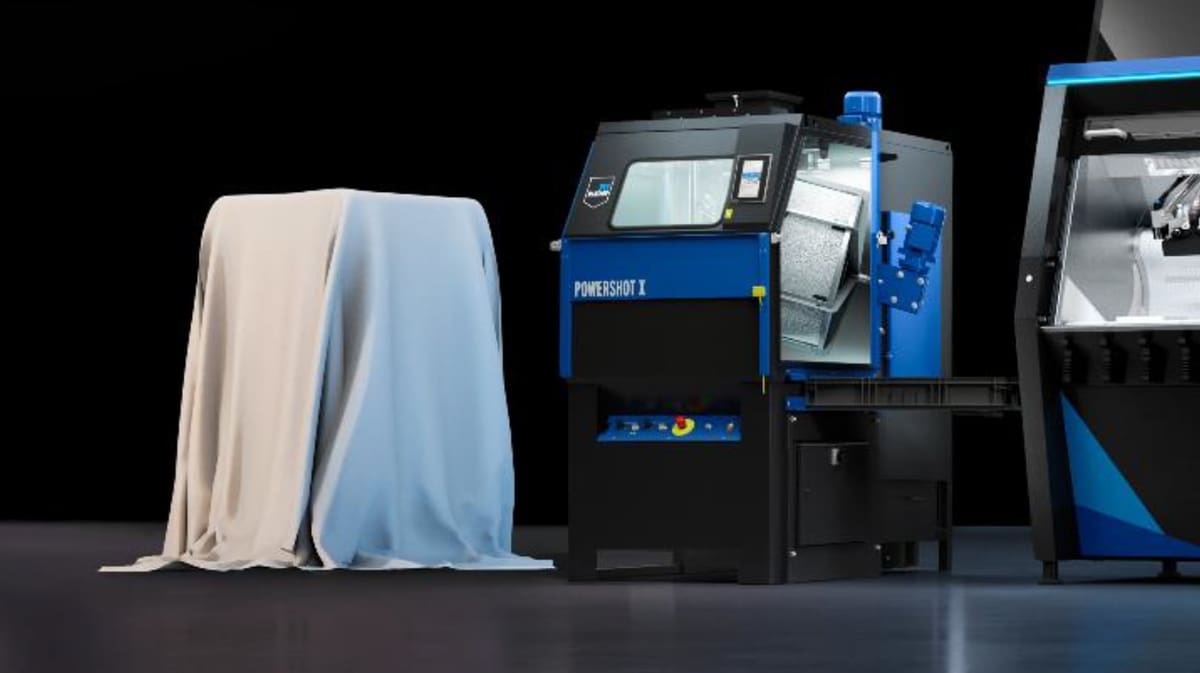
DyeMansion’s upcoming compact Powershot aims to eliminate the manual labor bottleneck with automated PolyShot surfacing for smaller workshops adopting systems like the HP MJF 1200.
Polymer powder-bed 3D printing has long carried a dirty secret: the tedious, manual labor required for post-processing. While massive industrial production cells handle powder removal and surfacing effortlessly, smaller workshops 3D printing with machines like the Sinterit Lisa or or Formlabs Fuse, have traditionally been forced to carry out tedious manual powder removal.
DyeMansion, one of the top bands in small niche of additive manufacturing post processing equipment, is looking to bring automated post processing to low-volume producers with a new compact Powershot system designed to deliver “automated, industrial-grade cleaning and surfacing,” the company says.
With over 1,300 machines already installed worldwide as post-processing companions to large powder-bed systems, such as EOS, 3D Systems, and Farsoon, DyeMansion is pivoting to ensure that post-processing scales down just as well as it scales up.
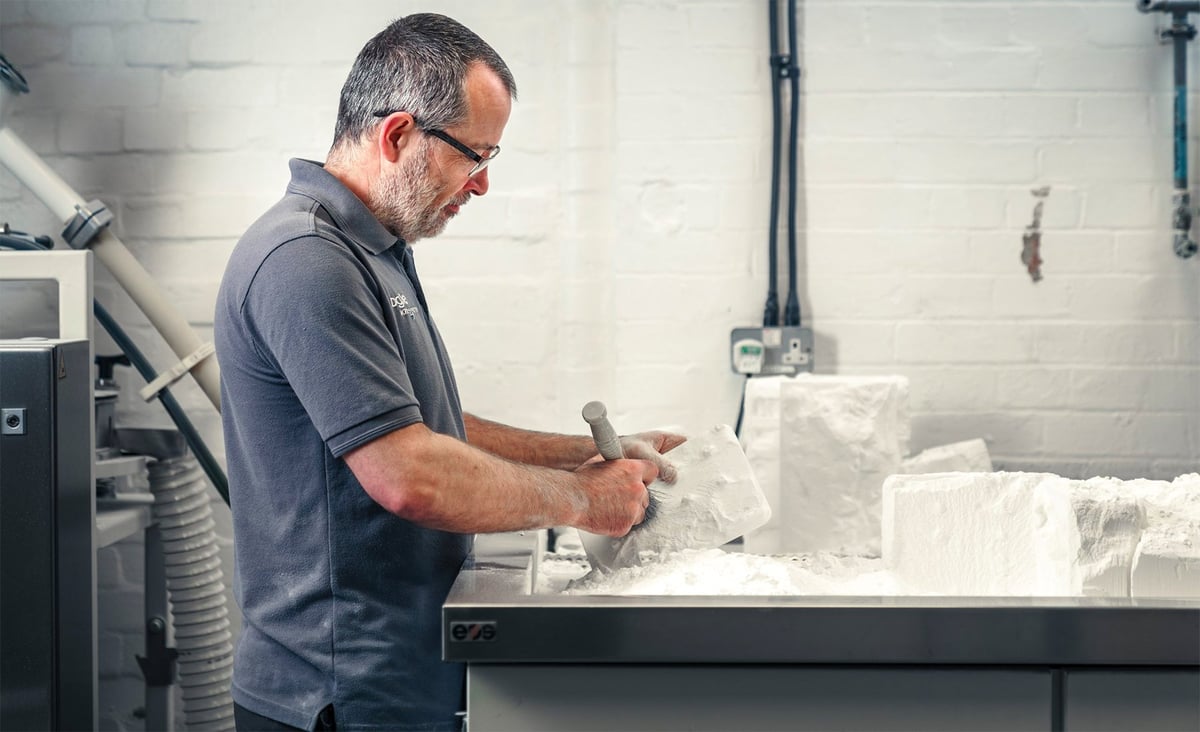
Escaping the Manual Labor Trap
The upcoming compact Powershot, which is slated to make its full debut at Formnext 2026 in November, brings DyeMansion’s PolyShot Cleaning & Surfacing technology to a much smaller footprint. It is targeted directly at service bureaus, OEMs, and companies using smaller powder-bed printers or those with industrial machines that simply don’t have the throughput to justify DyeMansion’s large-scale Powershot X or Dual Performance systems.
Previously, low-volume customers looking at DyeMansion’s lineup might have settled for the entry-level Powershot C, which is strictly a cleaning machine. The new compact Powershot offers a clear upgrade path: a two-in-one cleaning and surfacing solution.
A Growing Market for Accessible Powder Printing & Processing
This announcement highlights a shift in the additive manufacturing landscape with SLS and MJF becoming potentially more accessible thanks to more affordable machines, like the new smaller Multi Jet Fusion machine from HP (the MJF 1200 at around $60K) and the Raise3D SLS (the RMS220 at around $40K). With more polymer powder printing, there will be the need for more post-processing.
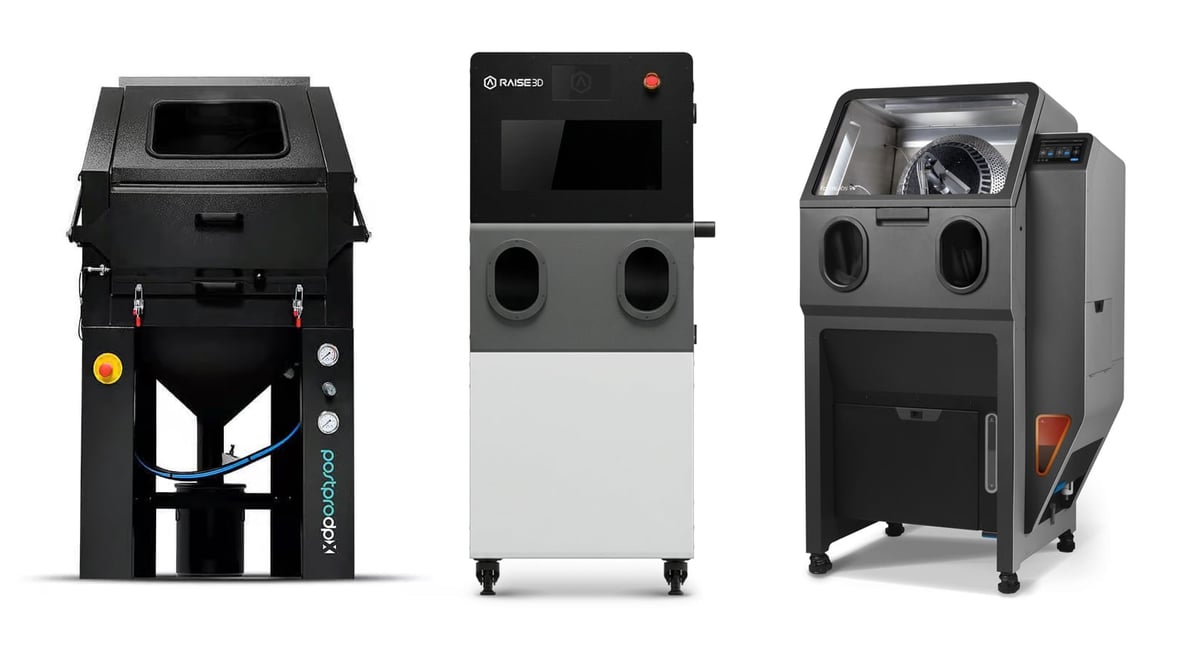
Although hard specifications of the unit, such as dimensions, effective build volume, cycle times, connectivity details, and crucially, the price tag remain tightly under wraps, DyeMansion’s new machine will likely go head-to-head with the Formlabs’ Fuse Blast with optional polishing system (about $14,000), as well as fresh challengers like Raise3D’s new B520 (priced around $10,000), and AMT’s PostPro DPX (about $16,000).
For smaller businesses, the proliferation of compact finishing machines is eliminating the manual labor bottleneck that has historically kept smaller shops from adopting polymer powder-based AM. Underscoring this industry-wide push toward accessible industrial manufacturing, HP has already positioned the new DyeMansion system as an ideal companion for its recently launched compact Multi Jet Fusion 1200 3D printer.
We will have to wait for Formnext 2026 to get the full spec sheet and see exactly how this new compact contender stacks up against a rapidly crowding field of rivals. All3DP will be there.
You May Also Like:

License: The text of "Finally More Affordable MJF & SLS Post-Processing Solutions for Low-Volume Workshops" by All3DP Pro is licensed under a Creative Commons Attribution 4.0 International License.