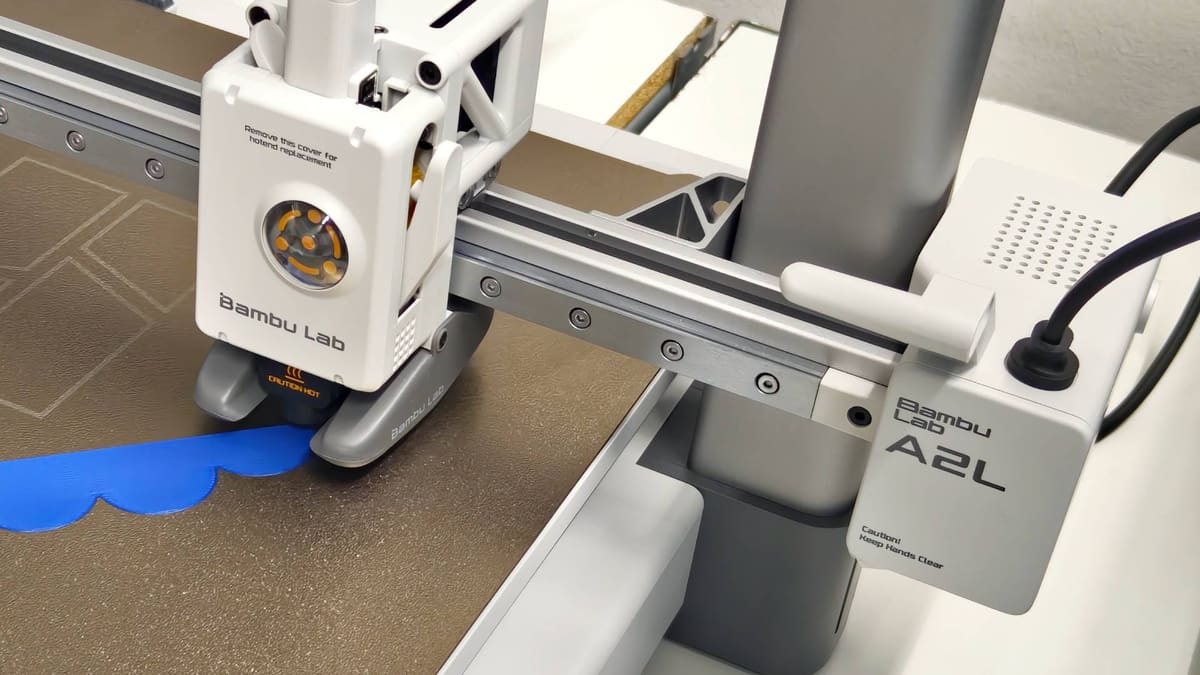
Bambu Lab Refreshes A-Series, Leads with New A2L Large Bed-Slinger

The company scales up its budget range further with the A2L, a larger build volume printer with H2-series module compatibility. Just don't expect a laser.
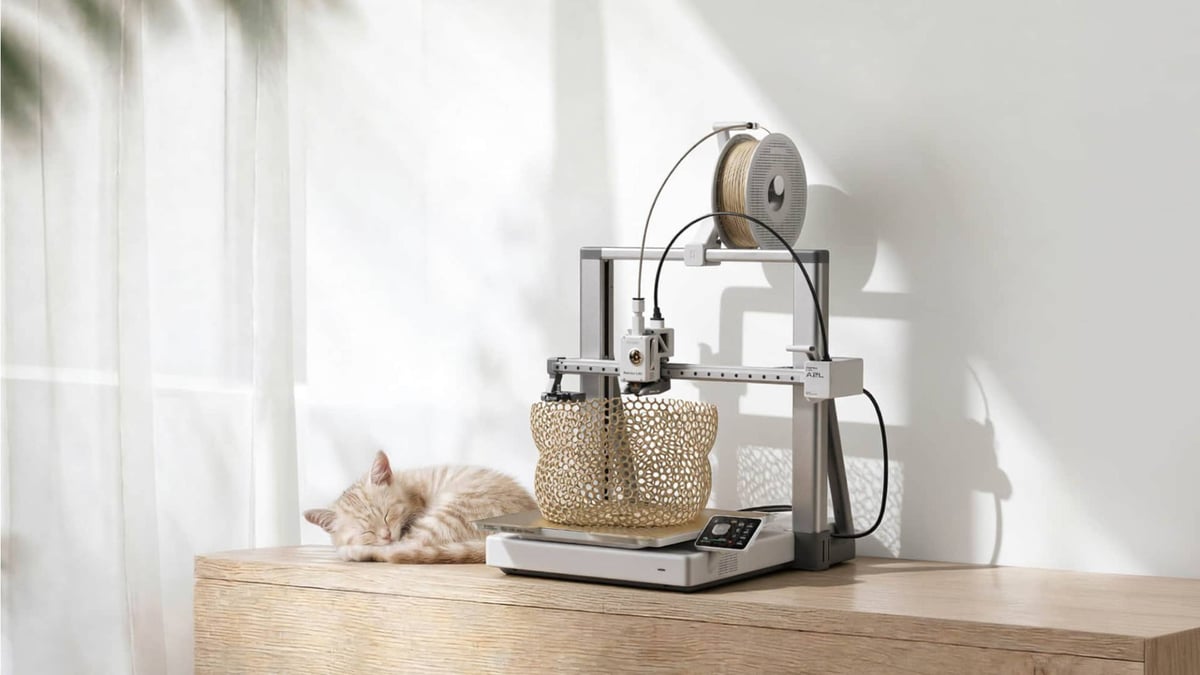
The last of Bambu Lab’s first-gen series 3D printers has finally gotten an update in the Bambu Lab A2L. Released today, June 1, the printer takes the bed-slinging simplicity of the A1 and iterates it further still, scaling it up and adding crafting compatibility with the company’s drag blade and pen plotting modules. This new printer lands just a month after the company released the engineering-centric X2D dual extrusion printer: with the A2L, the company is pivoting attention back to something more family-friendly.
Priced at $469 for the standalone printer and $569 for the A2L Combo, which ships with the AMS Lite filament feeding device, the core proposition here is that it’s the same accessible A1 that we know, but bigger, with some borrowed tech from its more advanced H2-series siblings.
The basic specs run as follows: a 330 x 320 x 325 mm build volume, with 300°C at the hot end and 80°C for the heated bed. Speeds and flow characteristics remain the same as the core A1: 500mm/s with 10,000mm/s acceleration, and maximum hot end flow rate at 28mm³/s.
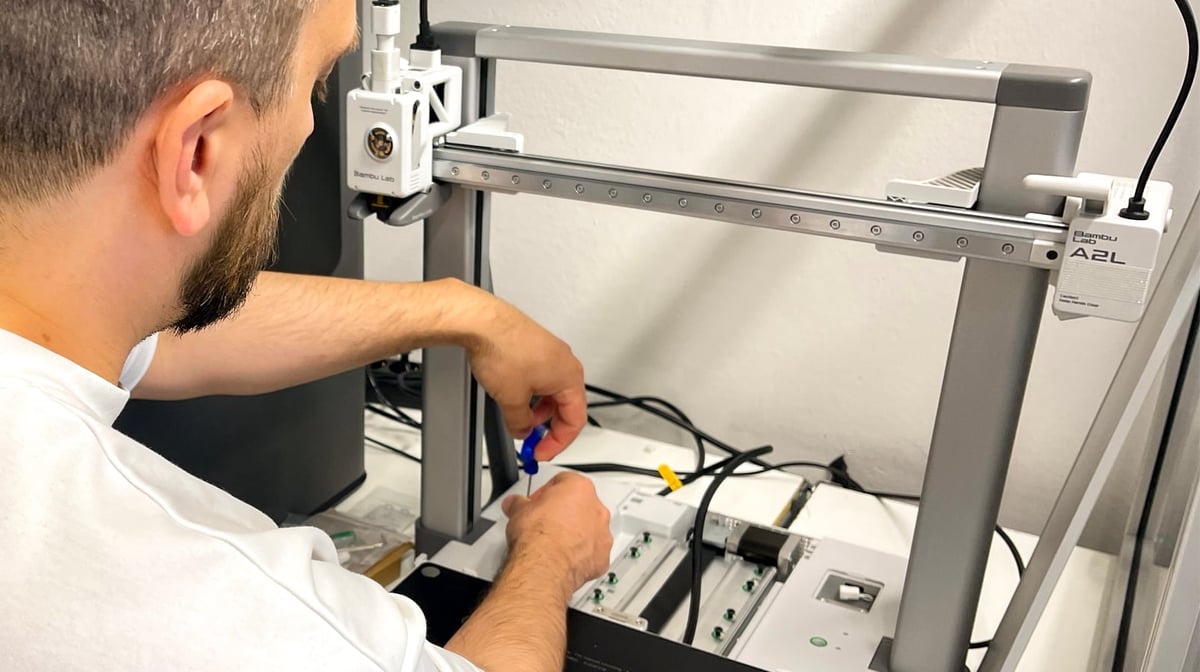
On paper, it tracks very closely to the A1 before it, though the two key differentiators are the doubling of print volume – the A2L shares build plate size with the H2C – and a 20°C drop at the heated bed. Bambu Lab explains the change as one made for performance and efficiency, stating the energy requirements to maintain a 100°C bed at this larger size on an open-frame printer didn’t make sense. It’s a compromise, for sure, but a sensible one given 100°C-bed printing on an open frame printer is a low performance fringe-case for a printer designed to run PLA and PETG and not much more. The ceiling doesn’t need to be so high.
The A2L joins a small group of other Bambu Lab printers to be UL2904 “Greenguard” certified, which signifies emissions from the printer, in this case using PLA Basic, PLA Pure, and PETG Basic, remain below the safe, standard thresholds for indoor use.
Bambu Lab A2L: At a Glance
Printer: Bambu Lab A2L | A2L Combo
Price: $469 | $569
Build volume: 330 x 320 x 325 mm
Temperatures: 300°C hot end | 80°C bed
Speed: 500mm/s | 10,000mm/s acceleration
Material compatibility: PLA, PETG, other “non-engineering” material
Compatible addons: AMS Lite, AMS, AMS 2 Pro, AMS HT, Blade Cutting Module, Pen Plotting Module
Connectivity: WiFi (2.4G)
Other features: Camera
Weight: 12.8 kg
Max. dimensions: 544 x 529 x 505 mm
New Features for Big Print Stability
Visually, the A2L looks very much like the A1, scaled up. Under the hood Bambu Lab has made some changes to accommodate the larger amount of mass the machine will be moving. For one, the company introduces what it calls Adaptive Vibration Compensation. Like regular vibration compensation, which measures the resonance in a given axis of movement and effectively “cancels” it out, “adaptive” compensation kicks in automatically through the print, the company says, explaining the system is “intelligently retuning for different bed loads and toolhead positions in real-time” with the result that “ensures smooth surfaces and sharp details from the first layer to the last regardless of print speed or part weight.”
The other mentioned adaptation for larger-scale printing is what Bambu Lab calls an “in-frame granular dampener” – they’ve stuffed voids in the frame with granules to neutralize vibrational resonance. This is a practise used in some industries to mitigate resonance in equipment, but this is the first we’re seeing or hearing of it in a 3D printer. The impact of such a move isn’t substantiated with figures by the company, so how necessary it was here, we’ll have to see.
Unlike the A1 series machines, which launched locked to the company AMS Lite “open” filament feeder, the A2L ships with compatibility with the full range of Bambu Lab’s AMS devices, including the AMS HT. The only caveat is that the printer’s Bambu bus connection doesn’t deliver the necessary power for drying functionality of the AMS2 Pro and HT, meaning you’ll have to source a separate power cable to run them in that mode with the A2L.
The chaining of AMS devices is supported – up to four regular box style AMS devices plus one AMS Lite giving 19 possible filament paths. On paper that should mean 20 filaments available to you, but one AMS Lite filament slot is taken out of play by the buffer to accommodate the box AMS devices.
New for the A-series is compatibility with most of Bambu Lab’s non-3D printing functions. The blade cutting tool and pen plotter attachments, introduced with 2025’s H2D 3D printer, both work with the A2L.
Practically, this means you’re able to process much more than filament on the printer – you can cut vinyl stickers, draw and then cut paper inserts – it’s quite open ended. The blade can cut through 0.5 mm of material at up to 600 gf (gram force). These modules don’t ship with the printer as launched today – you’ll need to get the dedicated blade cutting upgrade kit ($69). It includes all the necessary equipment for plotting and cutting, including a grippy cutting mat, the modules, plus sample materials to get started.
These additional functions work slightly differently in the H2-series machines, which are riddled with cameras to assist with workpiece placement and material checks throughout the cutting workflow. The A2L doesn’t have that – it’s missing the birds-eye camera – and so you’ll have to use your smartphone and the Bambu Handy app for manual photo alignment.
One consequence of this smartphone-assisted caveat is that Bambu Handy must be “online” to connect with and talk to the printer. We’ve confirmed with Bambu Lab that using the camera-assisted alignment feature won’t be possible with the A2L when in LAN mode.
As you might expect, for safety reasons the laser attachment is deliberately left out of the A2L’s feature set.
The Bambu Lab A2L and A2L Combo are available now on the Bambu Lab webstore.
Read more recent news:
License: The text of "Bambu Lab Refreshes A-Series, Leads with New A2L Large Bed-Slinger" by All3DP is licensed under a Creative Commons Attribution 4.0 International License.