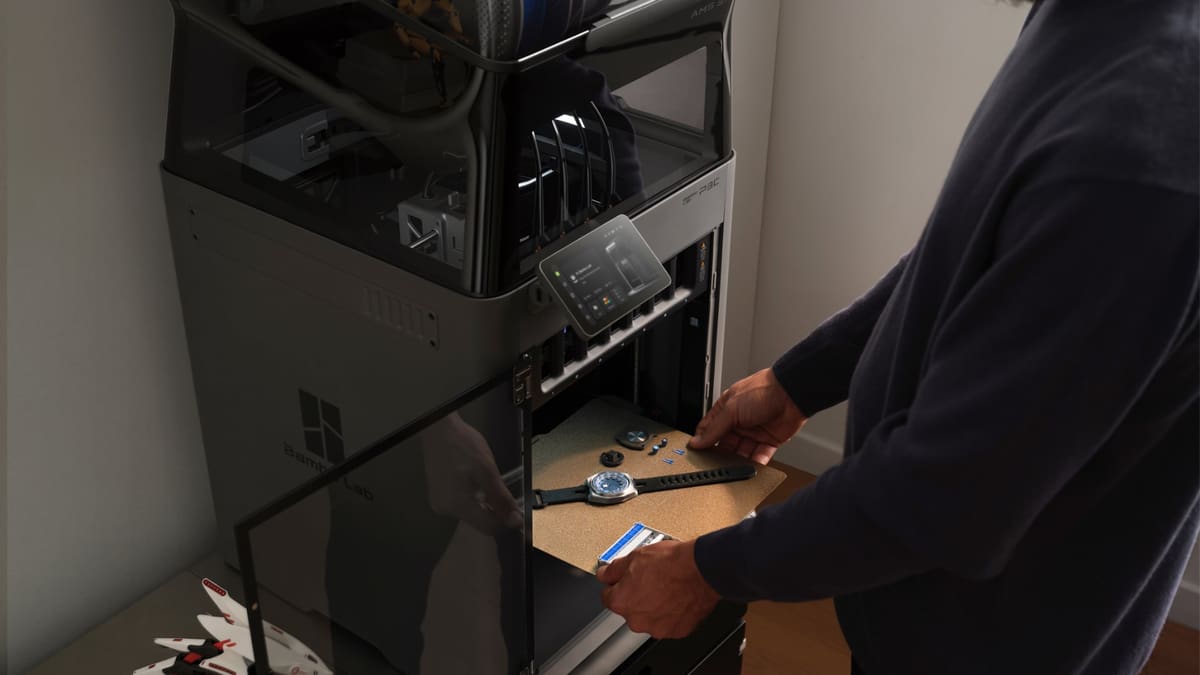
Bambu Lab Launches the P3C, the Bambu Lab Toolchanger Most of You Will Actually Buy

Scarcely weeks after dropping the H3C, a flexibles-first toolchanger at the top of its game, we now have the mid-range version of the same concept, the 7-tool-capable P3C.
If you just bought an H3C knowing it was overkill for your needs, this news might smart a little. Just weeks after launching the H3C and only a week after a trade fair known for big debuts, Bambu Lab has dropped the P3C – a seven-tool toolchanger for the mid-range P-series.
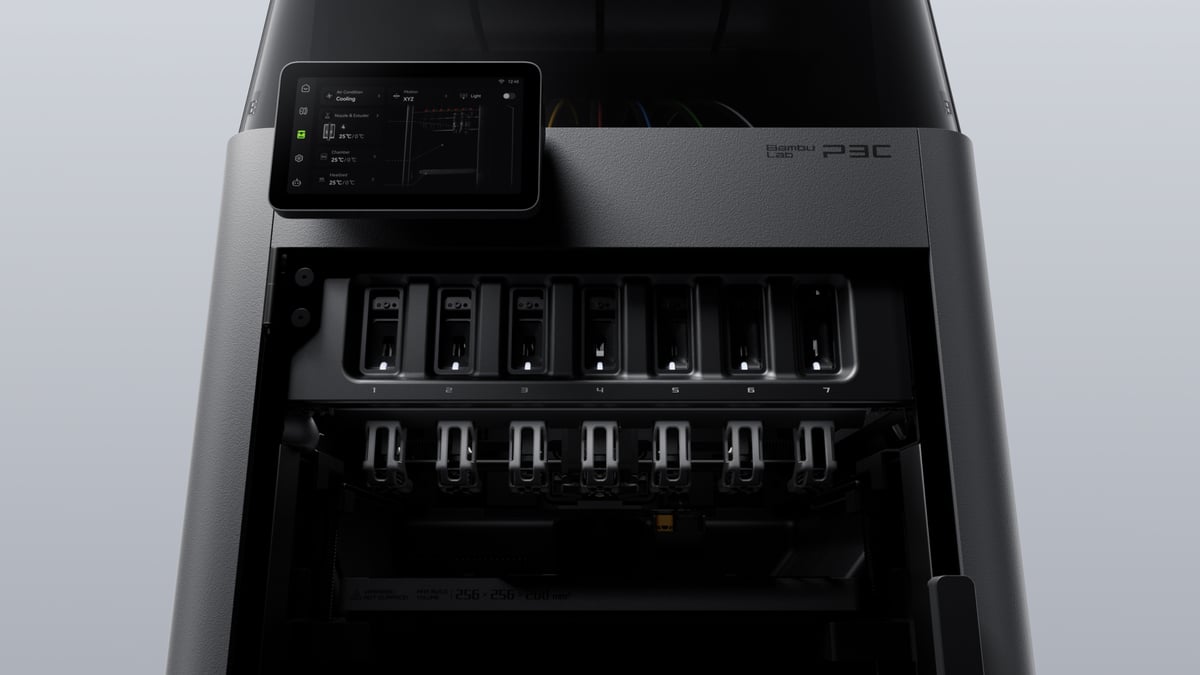
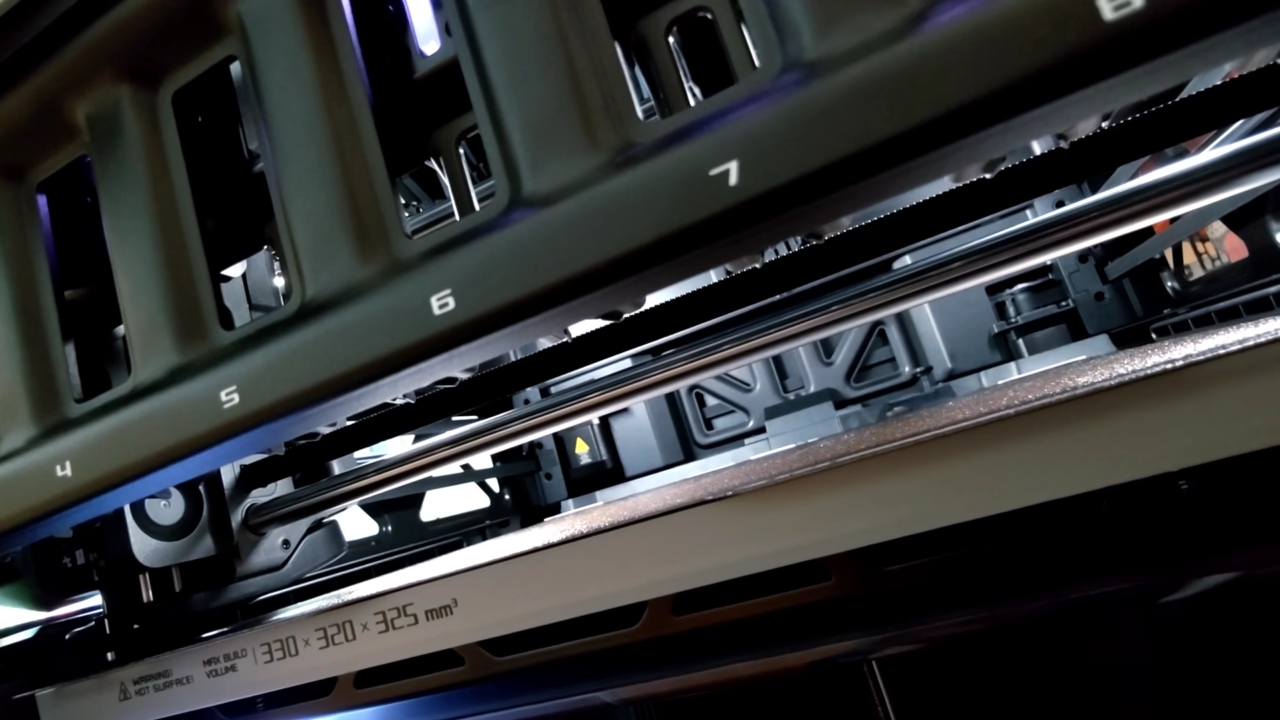
The printer borrows heavily from the H3C, utilizing SwapTek tools parked in a retractable dock at the front of the machine. The tools’ tech itself is identical, including the printer’s extruder’s ability to shift itself to accept 2.85 mm filament (but only through the correct tool).
Launching at $1,149, the P3C Combo ships with five print tools, with two empty slots that you can furnish with additional tools to bring it up to the total of seven for a print. Additional print tools cost $99, though Bambu Lab will sell printer bundles with more tools tailored toward specific types of printing – for multicolor, or multi-material with the 2.85mm tool for soft flexibles printing. The nozzles attached to the print tools can be changed out, so it’s not necessary to purchase a whole new tool for different nozzles sizes. The only distinction to keep in mind is that the 2.85mm print tool is a distinctly different unit and exclusive for flexibles in that particular size. The regular 1.75mm tools can be used for any material.
The P3C ships ready to mix nozzles sizes in prints, with the software feature to do so added to Bambu Studio with the launch of the H3C earlier this month.
The standard P-series build volume carries through to the P3C, 256 x 256 x 256 mm, with a 300°C max hot end temp and 110°C heated bed temp.
As with the PS2, there’s no active chamber heating – Bambu Lab clearly keeps the H3C and P3C separated capabilities-wise, as it did the H2S and P2S. The new printer is not simply a smaller version of the H3C, though. There are some compromises.
Bambu Lab P3C vs. H3C: Differences
Despite the changes, the core performance of the printer should remain in step with the H3C. The maximum speed and acceleration are 1,400 mm/s and 25,000mm/s, respectively. Just like the H3C. That’ll translate to fast prints and, depending on the job, very fast toolchanges. A prime tower is still necessary, so you won’t be gaining the kind of material efficiency we see with the INDX, but for raw speed, it’s fast. Bambu Lab clocks the standard hot end at 40mm³/s flow, printing a round, single-walled model in Bambu Lab ABS material.
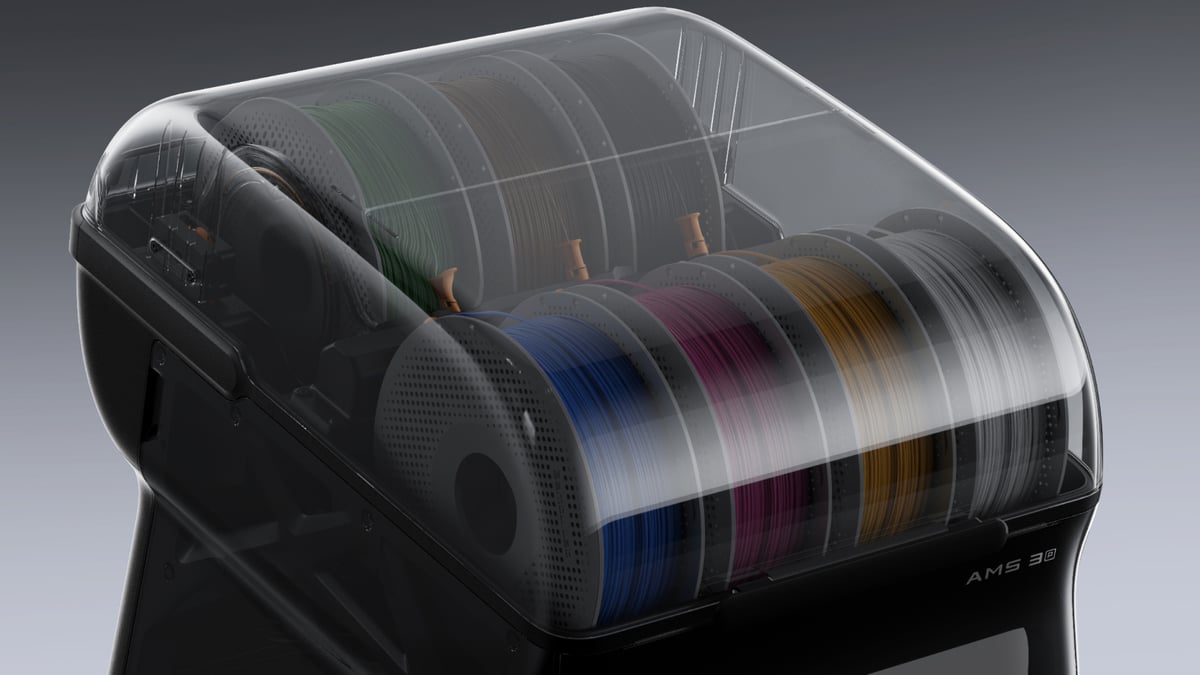
An all-new AMS unit specifically for the P3C ships with the printer, and is a necessary fixture for the printer as a whole. The toolheads ship attached to it. Called the AMS 3P, it mounts to the top of the printer and acts as the enclosure ceiling, sealing the print chamber. You can access the filament slots inside by lifting the lid up, propping it open on ratcheted arms. And you can access the chamber by removing either of the printer’s side windows.
Inside, there are seven spool slots with filament ingress tubes. Bambu Lab lists the P3C as not featuring auto filament loading – a distinction from the H3C, which does. This ostensibly means the AMS 3P won’t grab and push filament from the AMS to the print tool, with a manual feeding action required from you. The lack of an auto-rewind on the H3C is a common complaint, but the absence of even an auto-feed here for the P3C could be argued as a full degradation of the experience from any of the regular AMS devices. This only really hits when changing filaments between jobs, rather than impacting the printer’s capabilties: the machine in it’s stock state wouldn’t be able to change the filament fed to a tool even if it could autowind. Each spool slot in the AMS is a distinct filament path for the tool.
As with the H3C, one tool channel is reserved for external AMS connection. Four AMS units can be chained, feeding tool slot one to expand the P3C’s total filament count to 22.
Five of the seven spool slots feature bypass ports for flexible materials to drop through the AMS’s floor directly into the chamber.
With the chamber enclosed, Bambu Lab includes a H11-grade HEPA filter with granulated coconut shell activated carbon, going some way to filter emissions from printing. As with the H3C, the P3C is compatible with the company’s new E1 Air Purifier station ($199), upgrading the filtration making it so – their words – “you can keep printing without relying on an open window for ventilation”.
Also an optional extra is the AMS 3P’s filament drying unit. Costing $159.90, this sits inside the AMS 3P and encloses two spools for effective drying at up to 75°C. Camera-based print monitoring gets a prospective bump over the P2S, with an optional birds-eye camera available to provide a second angle, top-down on the build plate.
An update to the printer’s Health Management System (HMS) closes things out, with plain language troubleshooting tips and procedures now displayed on the printer’s display, augmenting the QR-code link-outs from before. Instead of having to go into a web browser to figure out a problem, you can stay at the printer and walk through things there instead.
The Bambu Lab P3C Combo is available now, starting at $1,149 on the Bambu Lab webstore.
You’ve Read That; Now Read These…
License: The text of "Bambu Lab Launches the P3C, the Bambu Lab Toolchanger Most of You Will Actually Buy" by All3DP is licensed under a Creative Commons Attribution 4.0 International License.