3D Printed Skeleton: The Best Models to 3D Print

3D printed skeletons make for great decorations and costume accessories. Read on to find some of the best boney models to print!
Skeletons are one of the most common decorations for Halloween and other spooky celebrations. Of course, depending on the model, they can also satisfy curiosities or educational purposes.
Regardless, the many joints and bones make skeleton designs pretty complex, making for a fun 3D printing challenge and a great way to show off the capabilities of your machine. In this article, we’ve compiled a list of some of the best skeleton 3D models that you can make.
If you see something you like, but you and your printer aren’t on speaking terms these days, don’t fret; try Craftcloud. With just a few clicks, you can specify everything you want and leave the printing to the professionals (including smooth or polished finishes!).
And now, let’s see some spooky designs!
Articulated Toy
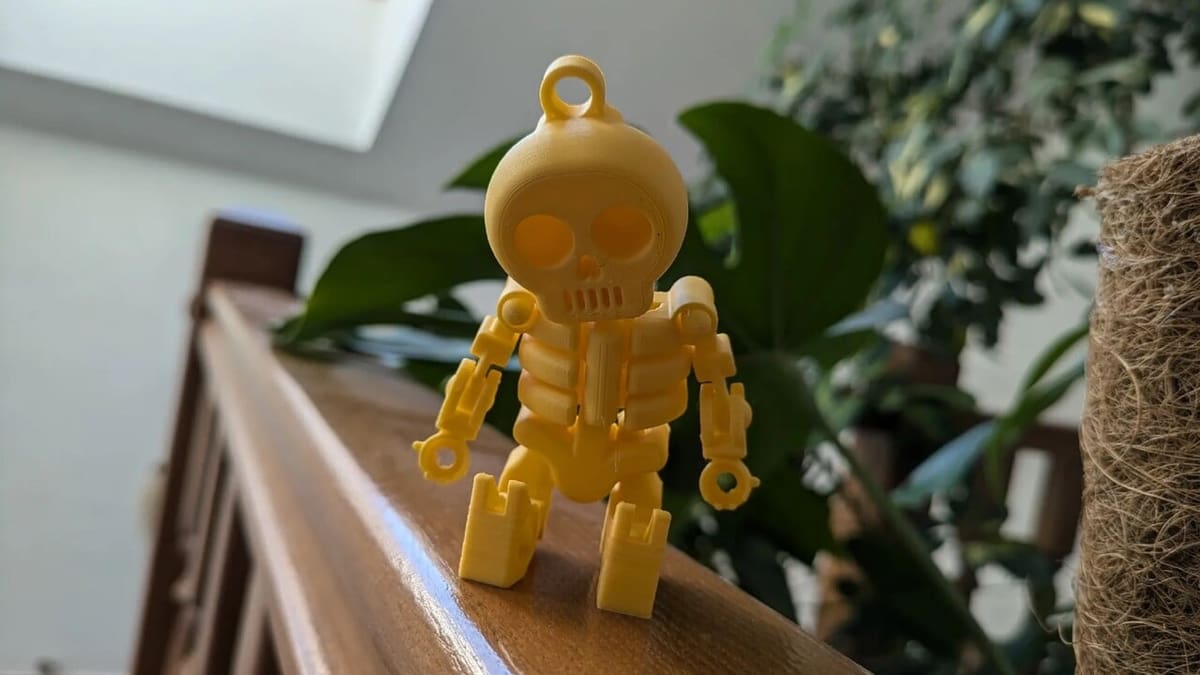
With a classic toy style and a mini mascot vibe, this small articulated skeleton is one of those prints that appeals for its simplicity and charm. Its compact size and cartoonish aesthetic make it perfect as a desk item, pendant or even keychain for fans of Halloween or eccentric characters. Despite being new to the platform, it has already gained a following among users due to its fun pose and friendly appearance.
The model is printed all at once, with the movable joints generated by articulated printing (so no external assembly or fittings are required). The designer’s recommended printing settings for the skeleton include a 0.2-mm layer height, a skirt, and the use of three perimeters, plus gyroid infill. Although the author used PETG, users have also reported good results with PLA.
The model also comes with a series of accessories, such as an executive briefcase, a gravedigger’s shovel, a French baguette, a tennis racket, a knight’s sword, and a cute Halloween pumpkin basket.
- Who designed it? t3dworld
- How printable/popular is it? This cute mascot has been downloaded 4,800 times and 52 makes have been shared so far.
- Where to find it? Printables
Poseable Army
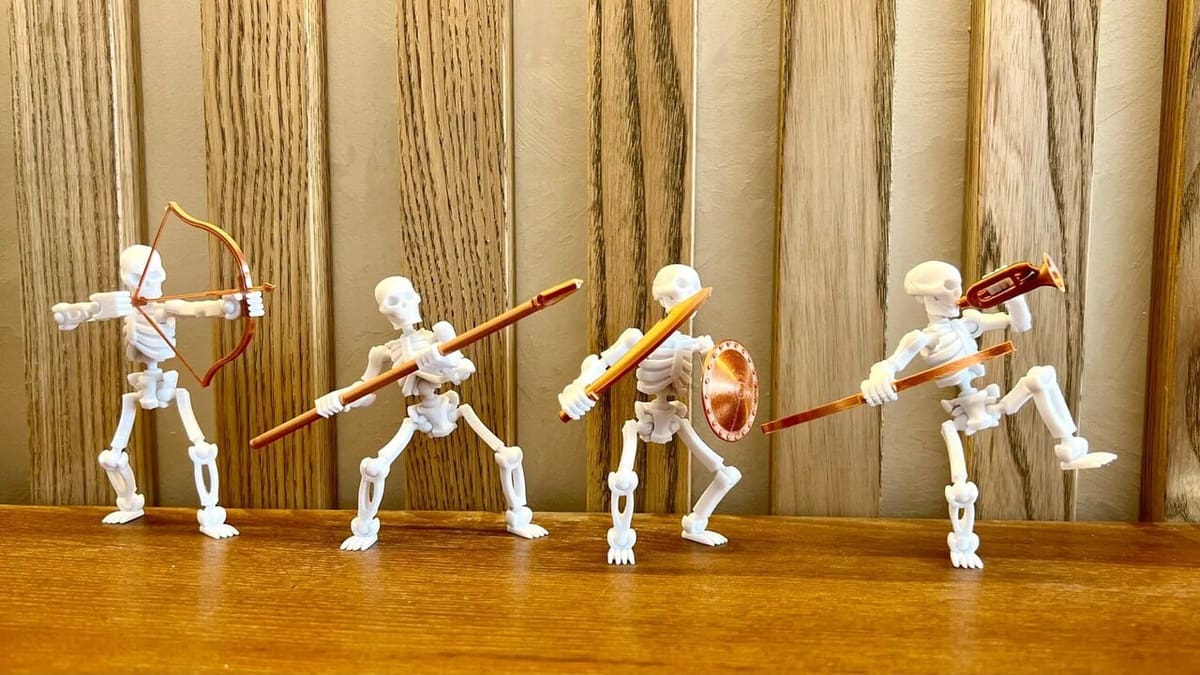
You know that kind of print that begs to be replicated en masse? This army of articulated skeletons is exactly that. Instead of just one miniature, you’ll have dozens of warriors ready to invade gaming tables or Halloween scenes. The aesthetic is reminiscent of classic strategy games and RPGs; there’s something of Warhammer and D&D here, but with more personality.
The model offers multiple pose options with movable arms and legs, as well as accessories like shields and spears. The articulation is simple and robust enough to withstand light manipulation. The author recommends using a 0.16-mm layer for better definition, especially in the details of the armor and faces. Several users mention that they printed the model in batches, taking advantage of its good adhesion to the build plate and compact size. For those who want more variety, it’s also possible to resize the parts and create larger skeletons, which can be ideal as “bosses”.
- Who designed it? soozafone
- How printable/popular is it? With over 100 shared makes and more than 8,500 downloads, there’s no doubt about this model’s popularity.
- Where to find it? Printables
Multilayer Silhouette
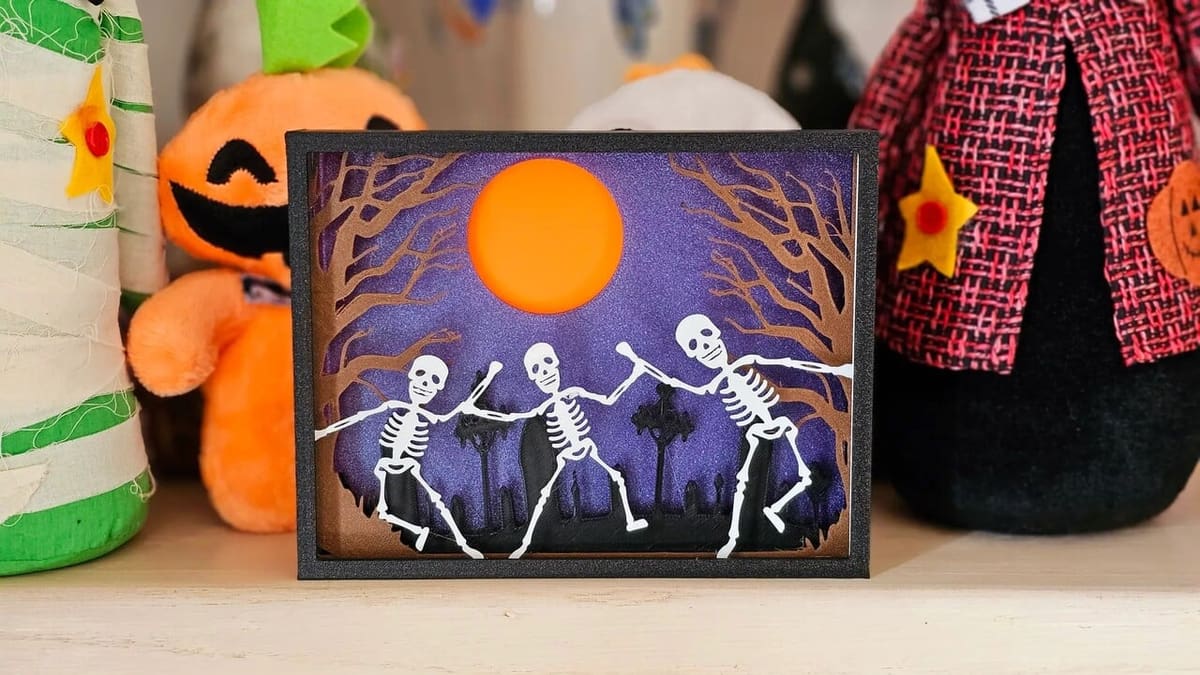
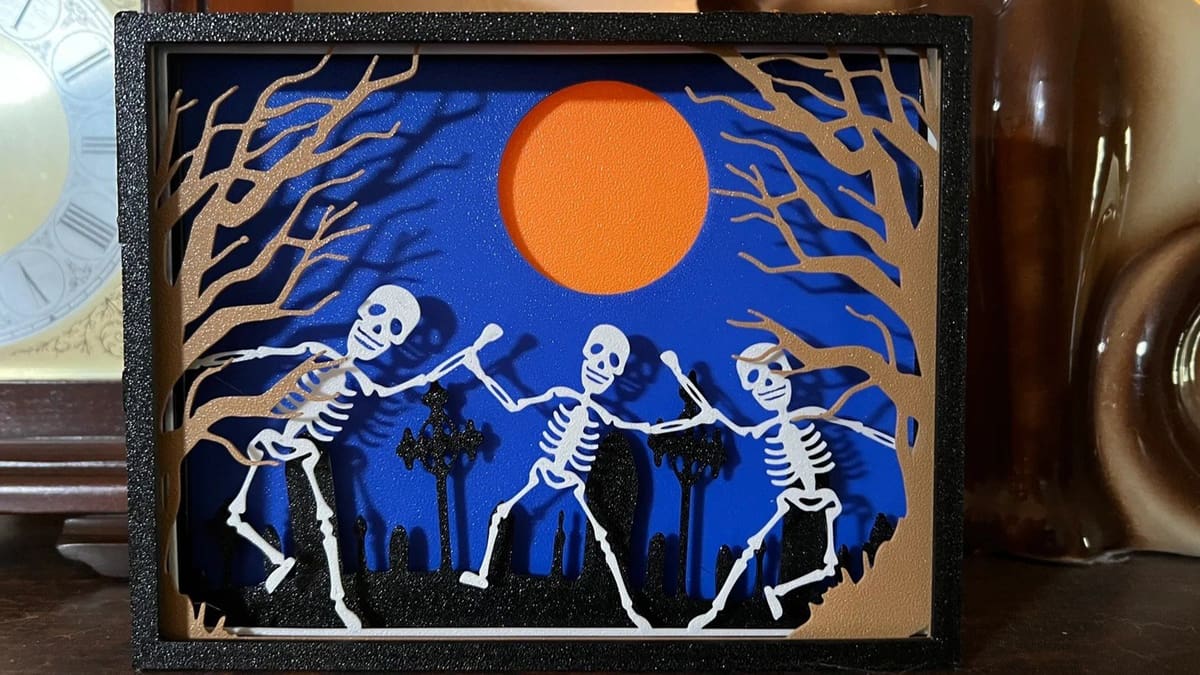
This model takes an artistic and minimalist approach: It’s a skeletal silhouette formed by several layers of depth, creating a creative and modern three-dimensional effect. It’s an elegant and low-tech piece that can add a dark but still cute touch, especially during Halloween.
The designer recommends printing each layer separately and gluing them in sequence, using contrasting colors to enhance the visual relief. The flat base makes it easy to use double-sided tape or adhesive to attach it to the wall, if you want that kind of decor. A really cool tip left by kriswillcode – and shown in some of the makes – is to print the skeletons with glow-in-the-dark filament for spooky details when the lights are off!
And if skeleton’s aren’t your thing or you want to add even more variety and fun to your Halloween decor, the designer has shared the same concept but with scary pumpkins.
- Who designed it? 3DPrintBunny
- How printable/popular is it? With 12 makes and 340 downloads currently, it’s easy to see that this template is a quick and fun decoration to make.
- Where to find it? Printables
Minifig
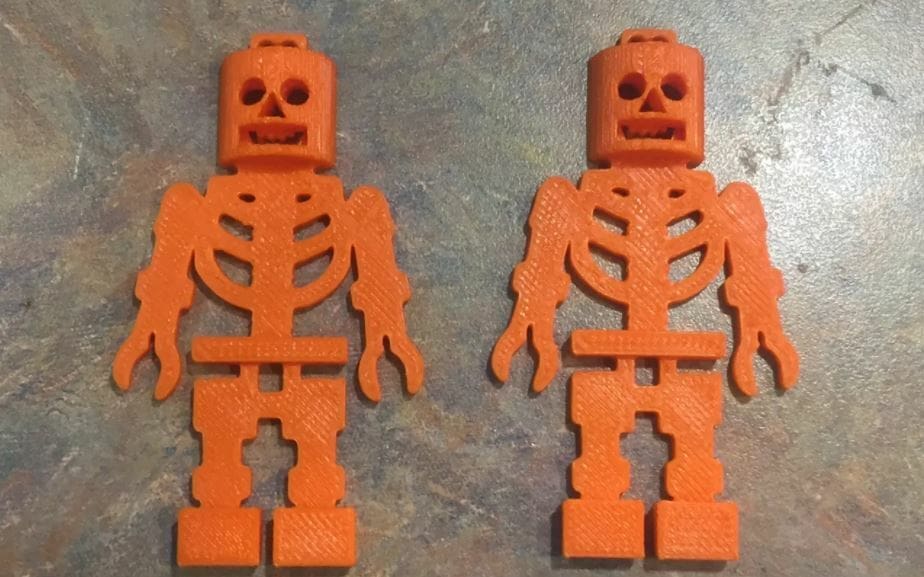
This Lego-like skeleton design would make a great spooky decoration. According to the designer, this model is an update of a similar mini skeleton and includes extra 3D features like a cylindrical head and larger feet.
The design of this skeleton has a flat bottom, making it easy to 3D print because it won’t require supports. Also, its head has a small string hole at the top, so you can hang a few skeletons up with string for decoration as one maker did. Alternatively, you could scale the model down and turn the design into a skeleton keychain.
- Who designed it? terryn
- How printable/popular is it? One Make has been posted, and the design has over 300 views.
- Where to find it? Printables
Mega Brick
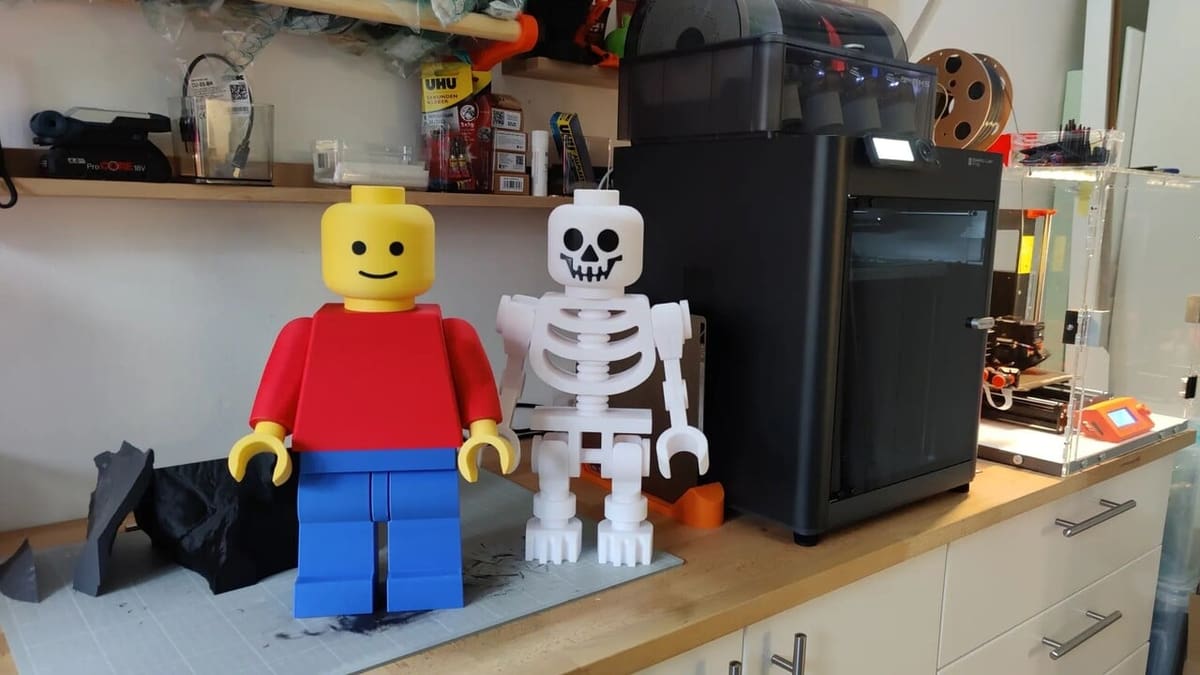
A giant skeleton in the shape of a Lego minifigure? Yes, please! The original scale is 10:1, but many users have reported excellent results at sizes between 40% and 150%. Either way, printing this while maintaining all the details that make the toy recognizable at first glance is very simple. It’s also worth mentioning that it’s a fun and nostalgic reproduction that would fit well into geek spaces or those who grew up with construction toys. The model is divided into several modular parts to make it easy to print and assemble.
Most of the pieces fit together well, but some users mentioned fine-tuning the pins and tabs, especially on less calibrated printers, but a dry-run is helpful before gluing the pieces together for good. Makers also shared creative adaptations, such as opting for glow-in-the-dark filament, going for color variations, and using accessories like the 10:1 Jack-o’-Lantern pumpkin head and winter hats scaled up to fit the skull. Keep in mind that a 150% version can easily exceed 2 kg of filament, but it’s ideal for maximum visual impact in the playroom.
- Who designed it? JuliaEbert
- How printable/popular is it? Over 20,000 downloads and 509 makes published on Printables show that this project is a huge success.
- Where to find it? Printables
Necklace
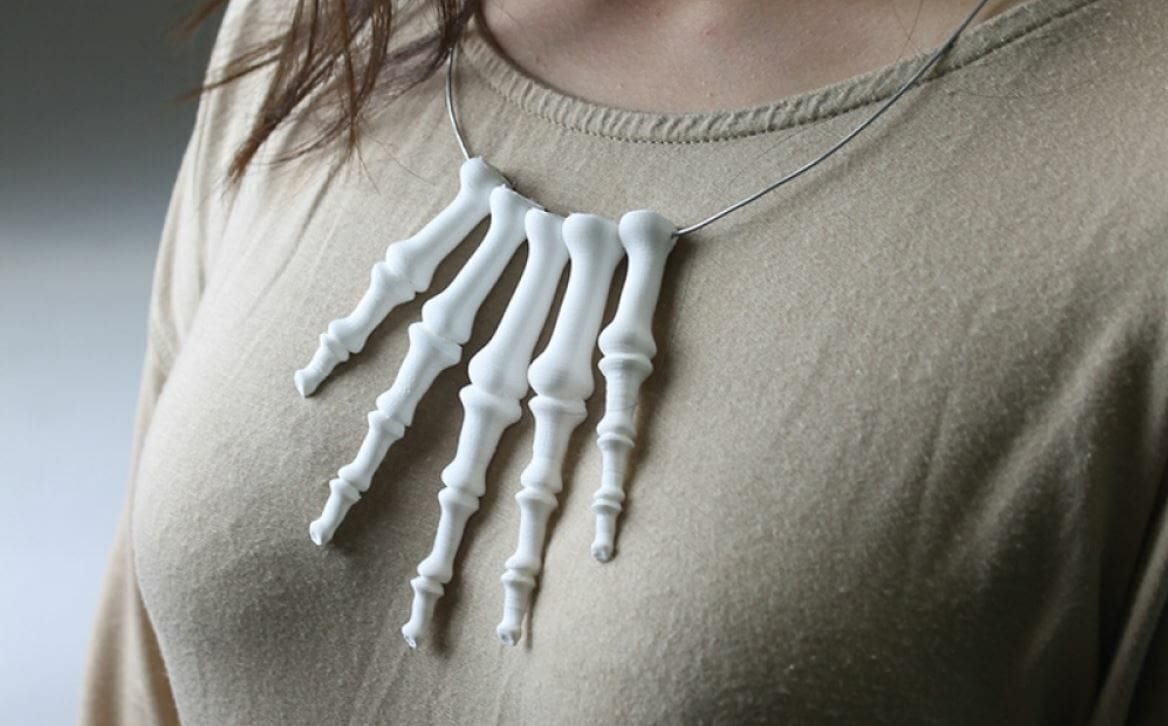
Going to a Halloween party or simply craving a spooky vibe? Well, this design is for you! The model is a set of five skeletal finger pendants for a necklace. The fingers aren’t articulated, but they’re well-designed with each one a different size, making the necklace look like a real skeleton hand.
The maker of this necklace stated that they printed the model with a 0.2-mm layer height and 10% infill density. As there are no tricky overhangs, this model can be printed without supports.
- Who designed it? Eimile
- How printable/popular is it? This stylish design has almost 1,500 downloads and over 14,700 views.
- Where to find it? MyMiniFactory
Coaster
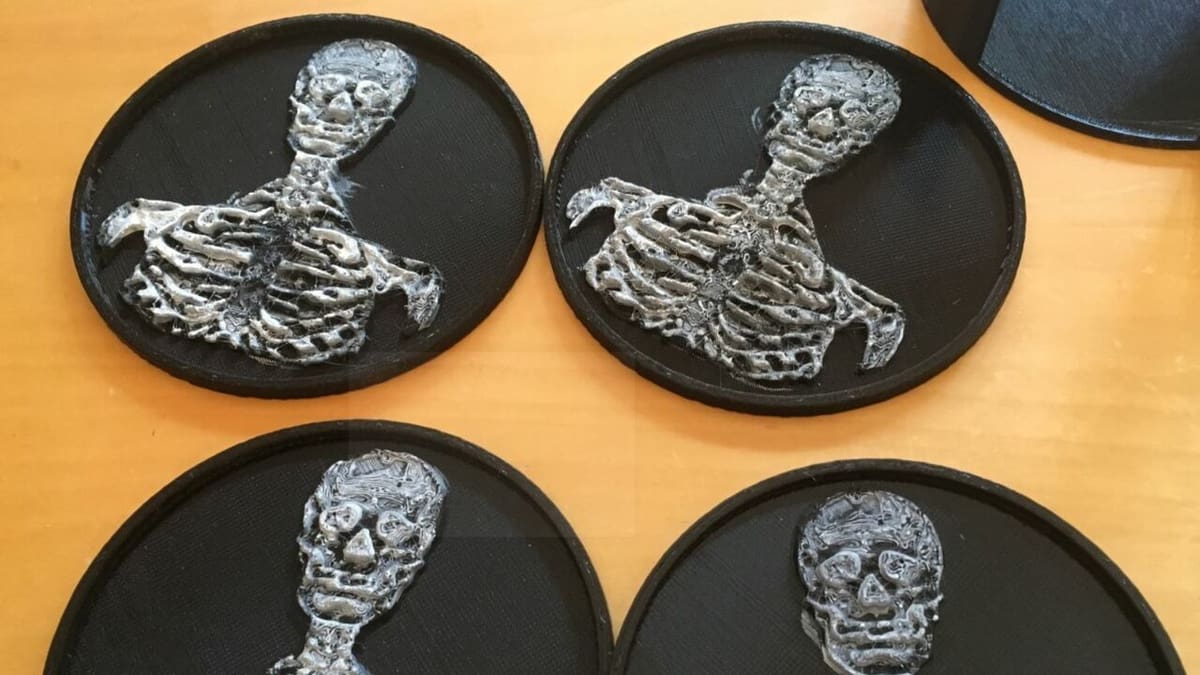
This coaster design includes a scary skeletal figure that looks like it could have come right out of a horror movie. In addition to the actual coaster, the designer has also included a coaster holder model on the project page.
The skeleton design is raised off the base of the coaster a slight amount. You can differentiate the two elements of the design by lightly brushing the skeleton figure in a white (or another color) acrylic paint, as done in the image above.
- Who designed it? thatncguy
- How printable/popular is it? This skeleton coaster design has more than 120 downloads, as well as over 2,900 views.
- Where to find it? MyMiniFactory
Cookie Cutter
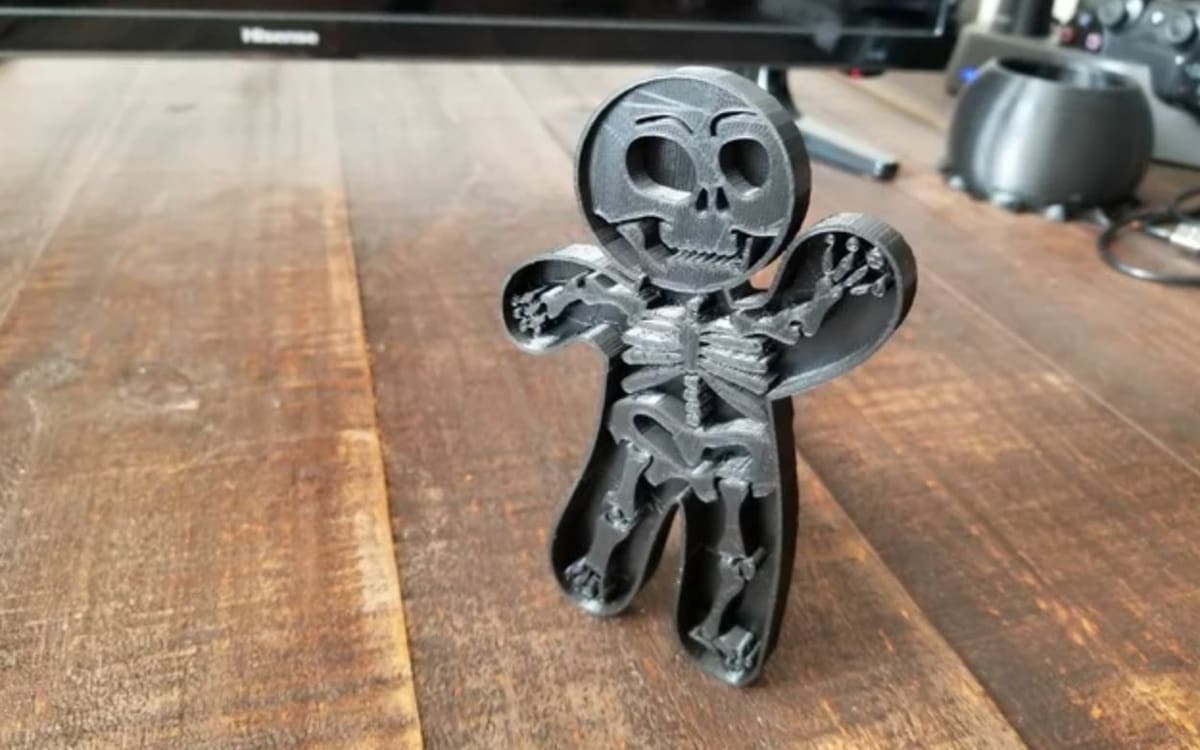
Want to give a boney look to some tasty treats? This 3D printable cookie cutter turns bland cookies into groovy human skeletons.
With a flat base and no overhangs, you shouldn’t need any supports to print this design. One maker stated that they used a 0.1-mm layer height and a 10% infill density to print the cookie cutter.
If you’ll be using the cookie cutters directly on the dough, you might want to look into food-safe filaments and facts on food-safe 3D printing before you get started.
- Who designed it? 3DWork
- How printable/popular is it? This skeleton cookie cutter has 11 recorded makes, a remix, and over 29,000 downloads. As 11 others have posted great prints of this model, you should be able to make one, too!
- Where to find it? Thingiverse
Cat Lithophane
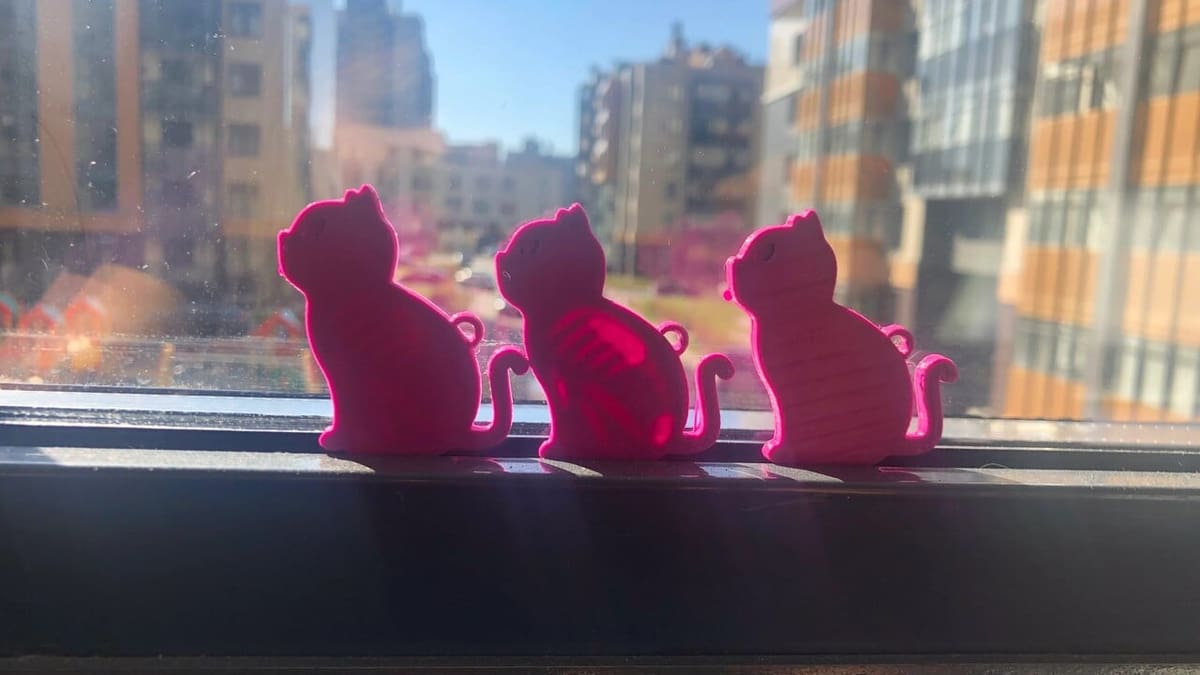
Not all skeletons have to be scary – some can be downright mesmerizing. This cat skeleton lithograph works its magic when backlit, creating a visual effect that blends delicacy with mystery. It’s perfect for themed decor in dark rooms or as a unique gift for cat lovers.
The panel can be printed vertically for better image definition, with a recommended layer height of 0.2 mm. The author suggests using semi-transparent filament to maximize contrast when backlit. Some users, such as Rocket1104, have reported in the comments that they didn’t get good results with regular filament, so it’s important to test whether your filament is too opaque for this model by printing a prototype first.
- Who designed it? tresdlito
- How printable/popular is it? So far, 7 makes and 2 remixes have been shared, while the model has already been downloaded 8,000 times.
- Where to find it? Thingiverse
T-Rex
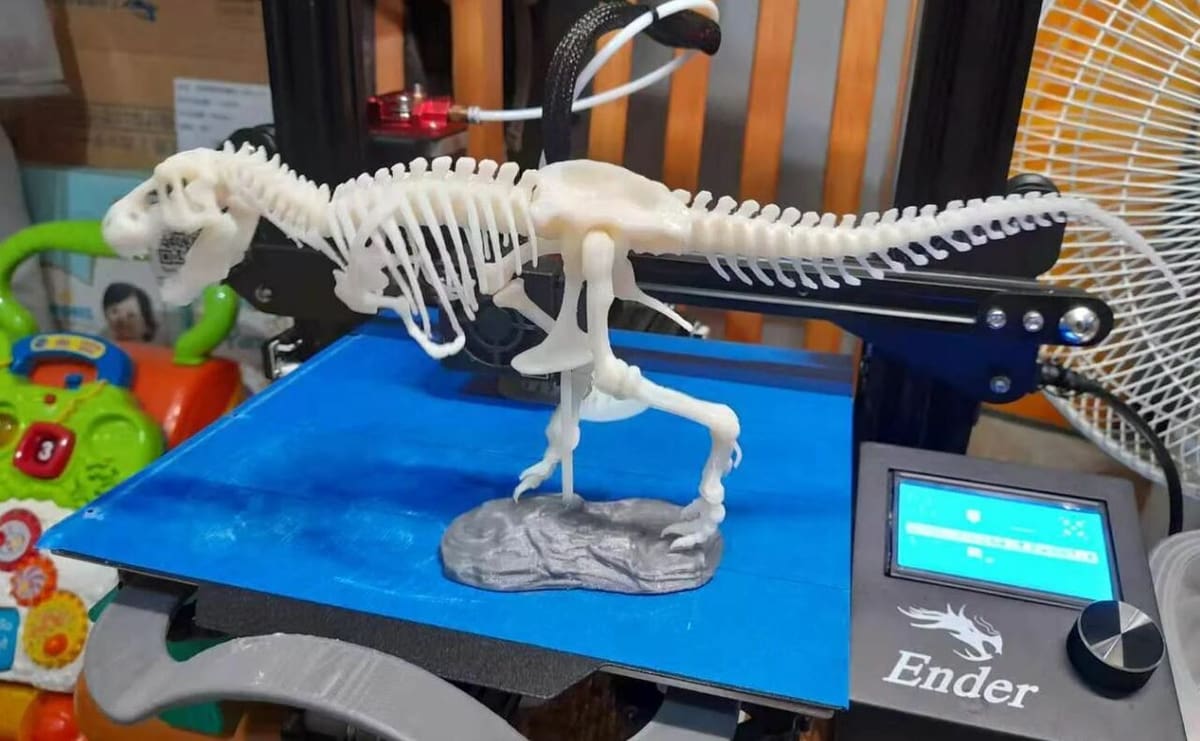
The Tyrannosaurus rex is perhaps the most popular and most terrifying dinosaur. Although, of course, no one has been alive long enough to see a real one, many skeletons of this large creature can be found in museums.
This model is a scaled replica of a T-Rex skeleton, which was designed by MakerBot, the company behind Thingiverse and a popular manufacturer of 3D printers. The design comprises 19 different files, containing a total of 79 individual pieces that can be assembled to form a great display piece. Given the detail of the T-Rex skeleton, this design is a great way to showcase your printer’s abilities.
Although MakerBot provided no official printing tips, one maker listed that they printed the pieces in PLA with a 20% infill density and a 0.2-mm layer height. They also mentioned that they used both a raft and supports to print the pieces.
- Who designed it? MakerBot
- How printable/popular is it? This popular design has over 850 recorded makes and 37 remixes! So many users have successfully printed this design; you can too!
- Where to find it? Thingiverse
License: The text of "3D Printed Skeleton: The Best Models to 3D Print" by All3DP is licensed under a Creative Commons Attribution 4.0 International License.