How Much Does a 3D Printed House Cost?

3D printed houses are popping up all around the globe, but are they the solution to housing prices? Let's take a look.
3D printed construction has been around for several years, decades even, and, with large concrete 3D printers gaining more ground in the industry, it is competing with traditional construction as a cost-effective alternative.
There are many reasons for the improving price points, including a variety of new start-ups and legacy engineering groups competing to seize market share with their proprietary 3D printers. These companies are taking advantage of innovative concrete mixtures and other unique materials to build homes in an affordable and, often, sustainable fashion. Another boost to the application of 3D printing to homes is the government grants and funding available for affordable housing worldwide.
With so many different 3D printed buildings being unveiled around the globe, it’s impossible to give an exact price for what a 3D printed house will cost you where you live, which is especially true with the variety of materials, costs unique to each location, and property price. Yet, we have the price tags on a number of new project.
3D construction costs may look like a steal at first, but generally only refer to printing the walls and floor. The total price of the home will generally be much higher once you add in the land, foundation, fixtures, roof, windows, permits, and more.
What 3D printing will save you is labor and time. And as always, time is money. We’ve found house designs that can be printed in less than a day. Something conventional construction is not likely to match, unless parts are prefabricated off site.
The best way to determine the price of a 3D printed home, we’ve found, is to compile a list of notable recent projects and examine their construction costs and purchase prices. As you’re about to see, the range between projects can be quite large but is generally competitive with conventionally constructed homes.
Affordable Tiny Homes, $17,000 Each
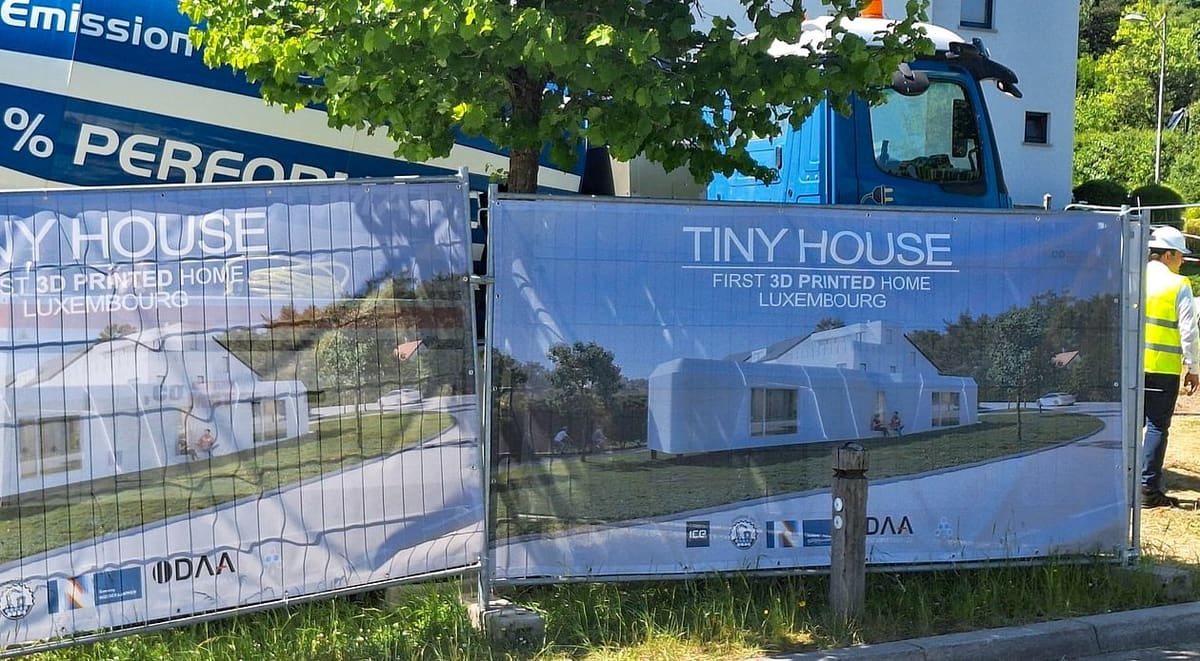
A town in the relatively affluent country of Luxembourg doesn’t have affordable enough housing for young adults or retired residences so it’s launching a program to 3D print “tiny homes” to be offered at rents 40% below the market rate.
The town of Rameldange says it will spend a total cost of $355,000 to build 21 new residential units. The first was built in May 2025. Qualifying renters are young residents between 18 and 35 and seniors above 65. Rents will start at about $1,000 a month for a 500-square-foot home. There’s a cap of 10 years on the lease.
Printing the structures takes only one week, and the entire project is completed in just four weeks. The units do not fall under the criteria for affordable housing as defined by national regulations, so Rameldange devised its own program.
The Tiny House project is printed by German firm, Staikos 3D. This pilot project aims to reduce the carbon footprint of the building sector by focusing on energy autonomy. The house is equipped with solar panels and an underfloor heating system.
- Printing Company: Staikon 3D
- Price: $17,000 (each)
- Size: 500 square feet
- Location: Rameldang, Luxembourg
- Finished: 2025 (underway)
Mobile & Disaster Recovery Homes, $20,000
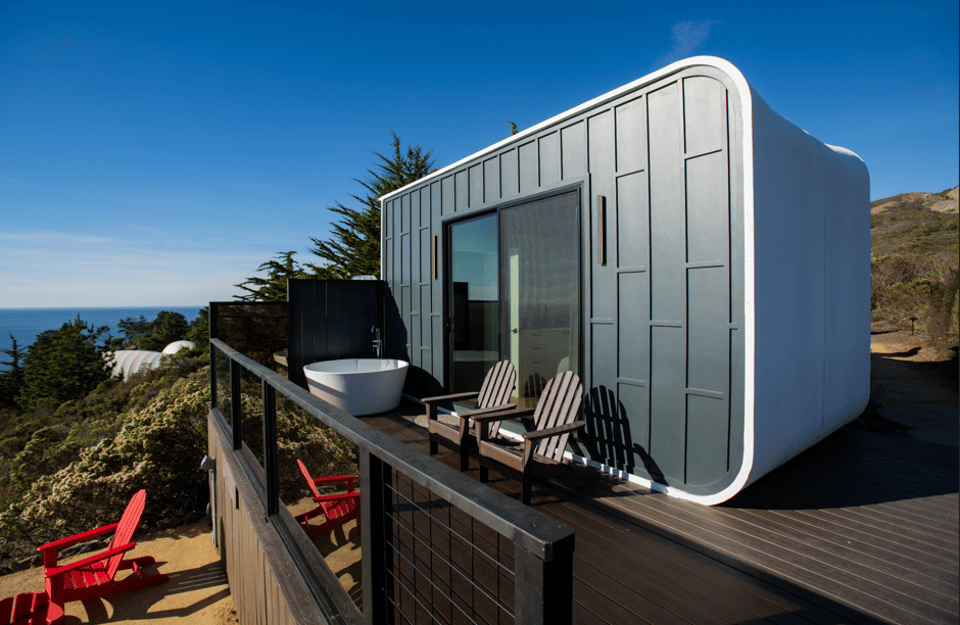
Azure Printed Homes, a 3D printed housing company, has launched a $4.2 million crowdfunding campaign to enable the scaling of its production capacity to rebuild Los Angeles after the recent wildfires.
Azure, located in Gardena, California aims to tackle the affordability crisis as well as the climate crisis and the loss of housing due to the recent fires in the Los Angeles area. Printed using recycled materials and fiberglass, the houses are just as energy efficient as they are weather and disaster resistant. They have been printing homes since 2022, and in part to the overwhelming need for housing, has since tripled their output.
Their Tiny Homes are constructed using over 150,000 recycled bottles per unit and can be printed in 24 hours, the company says.
Azure Printed homes are completely revolutionizing how we think about constructing a home. The company claims customers need less than an hour to design their own floor plan online, about a day to have it 3D printed, between 4-15 days to have it outfitted with interior finishes, and 1-2 days for delivery. Once on site, the company needs 1-4 days to have everything installed and make it ready for customers to move in. Their base designs include Tiny Homes, Homes on Wheels, Studios, ADU (Accessory Dwelling Units), as well as emergency and transitional housing.
- Creator: Azure Printed Homes
- Price: $20,000
- Size: from 120 square feet
- Location: Anywhere with a permit
- Finished: Building since 2022
Simple Homes for the Retired, $37,600

Japanese 3D printed housing company Serendix — the same company behind the train station printed in a day — developed a 3D printed house with its aging population in mind. Designed by architect Masayuki Sono, the Serendix 50 is a 538-square-foot house that costs about $37,500 to build. Complete with a bedroom, bathroom, living room, and kitchen built on a single story, the house is suitable for one or two people and can be printed in less than 48 hours.
The design follows all Japanese building codes and is earthquake resistant. It is constructed with reinforced concrete and keeps its layers visible. This not only makes the house easily recognizable as being 3D printed, it also helps to keep dirt off of the facade. The first printed house was covered in one coat of white, weather and stain resistant paint, but the design can be painted in any number of colors.
The Serenix 50 is the actually the second iteration of the company’s design. In 2022, the company built the Serendix 10, an approximately 107-square-foot house that prints in less than 24 hours using a gantry type 3D printer.
- Building contractor: Serendix
- Price: $37,600
- Size: 538 square feet
- Location: Suzu, Japan
- Finished: 2024
Affordable Family Community, $400,000
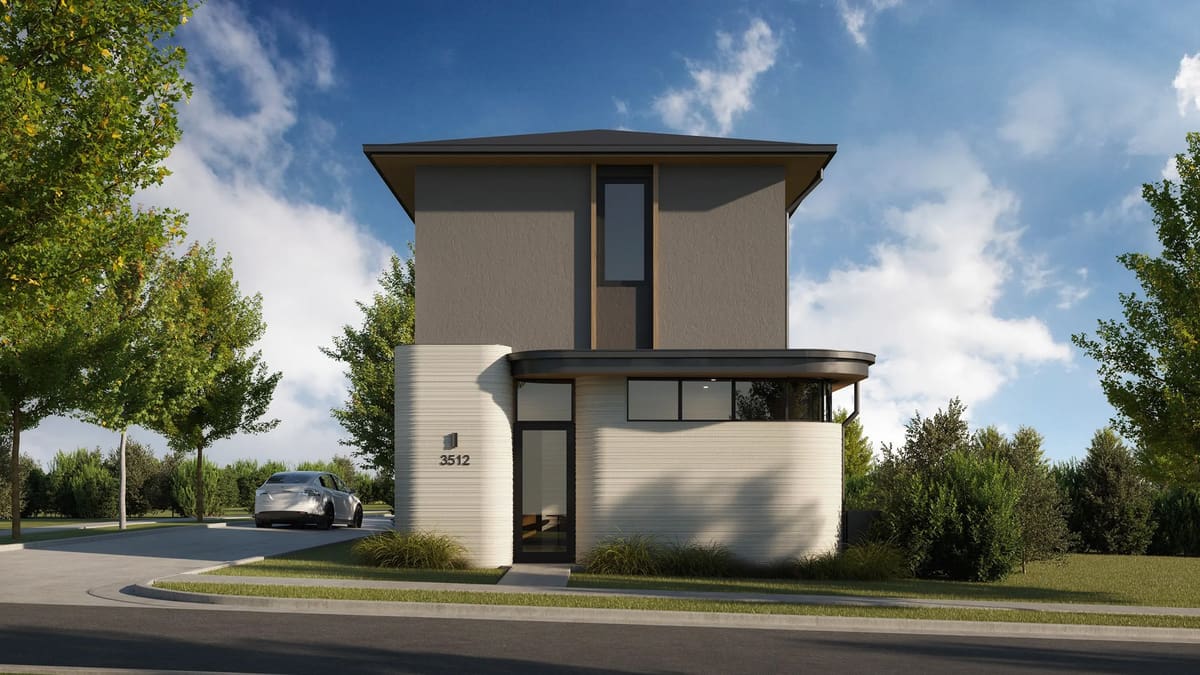
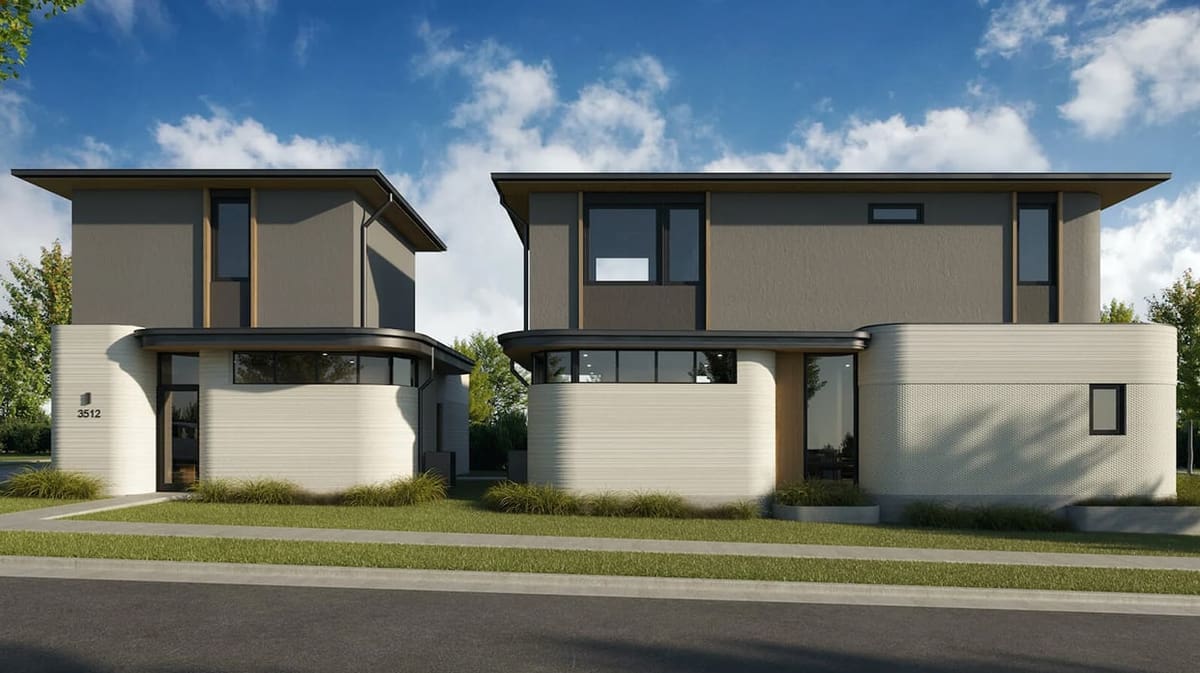
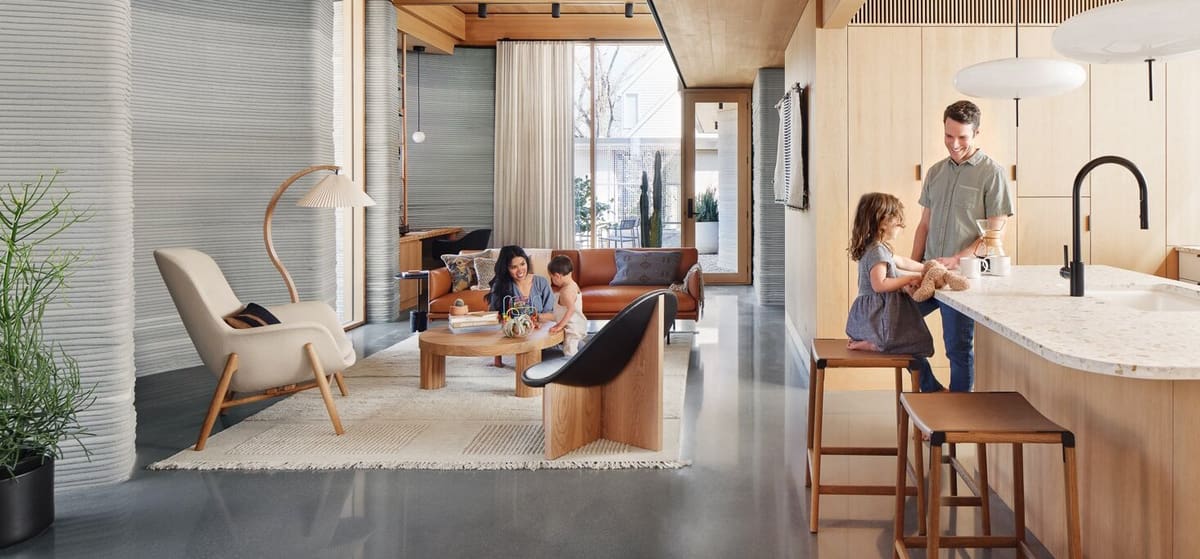
Icon, the Texas-based 3D home construction company, is bringing its 3D printed home technology to the Mueller neighborhood in Austin, Texas, marking the company’s first for-sale residential project in the city since 2021. Prices for the homes start at $400,000 depending on size, location, and features. As part of Mueller’s ongoing commitment to housing diversity and affordability, several of these homes are included in the Mueller Affordable Homes Program, helping to ensure accessibility for a wider range of buyers.
These homes use Ion’s Vulcan construction system to 3D print the first floor using a proprietary material called CarbonX. The upper floors are built using conventional construction methods. Home sizes vary widely, ranging from compact 650-square-foot units to larger homes of approximately 2,400 square feet. Floor plans include one to three bedrooms.
Architecturally, the homes emphasize open layouts, natural light, and strong connections between indoor and outdoor spaces. The design leverages the thermal efficiency of 3D printed walls to enhance energy performance and comfort. Located near the Southwest Greenway, residents will also enjoy access to walking trails and green space within the larger walkable, mixed-use Mueller community.
There are 12 units in development with seven already sold (as of May 2025).
- Building contractor: Icon
- Price: $400,000
- Size: 650 square feet
- Location: Austin Texas
- Finished: 2025
State-Sponsored Housing, $235,000
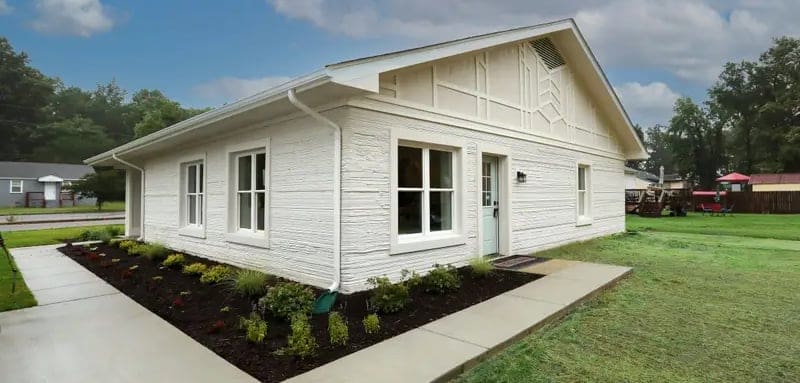
Alquist, the company behind a few recent Walmart construction projects, came to prominence with Project Virginia in 2022, which was a plan to 3D print over 200 affordable homes in a three-year period, starting in 2022. Alquist partnered with local organizations including Virginia Housing and Virginia Tech. The first family moved into one of the houses in July 2022, purchasing it for $235,000 with the assistance of several grants.
Although a 1,550-square-foot home in Richmond and later a 1,250-square-foot home in Williamsburg, Va., were completed the original 200-home plan was abandoned. Virginia Tech further expanded its 3D printed home efforts, partnering on the completion of two additional homes in Newport News in December 2023. As part of the partnership with Virginia Tech, a 3D Printed Construction curriculum was developed to teach students. It’s the first of its kind in North America and will help develop a workforce prepared to utilize 3D printing.
More recently, last fall, the Virginia Housing today announced a $1.1 million Community Innovation Demonstrations grant to the Virginia Center for Housing Research at Virginia Tech to purchase its own 3D construction printer, a Tvasta SIRA RC20. Grant funds also will enable 3D Concrete Printing (3DCP) tests, training, research and partnerships to print 10 affordable homes across Virginia by 2026.
- Printing Company: Alquist
- Price: $235,000
- Size: 1,280 square feet
- Location: Richmond, Virginia
- Finished: First unit completed in June 2022 with additional construction ongoing
Project Milestone, $946 monthly rent
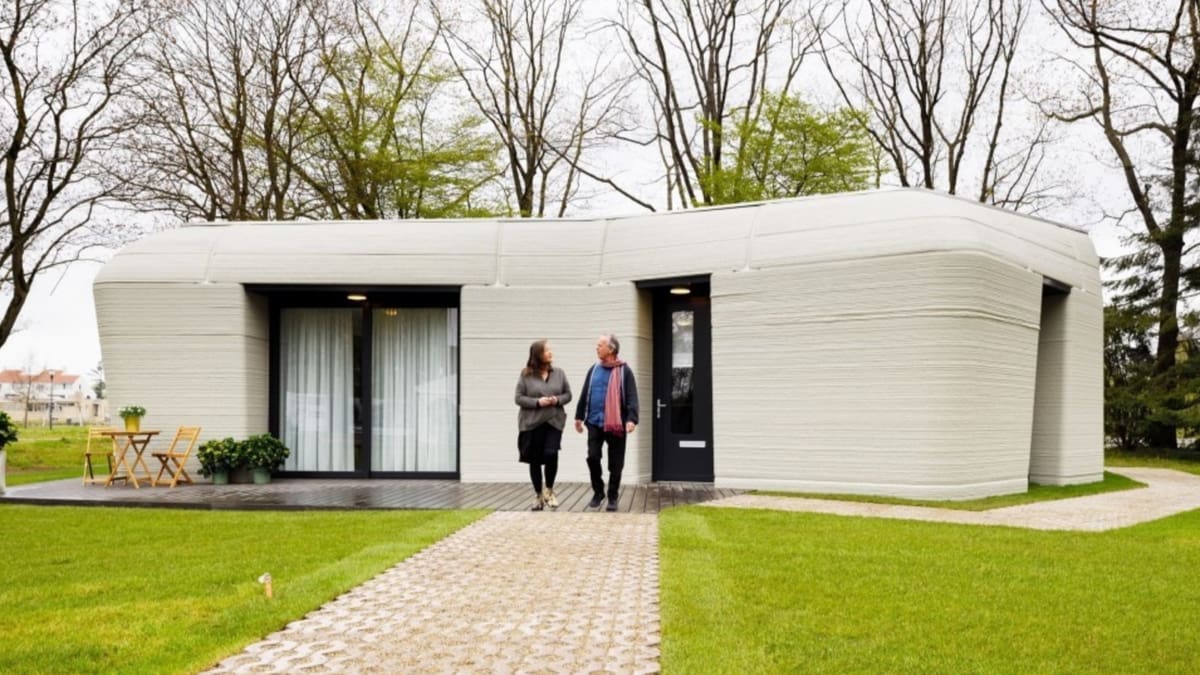
Project Milestone was, according to those behind it, the world’s first commercial housing project based on 3D concrete printing back in 2021. The plan was to consist of five 3D printed houses located in the Meerhoven district of Eindhoven, Netherlands. The exact location is called Bosrijk, which is an area with a high focus on sustainable living – so much so that it’s not even connected to the natural gas grid.
The original house had walls were entirely 3D printed using recycled concrete and later put together on-site. The interior space of the house in question measures 93 square meters. Exact information around its construction cost hasn’t yet been made available but i was initially available for rent at around $946 per month and the first tenants received the keys in April of 2021.
No other houses have been built since. Yet, the Eindhoven University of Technology is not deterred. Last summer it announced a follow-up project that’s more ambitious: two- and three-story 3D printed homes.
Breaking ground sometime this year, the new homes measuring 1,200- to 1,350-square-feet also will be located in the Bosrijk. “Lessons learned from the first home will be incorporated into the development of the next four houses,” the University said in a statement.
- Printing Company: Vesteda
- Price: $946 per month to rent
- Size: unknown
- Location: Eindhoven, Netherlands
- Finished: Early 2021
Planned Community, $450,000
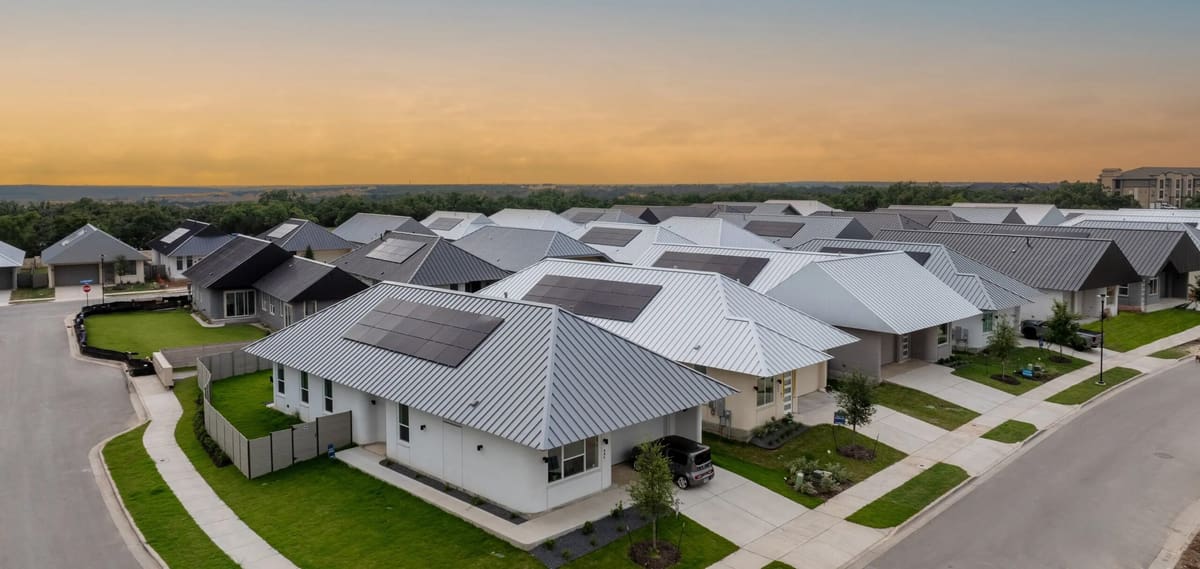
Another new 3D printed home construction project by Icon represents a significant advancement in residential building technology. Located within the Wolf Ranch master-planned community, this development is recognized as the world’s largest neighborhood of 3D printed homes, comprising 100 single-family residences.
Co-designed by the renowned architectural firm BIG-Bjarke Ingels Group, the development features single-story homes ranging from 1,574 to 2,112 square feet with three to four bedrooms and two to three bathrooms. Each home’s wall system takes approximately two to four weeks to print, significantly reducing construction time compared to traditional methods.
- Printing Company: Icon
- Price: between $450,000 and $600,000.
- Size: 1,574 to 2,112 square feet
- Location: Georgetown, texas
- Finished: 2024 (ongoing)
Purpose-Built Community, $200,000
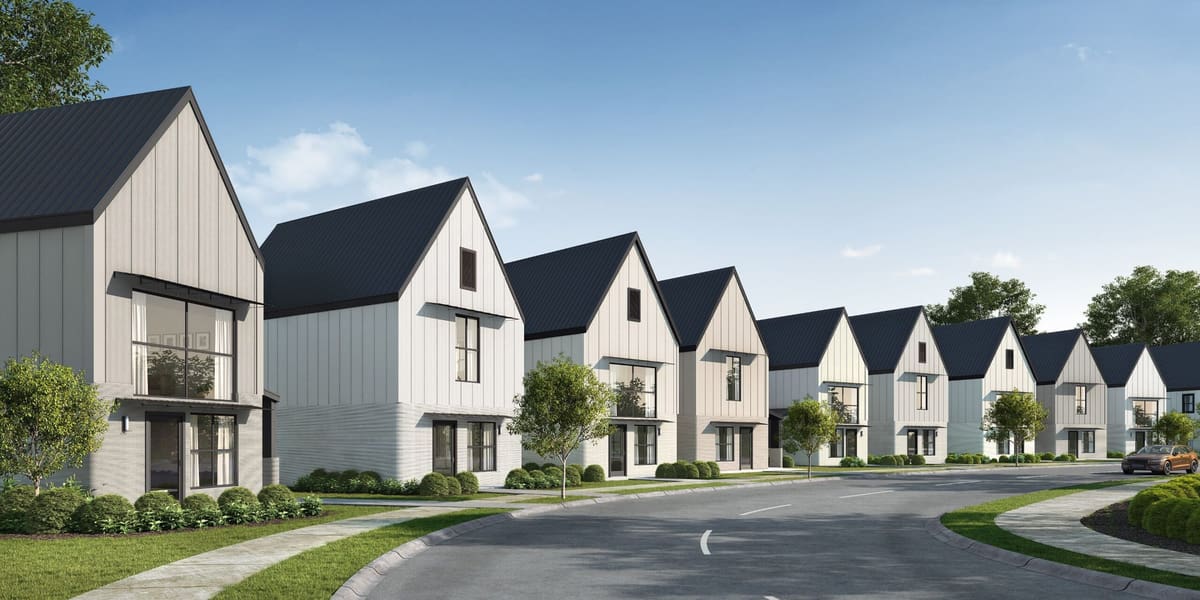
Printed construction company Hive3D is teaming up with Cole Klein Builders and The City of Houston to launch an 80-home developments in Houston, Texas, called Zuri Gardens. Homes, sized between 1,000-1,300 square feet will have prices starting in the low $200,000s.
The project has just broke ground but a few of Hive3D’s other builds are currently standing or underway. In Marfa, Texas, nine 1,700-1,900-quare-foot homes are being built and sold as a “reasonable” price, the company says, but these “residential villas” are not subsidized housing. One large luxury custom-build that Hive3D has under its belt is the Delilah at Independence Trail, completed in 2022. There’s also a “cozy collection of tiny homes” in Round Top, Texas, also underway.
-
- Printing Company: Hive3D
- Price: $200,000.
- Size: 1,700 square feet
- Location: Near Houston, Texas
- Finished: Ongoing
Suburban Townhome, $280,000
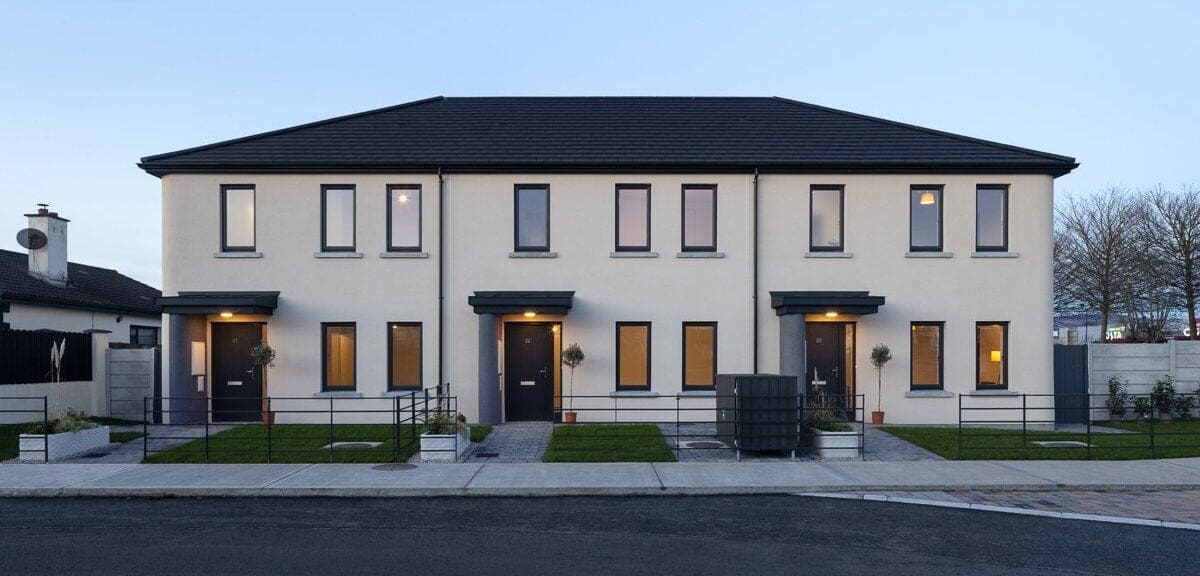
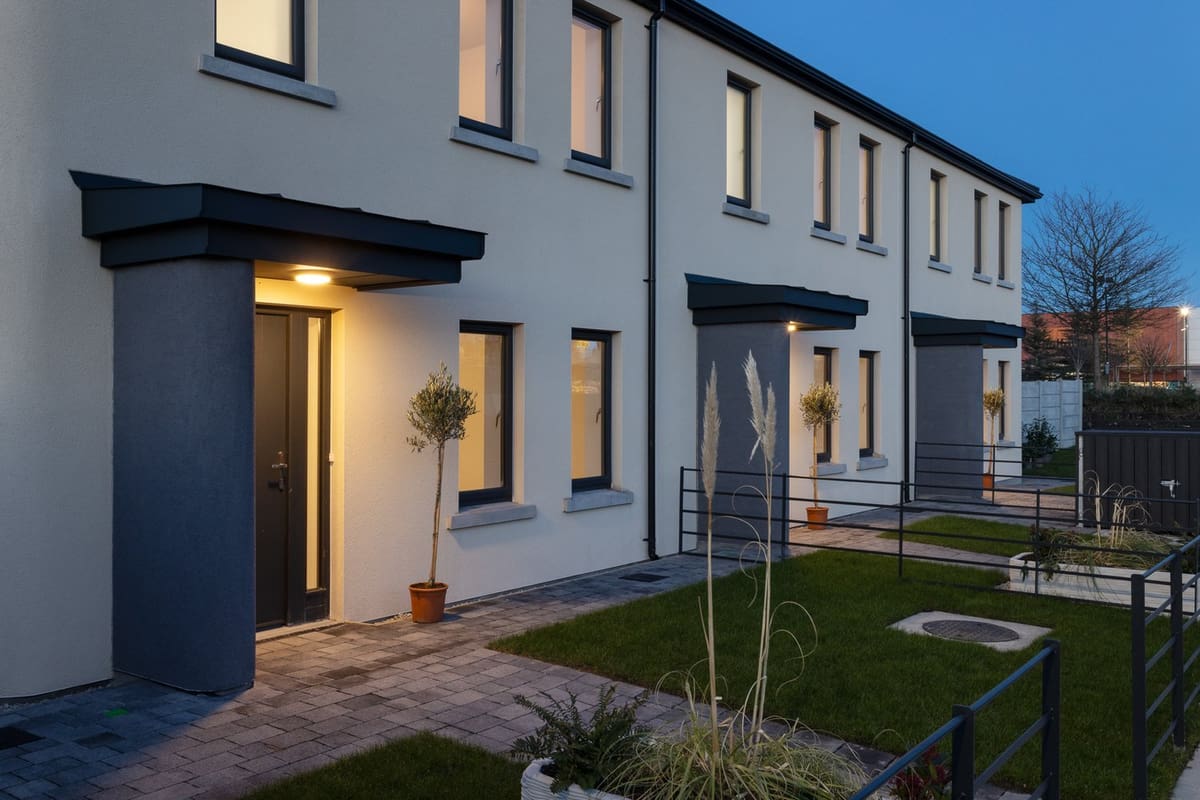
HTL Tech, in partnership with Harcourt Architects and COBOD International, is bringing 3D printed housing construction to the UK and Ireland. With the award winning social housing project Grange Close in Louth, Ireland, it’s made quite an impact.
Printed with rebar-free load bearing concrete, each layer takes about 18 minutes to cure before the next layer can be added. The double cavity concrete construction has five-times the compression strength than a comparative brick construction and is the first of its kind to meet international building standards.
The 3,500-square-foot project, consisting of three separate two-story residences, was printed in just 18 days. The homes took 132 days to complete in total – about a third faster than traditional construction, HTL Tech says. The project is compliant with standards and was “completed 35% faster than with conventional methods.”
The per unit cost came to about $280,000 and includes the price of a traditional roof and interior and exterior finishes.
- Printing Company: HTL Tech
- Price: ~$280,000
- Size: 1,000 square-feet each
- Location: Louth, Ireland
- Finished: 2025
Social Housing Duplex, $522,000
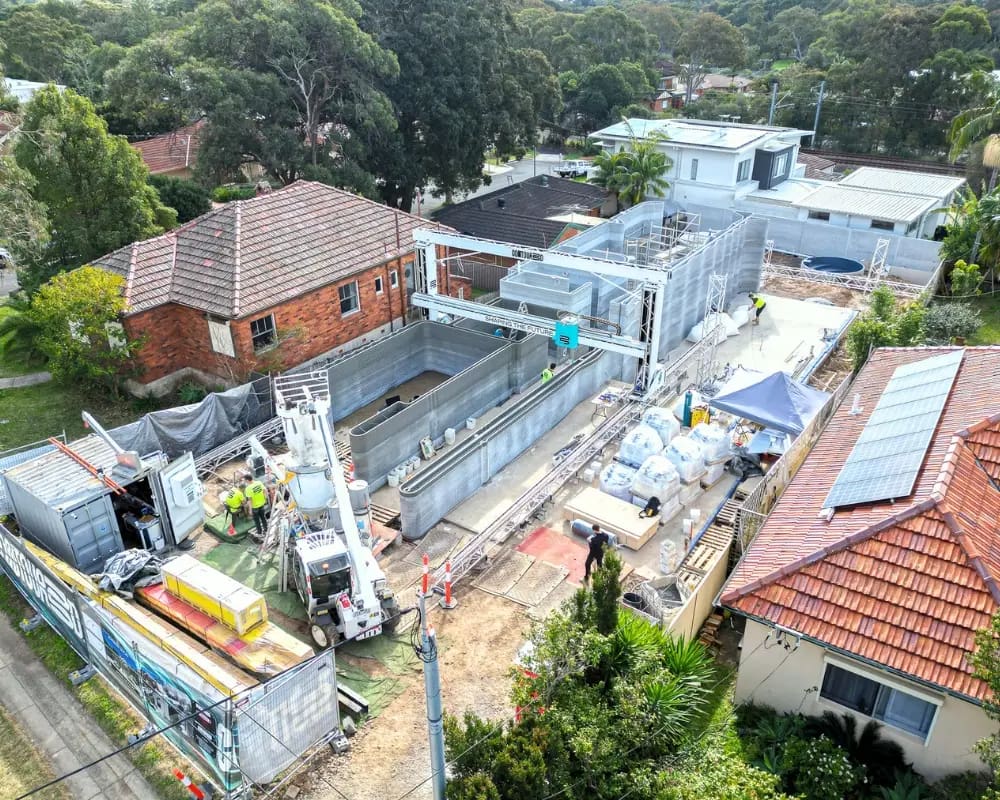
Australia based, Contour 3D has been picked by the government to 3D print affordable housing in Dubbo, New South Wales. Chosen for its lower cost, less material waste, and speed in construction, the government hopes that the use of 3D printed construction will help alleviate its housing shortage. For this project, Contour3D worked with ASH (Aboriginal Sustainable Homes) to provide housing for Aboriginal Housing Office tenants.
The printing process took 11 days and 135 tons of Contour3D’s custom made concrete mixture they call Contourcrete. The two two-bedroom duplexes will cost the government about $522K – about 20% less than the cost of a normal build – and was completed in early 2025. Construction took about 16 weeks. Similar buildings using traditional methods would normally take about 40 weeks to build.
- Creator: Contour3D
- Construction cost: $522,ooo
- Location: Dubbo, NSW, Australia
- Finished: 2025 (planned)
Where Are 3D Home Prices Headed?
As we mentioned above, it’s hard to give an exact cost or price of a 3D printed building, as it depends on the structure’s size and complexity. The simple answer would be that, in this day and age, it’s possible to 3D print a house for as low as $4,000. This covers the structure of the house (i.e. base, walls, and roof) and in some cases, wiring. Pricing then depends on the construction costs of the foundation, roofing, mechanical and plumbing fixtures, along with the coast of the land the house is built on.
Looking at the different values, you’ll have noticed that the price for the East 17th Street Residences is quite high in comparison to cheaper and smaller 3D printed houses built by Azure or ICON. For high-end projects with 3D printing concrete and additional construction components, you can expect the costs and prices to be higher, but from what we’ve seen, they’re never more than those of comparable, conventionally built houses. The one common denominator with 3D printed housing is the speed. Each of these projects have saved both the builder and the consumer many weeks in construction costs, which always means savings for everyone involved.
As time goes on, we predict more and more companies will move towards the construction of 3D printed buildings. This, combined with ever-advancing technologies, should bring prices down and quality and quantity up. And that’s great! After all, who doesn’t want to see a world with greater access to safe, affordable homes?
License: The text of "How Much Does a 3D Printed House Cost?" by All3DP Pro is licensed under a Creative Commons Attribution 4.0 International License.