Selling 3D Printed Items – A Legal Guide

There’s a big market for 3D printed items. But before selling them, understand what things you can and can’t 3D print and sell with our updated guide.
Want to make a business out of your 3D printing skills? If you’re good at it, 3D printing can lead from a hobby to a rewarding business. There’s practically no limit to the useful, artistic, and fun things to 3D print and sell.
But before you dive in, there are important financial, legal, and practical considerations. Tackle these, and you’re on your way to earning money doing something you love.
We have a number of features about successful 3D printing entrepreneurs here on All3DP, but in this article, we look at the legal aspects, specifically copyright and patents, that you should understand related to selling 3D printed products and designs.
For makers interested in selling a relatively small number of products to the public online, via web portals like Etsy, Amazon, or eBay, or through brick-and-mortar storefronts or even community craft fairs, understanding the legal landscape can protect you from intellectual-property infringement lawsuits and other business interruptions.

Can I Sell That?
Let’s start with the question everyone asks: Is it legal to sell products I 3D print from a file I downloaded online?
First, to be clear, we’re not offering legal advice here and laws differ depending on where you live. But, mostly, no. It’s not usually legal to sell the 3D print generated from a digital file you either downloaded for free or purchased online unless you have the creator’s express permission. Let’s explain.
Nearly every 3D model digital file you’ll find online at resources such as Thingiverse, Cults, MakerWorld, and MyMiniFactory, among many others, comes with a license type attached. The original author or designer who uploaded the file to either share or to sell attached their permission for you to 3D print and sell the object or they prohibit you from doing so.
Thingiverse encourages its platform users to adopt a Creative Commons license for uploaded models. A Creative Commons license is one of several public copyright licenses that enable the free distribution of an otherwise copyrighted work.
“In the spirit of maintaining an open platform, all designs are encouraged to be licensed under a Creative Commons license, meaning that anyone can use or alter any design,” it states on the Thingiverse platform. However, designers can also layer on top of the Creative Commons license certain stipulations, such as prohibiting the sale of 3D prints made from digital models. Most designers on Thingiverse have opted to restrict the use of their designs to non-commercial purposes only. Non-commercial means you can’t sell it, but you can 3D print it for personal use. Whether you paid for the file or got it for free doesn’t affect the license.
Below are the common license types you’ll find at online model file repositories and most are used in combination.
| License | Symbol | Definition |
| Copyright |  |
A copyright symbol informs others that copyright exists on your work and that those who want to use, edit, sell, your intellectual property should obtain permission from you. |
| Registered Trademark | 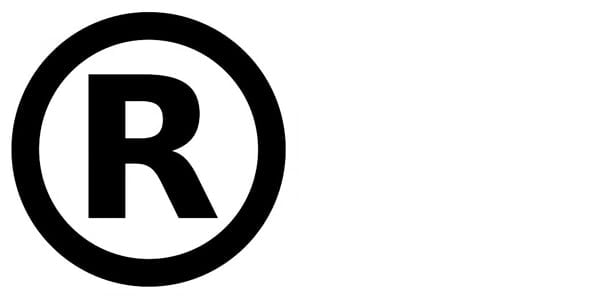 |
The “R” on a product is not a license type, rather it means that a brand name or logo is protected by (officially registered in) the U.S. Patent and Trademark Office and, typically, no licenses are granted. International copyright treaties extend this protection to many other countries. |
| Creative Commons (CC) |  |
Creative Commons works within copyright law. It allows creators to grant permission to everyone to use their work in certain ways. |
| Creative Commons – NonCommercial |  |
This license lets others use your work but not sell it or sell derivatives of it. Any Creative Commons license without this non-commercial designation can be sold. |
| Creative Commons – Attribution (CC BY) |  |
This license lets others distribute, remix, adapt, and build upon your work and sell it, as long as they credit you for the original creation. |
| Creative Commons- Attribution – Adaptations (CC BY-SA) |  |
This license allows anyone to distribute, remix, adapt, sell, and build upon the material in any medium or format, so long as attribution is given to the creator. If you build upon the material, you must license the modified material under identical terms. |
| Creative Commons – Attribution-NonCommercial (CC BY-NC) |  |
This license lets others remix, adapt, and build upon your work but not sell it, and although their new works must also acknowledge you and be non-commercial, they don’t have to license their derivative works on the same terms. |
| Creative Commons Public Domain (CC0) |  |
CC0 (aka CC Zero) is a public dedication tool, which allows creators to give up their copyright and put their works into the worldwide public domain. CC0 allows anyone to distribute, remix, adapt, sell, and build upon the material in any medium or format, with no conditions. |
| Remixing
|
 |
This license allows (or if crossed through, denies) others to remix, edit, adapt, or build upon the digital file. |
Not all 3D digital model sites follow the same Creative Commons license types using the same symbols, but that doesn’t make their license claims less valid.
For example, MyMiniFactory, has a license type of “exclusivity,” meaning, when you see the exclusivity symbol (of two hands shaking), the designs are exclusively hosted on MyMiniFactory. So even if you’re allowed to use them, you can’t upload them anywhere else.
Cults puts a copyright symbol on every uploaded file, which means they are exclusively reserved for private and personal use, no selling unless where it explicitly says you can sell them. It’s worth reading the details of each uploaded design because some designers may redirect you to another site, such as Patreon, where they will sell commercial licenses to their designs with a paid subscription to their work.
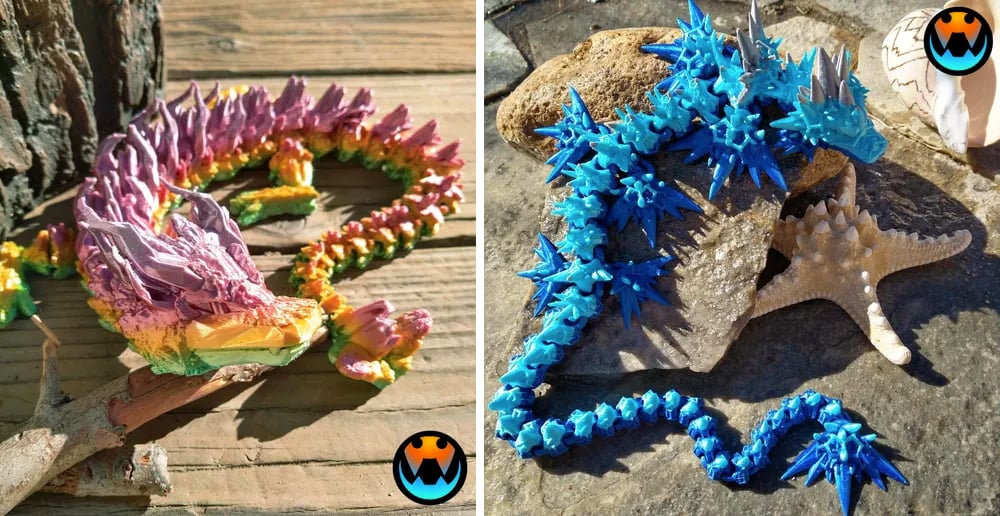
Patreon is an interesting take on the digital model repository. There, you purchase a monthly subscription to the work of individual designers, such as popular articulating dragon designer Cinderwing 3D which grants commercial licenses to subscribers to sell physical 3D prints of its designs. The same designs posted by Cinderwing 3D on Cults, for example, have a non-commercial license.
Most files on MakerWorld have a pretty restrictive “Standard Digital File License” that only lets you print from downloaded files for your personal use. Yet if your join any of the site’s Commercial License Memberships offered by creators for a montlhy fee you can sell print from their digital files.
Another license type you’ll see on CGTrader and elsewhere is “Editorial License”. Here the creator is granting you permission to use the design if you’re writing, for example, a blog post related to the subject of the design. You can not use the design in any way to promote yourself, sell it, or create a remix from it.
The editors here at All3DP, for example, may use a design with an editorial license in an article to illustrate a topic we’re writing about.
The bottom line here is to read and understand the license types imposed on the file by both the owner and the site where you find the file.
But wait, it’s not always that clear-cut.
Simply because you have downloaded a file that includes a license for printing and selling, does not mean that it doesn’t violate someone else’s intellectual property. The item printed may be covered by a third party’s intellectual property or patents. Although the CAD model itself may not infringe on the patent, a printed item could.
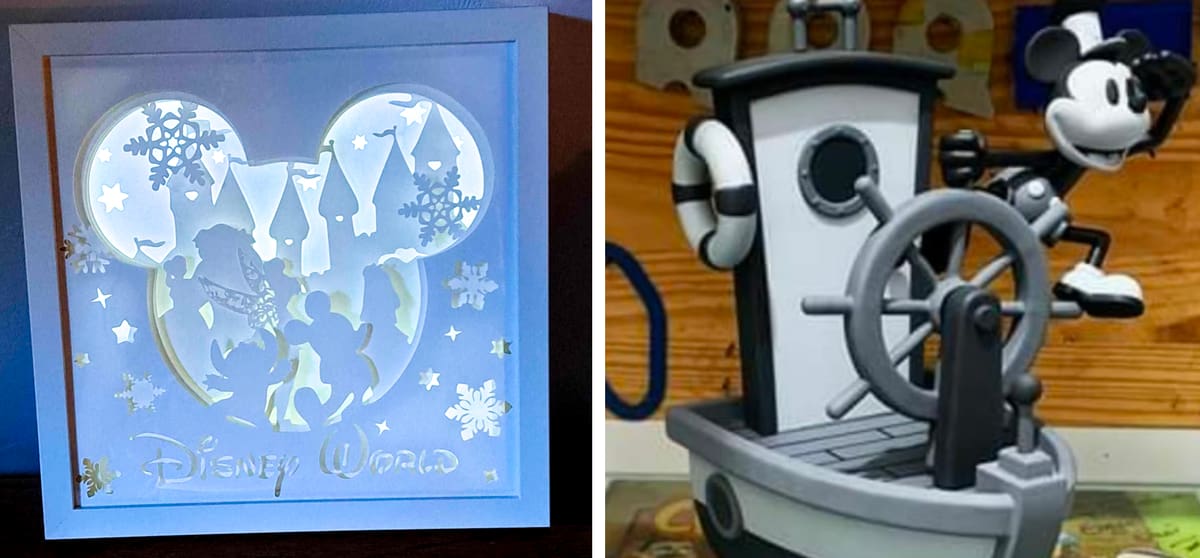
A Disney character is a perfect example. Disney holds trademark and copyright registrations for its fairy tale characters. If an individual uploads an STL of a Mickey Mouse figurine to Cults and selects a license type that enables anyone to sell the resulting 3D print, the resulting figurines likely still violate the Disney trademark.
Iron Man & Baby Yoda
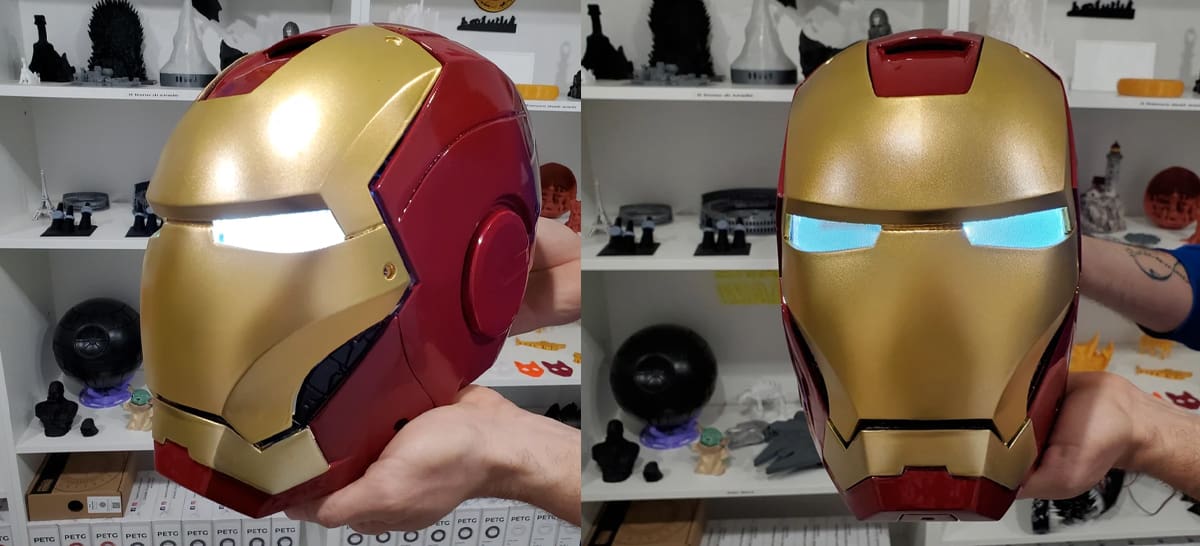
So if Iron Man and Baby Yoda are the intellectual property of Disney, why are there so many 3D printed Iron Man helmets and Baby Yoda figurines for sale on Etsy?
For help answering this question, All3DP turned to prominent patent and intellectual property lawyer Chris Higgins at the San Francisco-based law firm Orrick, Herrington & Sutcliffe. Higgins has a global reputation as an authority on legal issues in 3D printing and he leads Orrick’s 3D Printing Group.
“It could be due to a variety of factors,” Higgins says about Iron Man helmets on Etsy. “But most likely it is because Disney has not reached the thousands of sellers on Etsy that are selling items that include what Disney believes to be its protected copyrights or trademarks.”
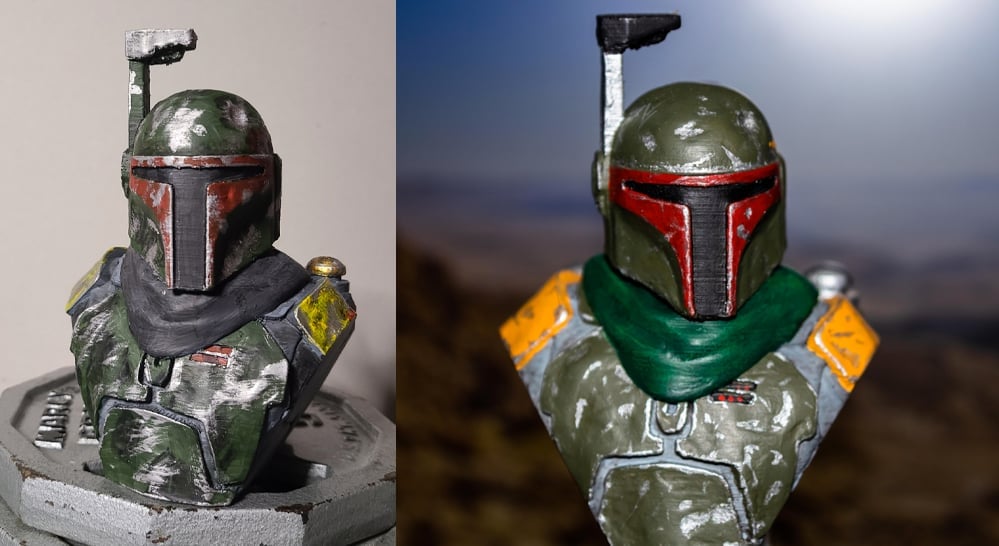
In other words, just because a 3D printed product is for sale at an online platform, doesn’t mean it’s not violating another party’s intellectual property. It may just be that Disney’s trademark office has bigger fish to fry, not that it’s okay to sell 3D printed Boba Fetts.
Disney does license its products to toy manufacturers and others, but it’s unlikely that the 3D printers on Etsy have a license, according to Higgins “given what a license may cost relative to the amount of sales an artist has on Etsy.”
It’s worth noting that, in 2025, Etsy instituted a new rule that all 3D printed products for sale on the site had to be designed by the seller. Although the policy is not crystal clear, it does seem that Etsy sellers who offer 3D printed models directly printed from a digital file purchased from a designer offering a commercial license, no longer qualify to sell those items on Etsy under this new Seller Policy.
A few years ago, Disney reached out to Thingiverse to request that a long list of Star Wars models be removed from the site for violating the company’s IP. Thingiverse complied, and no lawsuits were filed.
And still, there’s no shortage of Minion and Mandalorian model files for sale online, even when the terms and conditions of the model repositories clearly state sellers must own the IP of their uploads.
How is this possible? Likely, it’s a matter of numbers. There are thousands of digital files uploaded every day at online digital repositories and it’s not feasible for staff at these companies to act as IP police for every upload. It’s the honor system backed up with a clear established site policy detailing how the real IP holders can request digital files to be removed.
Original Designs, Derivatives & Tools
So if it’s very likely that any 3D print related to Disney, Star Wars, and Marvel characters, or any other copyrighted intellectual property, can not be legally sold, what can you 3D print and sell?
As we mentioned above, you can sell 3D prints from any unique digital 3D model that doesn’t infringe on another party’s IP if the original artist gives you express permission. The list of these is, unfortunately, not long.
If you’re a talented designer and know your way around computer-aided design software, such as Sketch Up or Fusion, any original object that you create from scratch can be sold. You can sell both the 3D digital files and the final 3D printed object. This is not the same as altering a file you find online.
Downloading an STL or 3MF or other file format and altering it is called “remixing” and the resulting work is called a derivative. As we mentioned above, some designers prohibit any remixing or selling any derivative of their work. Even if you alter the file beyond any reasonable recognition of the original, you still started with someone else’s work, so it’s a derivative. Can they prove it? Well, why take that risk. Best to start from scratch if you plan to sell the print or the digital file.
Useful Things
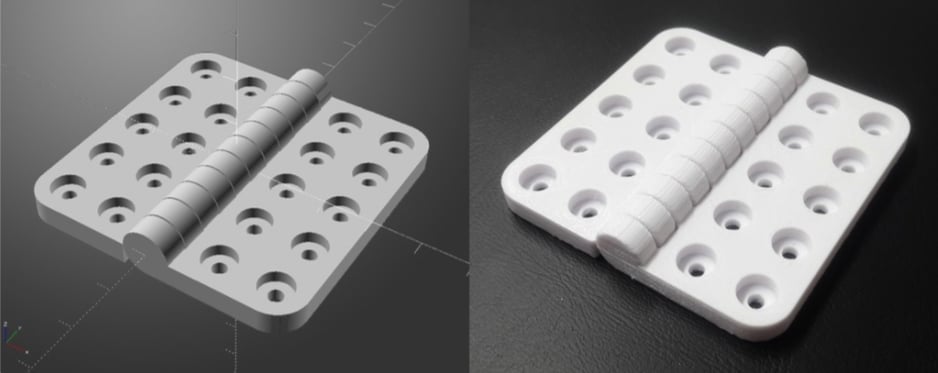
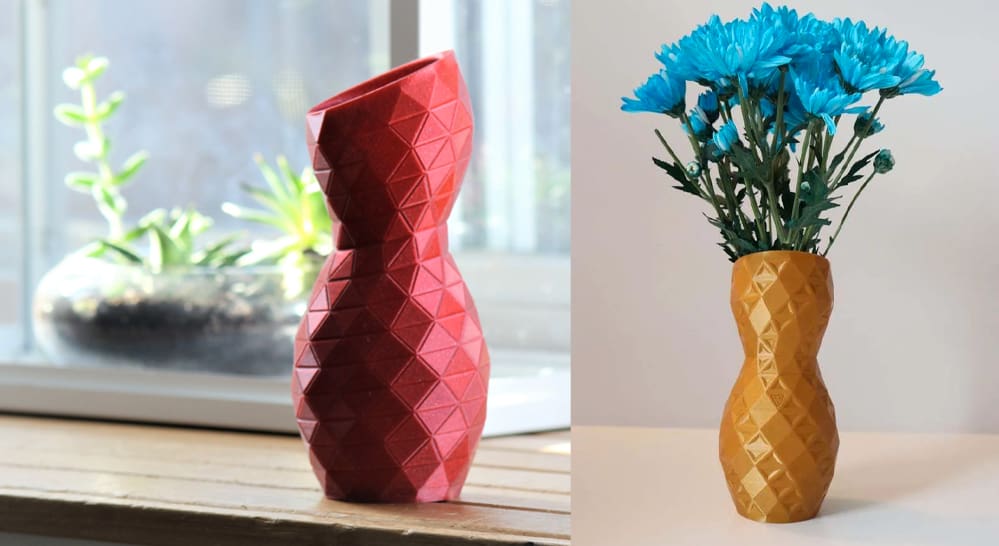
Another category of things you can 3D print and sell are functional objects. Copyright law grants protection for artwork or decorative items, but not for items that are deemed purely functional. What is functional? It’s open to interpretation. A functional item, such as a vase, may also have a copyrightable design applied to it.
“A good example of a functional object that could still have IP protection are the Ironman helmets on Etsy,” says Higgins. “A helmet is functional, but the inclusion of Ironman images and likeness may still require a license from Disney.”
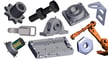
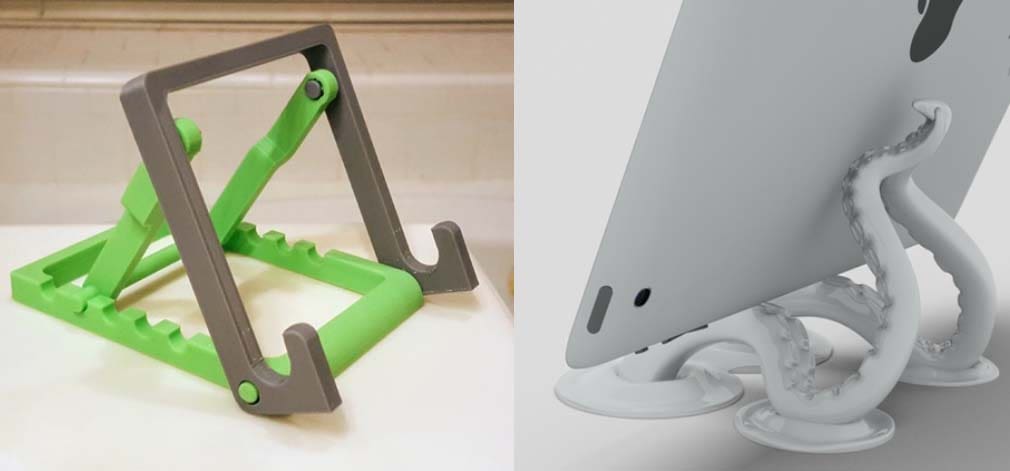
If the decorative portion of an object can be seen as separate from the functional portion of the object, it’s likely that the object as a whole may be eligible for intellectual property protection. However, there are thousands of iPad holders, desk organizers, planters, clips, and hangers that are purely functional. These typically can be 3D printed and sold without issue as long as you either create the original digital file yourself or acquire a file that’s licensed to allow commercial use for prints or derivatives.
But again, just because you may think an item is purely functional doesn’t necessarily make it so, especially if the original designer has indicated that the file is not to be remixed or sold. Take, for example, vacuum cleaner spare parts. Well-known manufacturer Miele posts several spare parts for its vacuums and other appliances on Thingiverse under a non-commercial license, meaning if you need the part for your vacuum, feel free to print one, but you can not print and sell these items.
More companies are making spare part and accessory parts available to the public to print. For example, take the new electric truck from the Jeff Bazos-backed company Slate Auto. There are dozens of 3D printable Slate truck accessories the company has offered up as digital files. Slate Truck owners can print these, but don’t try making a business out of selling these accessories online.
Who Owns AI-Generated Digital Models?
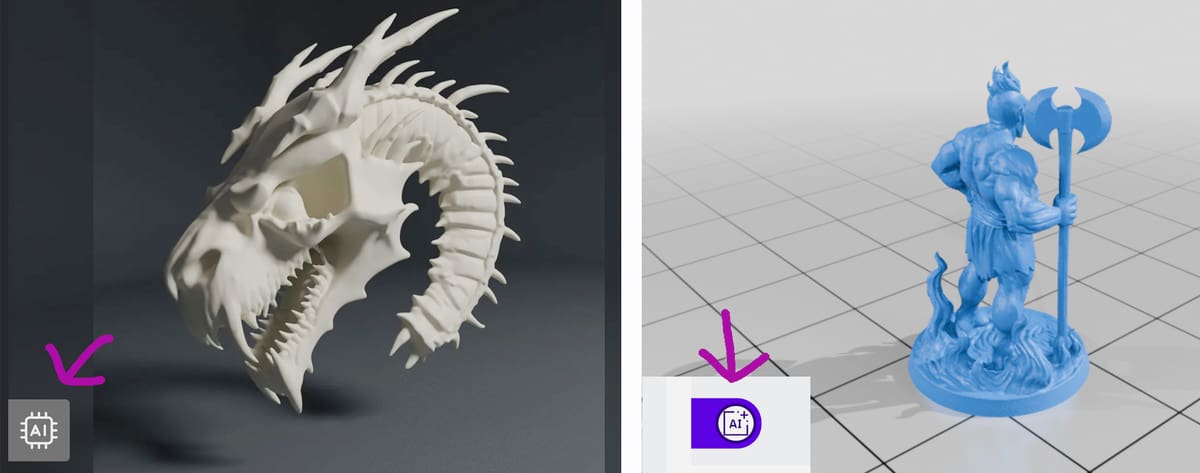
Ah, the new can of worms: AI-generated digital models.
AI model generators, like Meshy AI, Hitem3D, and Tripo AI, can generate 3D printable STL or 3MF files in minutes based on any text prompt, sketch, or reference image you provide. Theoretically, the digital file result is unique to your prompt and most of these platforms transfer full ownership rights to you, the creator.
You can upload these STLs, for example, to the Printables repository where you can designate how they are used by anyone who downloads them (commercial/non-commercial). You can also sell the digital files on platforms where allowed. (MakerWorld, for example, says all AI-assisted work “must include significant human creative input.”)
So what about selling prints from AI-generated models?
You’re free to sell prints from any model that you generate using an AI-model generator, with a few caveats.
First, the same rules apply as with any 3D printed item: you can’t infringe of the copyright or IP of anyone else. For example, if you use a Cinderwing 3D image as the source image in a AI-model generator and prompt it to add two tails, the resulting STL file and the resulting 3D printed part may still violate Cinderwings copyright because you used its image as the source material.
Even though the AI platform generated it, if the model resembles another creator’s work too closely, you can still be liable for copyright infringement.
The same goes for IP. You can use AI to generate a Spider Man with two arms and a tail, but if its recognizable as Spider Man, you’re infringing on Marvel’s IP.
Interestingly though, if you upload an STL that is 100% AI-generated from your prompt and appears to be completely unique, you have a very weak standing for claiming copyright infringement against someone else who copies your model. Why? Because AI-generated models are not copyrightable.
In the U.S. and the EU, copyright requires human authorship. The U.S. Copyright Office’s current position is that purely AI-generated output from prompts (text, images, sketches) alone is not copyrightable, although you can “own” it and sell it. Ownership of a file does not equal copyright protection over its contents.
An AI-generated work can be protected under copyright where a human contributed “enough” original expression, such as substantial editing in CAD or incorporating human-created elements. Mere prompting, even with many revisions, is usually not enough.
Bottom line: Do not generate STL files from copyrighted reference images or existing repository models unless the license allows it. A lightly changed AI-generated STL based on someone else’s model can still be an infringing derivative work.
Will I Go To Jail?
Copyright infringement is a criminal offense. Not knowing or not understanding that you’re selling 3D prints of a design that is someone else’s intellectual property is not a legal defense.
You may be thinking, “Well, other people are getting away with it.” Perhaps. But just like speeding in your car or eating something before you bought it; it’s not legal just because others seem to get away with it.
The creator and owner of a design can take legal action against you or your business for infringing on their copyright. The legal action is to both stop you from selling the protected design and to recoup the money you made selling the item. Court cases are usually expensive to bring, so the plaintiff typically seeks large sums of money as damages. If you’re not making large sums of money, it’s less likely you’ll attract the attention of copyright holders if you’re using their IP.
Today, in the U.S., when an individual or business makes a 3D model or a 3D print available for sale that violates someone else’s IP, the Digital Millennium Copyright Act (DMCA) lays out a procedure by which a copyright owner can ask the online provider to take down a work from its website that infringes on their copyright. Websites, such as Thingiverse state that they follow DMCA and provide details on how to request, for no fee, a design be removed. Many sites consider posting others’ IP (if you’re found to have done so) a violation of their terms of use and could ban you from using their platform in the future.
“Our legal team receives and reviews requests on a regular basis and, in collaboration with the software team, works to remove these violations,” says Jason Chan, former director of product at UltiMaker, which owns Thingiverse. “ takes IP rights very seriously, and we want to make sure designers feel confident when they use Thingiverse.”
It’s a time-consuming process for IP rights holders to reach out to model repositories, but it’s the more common action compared to taking someone to court.
As we see a boom in 3D printed parts for sale by individual makers on huge sites like Amazon, more money is being made and more attention is being drawn to these small businesses.

Sell a Service or an STL, Not a Print
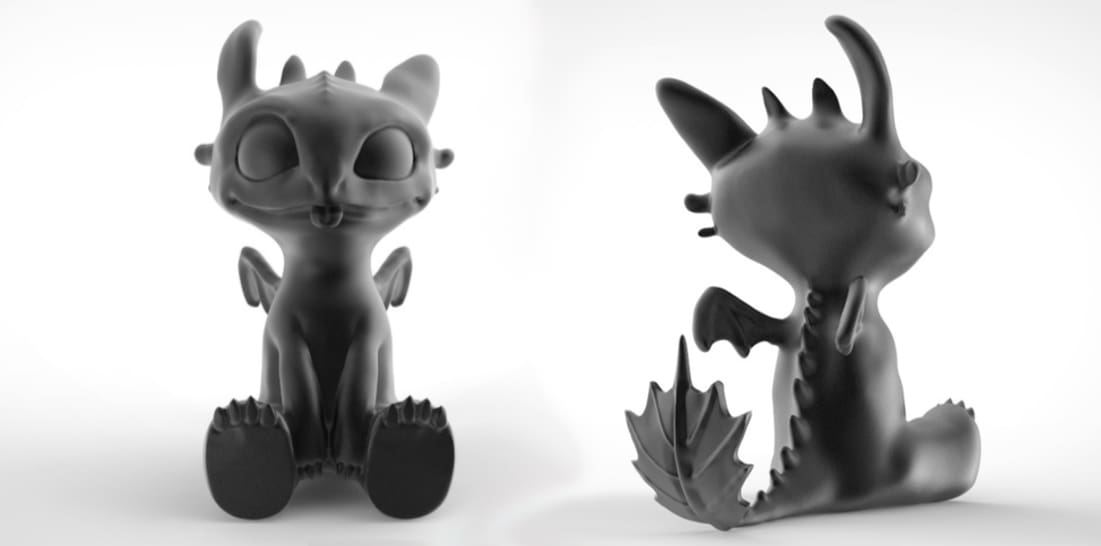
Alongside the 3D printed soap dishes on Etsy are individuals offering 3D print services, e.g. they’ll print any digital file you send them. This is a great alternative or addition to selling 3D printed items online. There are practically no restrictions for what you can print for others as a service, as long as it doesn’t break any laws locally, such as 3D printed guns.
Although 3D printing and selling a Baby Yoda figurine maybe a violation of Disney’s IP, fulfilling a customer’s order of a Baby Yoda figurine is not necessarily any less of an IP violation. In fact, even printing Disney character figurines for personal use may be still, technically, an IP violation. But “the odds of being sued for infringement are next to zero,” says Higgins. “First, it would be nearly impossible for the copyright or patent holder to know that an individual made the print, and even so, there would be little incentive to sue the individual for infringement because of the lack of damages and likely public backlash if a suit were to be filed.”
In the end, it’s not in Disney’s best interest to keep Baby Yoda figurines out of peoples’ hands. They want to promote their characters and encourage fans to collect them, even if a very small fraction are 3D printed.
Selling Your Digital Files
More often, talented digital designers today make money selling their original STL files on a wide variety of sites. As long as it’s your original creation and doesn’t violate another’s IP, then you should have no restrictions on selling STLs, or any other digital format for that matter. Plus, if you see someone has remixed your STL and posted it, or the resulting prints, for sale on Etsy, Cults, Gumroad, or Amazon, you can reach out to those sites and have the file and product removed. The poster also risks being permanently banned from those platforms.
You love 3D printing and your talent can result in some extra cash in your pocket, but make sure you read and follow the license types and intellectual property stipulations, so your profitable business isn’t yanked or banned from online platforms, or worse.
There are Many More Legal Issues
Copyright is only one of several compliance issues for hobby-scale 3D print sellers, and, as you can see from the details above, it’s not simple.
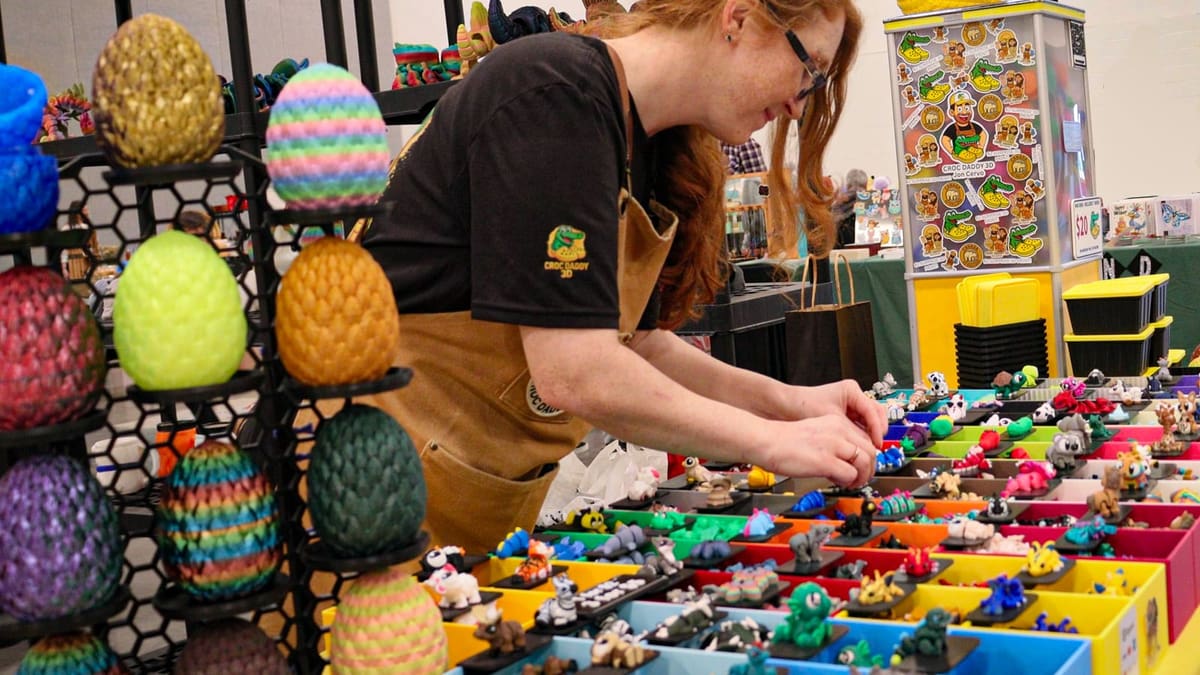
There are many more legal requirements you as a seller (whether it’s online or at a craft fair, festival, flea market, or fundraiser) are required to follow depending on your location. These vary widely, and are often thought to fly under the enforcement radar, but small size or volume doesn’t mean that you’re exempt. Below are the topics you should investigate before your first articulated dragon hits the folding table.
Sales tax / temporary seller permits
Many makers think “I’m just selling a few dragons at a school fundraiser” means hobby, not retail. Tax authorities may see it as retail sales of tangible personal property.
Local business license, vendor permit, and event rules
The event organizer’s vendor packet may impose requirements that are stricter than what a casual seller expects, especially for school fundraisers, municipal events, or holiday markets.
Product liability, even without regulatory enforcement
Any seller can face liability if a print injures someone especially if a child is hurt or a buyer claims the product was defective.
Children’s products
Technically, any toys sold to children need to follow safety laws. Marketing them as “not for small children” is not a legal defense if a child is injured. Magnets make prints fun and modular, but they dramatically raise the safety stakes.
Food-contact claims
3D printed cookie cutters, cups, mugs, plates, and cake toppers can create food-contact issues. Don’t mislable your PLA parts as “printed with natural materials” since the actual product can include colorants, additives, coatings, adhesives or resin residues.
Electronics, LEDs, batteries, and wireless parts
The moment you add a light-up base, battery compartment, USB lamp, or Bluetooth module, you’ve moved from printed part into electronics compliance.
Wearables and skin-contact products
3D printed earrings, rings, cosplay masks, and hair clips raise different concerns: skin irritation, sharp edges, and breakage.
You May Also Like:


Lead image source: Baby Yoda 3D Printed Figure Fan Art on Esty by ImagineFigurines
License: The text of "Selling 3D Printed Items – A Legal Guide" by All3DP Pro is licensed under a Creative Commons Attribution 4.0 International License.