Don’t Panic, Your Etsy 3D Prints Can Still Be Safe to Sell

A frenzy of social media posts have spread the idea that 3D printed parts, toys, and crafts are no longer allowed for sale on Etsy stores. Let’s dive into the facts.
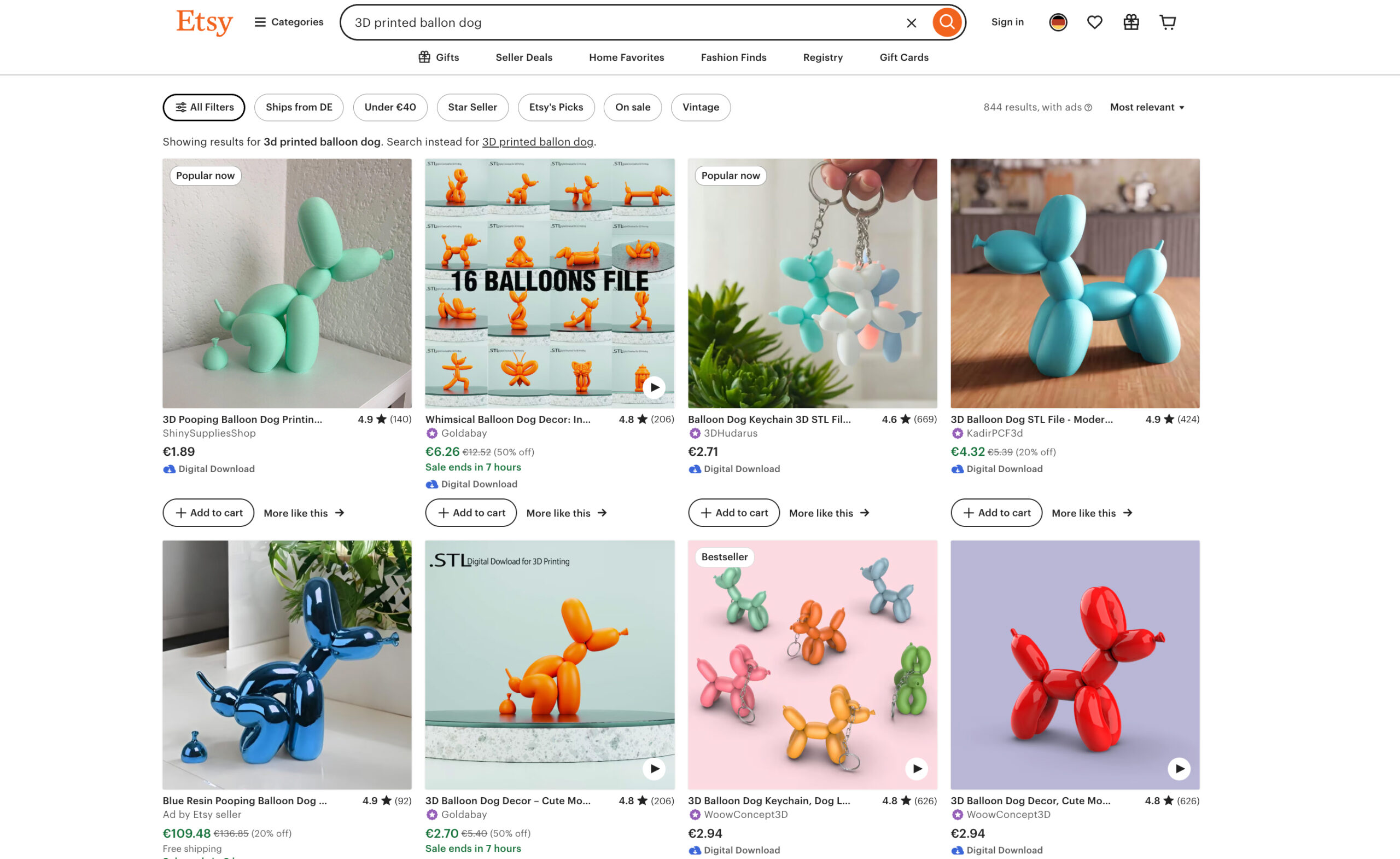
Etsy, the online platform for selling handmade and crafts-related items, amended its rules on June 10 covering what sellers can and can not sell on the platform. What is apparently a move to cut down on the skyrocketing number of sellers offering the same thing, for example, 3D printed toys or figurines from the exact same STL file, Etsy now says that anyone using a 3D printer (and other similar tools) can only print and sell their own original designs.
Specifically, Etsy states in its Seller Policy:
Items produced using computerized tools: Physical items that a seller produced in their personal shop or home, using computerized tools such as a laser printer, 3D printer, CNC or Cricut machine. These items must be produced based on a seller’s original design and are often personalized or customized to a buyer’s specification.

e.g., Clothing embroidered by a seller using a computerized embroidery machine; tumblers decorated with vinyl stickers printed by a Cricut machine; wedding invitations designed by a seller using software and printed onto stationery using a laser printer.
Although the policy is not crystal clear, it does seem that Etsy sellers who offer 3D printed models directly printed from a digital file purchased from a designer offering a commercial license, no longer qualify to sell those items on Etsy under this new Seller Policy.
There’s no doubt that if and when this policy is enforced, some Etsy shops will be permanently suspended. Some estimates put the number of sellers solely selling 3D printed products licensed from purchased digital files in the thousands if not more.
Etsy appears to have made the determination that these sellers are not its core community and do not fit within its mission. But, Etsy has left a few ways around the policy for those willing to flex their creative muscle.

Are Etsy’s New Rules Good or Bad?
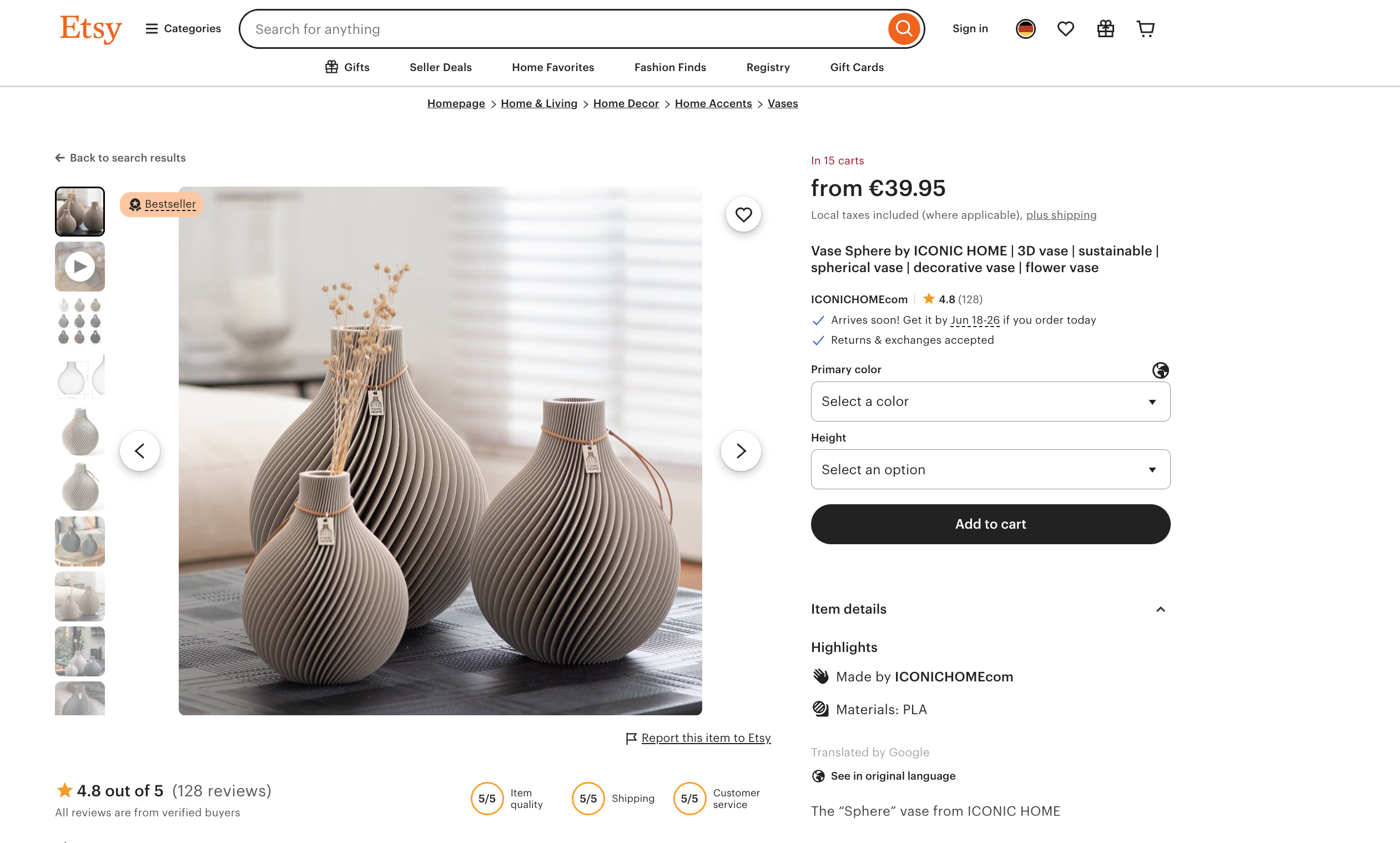
There are five million sellers on Etsy and thousands of small businesses and individuals selling 3D printed items. Sellers who design and 3D print their own creations have long been vocal online about their dismay over the 3D print farm operations churning out thousands of low cost products from licensed models. There’s also no shortage of accusations over Etsy turning a blind eye to sellers offering products that infringe on the intellectual property of others or 3D printing and selling products that they do not have a license to sell.
“Honestly, this is a super good thing even as a person who sells licensed prints. Etsy is swamped with garbage that’s not in the spirit of the site, and it has been a constant source of pain,” said one Reddit forum member called Thisremindsmeofbacon.
Sophie Duba, Etsy’s head of marketplace policy, said in a recent webinar that “the bottom line for us is just to make sure that regardless of whatever tool or technology advancement there might be, that there is a real creative human behind that art that we are keeping commerce human.”
Duba says Etsy policy involves internal teams (legal, public policy, trust & safety, etc.) and external research (academic, advocacy groups) to make well-informed decisions, but listening to Etsy sellers is also critical.
One Etsy seller, Logan over at Mountain Maker, says there was no notification to Etsy sellers about the June 10 policy change. The Mountain Maker Etsy shop consists of products of his own original design and also 3D prints from digital files to which he has purchased commercial licenses.
“I have been slowly moving towards designing my own products,” Mountain Maker said on his YouTube channel, “but … instead of having four, five, or six products on my Etsy page that I personally have designed, I fill the gaps with some other things from creators like 3D Meeks or HP Invent.”
Now though, the Mountain Maker will transition to only featuring his designed items, but he wonders about the market for selling digital design files in general. Creators who relied on subscriptions from businesses that bought licences to sell their design files may experience a significant drop in sales now that the 3D prints from their design files can’t be sold on Etsy.
Getting Around the New Policy?
Even though Duba at Etsy said “we want to make sure that our policies are so clear that we’re treating everyone equally,” policy questions remain. Most importantly, over the customization clause.
Etsy’s policy states that “commercially available base items” that are “hand altered” qualify for sale. The policy provides an example: “such as hand-embroidering flowers onto a tote bag.” Hand-painting a 3D print would logically fall under “hand altered” but glueing googly-eyes onto a 3D printed dragon seems to fall under Etsy’s example of what is not hand altered: “A commercially available base item with only superficial alteration, such as addition of a simple, mass-produced stick-on adornment.”
These are the only two examples Etsy provides to further illustrate hand altered, which leaves a bit gray area.
In addition to hand-altered items, there are also “hand assembled items” that also qualify to be sold on Etsy.
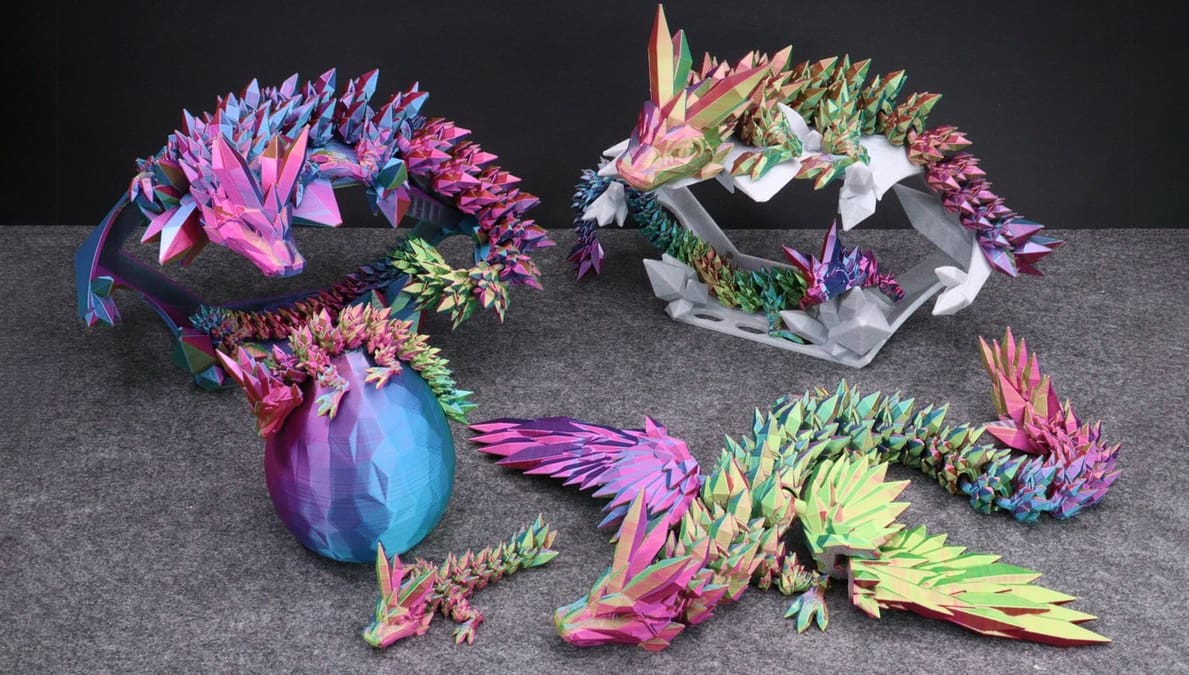
These are “commercially available … components that a seller attached together or combined by hand to create a unique end-product.” If we take a 3D printed articulated dragon made from a licensed file as an example, it might qualify as hand assembled if it were mounted on a unique piece of driftwood or inside a 3D printed basket.
Etsy says hand-altered items must have more than a “superficial alteration” from the base item, but no more specific guidelines are offered. This leaves a lot of leeway whereby Etsy sellers could alter their products to comply with the new policy.
Although Etsy hasn’t announced enforcement actions on this specific topic, the platform’s process for removing sellers is to ban them, and take questions later, which has a lot of sellers worried.
Repeated policy violations, selling prohibited items, IP infringements, and fraud on Etsy typically results in a permanent suspension. Sellers receive a clear notice via email after the fact, stating the suspension is permanent and explaining the reason. Sellers have six months from the day that their account was suspended to file an appeal. Etsy’s policy says, “A specialist will review your appeal and your account history, and reply with a final decision over email.”
All3DP hasn’t found any suspended accounts due to this new policy as of this publication date, but let us know in the comments if you feel this new policy change has affected you.
If your Etsy business model is solely based on 3D printing licensed digital models and you’re not interested in adding custom features to your products, now is the time to transition from Etsy to another platform.
“You can still sell on Amazon Handmade, as long as you’re following their terms of service; you could create your own website with platforms like Squarespace or Shopify; or you could sell the stuff at a craft fair or a farmers market,” notes Mountain Maker.
Better yet, now is the time to learn to 3D model.
The bottom line is that your 3D printed articulated dragons and anything else you license may still be sellable on your Etsy store if you’re willing to attach your personal creativity to the model by way of customizations or assemblies.
You May Also Like:


License: The text of "Don’t Panic, Your Etsy 3D Prints Can Still Be Safe to Sell" by All3DP is licensed under a Creative Commons Attribution 4.0 International License.