Why the Military’s Need for Cheap Drones Is Driving a $900M 3D Printing Boom

A new market forecast from Additive Manufacturing Research details how surging defense demands and low-cost polymer printing may drive a sixfold expansion for the drone 3D printing sector by 2034.
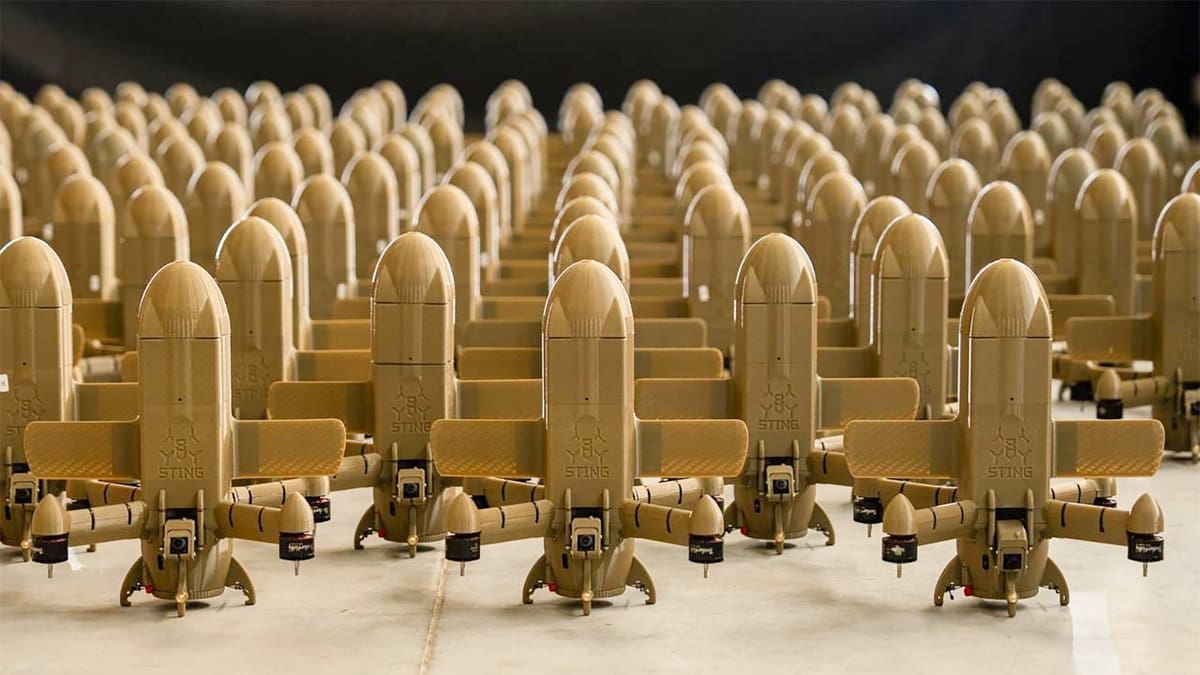
As global militaries race to secure operational readiness, a profound shift is quietly transforming the frontlines of modern drone warfare: additive manufacturing is moving straight into active deployment. Driven by an insatiable demand for expendable, low-cost tactical aircraft, the drone 3D printing sector is poised for a massive sixfold explosion. according to a new market forecast by Additive Manufacturing Research. This critical shift toward distributed production will skyrocket the niche from $140 million today into a $900 million ecosystem by 2034.
Just published in June, Additive Manufacturing Opportunities in Unmanned Aerial Systems 2026: Drones Market Analysis and Forecast examines the use of additive manufacturing across recreational, commercial, civil, and military drones. Its accompanying database segments the market by material, application, aircraft category, geography, technology, and vendor.
AM Research argues that aerial drones have become one of the most significant production applications for affordable 3D printers. The sector’s expansion has accelerated over the past three years as militaries, public agencies, service providers, and commercial operators seek faster and more flexible ways to produce aircraft and replacement components.
Disposable Drones & Cheap Polymers: Why Budget Pressures Favor 3D Printing
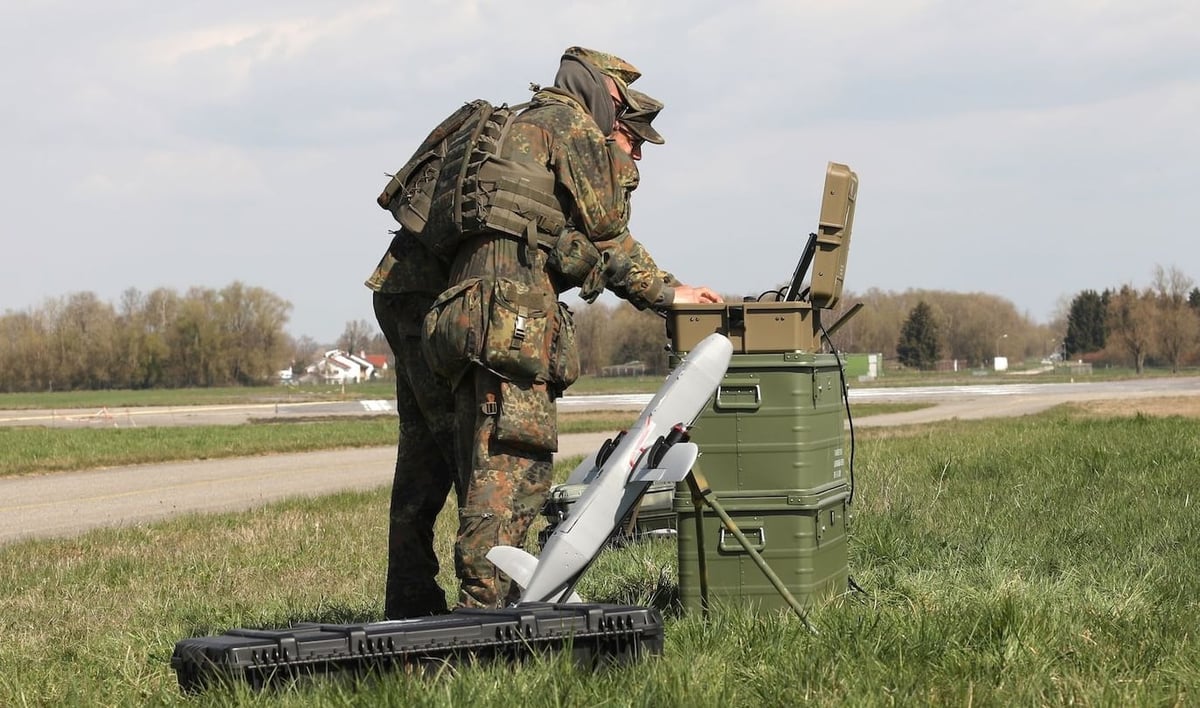
Many drones are designed for field deployment, limited service lives, or one-way missions. That makes manufacturing cost particularly important and favors polymer materials and relatively inexpensive extrusion systems.
Unlike conventional manufacturing processes that may require molds, tooling, and large production runs, 3D printing allows manufacturers to revise designs and produce components in smaller quantities. Potential applications include airframes, housings, aerodynamic structures, sensor mounts, payload interfaces, ducts, tooling, and replacement parts.
The report forecasts opportunities across four parts of the additive manufacturing ecosystem: printed components, 3D printers, materials, and production services. Technologies analyzed include polymer powder bed fusion, low-cost and professional material extrusion, vat photopolymerization, metal powder bed fusion, and metal extrusion.
Its market model separates drones into recreational aircraft weighing less than 250 grams, small commercial systems, larger civil drones, tactical military aircraft, and strategic military platforms.
Moving 3D Printers Directly to the Frontlines
The rapid scale-up of tactical military drones is a central theme of the research. Governments increasingly view drone and counter-drone manufacturing capacity as a matter of national defense and operational readiness, increasing pressure to develop and produce systems more quickly.
Additive manufacturing is suited to that environment because it can reduce tooling requirements, support frequent design changes, and enable more distributed production. Components could be manufactured closer to where aircraft are assembled or deployed, while digital inventories could shorten the wait for replacement parts.
The report says the cost profile of tactical aircraft is likely to favor polymers and low-cost printers, particularly where drones are expendable or produced in large volumes.
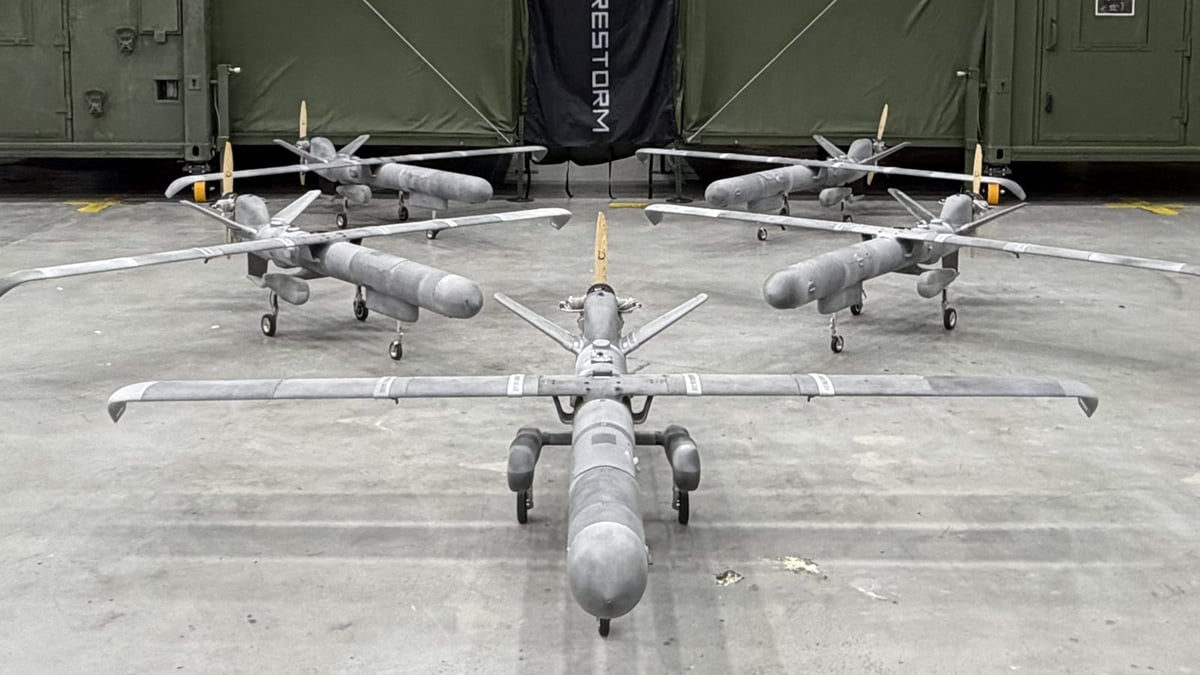
AM Research also examines how 3D printing is supporting military startups and emerging manufacturers. Companies covered include Firestorm Labs, Titan Dynamics, Tytan Technologies, TAF Industries, Wild Hornets, Thyra, Neros, Quantum Systems, General Atomics, and Skydio.
Heavy Payloads & Propulsion: Where Metal 3D Printing Takes Over
Polymer printing currently represents the most accessible route into drone production, but AM Research sees a growing role for metal additive manufacturing.
Metal powder bed fusion is the only metal 3D printing process the report identifies as being used in the sector today. Although adoption remains limited, the technology could address propulsion components and structural parts for larger aircraft with heavier payloads.
These applications may offer greater value per component than polymer parts, but they also bring stricter requirements for material performance, repeatability, qualification, traceability, and inspection. Their adoption is therefore likely to be concentrated in higher-value aircraft and systems where weight reduction or part consolidation can justify the additional manufacturing cost.
Companies referenced in connection with the wider market include Nikon SLM Solutions, Markforged, Cobra Aero, AcoDyne, Camflite, and Airflight.
Beyond Warfare: Inspections, Infrastructure, and Escaping Overseas Suppliers
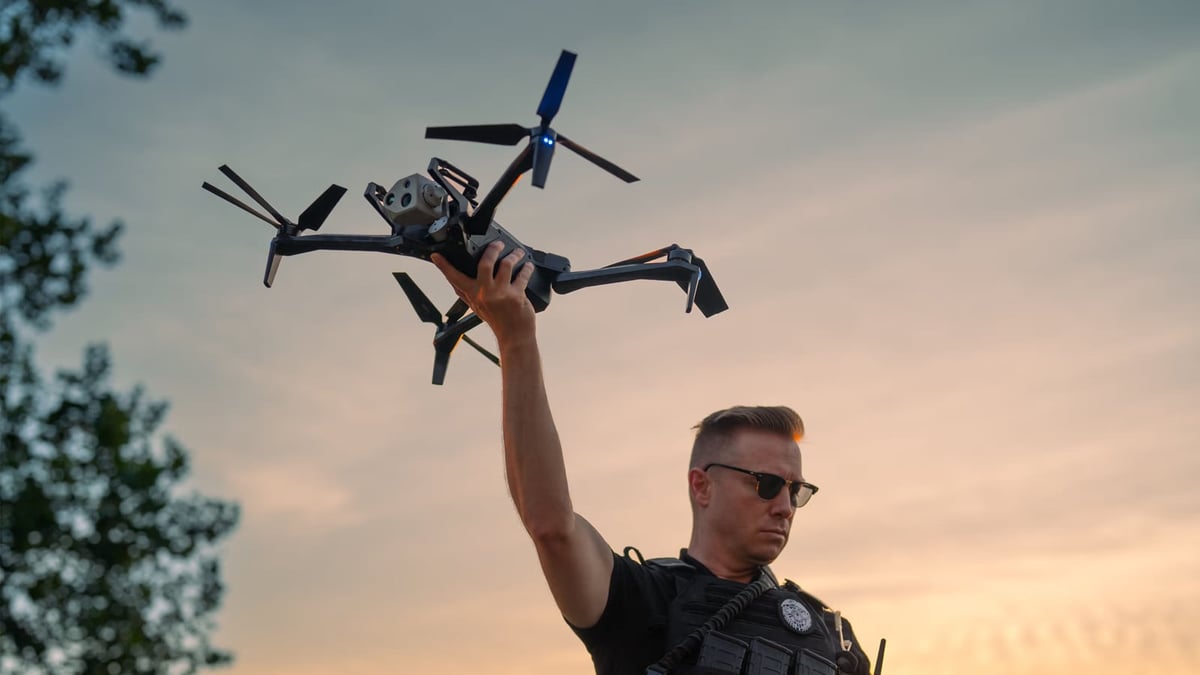
Outside defense, the report covers drones used in infrastructure inspection, mining, energy, public safety, agriculture, and wildlife surveying.
Commercial operators may benefit from printing application-specific equipment such as camera mounts, sensor housings, protective structures, and customized payload connections. Drone-service businesses could also use additive manufacturing to maintain mixed fleets without holding large inventories of spare components.
The research considers the possibility that local additive production could help Western manufacturers reduce dependence on overseas suppliers. While 3D printing cannot replace electronics, batteries, motors, and other critical systems, it can support domestic production of many mechanical and structural parts.
Regional forecasts cover North America, Europe, Asia-Pacific, Greater China, and the rest of the world. The report also highlights the continued development of India’s domestic drone industry.
Among the companies analyzed are DJI, Brinc, AirForestry, Carlson Software, Prusa Research, Stratasys, EOS, and HP.
From Hobbyist Workflows to Industrial Revenue: The Supply Chain Boom
Rather than measuring printed drone parts alone, AM Research’s $900 million forecast covers the surrounding additive manufacturing supply chain.
The study includes projections for printer revenue, unit sales, material consumption, service-provider revenue, and part volumes through 2034 or 2035, depending on the dataset. Material categories include polymer powders, filaments, photopolymer resins, metal powders, and metal-filled filament.
The report is based on a market-data series that AM Research says it has maintained for more than 12 years. The firm, previously known as SmarTech Analysis, has covered additive manufacturing markets since 2013.
A companion webcast, UAS Additive Strategies, was scheduled for June 30 at 11 am Eastern Time to present findings from the research.
The full report and a free sample are available from Additive Manufacturing Research. Buyers should confirm whether access includes both the written analysis and the underlying forecast database.
The headline forecast suggests that drone production could become a meaningful growth market for 3D printing suppliers. How much of that opportunity becomes recurring industrial revenue will depend on whether manufacturers can move beyond rapid prototyping and establish repeatable, qualified production workflows—particularly for military and flight-critical components.
You May Also Like:


License: The text of "Why the Military’s Need for Cheap Drones Is Driving a $900M 3D Printing Boom" by All3DP Pro is licensed under a Creative Commons Attribution 4.0 International License.