Not a China Ban, but Close: Who the U.S. Military Can (and Can’t) Buy 3D Printers From

Signed into law yesterday, the U.S, National Defense Authorization Act includes the new restrictions on 3D printer procurement, as it calls for streamlining qualifications of 3D printed parts.
The U.S. Department of Defense (DoD) is sending a clear signal to the additive manufacturing industry: 3D printing is now considered strategically sensitive infrastructure.
Buried within the latest National Defense Authorization Act (NDAA) signed into law yesterday by President Donald Trump are provisions that directly affect which 3D printer manufacturers can sell hardware to the U.S. military and under what conditions. For companies hoping to enter or expand in defense markets, these changes are not incremental. They are structural.
(Section 849(c)(1)) “The term ‘additive manufacturing machine’ means a system of integrated hardware and software used to carry out an additive manufacturing process, including the deposition of material and the associated post-processing steps as applicable.”
3D Printers Are Now “Covered Defense Equipment”
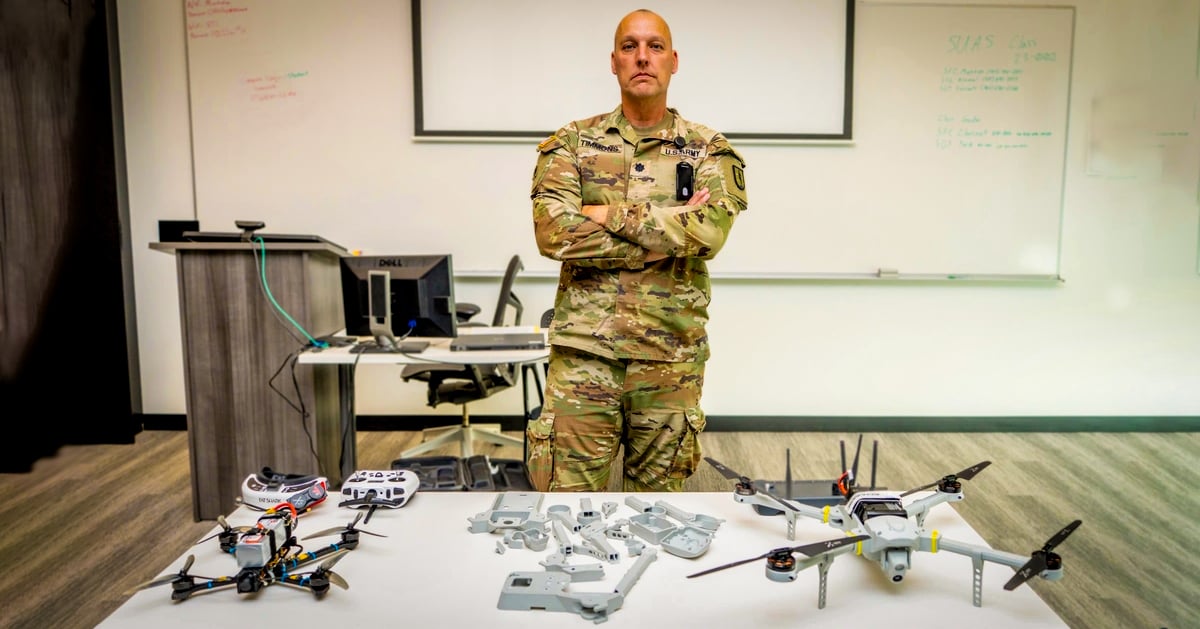
For the first time, the NDAA explicitly regulates additive manufacturing machines, the legal term used throughout the Act to describe industrial 3D printers.
Under the new law, the Department of Defense is prohibited from procuring “covered additive manufacturing machines” beginning one year after enactment. A covered machine is defined not by performance or application, but by who makes it and where corporate control resides.
In practical terms, this means that eligibility to sell 3D printers to the military is now tied to national-security vetting, not just technical qualification.
Who Is Prohibited and Why
The ban applies to additive manufacturing machines produced or supplied by entities that:
- Appear on U.S. government screening lists (such as the Consolidated Screening List or the Civil-Military Fusion List), or
- Are domiciled in, or subject to unmitigated foreign ownership, control, or influence from, a “covered nation”—a category that includes strategic competitors, such as China.
This approach isn’t new for the U.S. government. It mirrors recent restrictions on semiconductors, telecom equipment, and AI systems. The rationale is consistent: advanced manufacturing tools are now viewed as dual-use assets with potential military and intelligence value.
For 3D printer OEMs, this marks a decisive shift away from the historically open, commercial-first procurement environment that additive manufacturing once enjoyed.
Note that the NDAA does not prohibit companies from selling 3D printed parts or end products to the U.S. military based solely on what 3D printer they use. It also does not currently extend the prohibition to contractors’ internal manufacturing tools.
Narrow but Important Exceptions
The law does provide limited exceptions. The DoD may still procure restricted additive manufacturing systems for intelligence, electronic warfare, or information warfare purposes, including testing, analysis, or training .
However, these exceptions are tightly scoped and explicitly exclude routine operational use. For most manufacturers, they do not represent a viable long-term sales pathway.
At the Same Time: Massive Federal Support for Additive Manufacturing
Crucially, the NDAA does not signal a retreat from additive manufacturing, quite the opposite.
Across multiple sections, the Act promotes 3D printing as a cornerstone of:
- Defense supply-chain resilience
- Rapid surge manufacturing
- Sustainment and spare-parts production
- Industrial base modernization
Additive manufacturing is repeatedly named alongside powder-bed fusion and other advanced manufacturing technologies as essential to future readiness
The contradiction is intentional: the DoD wants more 3D printing, but only from trusted sources.
What This Means for 3D Printer Manufacturers
For companies looking to sell into the U.S. defense market, the implications are clear:
1. Corporate Structure Now Matters as Much as Machine Specs
Ownership, investor nationality, board control, and supply-chain transparency will increasingly determine procurement eligibility. Even technically superior systems may be excluded if corporate ties trigger national-security concerns.
2. “Made in the USA” Is Not Enough
Final assembly location alone is insufficient. The law focuses on control and influence, meaning OEMs must assess upstream components, software provenance, firmware updates, and service arrangements.
3. Certification and Qualification Will Accelerate for Approved Vendors
The NDAA also directs the DoD to streamline qualification frameworks for approved additive manufacturing suppliers, particularly during wartime or industrial surges. Companies that pass the gatekeeping stage may benefit from faster certification and deeper integration into defense programs.
4. Defense Is Becoming a Separate Market
Additive manufacturing firms should treat defense procurement as a distinct market segment with its own compliance, governance, and product strategies—much like aerospace or nuclear industries.
A Strategic Inflection Point for the Industry
For years, defense adoption of 3D printing was driven primarily by use cases: spare parts, tooling, and rapid prototyping. The NDAA marks a transition to a geopolitical framing of additive manufacturing.
3D printers are no longer just production tools. In the eyes of U.S. defense planners, they are infrastructure that shapes military autonomy, resilience, and technological advantage.
For companies aligned with U.S. and allied industrial policy, this creates long-term opportunity. For others, it may quietly but decisively close the door.
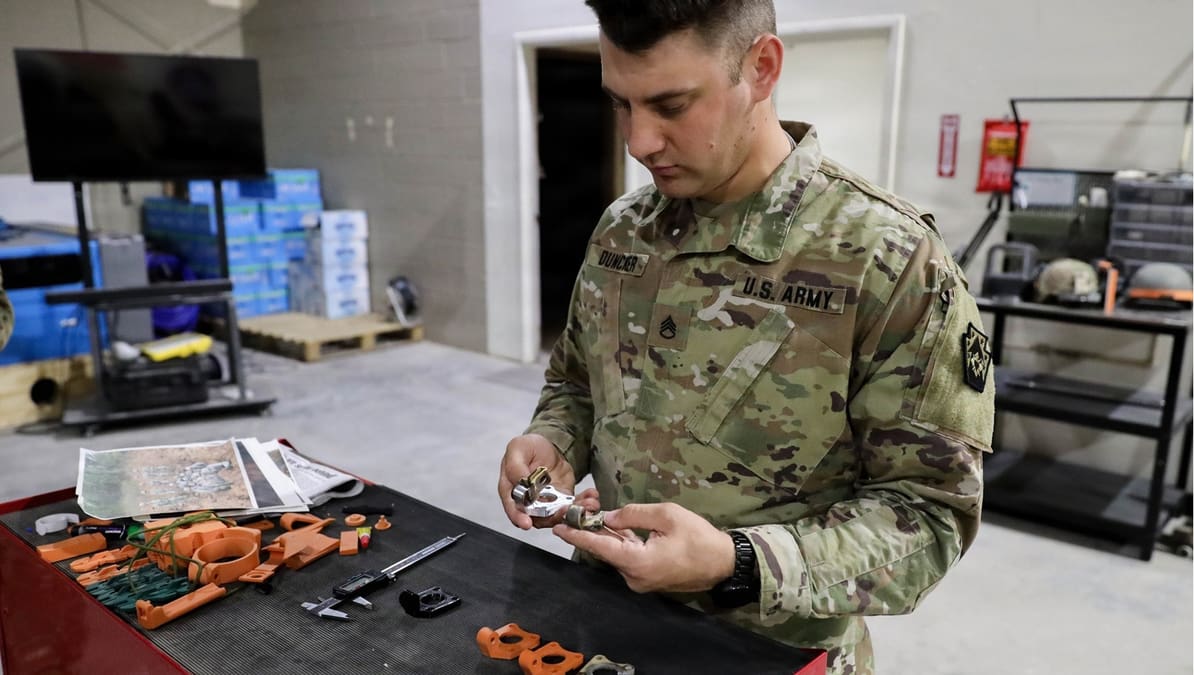
Opening image caption: U.S. Army Staff Sgt. Nicholas Duncker, U.S. Army Central Innovation and Manufacturing Center manufacturing non-commissioned officer in charge, compares control value brackets of a M984 Heavy Expanded Mobility Tactical Truck Wrecker, in the U.S. Central Command area of responsibility, March 27, 2025. The U.S. Army Central Innovation and Manufacturing Center uses 3D printing for rapidly prototyping products focused on enhancing combat operations. (U.S. Army photo by Sgt. Alison Strout)
License: The text of "Not a China Ban, but Close: Who the U.S. Military Can (and Can’t) Buy 3D Printers From" by All3DP Pro is licensed under a Creative Commons Attribution 4.0 International License.