We Now Know More About the Elegoo Centauri Carbon 2

On display at Formnext last week, Elegoo’s new multicolor-centric 3D printer does not replace the original Centauri Carbon, the company has told us.
Elegoo’s announcement of the Centauri Carbon 2 was a little ham-fisted, if you ask me. In announcing a delay to that printer’s filament switching device, and redirecting attention to the upcoming Centauri Carbon 2 – which has the multi-filament Canvas system by default – you could be forgiven for thinking it was a polite way for the company to say “It ain’t gonna happen”. That was my impression, but the language made no guarantees, and so we reported it with the uncertainty it warranted.
Having spoken to the company at Formnext, the picture is much clearer, and with it, an idea of what the Centauri Carbon 2 is and is not.
First things first – the original Centauri Carbon will still get a multicolor device. No word yet on when, or what it will look like, but addressing the ambiguity we were assured that it will still happen and it was not Elegoo’s intention to string users along nor convince them that the Centauri Carbon 2 was a substitute.
Despite its near identical looks, the Centauri Carbon 2 packs significant changes under the hood that set it apart as a distinct printer from the original Centauri Carbon.
Centauri Carbon 2: What’s New?
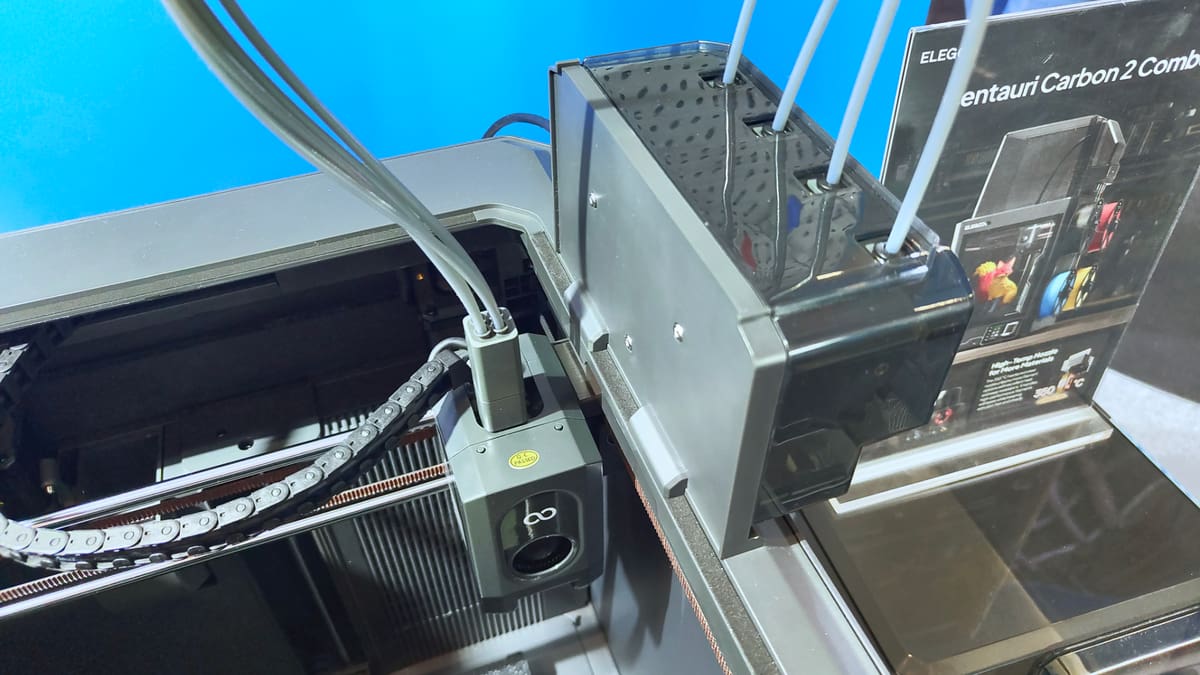
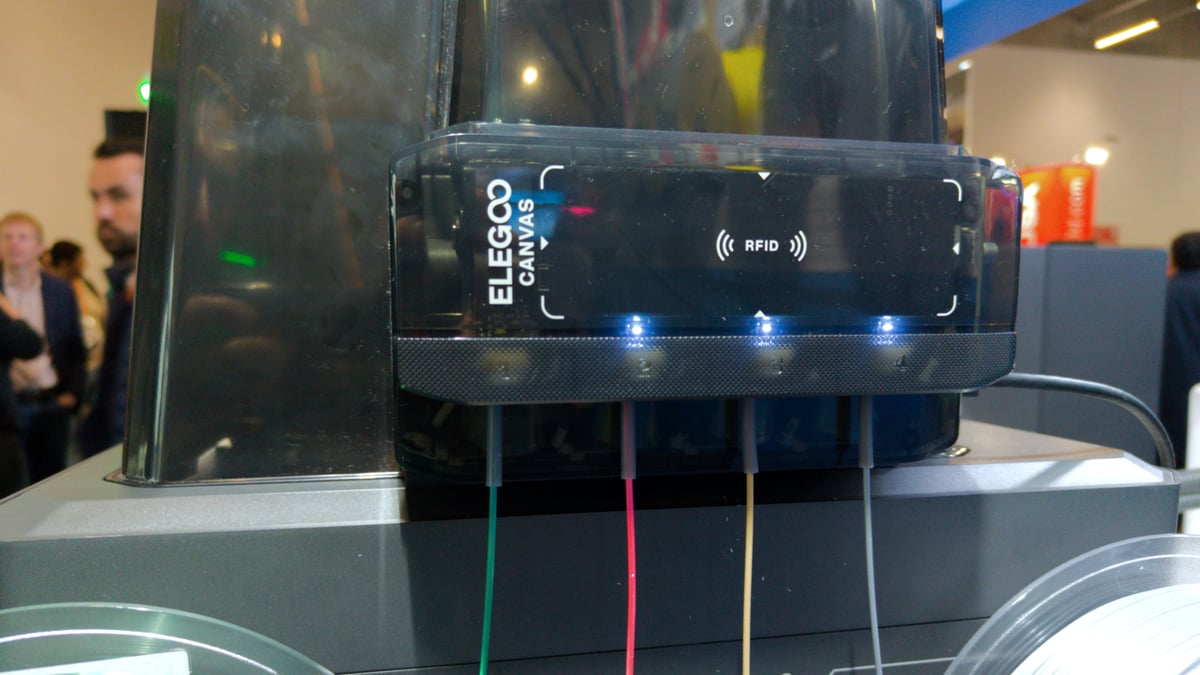
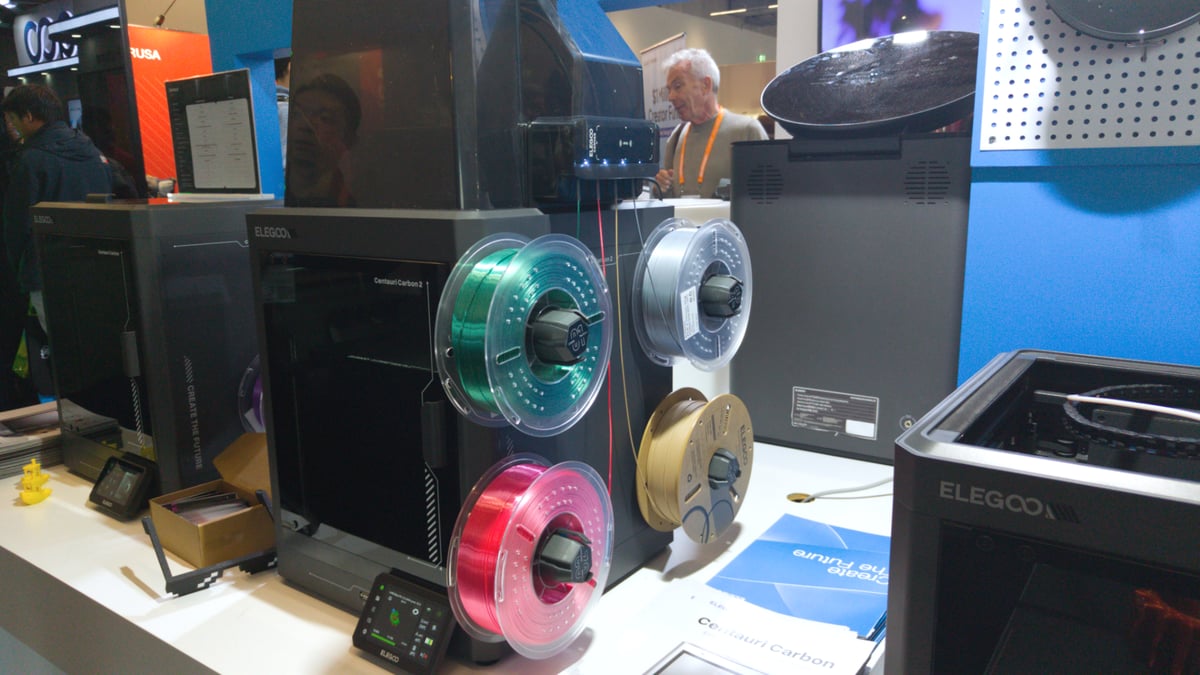
The obvious change is, of course, the filament changer. Called Canvas, it sits mounted to the printer’s frame, similar to the Flashforge AD5X, and feeds up to four colors or materials into a given print.
The Canvas is standard equipment on the Centauri Carbon 2. Initially, you will not be able to get the printer without it. Tapping a spool of Elegoo’s RFID-tagged filament to the Canvas will load the material’s details onto the printer. The system uses Elegoo’s open source standard for the tag, meaning you could theoretically create your own tags for other materials and simplify your workflow; likewise any other manufacturers that pick it up should work, too, though the likelihood of this seems low given the wild west of tag standards currently.
A bucket-style lid replaces the original Carbon’s glass lid, maintaining the benefit of the printer being fully enclosed.
Nozzle temperature ticks upwards, too, with the Centauri Carbon 2 shipping with a hardened steel nozzle that can reach 350°C. This step up over the original Carbon’s 320°C could theoretically bring more higher performance engineering grade materials into the printer’s capabilities, though Elegoo’s presentation and specs sheet for the printer make no meaningful mention of this.
New for the Carbon 2 is an actively controlled chamber, with automatic vents helping to exhaust warm air when printing filaments like PLA and PETG – something the original Carbon would recommend you prop the door open for.
In addition to watching over the various functions and operationality of the printer, an upgraded sensor suite includes a bed overheat cut off that operates independently from the firmware.
One positive step for the Centauri Carbon 2 is Elegoo’s approach to firmware, with it common knowledge now that the original Centauri Carbon appears to have been mishandled in its usage of Klipper, with the company eventually releasing the attributed files to GitHub. This time around, the Centauri Carbon 2’s firmware “source code” will released on GitHub around the printer’s launch.
We’re told the Centauri Carbon 2 will release early next year.
Read more recent news:
- Bambu Lab CEO Ye Tao Explains Why the H2C Is the Ultimate Machine for Lazy Makers
- Black Friday Is the Time to Stock Up On 3D Printing Filament, Too
- New Sub-$3K Continuous Fiber 3D Printer Threatens Markforged’s Dominance Securing $2M on Kickstarter
Tired of Reading? Try Listening
License: The text of "We Now Know More About the Elegoo Centauri Carbon 2" by All3DP is licensed under a Creative Commons Attribution 4.0 International License.