US Navy Bets on Meltio-Equipped Hybrid DED-CNC Systems with 12 Machine Order

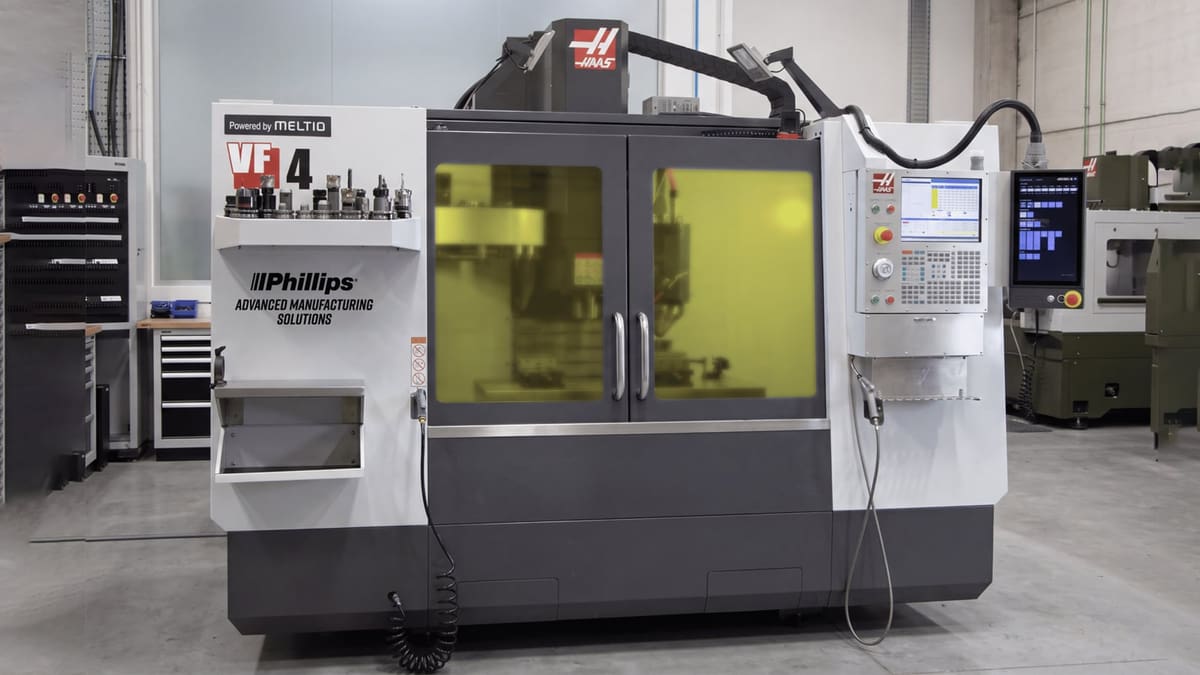
The Phillips Hybrid machines integrate Meltio wire-laser metal deposition technology with Haas CNC platforms, enabling sailors to add and machine metal using a single system.
The U.S. Navy just ordered 12 hybrid CNC-3D printing manufacturing systems that integrate Meltio’s metal additive manufacturing technology with Haas CNC machines, significantly expanding its capacity to train sailors in the production and repair of metal parts.
The systems are destined for the Navy’s advanced manufacturing Schoolhouse in Danville, Virginia, where they will be used by personnel enrolled in the Afloat Training Program.
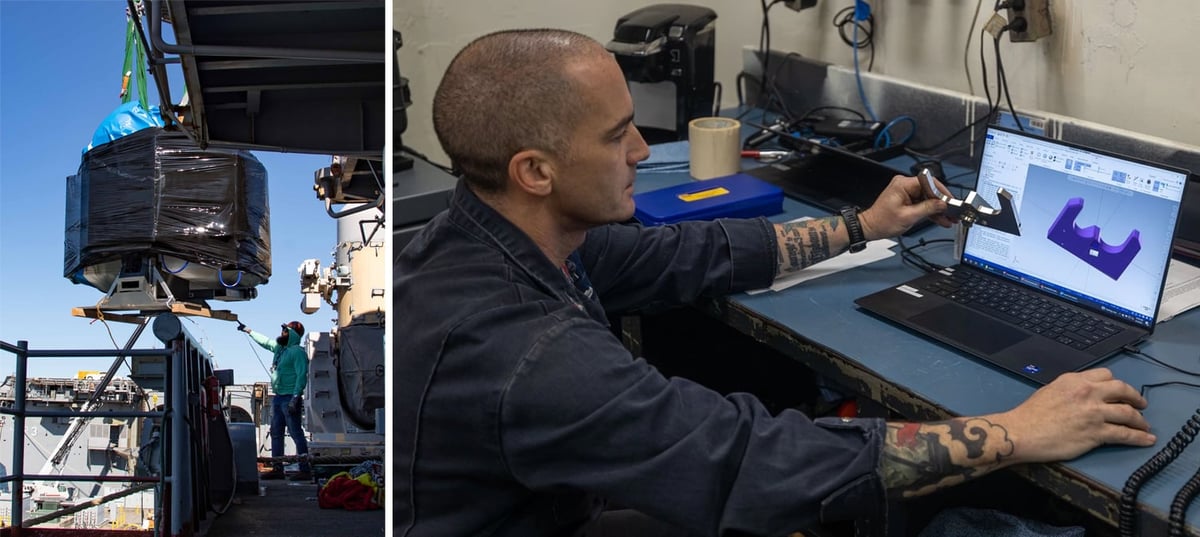
“By training sailors on the same hybrid and additive systems they will encounter aboard ship, the Navy is accelerating readiness, improving sustainment outcomes, and strengthening its advanced manufacturing workforce,” says Bobby Keithley, vice president of sales & product strategy at Phillips Federal, the distributor supplying the machines. “Hybrid manufacturing provides a powerful advantage by combining additive and subtractive processes, enabling sailors to produce new components, repair worn parts, and reduce dependence on traditional supply chains when operating in contested or remote environments.”
Built around Haas TM-1P CNC platforms, the Phillips Hybrid systems incorporate Meltio’s wire-laser directed energy deposition (DED) technology. Their defining feature is the ability to add and remove metal within the same manufacturing platform: operators can deposit new material onto a component, then machine it to its required dimensions and surface finish without transferring the workpiece to separate equipment.
The 12-machine order gives Meltio a prominent role in a broader Navy initiative to develop an advanced manufacturing workforce capable of supporting fleet maintenance, repair, and sustainment closer to the point of need.
From Worn Part to Finished Component
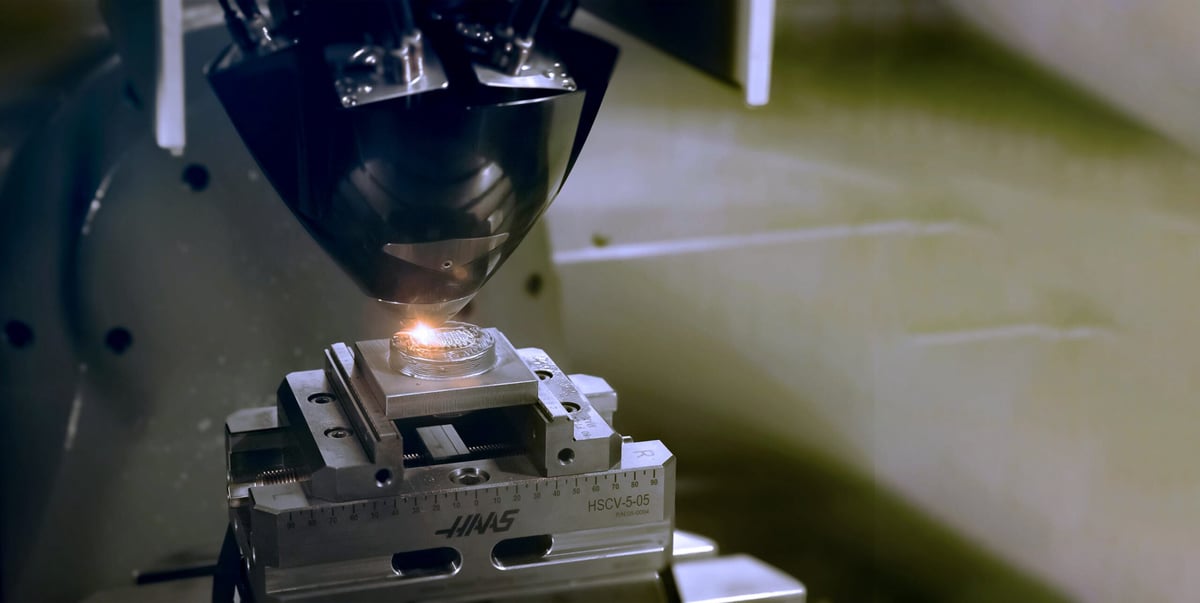
Directed energy deposition uses a concentrated energy source to melt metal wire material as it is deposited onto a component. Meltio’s process feeds standard metal welding wire into a laser-generated melt pool, building new material layer by layer.
Integrated into a CNC machine, operators can rebuild worn surfaces, restore damaged or high-value components, add features to existing parts, and subsequently machine the deposited material to its final geometry.
This makes hybrid systems distinct from conventional metal 3D printers designed primarily to produce complete parts from scratch. Their value lies as much in repair and remanufacturing as in new-part production, particularly when replacing an entire component would be slower or more expensive than restoring the original. Standalone DED 3D printers are also used for part repair and creation but with the disadvantage of having to remove the metal part from the 3D printer and then load it into a CNC machine, which is separately configured.
For the Navy, those capabilities could prove useful aboard ships, at maintenance depots, and in expeditionary settings where access to replacement parts and conventional manufacturing infrastructure may be limited. The investment reflects the Navy’s growing interest in manufacturing parts closer to where they are required. Producing or repairing components at sea or near an operating location could shorten lead times, reduce dependence on extended supply chains, and return equipment to service more quickly.
“There is hardly a more challenging operational environment than operating at sea,” says Gabriel Ortiz, Americas channel manager at Meltio.
Expanding on the USS Bataan Installation
The Danville procurement builds on earlier work involving the Navy, Phillips, Meltio, and Haas.
In 2023, a Phillips Additive Hybrid system was permanently installed aboard the amphibious assault ship USS Bataan. The machine combined Meltio’s wire-laser deposition technology with a Haas TM-1 CNC mill, giving personnel aboard the vessel both additive and subtractive metal manufacturing capabilities.
That installation was intended to support the production and repair of steel components at sea. It was described as the first Naval Sea Systems Command-sponsored hybrid manufacturing system to be permanently installed aboard a U.S. Navy ship.
The new order differs both in scale and purpose. Rather than deploying another individual machine aboard a vessel, the Navy is installing 12 Meltio-integrated systems in a dedicated training environment.
That shift suggests the service is placing greater emphasis on developing the personnel and standardized workflows required to operate hybrid manufacturing equipment across a wider range of settings.
For Meltio, the order expands its involvement with the Navy from a single shipboard installation to a substantial training deployment. For the Navy, it represents another step toward making point-of-need metal manufacturing and repair a repeatable operational capability rather than an isolated technology demonstration.
A 24-Machine Advanced Manufacturing Facility
The Meltio-equipped systems form one half of a broader 24-machine procurement. The Navy has also acquired 12 Markforged X7 composite 3D printers, which will be used to train personnel to manufacture reinforced composite parts such as tooling, fixtures, prototypes, and replacement components.
Taken together, the equipment gives the Danville Schoolhouse a training environment spanning metal deposition, CNC machining, composite additive manufacturing, and production-oriented workflows. The training program will extend beyond basic machine operation. Sailors will need to learn how to prepare damaged components, plan deposition and machining steps, control the manufacturing process, inspect finished parts, and work within the Navy’s procedures for approving components for use.
The facility is owned by Naval Sea Systems Command and operated in collaboration with the Institute for Advanced Learning and Research. BlueForge Alliance managed the equipment acquisition on the Navy’s behalf.
The difficulty of supplying and maintaining vessels far from established industrial facilities has made the Navy an increasingly prominent test bed for additive manufacturing. Yet introducing equipment is only one part of that effort. Establishing a practical fleet capability also requires trained operators, repeatable processes, qualified materials, reliable inspection, and clear rules governing which components can be manufactured and installed.
You May Also Like:


License: The text of "US Navy Bets on Meltio-Equipped Hybrid DED-CNC Systems with 12 Machine Order" by All3DP Pro is licensed under a Creative Commons Attribution 4.0 International License.