Phillips Bets on Blue-Laser DED from Meltio to Expand Defense Manufacturing

Touted as safer, faster, and easier to maintain, blue-laser DED and CNC hybrid tech could change how the defense industry thinks about medium- to large-scale metal part production.
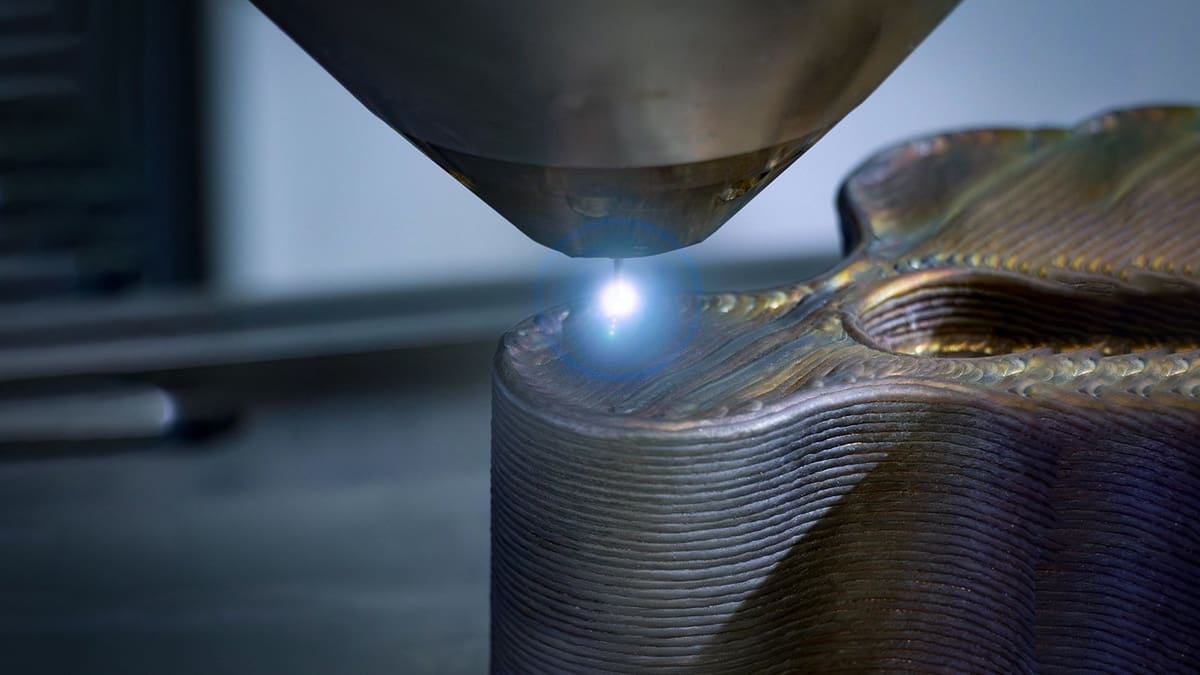
Meltio, a developer of directed energy deposition (DED) metal additive manufacturing systems, has just integrated its new Meltio Engine Blue, a print head that uses Blue Lasers to melt metal feedstock, into a hybrid manufacturing configuration by Phillips Corporation.
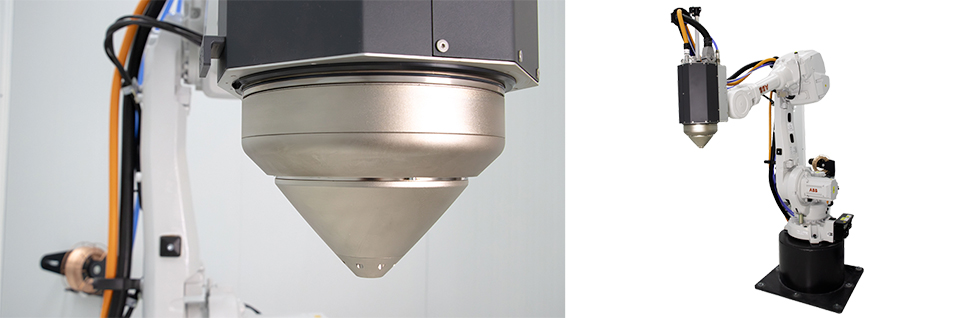
The Meltio Engine Blue, originally introduced at Formnext 2024, replaces the company’s previous infrared-based system with a 1.4 kW blue laser, aiming to improve deposition efficiency, expand material compatibility, and simplify system integration, the company says.
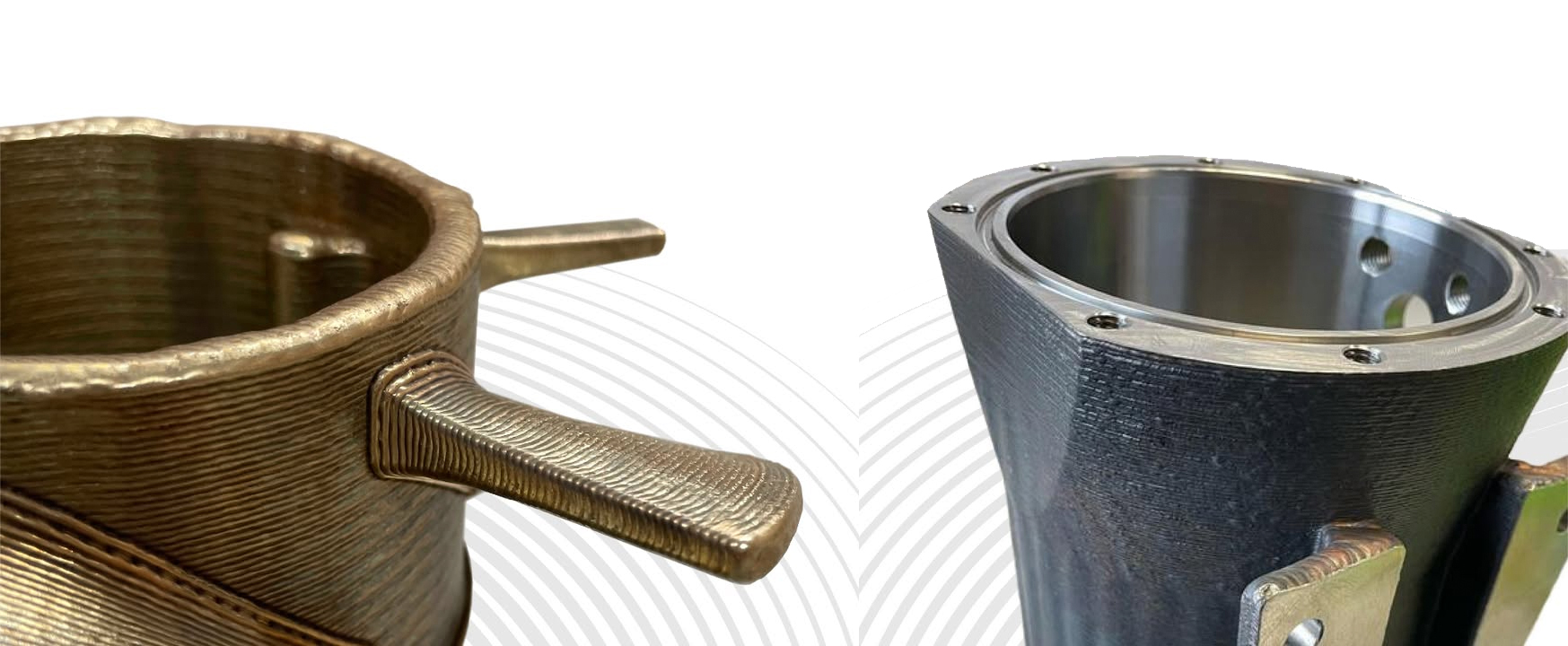
Blue lasers offer several advantages over the traditional infrared diode lasers previously used in Meltio’s wire DED technology. One of the most significant benefits is their higher absorption rate in reflective metals such as copper, aluminum, and nickel. These materials absorb blue light far more efficiently than infrared, leading to more stable and effective melting, which in turn enables higher deposition rates, allowing parts to be built more quickly compared to previous systems.
Unlike powder-based systems, the Meltio Engine Blue uses welding wire as its feedstock—a material considered safer, more cost-effective, and easier to handle. Meltio says that the system is compatible with stainless steel, titanium, copper, aluminum, and nickel alloys.
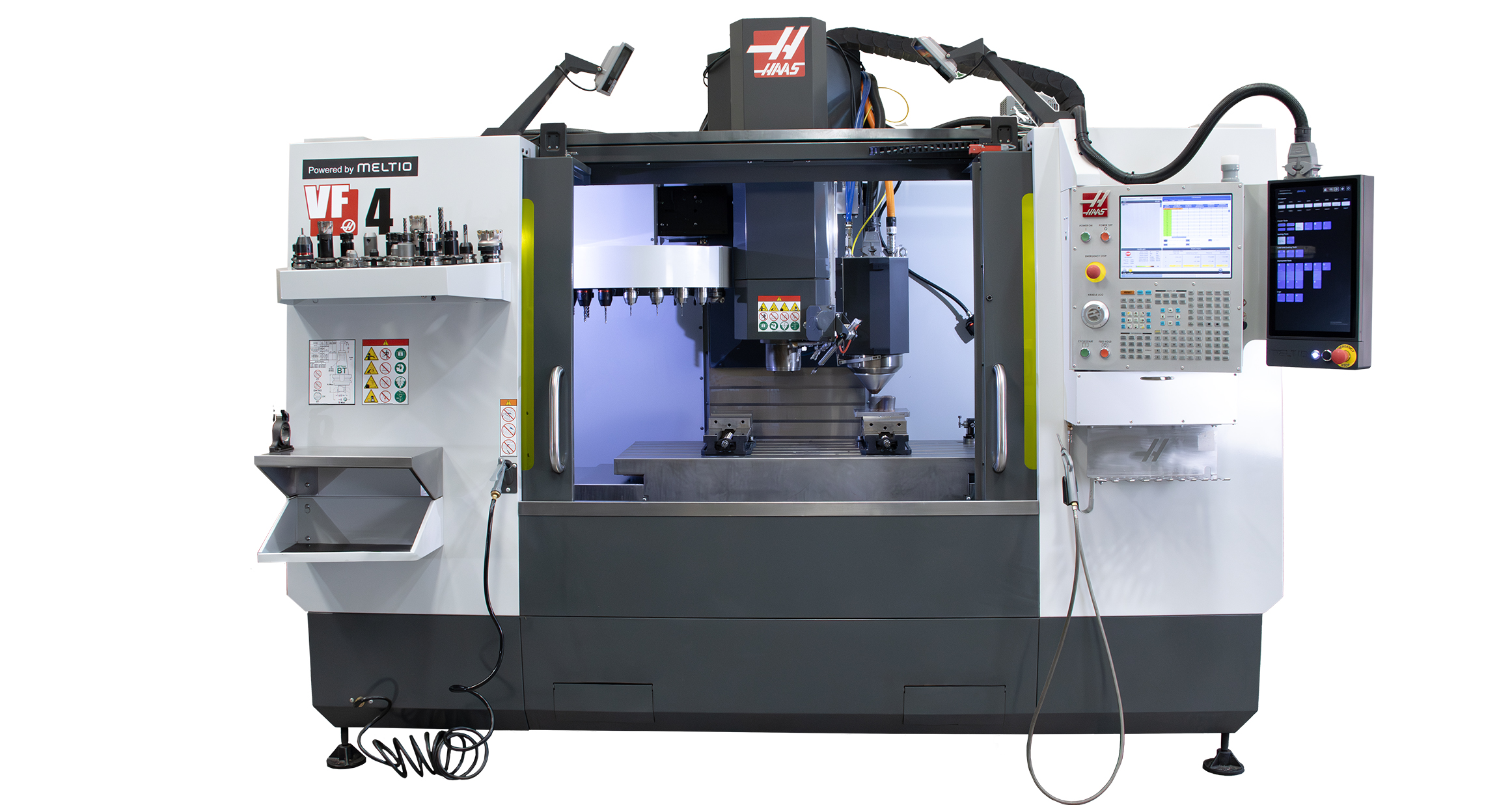
Phillips Corporation is the first Meltio partner worldwide to integrate the Engine Blue into a Haas TM-1r CNC machine. This hybrid system is designed to support both additive and subtractive manufacturing in a single platform, a configuration particularly relevant to defense and high-mix production environments. According to Phillips, the integration is intended to reduce production times for complex components and increase operational flexibility.
“Integrating Meltio’s impressive new Engine Blue into the Haas CNC platform unlocks a new level of control and versatility for manufacturers,” said Brian Kristaponis, General Manager of Phillips Additive Hybrid. “We’re proud to be the first Meltio partner to deliver this configuration through our Hybrid product line, which is already proving its value in fast-moving, resource-constrained environments like defense.”
The Haas CNC/Meltio Engine Blue system features a compact print head with integrated camera, dual-wire feeding, and quick-connect components. It eliminates fiber optics and collimators, reducing the need for laser alignment and minimizing maintenance, according to Meltio. Safety features have also been updated to meet high industrial protection standards, though final certification depends on specific implementations.
Meltio and Phillips have previously collaborated on projects for the U.S. Department of Defense, including the deployment of onboard metal printing systems aboard U.S. Navy ships. These efforts reflect a growing interest in distributed and hybrid manufacturing strategies aimed at improving supply chain resilience and part availability in the field.
“The demand for manufacturing increasingly complex 3D printed parts with Meltio’s DED metal technology using a CNC machine is growing across U.S. industries,” says Gabriel Ortiz, Meltio’s U.S. Channel Manager.
Machine makers say hybrid technology overcomes the shortcomings of both of their parent technologies and enables manufacturers to produce more accurate and higher-quality components faster and at a lower cost. It is less wasteful than machining alone and more productive and precise than 3D printing alone, with no manual labor to move parts around and no programming two distinct pieces of equipment.
The Meltio Engine Blue is now commercially available as an integration kit and is intended for industrial users requiring wire-laser metal additive manufacturing, either as a standalone solution or as part of a hybrid production setup. The Meltio Engine integrates with any robot arm manufacturer and interface on the market. Meltio Space slicer software for robots is compatible with ABB, Kuka, Fanuc, Yaskawa, and Siemens.
You May Also Like:
License: The text of "Phillips Bets on Blue-Laser DED from Meltio to Expand Defense Manufacturing" by All3DP Pro is licensed under a Creative Commons Attribution 4.0 International License.