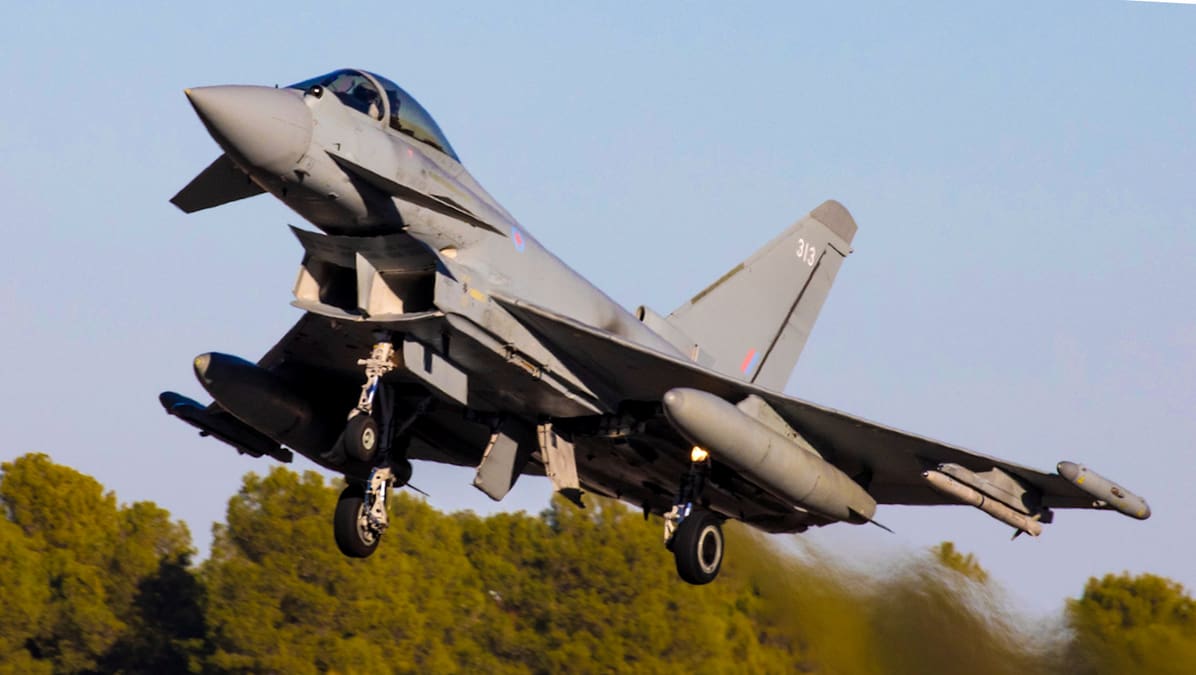
The UK Air Force Has a New Secret Weapon to Get Fighter Jets Back in the Air Faster

Air Force leaders say this breakthrough proves how 3D printing technology could transform military aircraft repair and maintenance.
The UK’s Royal Air Force installed its first in-house manufactured 3D printed component to an operational fighter jet — a Typhoon — last week marking a “revolutionary step,” it says, towards faster aircraft repairs and reduced downtime.
The small metal part is intended to be temporary. “This isn’t intended as a permanent fix,” says Squadron Leader John Mercer, Senior Engineering Officer at No 29 Squadron, “but it shows where we’re heading. When aircraft are grounded waiting for spare parts, we can’t afford delays. Being able to print our own temporary components means getting jets back in the air faster.”
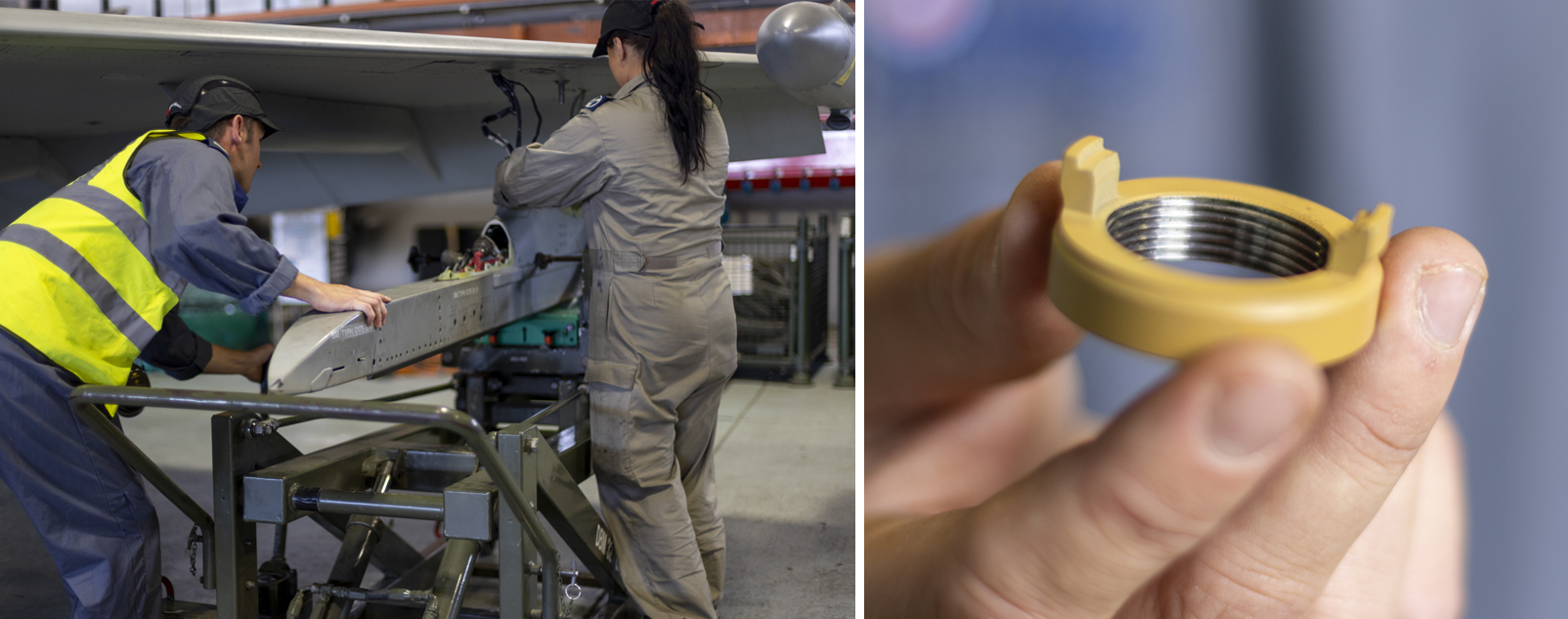
The temporary replacement is a part for the pylon assembly that connects weapons systems to the aircraft’s wing. It was manufactured at the Hilda B. Hewitt Centre for Innovation. Engineers 3D scanned the damaged component and shared the data with the original manufacturer. But while the manufacturer developed a permanent replacement, engineers at 71 Squadron, part of the RAF Support Force, designed and printed an intermediate solution.
71 Squadron’s principal roles are to repair damaged structure on UK fixed-wing military aircraft and provide specialist inspection capabilities to RAF aircraft wherever they are deployed. The Squadron also has its own designers, who devise repair solutions in circumstances where conventional fixes may not be effective or available.
“This technology offers enormous potential to maintain our aircraft faster than ever before,” says Wing Commander Gemma Lonsdale, Officer Commanding Air Wing Engineering at RAF Coningsby. “The 71 Squadron team has been exceptional – their expertise and collaboration made this milestone possible.”
The success opens the door to wider applications across the RAF fleet, potentially reducing maintenance costs and improving aircraft availability for operations.
The Hilda B Hewlett Centre for Innovation, opened in 2022, is equipped with a Wayland Additive Calibur3 3D printer, a Nikon HTX 540 CT scanner, a Renishaw RenAM 500 metal printer and a Stratasys Fortus 450 polymer printer.
Working in metal or polymer, the equipment can reproduce aircraft components with microscopic accuracy and precision. Before any manufactured component can be fitted to an aircraft, however, months of rigorous testing lies ahead with every imaginable aspect of the additive manufacture process examined in scientific detail.
You May Also Like:

License: The text of "The UK Air Force Has a New Secret Weapon to Get Fighter Jets Back in the Air Faster" by All3DP Pro is licensed under a Creative Commons Attribution 4.0 International License.